
A Power Point lesson by Jim Soto ACTING
A Power. Point lesson by Jim Soto ACTING II

About ACTING
Acting is by far one of the hardest professions to obtain regular work in and harder still to achieve success in. The glamour and opulence of celebrity is extremely alluring and the prestige of being considered a great actor can be very appealing. However, it's something that many want but only few obtain. To succeed as an actor it makes sense that one should know how to act. Actors tackle acting from either a technical or non-technical approach. There are different acting techniques that can be applied to the craft. In this lesson we will see some of the most popular and effective.
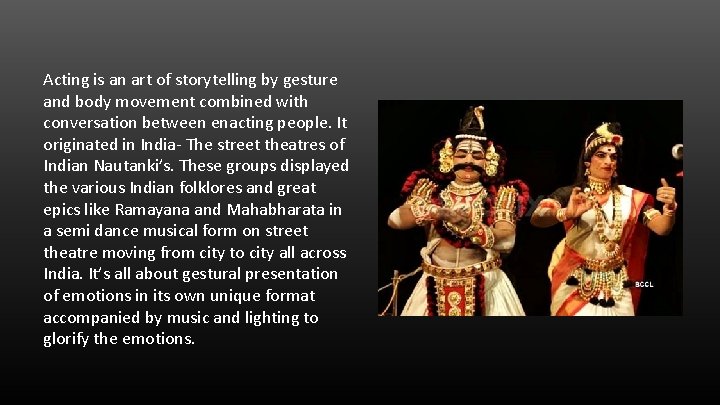
Acting is an art of storytelling by gesture and body movement combined with conversation between enacting people. It originated in India- The street theatres of Indian Nautanki’s. These groups displayed the various Indian folklores and great epics like Ramayana and Mahabharata in a semi dance musical form on street theatre moving from city to city all across India. It’s all about gestural presentation of emotions in its own unique format accompanied by music and lighting to glorify the emotions.

In the 6 th century BC, Greek actor Thespis performed the first 3 act theatrical performance paving the way for the work of the great Greek dramatists of antiquity. But with modernization taking place centuries later, theatre evolved with Shakespeare’s work laying the real foundation of the art of modern acting techniques.

There were several artists/actors who invented their own form of acting which was later so successful that today they comprise of the most famous and sought after actors of our times. The most successful of all was Konstantin Stanislavski, whose technique was influenced and developed by Lee Strasberg as a style known in America as Method Acting, the classic example being actor Marlon Brando. Let us now see various techniques of acting invented by various great artists…
Shakespeare/Classical Acting
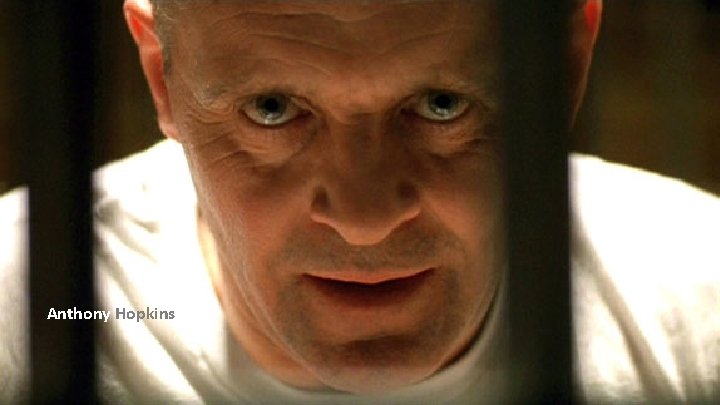
Anthony Hopkins
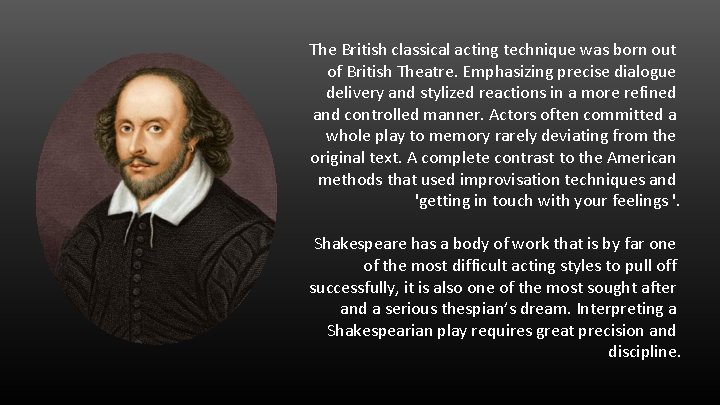
The British classical acting technique was born out of British Theatre. Emphasizing precise dialogue delivery and stylized reactions in a more refined and controlled manner. Actors often committed a whole play to memory rarely deviating from the original text. A complete contrast to the American methods that used improvisation techniques and 'getting in touch with your feelings '. Shakespeare has a body of work that is by far one of the most difficult acting styles to pull off successfully, it is also one of the most sought after and a serious thespian’s dream. Interpreting a Shakespearian play requires great precision and discipline.

Classical acting is one in which the characters play their role by imitating thoughts and emotions through external means. It includes the use of vocal intonation and facial expression. Classical acting contrasts with method acting, where the characters internalize their roles and act through their own emotions and thoughts. Delivery, pronunciation and projection needs to be practiced frequently. Practicing in front of a mirror; checking your posture, breathing and reaction stance are a must.

Classical Trained Actors James Mc. Avoy Judi Dench Rebecca Hall Chiwetel Ejiofor
Stanislavski Acting
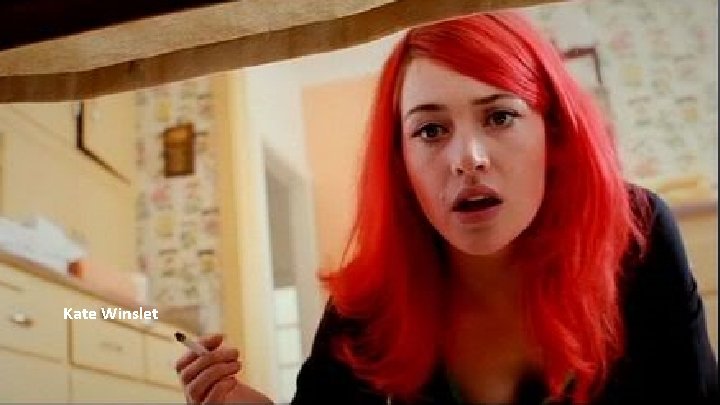
Kate Winslet
Konstantin Stanislavski influenced the acting world so greatly that most modern acting techniques stem from Stanislavskian approaches. Stanislavski acting involves analyzing the script and segmenting it. Stanislavski perceived a problem in the extremely regimented, unnatural acting being performed in Russia: namely, that it didn't seem real, and therefore didn't move an audience to empathy. He used many techniques--careful work understanding the character's intention, emotion memory, immersing oneself in the situation of the character through imagination, and concentrating on recreating the physical realities of the character, to transform yourself from the outside in.
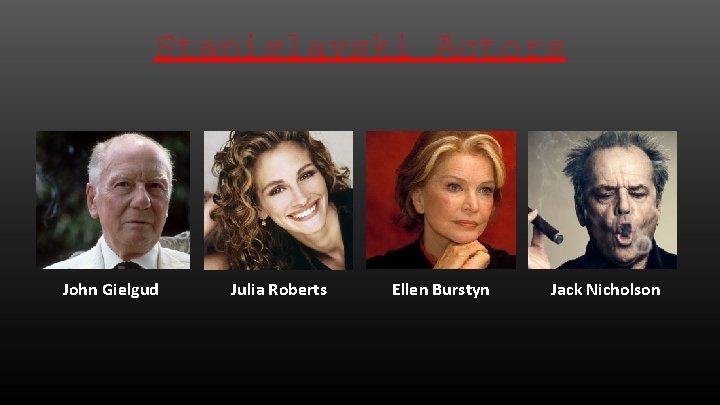
Stanislavski Actors John Gielgud Julia Roberts Ellen Burstyn Jack Nicholson
Method Acting
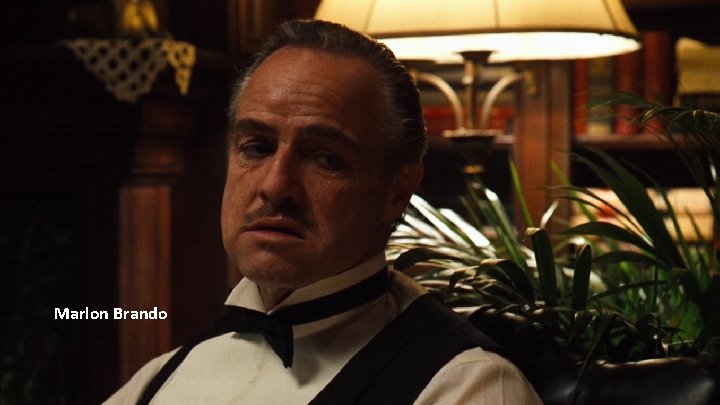
Marlon Brando
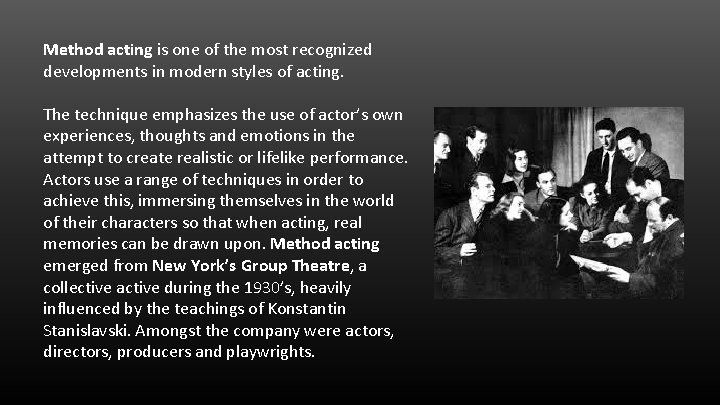
Method acting is one of the most recognized developments in modern styles of acting. The technique emphasizes the use of actor’s own experiences, thoughts and emotions in the attempt to create realistic or lifelike performance. Actors use a range of techniques in order to achieve this, immersing themselves in the world of their characters so that when acting, real memories can be drawn upon. Method acting emerged from New York’s Group Theatre, a collective active during the 1930’s, heavily influenced by the teachings of Konstantin Stanislavski. Amongst the company were actors, directors, producers and playwrights.
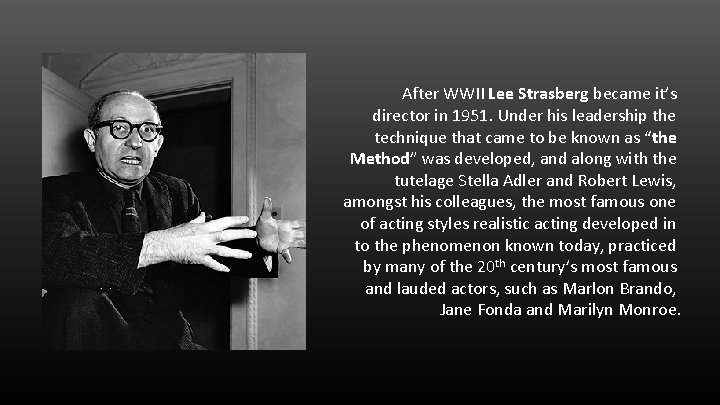
After WWII Lee Strasberg became it’s director in 1951. Under his leadership the technique that came to be known as “the Method” was developed, and along with the tutelage Stella Adler and Robert Lewis, amongst his colleagues, the most famous one of acting styles realistic acting developed in to the phenomenon known today, practiced by many of the 20 th century’s most famous and lauded actors, such as Marlon Brando, Jane Fonda and Marilyn Monroe.
While Strasberg used all of Stanislavski ‘s techniques for his "method" he concentrated most on the emotion memory. The main difference was that while Stanislavski thought it(the actor using his or her own recollections to evoke an emotion) was one of many useful tools, he noticed actors sometimes becoming hysterical trying it. He tried to find other less draining ways to get at those emotions. Strasberg really threw his actors into emotion memory without any reservations. I've seen film of him asking probing psychological questions of an actress until she was sobbing, falling apart. The criticism of this technique (voiced by Stella Adler, among others) is that in focusing on the actor's own emotion, it separates the actor from the world of the character.
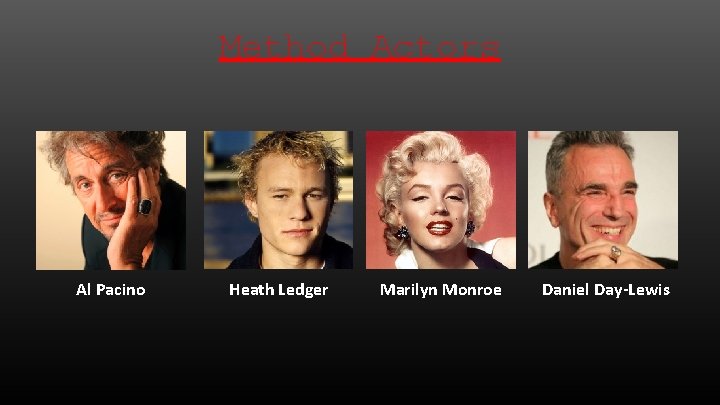
Method Actors Al Pacino Heath Ledger Marilyn Monroe Daniel Day-Lewis
Adler Acting Techniques
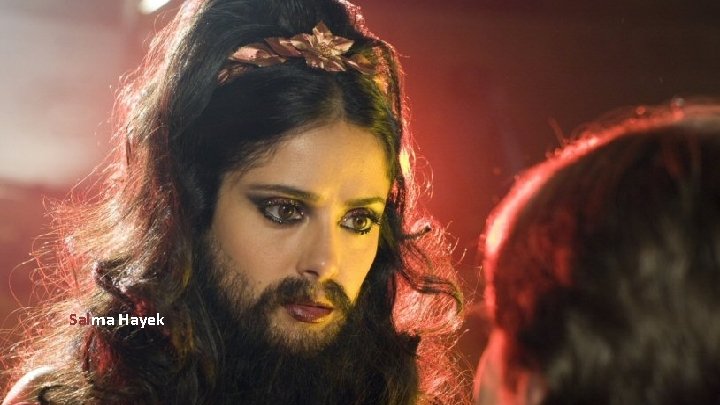
Salma Hayek
Stella Adler (Stanislavski disciple who studied alongside Strasberg at the Group Theater) went to Europe to study with Stanislavski, himself. Stanislavski was originally an advocate of emotional memory, but he realized that it was flawed. Over time, a memory can change. For example a memory that was once traumatic as a kid is now a silly memory. Stanislavski moved away from affective memory in his later work, seeking more reliable and expressive forms. Stella went back to the U. S. and said Strasberg was wrong and formed her branch of American Method. After personally studying with Stanislavski, Stella Adler denounced Strasberg’s work with emotional recall and began teaching a version of acting technique focused on given circumstances, imagination, voice, and body. She put herself in opposition to Strasberg and his work at the Actors Studio, setting up her own school in 1949.
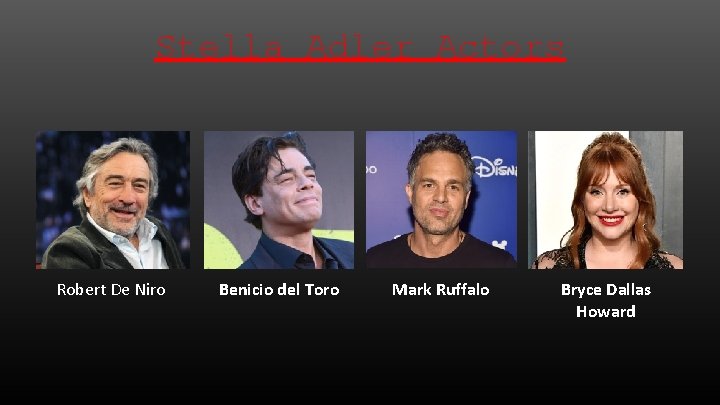
Stella Adler Actors Robert De Niro Benicio del Toro Mark Ruffalo Bryce Dallas Howard

Meisner Technique
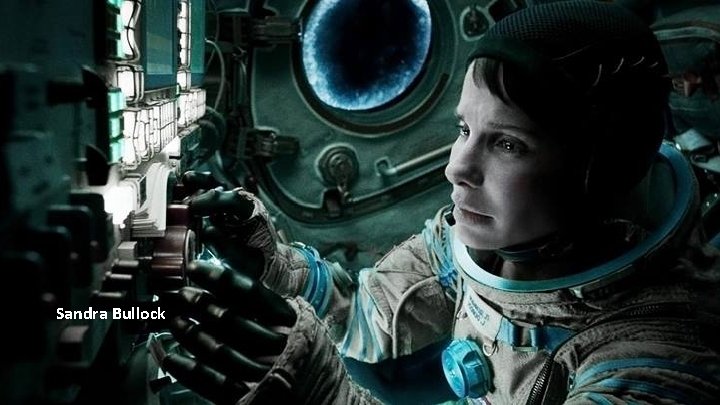
Sandra Bullock
Sanford Meisner (another Group Theatre disciple) also thought that emotional memory was junk so he formed his own version of American Method. His version focuses more on instincts and reacting to the moment. He defined acting as “living in imaginary circumstances”. Sanford Meisner’s technique is predominately placed on self, circumstances and affect on and reaction to others. Repetitive dialogues are used as an exercise; these enable actors to play on action and reaction, depending on how the line is delivered at that moment. It’s about considering the characters objective, reading tone and body language. Meisner’s cause and effect type teaching helps the actor to attune themselves to the community of the performance, who is friend and who is foe. “What is the catalyst of change and how as a character you deal with change and the chain reaction that follows it? ” – is Meisner’s important question to his actors.
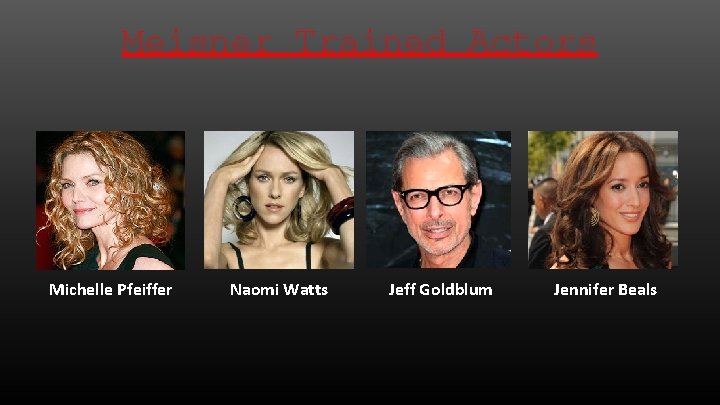
Meisner Trained Actors Michelle Pfeiffer Naomi Watts Jeff Goldblum Jennifer Beals
Reshoot 1. Where did acting first develop and how? 2. What two things does classical acting emphasize? 3. Mention two Shakespearian actors. 4. Who was Konstantin Stanislavski and what was his contribution to acting? 5. What did Lee Strasberg do with Stanislavski’s techniques? 6. What was Stella Adler’s main problem with “emotional memory”? 7. What is Sanford Meisner’s technique main focus?
- Slides: 31