
A Pilot Study of an Automated Voice Response
- Slides: 1
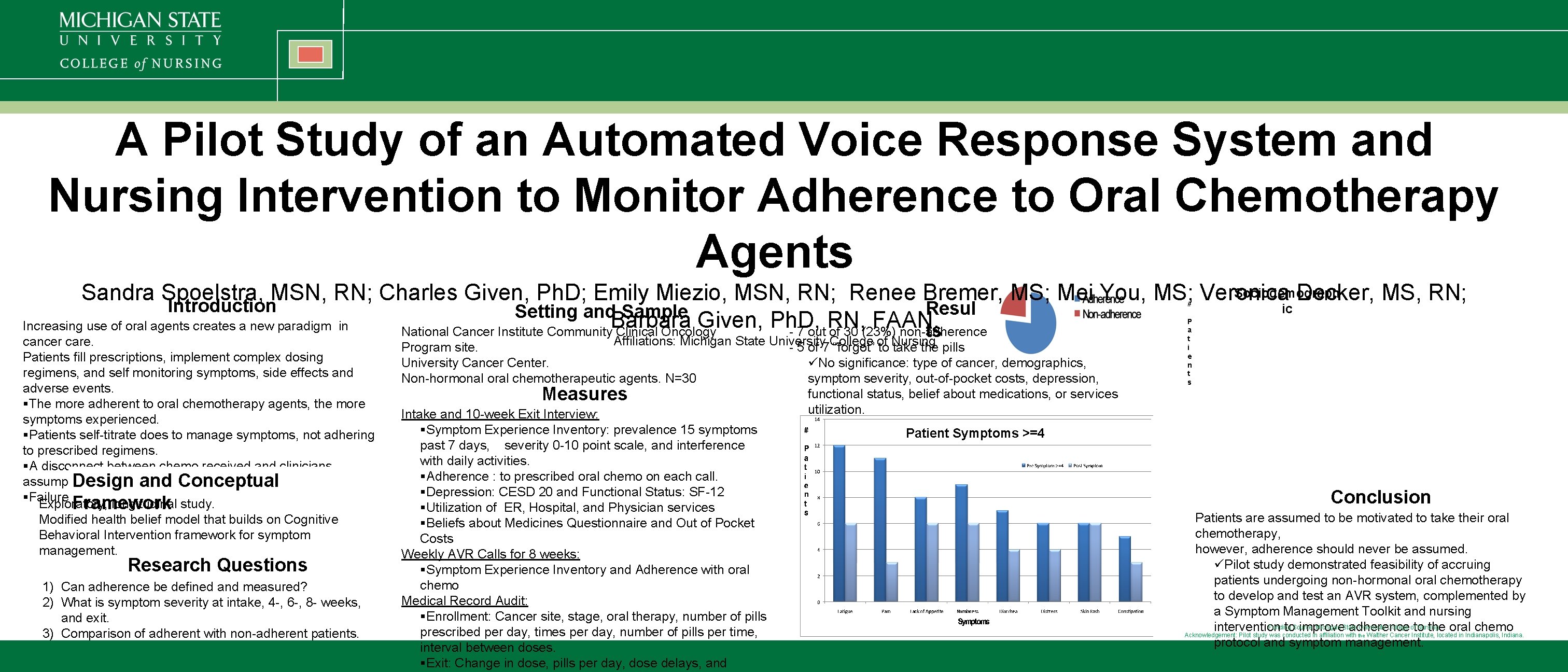
A Pilot Study of an Automated Voice Response System and Nursing Intervention to Monitor Adherence to Oral Chemotherapy Agents Sociodemograph Sandra Spoelstra, MSN, RN; Charles Given, Ph. D; Emily Miezio, MSN, RN; Renee Bremer, MS; Mei You, MS; Veronica Decker, MS, RN; Introduction ic Resul Setting and Sample Barbara Given, Ph. D, RN, FAAN. Increasing use of oral agents creates a new paradigm in - 7 out of 30 (23%) non-adherence National Cancer Institute Community Clinical Oncology ts # cancer care. Patients fill prescriptions, implement complex dosing regimens, and self monitoring symptoms, side effects and adverse events. §The more adherent to oral chemotherapy agents, the more symptoms experienced. §Patients self-titrate does to manage symptoms, not adhering to prescribed regimens. §A disconnect between chemo received and clinicians assumptions. Design and Conceptual §Failure to achieve therapeutic dose. Exploratory, longitudinal study. Framework Modified health belief model that builds on Cognitive Behavioral Intervention framework for symptom management. Research Questions 1) Can adherence be defined and measured? 2) What is symptom severity at intake, 4 -, 6 -, 8 - weeks, and exit. 3) Comparison of adherent with non-adherent patients. Affiliations: Michigan State University - 5 of 7 College “forgot” of to Nursing take the pills Program site. üNo significance: type of cancer, demographics, University Cancer Center. symptom severity, out-of-pocket costs, depression, Non-hormonal oral chemotherapeutic agents. N=30 functional status, belief about medications, or services Measures utilization. Intake and 10 -week Exit Interview: §Symptom Experience Inventory: prevalence 15 symptoms past 7 days, severity 0 -10 point scale, and interference with daily activities. §Adherence : to prescribed oral chemo on each call. §Depression: CESD 20 and Functional Status: SF-12 §Utilization of ER, Hospital, and Physician services §Beliefs about Medicines Questionnaire and Out of Pocket Costs Weekly AVR Calls for 8 weeks: §Symptom Experience Inventory and Adherence with oral chemo Medical Record Audit: §Enrollment: Cancer site, stage, oral therapy, number of pills prescribed per day, times per day, number of pills per time, interval between doses. §Exit: Change in dose, pills per day, dose delays, and P a t i e n t s Patient Symptoms >=4 Conclusion Patients are assumed to be motivated to take their oral chemotherapy, however, adherence should never be assumed. üPilot study demonstrated feasibility of accruing patients undergoing non-hormonal oral chemotherapy to develop and test an AVR system, complemented by a Symptom Management Toolkit and nursing Funding Source: Michigan State University College ofto Nursing intervention to improve adherence the oral chemo Acknowledgement: Pilot study was conducted in affiliation with Walther Cancer Institute, located in Indianapolis, Indiana. protocol and symptom management. the