
A pillar is a person or thing regarded
- Slides: 13
A pillar is a person or thing regarded as reliably providing essential support for something. The Four Pillars of Resiliency 1. Building coping and support resources 2. Be flexible 3. Attitude of Gratitude 4. See setbacks as temporary, keep moving forward Strength & Courage in everyday decisions
Stress pressure or tension exerted on a material object: • the degree of pressure exerted on a material object measured in units of force per unit area. • a state of mental or emotional strain or tension resulting from adverse or very demanding circumstances: • something that causes mental strain:
Trauma • a : an injury (as a wound) to living tissue caused by an extrinsic agent • b : a disordered psychic or behavioral state resulting from severe mental or emotional stress or physical injury • c : an emotional upset <the personal trauma of someone who is not living up to his own expectations • or • : an agent, force, or mechanism that causes trauma
The Poverty Link • • • Undiagnosed/untreated mental illness/addiction Undiagnosed/untreated learning disabilities Lack of education Generational poverty leads to a cycle of incarceration The goal is to do at least a little better than your parents?
Stress Response System: Sympathetic Nervous system Sympathetic (SNS) Prepares for action, fight, or flight The SNS controls organs during times of stress • Breathing rate increases • Heart rate increases • Pupils dilate • Blood pressure, sweating, and stress hormones increase • Digestion and saliva reduce
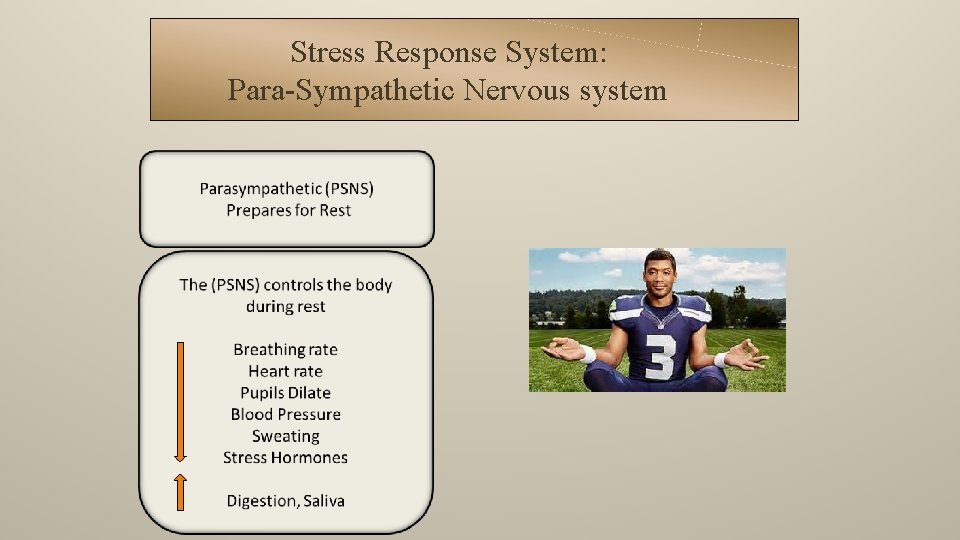
Stress Response System: Para-Sympathetic Nervous system
Under-Responding Delayed Response Ineffective effort Reduced concentration Reduced muscle strength Boredom/ Complacency Delayed/slow decision making
Over Responding Choking/freeze Panic Increased mistakes Reduced processing Over aggressiveness Death grip Blurred vision Disorganized/ impulsive decision making
Emotional Intelligence • Emotional intelligence is the ability to identify and manage your own emotions and the emotions of others. It is generally said to include three skills: emotional awareness; the ability to harness emotions and apply them to tasks like thinking and problem solving; and the ability to manage emotions, which includes regulating your own emotions and cheering up or calming down other people. • Emotional Booby-Traps • Body Language (reading others and awareness of how yours’ is being read by others)
PAUSE • Learning Self-restraint must be priority, will prevent ruin of relationships, destruction of jobs, opportunities, education, freedom • Pride, Vengence, Temper are bait for failure and elimination of freedoms • “We can neither think nor act to good purpose until the habit of self-restraint has become automatic. ” (Step Ten, AA)
Coping Thoughts • • • • - Mistakes happen; nobody is perfect - This situation won't last forever - I've survived many other painful experiences, I can survive this - Feelings are like waves that come and go - I can be anxious and still handle the situation - My feelings are making me uncomfortable right now, but that's okay - I am strong enough to handle what's happening - This is a chance to face my fears - I can make it through this - No one knows what the future holds - I can, I will, I am amazing - Thank you for. . . - I am good enough - Identify one thing pleasant in each day, ultimately working towards one pleasant thing in each experience
Mindfulness • • • An exercise in mindfulness: Choose Your Response!!! - Focus on your breathing - Focus on your emotion (past or present) - Notice physical feelings connected to your emotions - Name each emotion - Notice judgments about yourself, your emotions, and others; then let them go like leaves in a stream - Watch your emotion rise and fall like waves - Remind yourself you have a right to your feelings - Continue identifying and letting go of judgments - Finish with 3 to 5 minutes of mindful breathing
Changing Body Language • 70% of communication is non-verbal: if you wear a chip on your shoulder, project attitude, defensiveness, or hostility you undermine your interactions, and ultimately the results of the interactions.