
A Perspective on Electrical Communications EECE 341 Fall







- Slides: 90
A Perspective on Electrical Communications 포항공과대학교 전자전기공학과 부교수 조준호 EECE 341, Fall 2017
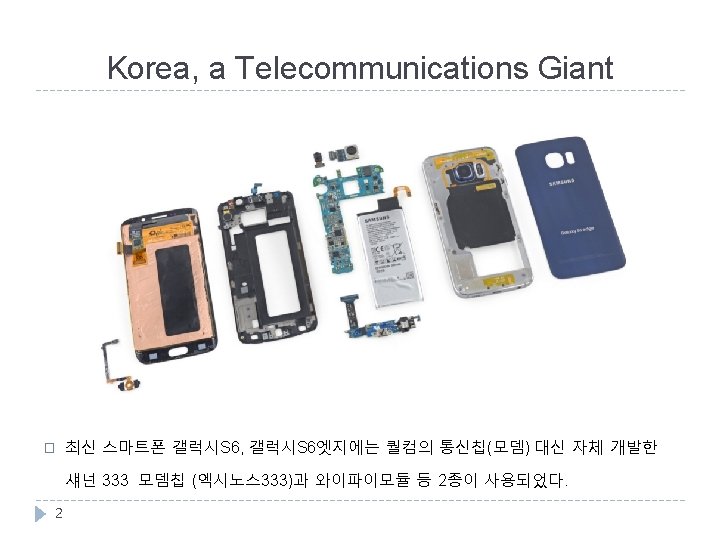
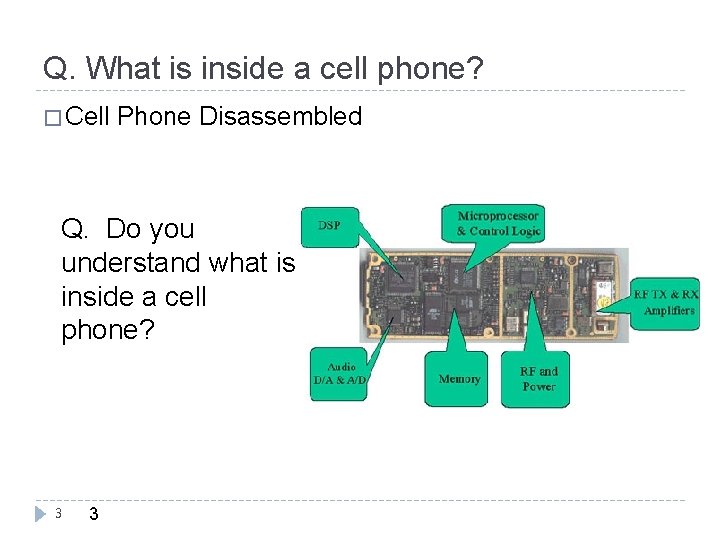
Q. What is inside a cell phone? � Cell Phone Disassembled Q. Do you understand what is inside a cell phone? 3 3
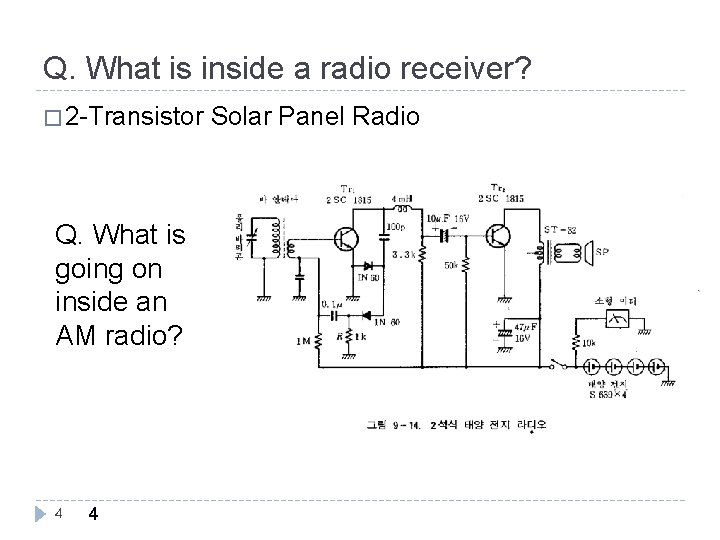
Q. What is inside a radio receiver? � 2 -Transistor Solar Panel Radio Q. What is going on inside an AM radio? 4 4
Communications: From Stentor To Bell 10
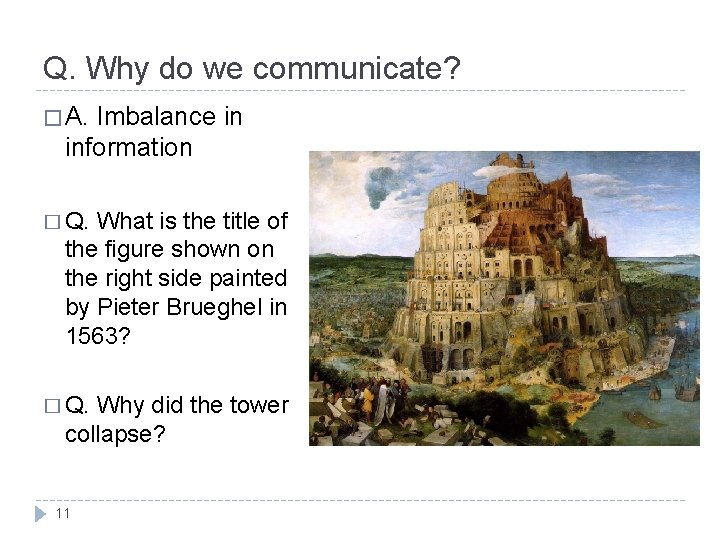
Q. Why do we communicate? � A. Imbalance in information � Q. What is the title of the figure shown on the right side painted by Pieter Brueghel in 1563? � Q. Why did the tower collapse? 11
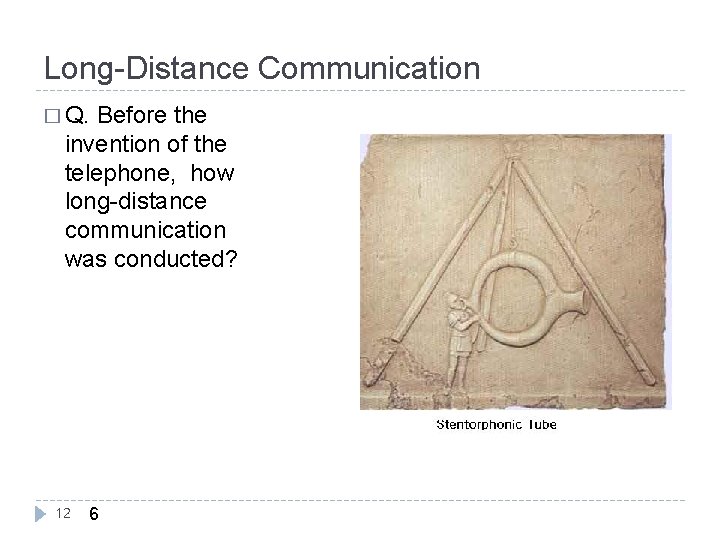
Long-Distance Communication � Q. Before the invention of the telephone, how long-distance communication was conducted? 12 6
Speech Communication � How do we generate speech sound? � Q. Using the figure shown on the right side, explain how we generate speech sound. 14
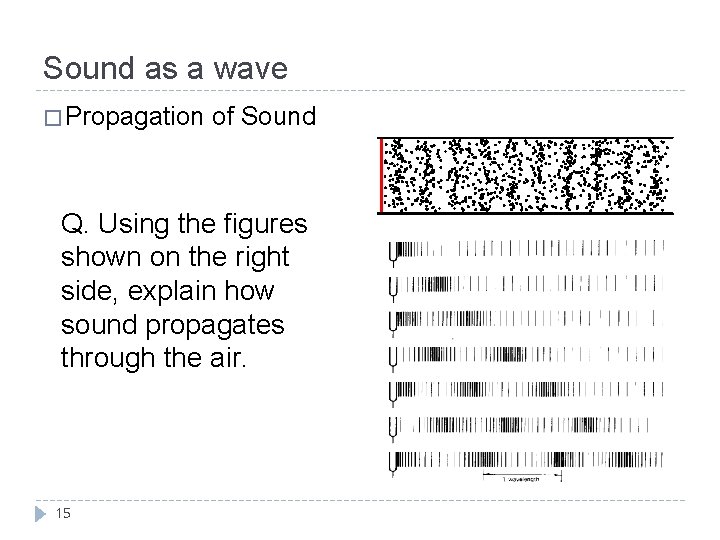
Sound as a wave � Propagation of Sound Q. Using the figures shown on the right side, explain how sound propagates through the air. 15
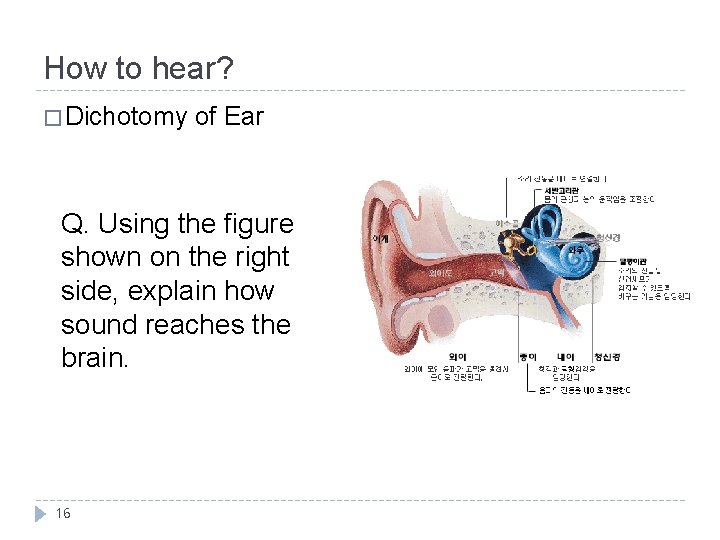
How to hear? � Dichotomy of Ear Q. Using the figure shown on the right side, explain how sound reaches the brain. 16
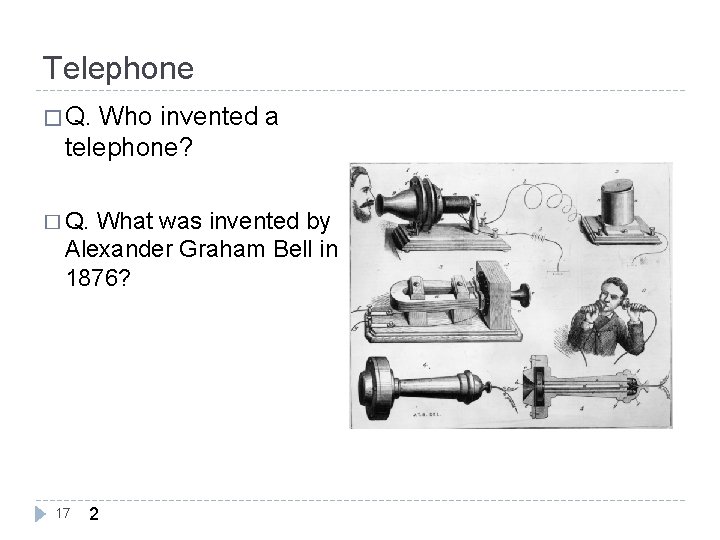
Telephone � Q. Who invented a telephone? � Q. What was invented by Alexander Graham Bell in 1876? 17 2
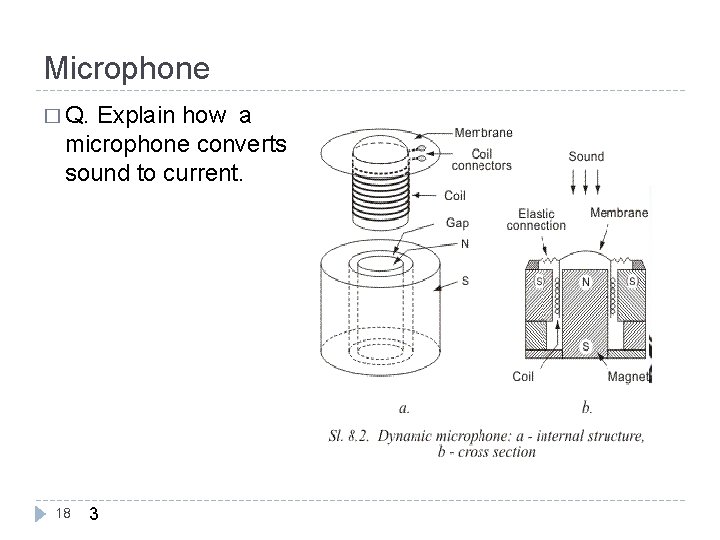
Microphone � Q. Explain how a microphone converts sound to current. 18 3
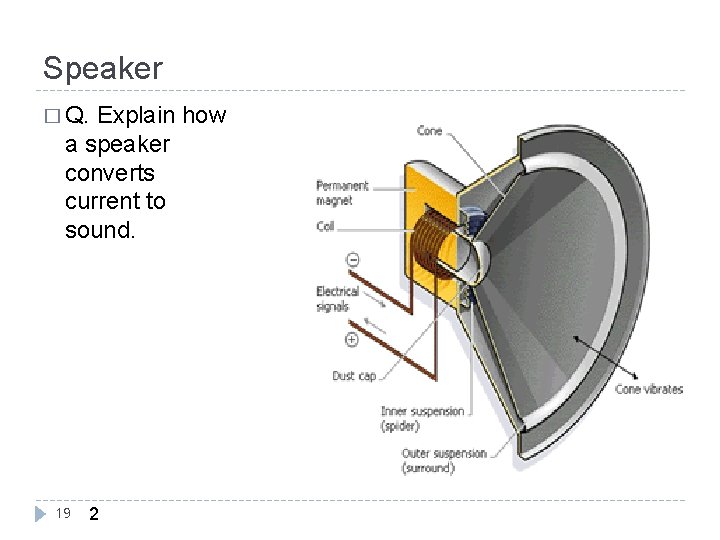
Speaker � Q. Explain how a speaker converts current to sound. 19 2
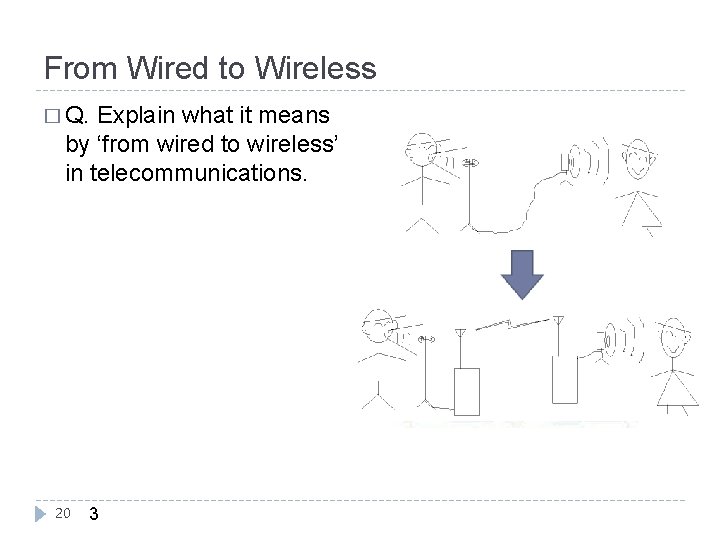
From Wired to Wireless � Q. Explain what it means by ‘from wired to wireless’ in telecommunications. 20 3
Communications: Era of Radio 21
Q. Who invented a smartphone? �Q. Smart Phone = ( )+( ) �A. Computer + Cellular Phone 22 2
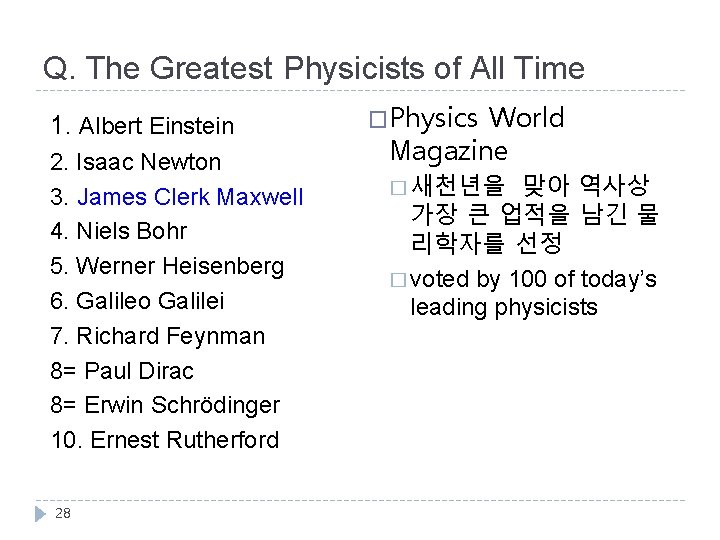
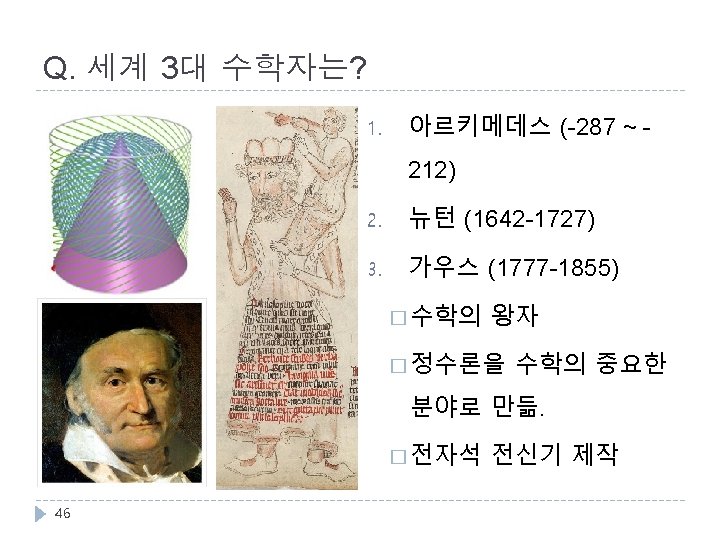
Q. The Greatest Physicists of All Time 1. Albert Einstein 2. Isaac Newton 3. James Clerk Maxwell 4. Niels Bohr 5. Werner Heisenberg 6. Galileo Galilei 7. Richard Feynman 8= Paul Dirac 8= Erwin Schrödinger 10. Ernest Rutherford 28 �Physics World Magazine � 새천년을 맞아 역사상 가장 큰 업적을 남긴 물 리학자를 선정 � voted by 100 of today’s leading physicists
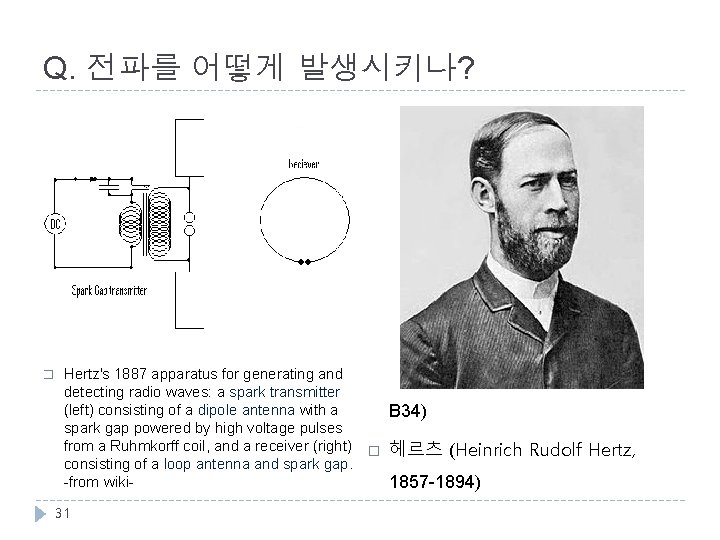
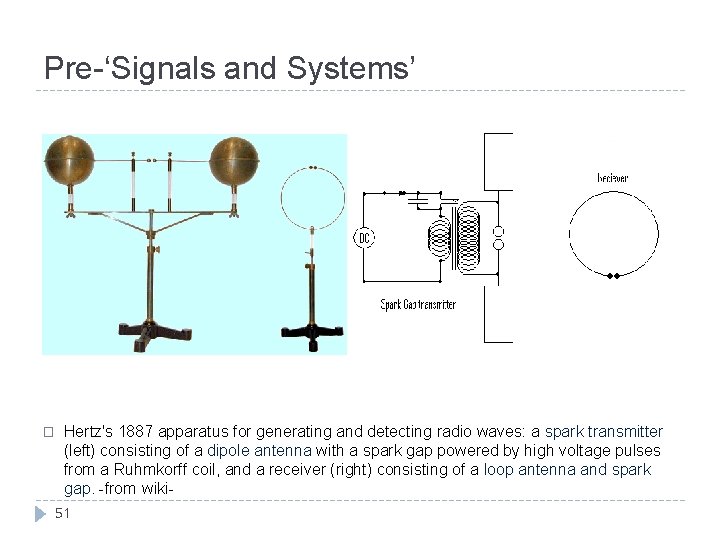
Q. 전파를 어떻게 발생시키나? � 그의 난해한 논문 따위야 아무래도 좋다. 전자기파라는 것이 있어도 이 상할 것이 없다. 필요한 것은 일단 전자기파를 발생시키는 것이다. 맥 스웰의 이론 따위는 전자기파를 실 제로 발생시키는 목적에는 직접적 으로는 아무 도움이 안되지 않느냐. 이론 따위야 이해하지 못하더라도 � Hertz's 1887 apparatus for generating and detecting radio waves: a spark transmitter (left) consisting of a dipole antenna with a spark gap powered by high voltage pulses from a Ruhmkorff coil, and a receiver (right) � consisting of a loop antenna and spark gap. -from wiki 31 조금도 개의할 바 없다. (Bluebacks B 34) 헤르츠 (Heinrich Rudolf Hertz, 1857 -1894)
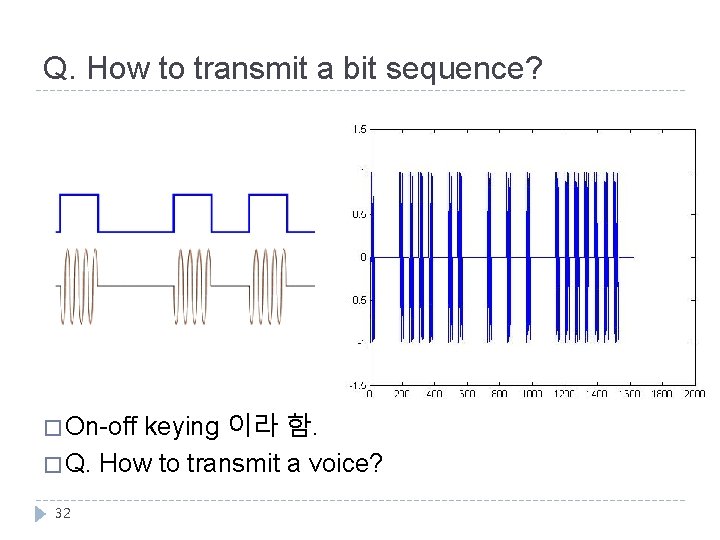
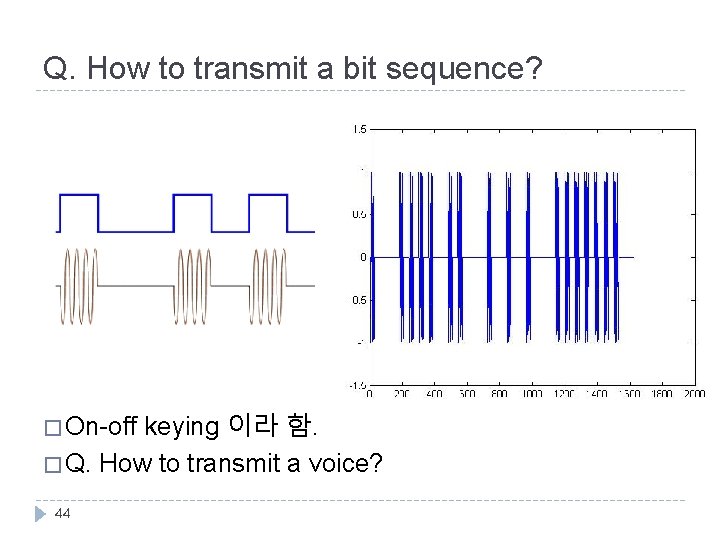
Q. How to transmit a bit sequence? � On-off keying 이라 함. � Q. How to transmit a voice? 32
33
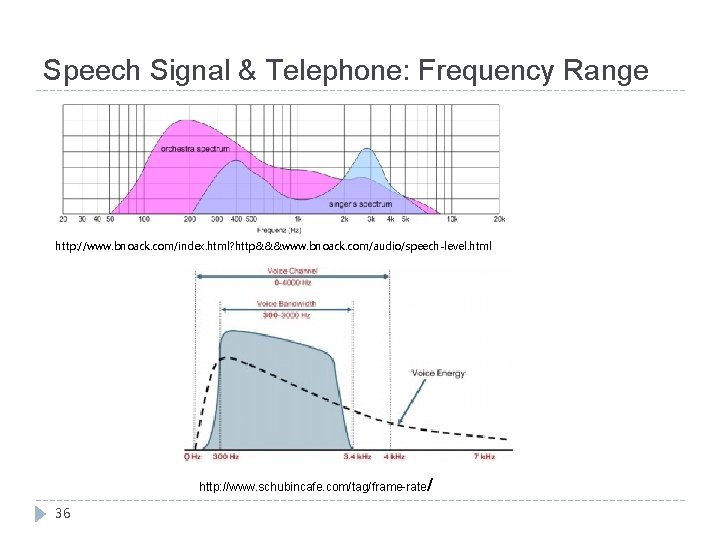
Speech Signal & Telephone: Frequency Range http: //www. bnoack. com/index. html? http&&&www. bnoack. com/audio/speech-level. html http: //www. schubincafe. com/tag/frame-rate/ 36
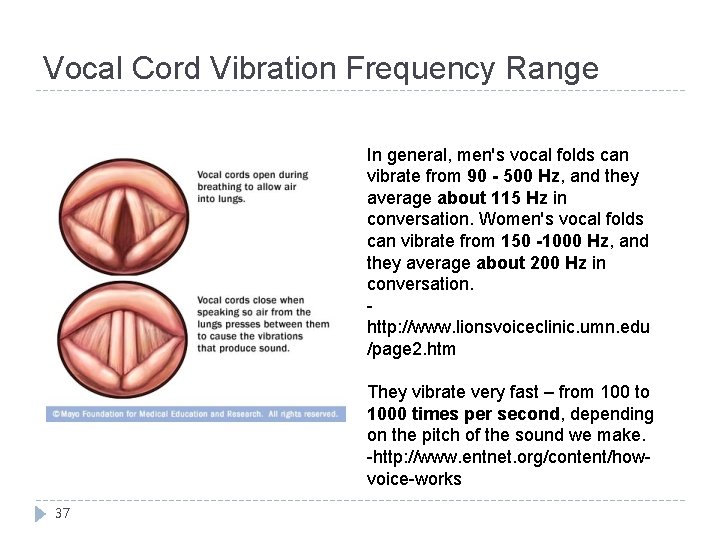
Vocal Cord Vibration Frequency Range In general, men's vocal folds can vibrate from 90 - 500 Hz, and they average about 115 Hz in conversation. Women's vocal folds can vibrate from 150 -1000 Hz, and they average about 200 Hz in conversation. http: //www. lionsvoiceclinic. umn. edu /page 2. htm They vibrate very fast – from 100 to 1000 times per second, depending on the pitch of the sound we make. -http: //www. entnet. org/content/howvoice-works 37
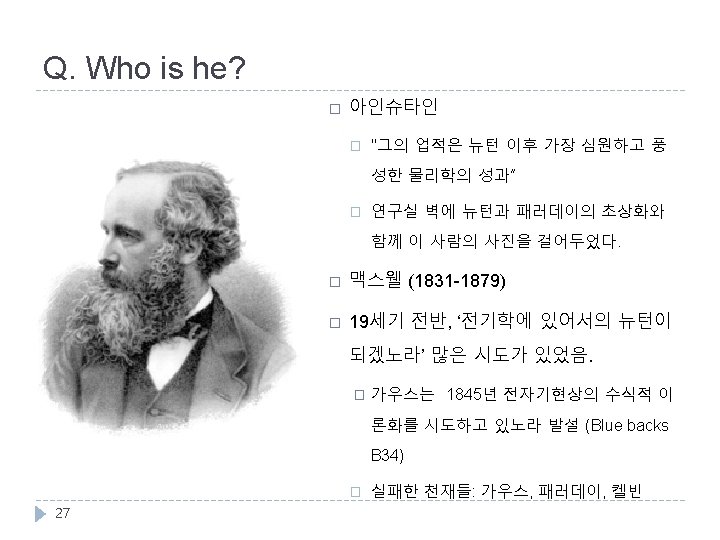
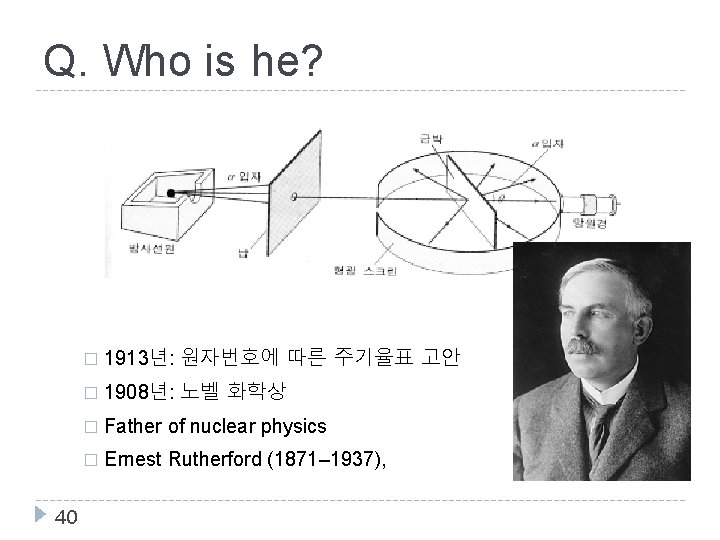
Q. Who is he? 40 � 1913년: 원자번호에 따른 주기율표 고안 � 1908년: 노벨 화학상 � Father of nuclear physics � Ernest Rutherford (1871– 1937),
Q. How to transmit a bit sequence? � On-off keying 이라 함. � Q. How to transmit a voice? 44
45
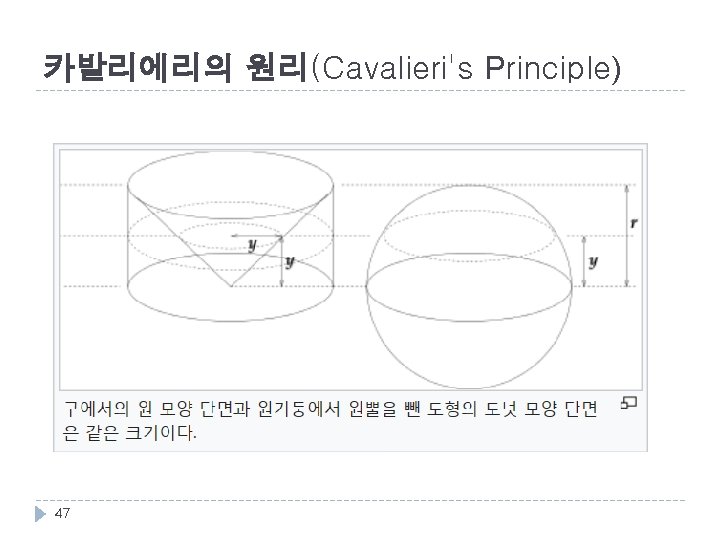
카발리에리의 원리(Cavalieri's Principle) 47
Pre-‘Signals and Systems’ � Hertz's 1887 apparatus for generating and detecting radio waves: a spark transmitter (left) consisting of a dipole antenna with a spark gap powered by high voltage pulses from a Ruhmkorff coil, and a receiver (right) consisting of a loop antenna and spark gap. -from wiki 51
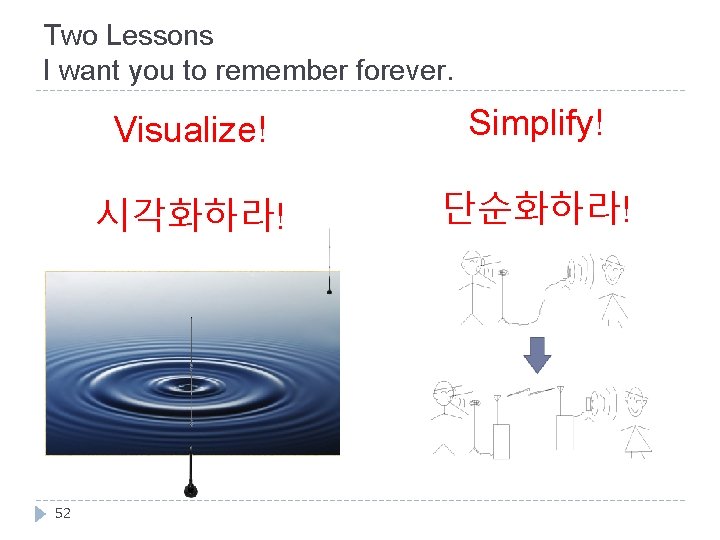
Two Lessons I want you to remember forever. Visualize! 시각화하라! 52 Simplify! 단순화하라!
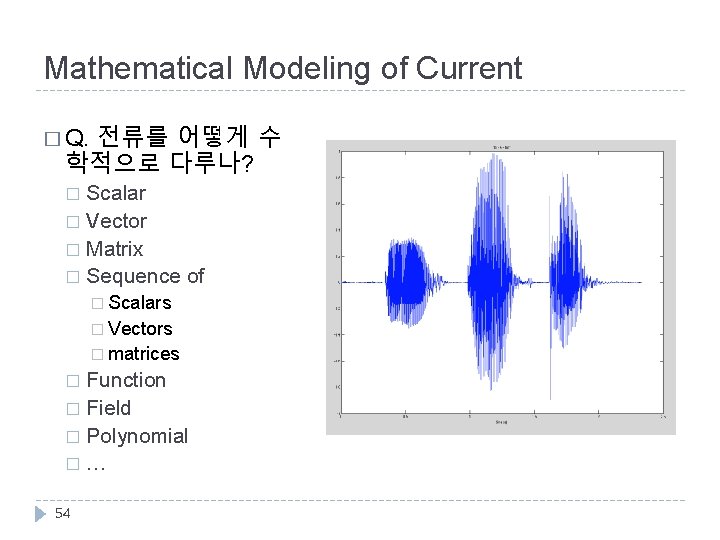
Mathematical Modeling of Current 어떻게 수 학적으로 다루나? � Q. 전류를 Scalar � Vector � Matrix � Sequence of � � Scalars � Vectors � matrices Function � Field � Polynomial �… � 54
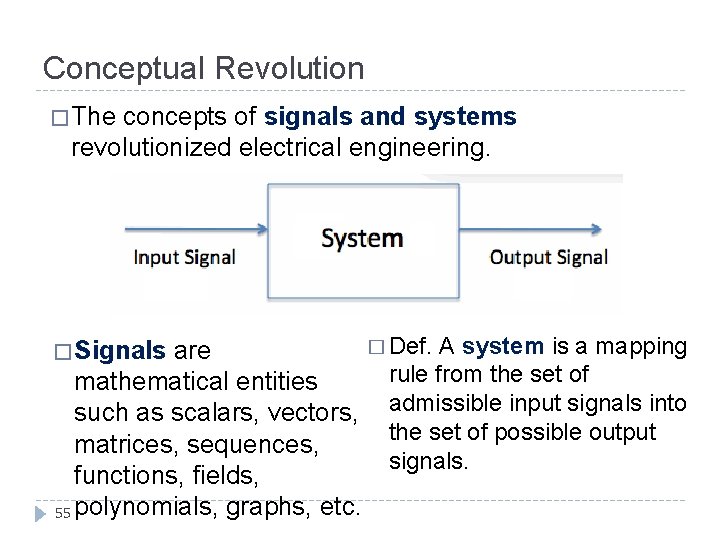
Conceptual Revolution � The concepts of signals and systems revolutionized electrical engineering. � Signals are � Def. A system is a mapping mathematical entities such as scalars, vectors, matrices, sequences, functions, fields, 55 polynomials, graphs, etc. rule from the set of admissible input signals into the set of possible output signals.
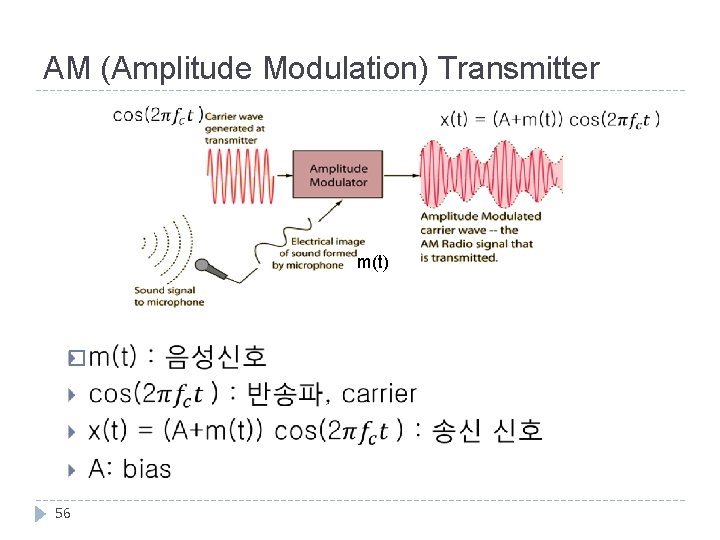
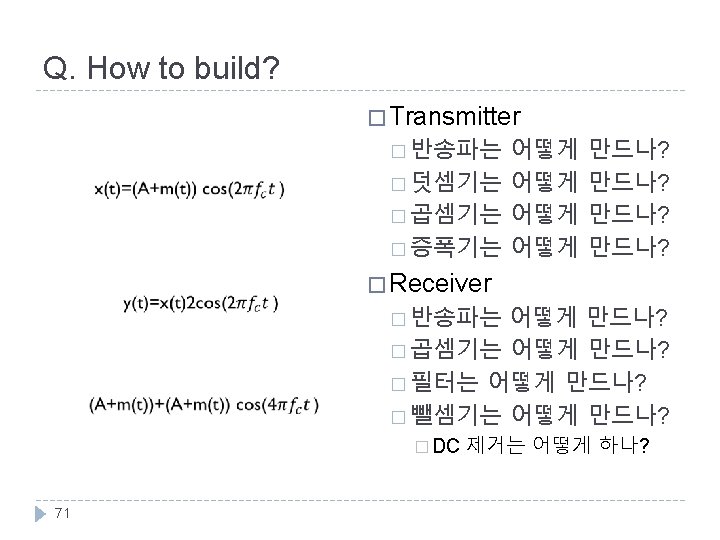
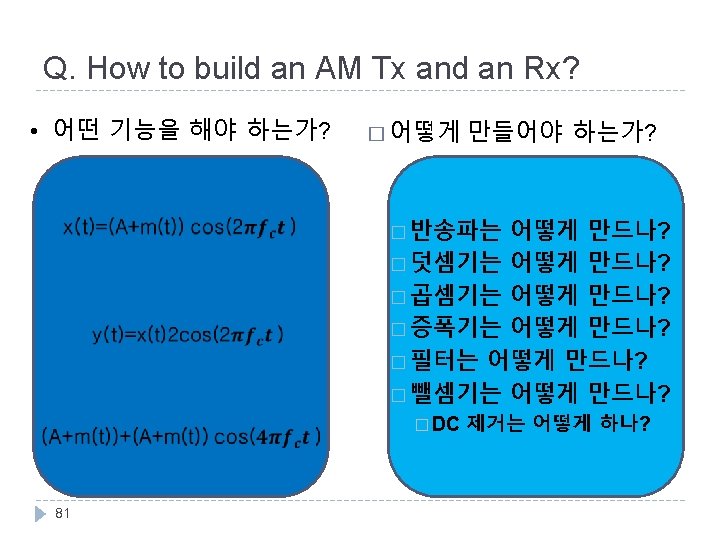
AM (Amplitude Modulation) Transmitter m(t) � 56
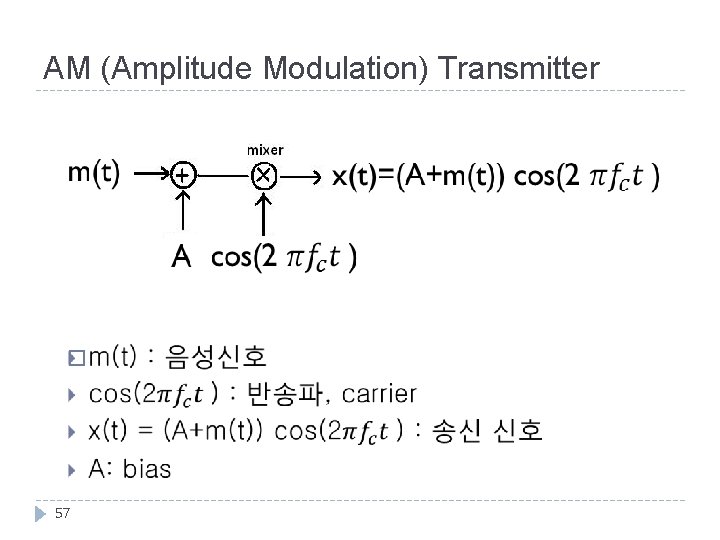
AM (Amplitude Modulation) Transmitter m(t) � 57
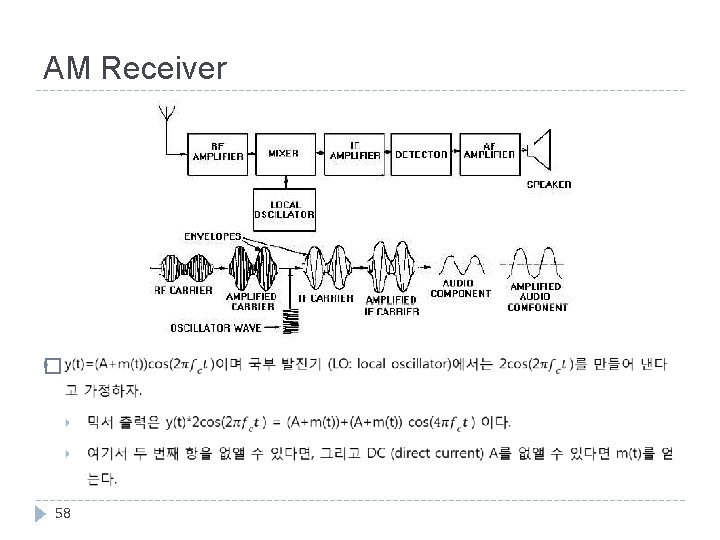
AM Receiver � 58
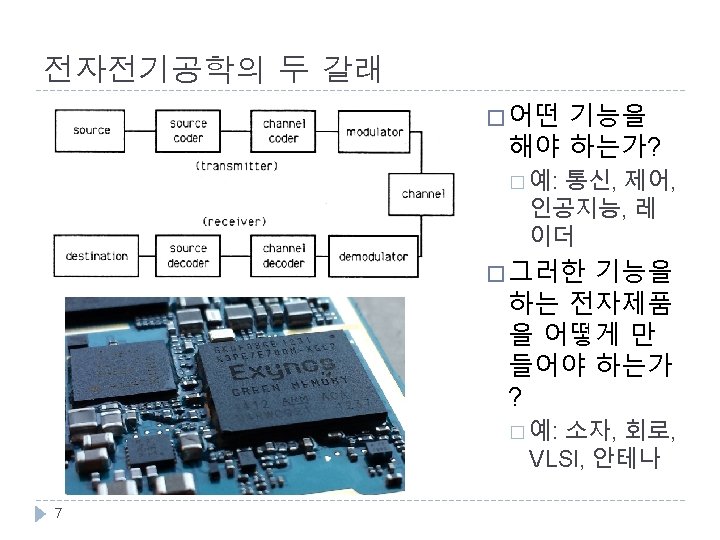
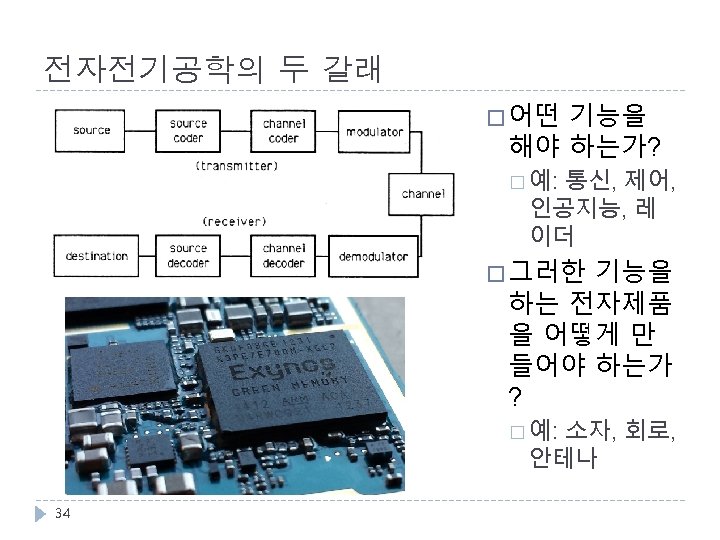
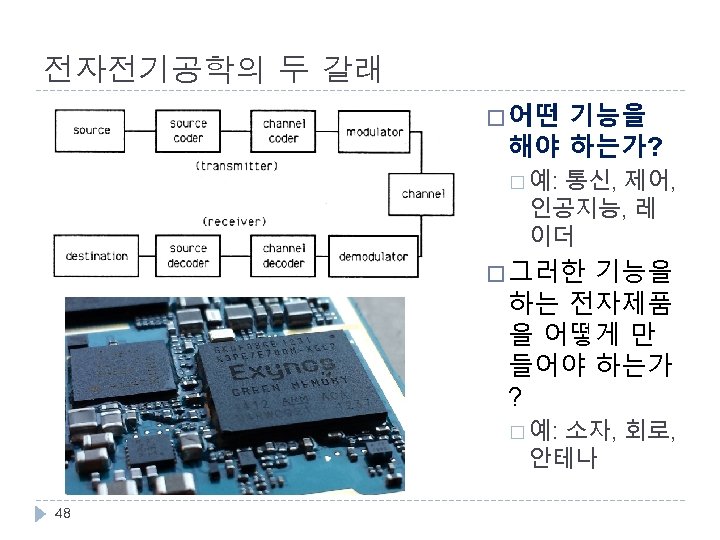
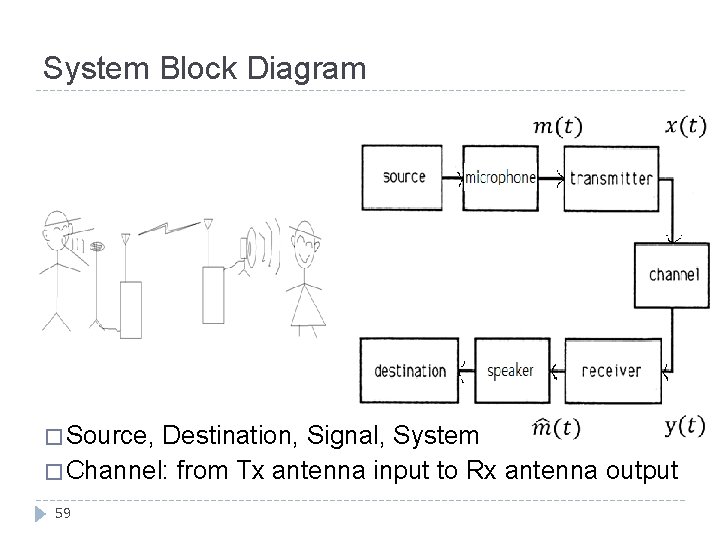
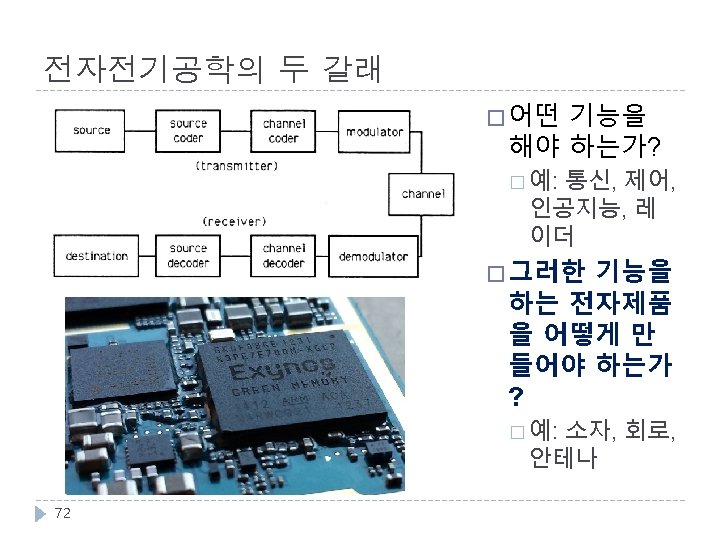
System Block Diagram � Source, Destination, Signal, System � Channel: from Tx antenna input to Rx antenna output 59
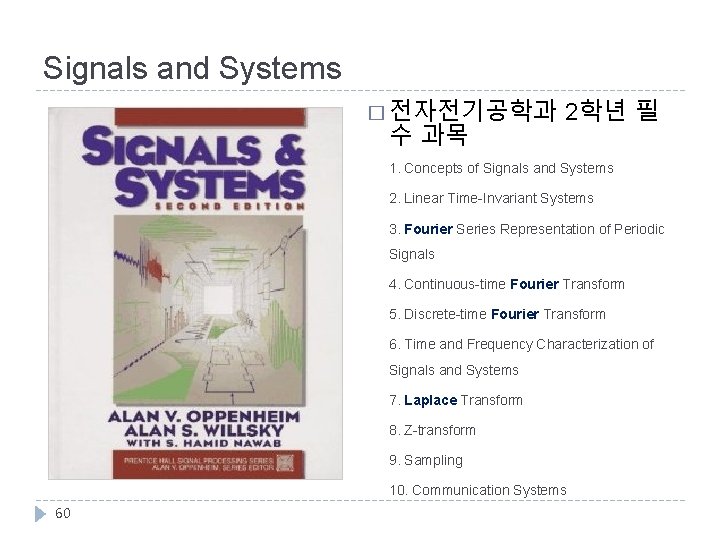
Signals and Systems � 전자전기공학과 수 과목 2학년 필 1. Concepts of Signals and Systems 2. Linear Time-Invariant Systems 3. Fourier Series Representation of Periodic Signals 4. Continuous-time Fourier Transform 5. Discrete-time Fourier Transform 6. Time and Frequency Characterization of Signals and Systems 7. Laplace Transform 8. Z-transform 9. Sampling 10. Communication Systems 60
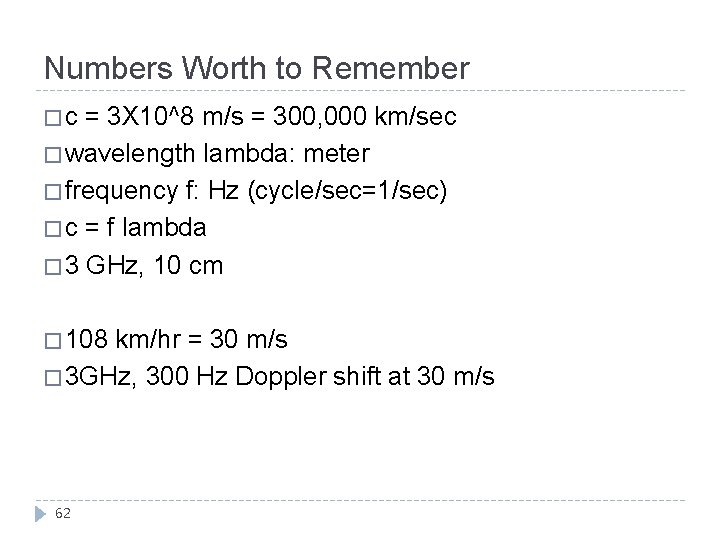
Numbers Worth to Remember � c = 3 X 10^8 m/s = 300, 000 km/sec � wavelength lambda: meter � frequency f: Hz (cycle/sec=1/sec) � c = f lambda � 3 GHz, 10 cm � 108 km/hr = 30 m/s � 3 GHz, 300 Hz Doppler shift at 30 m/s 62
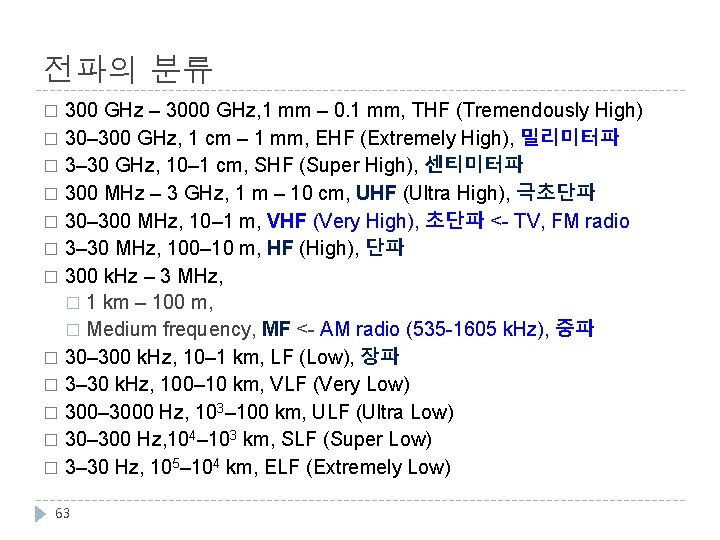
전파의 분류 300 GHz – 3000 GHz, 1 mm – 0. 1 mm, THF (Tremendously High) � 30– 300 GHz, 1 cm – 1 mm, EHF (Extremely High), 밀리미터파 � 3– 30 GHz, 10– 1 cm, SHF (Super High), 센티미터파 � 300 MHz – 3 GHz, 1 m – 10 cm, UHF (Ultra High), 극초단파 � 30– 300 MHz, 10– 1 m, VHF (Very High), 초단파 <- TV, FM radio � 3– 30 MHz, 100– 10 m, HF (High), 단파 � 300 k. Hz – 3 MHz, � 1 km – 100 m, � Medium frequency, MF <- AM radio (535 -1605 k. Hz), 중파 � 30– 300 k. Hz, 10– 1 km, LF (Low), 장파 � 3– 30 k. Hz, 100– 10 km, VLF (Very Low) � 300– 3000 Hz, 103– 100 km, ULF (Ultra Low) � 30– 300 Hz, 104– 103 km, SLF (Super Low) � 3– 30 Hz, 105– 104 km, ELF (Extremely Low) � 63
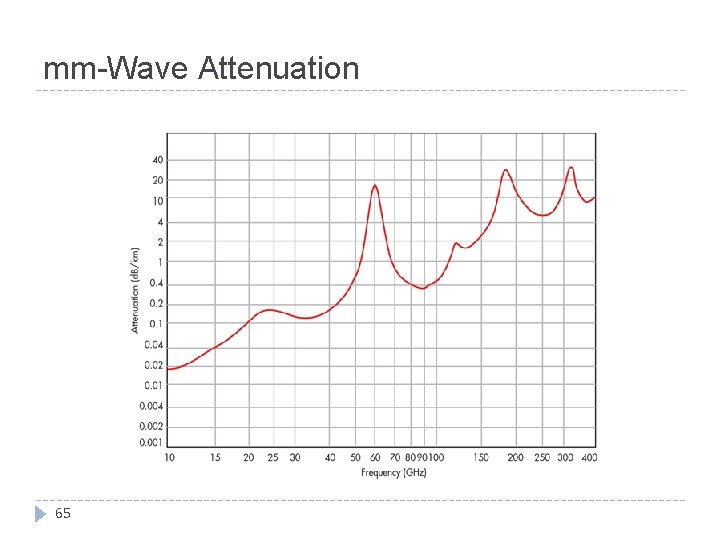
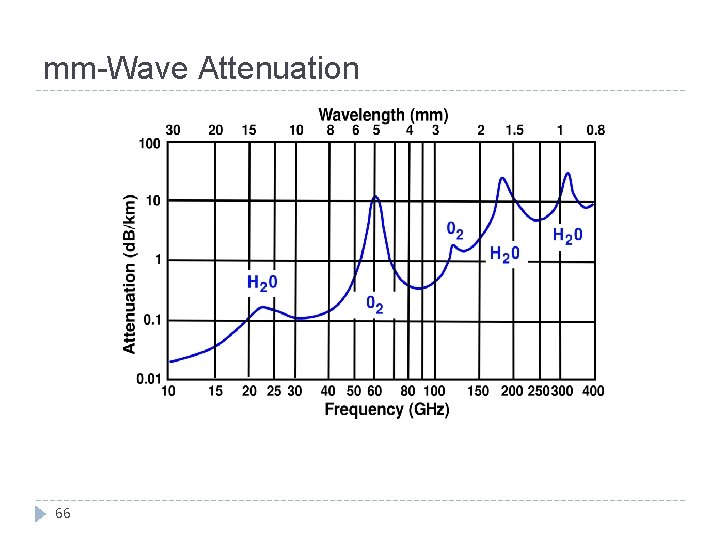
mm-Wave Attenuation � What and Why? 64
mm-Wave Attenuation 65
mm-Wave Attenuation 66
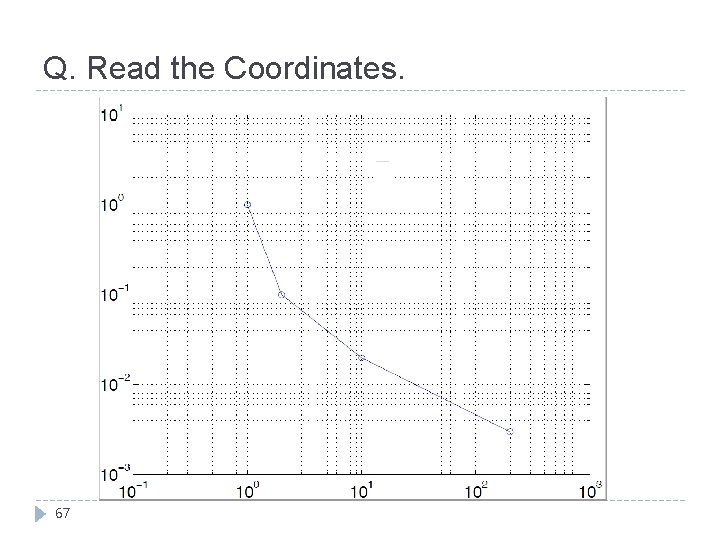
Q. Read the Coordinates. 67
68
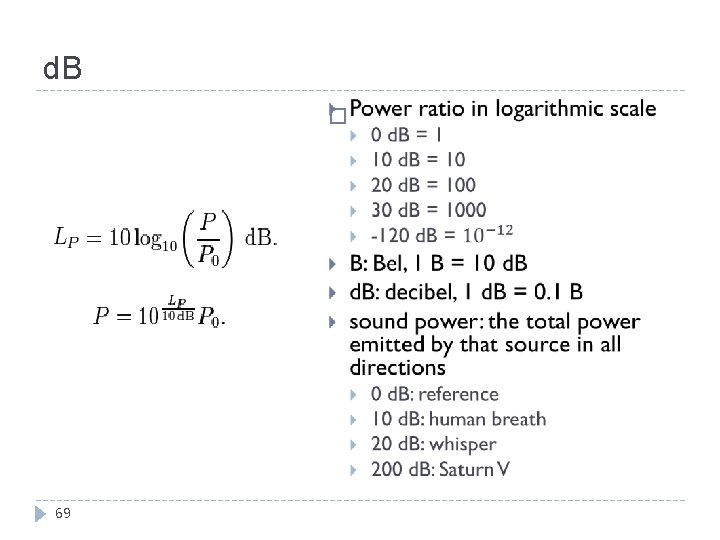
d. B � 69
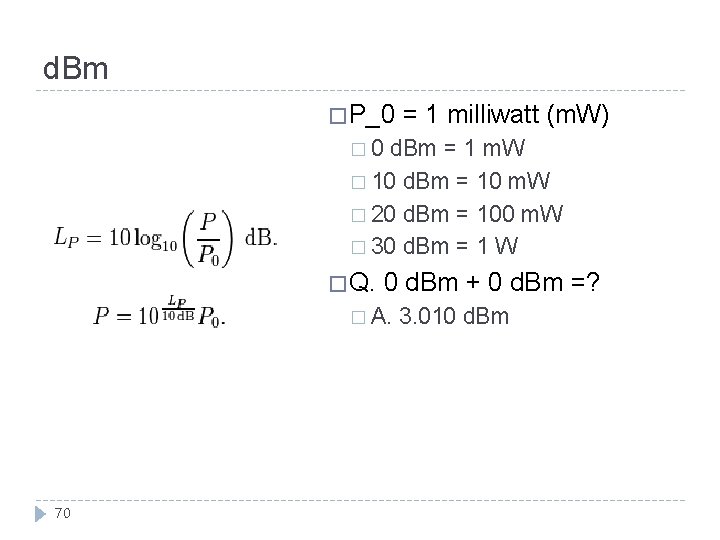
d. Bm � P_0 = 1 milliwatt (m. W) � 0 d. Bm = 1 m. W � 10 d. Bm = 10 m. W � 20 d. Bm = 100 m. W � 30 d. Bm = 1 W � Q. 0 d. Bm + 0 d. Bm =? � A. 3. 010 d. Bm 70
A Basic Building Block � Existence � Uniqueness 75
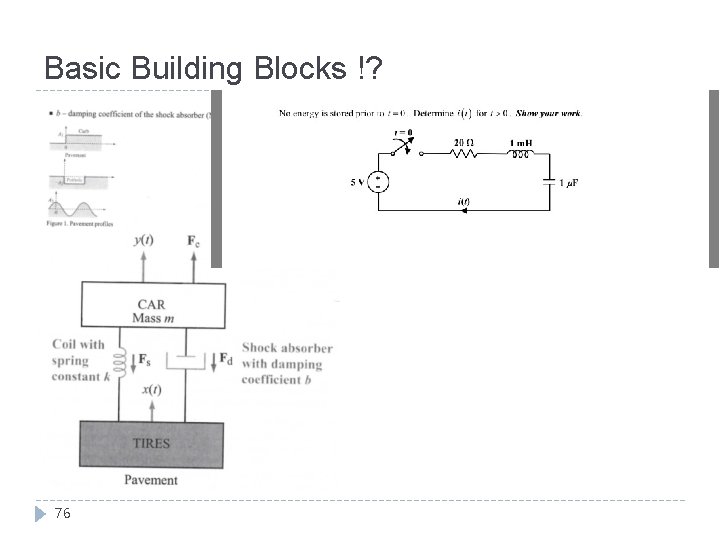
Basic Building Blocks !? 76
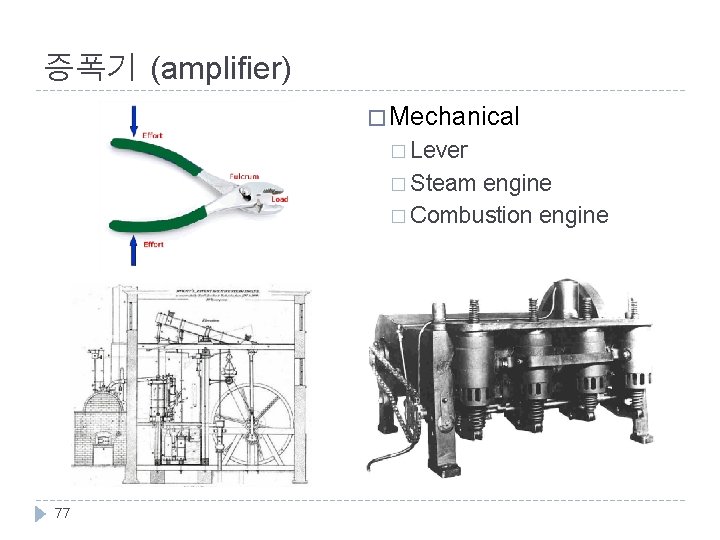
증폭기 (amplifier) � Mechanical � Lever � Steam engine � Combustion engine 77
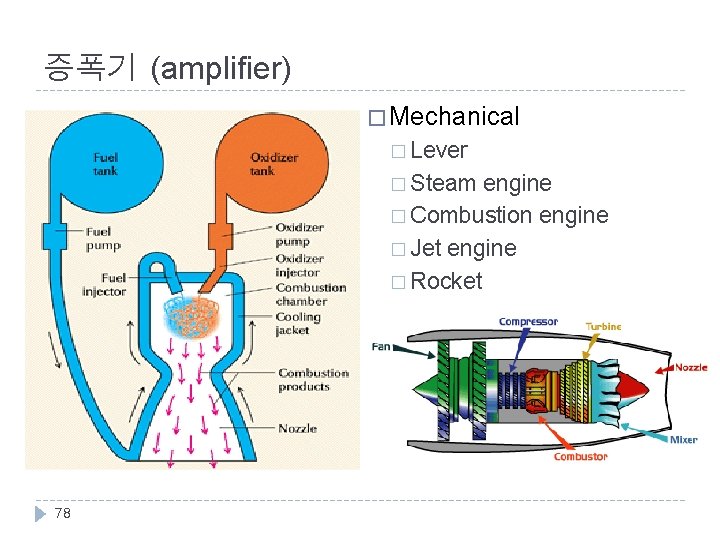
증폭기 (amplifier) � Mechanical � Lever � Steam engine � Combustion engine � Jet engine � Rocket 78
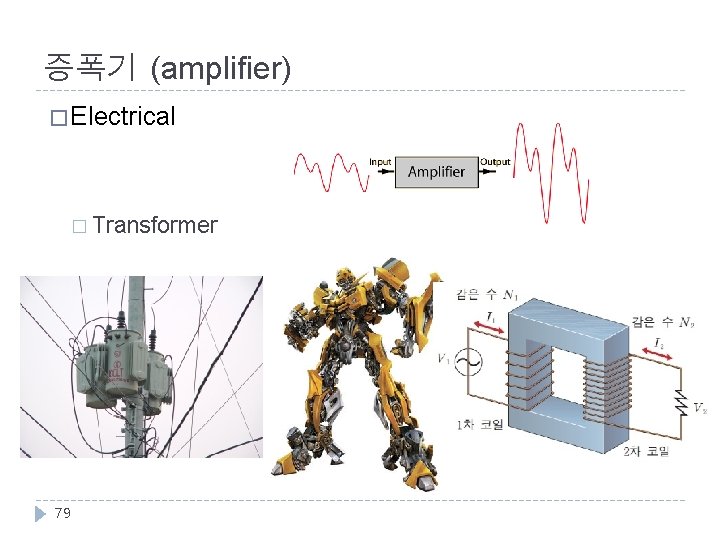
증폭기 (amplifier) � Electrical � Transformer 79
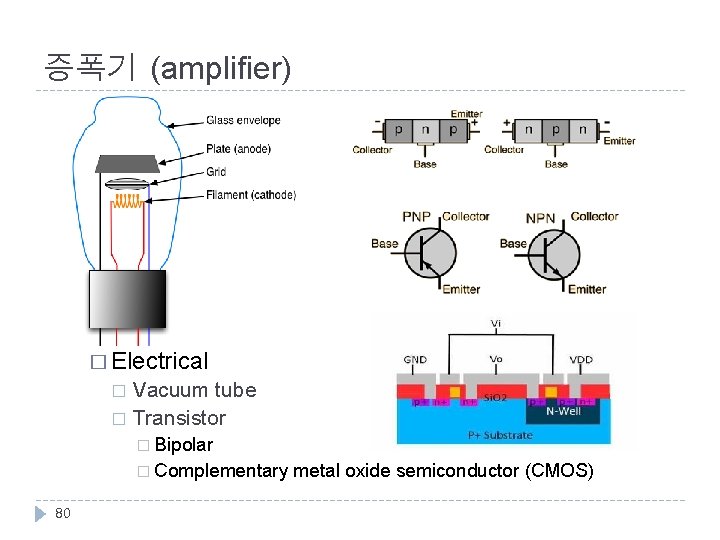
증폭기 (amplifier) � Electrical Vacuum tube � Transistor � � Bipolar � Complementary metal oxide semiconductor (CMOS) 80
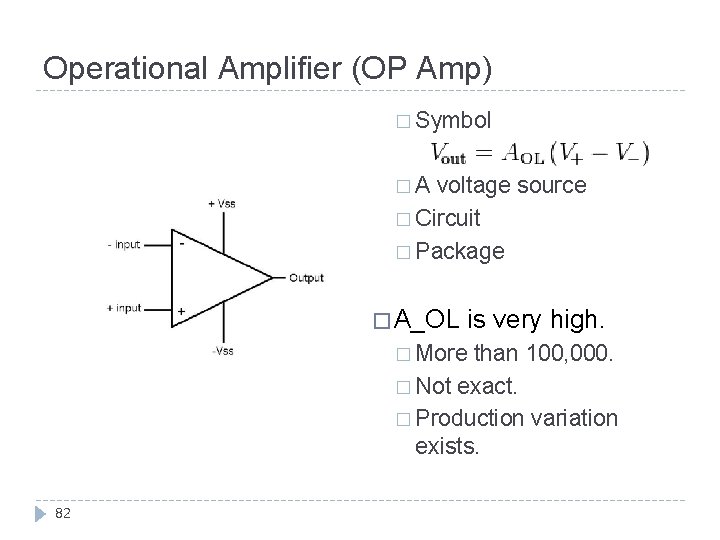
Operational Amplifier (OP Amp) � Symbol � A voltage source � Circuit � Package � A_OL is very high. � More than 100, 000. � Not exact. � Production variation exists. 82
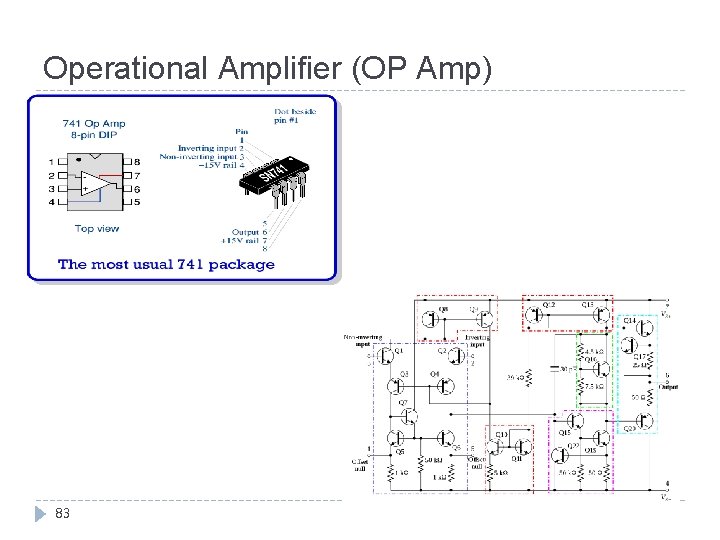
Operational Amplifier (OP Amp) 83
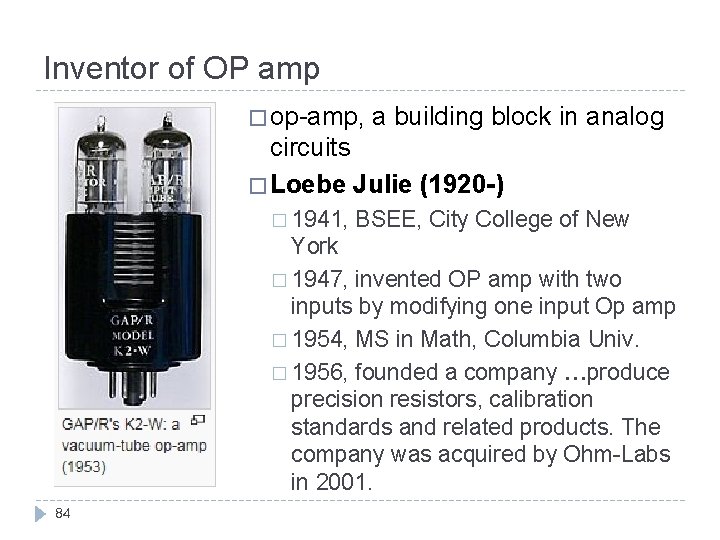
Inventor of OP amp � op-amp, a building block in analog circuits � Loebe Julie (1920 -) � 1941, BSEE, City College of New York � 1947, invented OP amp with two inputs by modifying one input Op amp � 1954, MS in Math, Columbia Univ. � 1956, founded a company …produce precision resistors, calibration standards and related products. The company was acquired by Ohm-Labs in 2001. 84
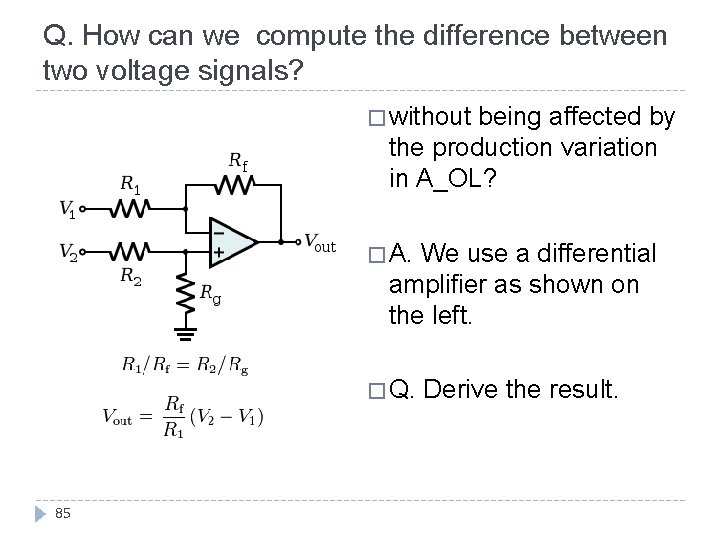
Q. How can we compute the difference between two voltage signals? � without being affected by the production variation in A_OL? � A. We use a differential amplifier as shown on the left. � Q. Derive the result. 85
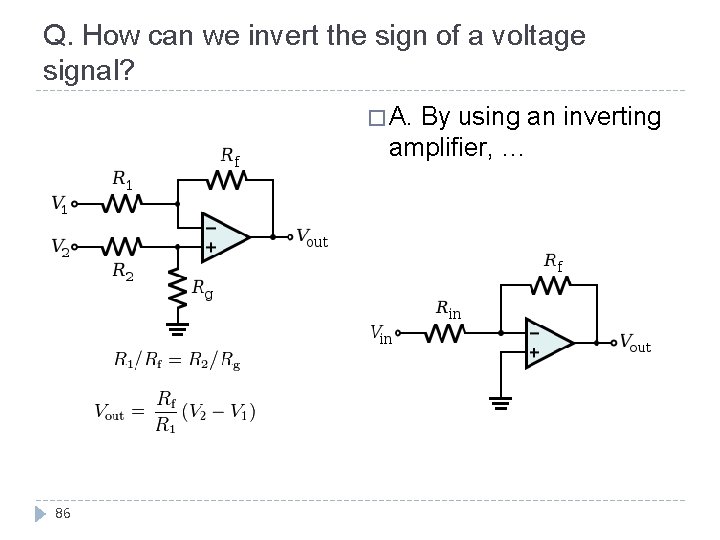
Q. How can we invert the sign of a voltage signal? � A. By using an inverting amplifier, … 86
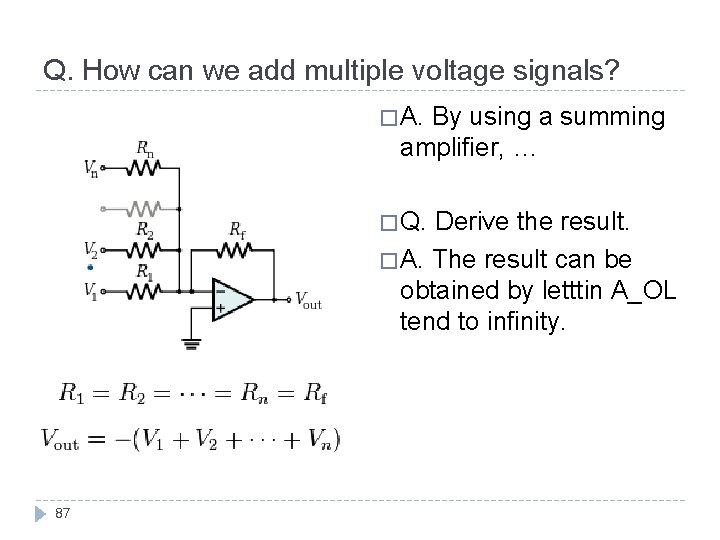
Q. How can we add multiple voltage signals? � A. By using a summing amplifier, … � Q. Derive the result. � A. The result can be obtained by letttin A_OL tend to infinity. 87
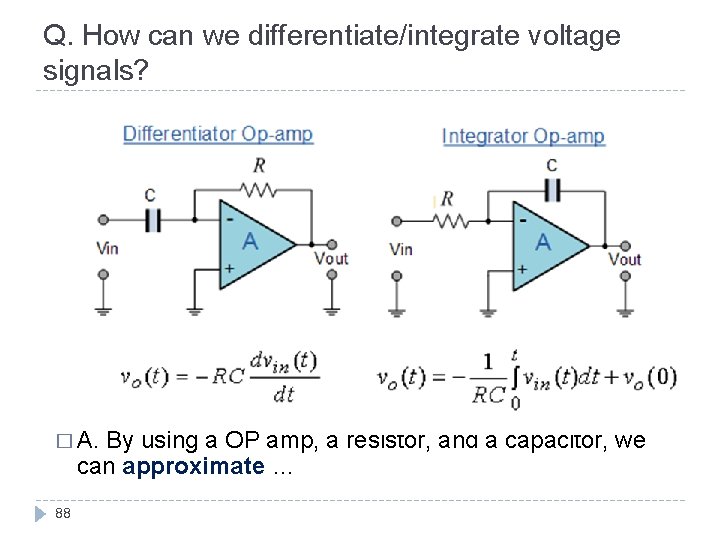
Q. How can we differentiate/integrate voltage signals? � A. By using a OP amp, a resistor, and a capacitor, we can approximate … 88
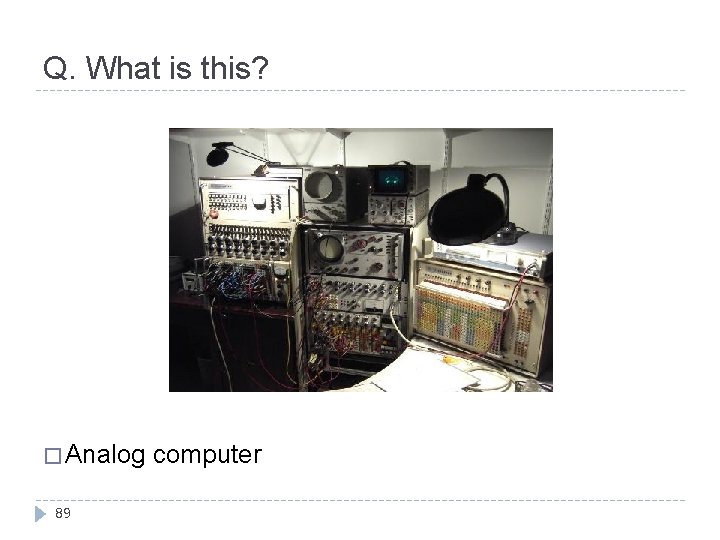
Q. What is this? � Analog computer 89
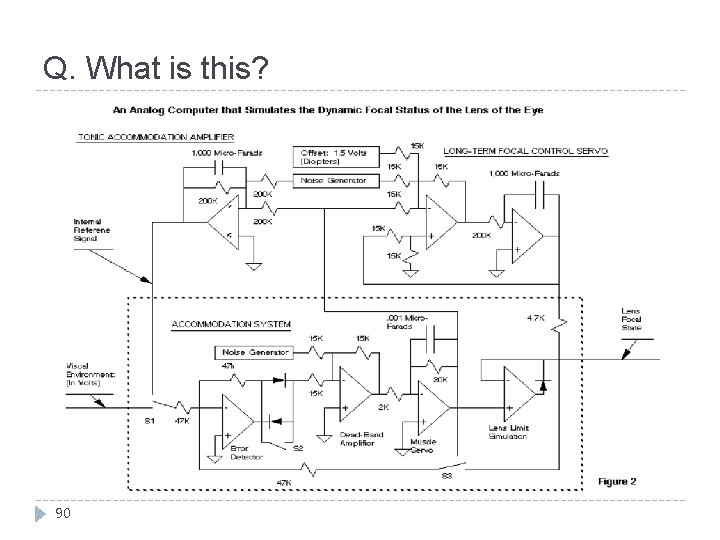
Q. What is this? 90