
A Palliative Approach to Care The introductory end
- Slides: 19
A Palliative Approach to Care The introductory end of life care training program
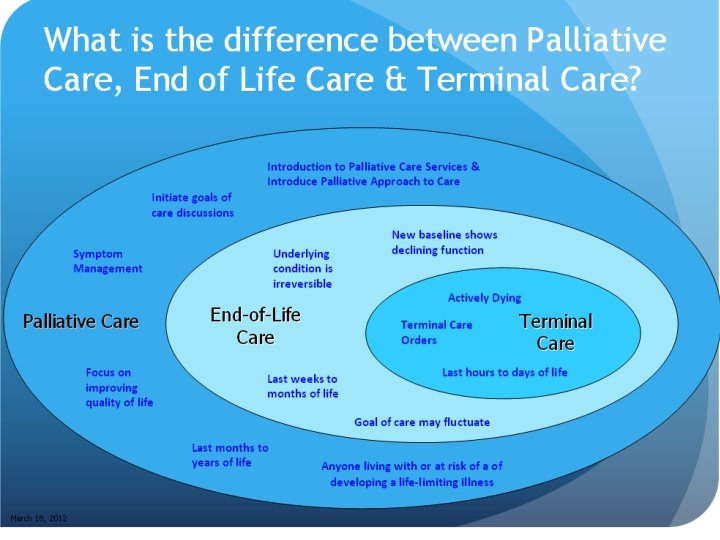
Introduction We are all born, we experience, we die All between is living Death is last challenge of life – part of life Learning Objectives Understand Palliative Care and when to implement. Understand how to communicate empathy and respond to challenging conversations. Understand Goals of care How to care for yourself
A Palliative approach to care? Not just for cancer Extends to all chronic diseases Frailty Death affects carers and professionals, and not only patients and their families. Not what we do but how we do it
World Health organisation (WHO) Palliative care is: “. . . an approach which improves the quality of life of patients and their families facing life-threatening illness, through the prevention, assessment and treatment of pain and other physical, psychosocial and spiritual problems”.
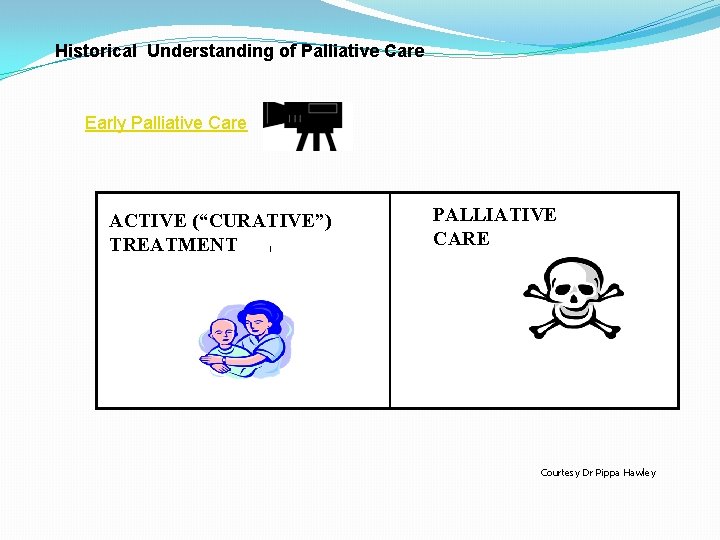
Historical Understanding of Palliative Care Early Palliative Care ACTIVE (“CURATIVE”) TREATMENT PALLIATIVE CARE Courtesy Dr Pippa Hawley
Time to plan �One of the biggest complaints in healthcare is that family/carers recognise someone is dying but staff don’t communicate this. �This highlights the importance of recognising the unpredictability but alongside this starting these conversations early so that people have time to plan.
False Hope is not a plan, but hope is our plan. We imagine that we can wait until Drs say there is nothing more they can do – rarely is there nothing more Drs can do. Hope for the best- plan for the worst
3 Step approach Identify Discuss Plan
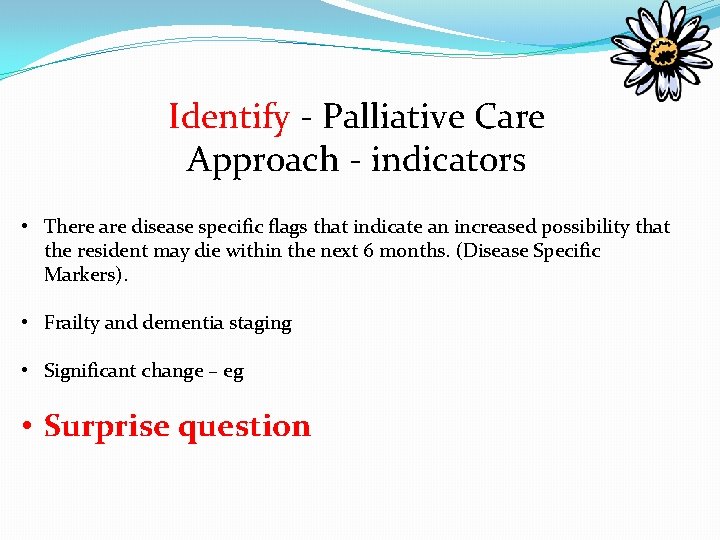
Identify - Palliative Care Approach - indicators • There are disease specific flags that indicate an increased possibility that the resident may die within the next 6 months. (Disease Specific Markers). • Frailty and dementia staging • Significant change – eg • Surprise question
Age matters – It does not identify Consider that biological age, and chronological age can be very different. Young people with chronic conditions will be affected by limitation of life span and quality of life. Some older people live extremely well to a great age.
Cleveland clinic video Empathy: The Human Connection to Patient Care
Discuss - Compassionate honesty Providing information for the patient, family and loved ones can help prepare them for death. Allows patients and families the opportunity to discuss any worries they may have about any aspect of the illness or dying process. Allows them to understand the need to review the appropriateness of current medical and nursing interventions – Goals of Care Address concerns about the process of dying; for example, what to expect as they approach their final hours. Address concerns about death itself, such as not being here any more, unfinished business, leaving family behind.
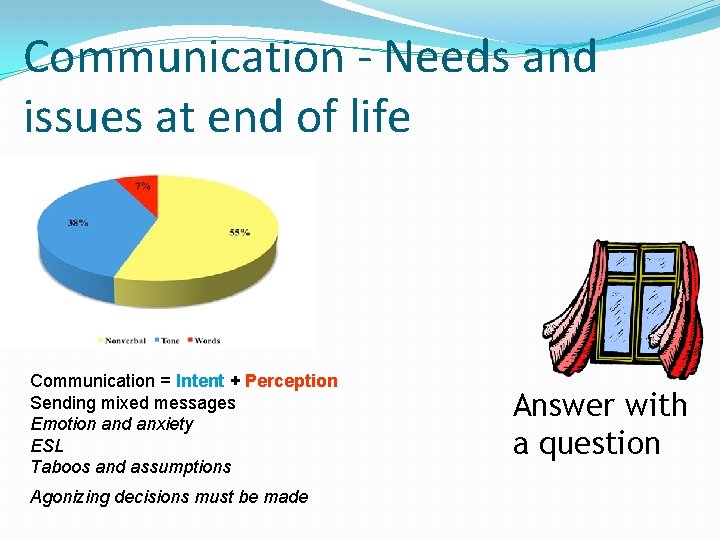
Communication - Needs and issues at end of life Communication = Intent + Perception Sending mixed messages Emotion and anxiety ESL Taboos and assumptions Agonizing decisions must be made Answer with a question
Communication with challenging Families There is always a reason for challenging behaviour. Your role is to find out why Reactions to threat/loss Multiple losses Guilt Anticipatory grief Fear � Communicate empathy and support � Convey respect and understanding
Curiosity What does the resident care about? What is important to them? What has the resident been forced to forfeit? – freedom? (Home is where your own priorities are important, how you spend your time, share your space, manage your possessions. ) What are their fears/worries? What are unacceptable outcomes?
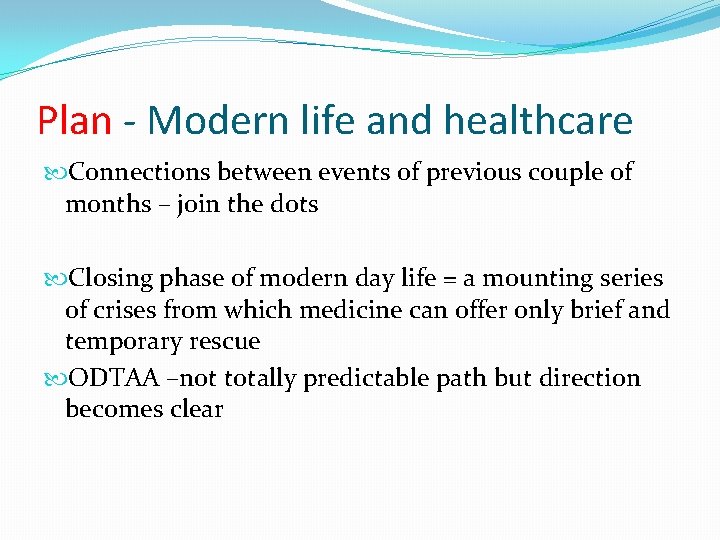
Plan - Modern life and healthcare Connections between events of previous couple of months – join the dots Closing phase of modern day life = a mounting series of crises from which medicine can offer only brief and temporary rescue ODTAA –not totally predictable path but direction becomes clear
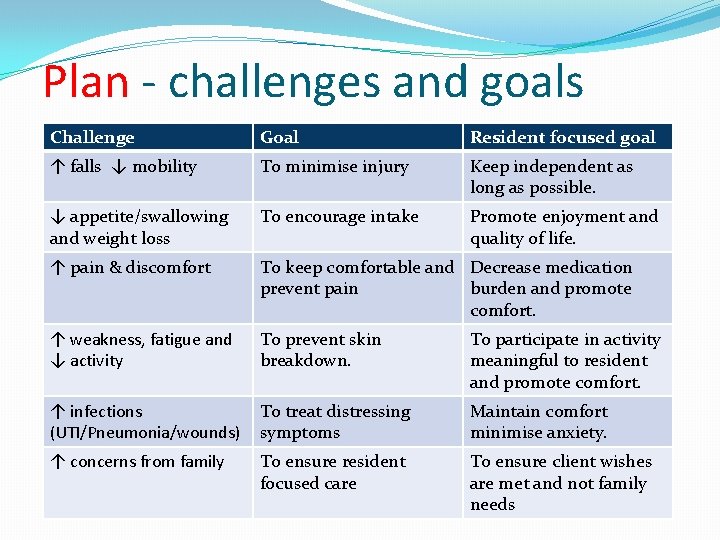
Plan - challenges and goals Challenge Goal Resident focused goal ↑ falls ↓ mobility To minimise injury Keep independent as long as possible. ↓ appetite/swallowing and weight loss To encourage intake Promote enjoyment and quality of life. ↑ pain & discomfort To keep comfortable and Decrease medication prevent pain burden and promote comfort. ↑ weakness, fatigue and ↓ activity To prevent skin breakdown. To participate in activity meaningful to resident and promote comfort. ↑ infections (UTI/Pneumonia/wounds) To treat distressing symptoms Maintain comfort minimise anxiety. ↑ concerns from family To ensure resident focused care To ensure client wishes are met and not family needs
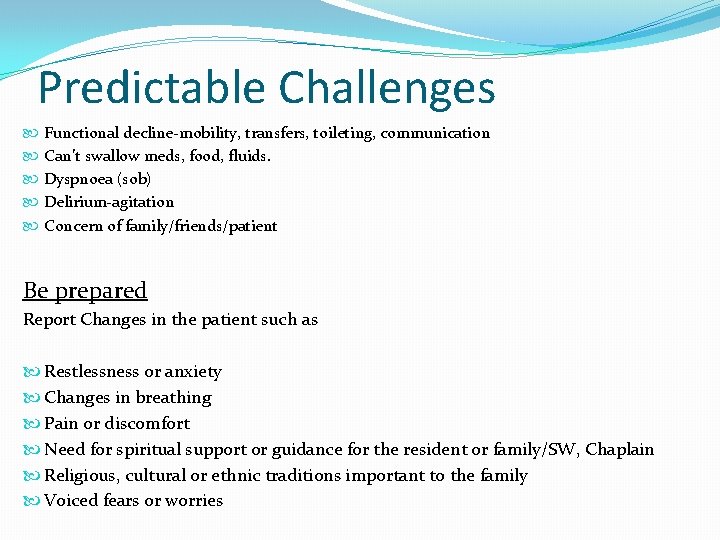
Predictable Challenges Functional decline-mobility, transfers, toileting, communication Can’t swallow meds, food, fluids. Dyspnoea (sob) Delirium-agitation Concern of family/friends/patient Be prepared Report Changes in the patient such as Restlessness or anxiety Changes in breathing Pain or discomfort Need for spiritual support or guidance for the resident or family/SW, Chaplain Religious, cultural or ethnic traditions important to the family Voiced fears or worries