
A P Psychology Modules 20 22 Classical Conditioning
- Slides: 27
A. P. Psychology Modules 20 -22 Classical Conditioning, Operant Conditioning & Observational Learning
Learning & Association § Learning § relatively permanent change in an organism’s behavior due to experience § We learn by association § Our minds naturally connect events that occur in sequence § Associative Learning § learning that two events occur together
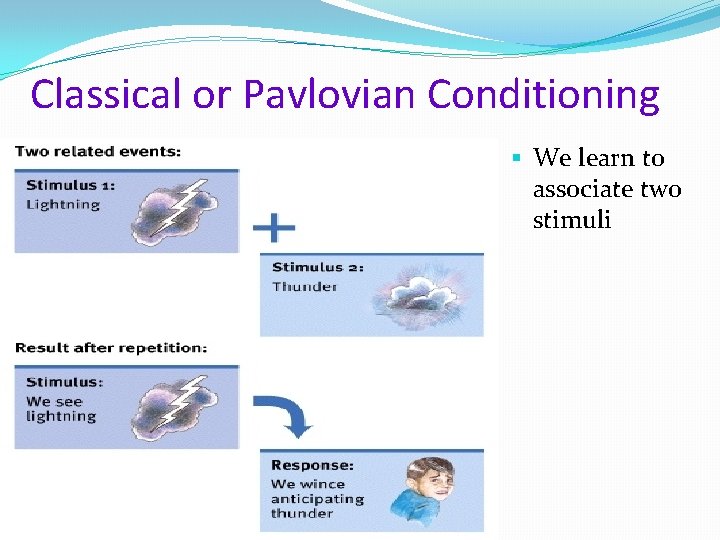
Classical or Pavlovian Conditioning § We learn to associate two stimuli
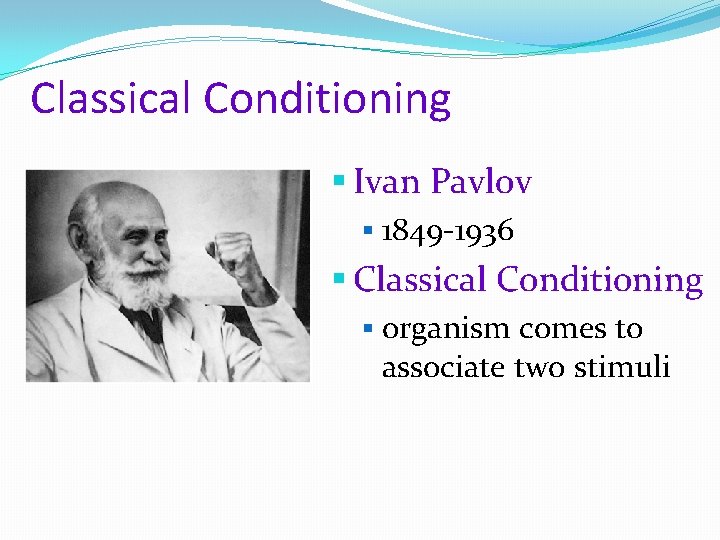
Classical Conditioning § Ivan Pavlov § 1849 -1936 § Classical Conditioning § organism comes to associate two stimuli
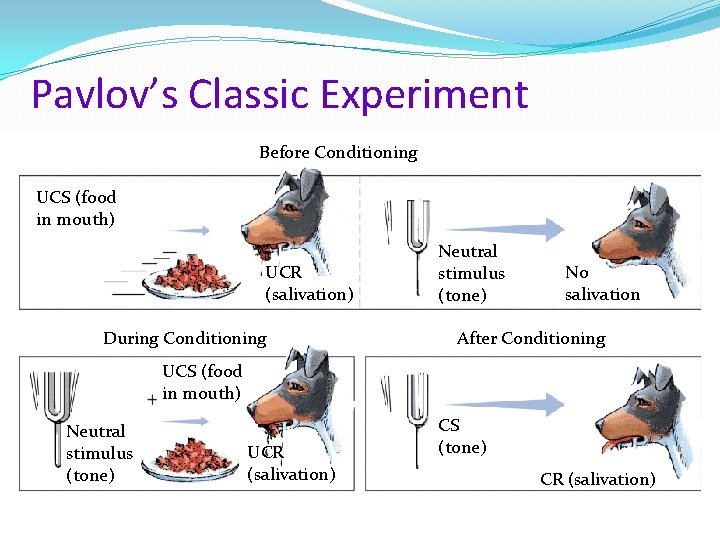
Pavlov’s Classic Experiment Before Conditioning UCS (food in mouth) UCR (salivation) During Conditioning Neutral stimulus (tone) No salivation After Conditioning UCS (food in mouth) Neutral stimulus (tone) UCR (salivation) CS (tone) CR (salivation)
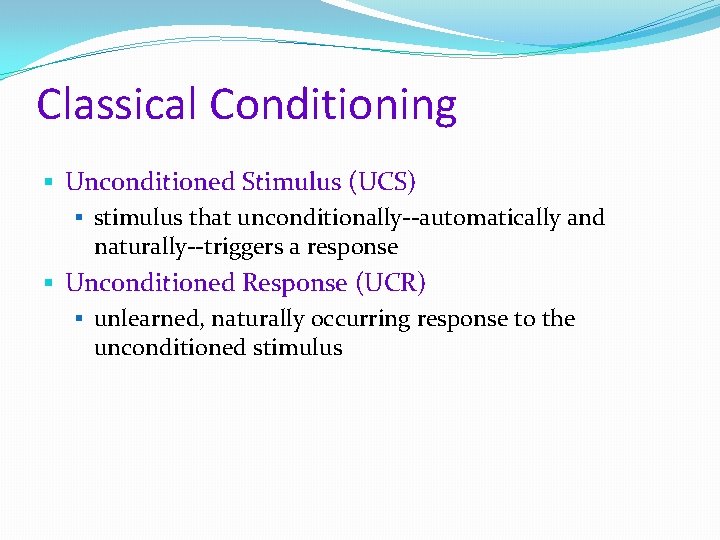
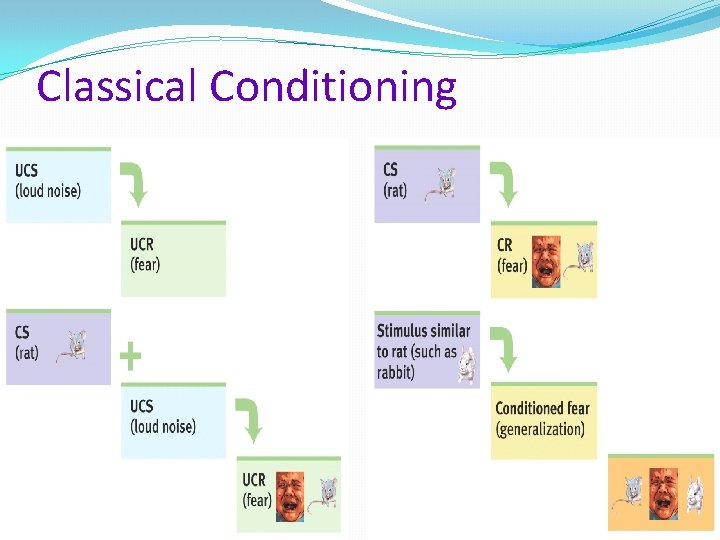
Classical Conditioning § Unconditioned Stimulus (UCS) § stimulus that unconditionally--automatically and naturally--triggers a response § Unconditioned Response (UCR) § unlearned, naturally occurring response to the unconditioned stimulus
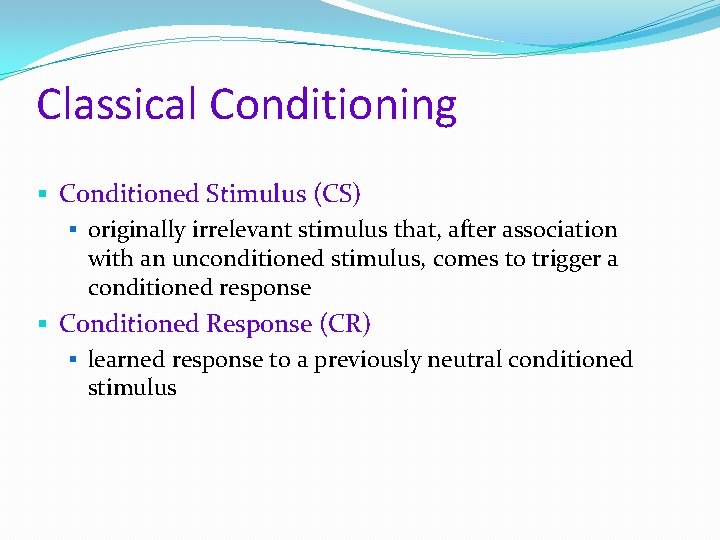
Classical Conditioning § Conditioned Stimulus (CS) § originally irrelevant stimulus that, after association with an unconditioned stimulus, comes to trigger a conditioned response § Conditioned Response (CR) § learned response to a previously neutral conditioned stimulus
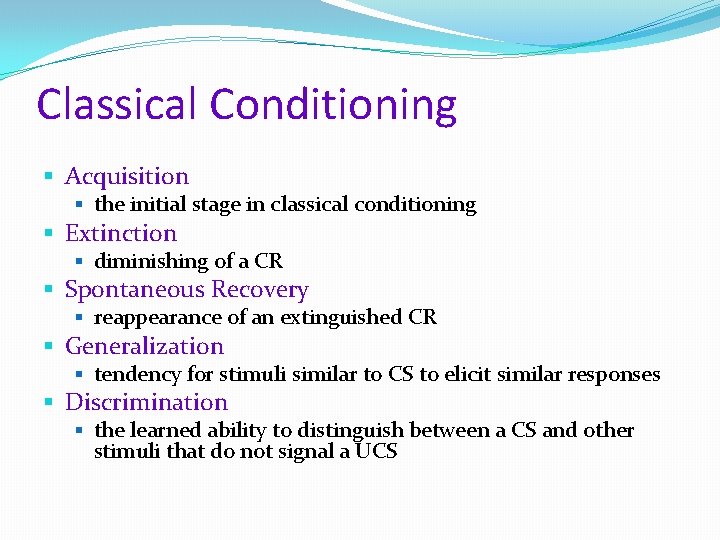
Classical Conditioning § Acquisition § the initial stage in classical conditioning § Extinction § diminishing of a CR § Spontaneous Recovery § reappearance of an extinguished CR § Generalization § tendency for stimuli similar to CS to elicit similar responses § Discrimination § the learned ability to distinguish between a CS and other stimuli that do not signal a UCS
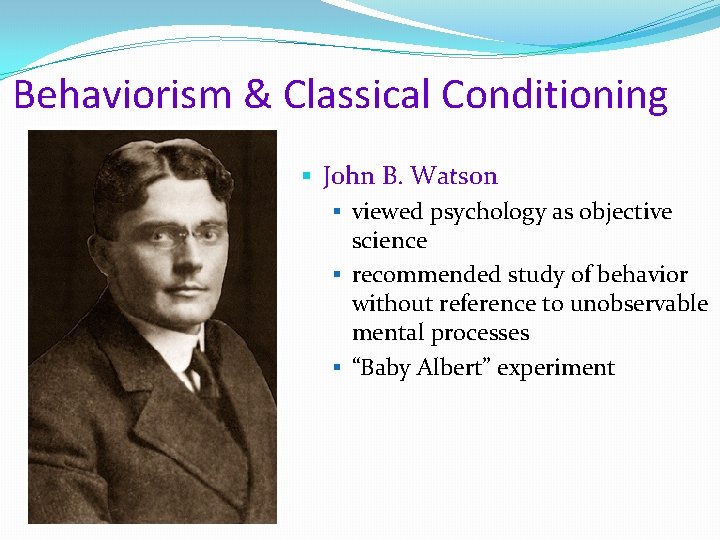
Behaviorism & Classical Conditioning § John B. Watson § viewed psychology as objective science § recommended study of behavior without reference to unobservable mental processes § “Baby Albert” experiment
Classical Conditioning
Operant Conditioning § Law of Effect § E. L. Thorndike § behaviors followed by favorable consequences become more likely, and behaviors followed by unfavorable consequences become less likely § Operant Conditioning § behavior is strengthened if followed by reinforcement or diminished if followed by punishment
Operant Conditioning § Operant Behavior § operates (acts) on environment § produces consequences § Respondent Behavior § occurs as an automatic response to stimulus § behavior learned through classical conditioning
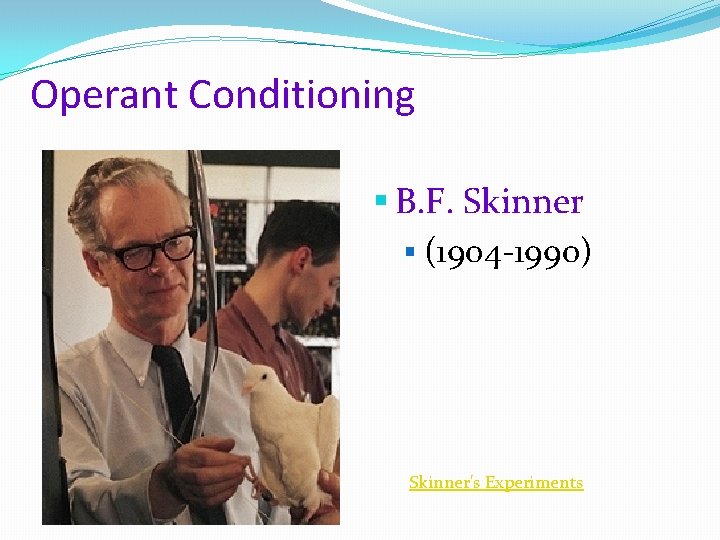
Operant Conditioning § B. F. Skinner § (1904 -1990) Skinner's Experiments
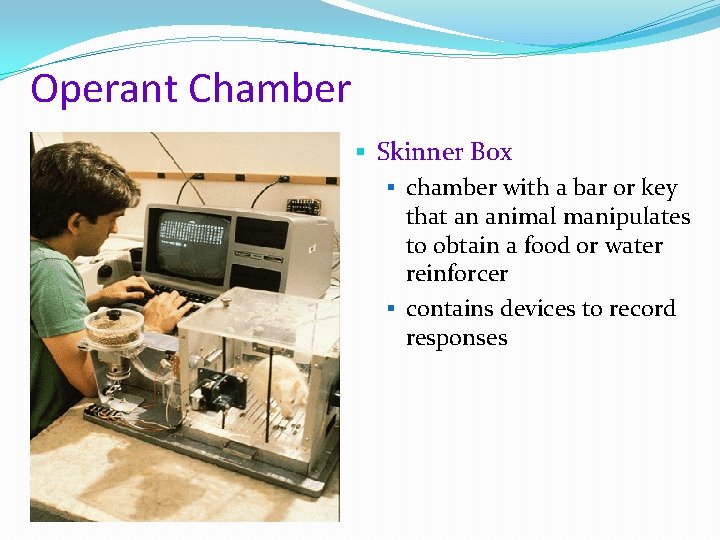
Operant Chamber § Skinner Box § chamber with a bar or key that an animal manipulates to obtain a food or water reinforcer § contains devices to record responses
Operant Conditioning § Reinforcer § any event that strengthens the behavior it follows § Shaping § procedure in which reinforcers guide behavior toward closer approximations of a desired goal
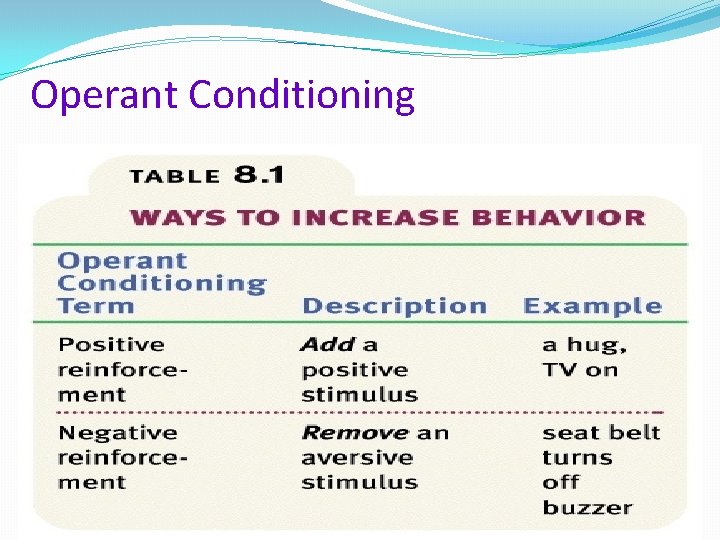
Operant Conditioning
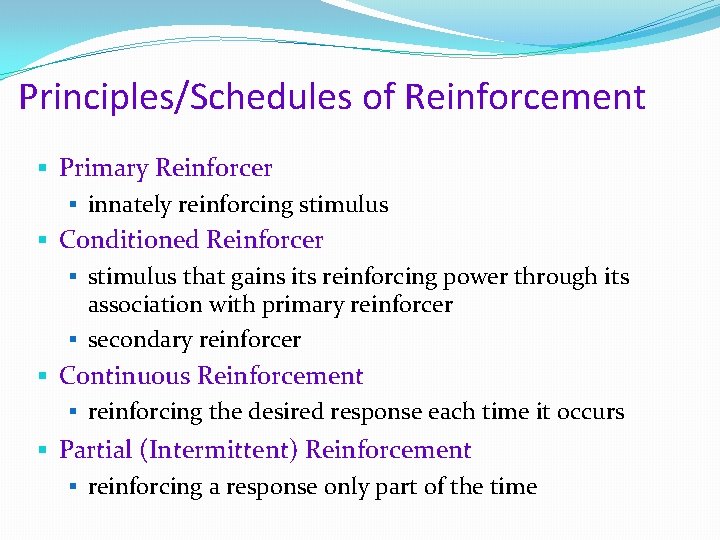
Principles/Schedules of Reinforcement § Primary Reinforcer § innately reinforcing stimulus § Conditioned Reinforcer § stimulus that gains its reinforcing power through its association with primary reinforcer § secondary reinforcer § Continuous Reinforcement § reinforcing the desired response each time it occurs § Partial (Intermittent) Reinforcement § reinforcing a response only part of the time
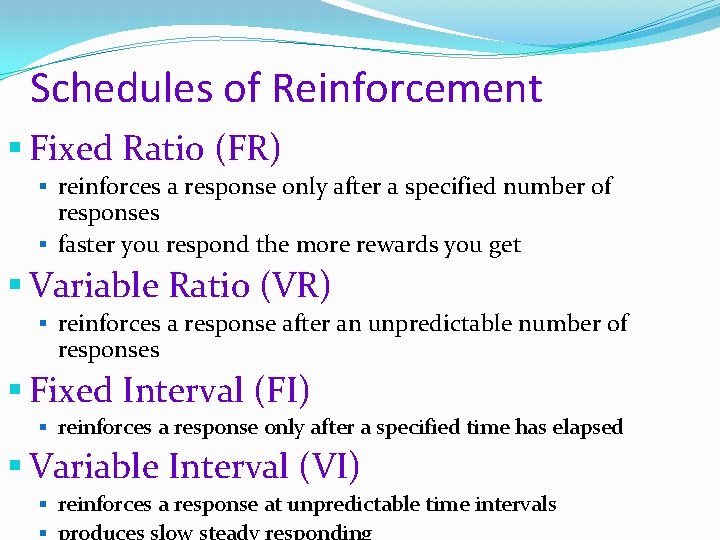
Schedules of Reinforcement § Fixed Ratio (FR) § reinforces a response only after a specified number of responses § faster you respond the more rewards you get § Variable Ratio (VR) § reinforces a response after an unpredictable number of responses § Fixed Interval (FI) § reinforces a response only after a specified time has elapsed § Variable Interval (VI) § reinforces a response at unpredictable time intervals § produces slow steady responding
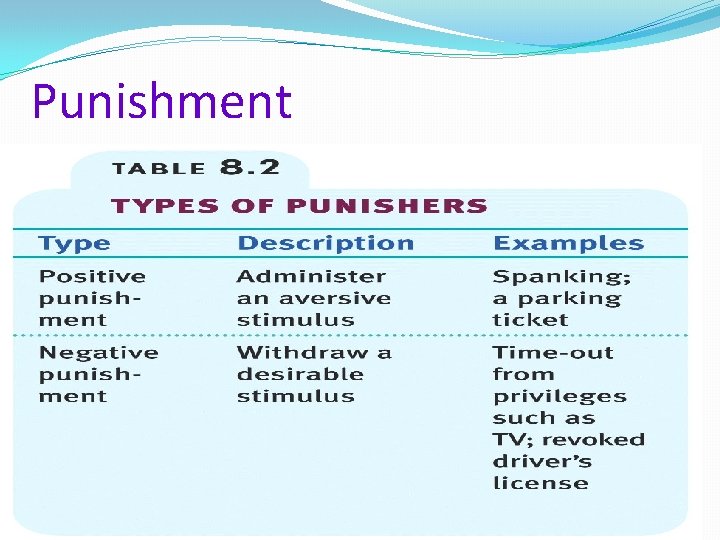
Punishment § aversive event that decreases the behavior that it follows § powerful controller of unwanted behavior
Punishment
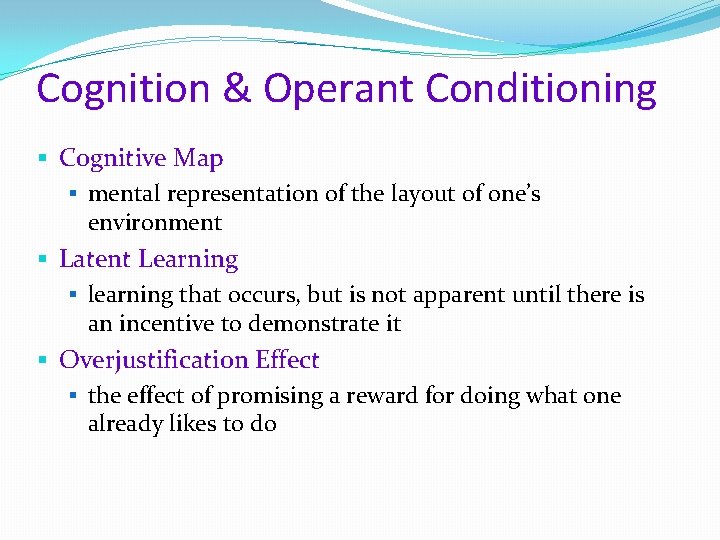
Cognition & Operant Conditioning § Cognitive Map § mental representation of the layout of one’s environment § Latent Learning § learning that occurs, but is not apparent until there is an incentive to demonstrate it § Overjustification Effect § the effect of promising a reward for doing what one already likes to do
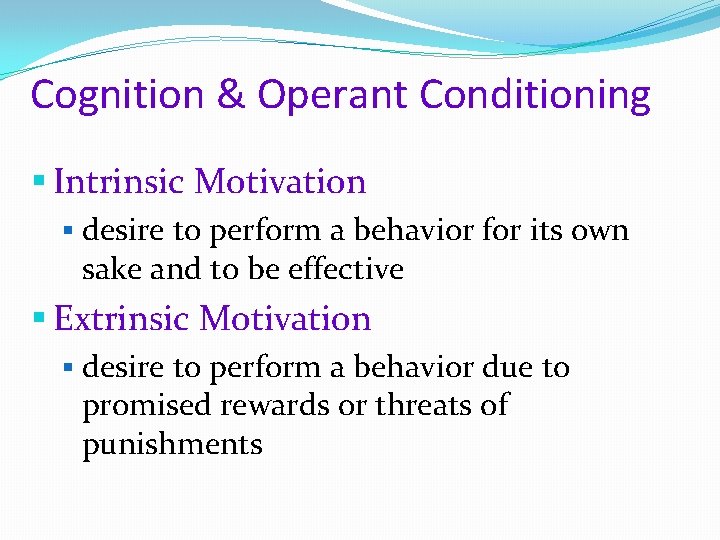
Cognition & Operant Conditioning § Intrinsic Motivation § desire to perform a behavior for its own sake and to be effective § Extrinsic Motivation § desire to perform a behavior due to promised rewards or threats of punishments
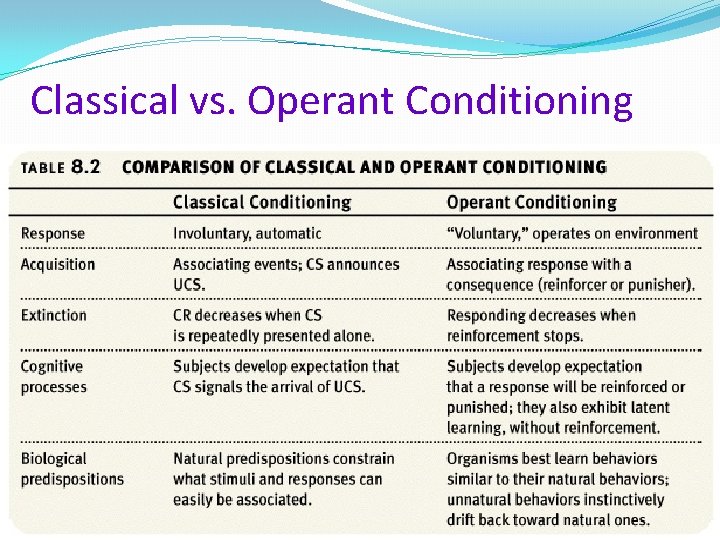
Classical vs. Operant Conditioning
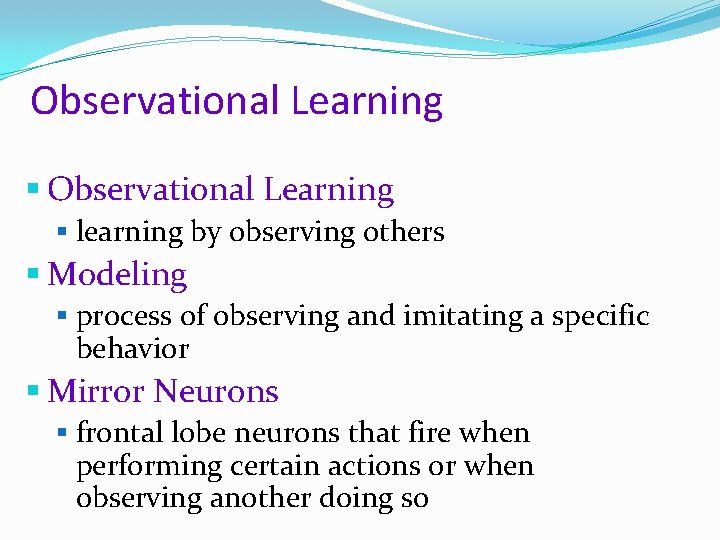
Observational Learning § learning by observing others § Modeling § process of observing and imitating a specific behavior § Mirror Neurons § frontal lobe neurons that fire when performing certain actions or when observing another doing so
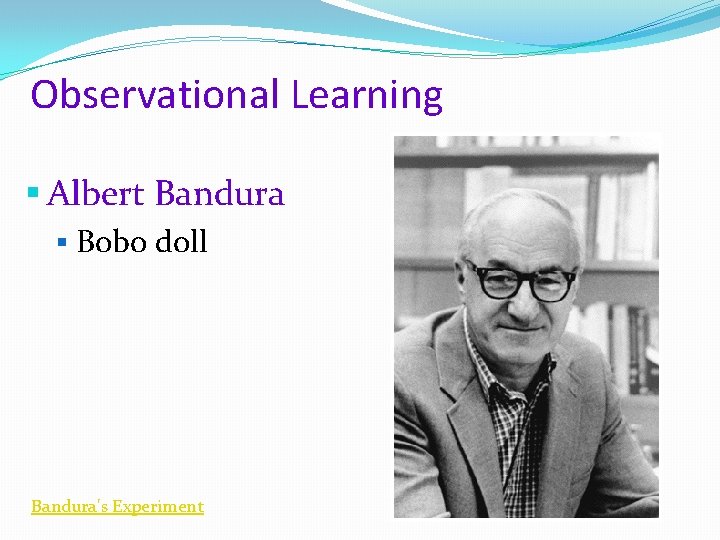
Observational Learning § Albert Bandura § Bobo doll Bandura's Experiment
Observational Learning § Prosocial Behavior § positive, constructive, helpful behavior § opposite of antisocial behavior
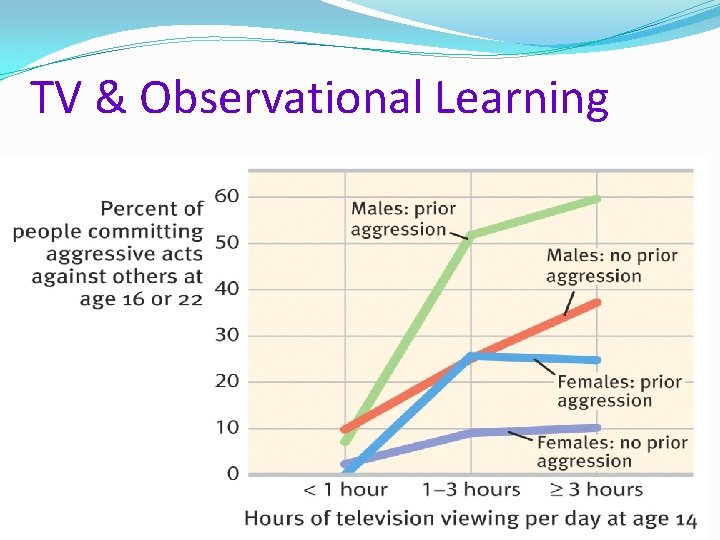
TV & Observational Learning