
A One Health approach to the spatial epidemiology
- Slides: 12
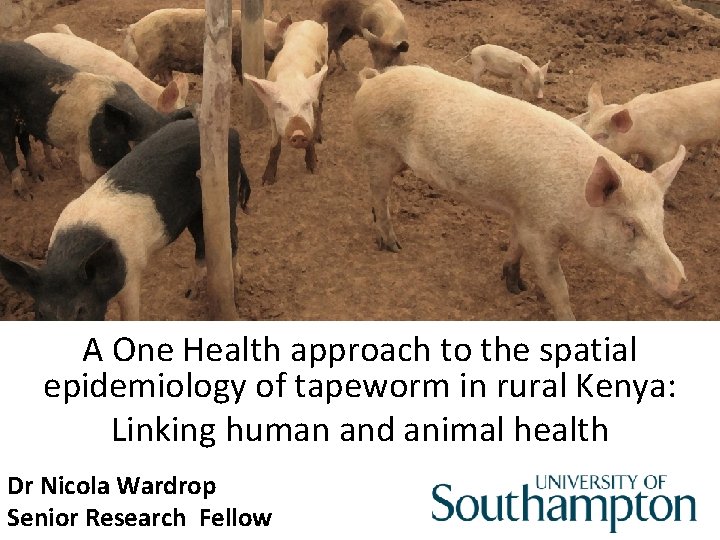
A One Health approach to the spatial epidemiology of tapeworm in rural Kenya: Linking human and animal health Dr Nicola Wardrop Senior Research Fellow
Background • Zoonotic diseases – Transmit from animals to humans – Burden on animal and human health – Agricultural losses One Health approach needed for control Still significant gaps in understanding
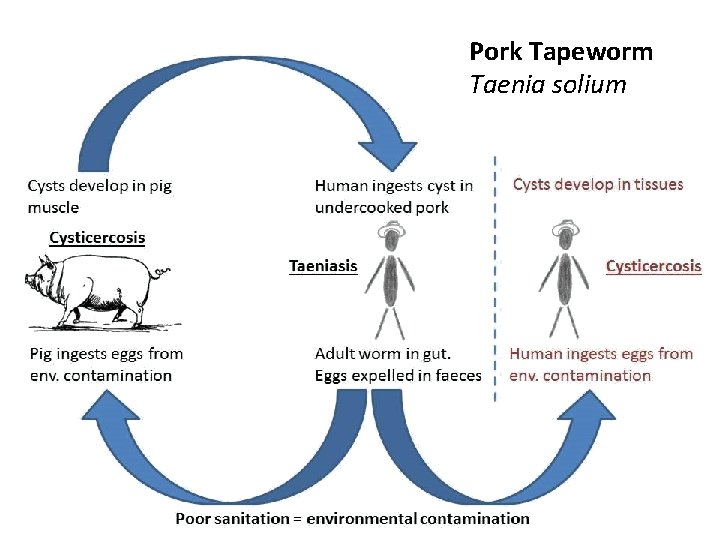
Pork Tapeworm Taenia solium
Background • Distinct disease outcomes – Human taeniasis – Human cysticercosis – Pig cysticercosis Presumed spatial overlap • Previous detection of spatial clustering – Possible environmental drivers (widely accepted for other similar diseases)
Aims 1. Develop analysis framework for integration of human and animal health outcomes 2. Examine evidence of spatial overlap between human and pig infections 3. Assess the potential role of environmental factors in the spatial distribution of human and pig infections
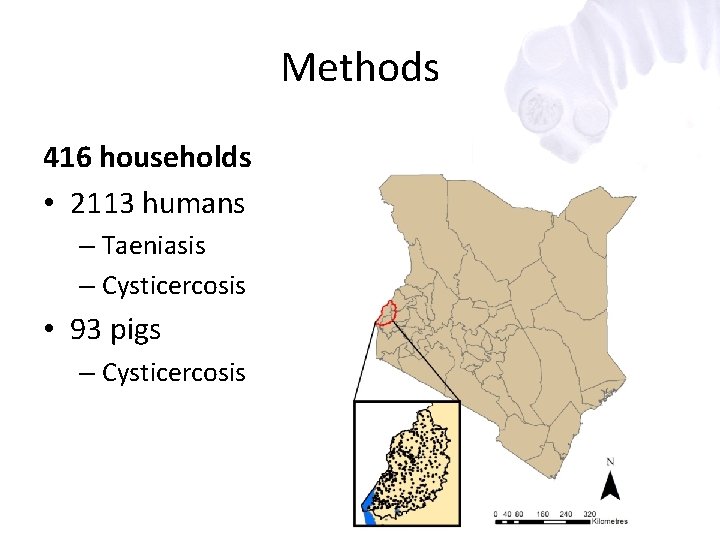
Methods 416 households • 2113 humans – Taeniasis – Cysticercosis • 93 pigs – Cysticercosis
Methods Exploratory spatial analysis – Assessment of spatial concurrence – Bivariate kernel density estimation (spatially smooth relative risk surface) – Spatial cluster detection Regression analysis – Assess importance of individual and household level factors (including environment)
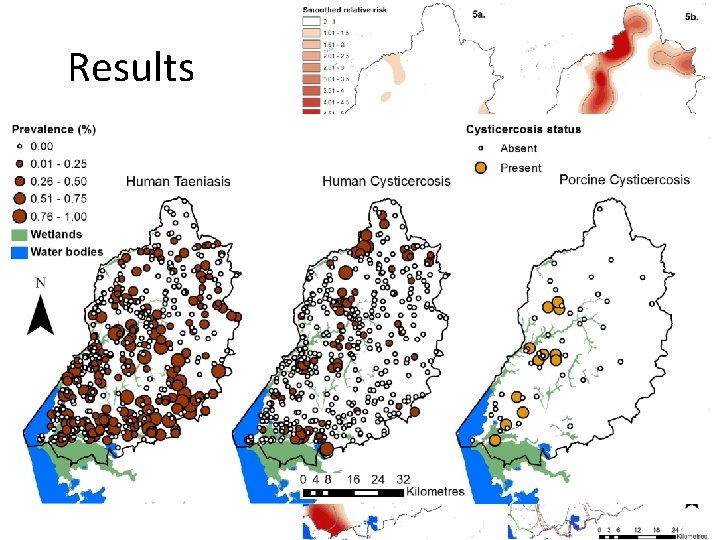
Results • Clear areas of elevated risk • Some overlap, but not widespread
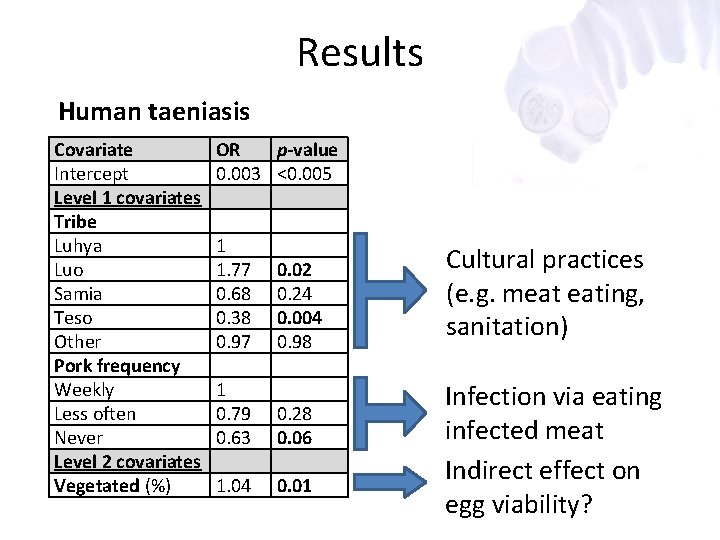
Results Human taeniasis Covariate Intercept Level 1 covariates Tribe Luhya Luo Samia Teso Other Pork frequency Weekly Less often Never Level 2 covariates Vegetated (%) OR p-value 0. 003 <0. 005 1 1. 77 0. 68 0. 38 0. 97 0. 02 0. 24 0. 004 0. 98 1 0. 79 0. 63 0. 28 0. 06 1. 04 0. 01 Cultural practices (e. g. meat eating, sanitation) Infection via eating infected meat Indirect effect on egg viability?
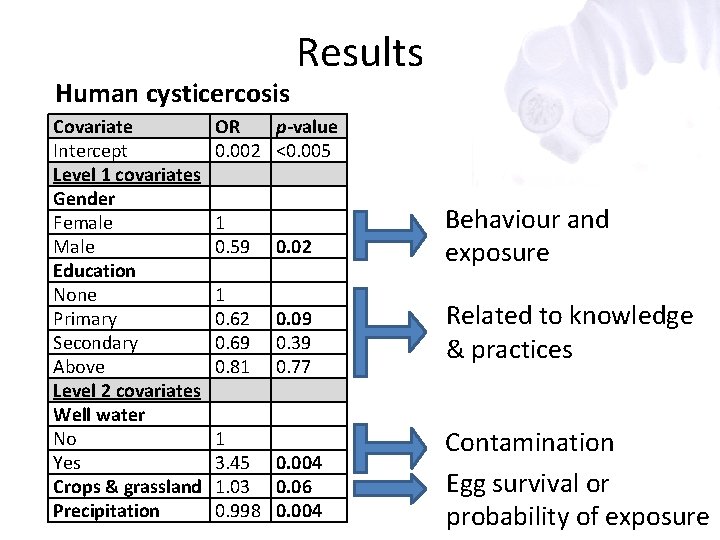
Human cysticercosis Covariate Intercept Level 1 covariates Gender Female Male Education None Primary Secondary Above Level 2 covariates Well water No Yes Crops & grassland Precipitation Results OR p-value 0. 002 <0. 005 1 0. 59 0. 02 1 0. 62 0. 69 0. 81 0. 09 0. 39 0. 77 1 3. 45 0. 004 1. 03 0. 06 0. 998 0. 004 Behaviour and exposure Related to knowledge & practices Contamination Egg survival or probability of exposure
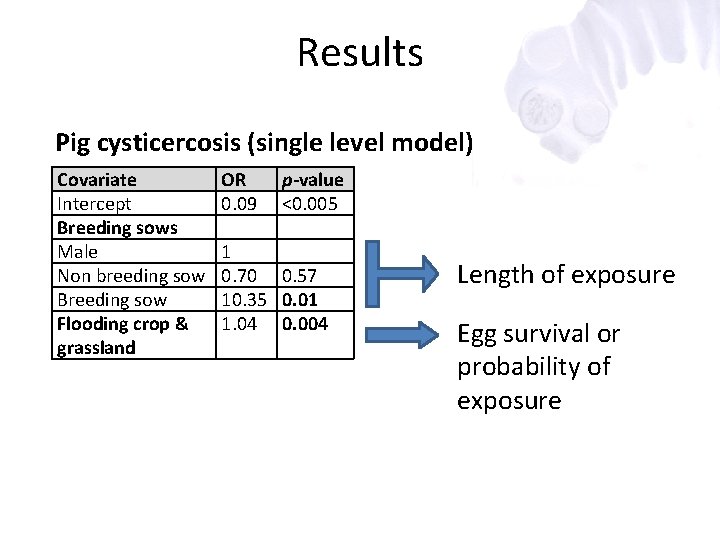
Results Pig cysticercosis (single level model) Covariate Intercept Breeding sows Male Non breeding sow Breeding sow Flooding crop & grassland OR 0. 09 p-value <0. 005 1 0. 70 0. 57 10. 35 0. 01 1. 04 0. 004 Length of exposure Egg survival or probability of exposure
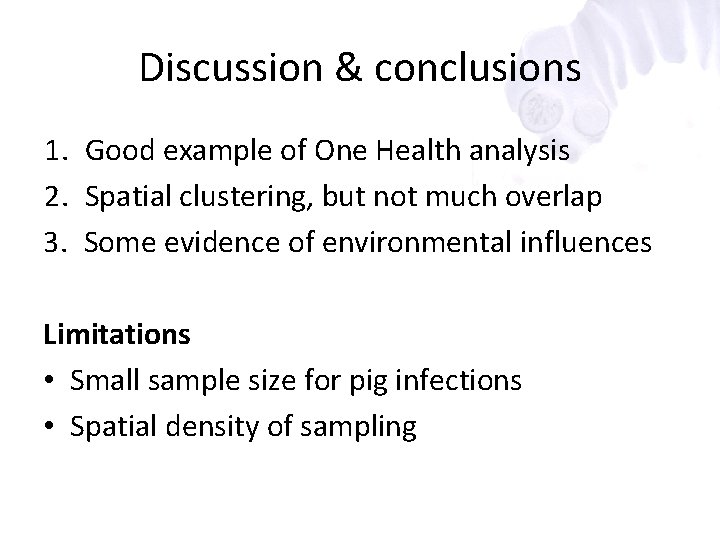
Discussion & conclusions 1. Good example of One Health analysis 2. Spatial clustering, but not much overlap 3. Some evidence of environmental influences Limitations • Small sample size for pig infections • Spatial density of sampling