
A NursingDirected Approach to Identifying Documenting and Preventing

- Slides: 25
A Nursing-Directed Approach to Identifying, Documenting and Preventing Delirium in Hospitalized Elderly Individuals Ms. Amanda Try and Dr. Elise Levinoff Mc. Gill University, Faculty of Medicine Jewish General Hospital, Internal Medicine, Division of Geriatrics Canadian Geriatrics Society 38 th Annual Scientific Meeting Montreal, QC April 20, 2018
Presenter Disclosure • Presenter: Amanda Try • Relationships with financial sponsors: • None
Disclosure of Financial Support • This program has received financial support from the Faculty of Medicine of Mc. Gill University in the form of a research bursary (Dr. Clarke Mc. Leod Memorial Scholarship) and from the Division of Geriatrics of the Jewish General Hospital in the form of funding. • Potential for conflict(s) of interest: • None
Mitigating Potential Bias • The results were not biased in any particular way. The research bursary was merely used to pay my rent and board for the summer. The funding from the Division of Geriatrics was used to print educational posters.
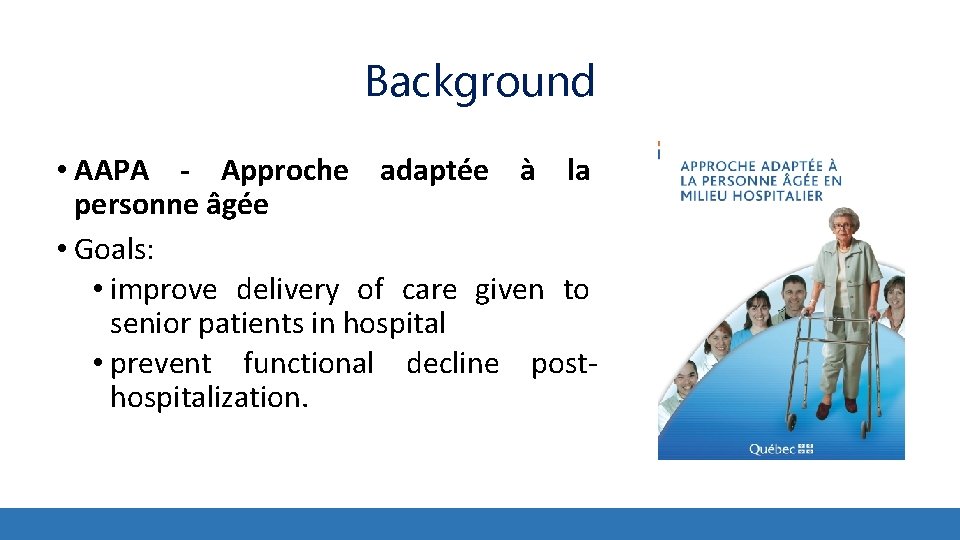
Background • AAPA - Approche adaptée à la personne âgée • Goals: • improve delivery of care given to senior patients in hospital • prevent functional decline posthospitalization.
Delirium • An acute confusional state that affects… 14 -56% of all elderly hospitalized 1 patients. 1. Inouye SK. Delirium in Older Persons. N Engl J Med. 2006; 354(11): 1157 -1165. doi: 10. 1056/NEJMra 052321.
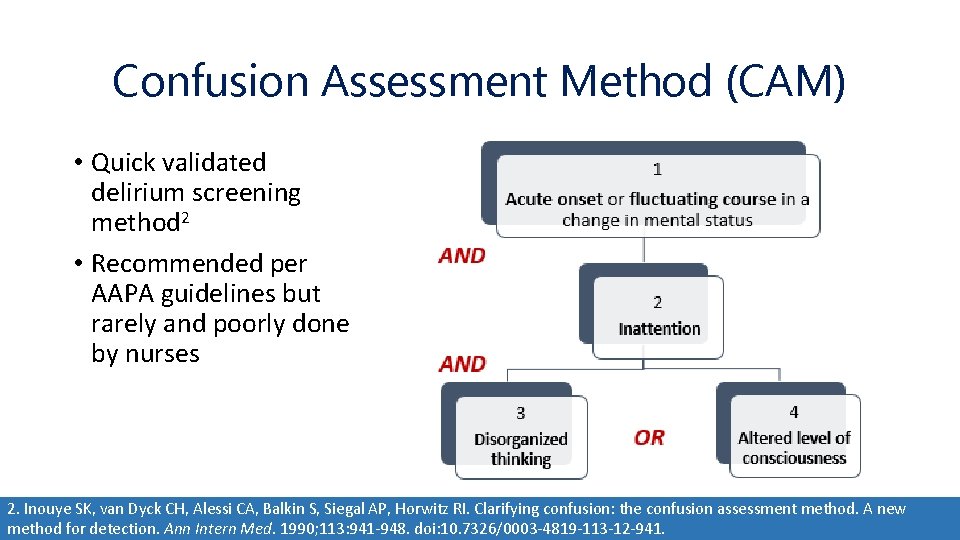
Confusion Assessment Method (CAM) • Quick validated delirium screening method 2 • Recommended per AAPA guidelines but rarely and poorly done by nurses 2. Inouye SK, van Dyck CH, Alessi CA, Balkin S, Siegal AP, Horwitz RI. Clarifying confusion: the confusion assessment method. A new method for detection. Ann Intern Med. 1990; 113: 941 -948. doi: 10. 7326/0003 -4819 -113 -12 -941.
Objectives 1) Instill a change in nursing practices and attitude towards delirium. 2) Assess the remaining challenges in the application of the AAPA protocol.
Hypothesis Teaching will encourage documentation of the Confusion Assessment Method (CAM) and more implementation of preventive measures to minimize delirium.
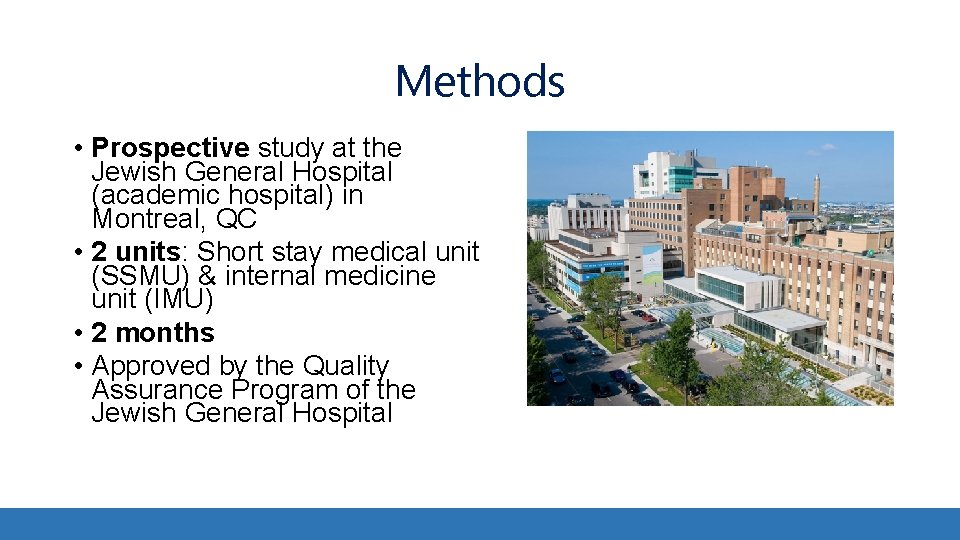
Methods • Prospective study at the Jewish General Hospital (academic hospital) in Montreal, QC • 2 units: Short stay medical unit (SSMU) & internal medicine unit (IMU) • 2 months • Approved by the Quality Assurance Program of the Jewish General Hospital
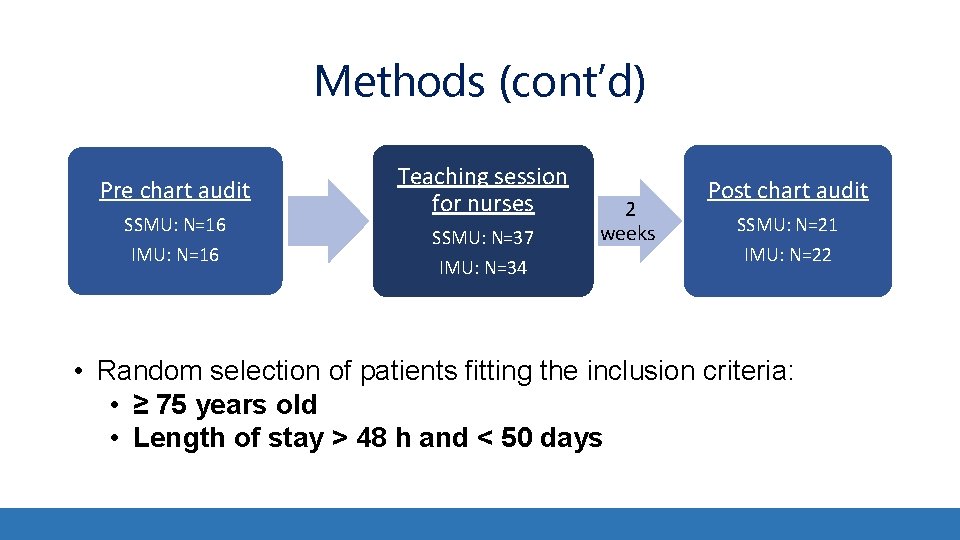
Methods (cont’d) Pre chart audit SSMU: N=16 IMU: N=16 Teaching session for nurses SSMU: N=37 IMU: N=34 2 weeks Post chart audit SSMU: N=21 IMU: N=22 • Random selection of patients fitting the inclusion criteria: • ≥ 75 years old • Length of stay > 48 h and < 50 days
Teaching Session • 20 minutes, given in English or French • Topics • Delirium and risk factors • CAM and documentation guidelines • Preventive systematic interventions • High attendance • SSMU: 39/44 nurses (89%) • IMU: 34/47 nurses (72%)
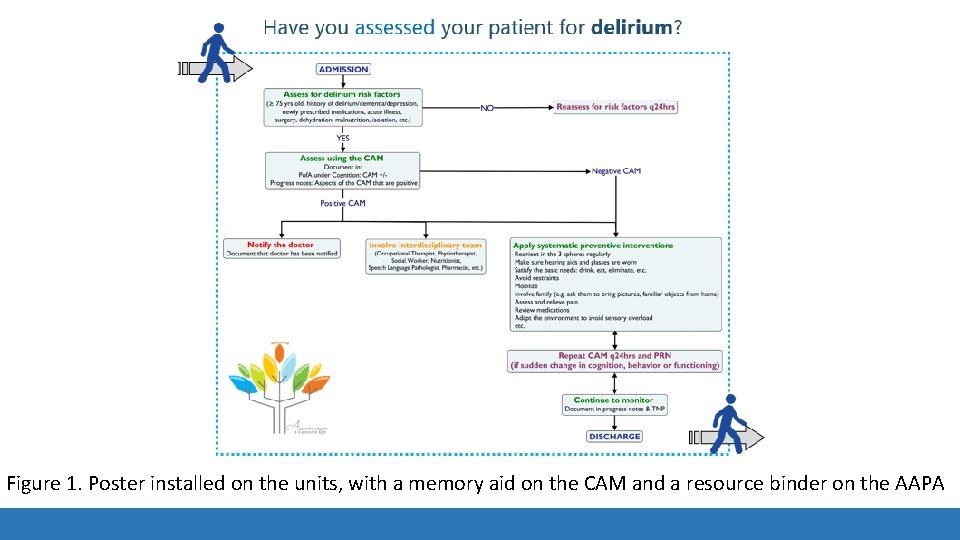
Figure 1. Poster installed on the units, with a memory aid on the CAM and a resource binder on the AAPA
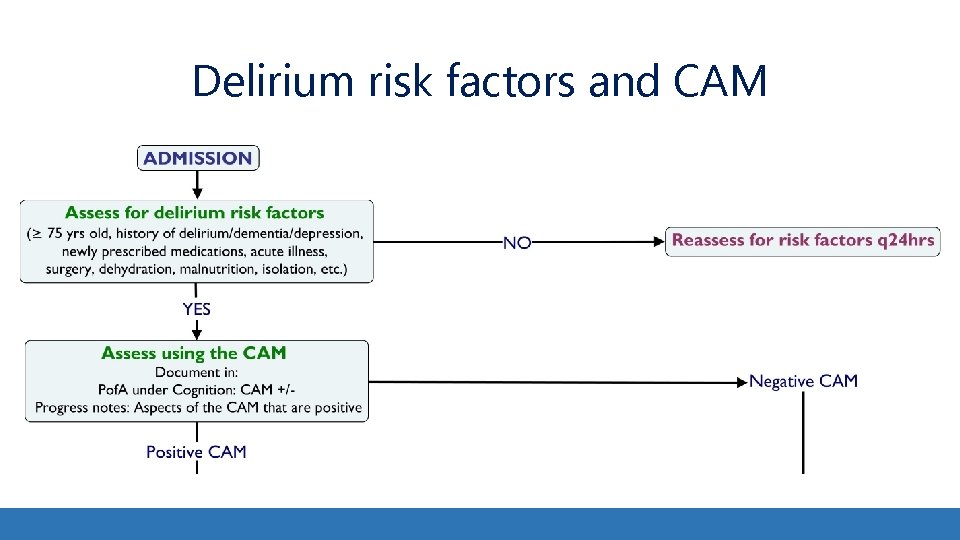
Delirium risk factors and CAM
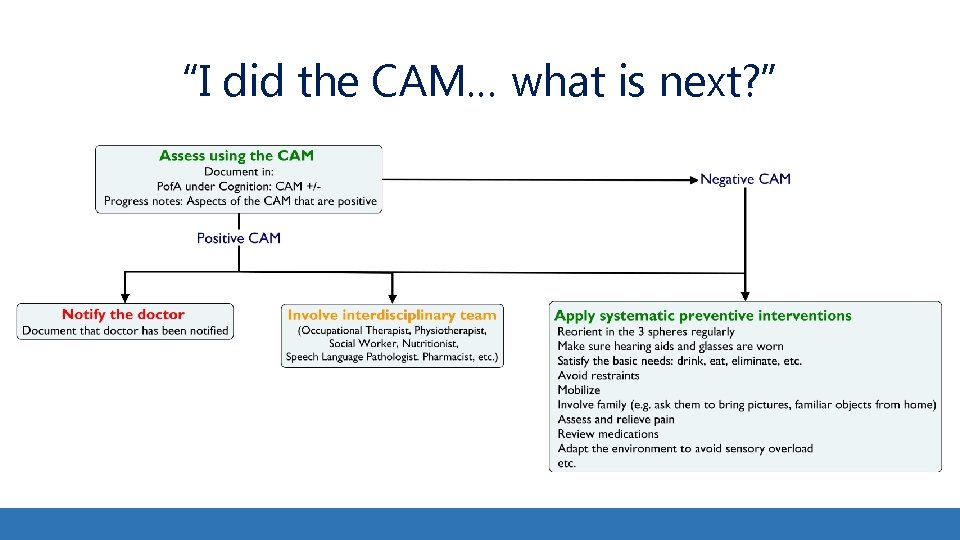
“I did the CAM… what is next? ”
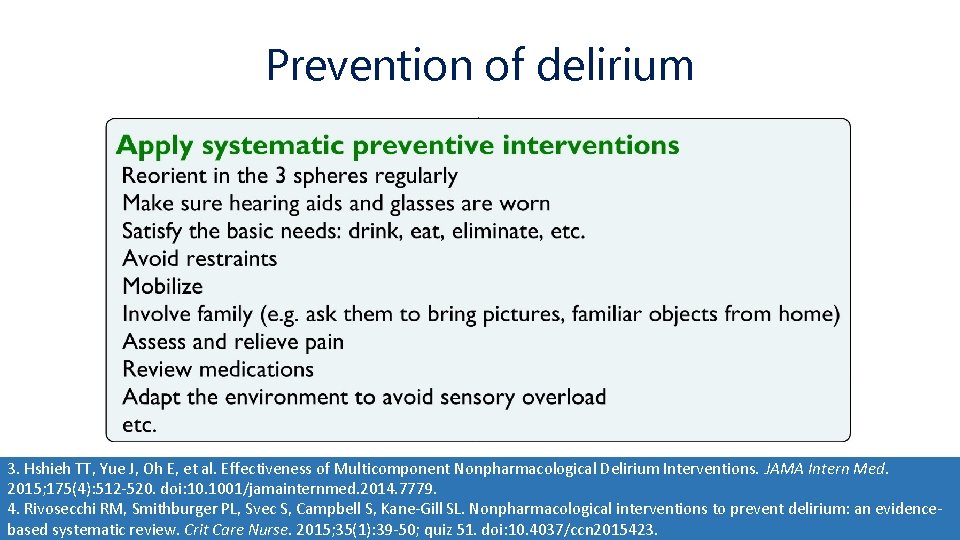
Prevention of delirium 3. Hshieh TT, Yue J, Oh E, et al. Effectiveness of Multicomponent Nonpharmacological Delirium Interventions. JAMA Intern Med. 2015; 175(4): 512 -520. doi: 10. 1001/jamainternmed. 2014. 7779. 4. Rivosecchi RM, Smithburger PL, Svec S, Campbell S, Kane-Gill SL. Nonpharmacological interventions to prevent delirium: an evidencebased systematic review. Crit Care Nurse. 2015; 35(1): 39 -50; quiz 51. doi: 10. 4037/ccn 2015423.
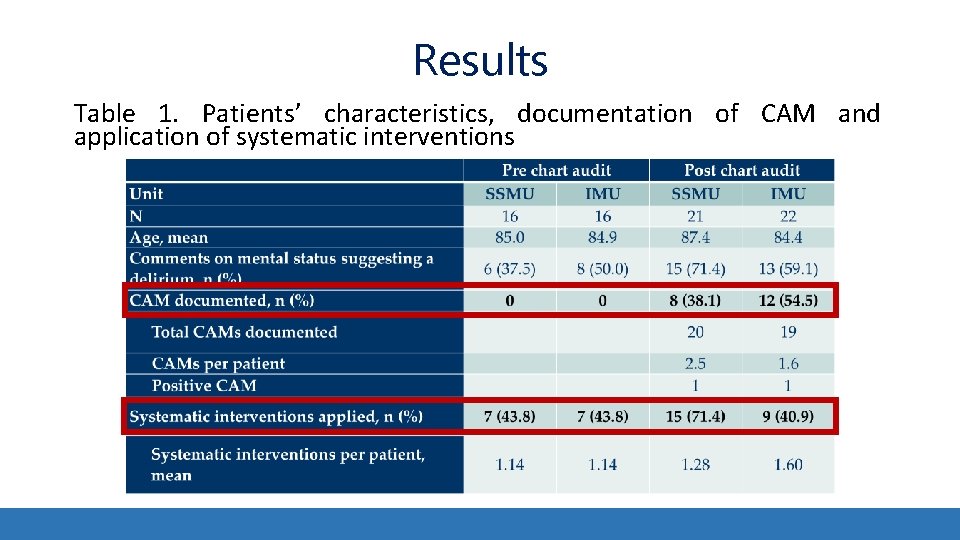
Results Table 1. Patients’ characteristics, documentation of CAM and application of systematic interventions
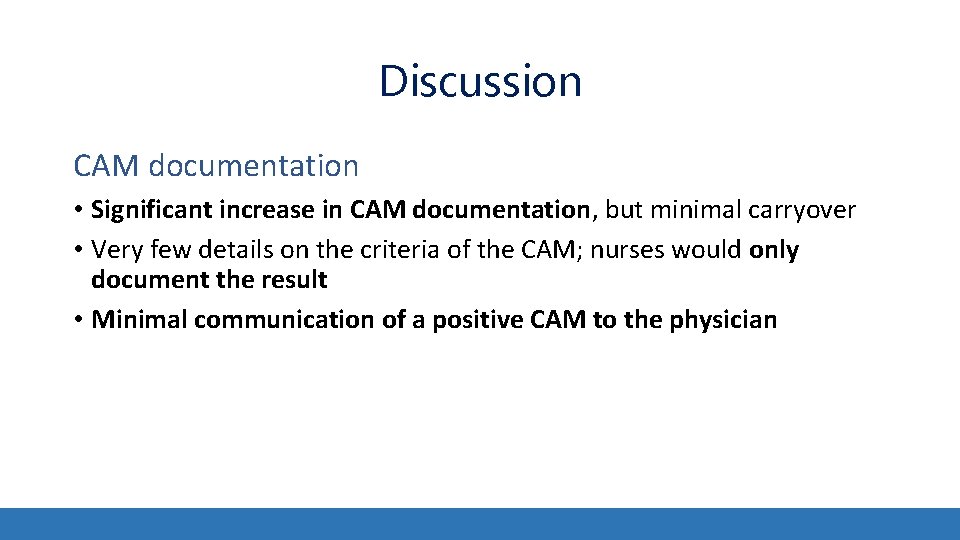
Discussion CAM documentation • Significant increase in CAM documentation, but minimal carryover • Very few details on the criteria of the CAM; nurses would only document the result • Minimal communication of a positive CAM to the physician
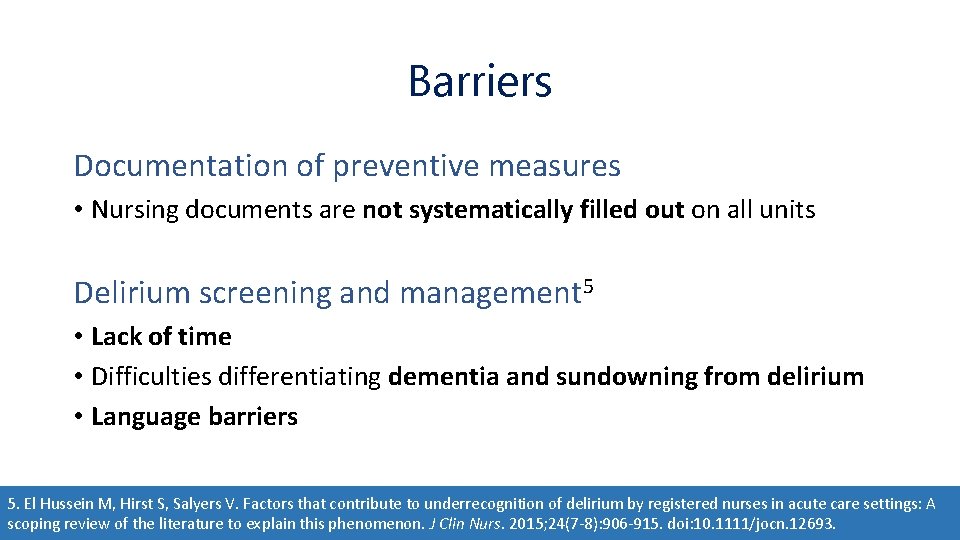
Barriers Documentation of preventive measures • Nursing documents are not systematically filled out on all units Delirium screening and management 5 • Lack of time • Difficulties differentiating dementia and sundowning from delirium • Language barriers 5. El Hussein M, Hirst S, Salyers V. Factors that contribute to underrecognition of delirium by registered nurses in acute care settings: A scoping review of the literature to explain this phenomenon. J Clin Nurs. 2015; 24(7 -8): 906 -915. doi: 10. 1111/jocn. 12693.
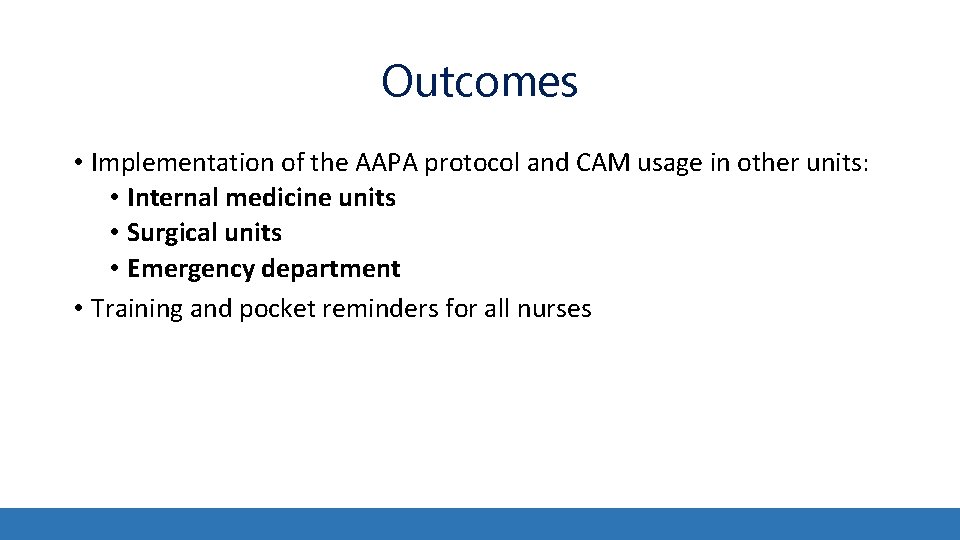
Outcomes • Implementation of the AAPA protocol and CAM usage in other units: • Internal medicine units • Surgical units • Emergency department • Training and pocket reminders for all nurses
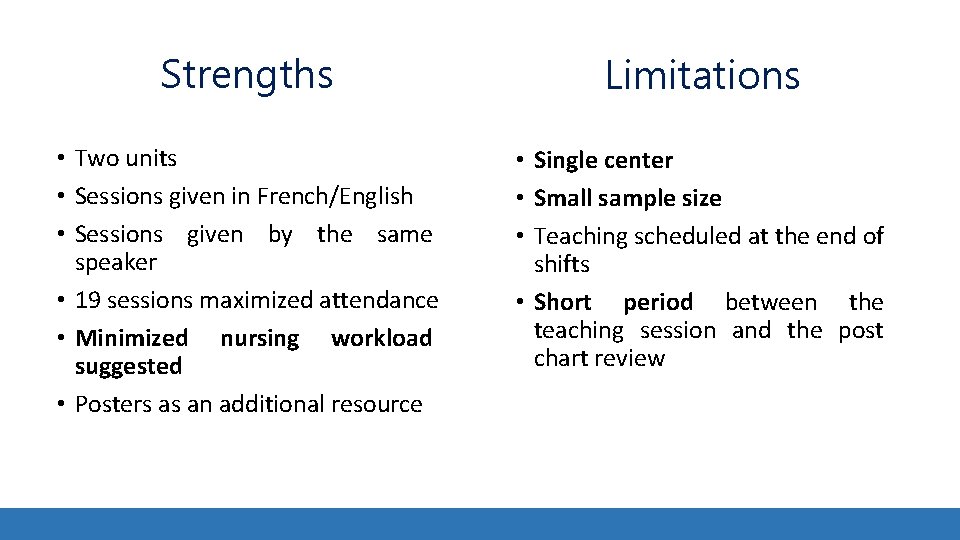
Strengths Limitations • Two units • Sessions given in French/English • Sessions given by the same speaker • 19 sessions maximized attendance • Minimized nursing workload suggested • Posters as an additional resource • Single center • Small sample size • Teaching scheduled at the end of shifts • Short period between the teaching session and the post chart review
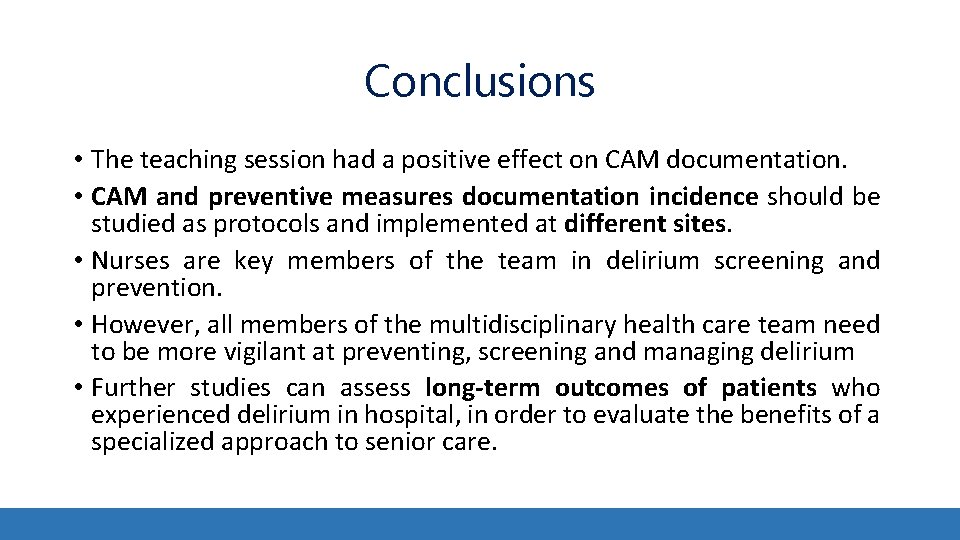
Conclusions • The teaching session had a positive effect on CAM documentation. • CAM and preventive measures documentation incidence should be studied as protocols and implemented at different sites. • Nurses are key members of the team in delirium screening and prevention. • However, all members of the multidisciplinary health care team need to be more vigilant at preventing, screening and managing delirium • Further studies can assess long-term outcomes of patients who experienced delirium in hospital, in order to evaluate the benefits of a specialized approach to senior care.
Questions
References 1. 2. 3. 4. 5. Inouye SK. Delirium in Older Persons. N Engl J Med. 2006; 354(11): 1157 -1165. doi: 10. 1056/NEJMra 052321. Inouye SK, van Dyck CH, Alessi CA, Balkin S, Siegal AP, Horwitz RI. Clarifying confusion: the confusion assessment method. A new method for detection. Ann Intern Med. 1990; 113: 941 -948. doi: 10. 7326/0003 -4819 -113 -12 -941. Hshieh TT, Yue J, Oh E, et al. Effectiveness of Multicomponent Nonpharmacological Delirium Interventions. JAMA Intern Med. 2015; 175(4): 512 -520. doi: 10. 1001/jamainternmed. 2014. 7779. Rivosecchi RM, Smithburger PL, Svec S, Campbell S, Kane-Gill SL. Nonpharmacological interventions to prevent delirium: an evidence-based systematic review. Crit Care Nurse. 2015; 35(1): 39 -50; quiz 51. doi: 10. 4037/ccn 2015423. El Hussein M, Hirst S, Salyers V. Factors that contribute to underrecognition of delirium by registered nurses in acute care settings: A scoping review of the literature to explain this phenomenon. J Clin Nurs. 2015; 24(7 -8): 906 -915. doi: 10. 1111/jocn. 12693.
Acknowledgements Special thanks go to Judy Bianco, Juliana Tebo, Josina Van Den Nieuwenhof, Isabelle Cormier, and all the nurses who participated in this project.