
A numerical example l Update frequency 12 Simulation

- Slides: 18
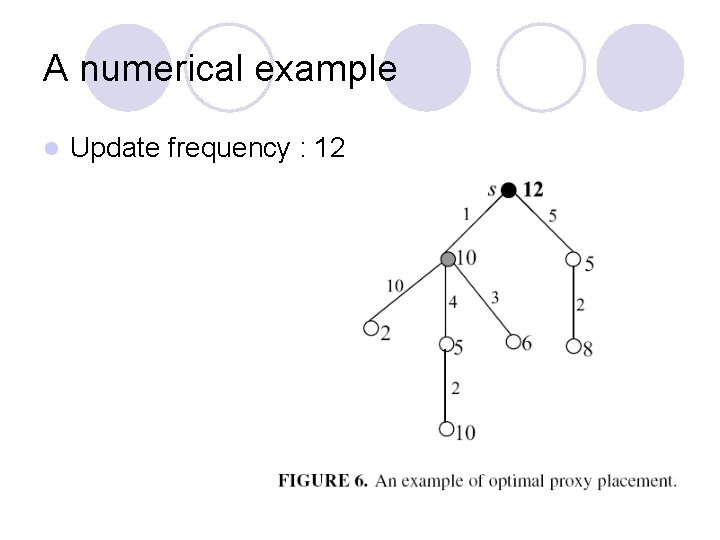
A numerical example l Update frequency : 12
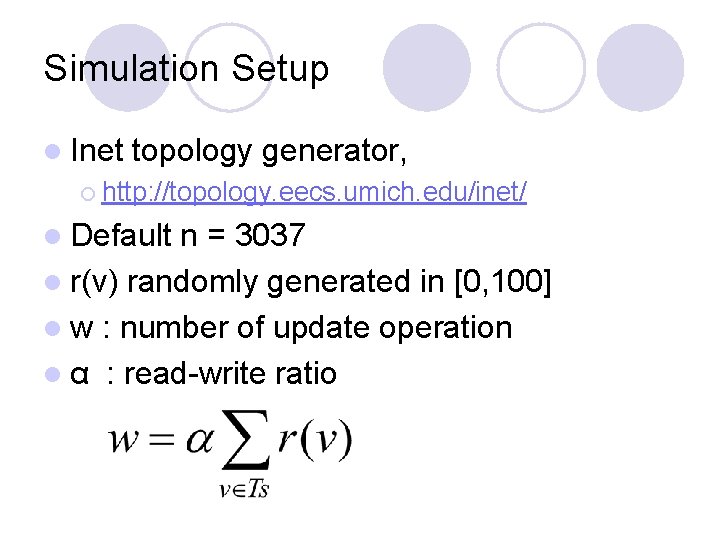
Simulation Setup l Inet topology generator, ¡ http: //topology. eecs. umich. edu/inet/ l Default n = 3037 l r(v) randomly generated in [0, 100] l w : number of update operation l α : read-write ratio
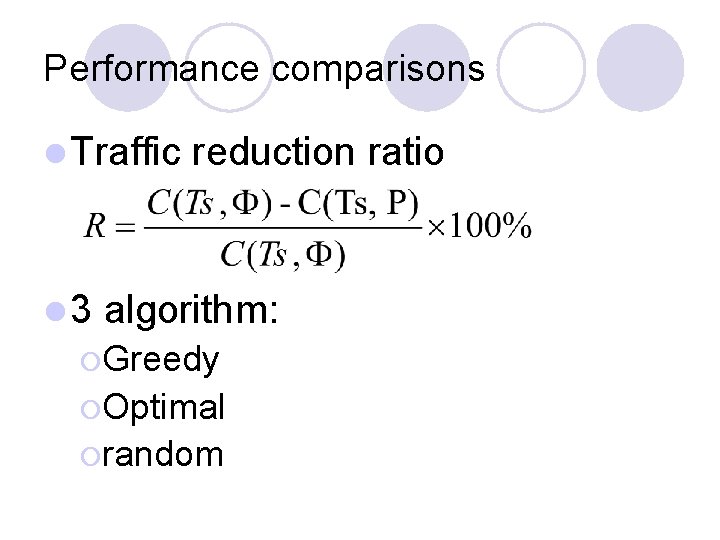
Performance comparisons l Traffic l 3 reduction ratio algorithm: ¡Greedy ¡Optimal ¡random
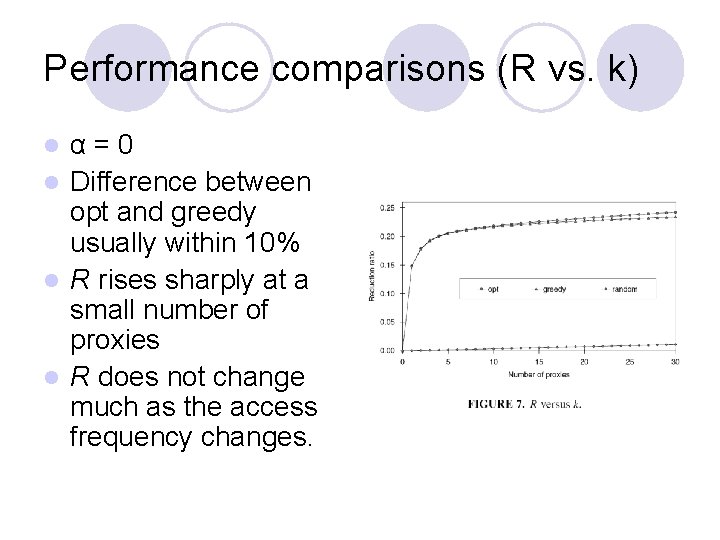
Performance comparisons (R vs. k) α=0 l Difference between opt and greedy usually within 10% l R rises sharply at a small number of proxies l R does not change much as the access frequency changes. l
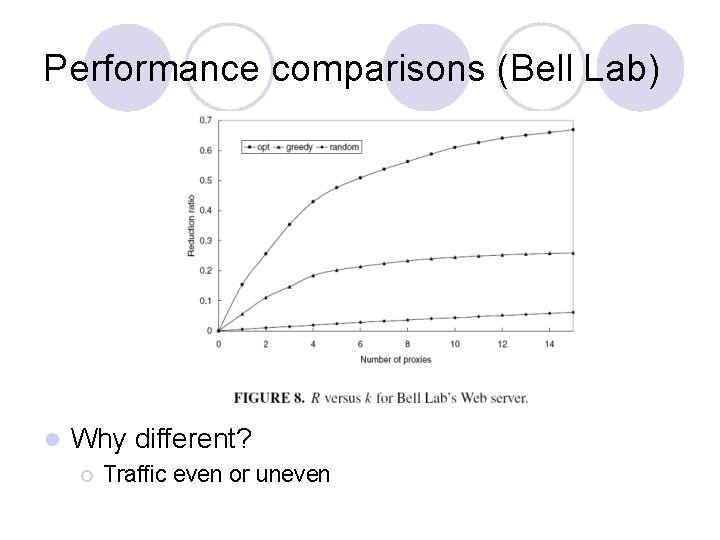
Performance comparisons (Bell Lab) l Why different? ¡ Traffic even or uneven
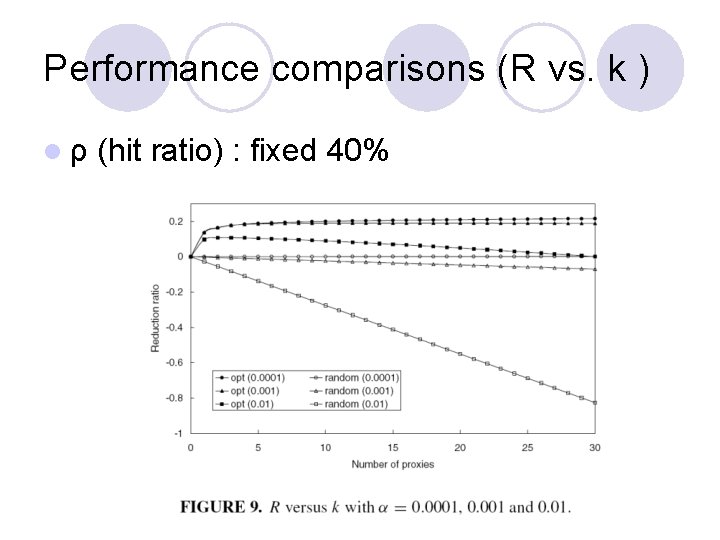
Performance comparisons (R vs. k ) lρ (hit ratio) : fixed 40%
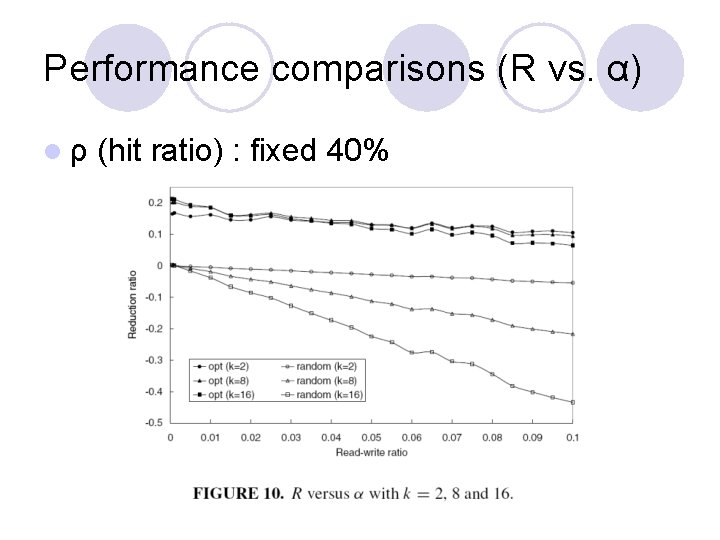
Performance comparisons (R vs. α) lρ (hit ratio) : fixed 40%
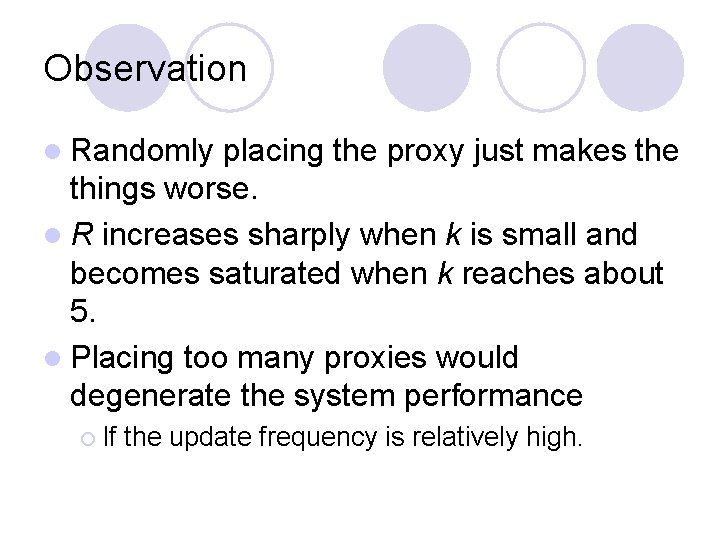
Observation l Randomly placing the proxy just makes the things worse. l R increases sharply when k is small and becomes saturated when k reaches about 5. l Placing too many proxies would degenerate the system performance ¡ If the update frequency is relatively high.
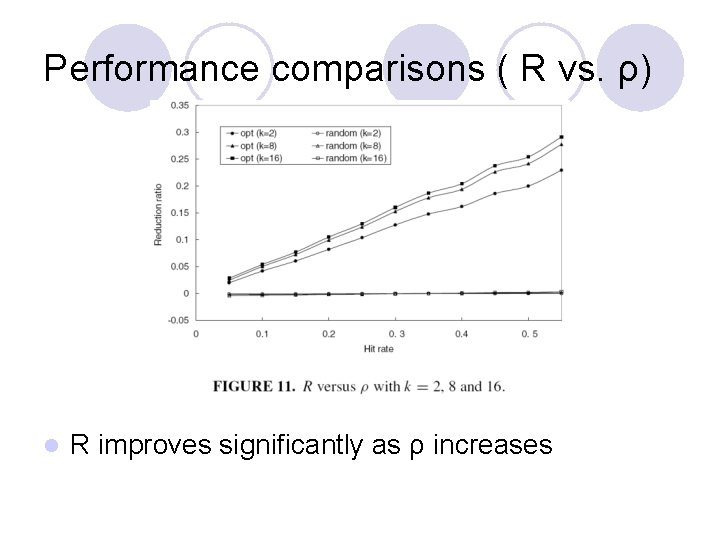
Performance comparisons ( R vs. ρ) l R improves significantly as ρ increases
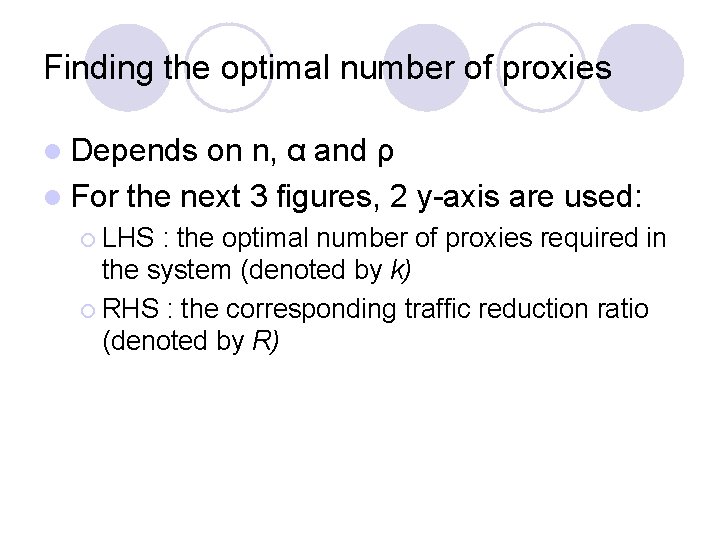
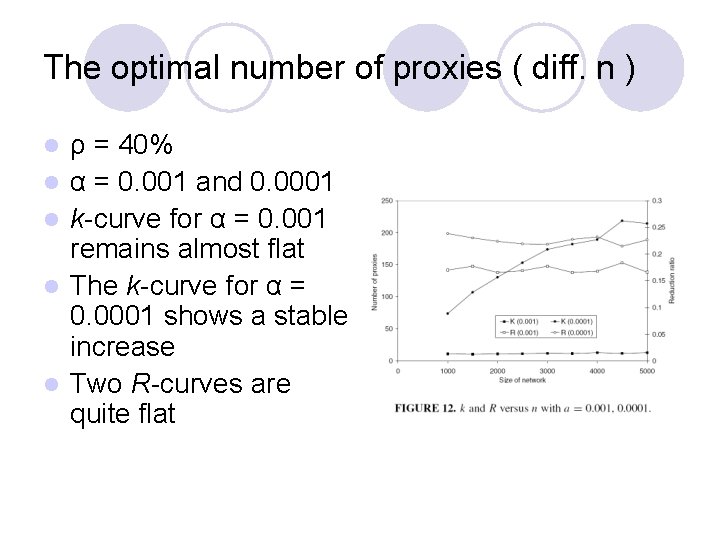
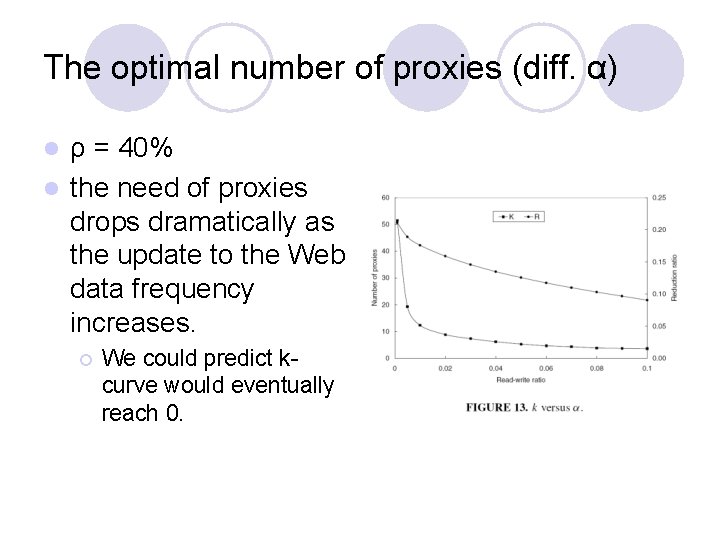
Finding the optimal number of proxies l Depends on n, α and ρ l For the next 3 figures, 2 y-axis are used: ¡ LHS : the optimal number of proxies required in the system (denoted by k) ¡ RHS : the corresponding traffic reduction ratio (denoted by R)
The optimal number of proxies ( diff. n ) l l l ρ = 40% α = 0. 001 and 0. 0001 k-curve for α = 0. 001 remains almost flat The k-curve for α = 0. 0001 shows a stable increase Two R-curves are quite flat
The optimal number of proxies (diff. α) ρ = 40% l the need of proxies drops dramatically as the update to the Web data frequency increases. l ¡ We could predict kcurve would eventually reach 0.
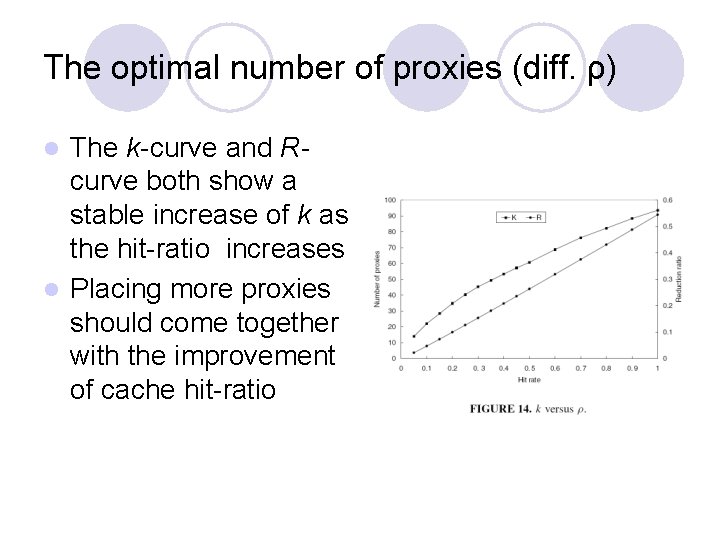
The optimal number of proxies (diff. ρ) The k-curve and Rcurve both show a stable increase of k as the hit-ratio increases l Placing more proxies should come together with the improvement of cache hit-ratio l
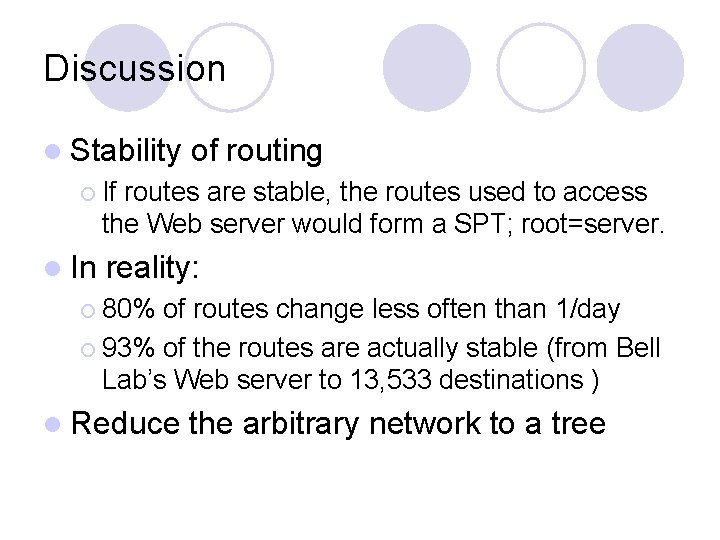
Discussion l Stability of routing ¡ If routes are stable, the routes used to access the Web server would form a SPT; root=server. l In reality: ¡ 80% of routes change less often than 1/day ¡ 93% of the routes are actually stable (from Bell Lab’s Web server to 13, 533 destinations ) l Reduce the arbitrary network to a tree
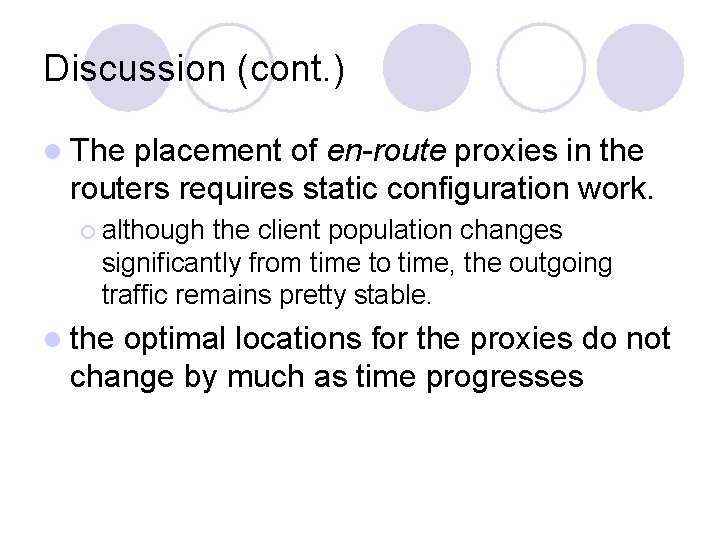
Discussion (cont. ) l The placement of en-route proxies in the routers requires static configuration work. ¡ although the client population changes significantly from time to time, the outgoing traffic remains pretty stable. l the optimal locations for the proxies do not change by much as time progresses
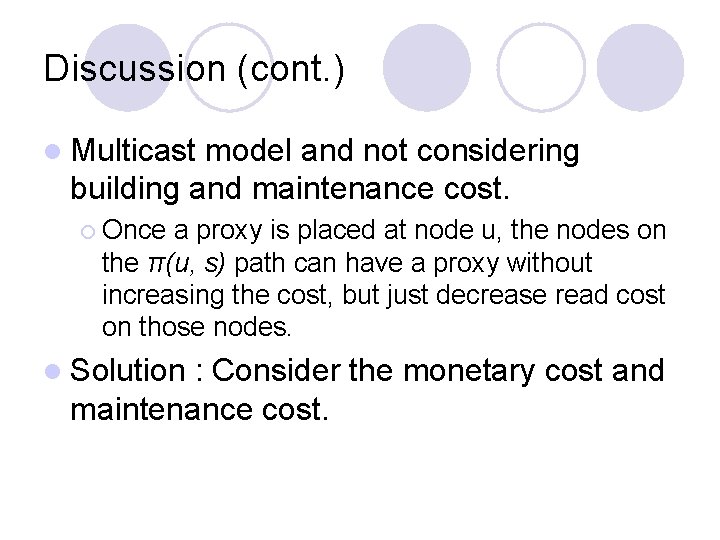
Discussion (cont. ) l Multicast model and not considering building and maintenance cost. ¡ Once a proxy is placed at node u, the nodes on the π(u, s) path can have a proxy without increasing the cost, but just decrease read cost on those nodes. l Solution : Consider the monetary cost and maintenance cost.
Conclusion l placing k proxies problem ¡ Time complexity : O(n 3 k 2), where k is the number of proxies and n the number of nodes in the system. l The optimal number of proxies problem ¡ given the read frequencies of all clients and the update frequency of the server. ¡ Time complexity : O(n 3),
Web-Server Proxies with Placement of Consideration of 2007 COMMUNICATION OPTIMIZATION FOR PARALLEL PROCESSING R 李苡嬋 e Update Operations a 張又仁 莊謹譽 d Internet a n d o n t h e