
A numerical analysis approach to convex optimization Speaker
![Recap [Adil-K. -Peng-Sachdeva]](https://slidetodoc.com/presentation_image_h/0db80a6426a3e51227351e21acbfaffe/image-64.jpg "Recap [Adil-K. -Peng-Sachdeva]")


- Slides: 128
A numerical analysis approach to convex optimization Speaker Rasmus Kyng ETH Zurich Joint works with D. Adil, R. Peng, S. Sachdeva, D. Wang March, 2020
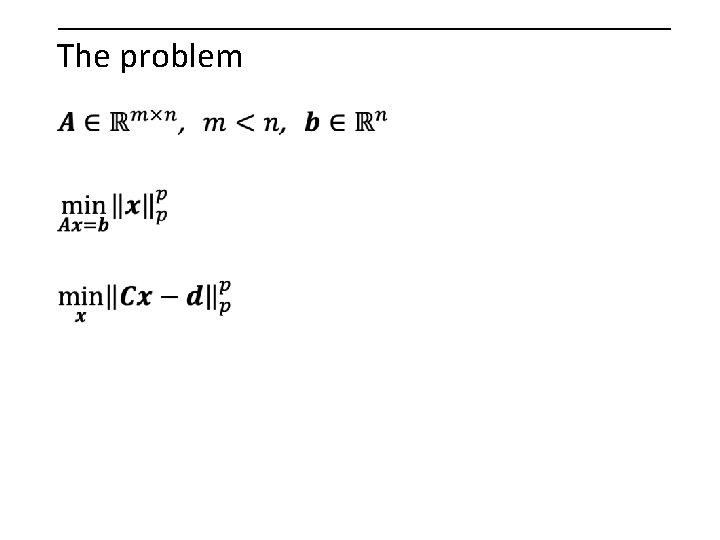
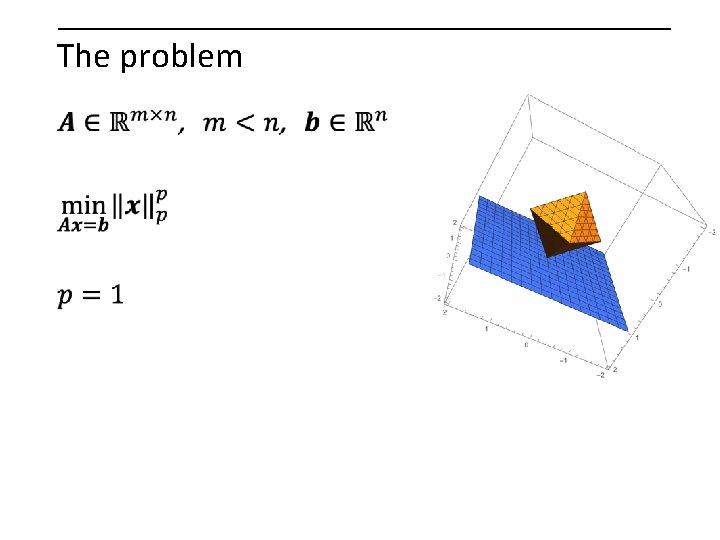
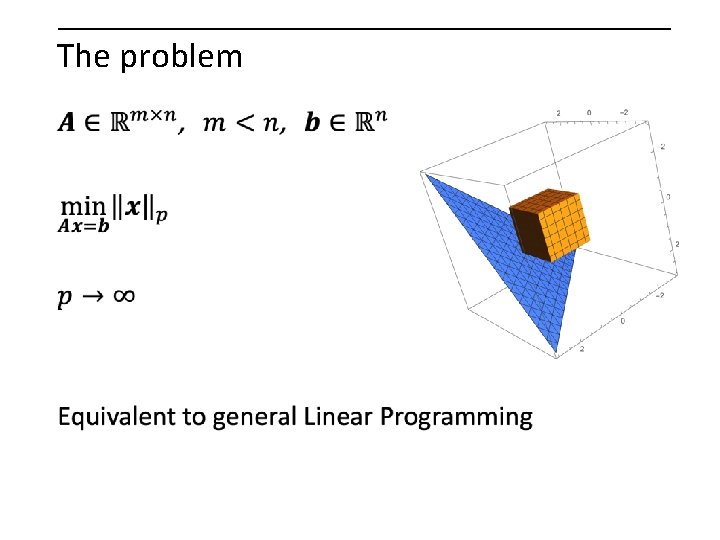
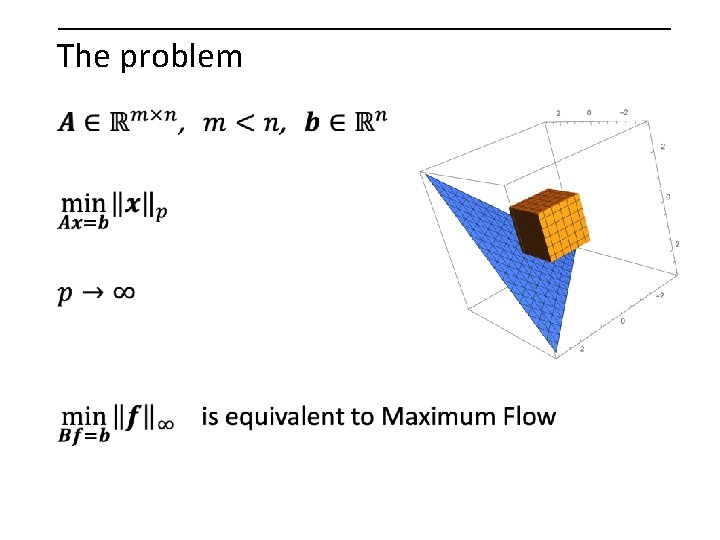
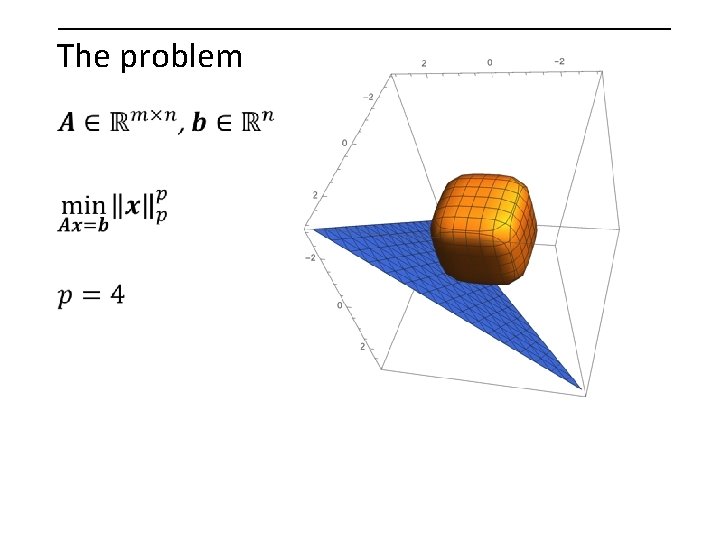
The problem
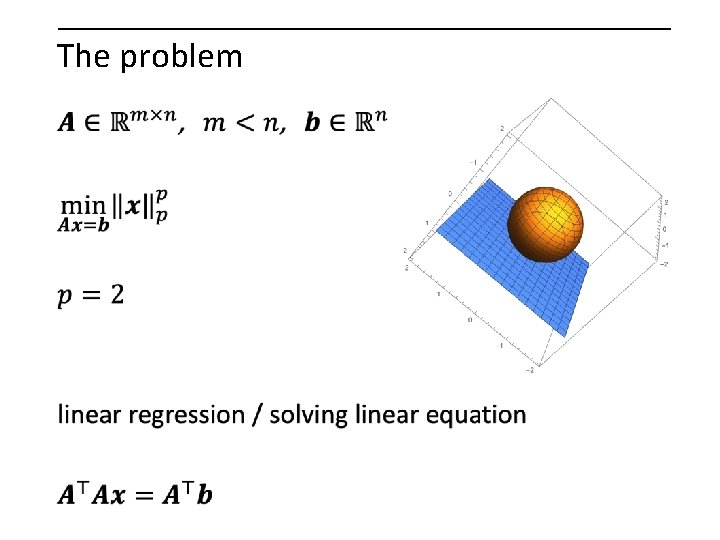
The problem
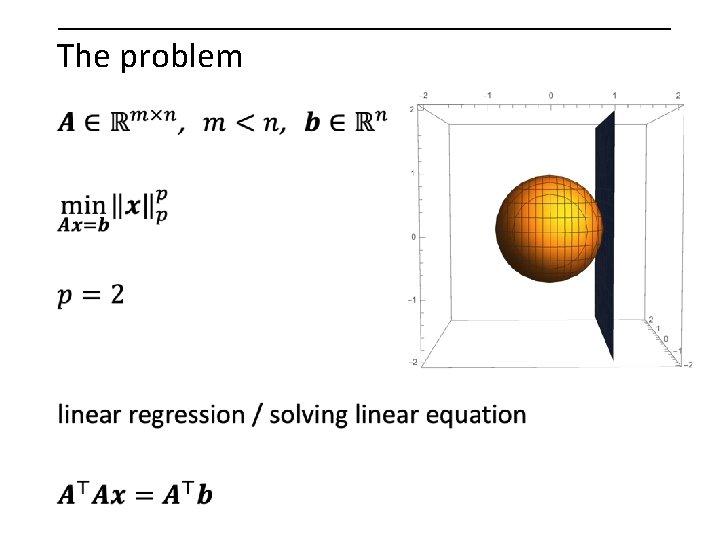
The problem
The problem
The problem
The problem
The problem
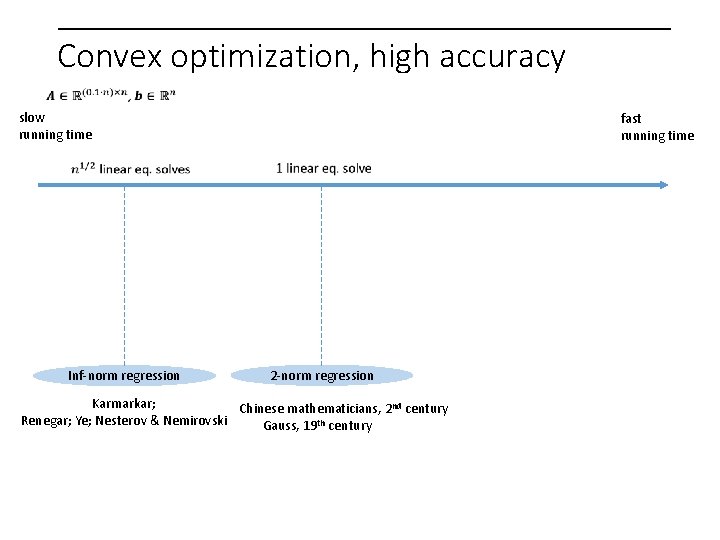
Convex optimization, high accuracy slow running time fast running time Inf-norm regression 2 -norm regression Karmarkar; Chinese mathematicians, 2 nd century Renegar; Ye; Nesterov & Nemirovski Gauss, 19 th century
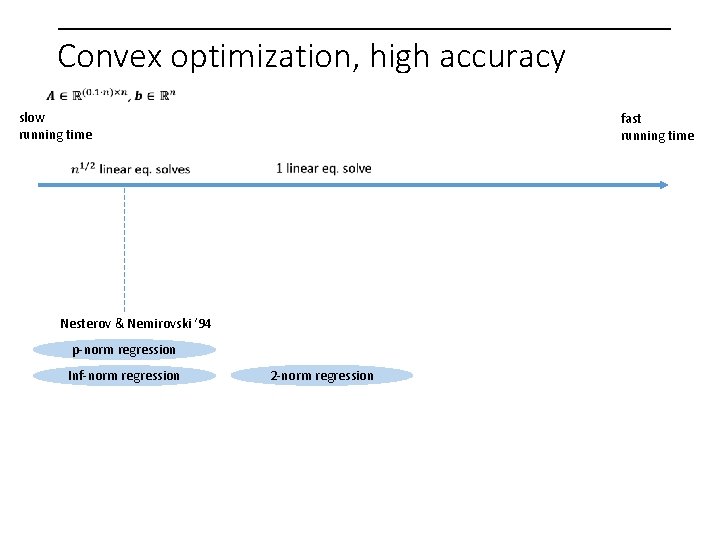
Convex optimization, high accuracy slow running time fast running time Nesterov & Nemirovski ‘ 94 p-norm regression Inf-norm regression 2 -norm regression
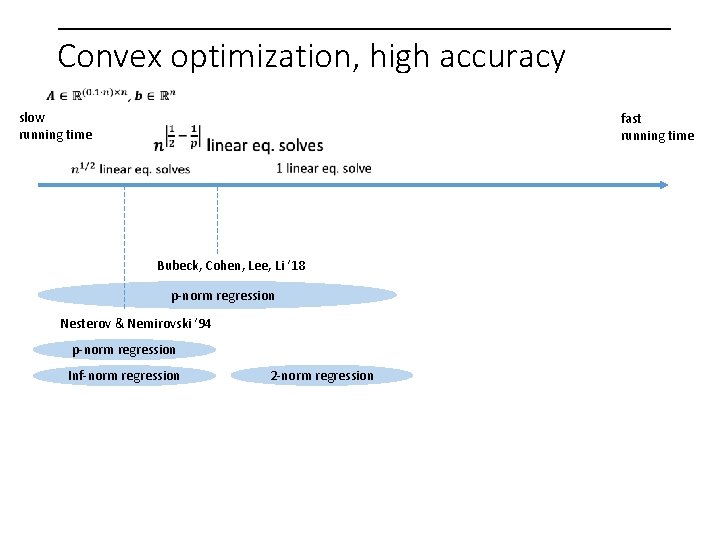
Convex optimization, high accuracy slow running time fast running time Bubeck, Cohen, Lee, Li ‘ 18 p-norm regression Nesterov & Nemirovski ‘ 94 p-norm regression Inf-norm regression 2 -norm regression
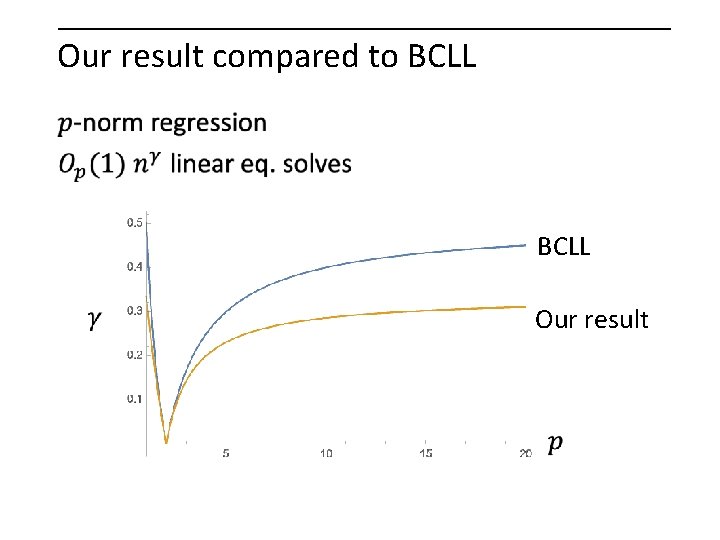
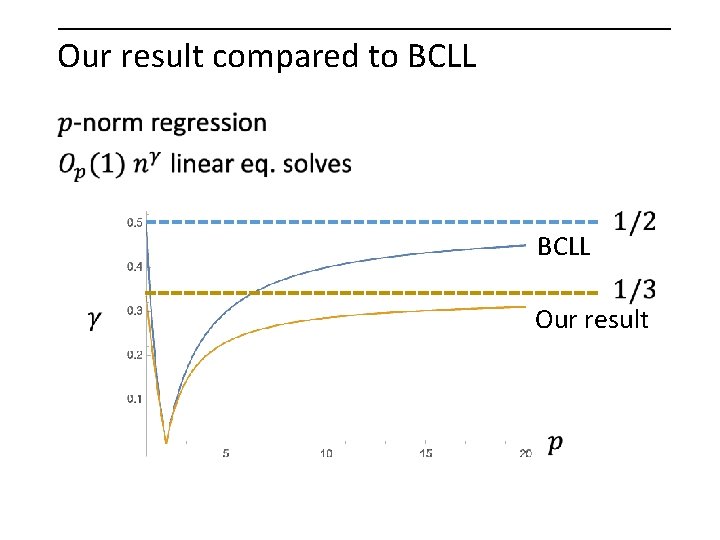
Our result compared to BCLL Our result
Our result compared to BCLL Our result
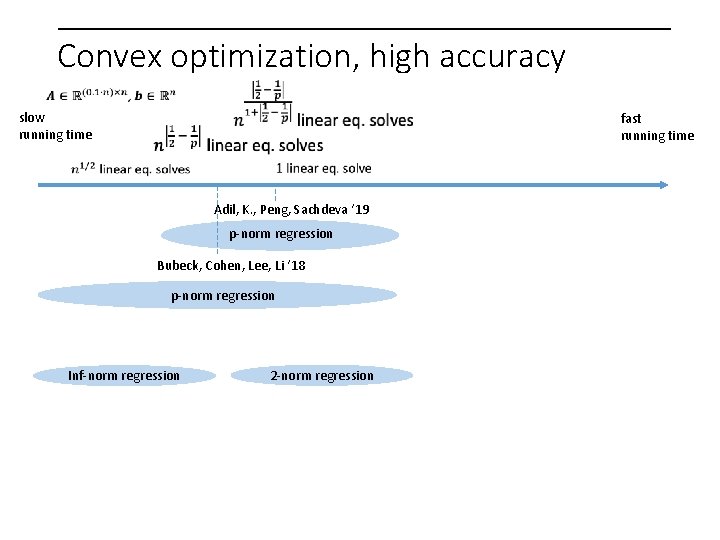
Convex optimization, high accuracy slow running time fast running time Adil, K. , Peng, Sachdeva ‘ 19 p-norm regression Bubeck, Cohen, Lee, Li ‘ 18 p-norm regression Inf-norm regression 2 -norm regression
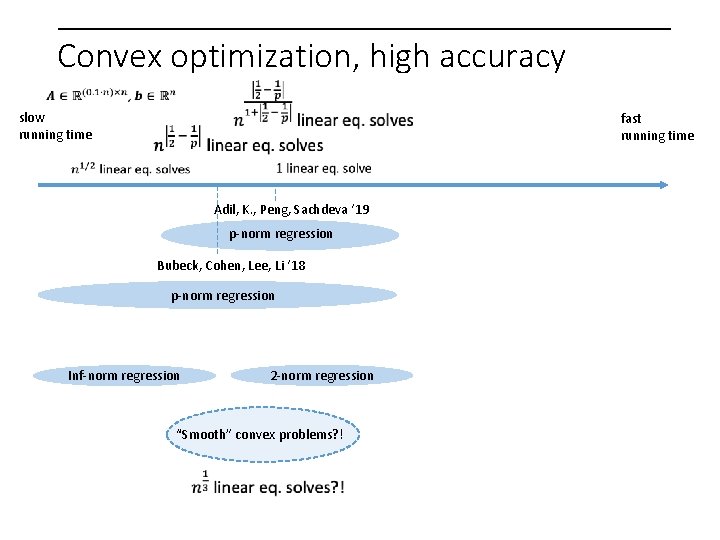
Convex optimization, high accuracy slow running time fast running time Adil, K. , Peng, Sachdeva ‘ 19 p-norm regression Bubeck, Cohen, Lee, Li ‘ 18 p-norm regression Inf-norm regression 2 -norm regression “Smooth” convex problems? !
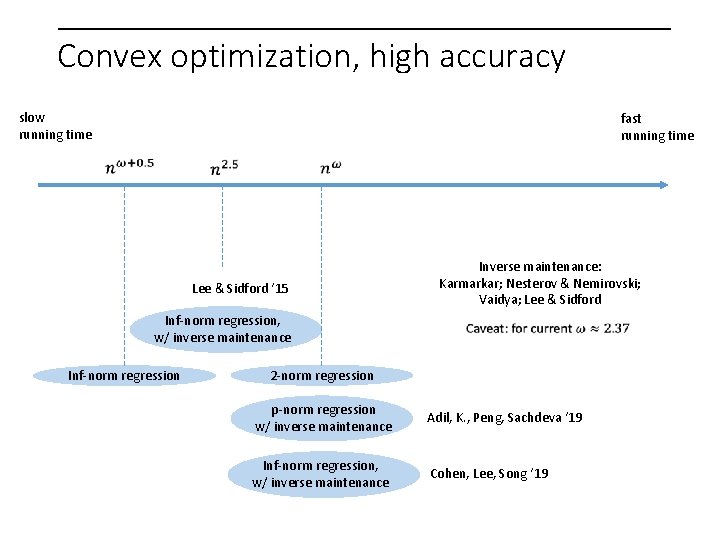
Convex optimization, high accuracy slow running time fast running time Lee & Sidford ‘ 15 Inf-norm regression, w/ inverse maintenance Inf-norm regression Inverse maintenance: Karmarkar; Nesterov & Nemirovski; Vaidya; Lee & Sidford 2 -norm regression p-norm regression w/ inverse maintenance Adil, K. , Peng, Sachdeva ‘ 19 Inf-norm regression, w/ inverse maintenance Cohen, Lee, Song ‘ 19
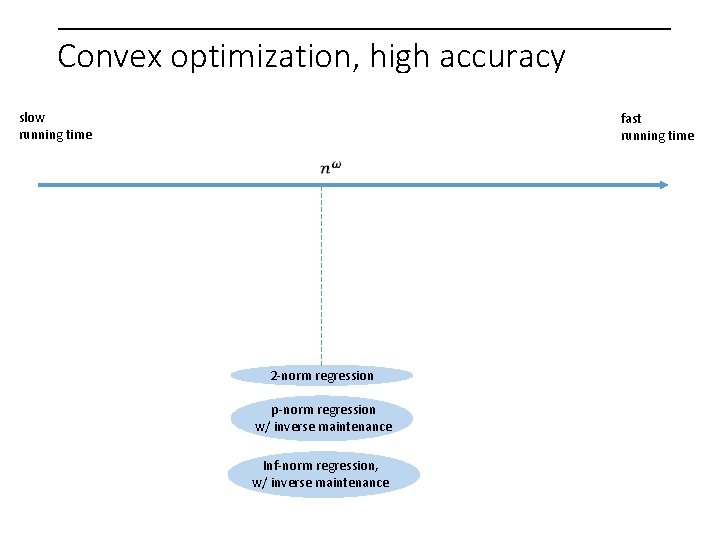
Convex optimization, high accuracy slow running time fast running time 2 -norm regression p-norm regression w/ inverse maintenance Inf-norm regression, w/ inverse maintenance
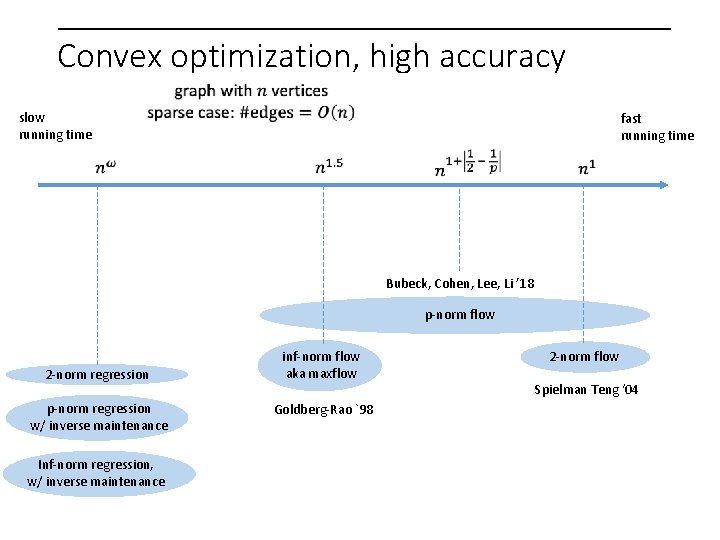
Convex optimization, high accuracy slow running time fast running time Bubeck, Cohen, Lee, Li ’ 18 p-norm flow 2 -norm regression p-norm regression w/ inverse maintenance Inf-norm regression, w/ inverse maintenance inf-norm flow aka maxflow Goldberg-Rao `98 2 -norm flow Spielman Teng ‘ 04
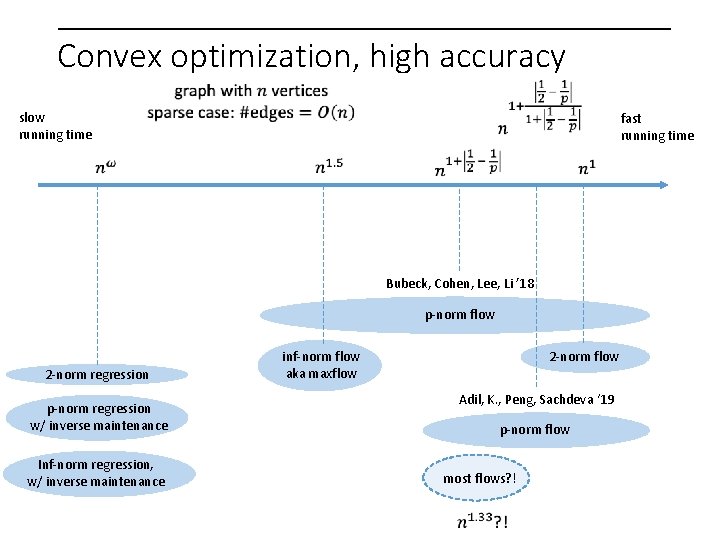
Convex optimization, high accuracy slow running time fast running time Bubeck, Cohen, Lee, Li ’ 18 p-norm flow 2 -norm regression inf-norm flow aka maxflow 2 -norm flow Adil, K. , Peng, Sachdeva ‘ 19 p-norm regression w/ inverse maintenance Inf-norm regression, w/ inverse maintenance p-norm flow most flows? !
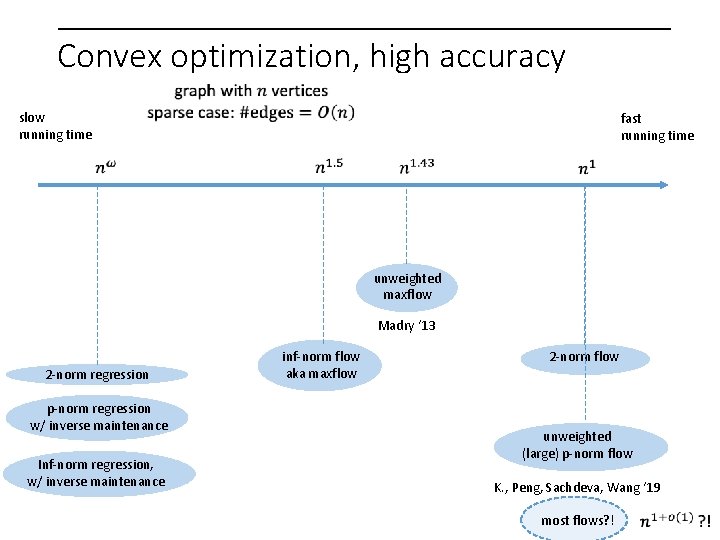
Convex optimization, high accuracy slow running time fast running time unweighted maxflow Madry ‘ 13 2 -norm regression p-norm regression w/ inverse maintenance Inf-norm regression, w/ inverse maintenance inf-norm flow aka maxflow 2 -norm flow unweighted (large) p-norm flow K. , Peng, Sachdeva, Wang ‘ 19 most flows? !
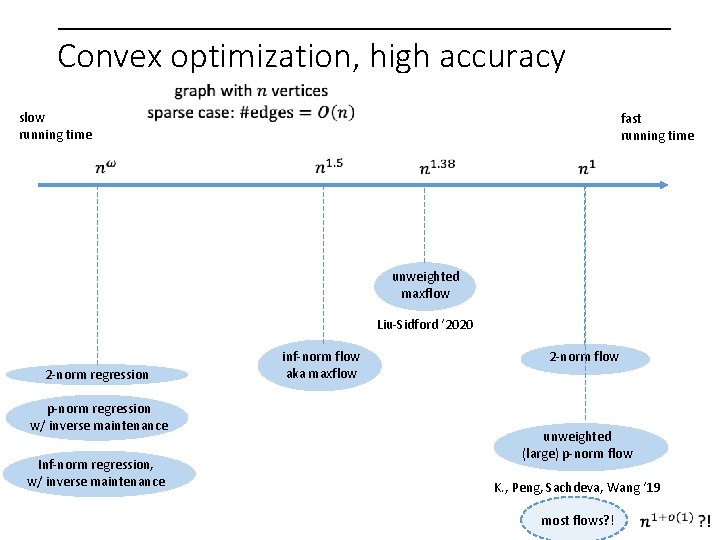
Convex optimization, high accuracy slow running time fast running time unweighted maxflow Liu-Sidford ‘ 2020 2 -norm regression p-norm regression w/ inverse maintenance Inf-norm regression, w/ inverse maintenance inf-norm flow aka maxflow 2 -norm flow unweighted (large) p-norm flow K. , Peng, Sachdeva, Wang ‘ 19 most flows? !
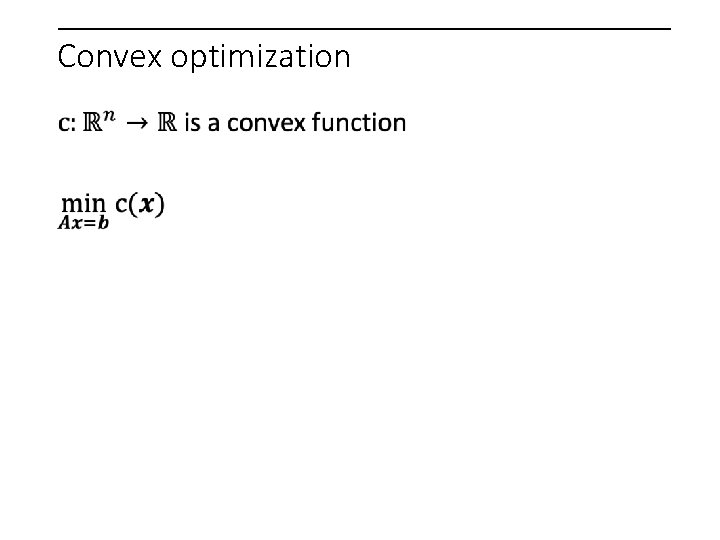
Convex optimization
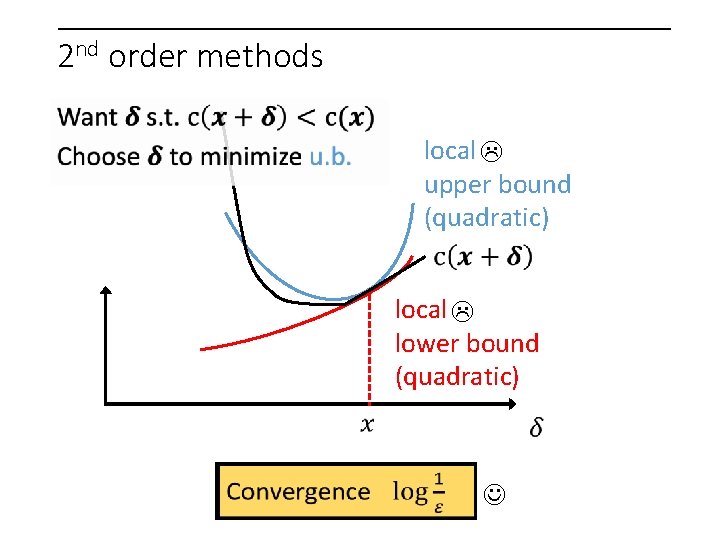
2 nd order methods local upper bound (quadratic) local lower bound (quadratic)
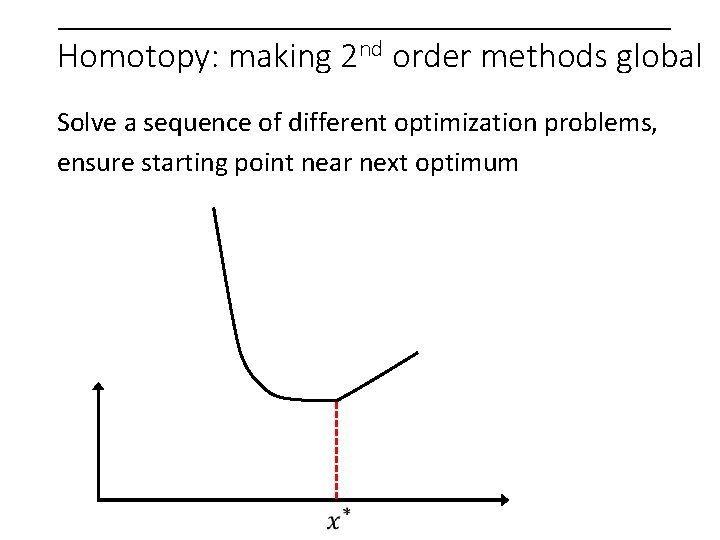
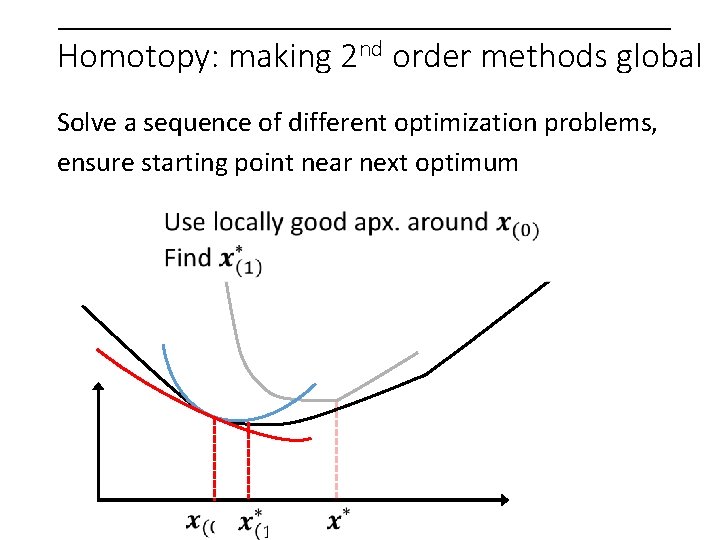
Homotopy: making 2 nd order methods global Solve a sequence of different optimization problems, ensure starting point near next optimum
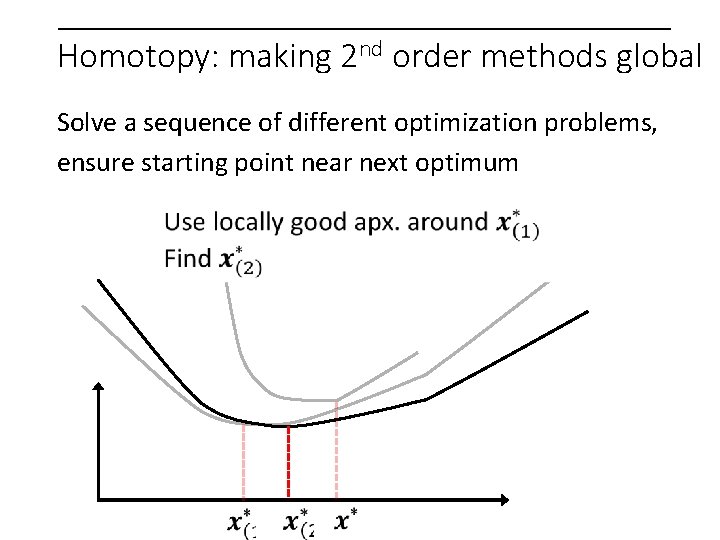
Homotopy: making 2 nd order methods global Solve a sequence of different optimization problems, ensure starting point near next optimum
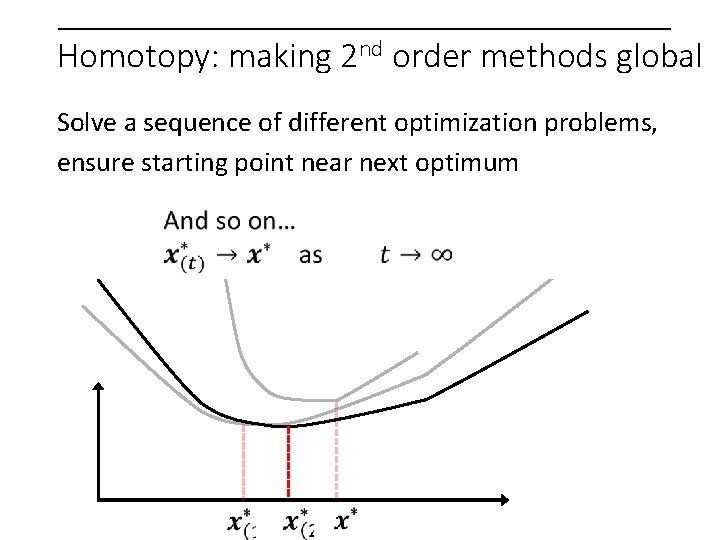
Homotopy: making 2 nd order methods global Solve a sequence of different optimization problems, ensure starting point near next optimum
Homotopy: making 2 nd order methods global Solve a sequence of different optimization problems, ensure starting point near next optimum
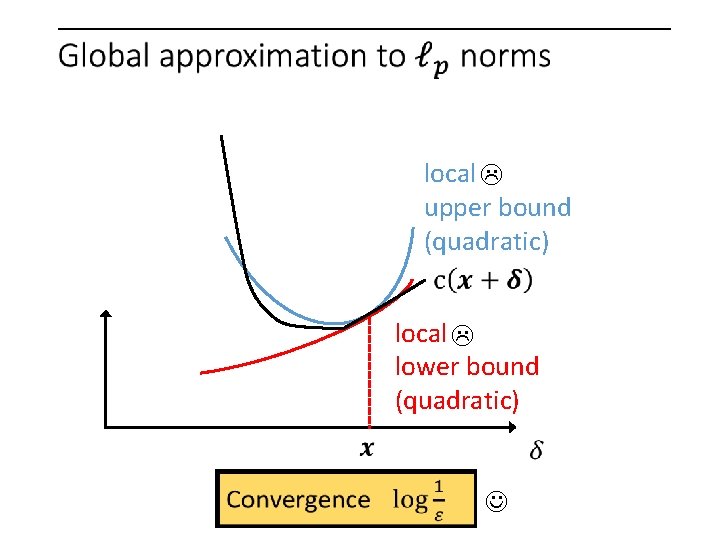
local upper bound (quadratic) local lower bound (quadratic)
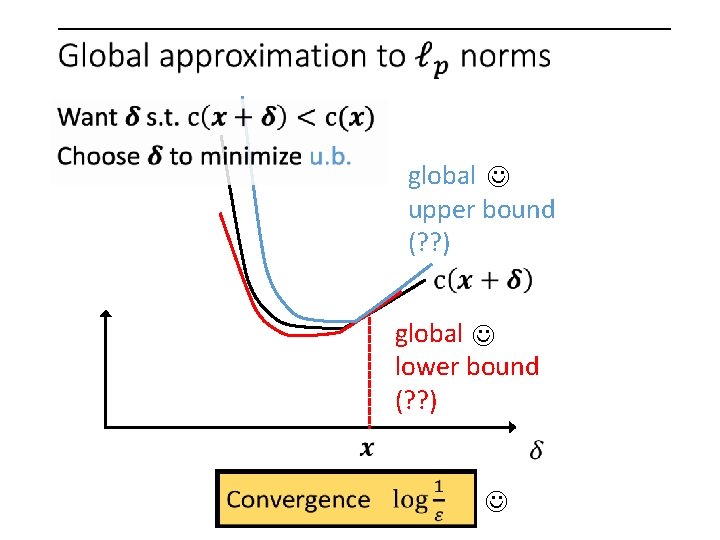
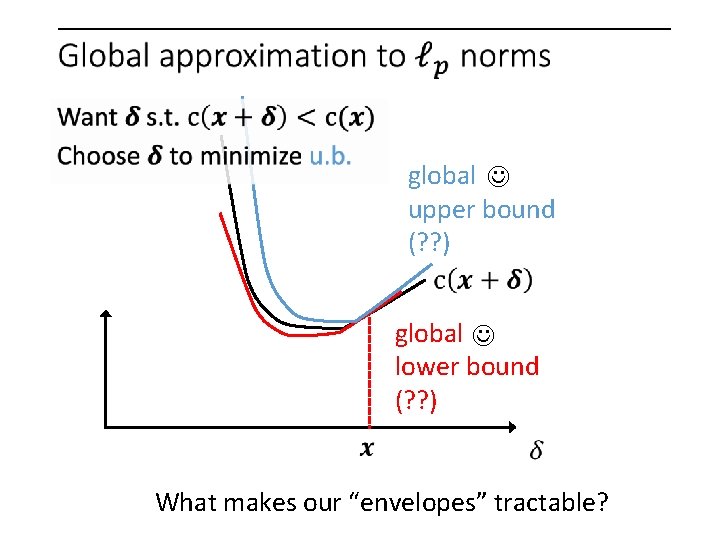
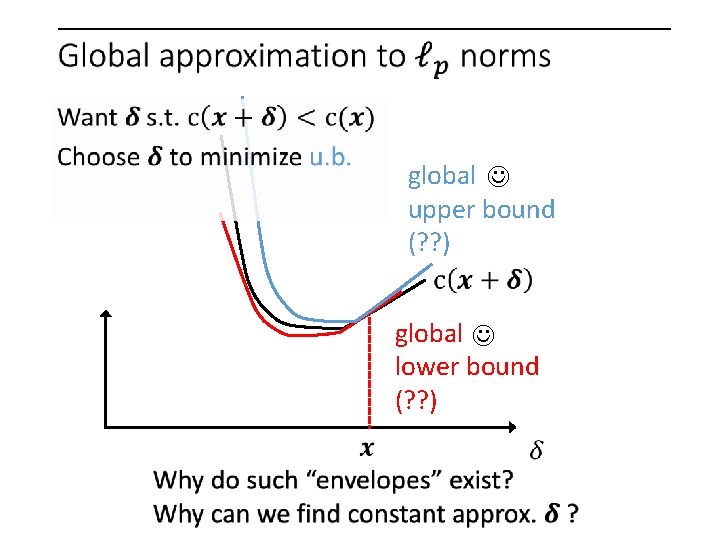
global upper bound (? ? ) global lower bound (? ? )
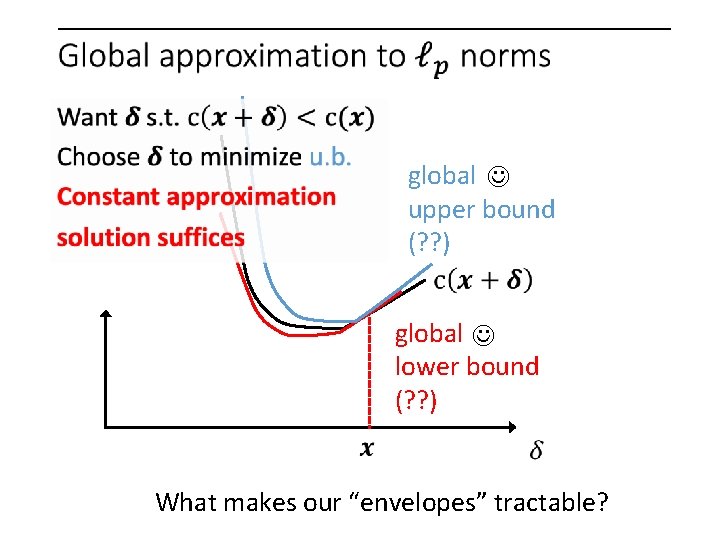
global upper bound (? ? ) global lower bound (? ? ) What makes our “envelopes” tractable?
global upper bound (? ? ) global lower bound (? ? ) What makes our “envelopes” tractable?
global upper bound (? ? ) global lower bound (? ? )
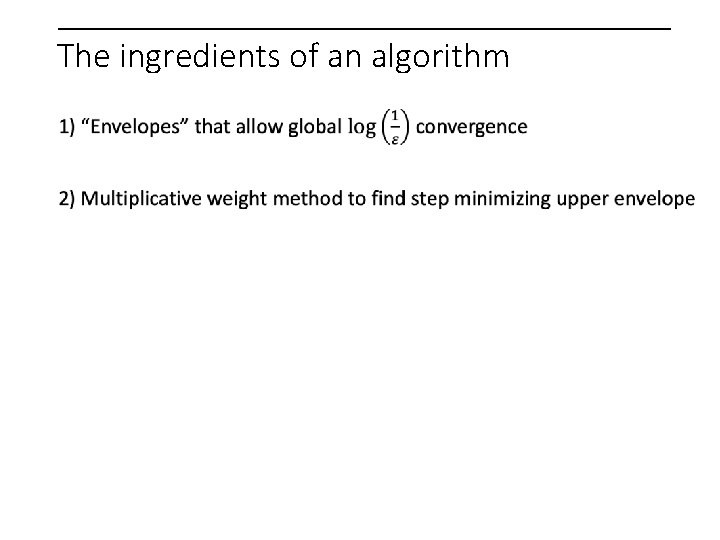
The ingredients of an algorithm
The envelopes (upper and lower bounds)
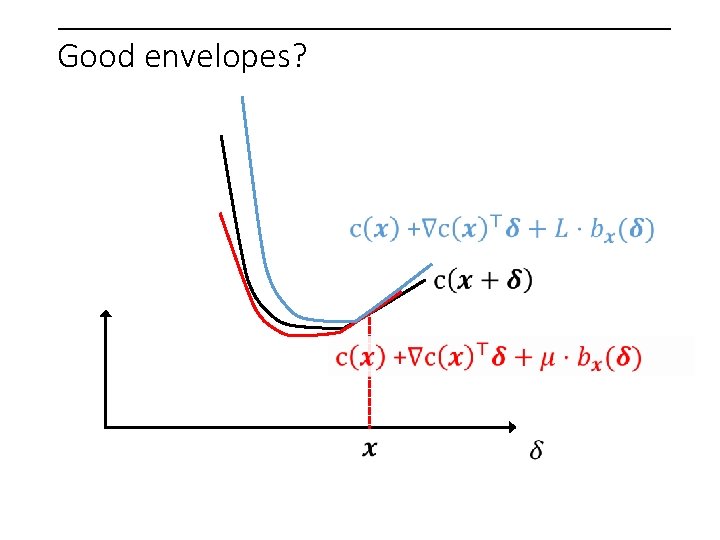
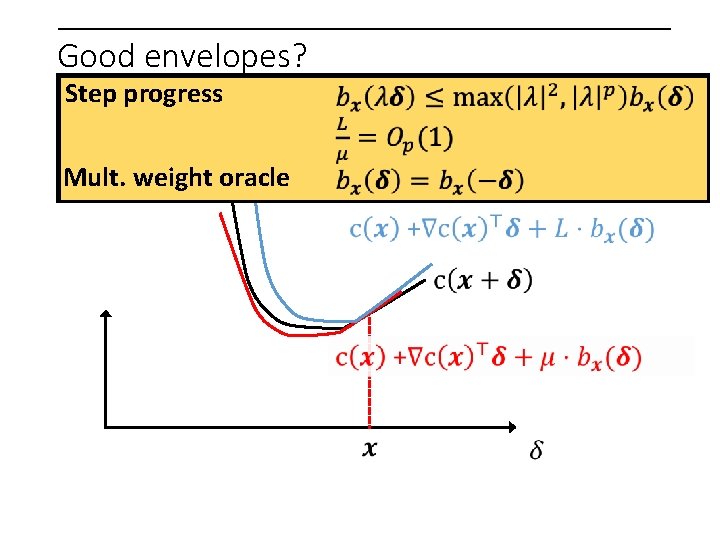
Good envelopes?
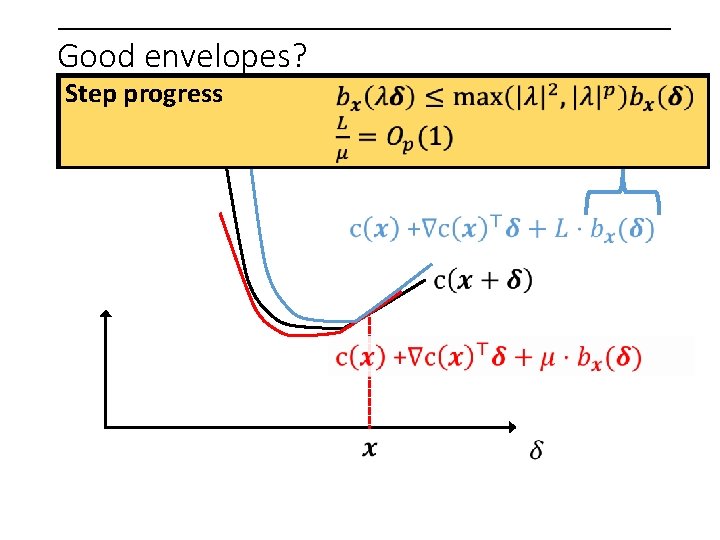
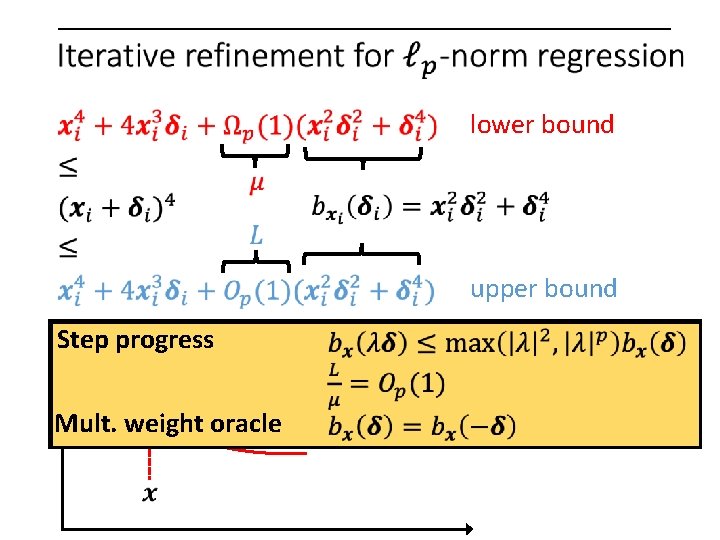
Good envelopes? Step progress
Good envelopes? Step progress Mult. weight oracle
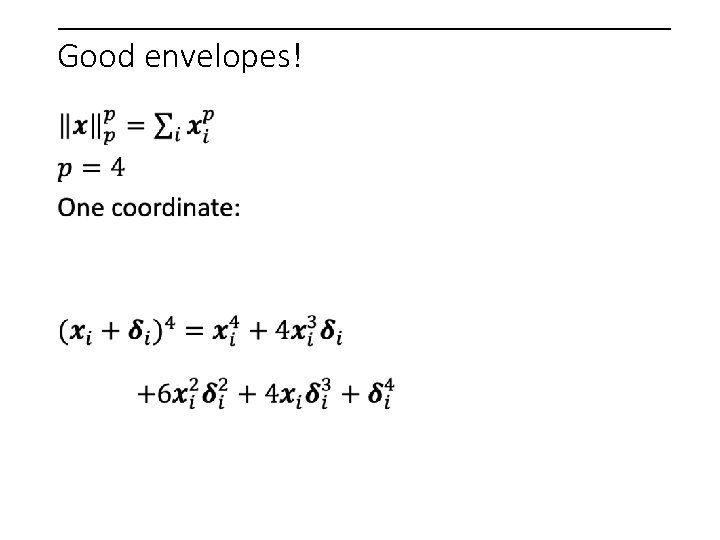
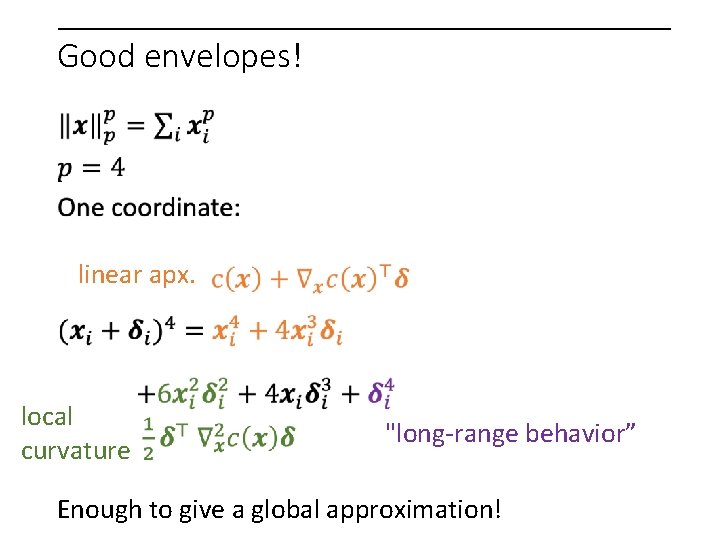
Good envelopes!
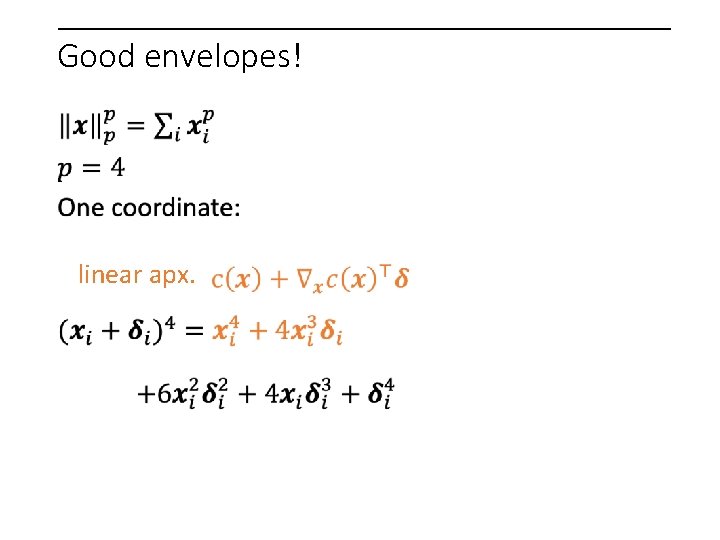
Good envelopes! linear apx.
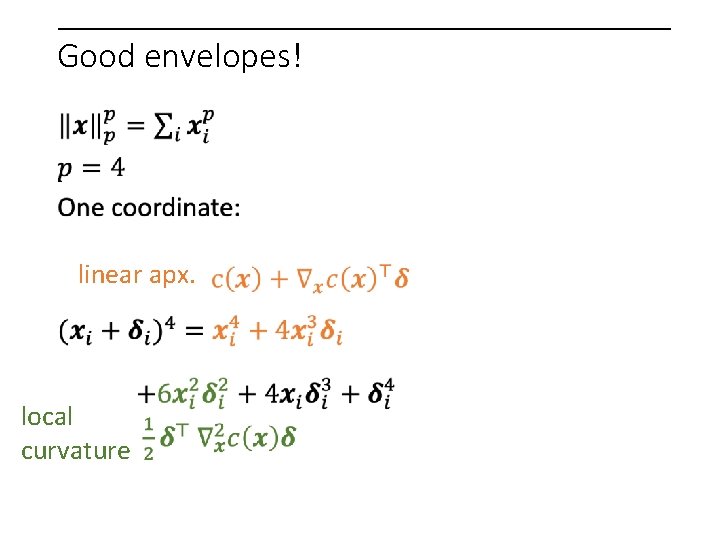
Good envelopes! linear apx. local curvature
Good envelopes! linear apx. local curvature "long-range behavior” Enough to give a global approximation!
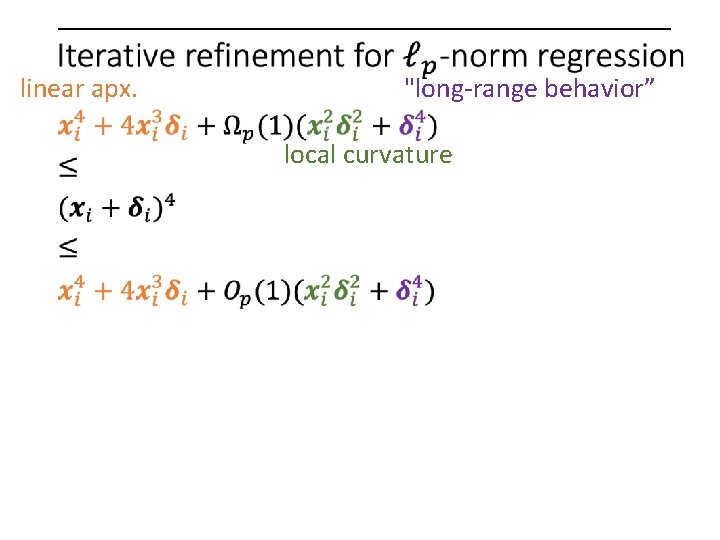
linear apx. "long-range behavior” local curvature
lower bound upper bound Step progress Mult. weight oracle
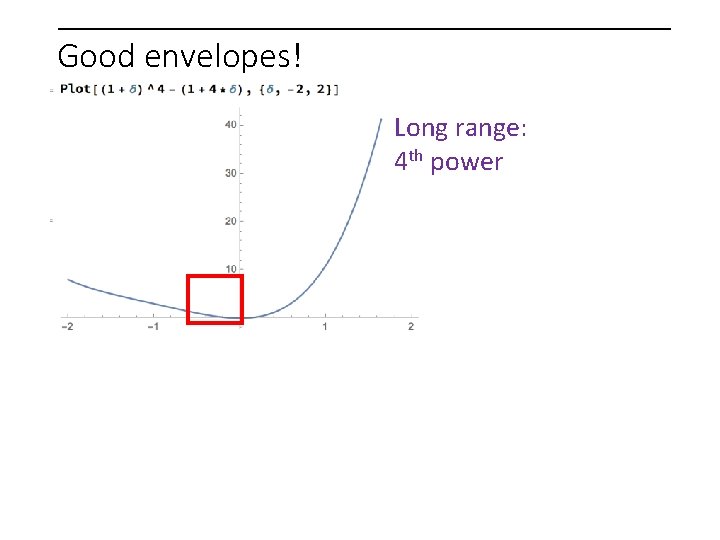
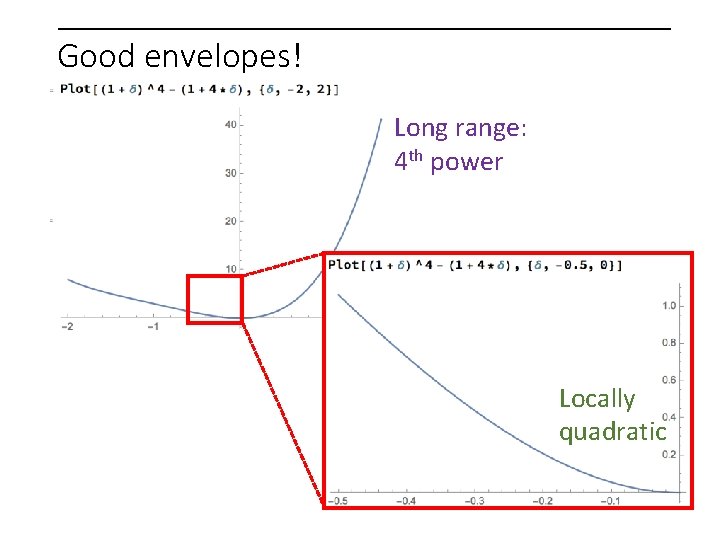
Good envelopes! Long range: 4 th power
Good envelopes! Long range: 4 th power Locally quadratic
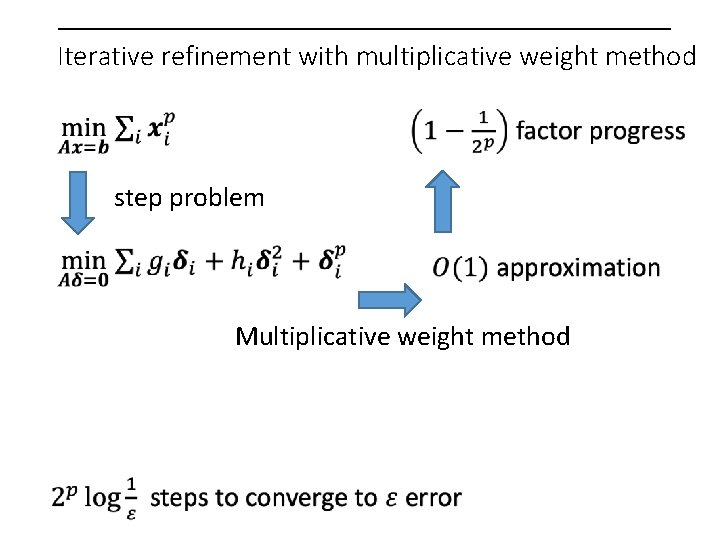
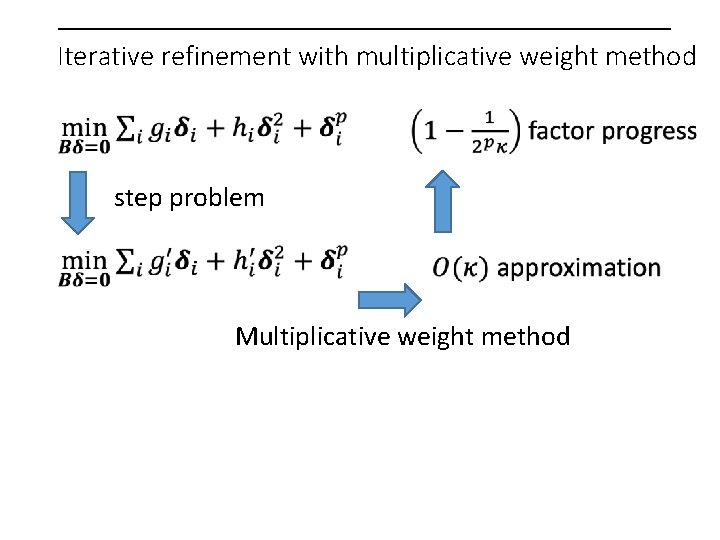
Iterative refinement with multiplicative weight method step problem Multiplicative weight method
Using multiplicative weights to take a step
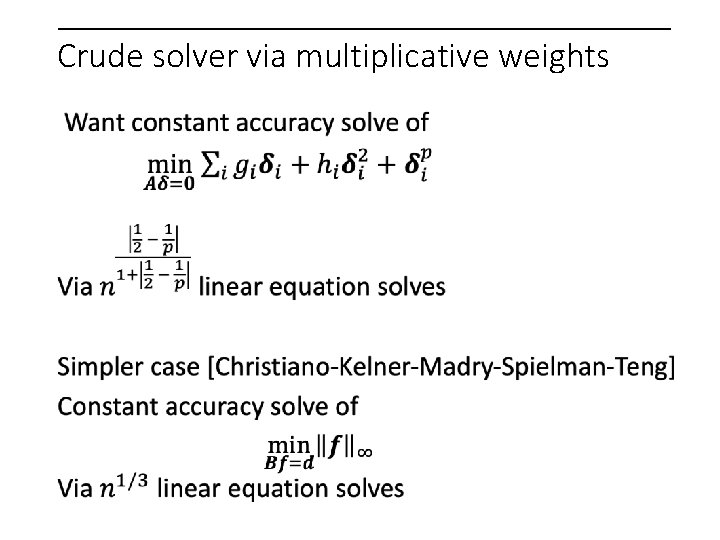
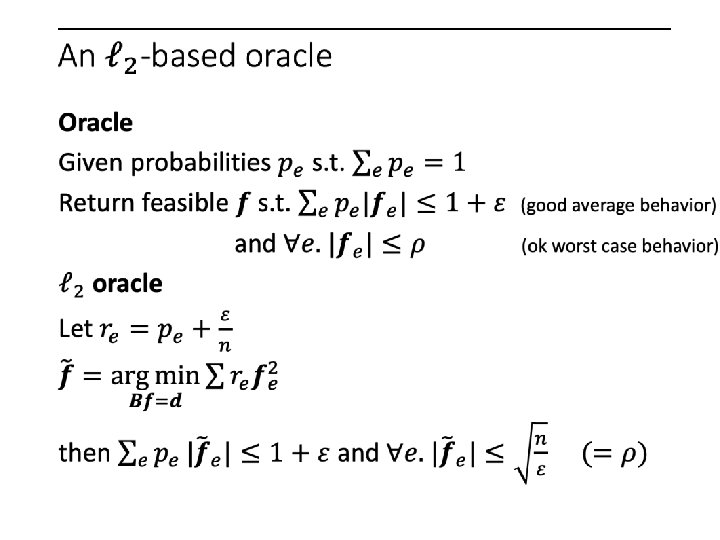
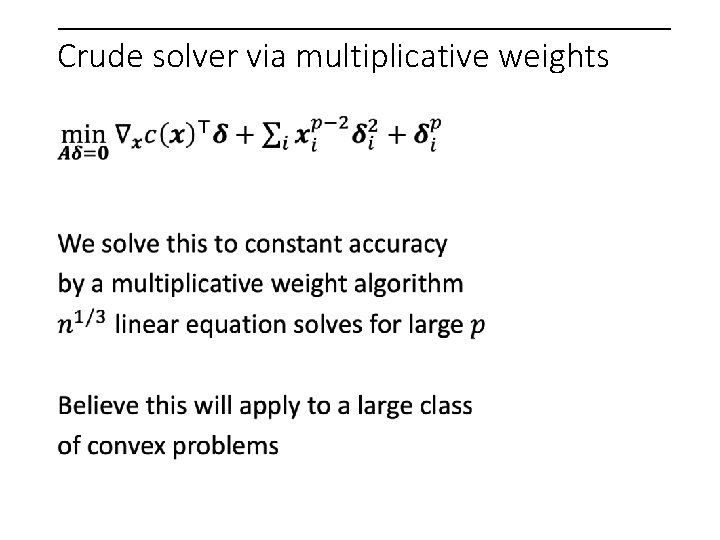
Crude solver via multiplicative weights
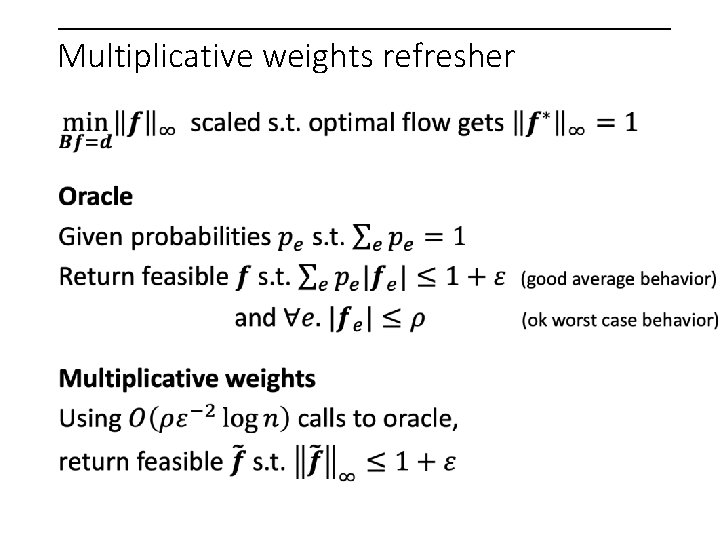
Multiplicative weights refresher
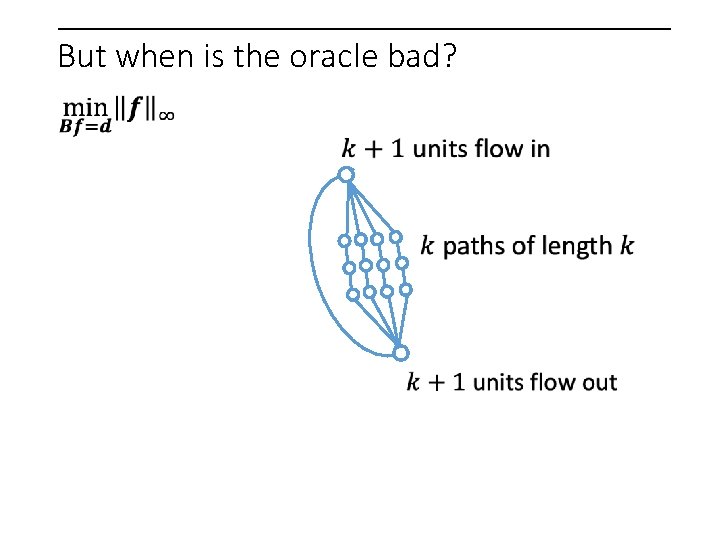
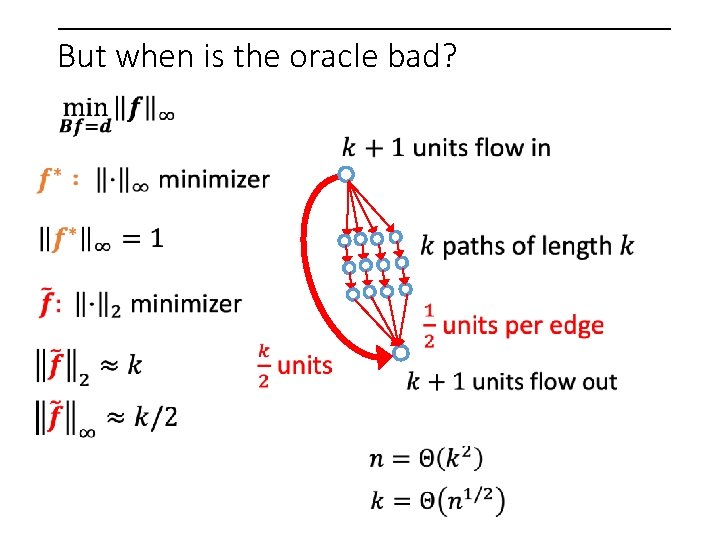
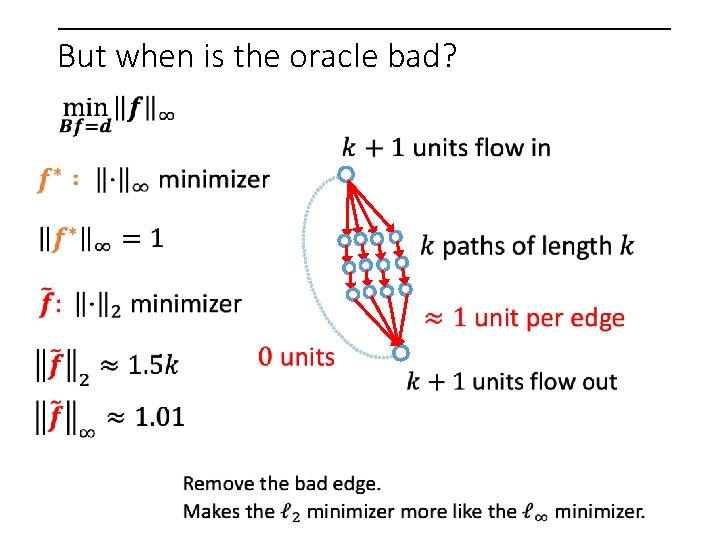
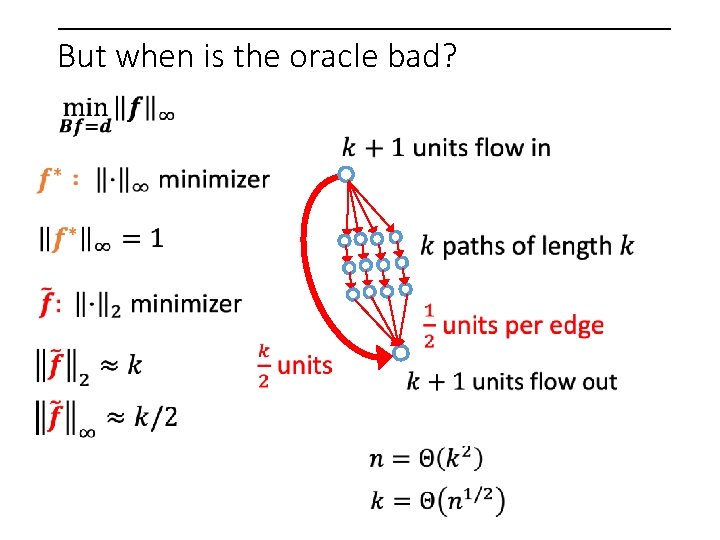
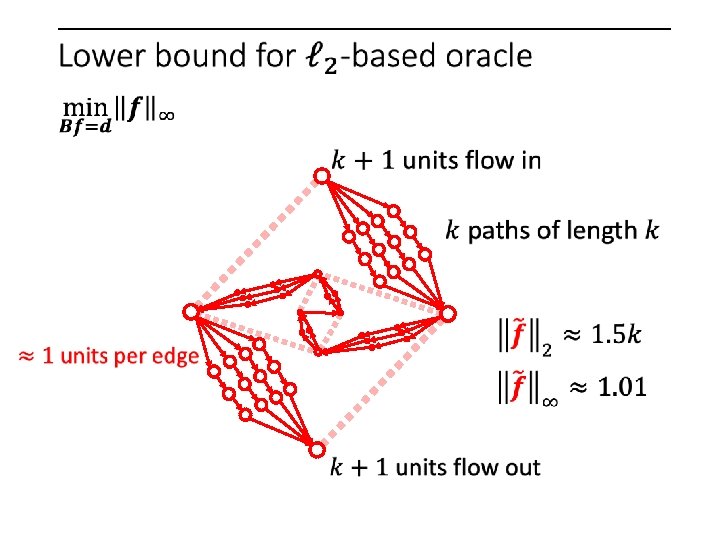
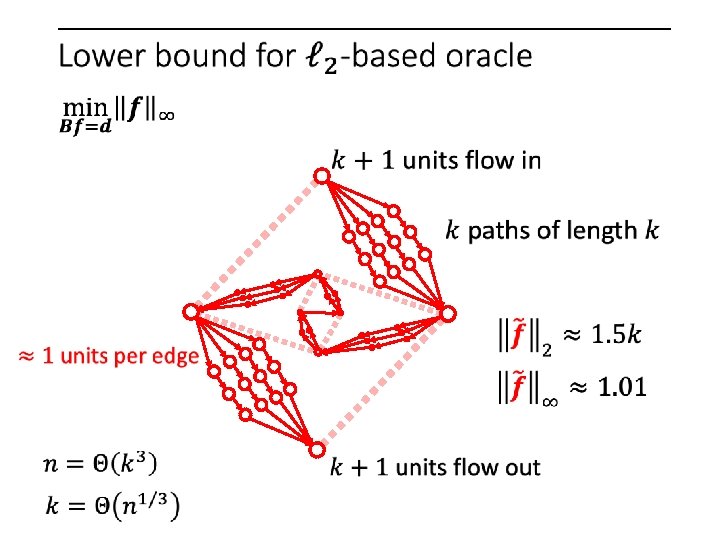
But when is the oracle bad?
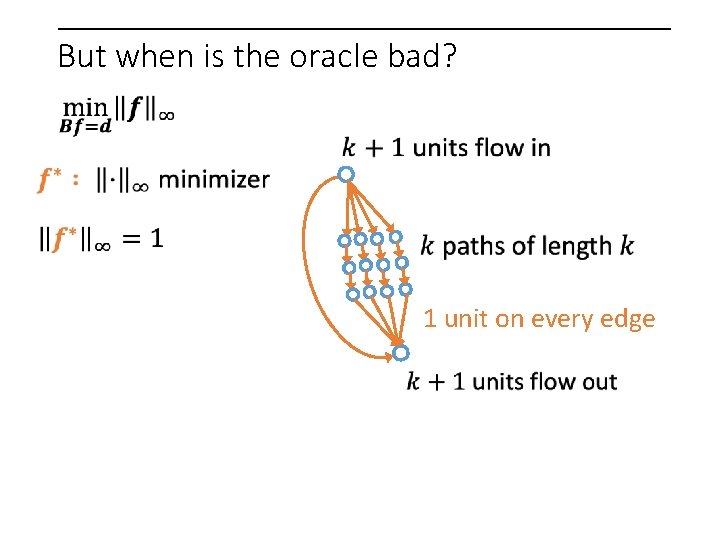
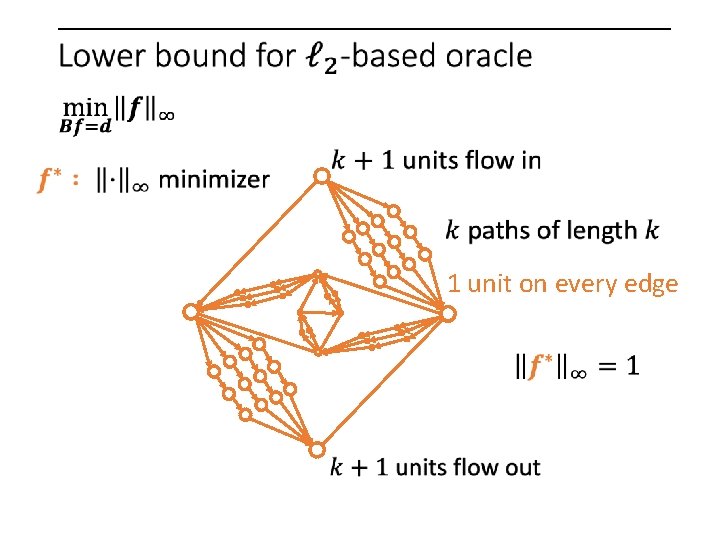
But when is the oracle bad? 1 unit on every edge
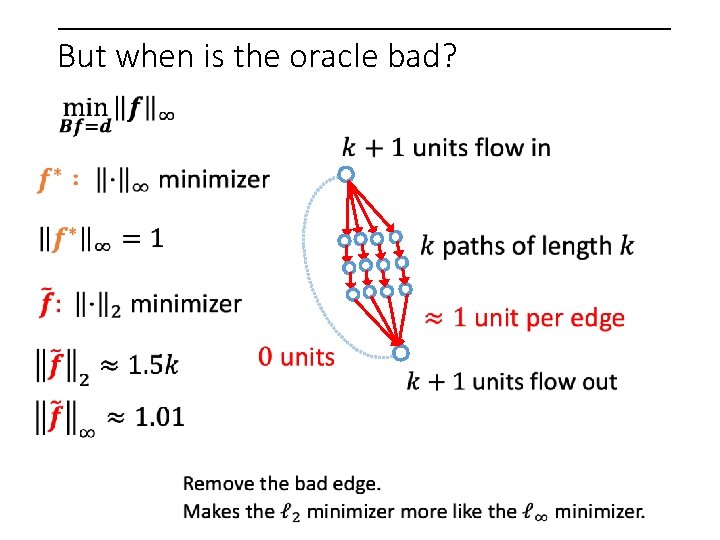
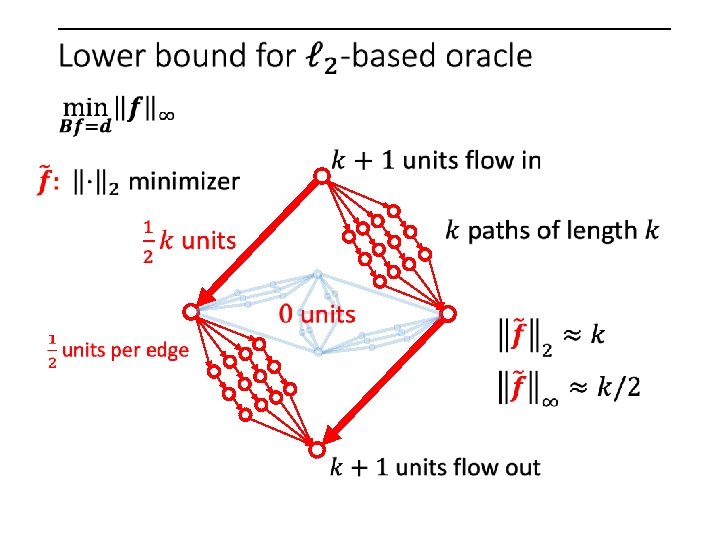
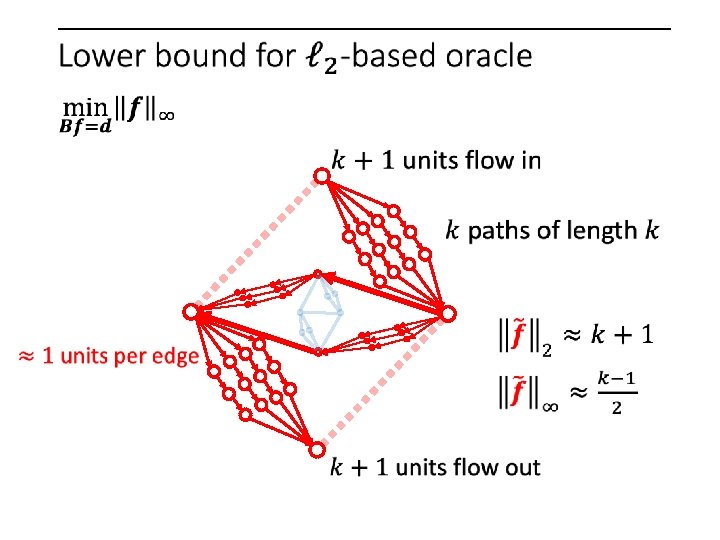
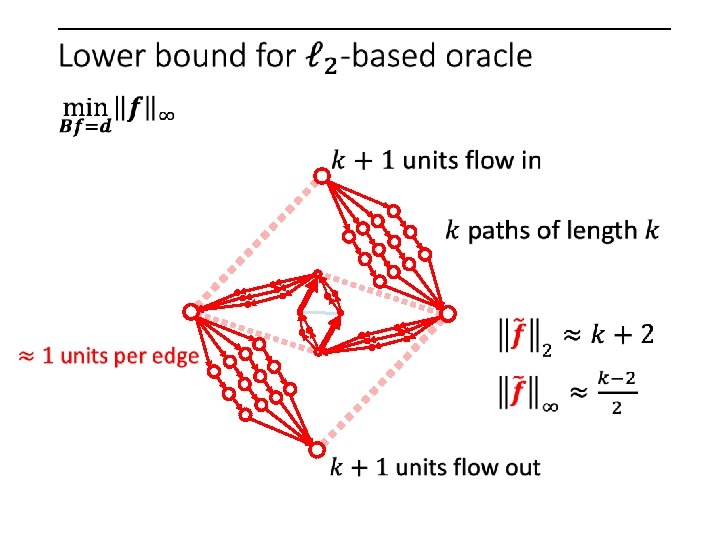
But when is the oracle bad?
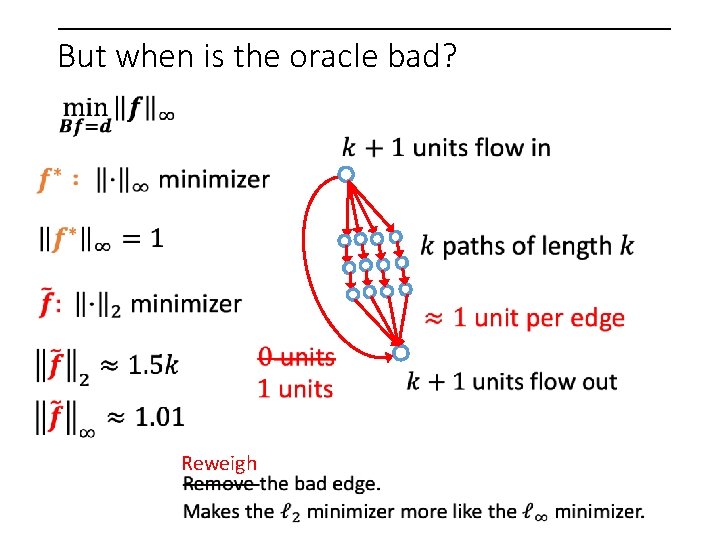
But when is the oracle bad?
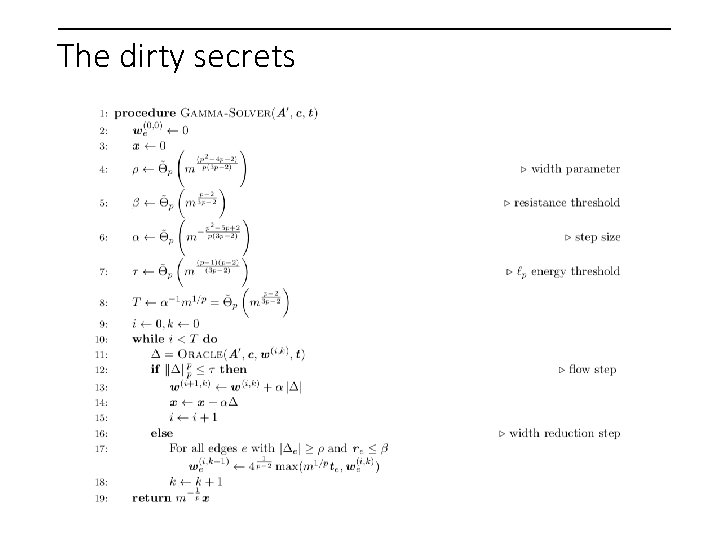
The dirty secrets
Crude solver via multiplicative weights
Why do we call it “iterative refinement”?
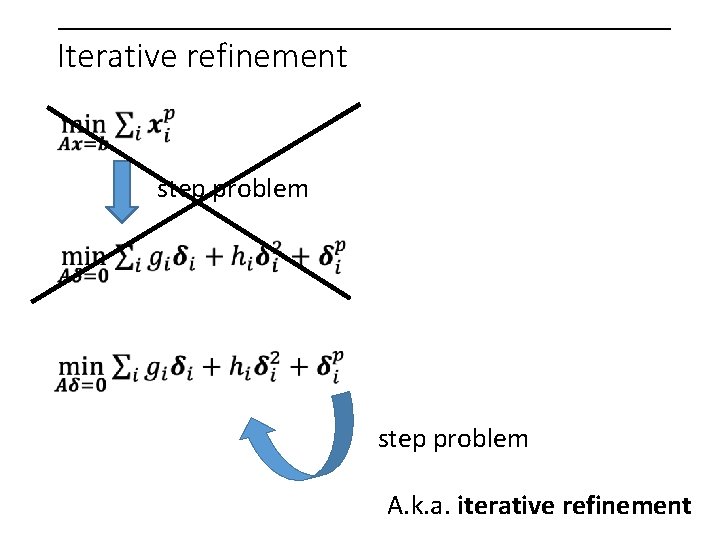
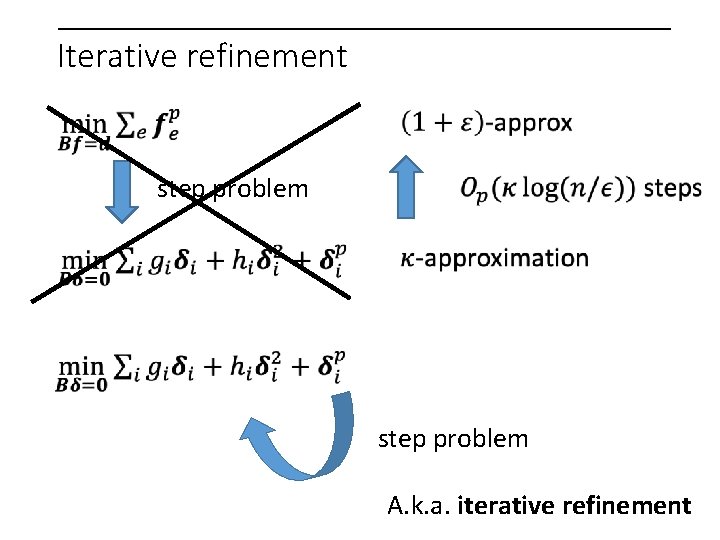
Iterative refinement step problem A. k. a. iterative refinement
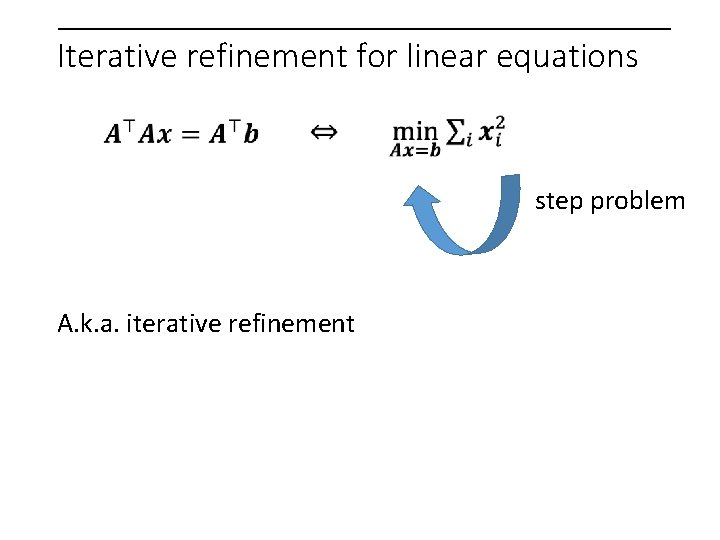
Iterative refinement for linear equations step problem A. k. a. iterative refinement
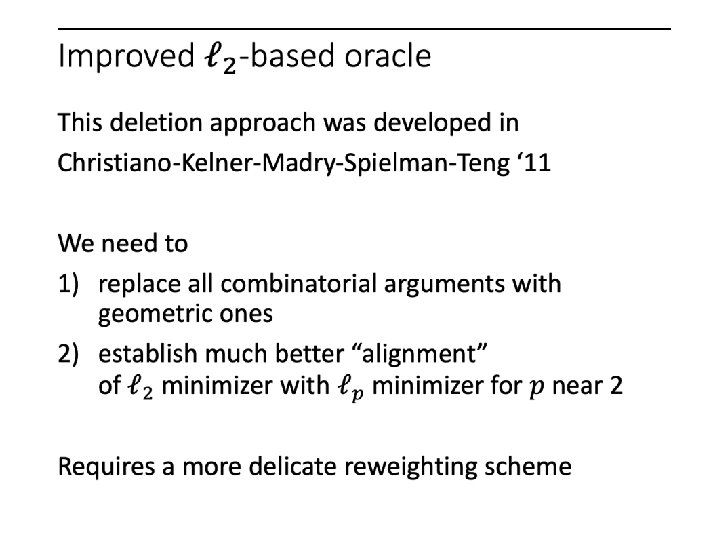
Iterative refinement For linear equations, build the “crude” solver by preconditioning For our non-linear equations build the “crude” solver by multiplicative weights Or we can build a solver by recursive preconditioning Must be nonlinear, adaptive?
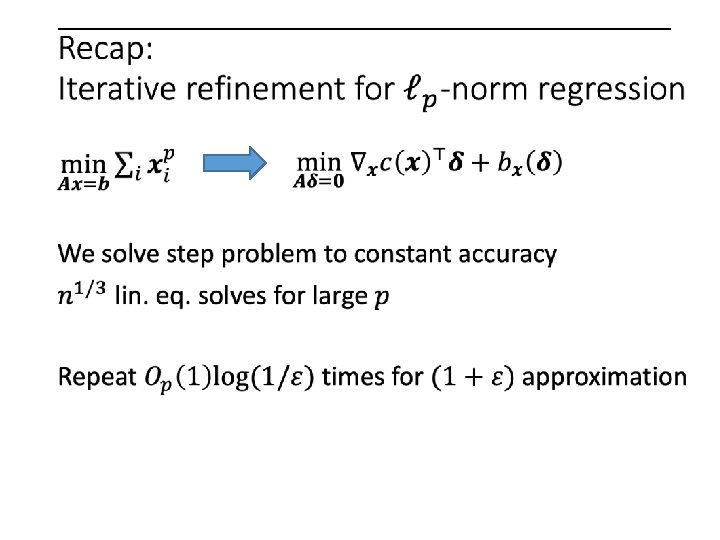
Recap [Adil-K. -Peng-Sachdeva]
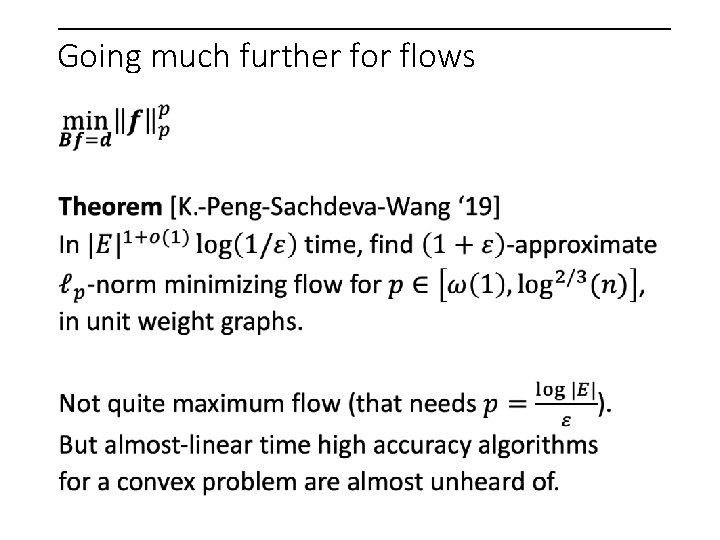
Going much further for flows
Going much further for flows
Iterative refinement step problem A. k. a. iterative refinement
Iterative refinement with multiplicative weight method step problem Multiplicative weight method
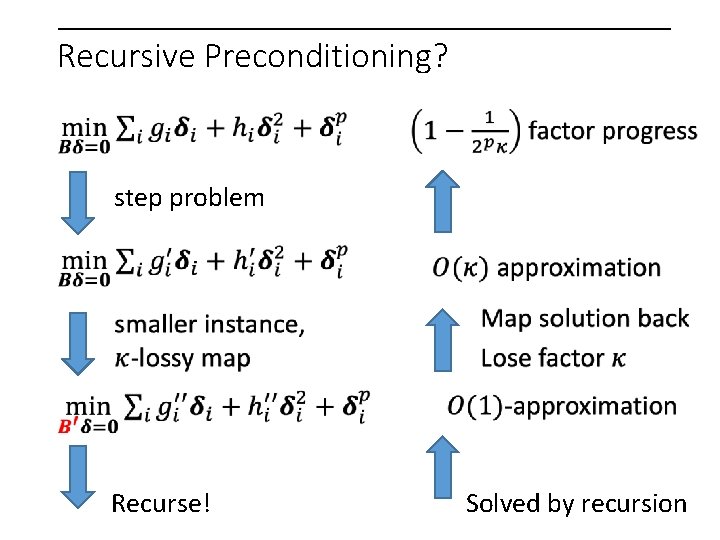
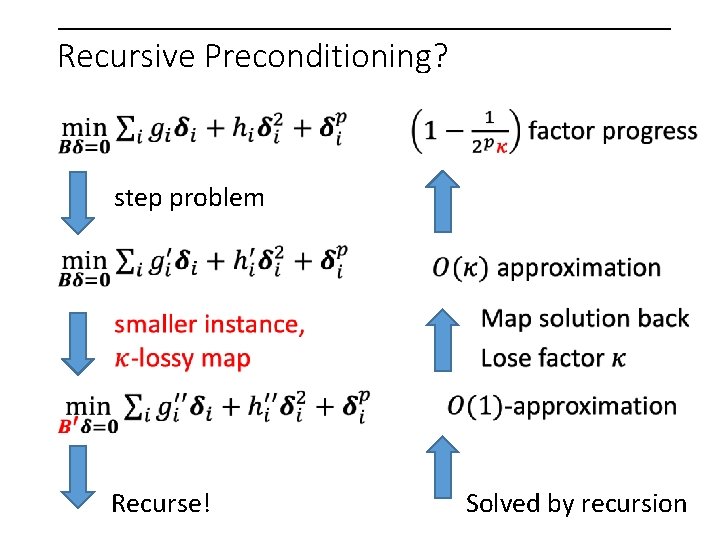
Recursive Preconditioning? step problem Recurse! Solved by recursion
Recursive Preconditioning? step problem Recurse! Solved by recursion
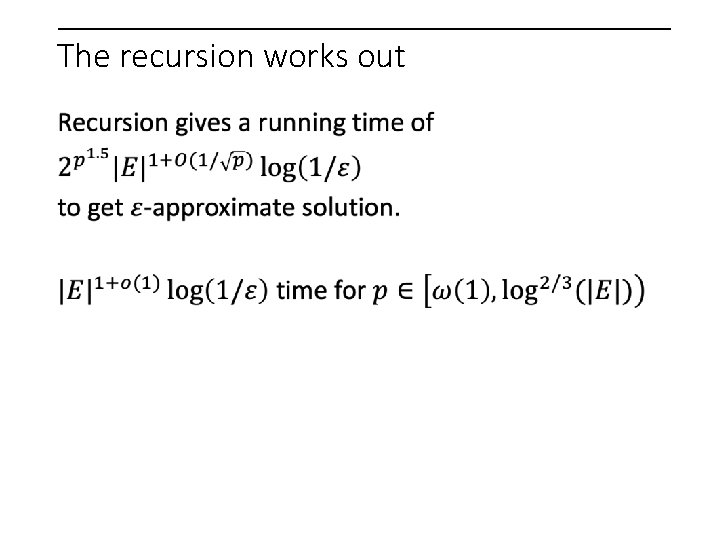
The recursion works out
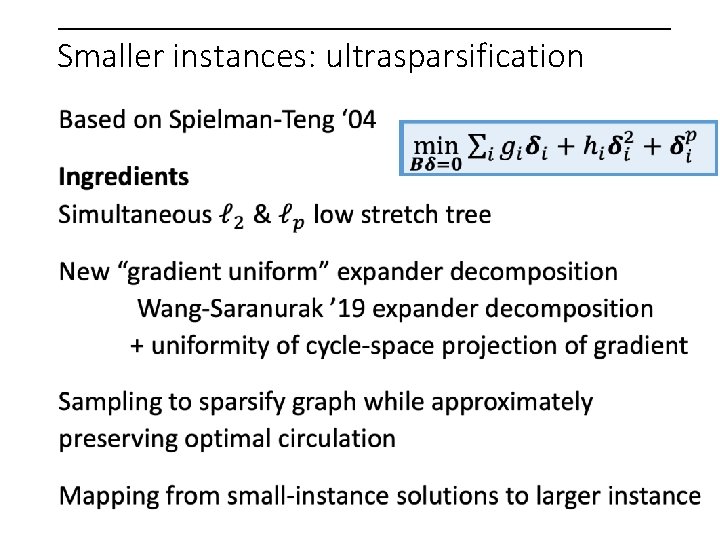
Smaller instances: ultrasparsification
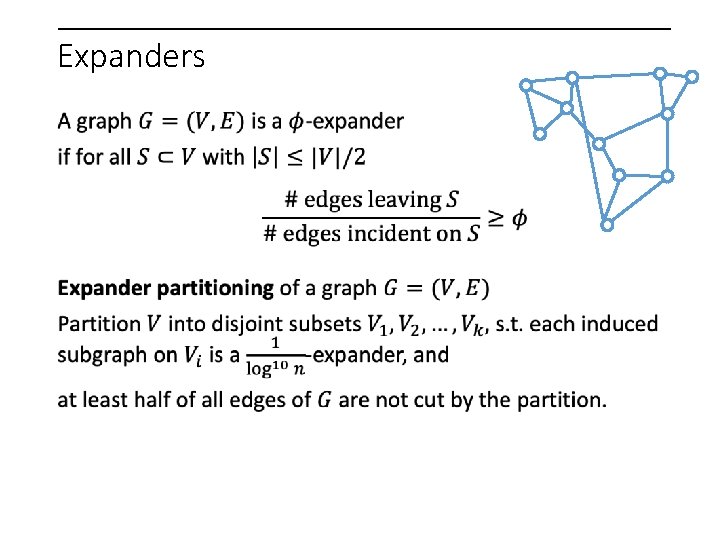
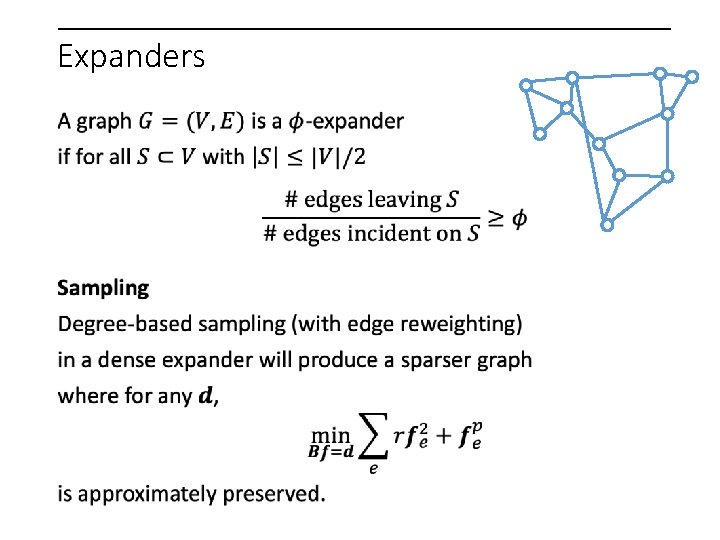
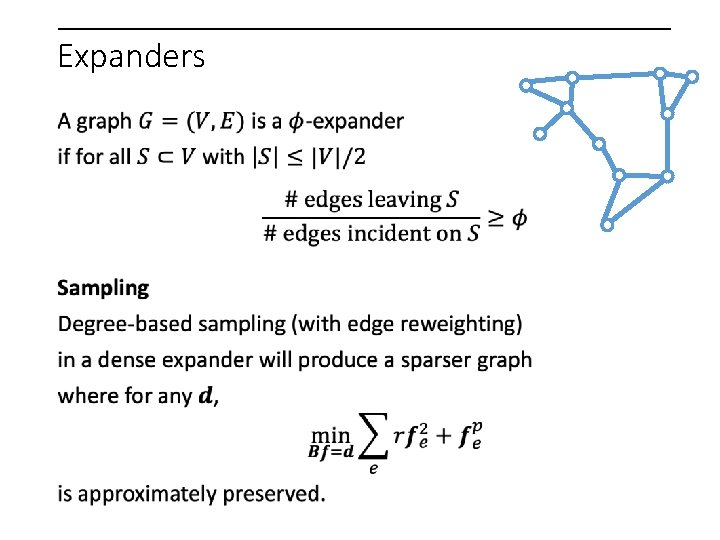
Expanders
Expanders
Expanders
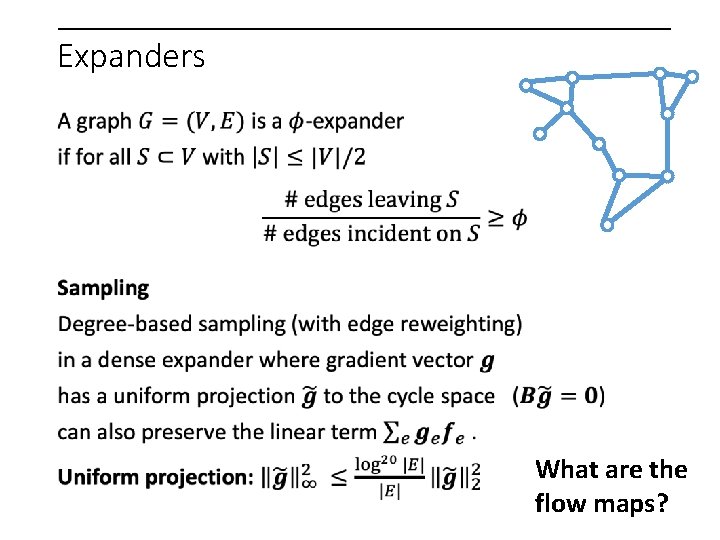
Expanders What are the flow maps?
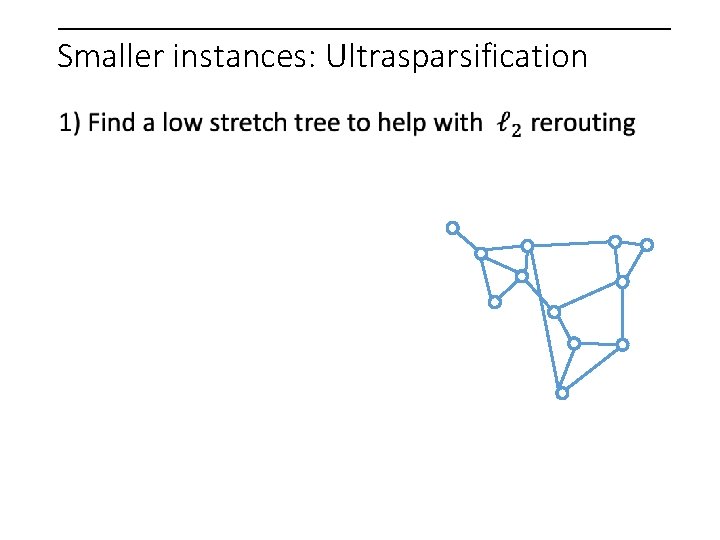
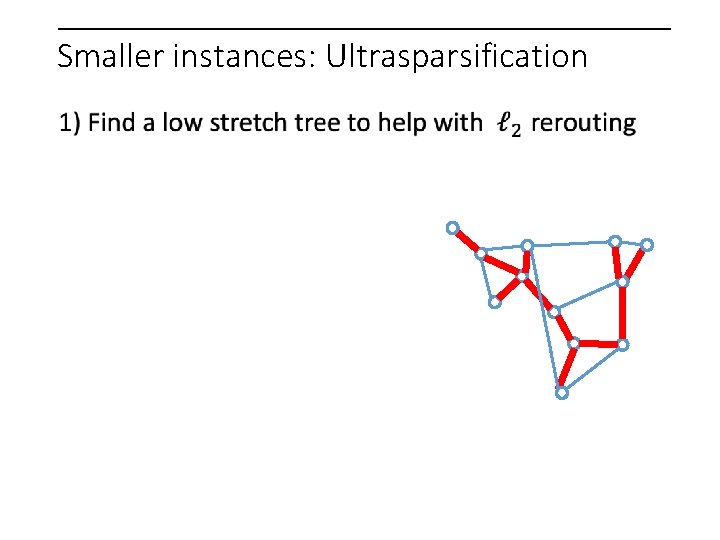
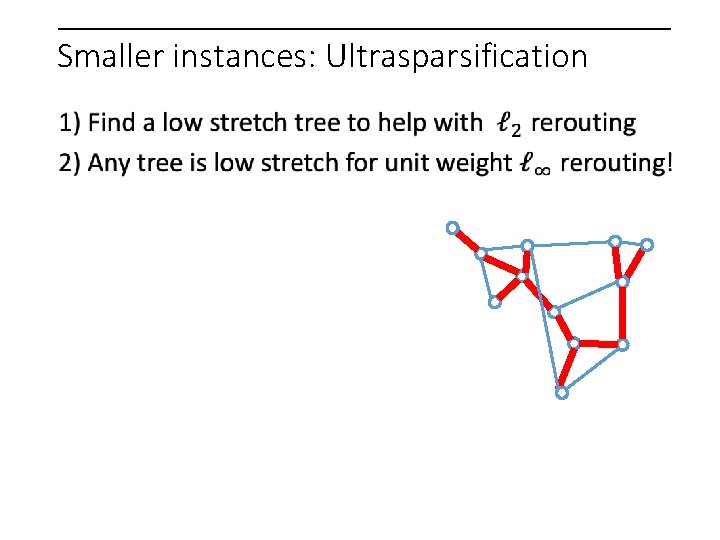
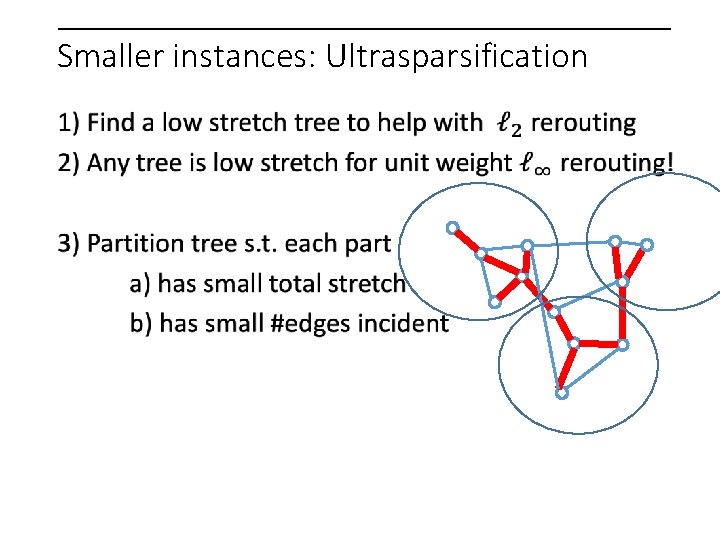
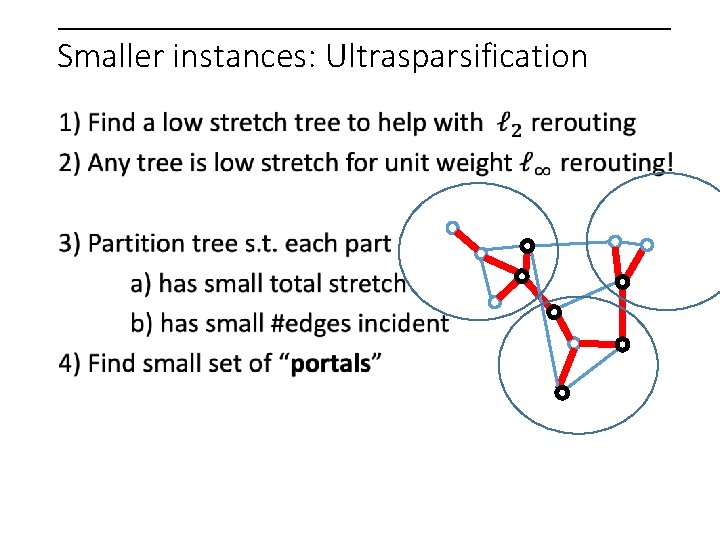
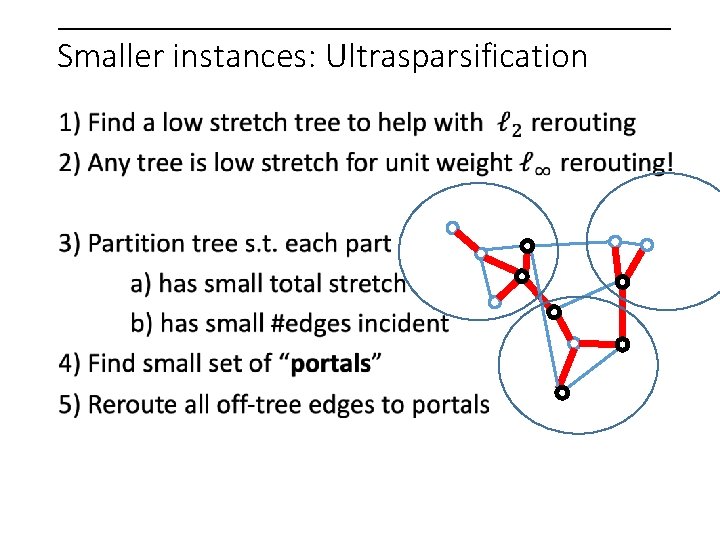
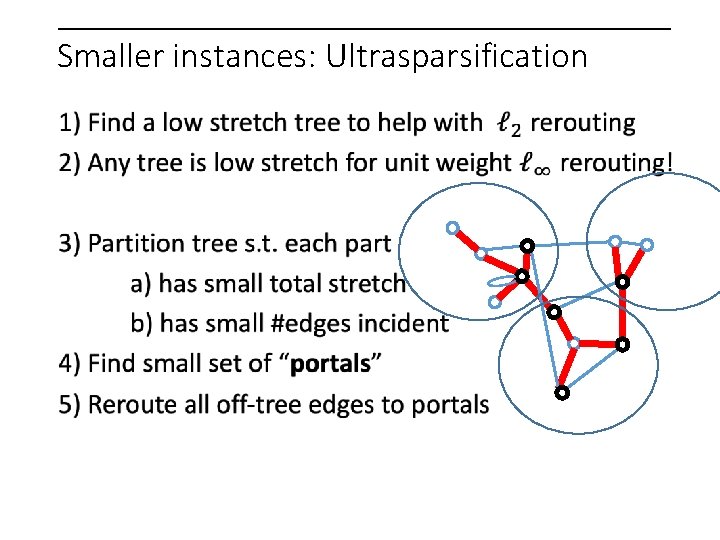
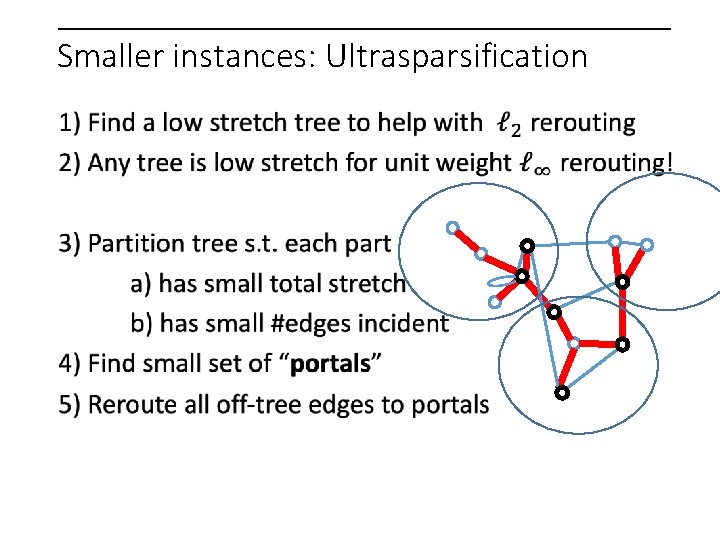
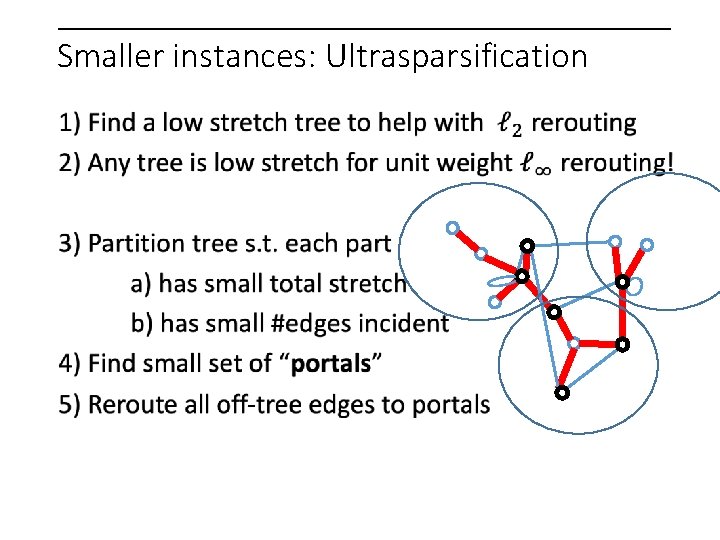
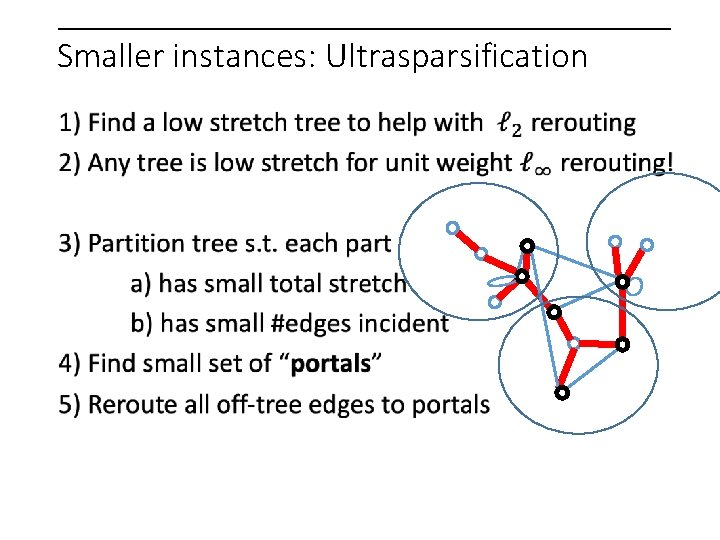
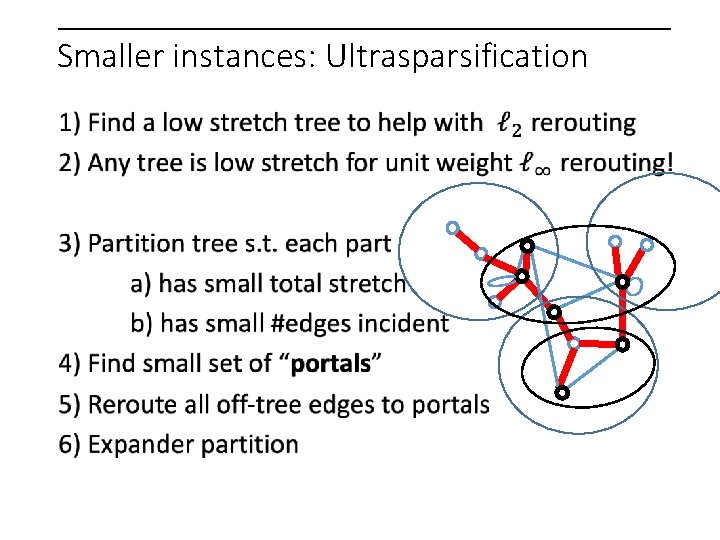
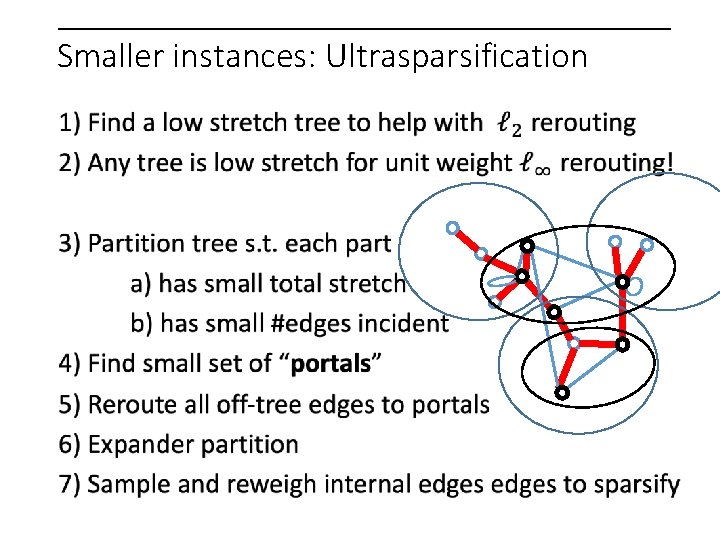
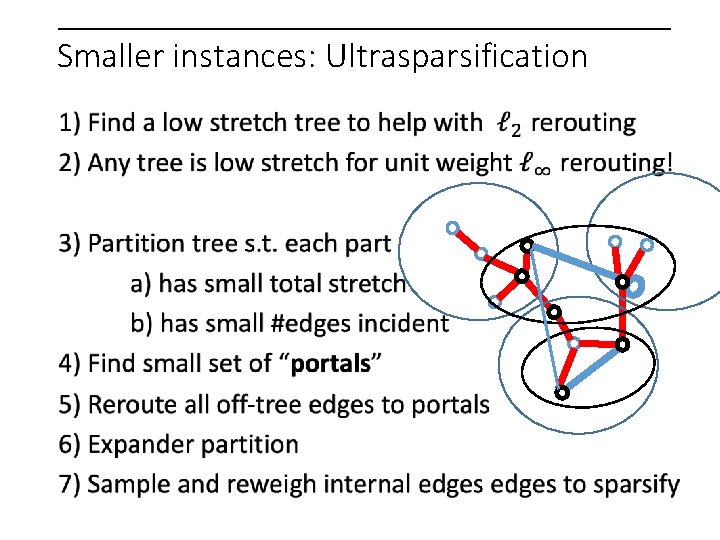
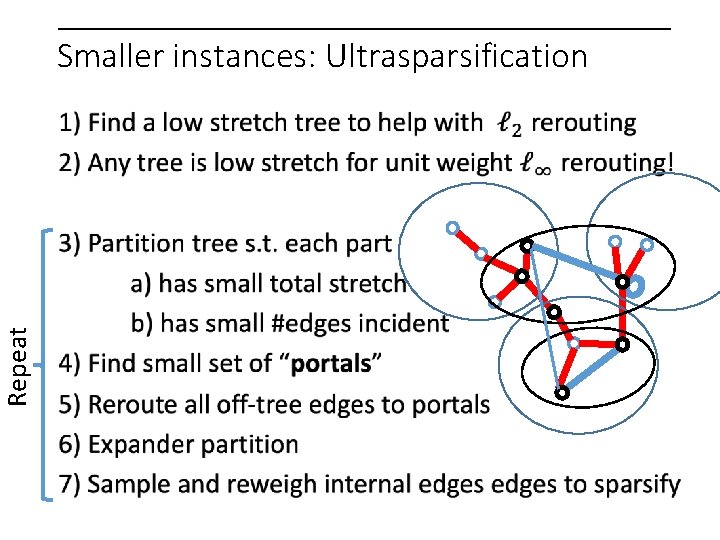
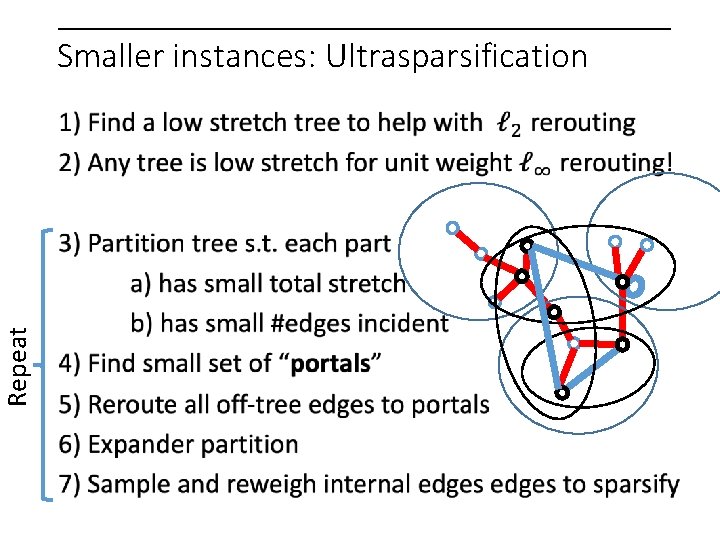
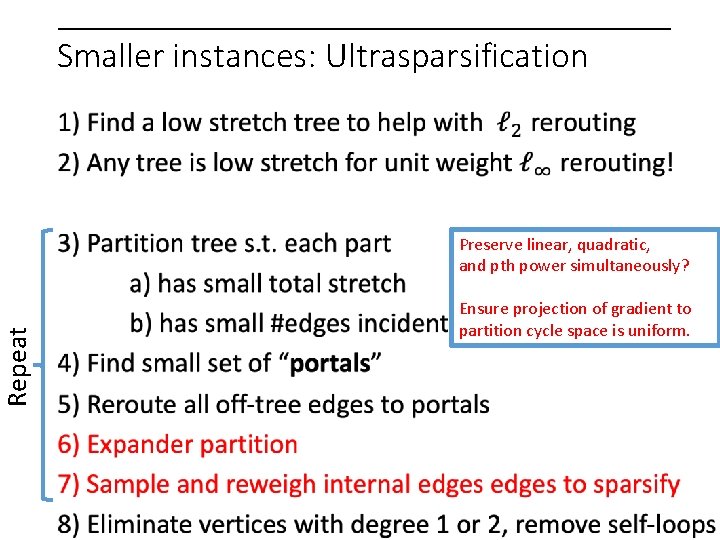
Smaller instances: Ultrasparsification
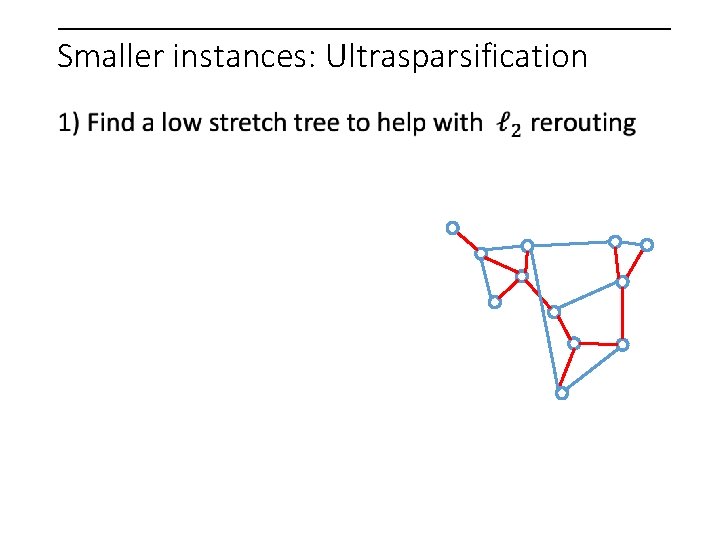
Smaller instances: Ultrasparsification
Smaller instances: Ultrasparsification
Smaller instances: Ultrasparsification
Smaller instances: Ultrasparsification
Smaller instances: Ultrasparsification
Smaller instances: Ultrasparsification
Smaller instances: Ultrasparsification
Smaller instances: Ultrasparsification
Smaller instances: Ultrasparsification
Smaller instances: Ultrasparsification
Smaller instances: Ultrasparsification
Smaller instances: Ultrasparsification
Smaller instances: Ultrasparsification
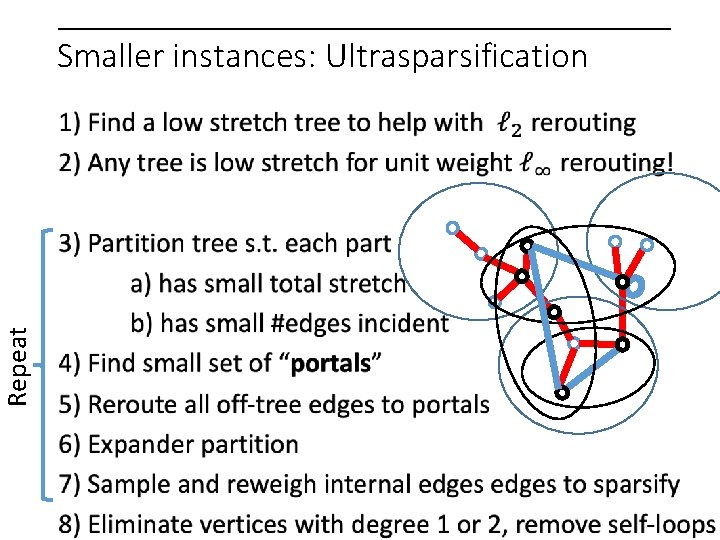
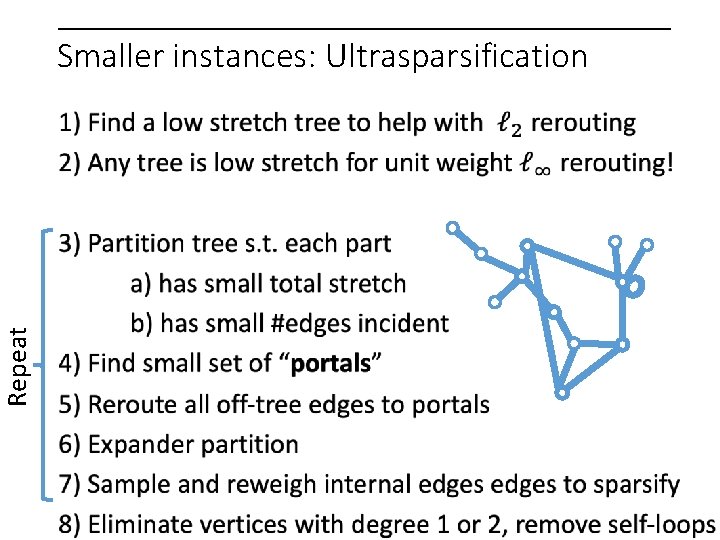
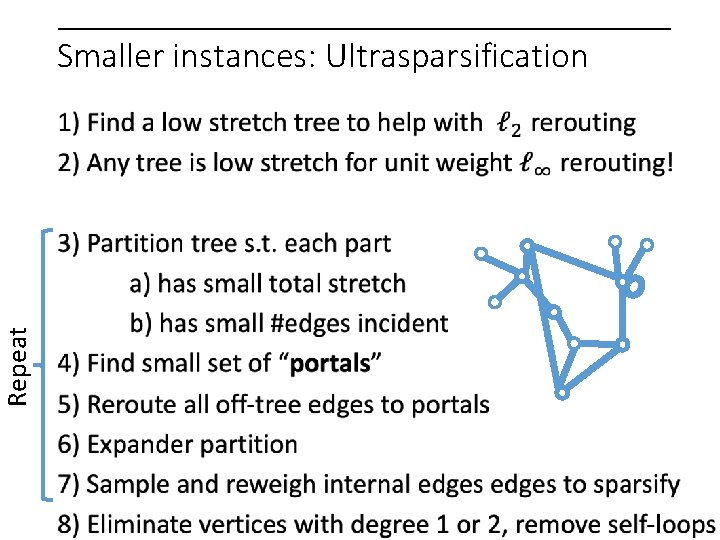
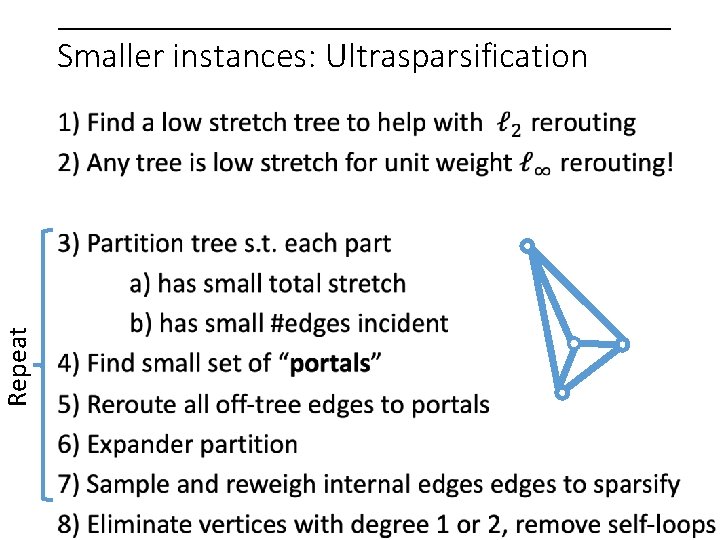
Repeat Smaller instances: Ultrasparsification
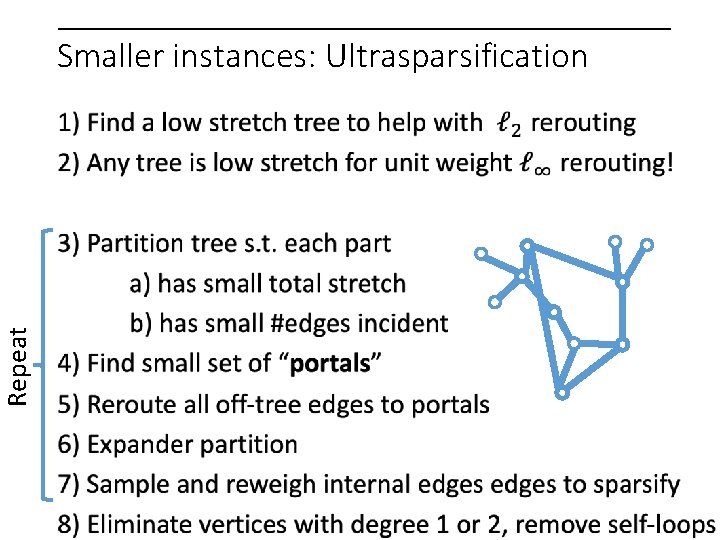
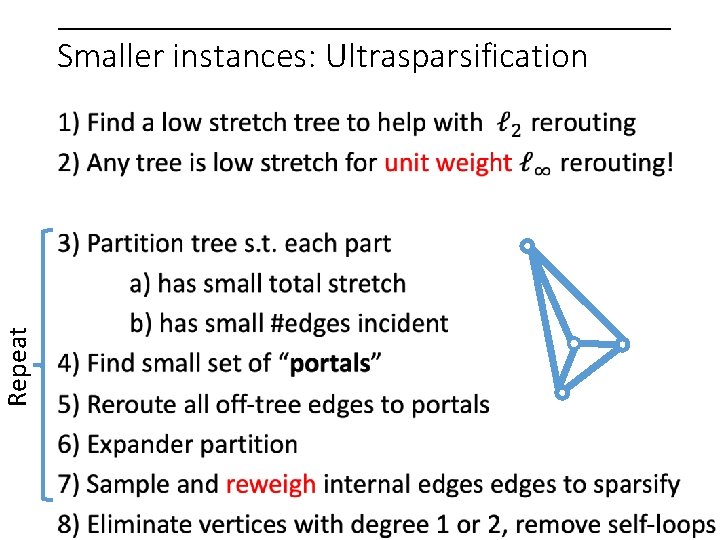
Repeat Smaller instances: Ultrasparsification
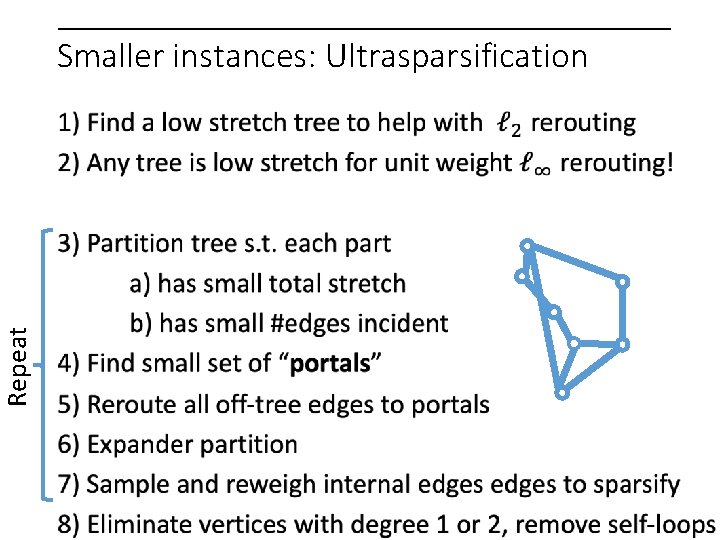
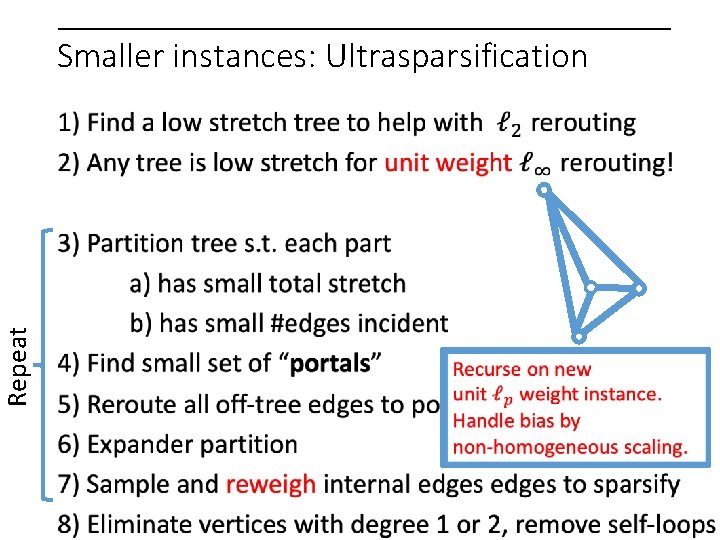
Repeat Smaller instances: Ultrasparsification
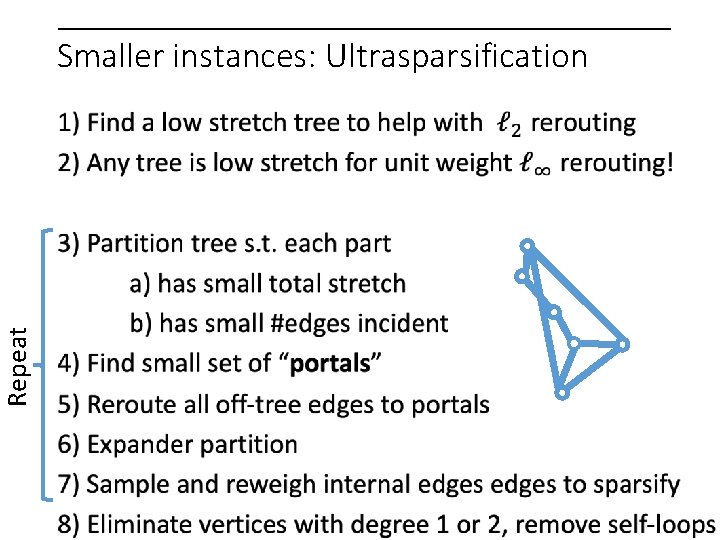
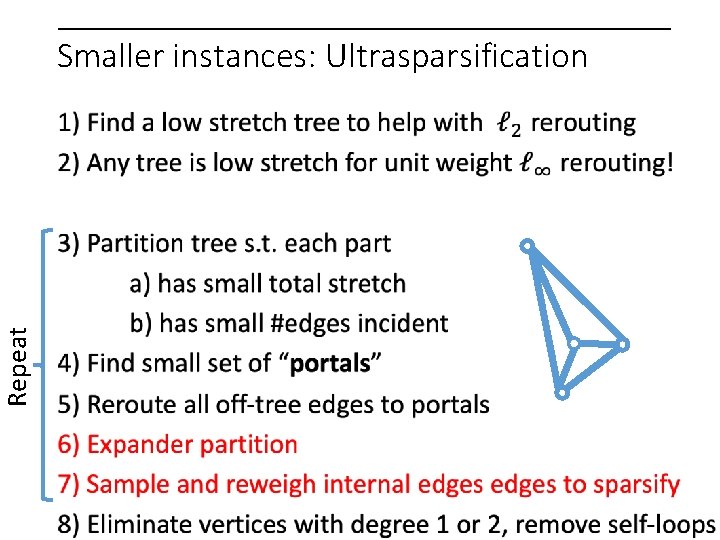
Repeat Smaller instances: Ultrasparsification
Repeat Smaller instances: Ultrasparsification
Repeat Smaller instances: Ultrasparsification
Repeat Smaller instances: Ultrasparsification
Repeat Smaller instances: Ultrasparsification
Repeat Smaller instances: Ultrasparsification
Repeat Smaller instances: Ultrasparsification
Repeat Smaller instances: Ultrasparsification
Repeat Smaller instances: Ultrasparsification
Repeat Smaller instances: Ultrasparsification Preserve linear, quadratic, and pth power simultaneously? Ensure projection of gradient to partition cycle space is uniform.
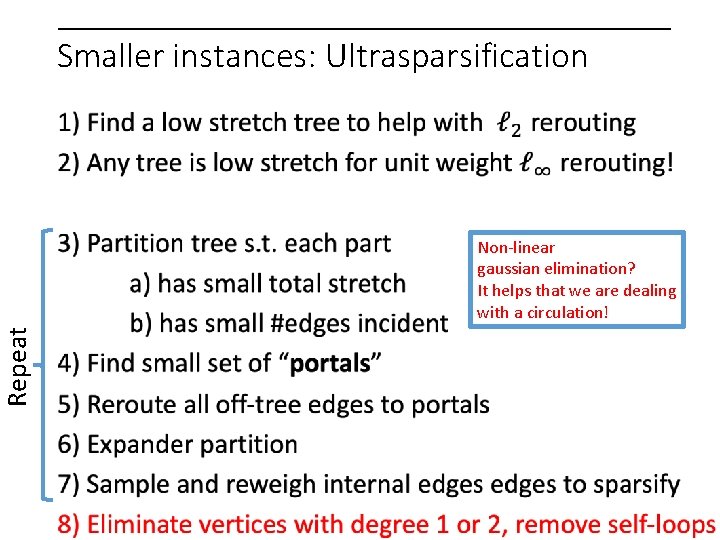
Repeat Smaller instances: Ultrasparsification Non-linear gaussian elimination? It helps that we are dealing with a circulation!
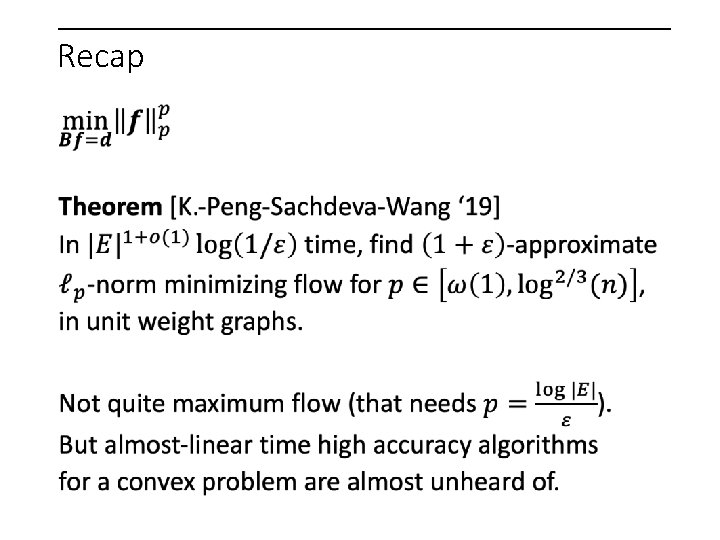
Recap
Application to maximum flow
But when is the oracle bad?
But when is the oracle bad?
But when is the oracle bad? Reweigh
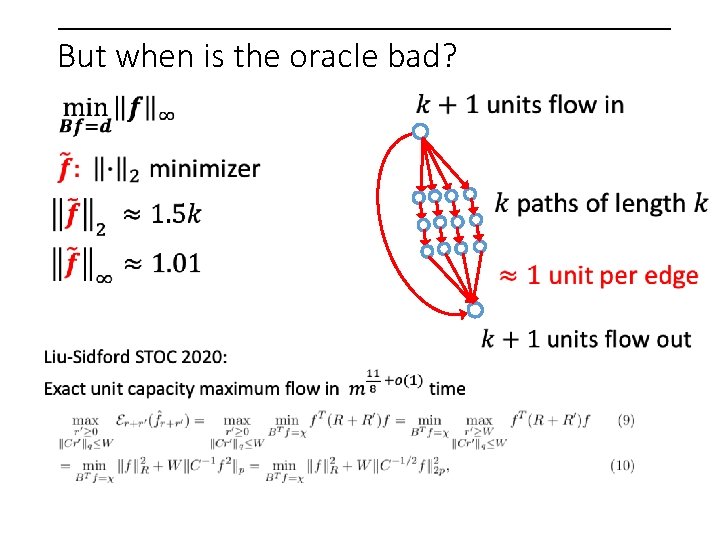
But when is the oracle bad?
Open questions Remove unit weight restriction Generalize to most convex flow problems? Maximum flow? (iterative refinement works) Preconditioning outside graph-land?
Thanks! My co-authors Deeksha Adil Richard Peng Sushant Sachdeva UToronto Ga. Tech UToronto Di Wang Ga. Tech
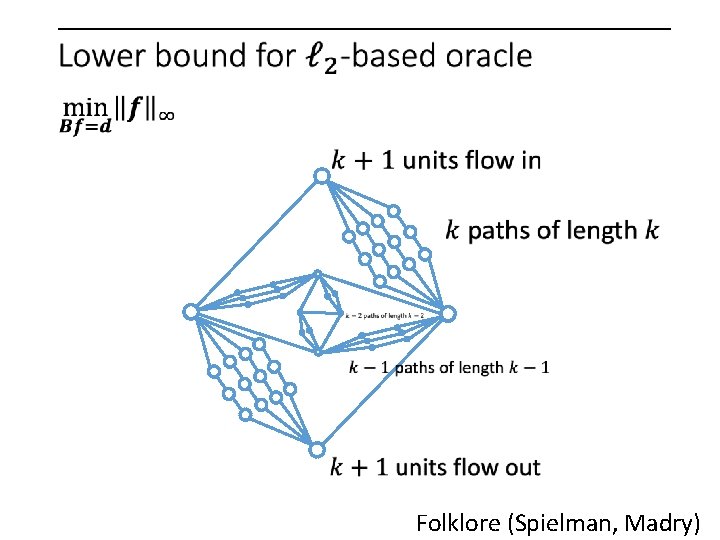
Folklore (Spielman, Madry)
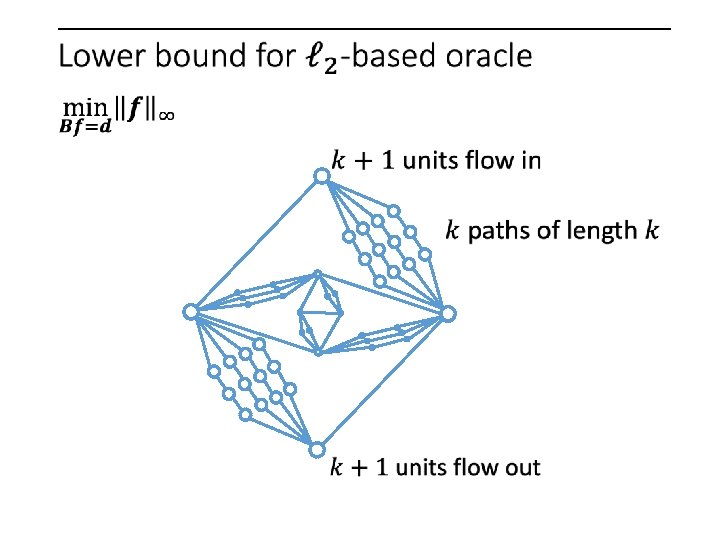
1 unit on every edge
Thanks! My co-authors Deeksha Adil Richard Peng Sushant Sachdeva UToronto Ga. Tech UToronto Di Wang Ga. Tech
TODO Reconcile m and choices? Decision on bold vs non-bold vectors Introduce flow problems somewhere Be clearer about additive vs multiplicative error! Be clear about recursion errors