
A New Wyoming Basin Produced Waters REE Normalization
A New Wyoming Basin Produced Waters REE Normalization and Its Application Charles NYE, Davin BAGDONAS, Scott QUILLINAN Carbon Management Institute, University of Wyoming In collaboration with INL
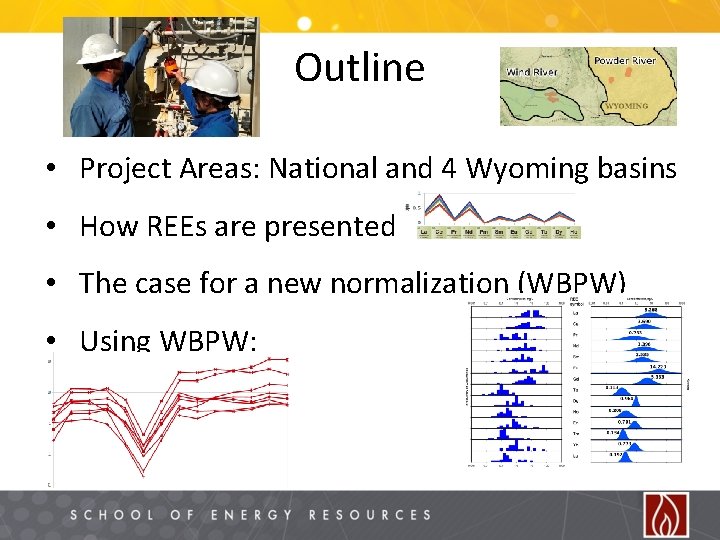
Outline • Project Areas: National and 4 Wyoming basins • How REEs are presented • The case for a new normalization (WBPW) • Using WBPW:
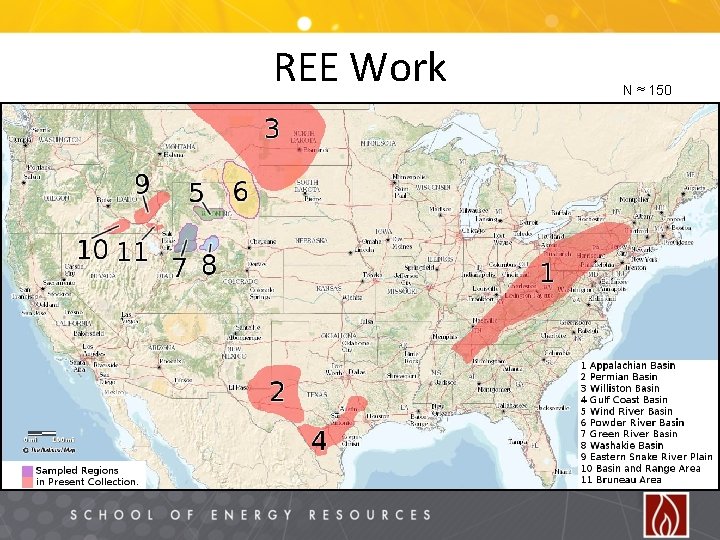
REE Work N ≈ 150
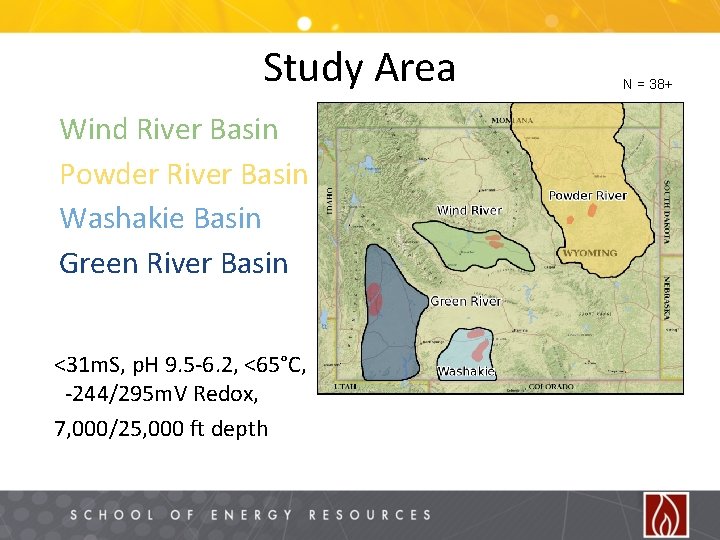
Study Area Wind River Basin Powder River Basin Washakie Basin Green River Basin <31 m. S, p. H 9. 5 -6. 2, <65°C, -244/295 m. V Redox, 7, 000/25, 000 ft depth N = 38+

Study Area Wind River Basin Powder River Basin Washakie Basin Green River Basin Mix of Core and Cuttings N = 80+
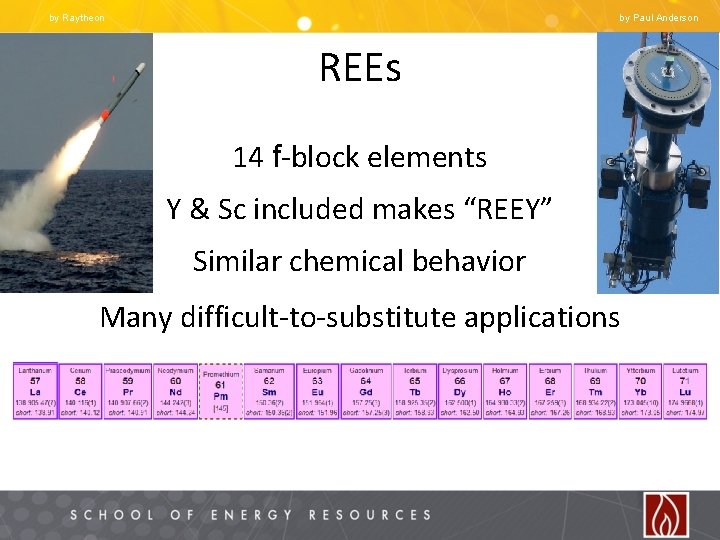
by Raytheon by Paul Anderson REEs 14 f-block elements Y & Sc included makes “REEY” Similar chemical behavior Many difficult-to-substitute applications
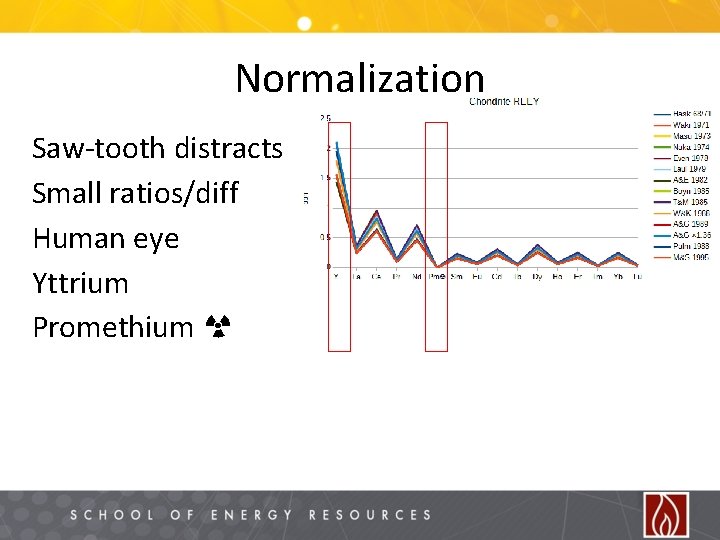
Normalization Saw-tooth distracts Small ratios/diff Human eye Yttrium Promethium ☢
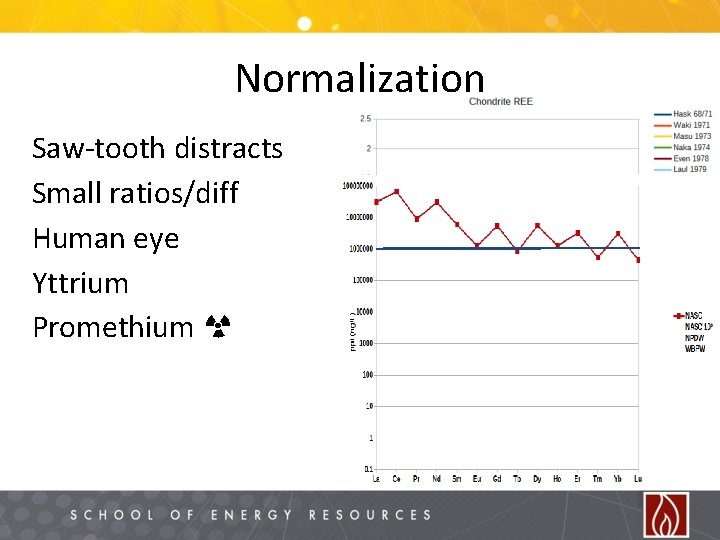
Normalization Saw-tooth distracts Small ratios/diff Human eye Yttrium Promethium ☢
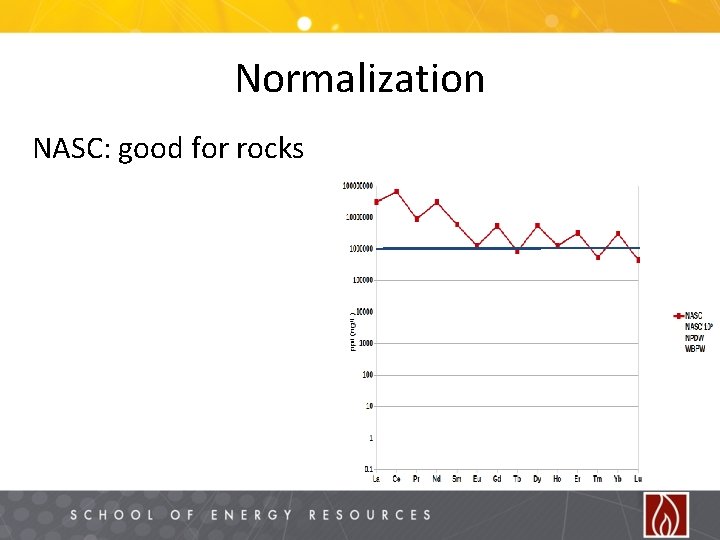
Normalization NASC: good for rocks
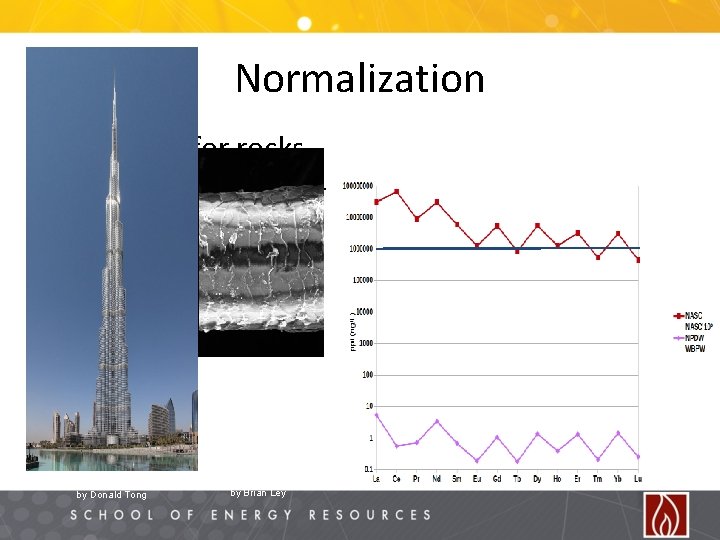
Normalization NASC: good for rocks NPDW: good for water by Donald Tong by Brian Ley
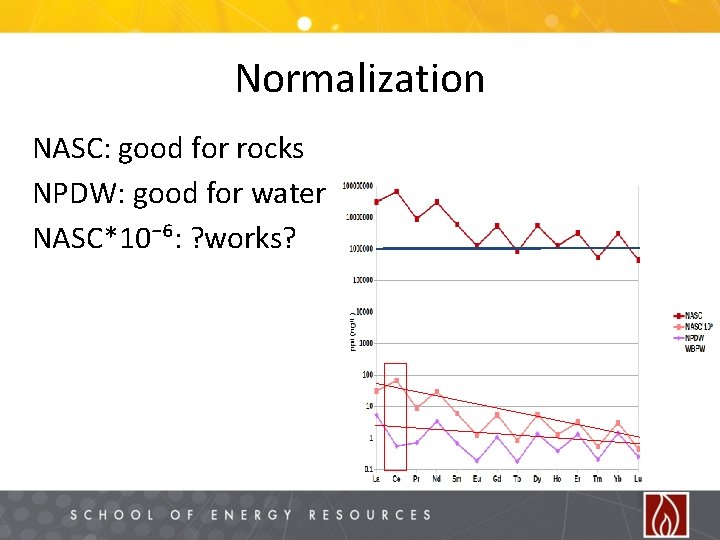
Normalization NASC: good for rocks NPDW: good for water NASC*10⁻⁶: ? works?
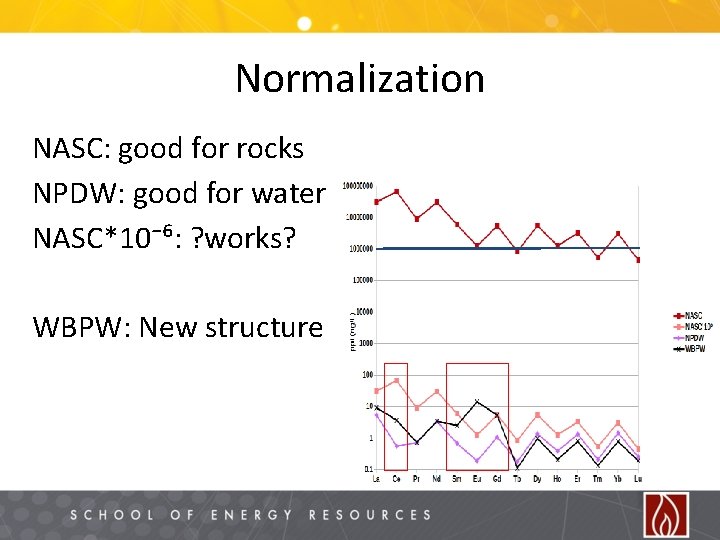
Normalization NASC: good for rocks NPDW: good for water NASC*10⁻⁶: ? works? WBPW: New structure
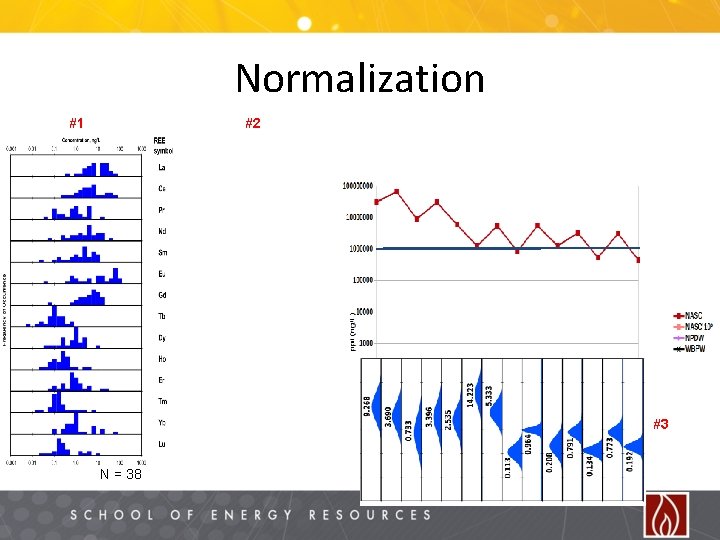
Normalization #1 #2 #3 N = 38
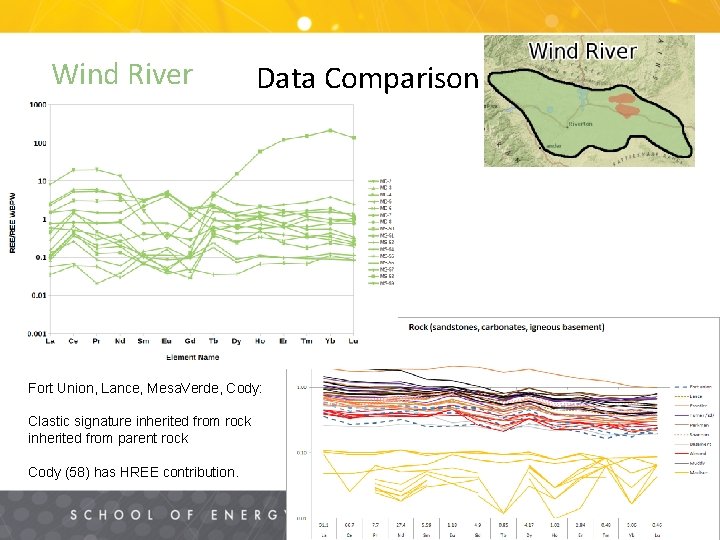
Wind River Data Comparison Fort Union, Lance, Mesa. Verde, Cody: Clastic signature inherited from rock inherited from parent rock Cody (58) has HREE contribution.
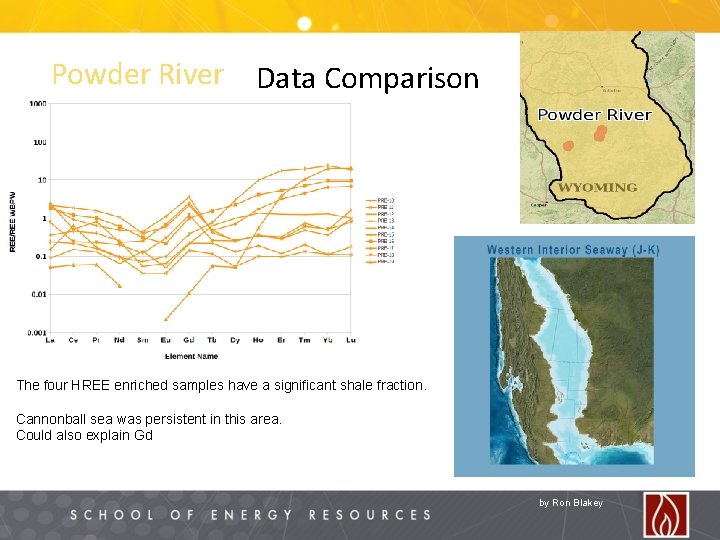
Powder River Data Comparison The four HREE enriched samples have a significant shale fraction. Cannonball sea was persistent in this area. Could also explain Gd by Ron Blakey
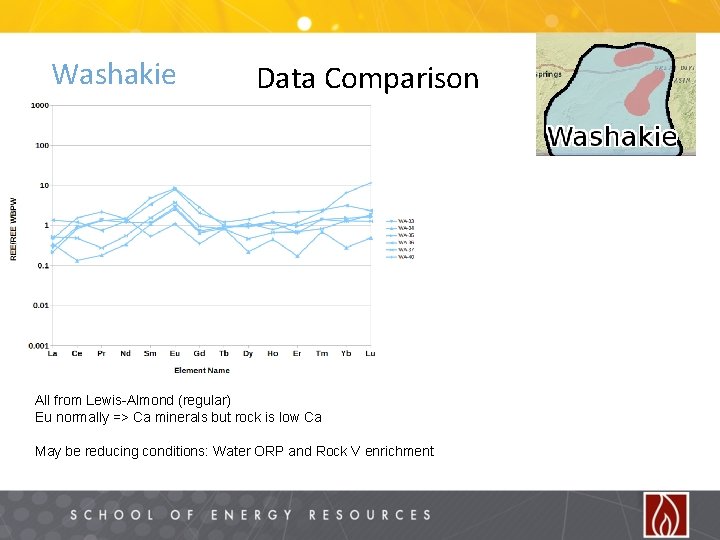
Washakie Data Comparison All from Lewis-Almond (regular) Eu normally => Ca minerals but rock is low Ca May be reducing conditions: Water ORP and Rock V enrichment
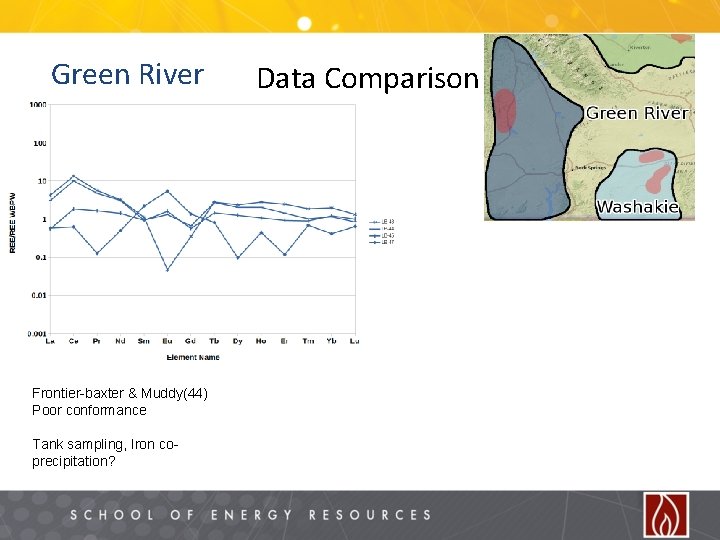
Green River Frontier-baxter & Muddy(44) Poor conformance Tank sampling, Iron coprecipitation? Data Comparison
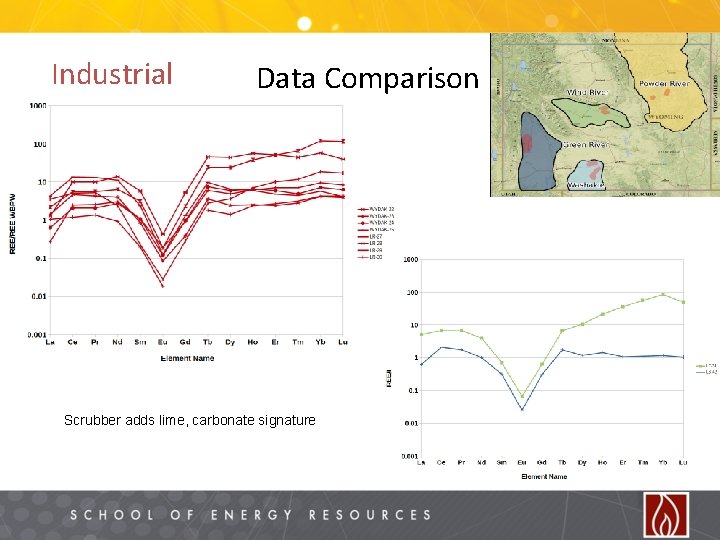
Industrial Data Comparison Scrubber adds lime, carbonate signature
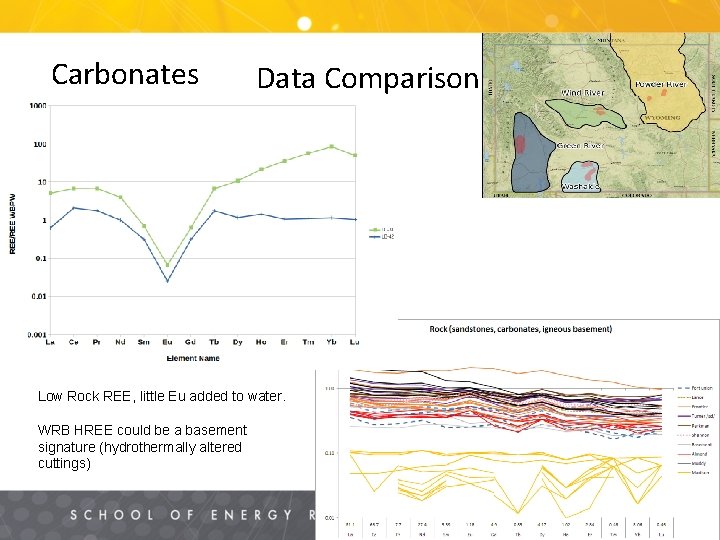
Carbonates Data Comparison Low Rock REE, little Eu added to water. WRB HREE could be a basement signature (hydrothermally altered cuttings)
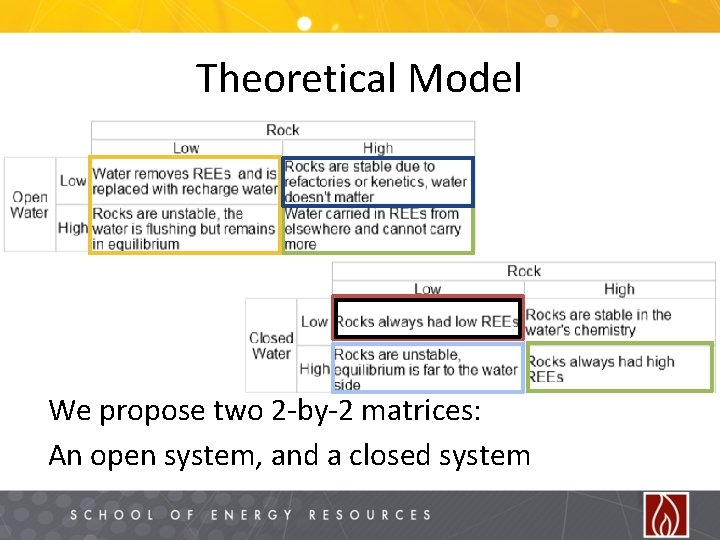
Theoretical Model We propose two 2 -by-2 matrices: An open system, and a closed system
Conclusions REE exist in solution and can be measured (ppt) Each study area has a unique signature. Gd is unique to PRB, samples from ND needed In produced waters HREE behavior may be local Ligand relationship not yet described Role of depositional environment (cannonball sea)
Acknowledgements Funding sources: DOE: EERE State of Wyoming Team Members: Carbon Management Institute
Ref Chu, Steven. : Critical Materials Strategy, Department of Energy, Office of International Affairs, Washington, DC (2011). Accessed from: https: //energy. gov/sites/prod/files/DOE_CMS 2011_FINAL_Full. pdf (December, 2016) Clark, Ian, and Peter Fritz, 1997, Environmental isotopes in hydrogeology: Boca Raton, Fla. , Lewis Publishers. Hatje, Vanessa, Bruland K. , and Flegal A. R. “Increases in Anthropogenic Gadolinium Anomalies and Rare Earth Element Concentrations in San Francisco Bay over a 20 Year Record” Environmental Science & Technology 2016 50 (8), 4159 -4168 DOI: 10. 1021/acs. est. 5 b 04322 Mc. Lennan, S. M. (2001), Relationships between the trace element composition of sedimentary rocks and upper continental crust, Geochem. Geophys. Geosyst. , 2, 1021, doi: 10. 1029/2000 GC 000109. Migdisov A. , A. E. Williams-Jones, J. Brugger, F. A. Caporuscio. (2016) Hydrothermal transport, deposition, and fractionation of the REE: experimental data and thermodynamic calculations. Chemical Geology, 439, pages 13– 42. http: //dx. doi. org/10. 1016/j. chemgeo. 2016. 005
- Slides: 23