
A new shortwave infrared camera approach for snow
- Slides: 15
A new shortwave infrared camera approach for snow specific surface area retrieval Benoit Montpetit, Alain Royer, Alexandre Langlois, Patrick Cliche, Alexandre Roy Centre d’Applications et de Recherches en Télédétection, Université de Sherbrooke, Québec, Canada Snow Grain Size Workshop Grenoble, France, April 2013
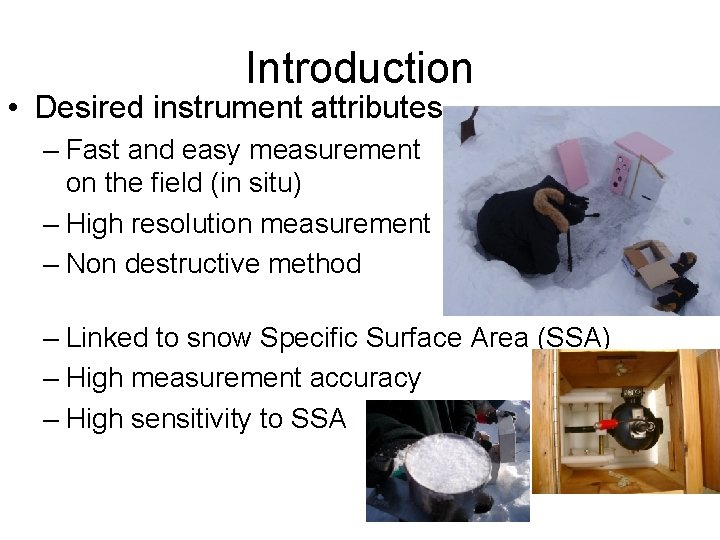
Introduction • Desired instrument attributes – Fast and easy measurement on the field (in situ) – High resolution measurement – Non destructive method – Linked to snow Specific Surface Area (SSA) – High measurement accuracy – High sensitivity to SSA
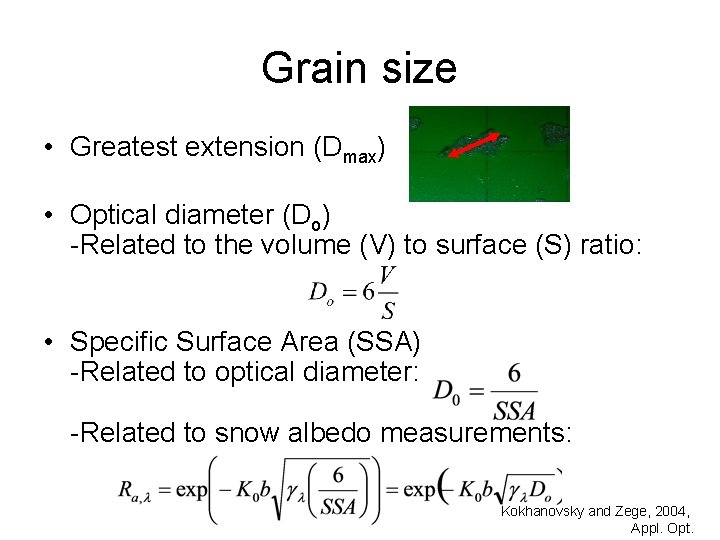
Grain size • Greatest extension (Dmax) • Optical diameter (Do) -Related to the volume (V) to surface (S) ratio: • Specific Surface Area (SSA) -Related to optical diameter: -Related to snow albedo measurements: Kokhanovsky and Zege, 2004, Appl. Opt.
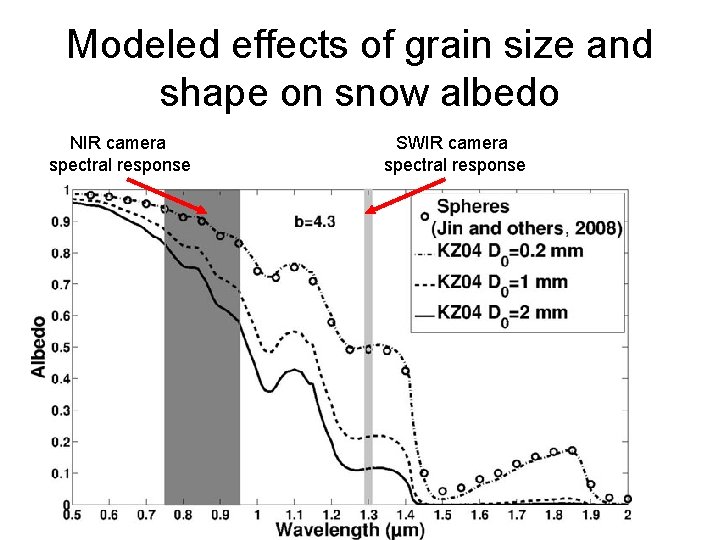
Modeled effects of grain size and shape on snow albedo NIR camera spectral response SWIR camera spectral response
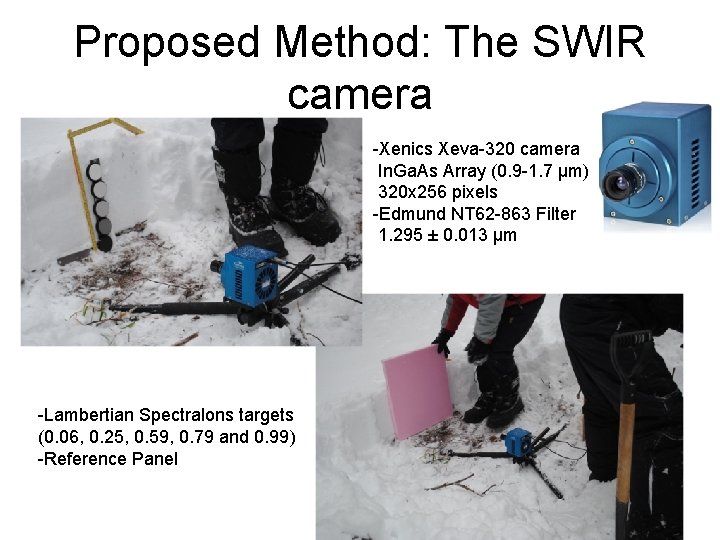
Proposed Method: The SWIR camera -Xenics Xeva-320 camera In. Ga. As Array (0. 9 -1. 7 µm) 320 x 256 pixels -Edmund NT 62 -863 Filter 1. 295 ± 0. 013 µm -Lambertian Spectralons targets (0. 06, 0. 25, 0. 59, 0. 79 and 0. 99) -Reference Panel
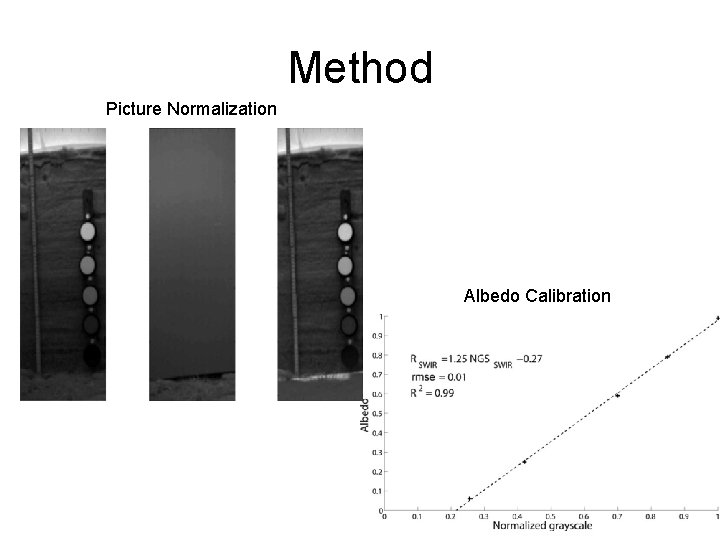
Method Picture Normalization Albedo Calibration
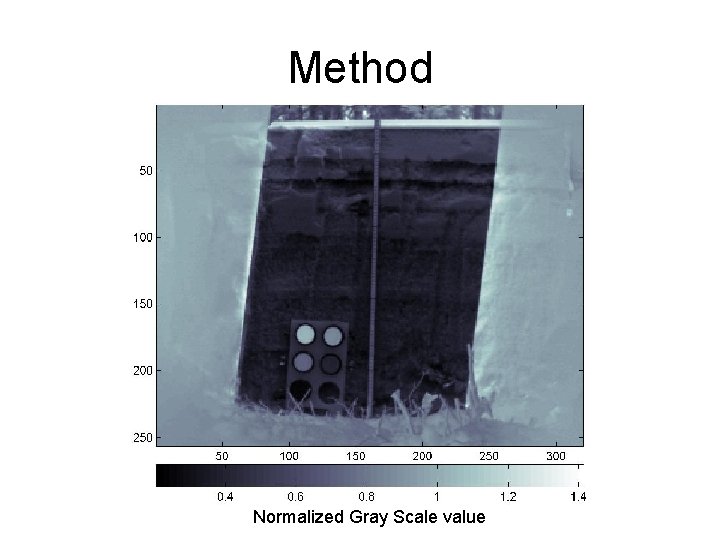
Method Normalized Gray Scale value
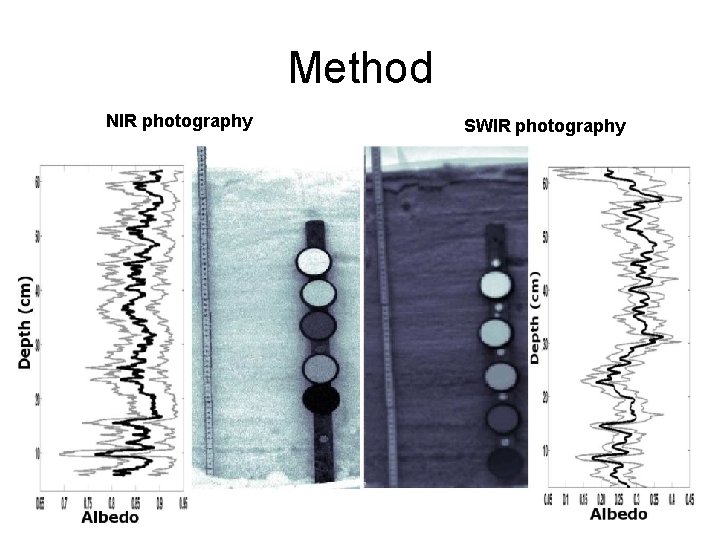
Method NIR photography SWIR photography
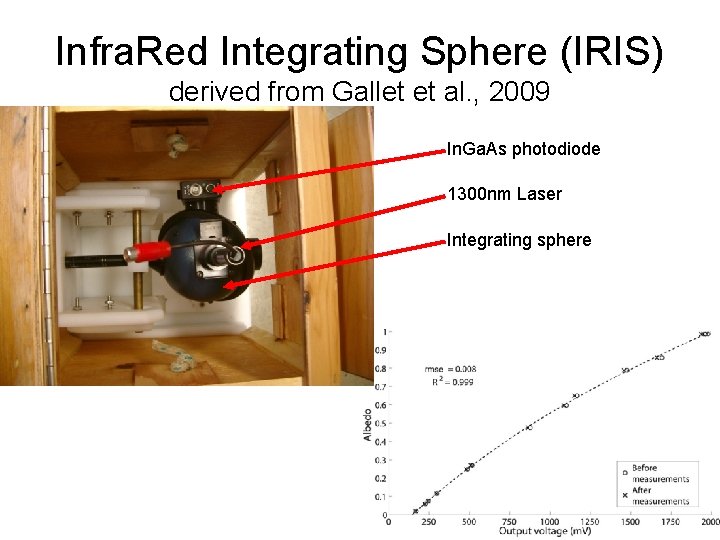
Infra. Red Integrating Sphere (IRIS) derived from Gallet et al. , 2009 In. Ga. As photodiode 1300 nm Laser Integrating sphere
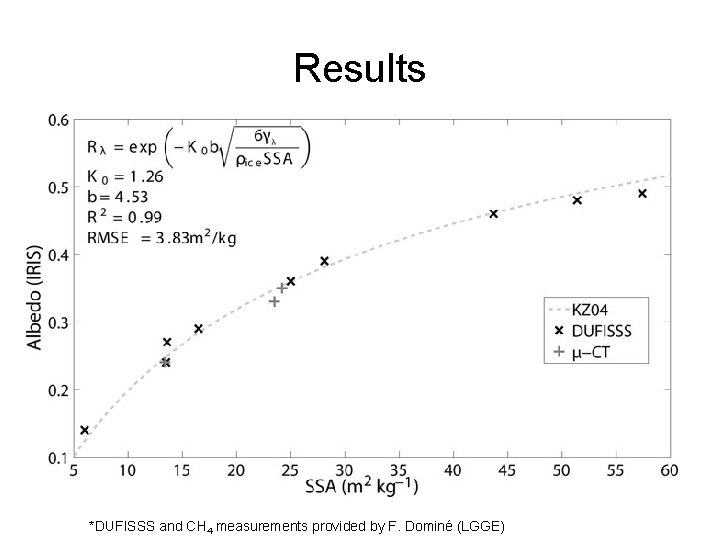
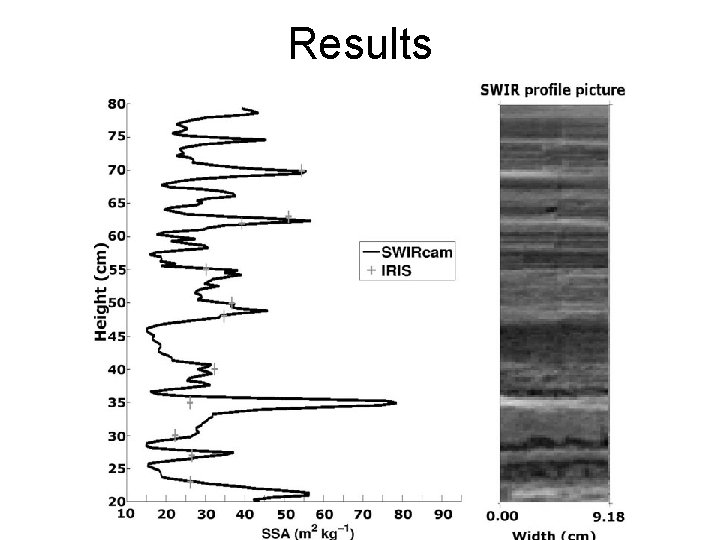
Results *DUFISSS and CH 4 measurements provided by F. Dominé (LGGE)
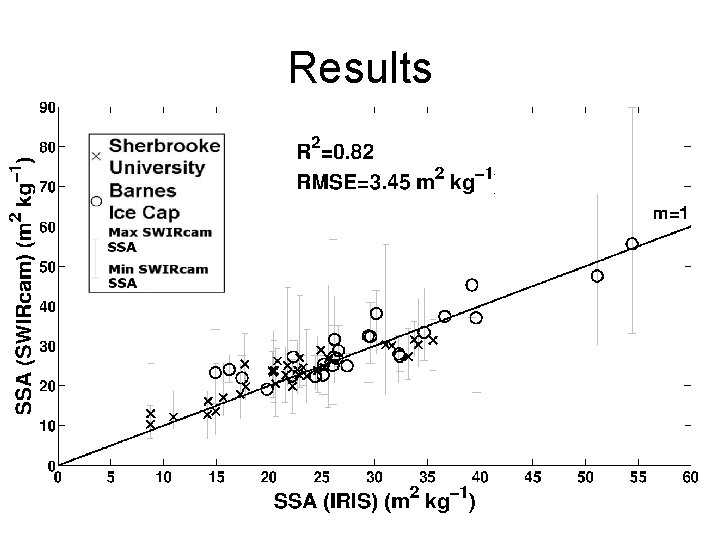
Results
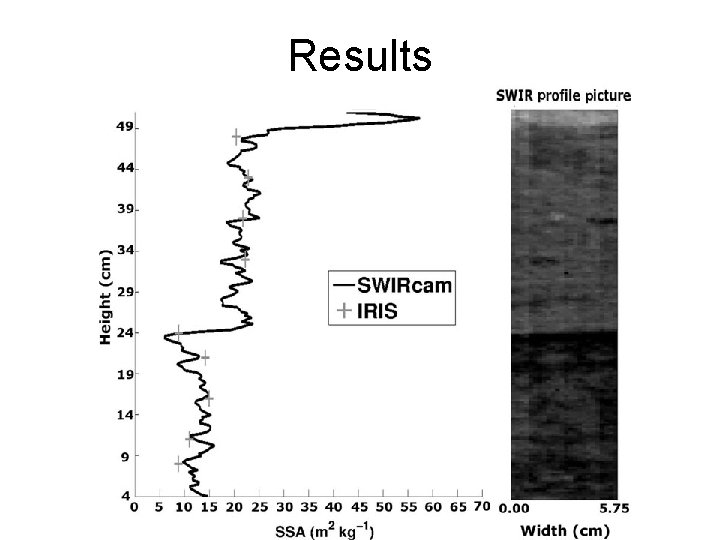
Results
Results
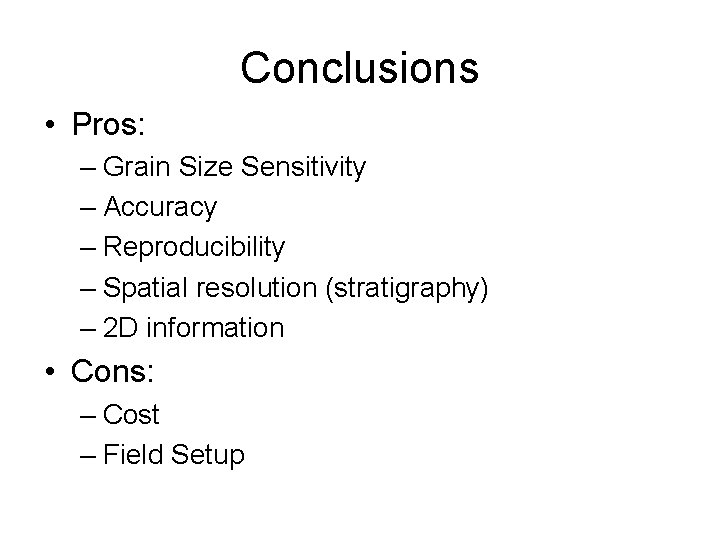
Conclusions • Pros: – Grain Size Sensitivity – Accuracy – Reproducibility – Spatial resolution (stratigraphy) – 2 D information • Cons: – Cost – Field Setup
Thank you… Acknowledgments Polar Continental Shelf Program