
A new severe plastic deformation technique Twist Extrusion




- Slides: 73
A new severe plastic deformation technique: Twist Extrusion Yan Beygelzimer Donetsk Institute of Physics and Technology Ukrainian National Academy of Sciences
Ultrafine-grained materials l What do I mean? – l Why are they appealing? – l Metals with grain size ~10 -1000 nm Dramatically improved and/or different properties not seen in conventional materials, for example, increased strength and toughness. Where can they be applied? – Medical and electronic applications
Ultrafine-grained materials l How does one obtain UFG materials? Roughly speaking, there are two major directions: l Consolidation of powder materials l Refining of coarse-grained materials l We will be concerned with the second direction
UFG materials obtained via refining The standard way: Severe Plastic Deformations (SPD) of coarse-grained materials Now the term “SPD” covers any large plastic deformation obtained using simple shear
Refining of materials via SPD
Refining of materials via SPD
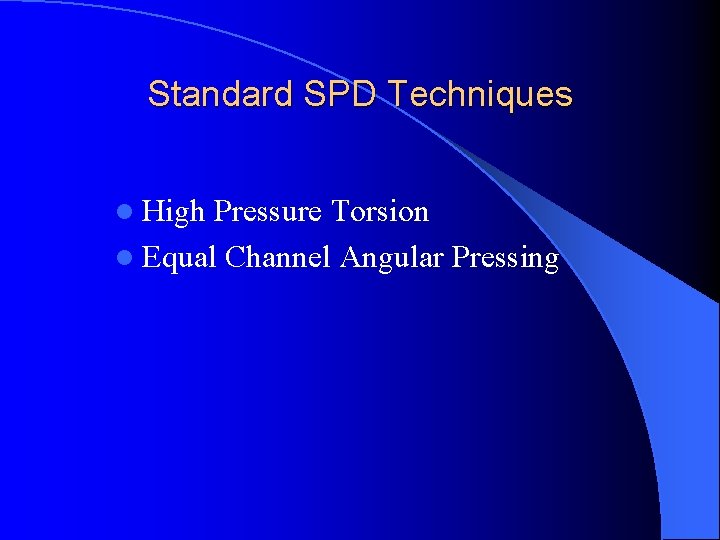
Standard SPD Techniques l High Pressure Torsion l Equal Channel Angular Pressing
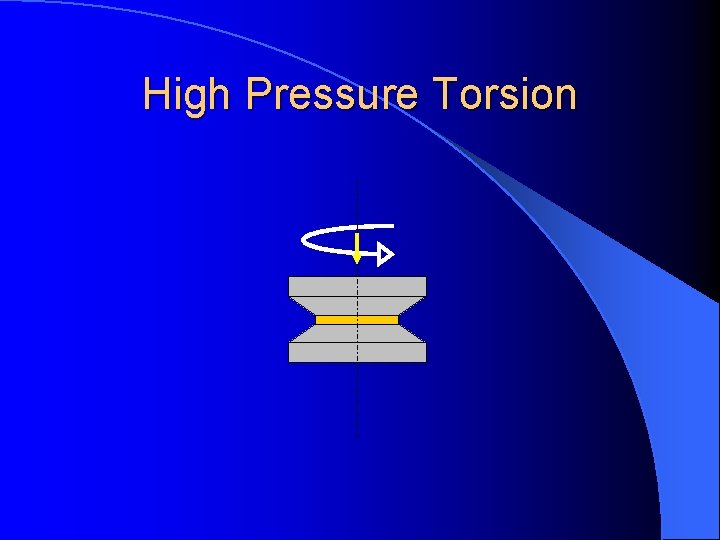
High Pressure Torsion
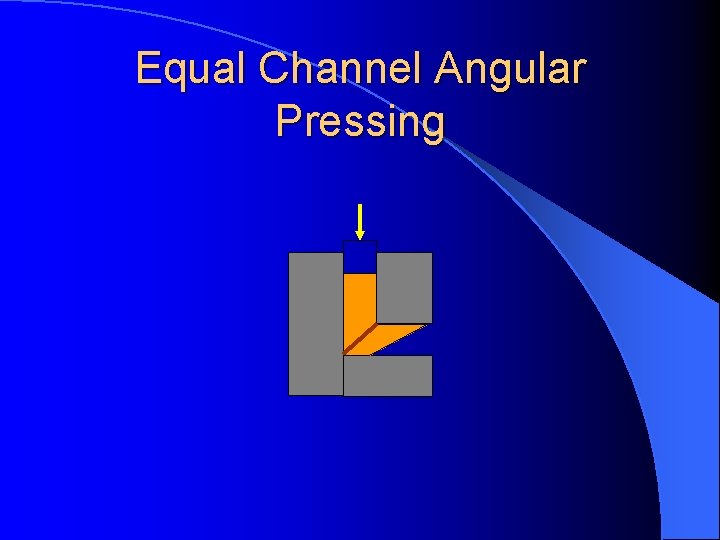
Equal Channel Angular Pressing
Main properties of SPD techniques l High Pressure Torsion – gives high quality UFG materials – specimen size: thickness ~10 m, diameter ~ 5 mm, limited industrial use l Equal Channel Angular Pressing – lower quality materials, but still good enough – specimen size: length ~100 mm, diameter ~20 mm
This talk: We propose a new SPD technique – Twist Extrusion (TE) l We show that it extends the potential of severe plastic deformations for obtaining bulk UFG materials. This is due to certain properties of the strain-stressed state of the material in the twist matrix, as well as some technological potentialities of direct extrusion. l
Outline l l l l Main idea of TE Technological schemes TE mechanics Relationships between TE and other SPD processes TE equipment Preliminary experimental results Conclusion P. S.
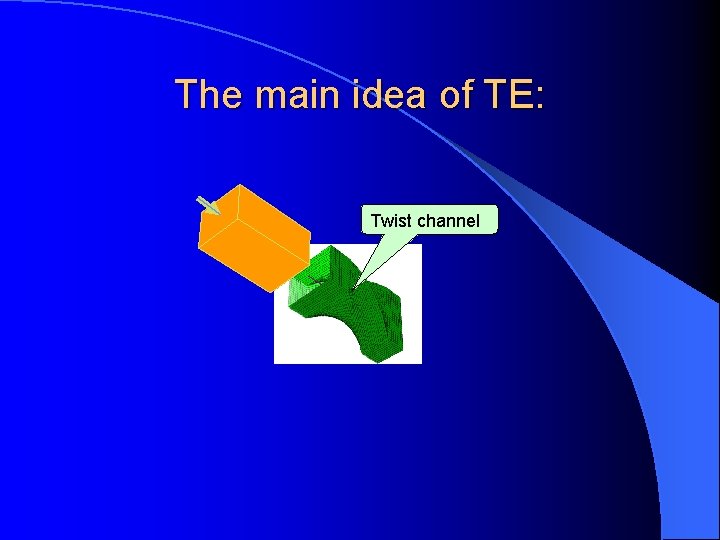
The main idea of TE: Twist channel
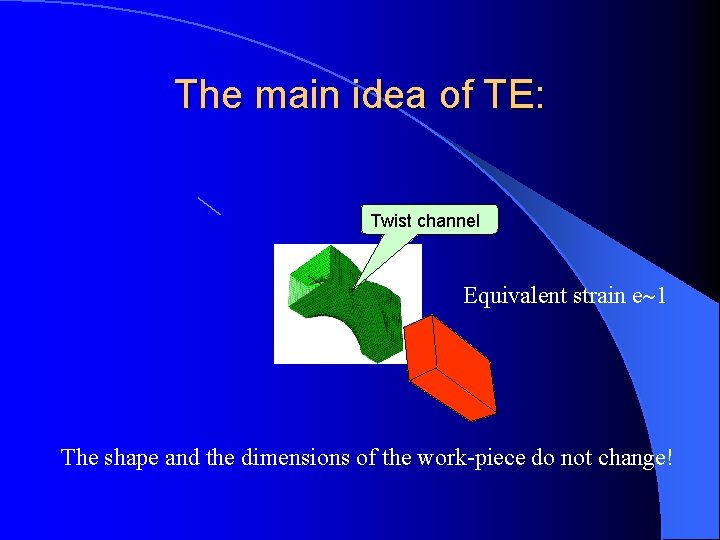
The main idea of TE: Twist channel Equivalent strain e 1 The shape and the dimensions of the work-piece do not change!
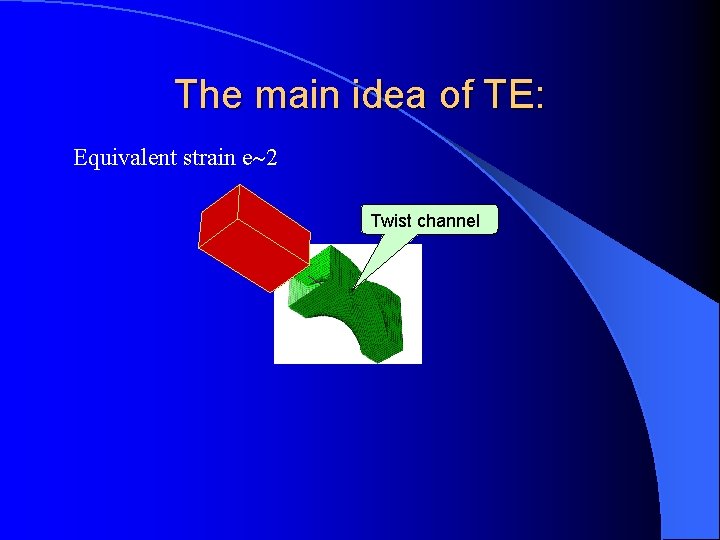
The main idea of TE: Equivalent strain e 2 Twist channel
The main idea of TE: and so on… Refining is a result of large plastic deformations
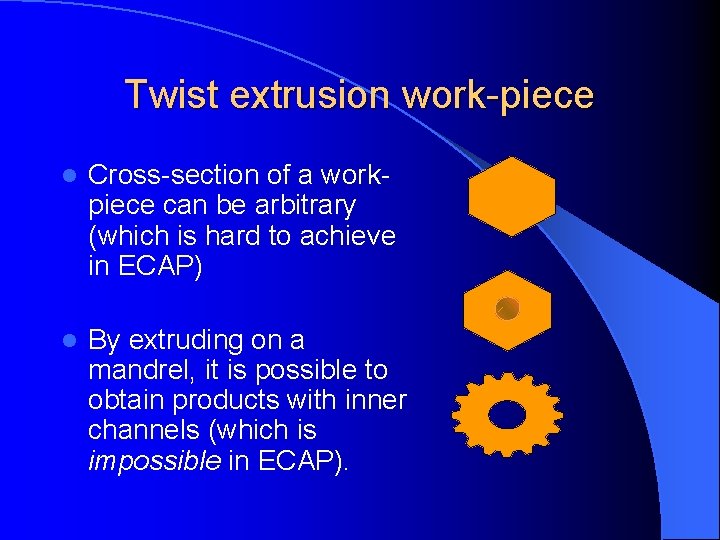
Twist extrusion work-piece l Cross-section of a workpiece can be arbitrary (which is hard to achieve in ECAP) l By extruding on a mandrel, it is possible to obtain products with inner channels (which is impossible in ECAP).
Technological schemes for Twist Extrusion Technological implementation of TE is possible with the use of known metal forming processes.
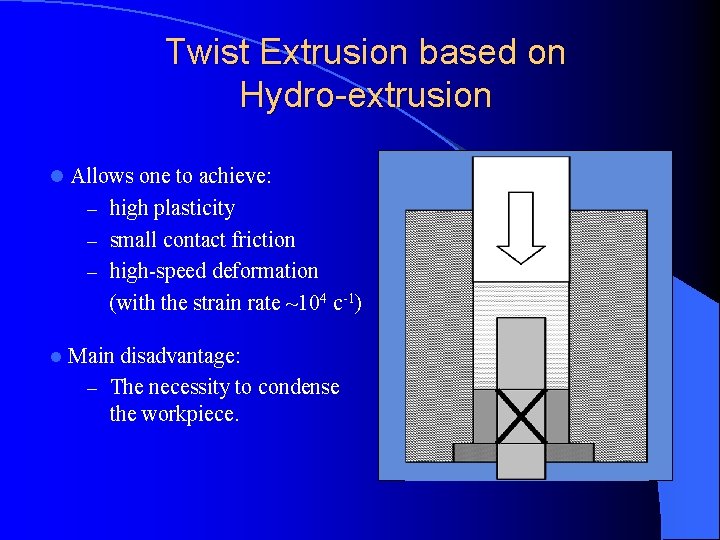
Twist Extrusion based on Hydro-extrusion l Allows one to achieve: – high plasticity – small contact friction – high-speed deformation (with the strain rate ~104 с-1) l Main disadvantage: – The necessity to condense the workpiece.
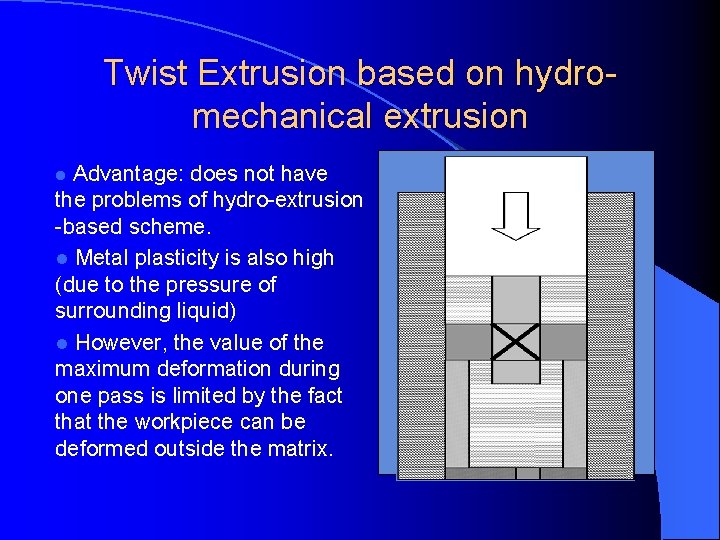
Twist Extrusion based on hydromechanical extrusion l Advantage: does not have the problems of hydro-extrusion -based scheme. l Metal plasticity is also high (due to the pressure of surrounding liquid) l However, the value of the maximum deformation during one pass is limited by the fact that the workpiece can be deformed outside the matrix.
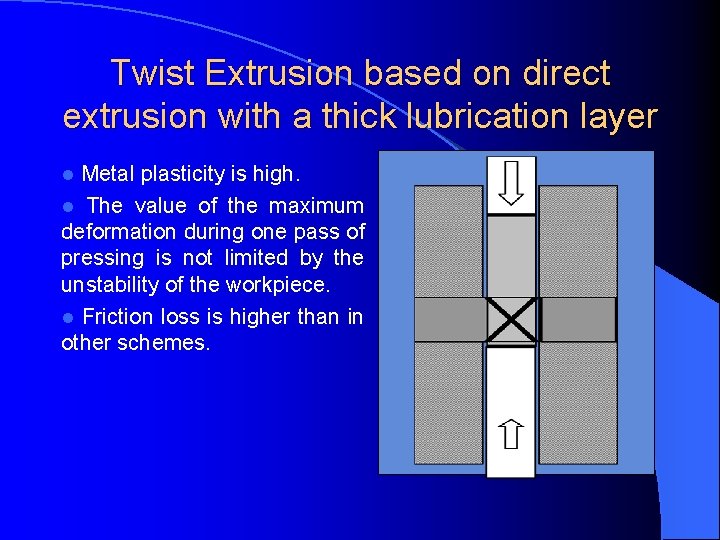
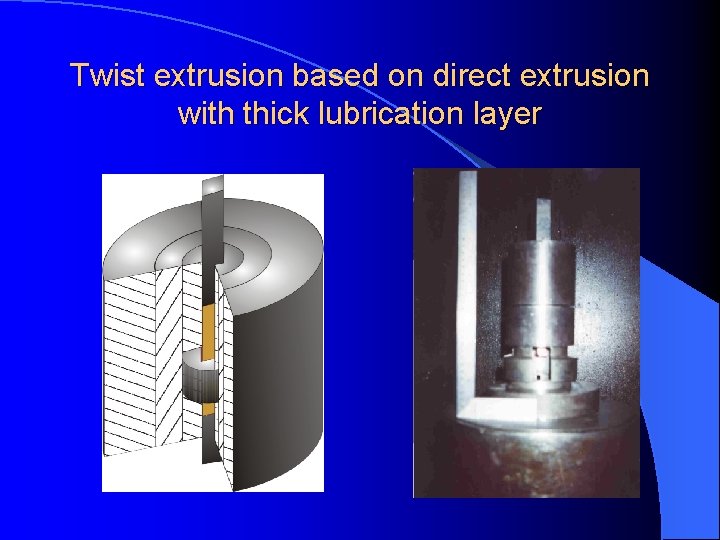
Twist Extrusion based on direct extrusion with a thick lubrication layer l Metal plasticity is high. l The value of the maximum deformation during one pass of pressing is not limited by the unstability of the workpiece. l Friction loss is higher than in other schemes.
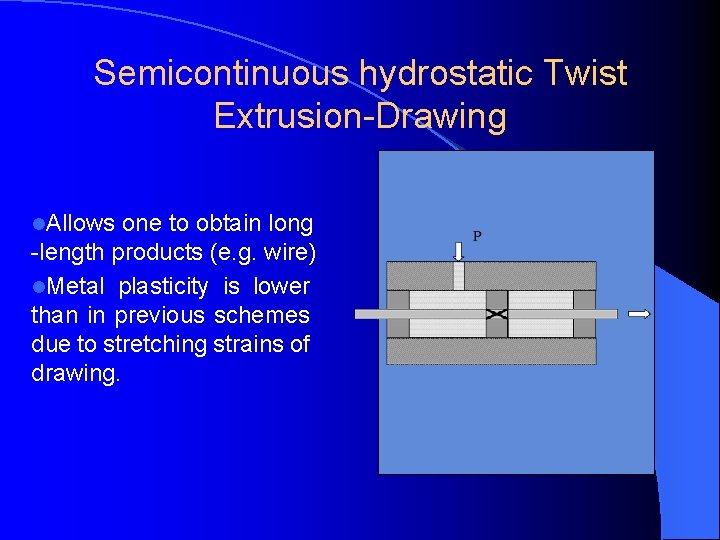
Semicontinuous hydrostatic Twist Extrusion-Drawing l. Allows one to obtain long -length products (e. g. wire) l. Metal plasticity is lower than in previous schemes due to stretching strains of drawing.
Twist Extrusion based on Linear Continuous Extrusion l. Allows one to obtain long- length products l. Metal plasticity is high l. Deformation per pass is limited to a condition of friction
Mechanics of TE l. In order to investigate the mechanics of TE we performed experiments using modeling clay specimens. l. Based on the experiments we suggested a kinematically admissible velocity field, which was then used for investigating the mechanics of TE using the variational principle.
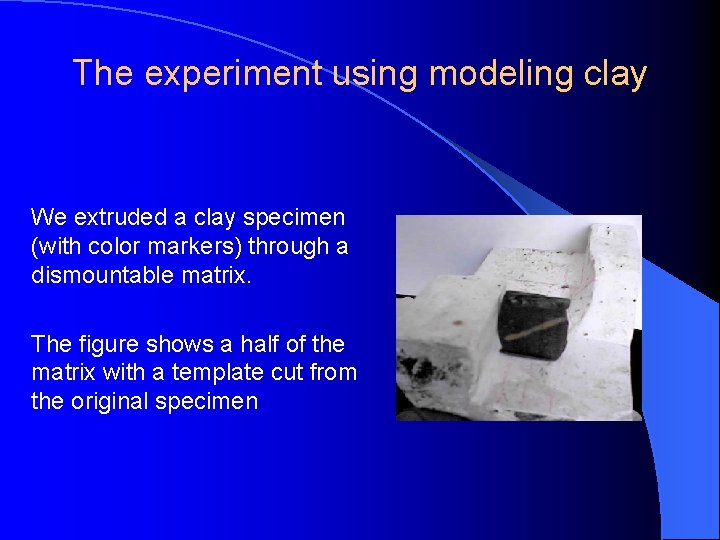
The experiment using modeling clay We extruded a clay specimen (with color markers) through a dismountable matrix. The figure shows a half of the matrix with a template cut from the original specimen
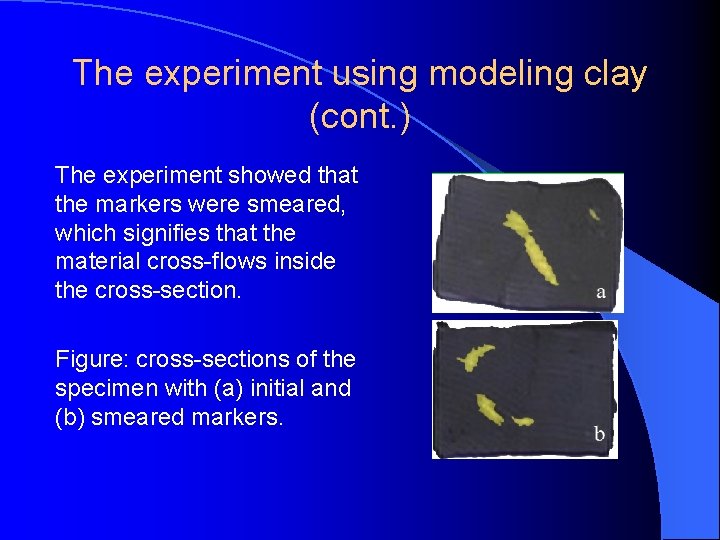
The experiment using modeling clay (cont. ) The experiment showed that the markers were smeared, which signifies that the material cross-flows inside the cross-section. Figure: cross-sections of the specimen with (a) initial and (b) smeared markers.
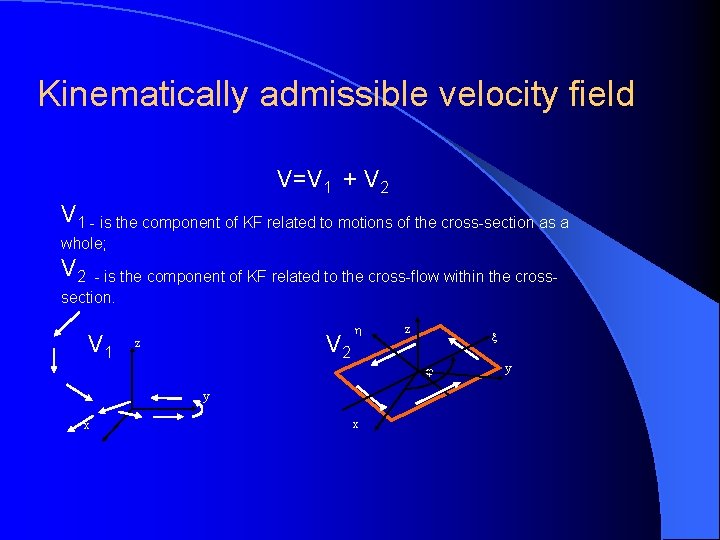
Kinematically admissible velocity field V=V 1 + V 2 V 1 - is the component of KF related to motions of the cross-section as a whole; V 2 - is the component of KF related to the cross-flow within the crosssection. V 1 V 2 z z y x x y
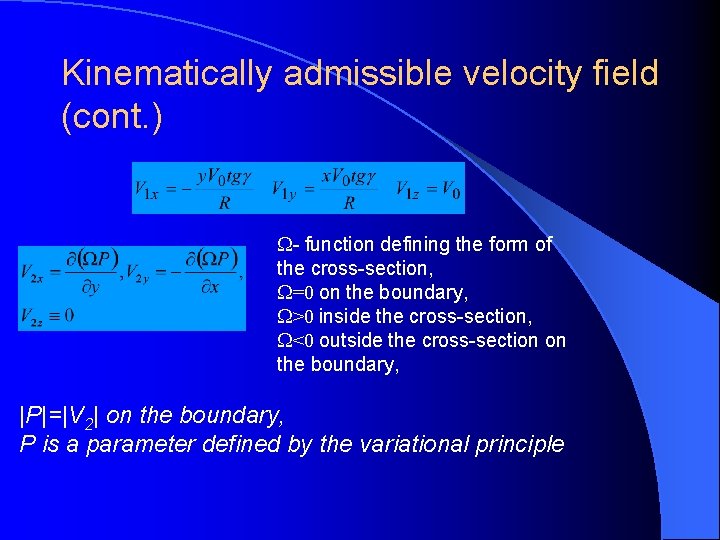
Kinematically admissible velocity field (cont. ) - function defining the form of the cross-section, =0 on the boundary, >0 inside the cross-section, <0 outside the cross-section on the boundary, |P|=|V 2| on the boundary, P is a parameter defined by the variational principle
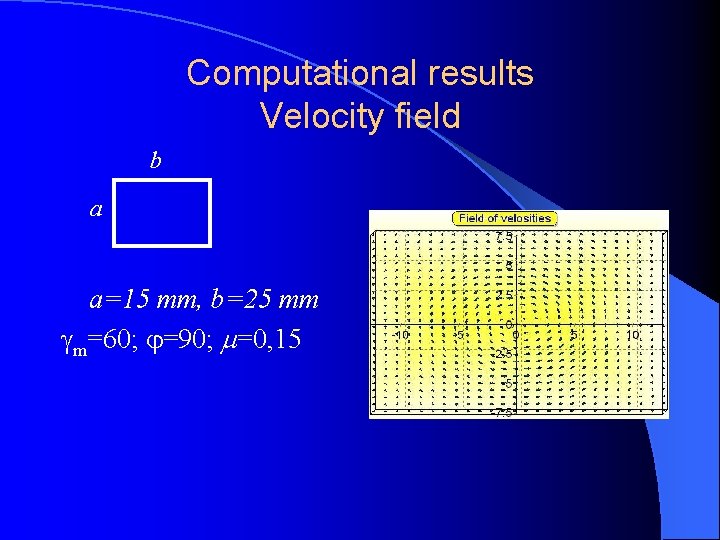
Computational results Velocity field b a a=15 mm, b=25 mm m=60; =90; =0, 15
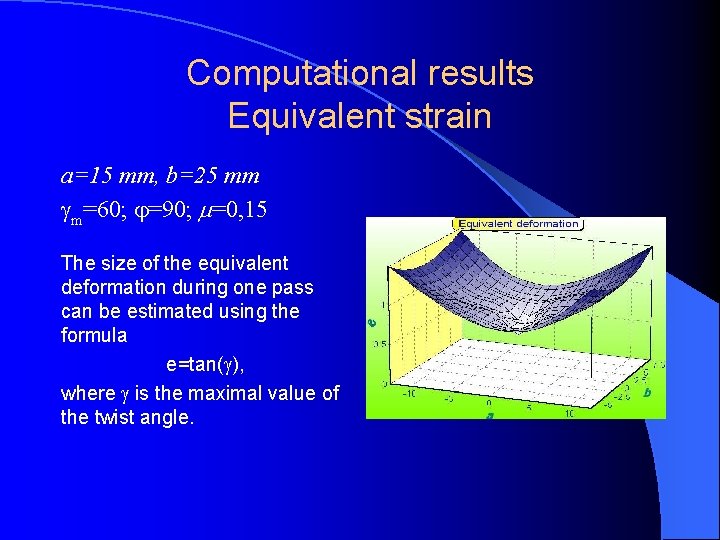
Computational results Equivalent strain a=15 mm, b=25 mm m=60; =90; =0, 15 The size of the equivalent deformation during one pass can be estimated using the formula e=tan( ), where is the maximal value of the twist angle.
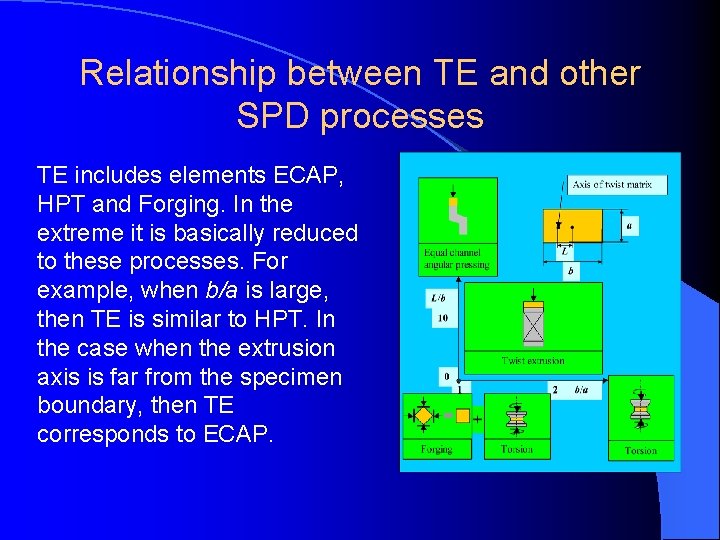
Relationship between TE and other SPD processes TE includes elements ECAP, HPT and Forging. In the extreme it is basically reduced to these processes. For example, when b/a is large, then TE is similar to HPT. In the case when the extrusion axis is far from the specimen boundary, then TE corresponds to ECAP.
Our Installation for Twist Extrusion We have the following two installations: l. TE based on hydro-extrusion and hydro- mechanical extrusion; l. TE based on direct extrusion with thick lubrication layer.
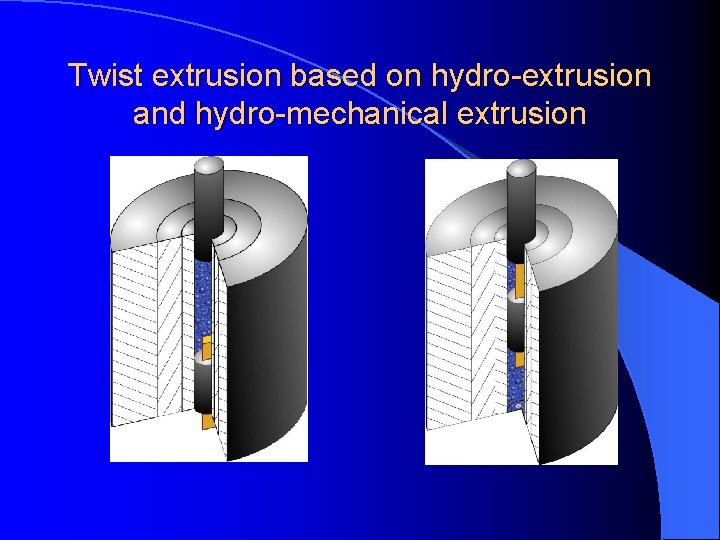
Twist extrusion based on hydro-extrusion and hydro-mechanical extrusion
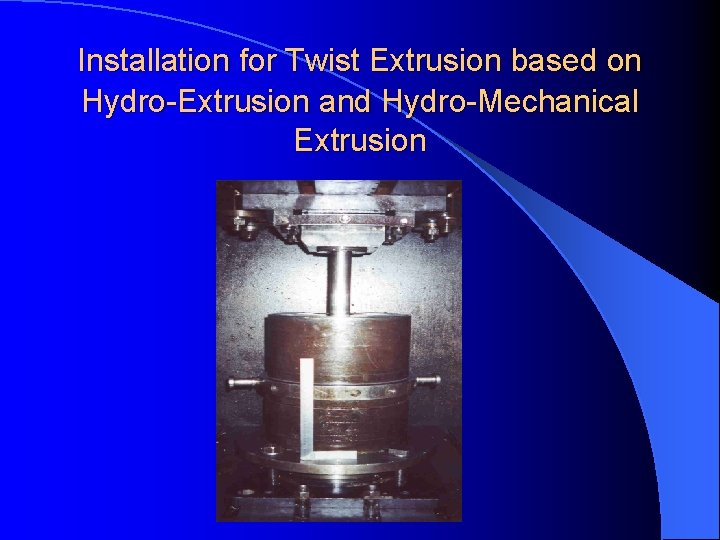
Installation for Twist Extrusion based on Hydro-Extrusion and Hydro-Mechanical Extrusion
Twist extrusion based on direct extrusion with thick lubrication layer
Experimental results Preliminary experiments on copper and titanium showed the following: l. Metal flow is twisted. l. The hardening of metals is high. l. Grain refining is intense.
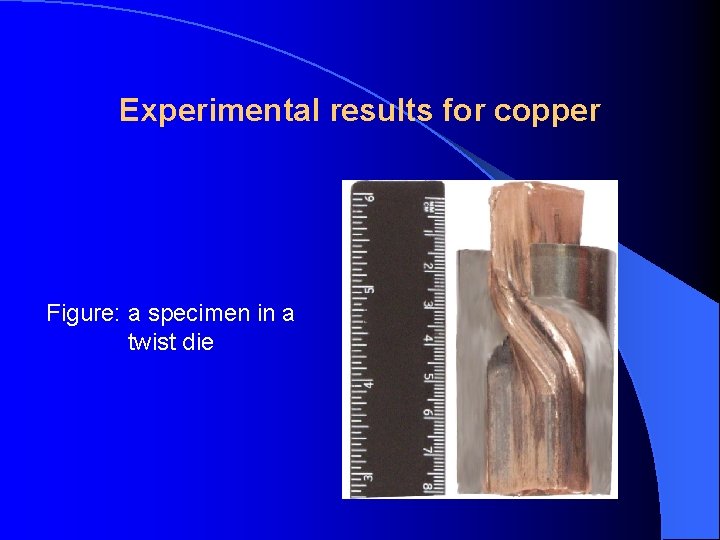
Experimental results for copper Figure: a specimen in a twist die
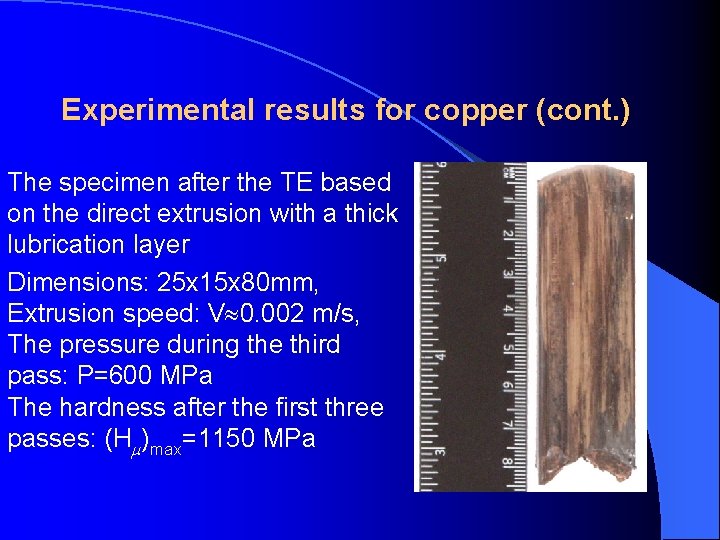
Experimental results for copper (cont. ) The specimen after the TE based on the direct extrusion with a thick lubrication layer Dimensions: 25 x 15 x 80 mm, Extrusion speed: V 0. 002 m/s, The pressure during the third pass: P=600 MPa The hardness after the first three passes: (H )max=1150 MPa
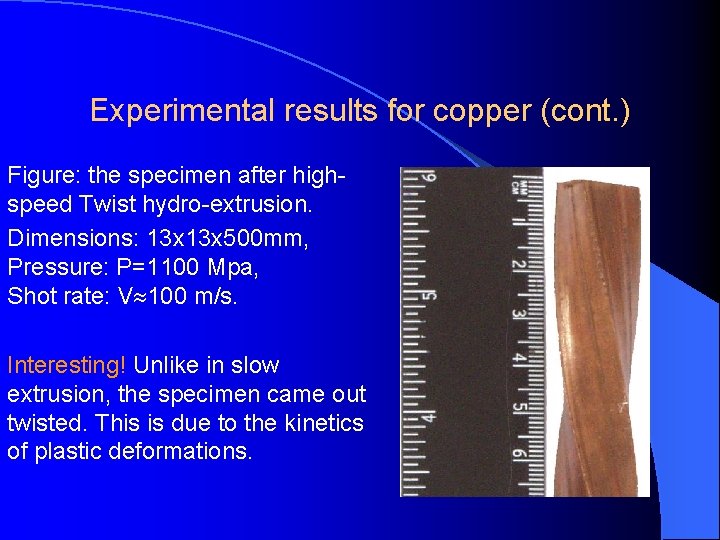
Experimental results for copper (cont. ) Figure: the specimen after highspeed Twist hydro-extrusion. Dimensions: 13 x 500 mm, Pressure: P=1100 Mpa, Shot rate: V 100 m/s. Interesting! Unlike in slow extrusion, the specimen came out twisted. This is due to the kinetics of plastic deformations.
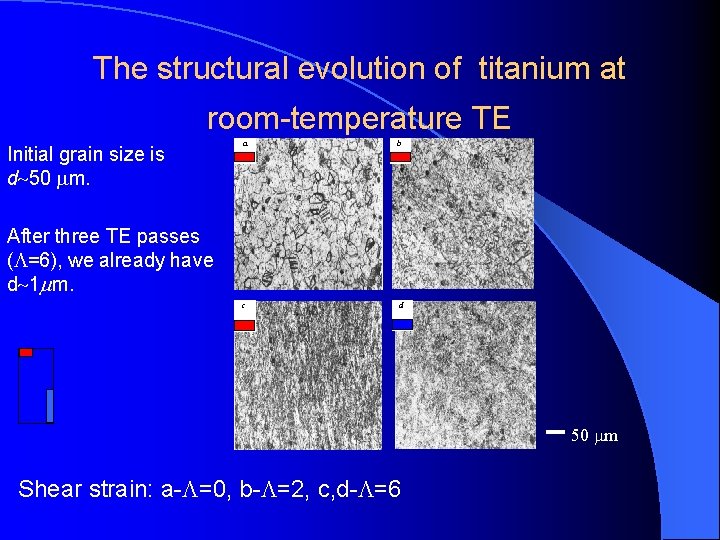
The structural evolution of titanium at room-temperature TE Initial grain size is d 50 m. a b c d After three TE passes ( =6), we already have d 1 m. Cross Shear strain: a- =0, b- =2, c, d- =6 50 m
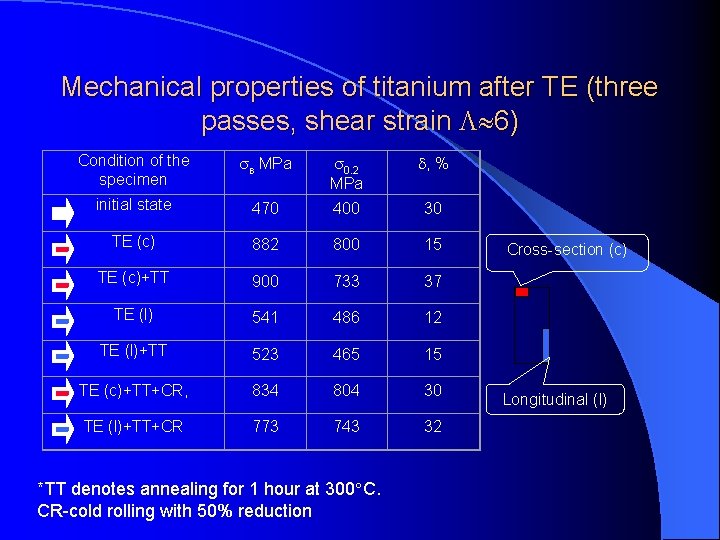
Mechanical properties of titanium after TE (three passes, shear strain 6) Condition of the specimen в MPa 0. 2 MPa , % initial state 470 400 30 TE (c) 882 800 15 TE (c)+TT 900 733 37 TE (l) 541 486 12 TE (l)+TT 523 465 15 TE (c)+TT+CR, 834 804 30 TE (l)+TT+CR 773 743 32 *TT denotes annealing for 1 hour at 300 C. CR-cold rolling with 50% reduction Cross-section (c) Longitudinal (l)
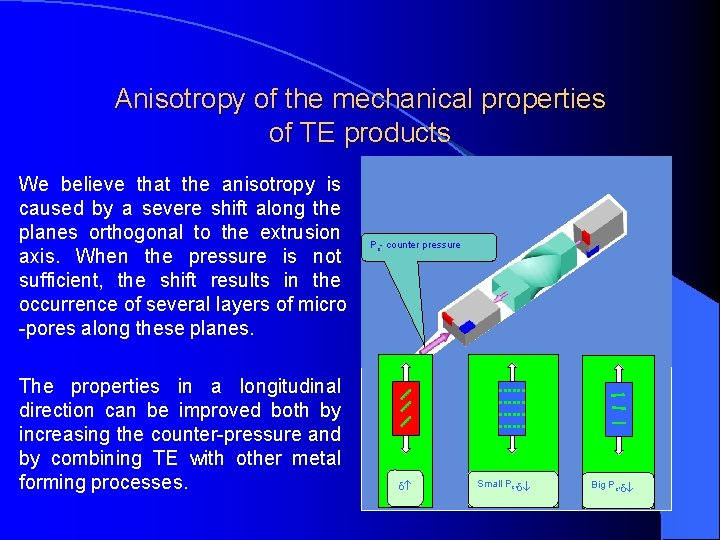
Anisotropy of the mechanical properties of TE products We believe that the anisotropy is caused by a severe shift along the planes orthogonal to the extrusion axis. When the pressure is not sufficient, the shift results in the occurrence of several layers of micro -pores along these planes. The properties in a longitudinal direction can be improved both by increasing the counter-pressure and by combining TE with other metal forming processes. Pc- counter pressure Small Pc, Big Pc,
Conclusion v Even a single pass of Twist Extrusion provides sufficiently large severe plastic deformations of prism samples. v. The size of the equivalent deformation during one pass can be estimated using the formula e=tan( ), where is the maximal value of the twist angle. v The dimensions of the specimen do not change after TE, which allows to repeat TE iteratively, accumulating deformations.
Conclusion v. Several TE passes already suffice to obtain UFG materials v. TE expands the potential of other SPD techniques in controlling the structure of materials and the specifications of end products. v. To eliminate the anisotropy of properties we recommend to combine TE with ECAP and traditional metal forming processes (rolling, drawing).
P. S. We investigated the evolution of metal structure under plastic deformation, in particular TE. This is a multi-level problem, whose main difficulty is due to the fact that the processes on different levels are interdependent.
P. S.
P. S. (cont. ) Classical models of mechanical plasticity do not allow to formulate and solve such problems. Such models are built on constitutive relationships for the Representative Volume Element (RVE). Here RVE is considered to be a point without dimensions, while the most interesting and exciting processes happen inside RVE
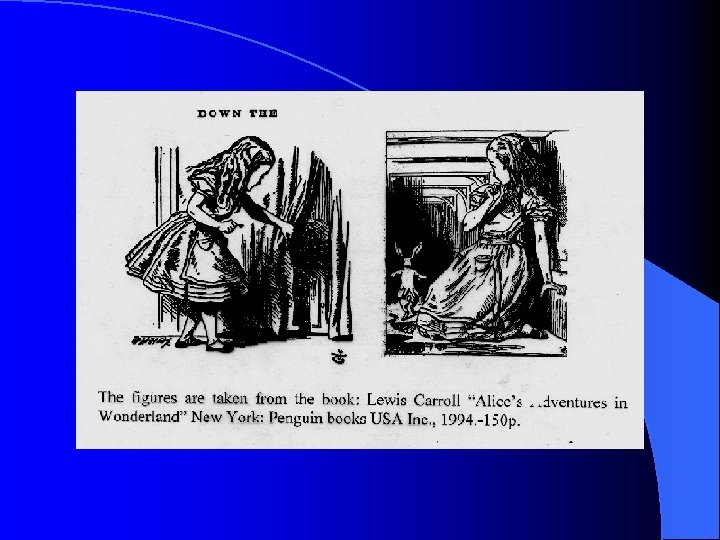
P. S. (cont. ) The situation is the same as the one that Alice experienced in the beginning of her adventures in the Wonderland. Through a tiny door, she saw a rat hole and a beautiful garden beyond it. But she couldn’t enter the garden, because the hole was too narrow.
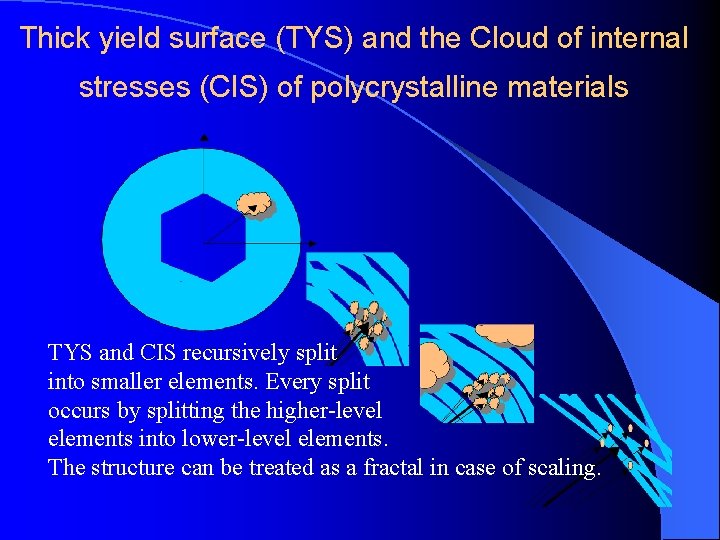
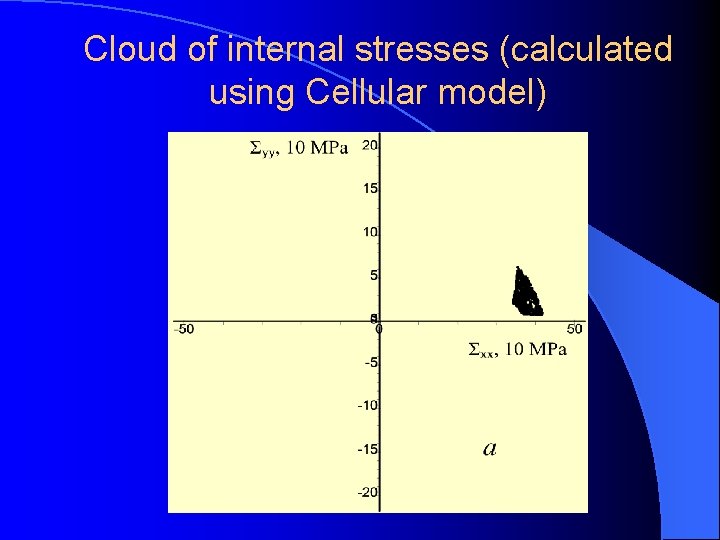
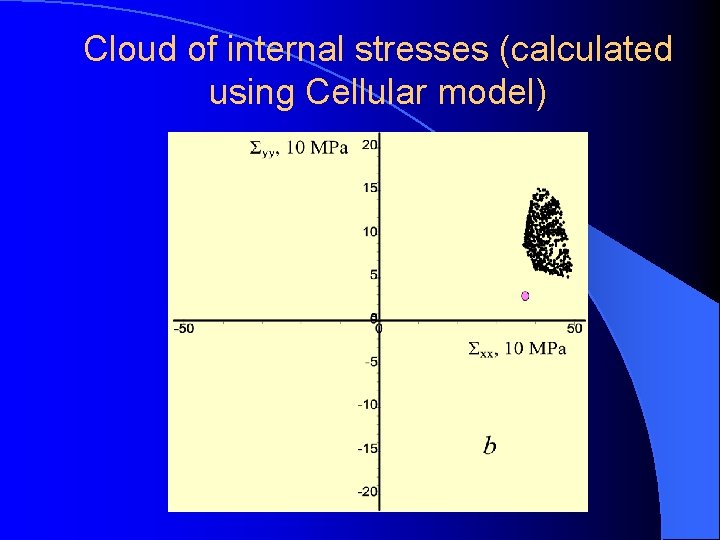
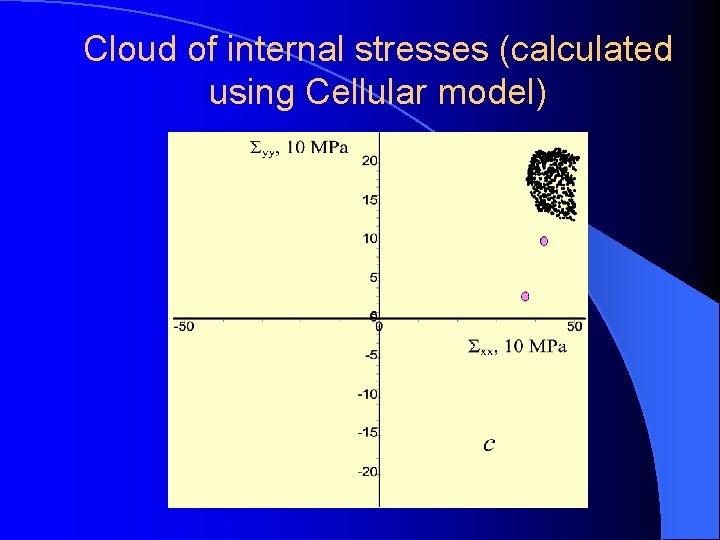
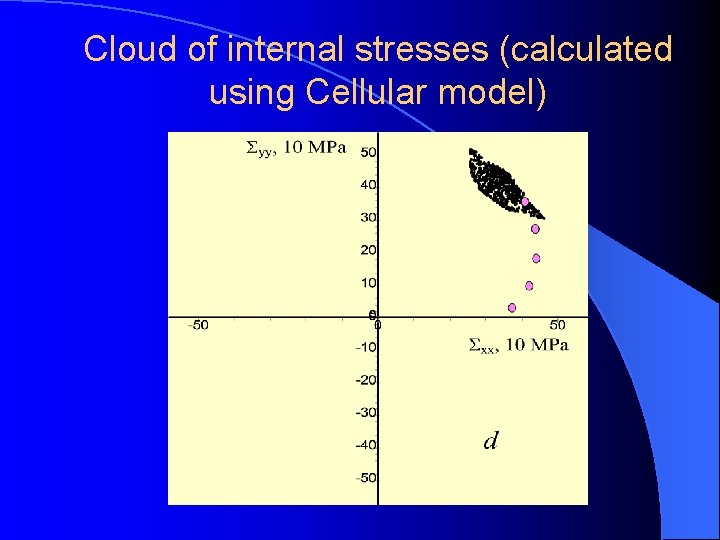
Our goal It happened so that Alice shrank, which made it possible for her to enter the Wonderland. We are trying to do the same. We developed a cellular model of polycrystals and proposed two new notions for representing microprocesses on the macrolevel: thick yield surface and the cloud of internal stress.
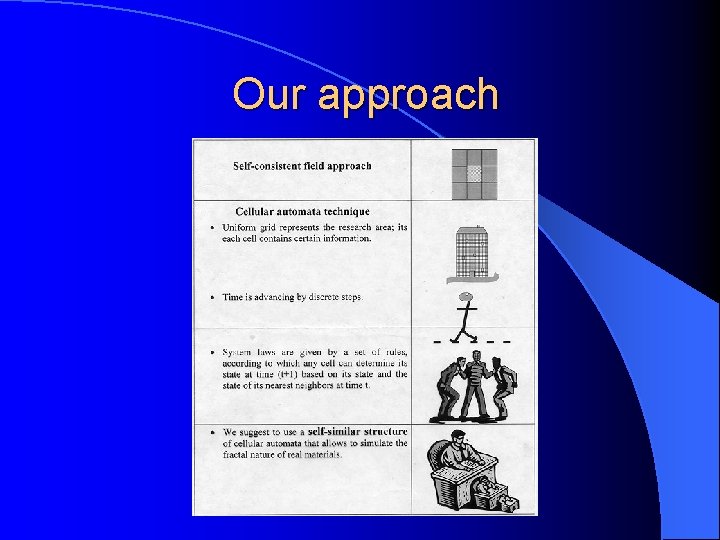
Our approach
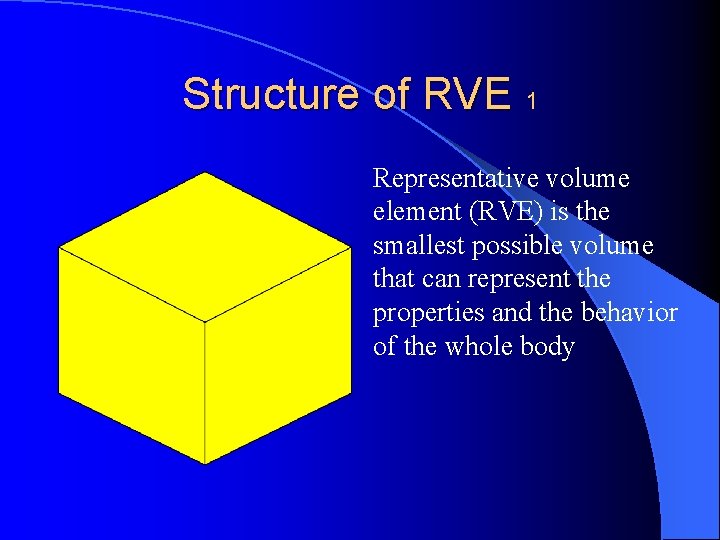
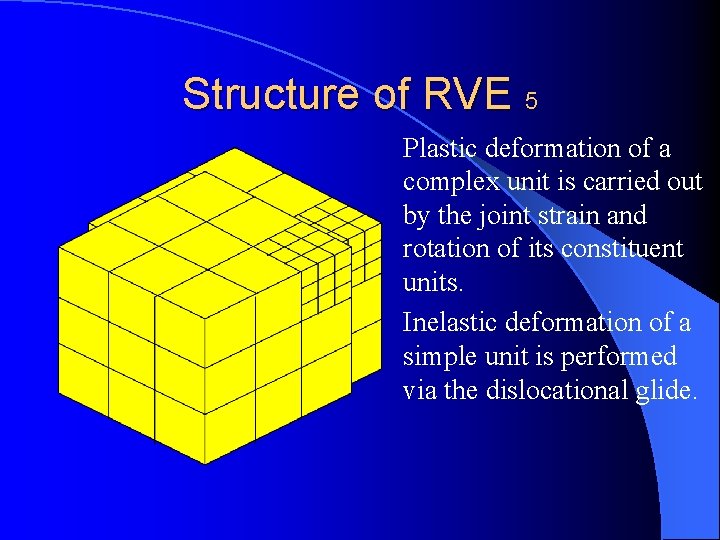
Structure of RVE 1 Representative volume element (RVE) is the smallest possible volume that can represent the properties and the behavior of the whole body
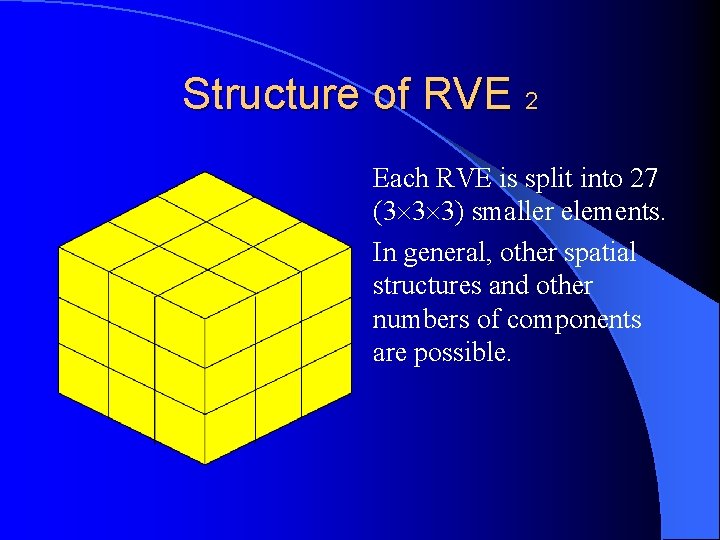
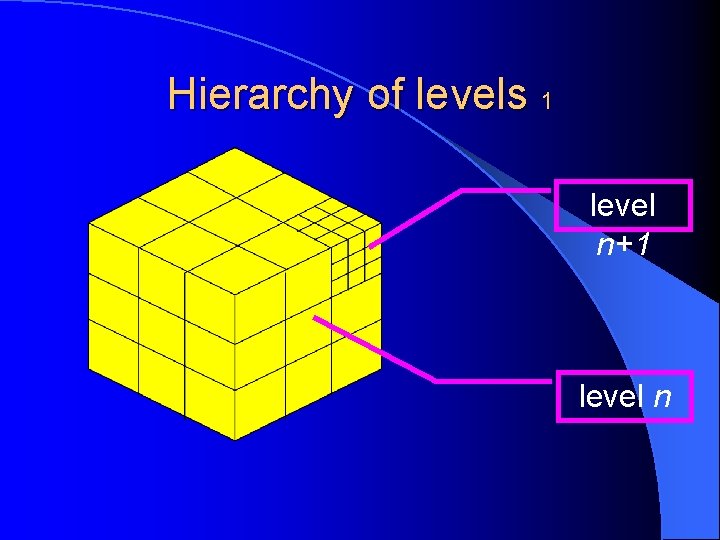
Structure of RVE 2 Each RVE is split into 27 (3 3 3) smaller elements. In general, other spatial structures and other numbers of components are possible.
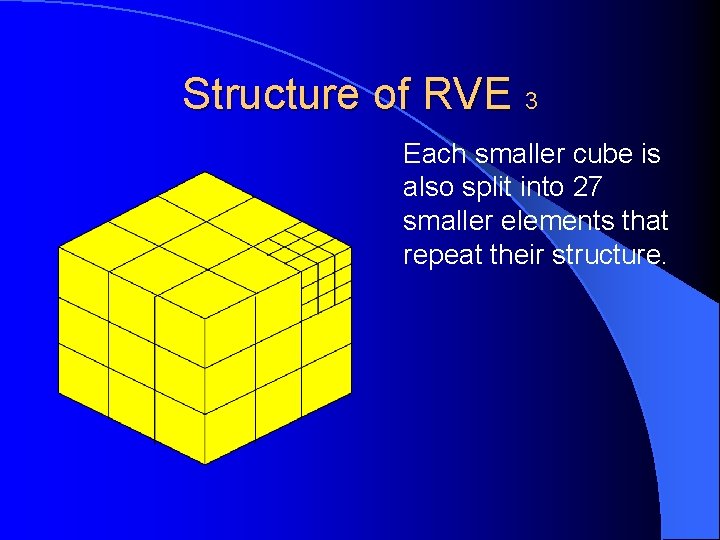
Structure of RVE 3 Each smaller cube is also split into 27 smaller elements that repeat their structure.
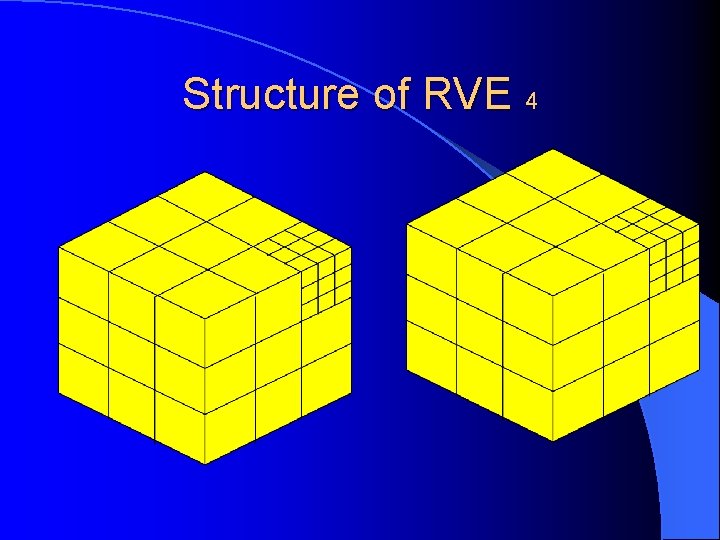
Structure of RVE 4
Structure of RVE 5 Plastic deformation of a complex unit is carried out by the joint strain and rotation of its constituent units. Inelastic deformation of a simple unit is performed via the dislocational glide.
Hierarchy of levels 1 level n+1 level n
Hierarchy of levels 2
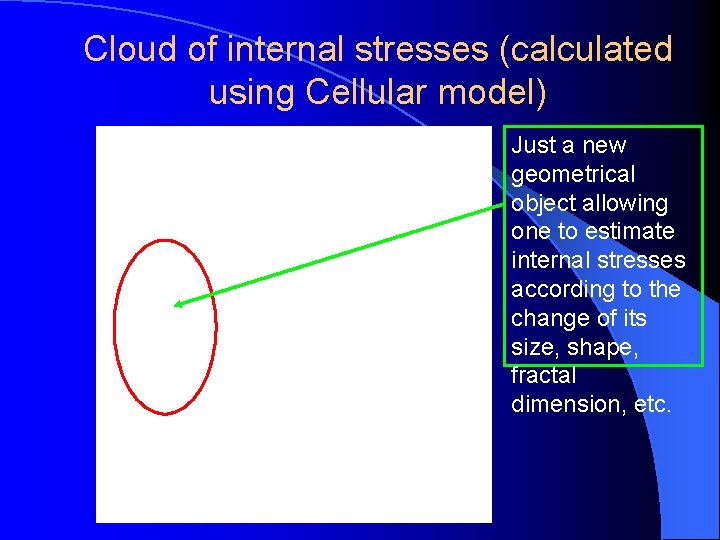
Thick yield surface (TYS) and the Cloud of internal stresses (CIS) of polycrystalline materials TYS and CIS recursively split into smaller elements. Every split occurs by splitting the higher-level elements into lower-level elements. The structure can be treated as a fractal in case of scaling.
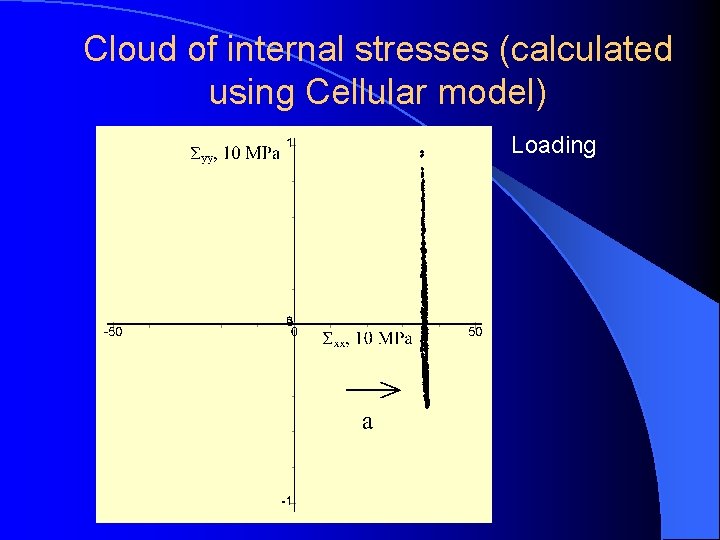
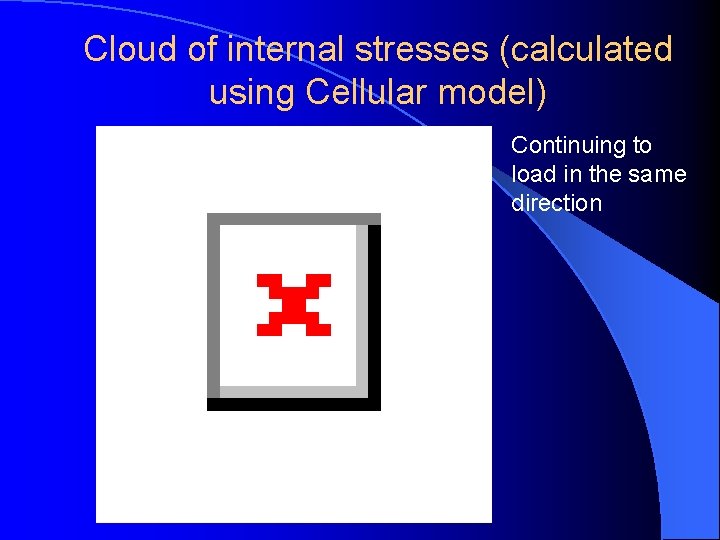
Cellular Model Simulation l We modeled the loading of a poly-crystal along the radius path. l Every time we entered the thick yield surface so that the residual strength was guaranteed to be at least. 2 l The following slides show the evolution of the cloud during consecutive loadings.
Cloud of internal stresses (calculated using Cellular model)
Cloud of internal stresses (calculated using Cellular model)
Cloud of internal stresses (calculated using Cellular model)
Cloud of internal stresses (calculated using Cellular model)
Remarks l Pink points denote the centers of clouds in previous loadings. l It can be assumed that these points lie on a classical loading surface. l The following slides illustrate the evolution of the cloud at sign-alternating loadings. This corresponds to the Bauschinger effect.
Cloud of internal stresses (calculated using Cellular model) Loading
Cloud of internal stresses (calculated using Cellular model) Continuing to load in the same direction
Cloud of internal stresses (calculated using Cellular model) Unloading
Cloud of internal stresses (calculated using Cellular model) Continuing to unload
Cloud of internal stresses (calculated using Cellular model) Continuing to unload
Cloud of internal stresses (calculated using Cellular model) Finishing to unload
Cloud of internal stresses (calculated using Cellular model) Just a new geometrical object allowing one to estimate internal stresses according to the change of its size, shape, fractal dimension, etc.
Acknowledgments We are grateful to Professor Li for the invitation. § We acknowledge the travel support of CRDF grant TGP 654. § We also thank Vladimir Stolyarov and Hamit Salimgareev for mechanical testing of titanium specimens. §