
A New Model for the Galactic Electron Density




- Slides: 48
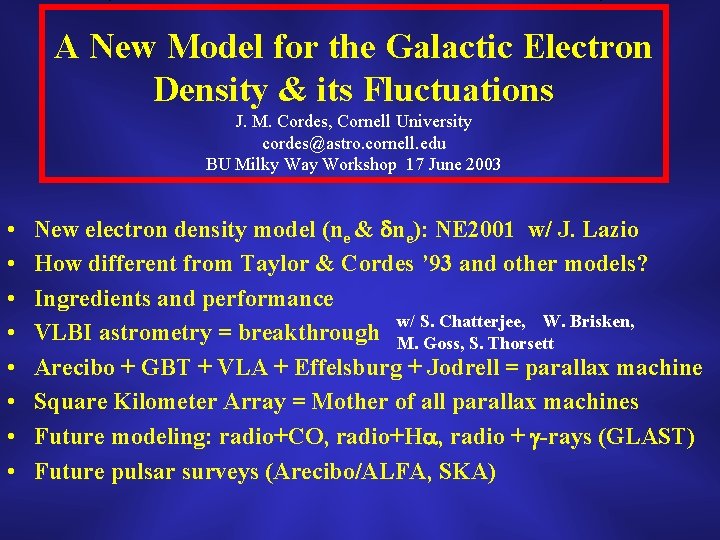
A New Model for the Galactic Electron Density & its Fluctuations J. M. Cordes, Cornell University cordes@astro. cornell. edu BU Milky Way Workshop 17 June 2003 • • New electron density model (ne & ne): NE 2001 w/ J. Lazio How different from Taylor & Cordes ’ 93 and other models? Ingredients and performance w/ S. Chatterjee, W. Brisken, VLBI astrometry = breakthrough M. Goss, S. Thorsett Arecibo + GBT + VLA + Effelsburg + Jodrell = parallax machine Square Kilometer Array = Mother of all parallax machines Future modeling: radio+CO, radio+H , radio + -rays (GLAST) Future pulsar surveys (Arecibo/ALFA, SKA)
NE 2001 (uses data through 2001) Paper I = the model (astro-ph/0207156) Paper II = methodology & particular lines of sight (astro-ph/0301598) Code + driver files + papers: www. astro. cornell. edu/~cordes/NE 2001
Why detailed modeling? • Distance scale for neutron stars – Neutron star populations (space density, luminosities) – Birth/death rates – Correlations with supernova remnants • Designing Radio Pulsar Surveys • Turbulence in Galactic plasma • Galactic magnetic fields (deconstructing Faraday rotation measures) • Interpreting scintillations of sources at cosmological distances (AGNs, GRBs) • Baseline model for exploring the intergalactic medium (dispersion & scattering in ISM, IGM)
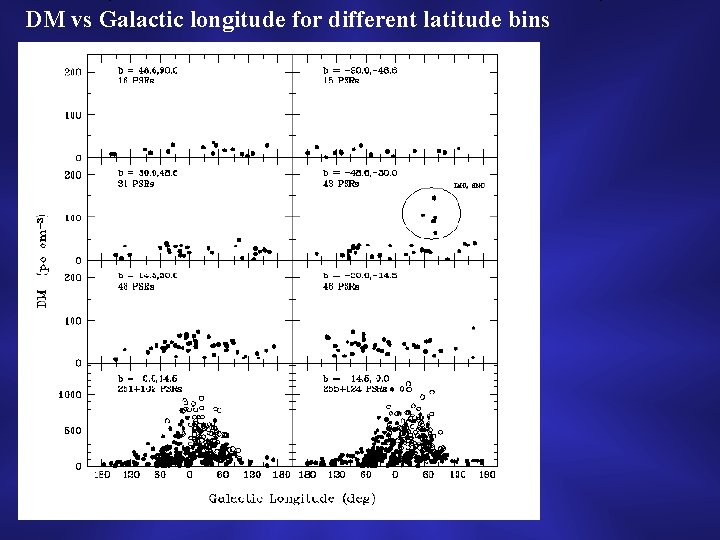
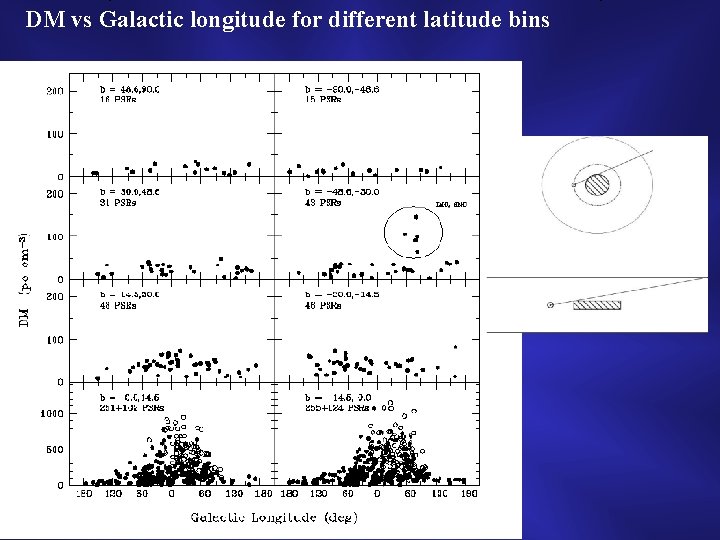
Deficiencies of TC 93 • DM too small for distant, high latitude objects • Distances overestimated for many objects in the Galactic plane (10% of now-known objects have DMs too large to be accounted for) • Pulse broadening over/underestimated in some directions • Spiral arms incompletely defined over Galaxy • No Galactic center component
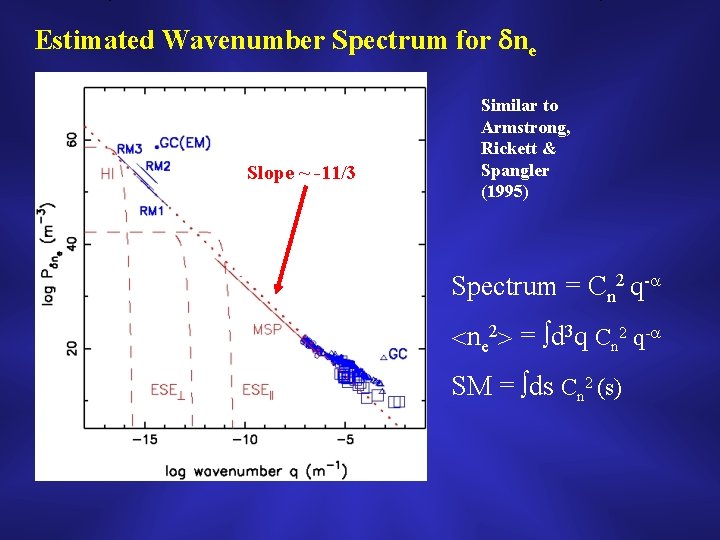
Estimated Wavenumber Spectrum for ne Slope ~ -11/3 Similar to Armstrong, Rickett & Spangler (1995) Spectrum = Cn 2 q- ne 2 = d 3 q Cn 2 q- SM = ds Cn 2 (s)
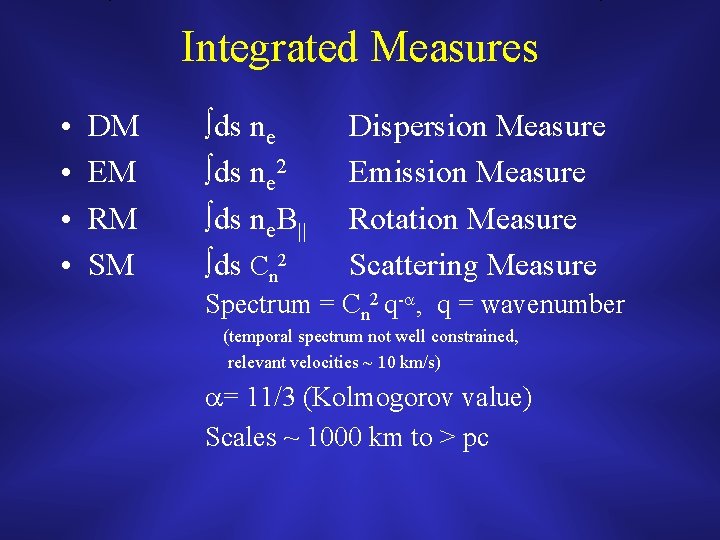
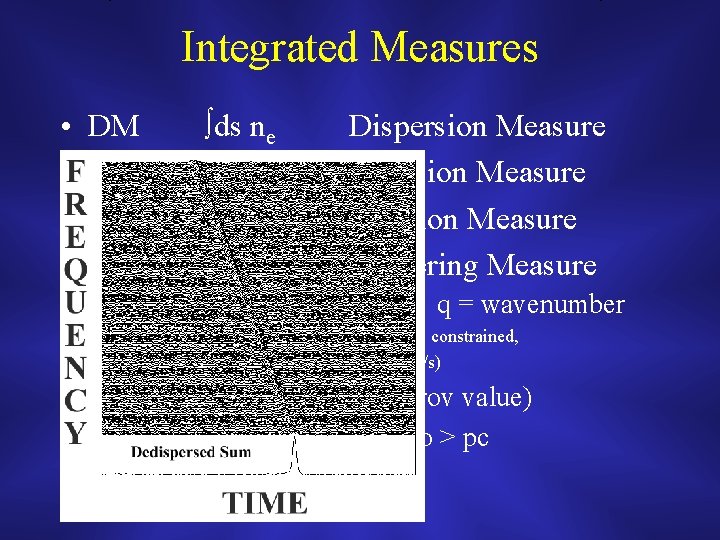
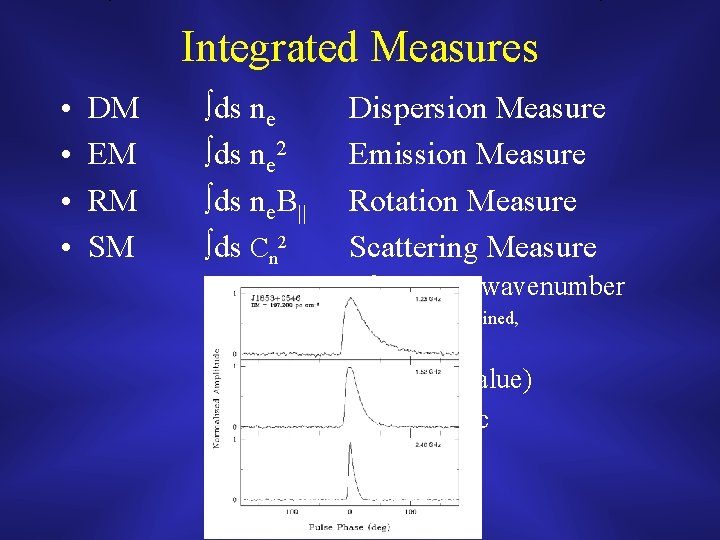
Integrated Measures • • DM EM RM SM ds ne 2 ds ne B|| ds Cn 2 Dispersion Measure Emission Measure Rotation Measure Scattering Measure Spectrum = Cn 2 q- , q = wavenumber (temporal spectrum not well constrained, relevant velocities ~ 10 km/s) = 11/3 (Kolmogorov value) Scales ~ 1000 km to > pc
Integrated Measures • • DM EM RM SM ds ne 2 ds ne B|| ds Cn 2 Dispersion Measure Emission Measure Rotation Measure Scattering Measure Spectrum = Cn 2 q- , q = wavenumber (temporal spectrum not well constrained, relevant velocities ~ 10 km/s) = 11/3 (Kolmogorov value) Scales ~ 1000 km to > pc
Integrated Measures • • DM EM RM SM ds ne 2 ds ne B|| ds Cn 2 Dispersion Measure Emission Measure Rotation Measure Scattering Measure Spectrum = Cn 2 q- , q = wavenumber (temporal spectrum not well constrained, relevant velocities ~ 10 km/s) = 11/3 (Kolmogorov value) Scales ~ 1000 km to > pc
Independent Pulsar Distances • Parallaxes: Pulse timing Interferometry • Associations: Supernova remnants Globular clusters • HI Absorption: Galactic rotation
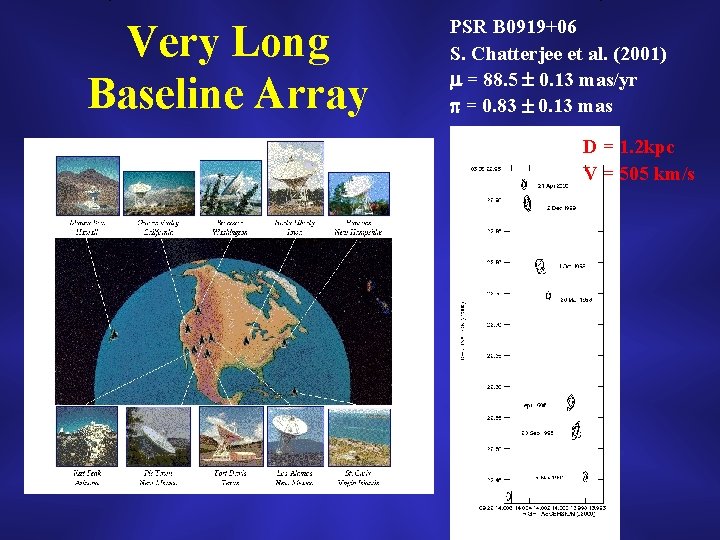
Very Long Baseline Array PSR B 0919+06 S. Chatterjee et al. (2001) = 88. 5 0. 13 mas/yr = 0. 83 0. 13 mas D = 1. 2 kpc V = 505 km/s
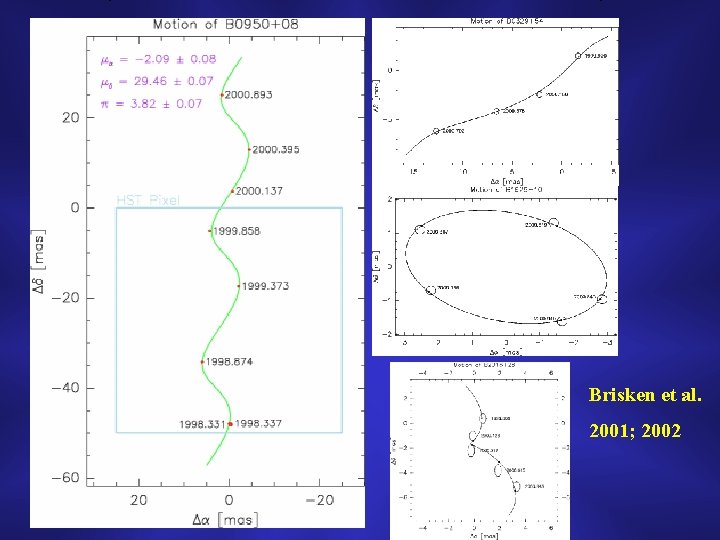
Brisken et al. 2001; 2002
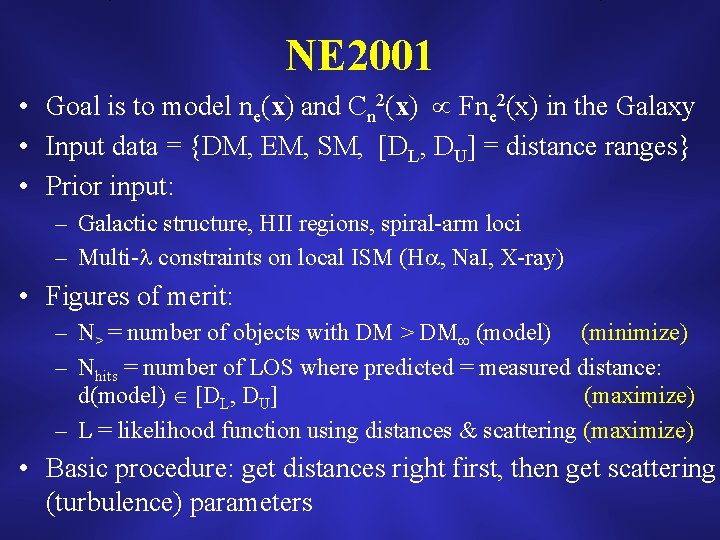
NE 2001 • Goal is to model ne(x) and Cn 2(x) Fne 2(x) in the Galaxy • Input data = {DM, EM, SM, [DL, DU] = distance ranges} • Prior input: – Galactic structure, HII regions, spiral-arm loci – Multi- constraints on local ISM (H , Na. I, X-ray) • Figures of merit: – N> = number of objects with DM > DM (model) (minimize) – Nhits = number of LOS where predicted = measured distance: d(model) [DL, DU] (maximize) – L = likelihood function using distances & scattering (maximize) • Basic procedure: get distances right first, then get scattering (turbulence) parameters
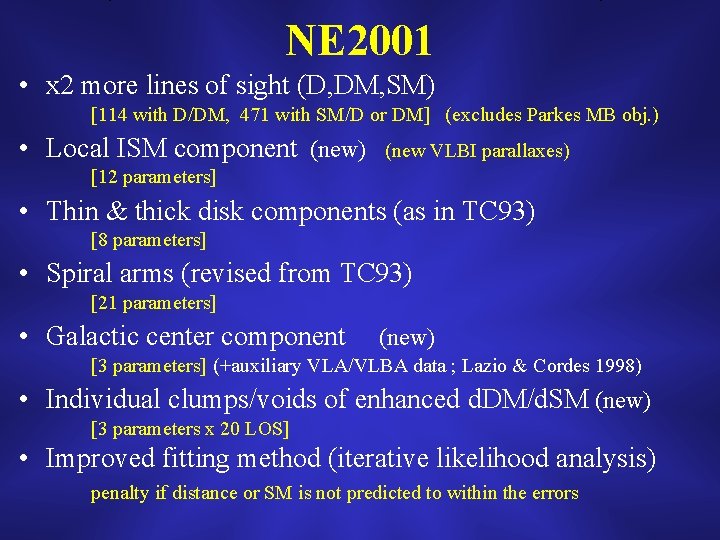
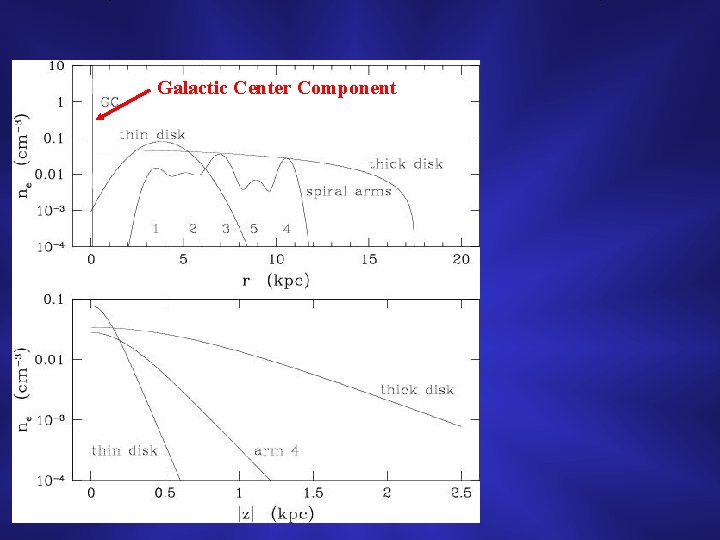
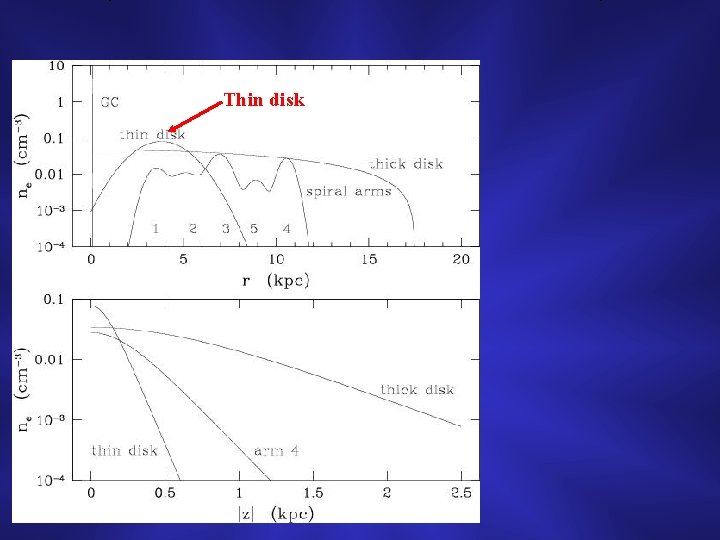
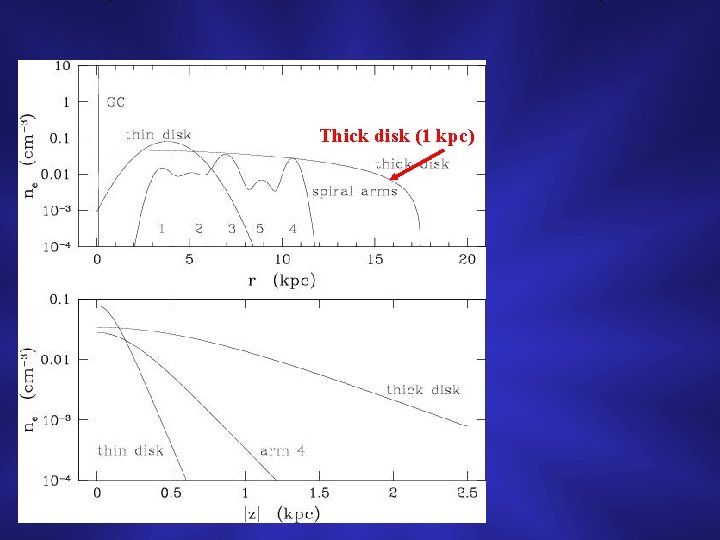
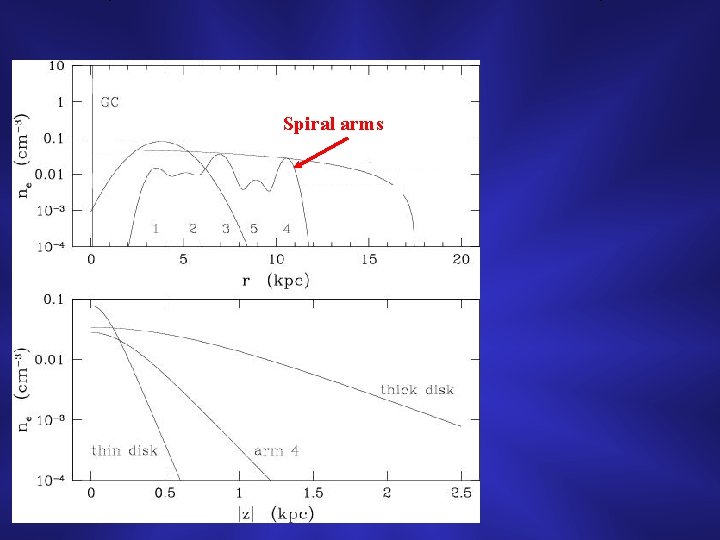
NE 2001 • x 2 more lines of sight (D, DM, SM) [114 with D/DM, 471 with SM/D or DM] (excludes Parkes MB obj. ) • Local ISM component (new) (new VLBI parallaxes) [12 parameters] • Thin & thick disk components (as in TC 93) [8 parameters] • Spiral arms (revised from TC 93) [21 parameters] • Galactic center component (new) [3 parameters] (+auxiliary VLA/VLBA data ; Lazio & Cordes 1998) • Individual clumps/voids of enhanced d. DM/d. SM (new) [3 parameters x 20 LOS] • Improved fitting method (iterative likelihood analysis) penalty if distance or SM is not predicted to within the errors
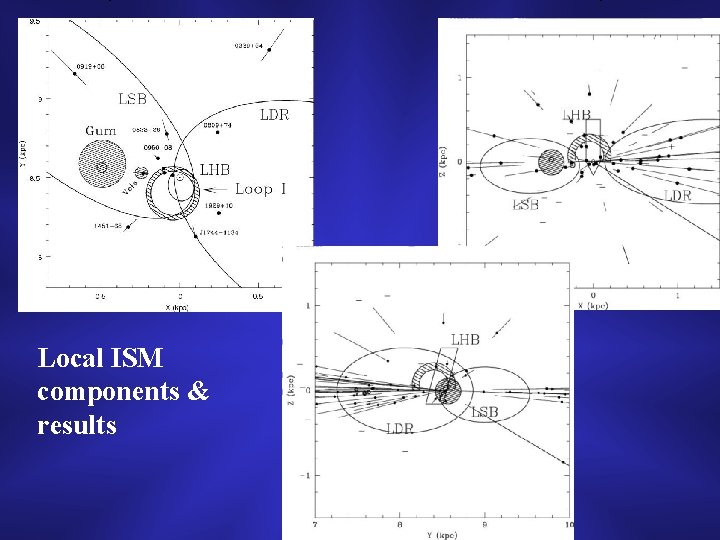
Local ISM components & results
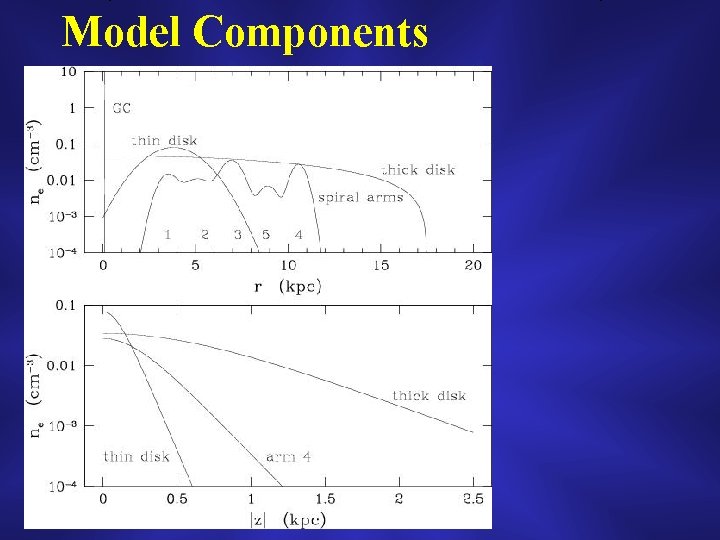
Model Components
Galactic Center Component
Thin disk
Thick disk (1 kpc)
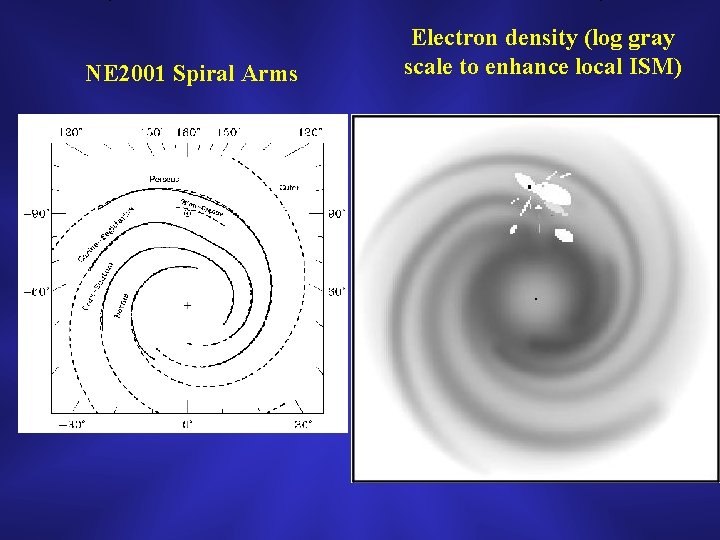
Spiral arms
DM vs Galactic longitude for different latitude bins
DM vs Galactic longitude for different latitude bins
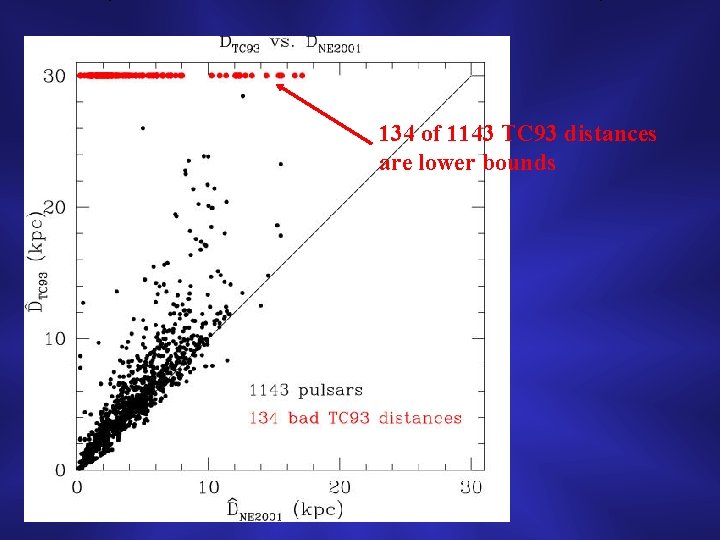
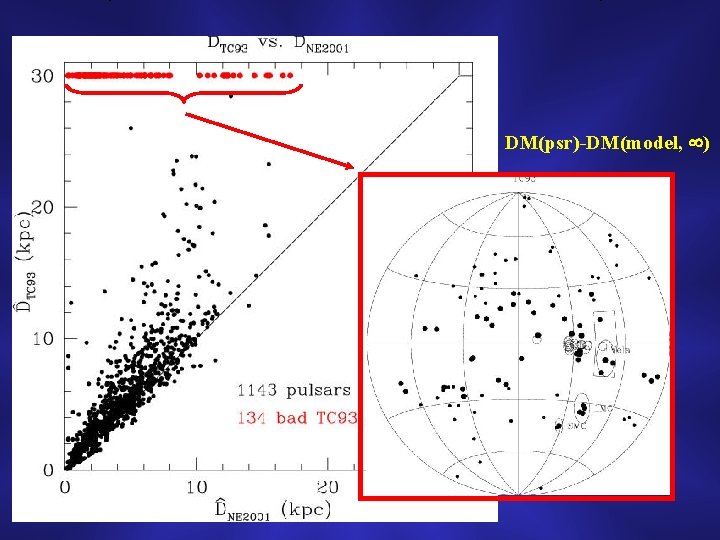
134 of 1143 TC 93 distances are lower bounds
DM(psr)-DM(model, )
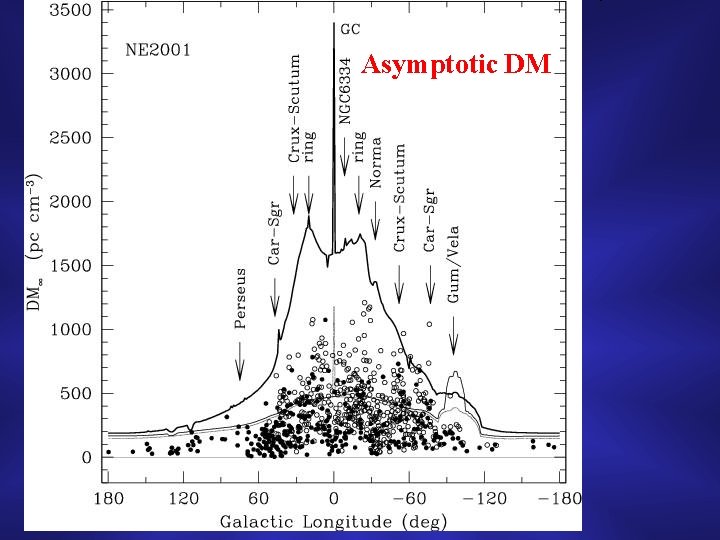
Asymptotic DM
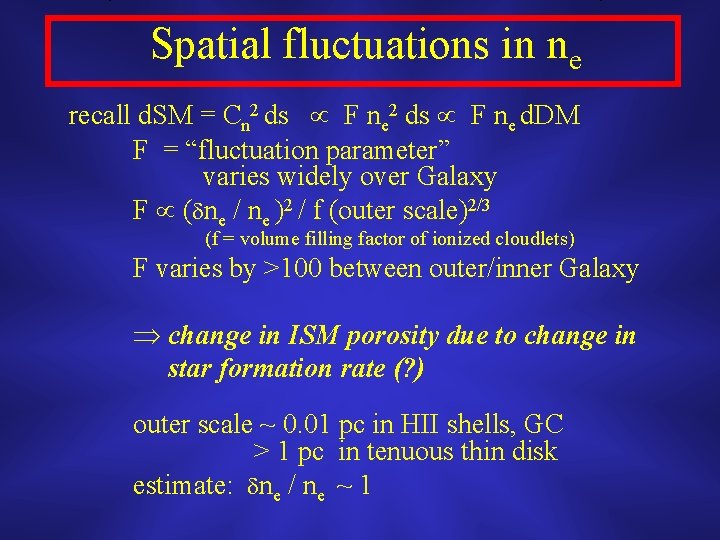
Spatial fluctuations in ne recall d. SM = Cn 2 ds F ne d. DM F = “fluctuation parameter” varies widely over Galaxy F (dne / ne )2 / f (outer scale)2/3 (f = volume filling factor of ionized cloudlets) F varies by >100 between outer/inner Galaxy change in ISM porosity due to change in star formation rate (? ) outer scale ~ 0. 01 pc in HII shells, GC > 1 pc in tenuous thin disk estimate: dne / ne ~ 1
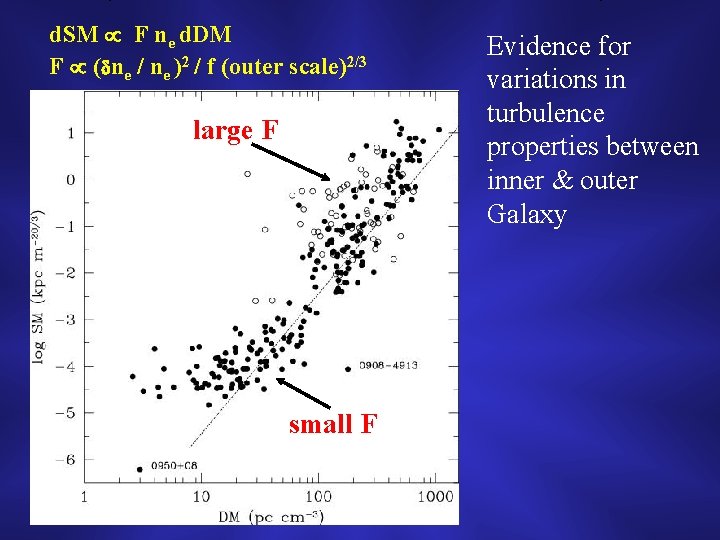
d. SM F ne d. DM F ( ne / ne )2 / f (outer scale)2/3 large F small F Evidence for variations in turbulence properties between inner & outer Galaxy
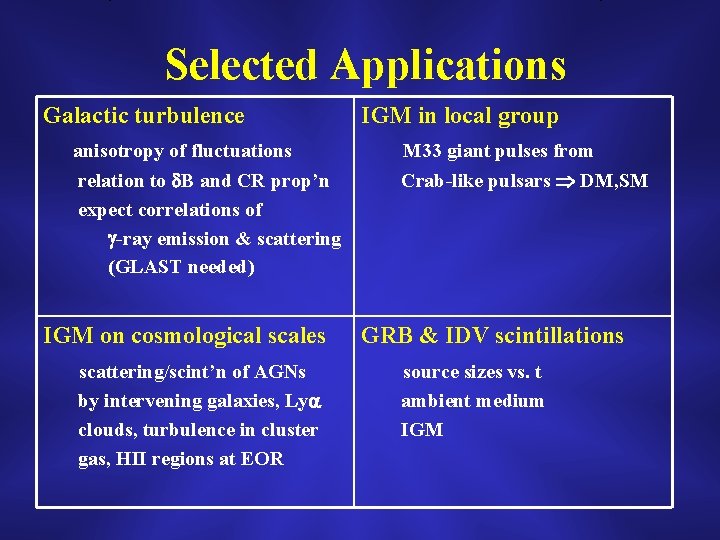
Selected Applications Galactic turbulence anisotropy of fluctuations relation to B and CR prop’n expect correlations of -ray emission & scattering (GLAST needed) IGM on cosmological scales scattering/scint’n of AGNs by intervening galaxies, Ly clouds, turbulence in cluster gas, HII regions at EOR IGM in local group M 33 giant pulses from Crab-like pulsars DM, SM GRB & IDV scintillations source sizes vs. t ambient medium IGM
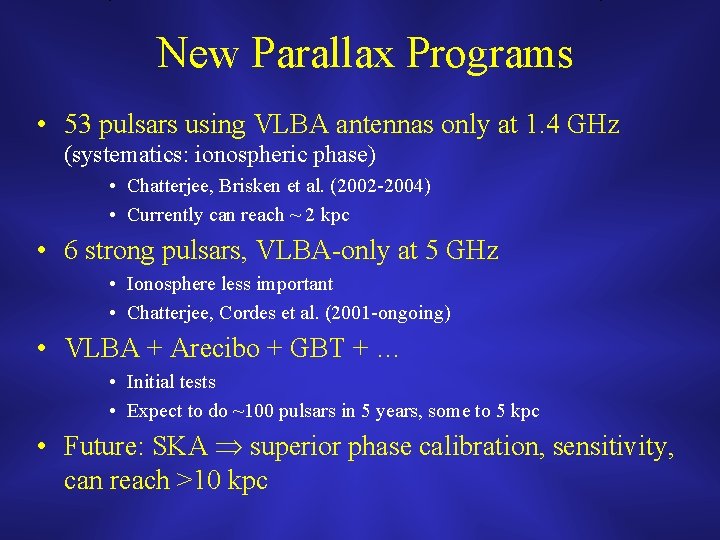
New Parallax Programs • 53 pulsars using VLBA antennas only at 1. 4 GHz (systematics: ionospheric phase) • Chatterjee, Brisken et al. (2002 -2004) • Currently can reach ~ 2 kpc • 6 strong pulsars, VLBA-only at 5 GHz • Ionosphere less important • Chatterjee, Cordes et al. (2001 -ongoing) • VLBA + Arecibo + GBT + … • Initial tests • Expect to do ~100 pulsars in 5 years, some to 5 kpc • Future: SKA superior phase calibration, sensitivity, can reach >10 kpc
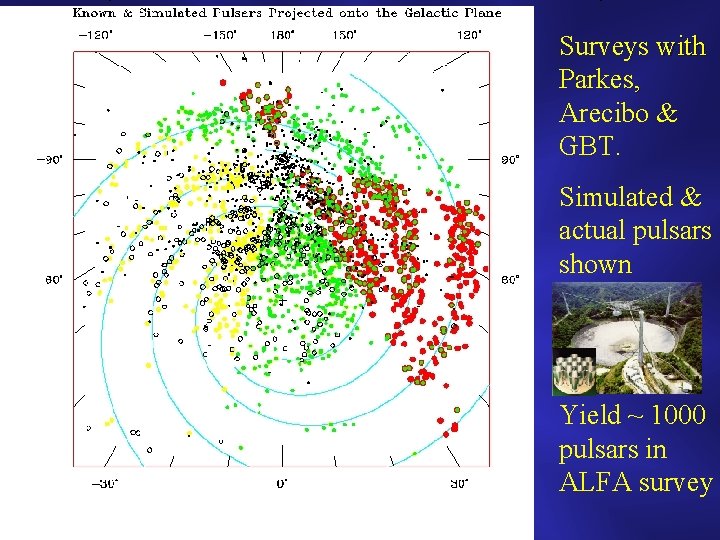
Surveys with Parkes, Arecibo & GBT. Simulated & actual pulsars shown Yield ~ 1000 pulsars in ALFA survey
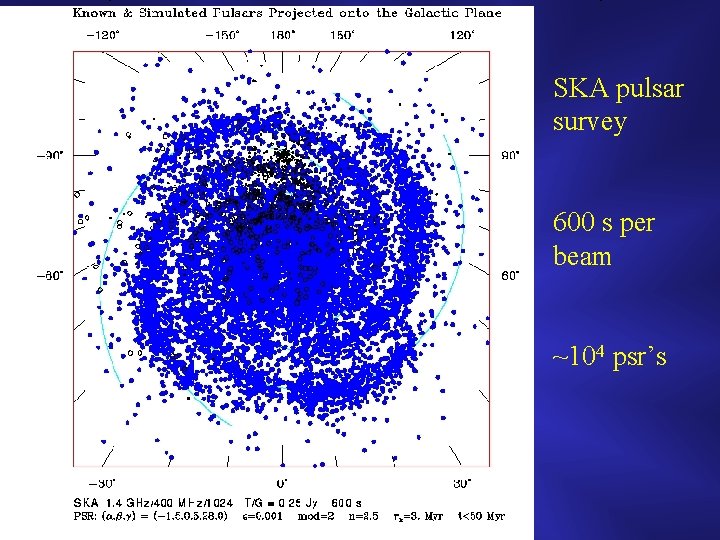
SKA pulsar survey 600 s per beam ~104 psr’s
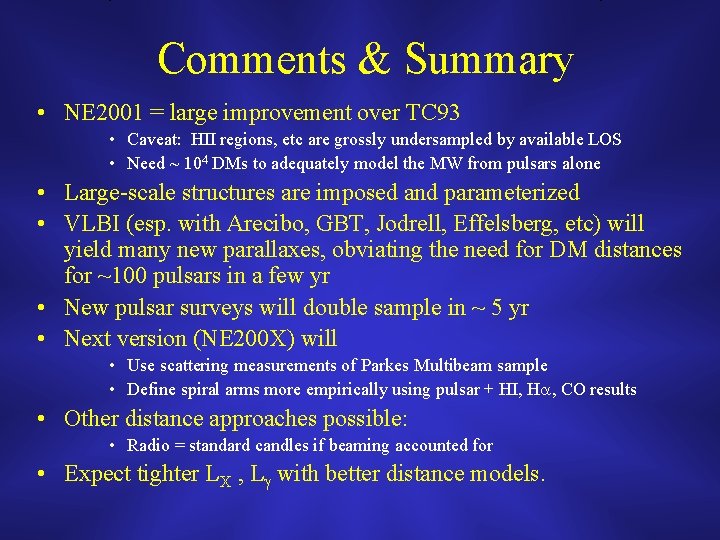
Comments & Summary • NE 2001 = large improvement over TC 93 • Caveat: HII regions, etc are grossly undersampled by available LOS • Need ~ 104 DMs to adequately model the MW from pulsars alone • Large-scale structures are imposed and parameterized • VLBI (esp. with Arecibo, GBT, Jodrell, Effelsberg, etc) will yield many new parallaxes, obviating the need for DM distances for ~100 pulsars in a few yr • New pulsar surveys will double sample in ~ 5 yr • Next version (NE 200 X) will • Use scattering measurements of Parkes Multibeam sample • Define spiral arms more empirically using pulsar + HI, H , CO results • Other distance approaches possible: • Radio = standard candles if beaming accounted for • Expect tighter LX , L with better distance models.
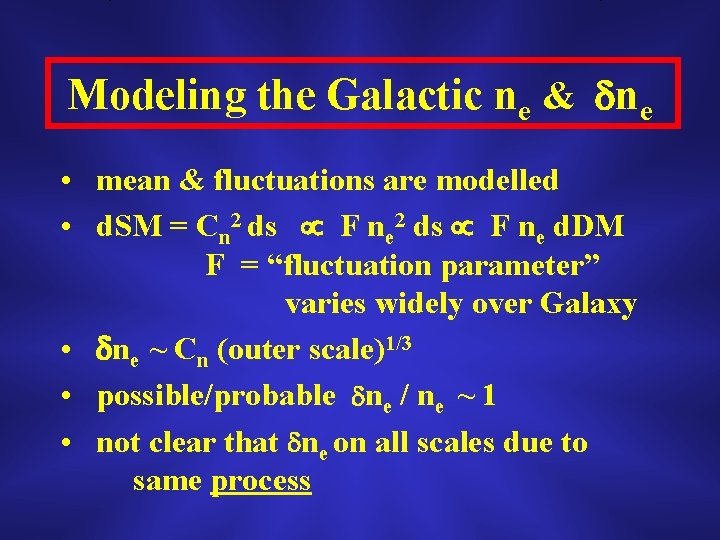
Modeling the Galactic ne & ne • mean & fluctuations are modelled • d. SM = Cn 2 ds F ne d. DM F = “fluctuation parameter” varies widely over Galaxy • ne ~ Cn (outer scale)1/3 • possible/probable ne / ne ~ 1 • not clear that ne on all scales due to same process
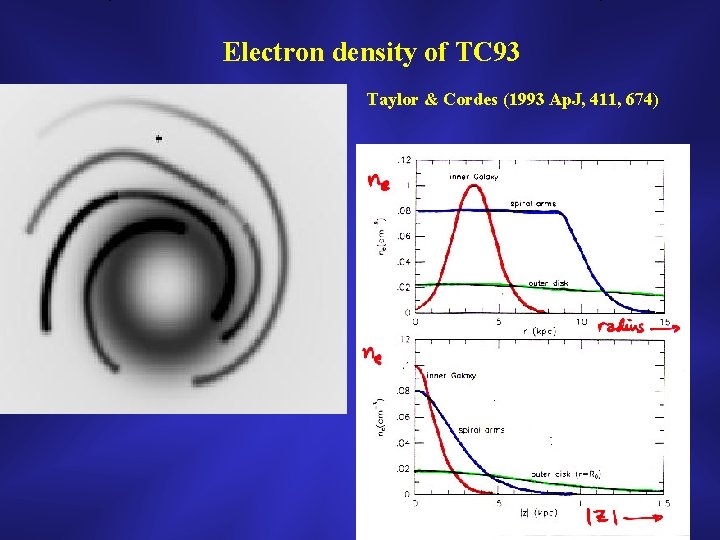
Electron density of TC 93 Taylor & Cordes (1993 Ap. J, 411, 674)
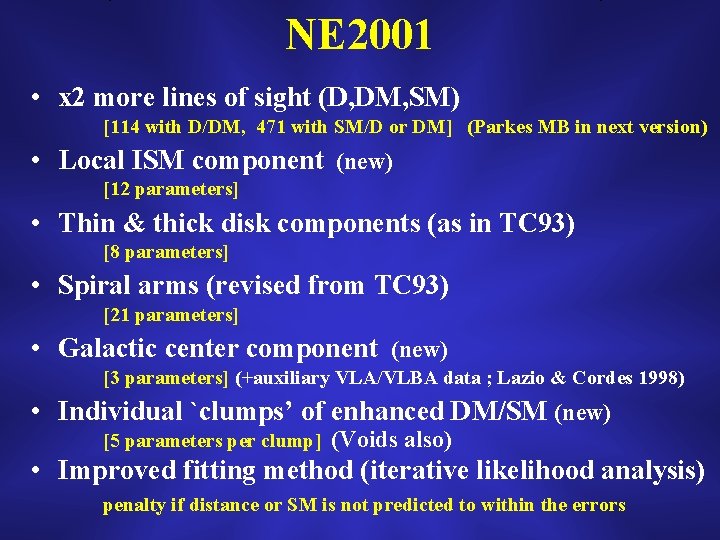
NE 2001 • x 2 more lines of sight (D, DM, SM) [114 with D/DM, 471 with SM/D or DM] (Parkes MB in next version) • Local ISM component (new) [12 parameters] • Thin & thick disk components (as in TC 93) [8 parameters] • Spiral arms (revised from TC 93) [21 parameters] • Galactic center component (new) [3 parameters] (+auxiliary VLA/VLBA data ; Lazio & Cordes 1998) • Individual `clumps’ of enhanced DM/SM (new) [5 parameters per clump] (Voids also) • Improved fitting method (iterative likelihood analysis) penalty if distance or SM is not predicted to within the errors
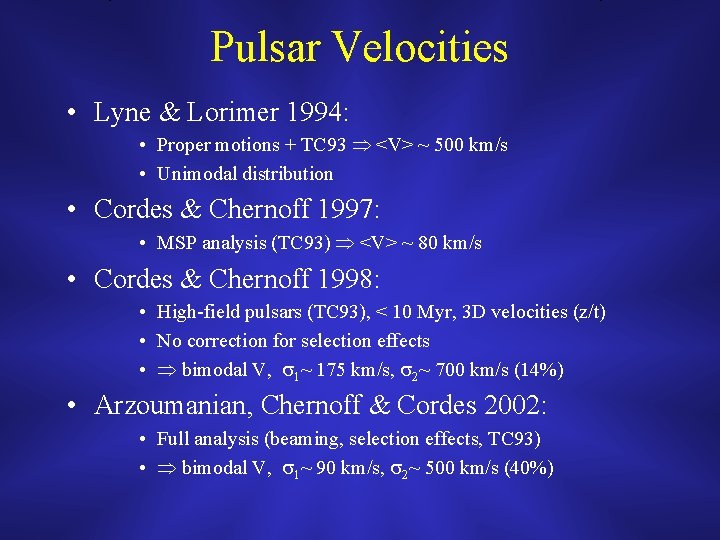
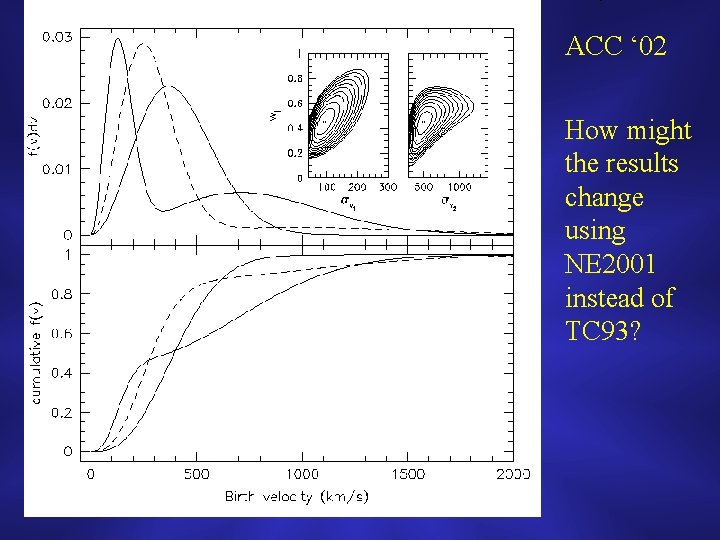
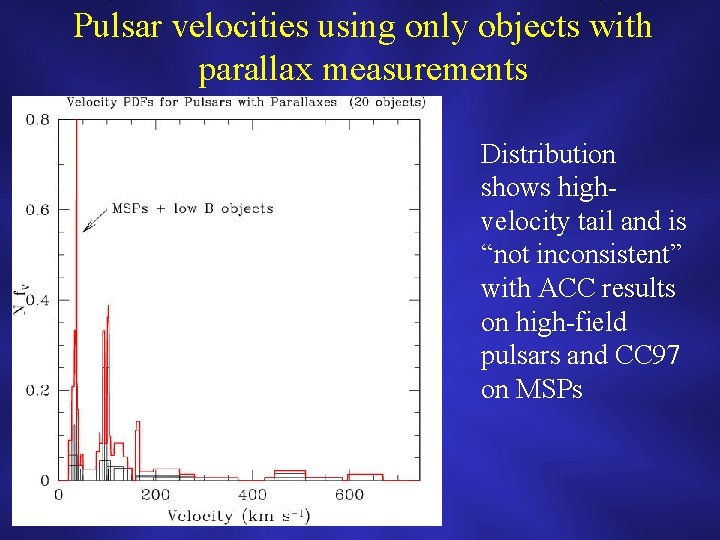
Pulsar Velocities • Lyne & Lorimer 1994: • Proper motions + TC 93 <V> ~ 500 km/s • Unimodal distribution • Cordes & Chernoff 1997: • MSP analysis (TC 93) <V> ~ 80 km/s • Cordes & Chernoff 1998: • High-field pulsars (TC 93), < 10 Myr, 3 D velocities (z/t) • No correction for selection effects • bimodal V, 1~ 175 km/s, 2~ 700 km/s (14%) • Arzoumanian, Chernoff & Cordes 2002: • Full analysis (beaming, selection effects, TC 93) • bimodal V, 1~ 90 km/s, 2~ 500 km/s (40%)
ACC ‘ 02 How might the results change using NE 2001 instead of TC 93?
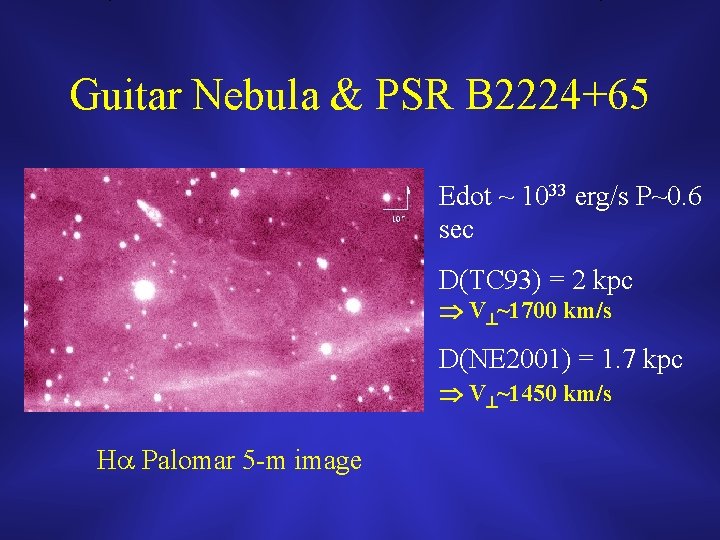
Guitar Nebula & PSR B 2224+65 Edot ~ 1033 erg/s P~0. 6 sec D(TC 93) = 2 kpc V ~1700 km/s D(NE 2001) = 1. 7 kpc V ~1450 km/s H Palomar 5 -m image
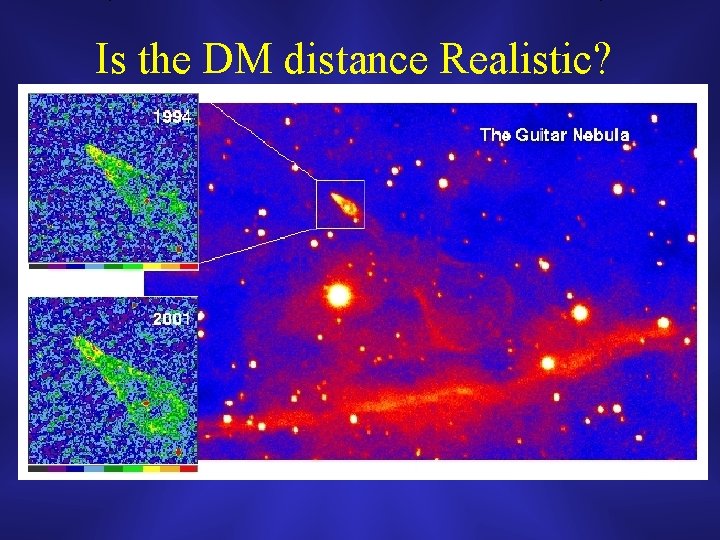
Is the DM distance Realistic?
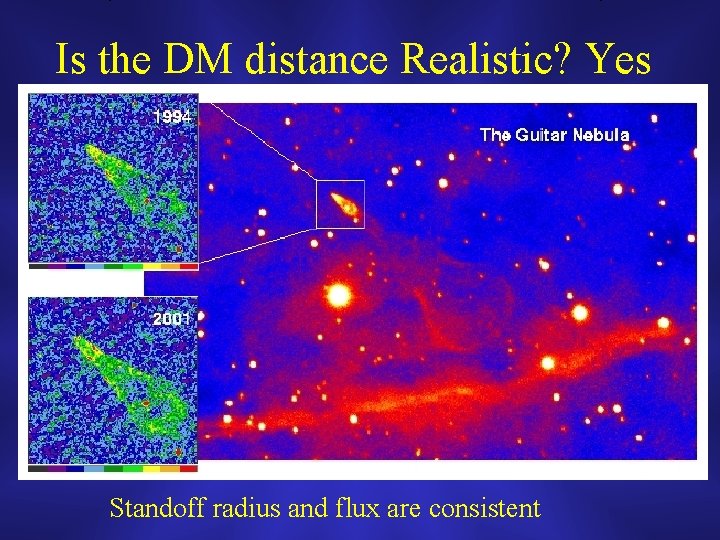
Is the DM distance Realistic? Yes Standoff radius and flux are consistent
Pulsar velocities using only objects with parallax measurements Distribution shows highvelocity tail and is “not inconsistent” with ACC results on high-field pulsars and CC 97 on MSPs
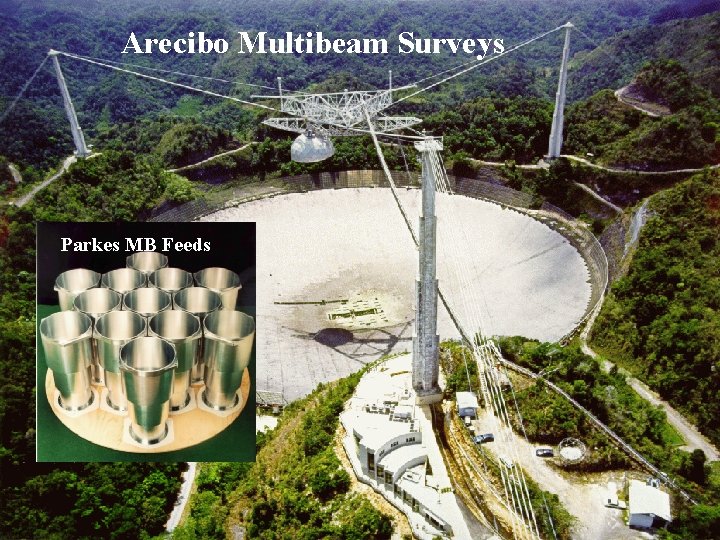
Arecibo Multibeam Surveys Parkes MB Feeds
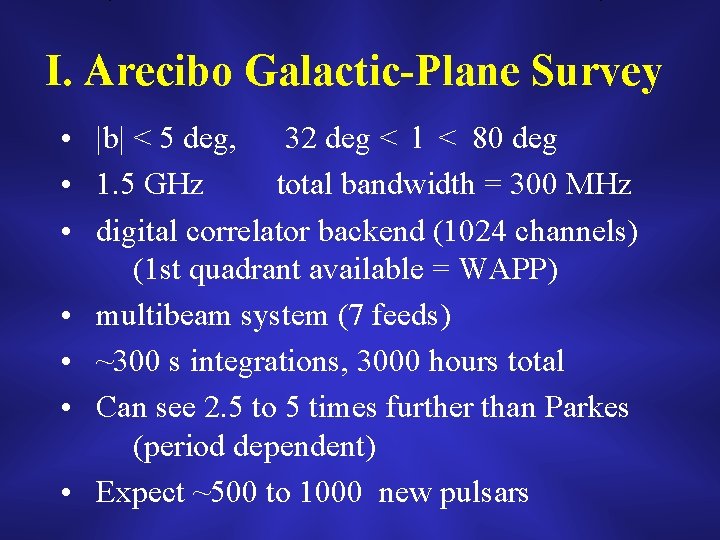
I. Arecibo Galactic-Plane Survey • |b| < 5 deg, 32 deg < l < 80 deg • 1. 5 GHz total bandwidth = 300 MHz • digital correlator backend (1024 channels) (1 st quadrant available = WAPP) • multibeam system (7 feeds) • ~300 s integrations, 3000 hours total • Can see 2. 5 to 5 times further than Parkes (period dependent) • Expect ~500 to 1000 new pulsars
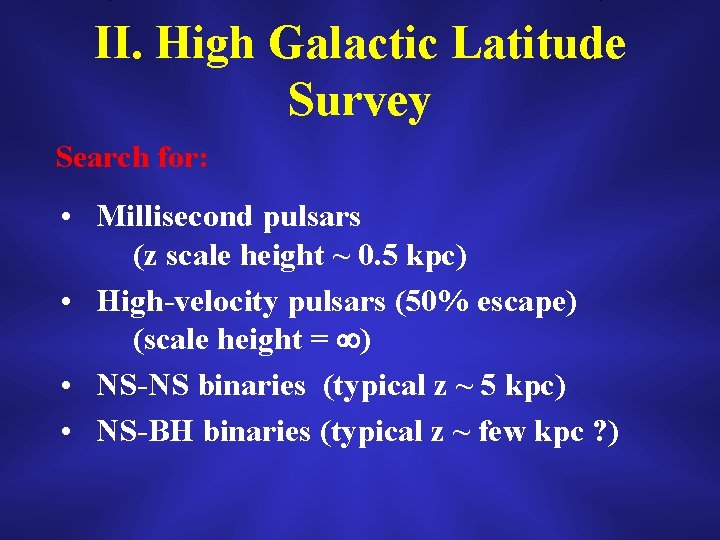
II. High Galactic Latitude Survey Search for: • Millisecond pulsars (z scale height ~ 0. 5 kpc) • High-velocity pulsars (50% escape) (scale height = ) • NS-NS binaries (typical z ~ 5 kpc) • NS-BH binaries (typical z ~ few kpc ? )
NE 2001 Spiral Arms Electron density (log gray scale to enhance local ISM)
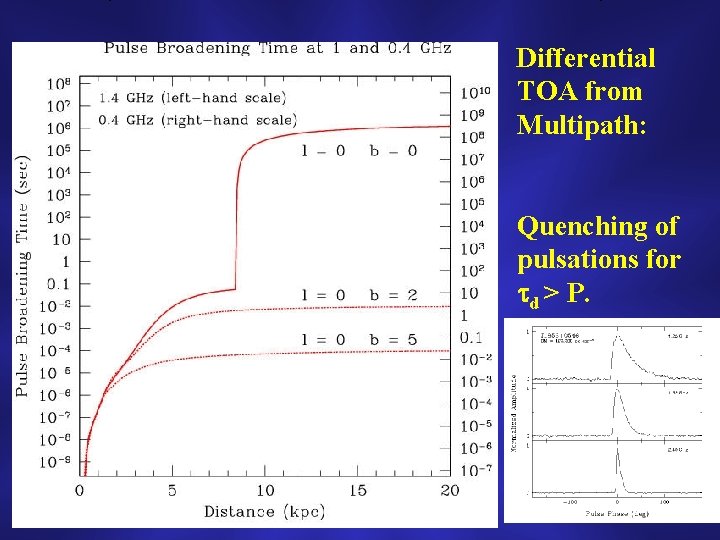
Differential TOA from Multipath: Quenching of pulsations for d > P.
NE 2001 = New Model Cordes & Lazio 2002 astro-ph July www. astro. cornell. edu/~cordes/NE 2001 • • Goal is to model ne(x) and Cn 2(x) in the Galaxy Software to the community (cf web site) Supercedes earlier model (Taylor & Cordes 1993, Ap. J) Investigate application spinoffs: – Astronomical: • scattering degradation of pulsar surveys • Imaging surveys at low frequencies (LOFAR, SKA) • SETI – Astrophysical: • Physics of interstellar turbulence • Connection to magnetic fluctuations & CR propagation (scales probed match CR gyroradii over wide energy range)
Deficiencies of TC 93 • DM too small for distant, high latitude objects • Distances overestimated for many objects in the Galactic plane (10% of now-known objects have DMs too large to be accounted for) • Pulse broadening over/underestimated in some directions • Spiral arms incompletely defined over Galaxy • No Galactic center component