
A new load distribution strategy for linear network
A new load distribution strategy for linear network with communication delays Mathematics and Computers in Simulation, 2008 July Speaker : Chia Wei Chu Date : 2013/ 03/ 18
Outline Ø Introduction Ø Ø Ø Send-and-receive (SR) strategy Efficient utilization of front-end (EFU) strategy Linear Network Ø Ø Ø Boundary case Interior case Numerical example Parallel implementation of digital watermarking Ø Conclusion Ø 2 2021/3/10
Introduction Ø We present a new load distribution strategy called send-and-receive (SR) strategy for effective utilization of communication resources in a linear network. Ø This strategy is designed to optimally utilize the network resources and thereby minimizes the processing time of entire processing load. 3 2021/3/10
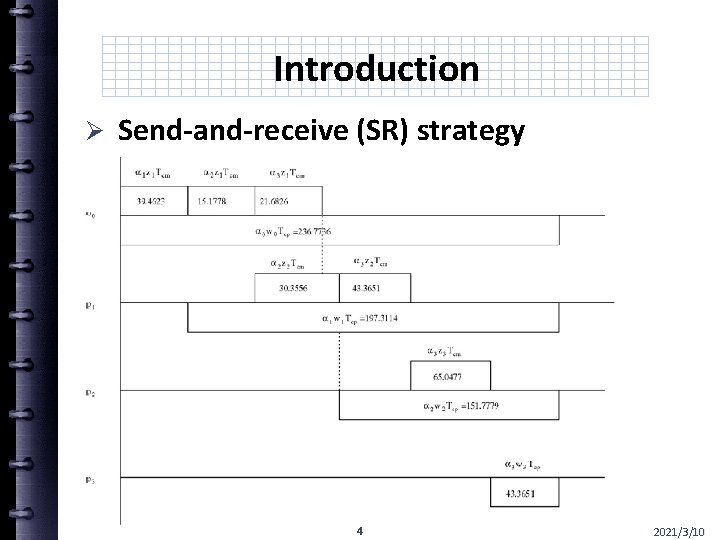
Introduction Ø Send-and-receive (SR) strategy 4 2021/3/10
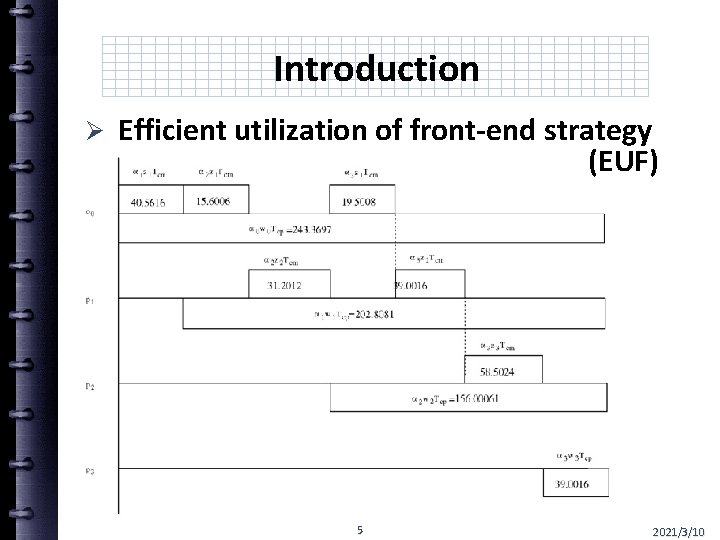
Introduction Ø Efficient utilization of front-end strategy (EUF) 5 2021/3/10
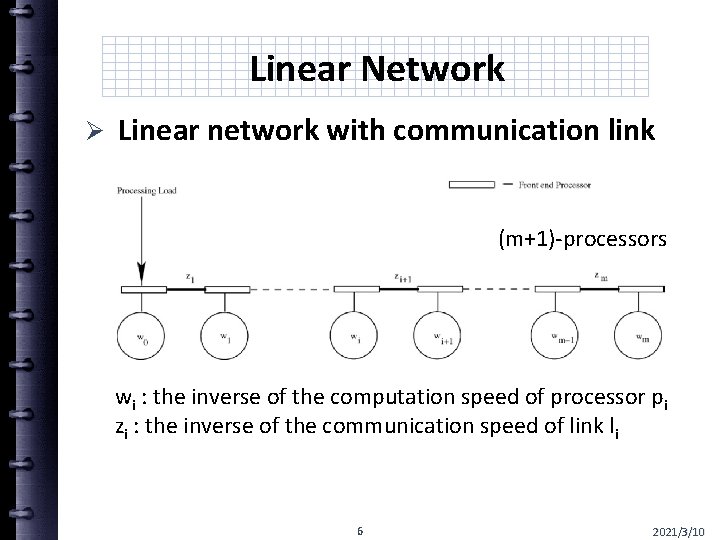
Linear Network Ø Linear network with communication link (m+1)-processors wi : the inverse of the computation speed of processor pi zi : the inverse of the communication speed of link li 6 2021/3/10
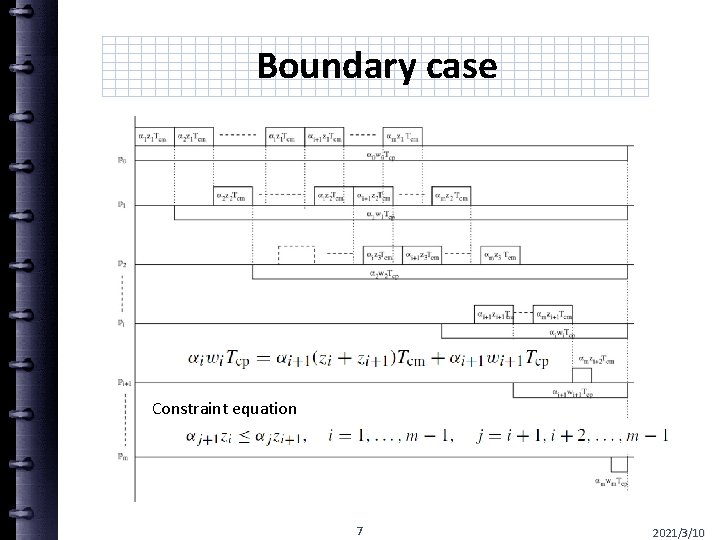
Boundary case Constraint equation 7 2021/3/10
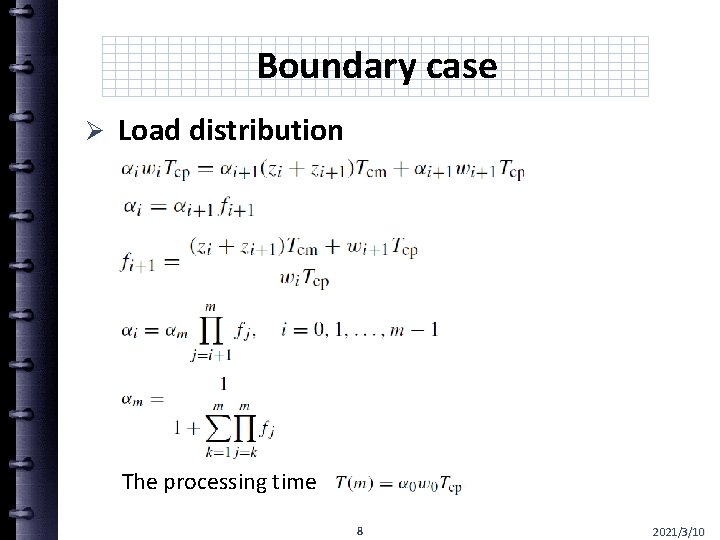
Boundary case Ø Load distribution The processing time 8 2021/3/10
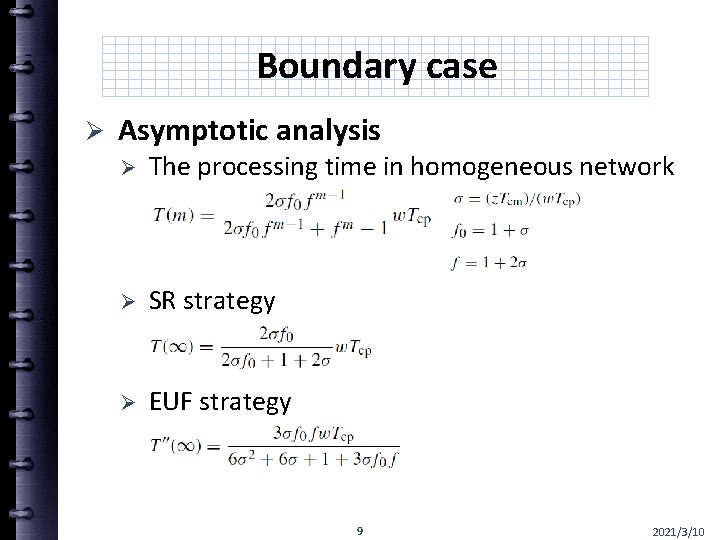
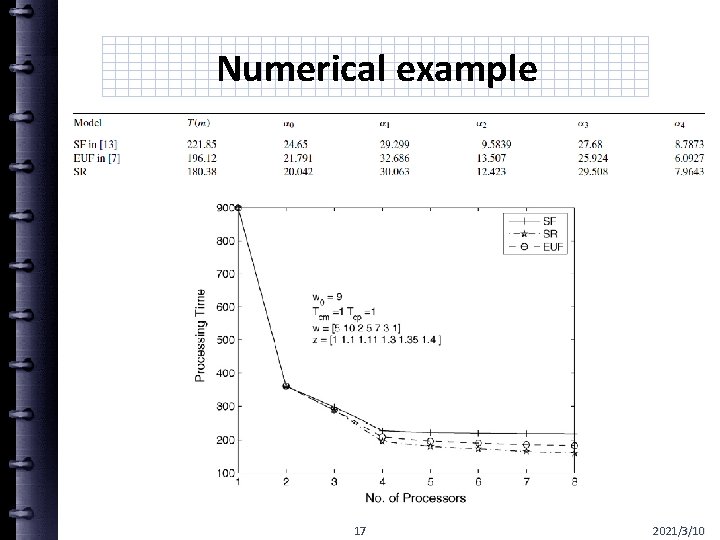
Boundary case Ø Asymptotic analysis Ø The processing time in homogeneous network Ø SR strategy Ø EUF strategy 9 2021/3/10
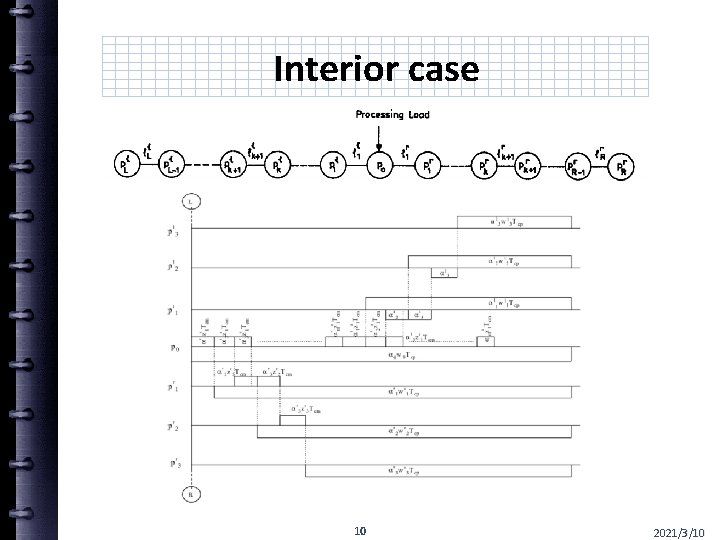
Interior case 10 2021/3/10
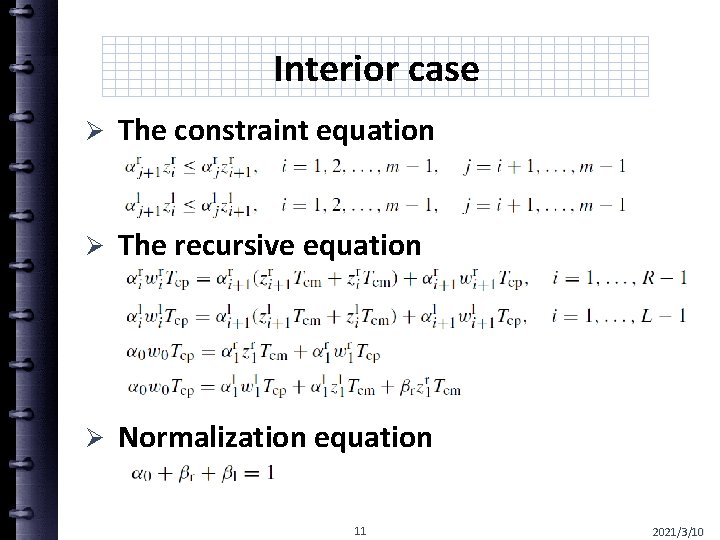
Interior case Ø The constraint equation Ø The recursive equation Ø Normalization equation 11 2021/3/10
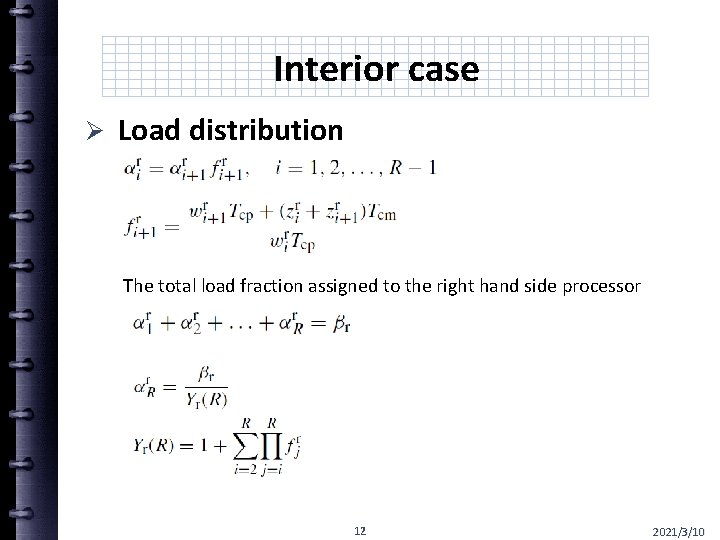
Interior case Ø Load distribution The total load fraction assigned to the right hand side processor 12 2021/3/10
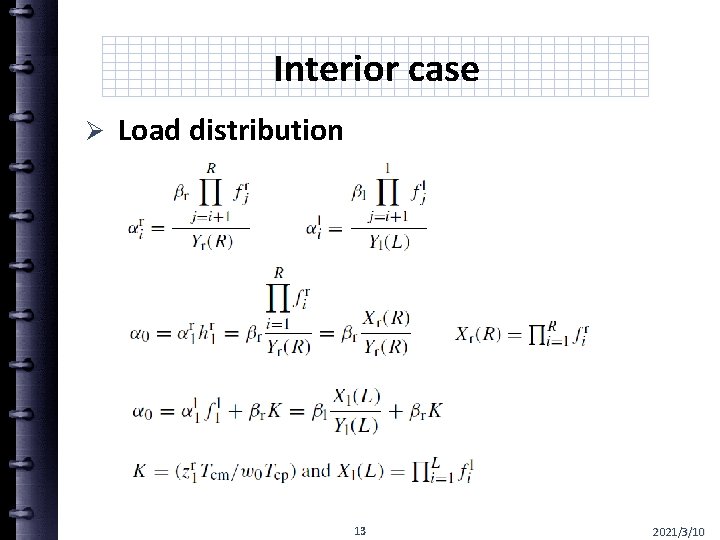
Interior case Ø Load distribution 13 2021/3/10
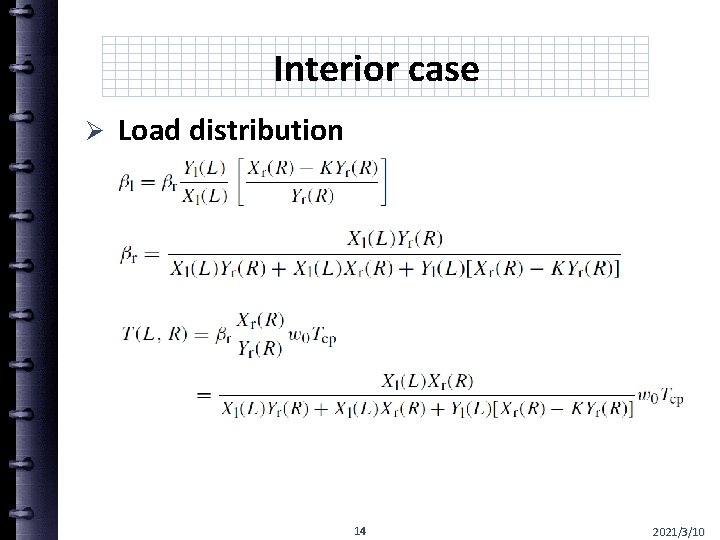
Interior case Ø Load distribution 14 2021/3/10
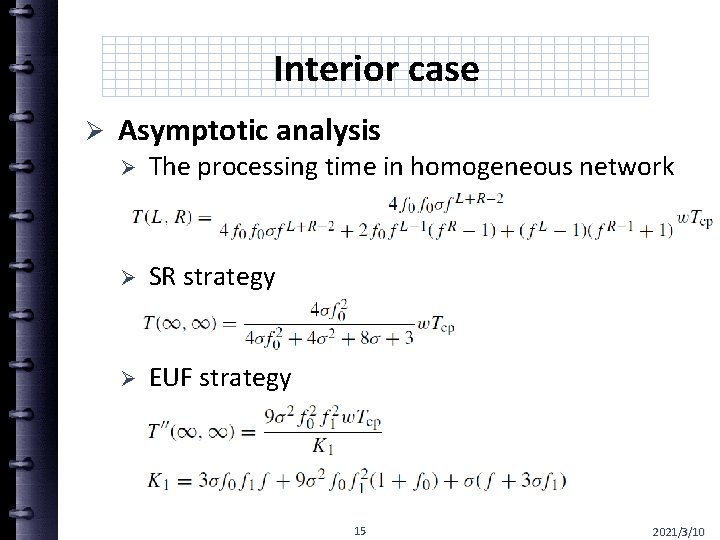
Interior case Ø Asymptotic analysis Ø The processing time in homogeneous network Ø SR strategy Ø EUF strategy 15 2021/3/10
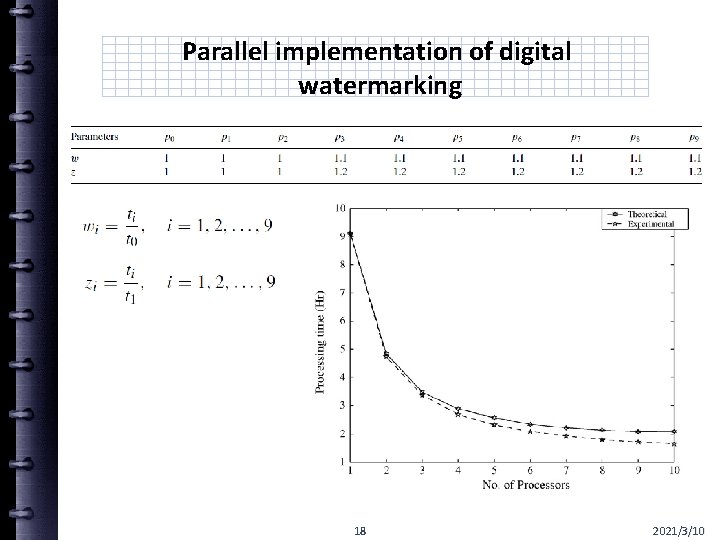
Parallel implementation of digital watermarking Ø Pentium Linear Network (PLN) Ø A PC-based linear network topology with Pentium processors running at (3. 0 GHZ, 265 MB RAM) and (3. 6 GHZ, 512 MB RAM) and the processors are connected by 10/100 MBS Ethernet cables. Ø The PLN network consist of 10 (m = 9) processors and processor p 0 is located at the extreme boundary. Ø The size of the digital images considered in this experiment is typically of 512 × 512 pixels and the size of the watermark image is 128 × 128 pixels. 16 2021/3/10
Numerical example 17 2021/3/10
Parallel implementation of digital watermarking 18 2021/3/10
Conclusion Ø We have presented a send-and-receive load distribution strategy for scheduling divisible loads in a linear network of processors with communication delay. Ø For homogeneous network, asymptotic analysis is also presented and compared with other strategies available in the literature. The results clearly indicate that the proposed strategy utilizes the resources efficiently and minimizes the processing time. 19 2021/3/10

- Slides: 20