
A new infrastructure for high throughput network and


- Slides: 41
A new infrastructure for high throughput network and application performance measurement. Les Cottrell – SLAC Prepared for the IPAM meeting, UCLA Mar 19 ‘ 02 http: //www. slac. stanford. edu/grp/scs/net/talk/ipam-mar 02. html Partially funded by DOE/MICS Field Work Proposal on Internet End-to-end Performance Monitoring (IEPM), also supported by IUPAP 1
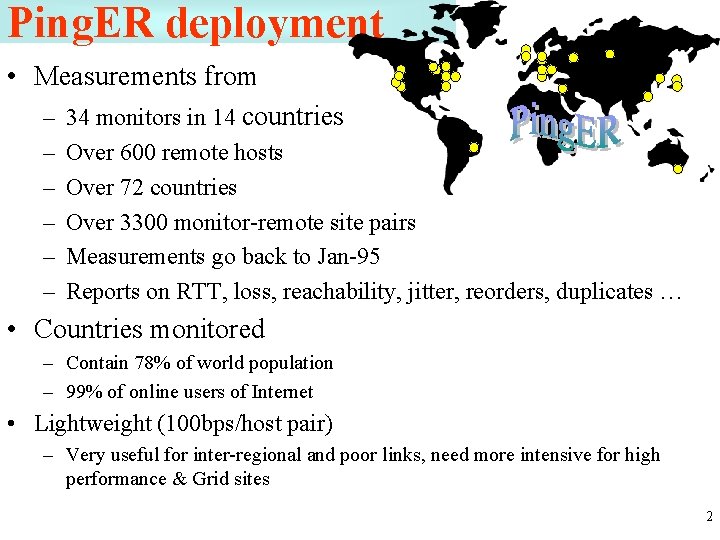
Ping. ER deployment • Measurements from – 34 monitors in 14 countries – – – Over 600 remote hosts Over 72 countries Over 3300 monitor-remote site pairs Measurements go back to Jan-95 Reports on RTT, loss, reachability, jitter, reorders, duplicates … • Countries monitored – Contain 78% of world population – 99% of online users of Internet • Lightweight (100 bps/host pair) – Very useful for inter-regional and poor links, need more intensive for high performance & Grid sites 2
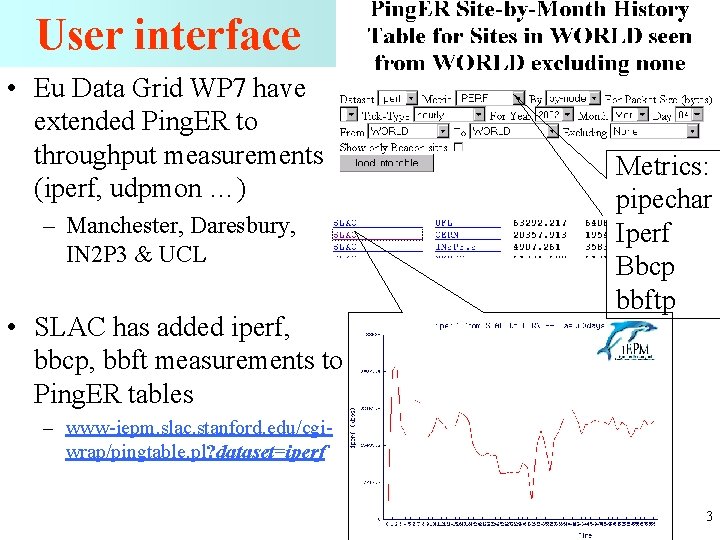
User interface • Eu Data Grid WP 7 have extended Ping. ER to throughput measurements (iperf, udpmon …) – Manchester, Daresbury, IN 2 P 3 & UCL • SLAC has added iperf, bbcp, bbft measurements to Ping. ER tables Metrics: pipechar Iperf Bbcp bbftp – www-iepm. slac. stanford. edu/cgiwrap/pingtable. pl? dataset=iperf 3
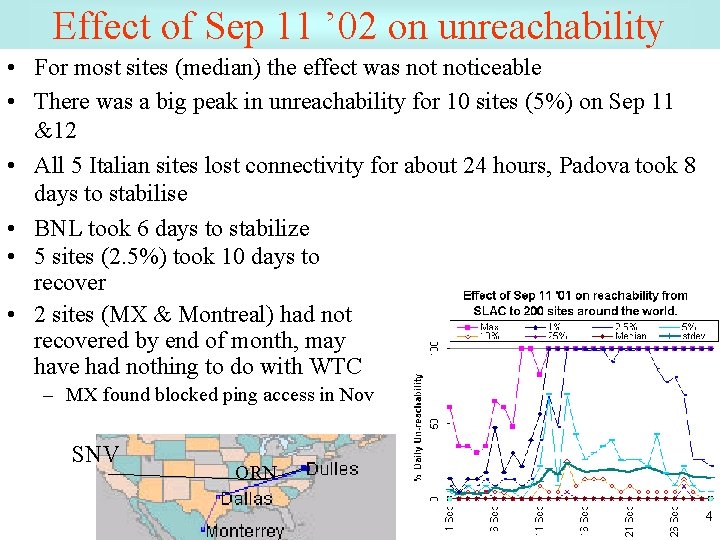
Effect of Sep 11 ’ 02 on unreachability • For most sites (median) the effect was noticeable • There was a big peak in unreachability for 10 sites (5%) on Sep 11 &12 • All 5 Italian sites lost connectivity for about 24 hours, Padova took 8 days to stabilise • BNL took 6 days to stabilize • 5 sites (2. 5%) took 10 days to recover • 2 sites (MX & Montreal) had not recovered by end of month, may have had nothing to do with WTC – MX found blocked ping access in Nov SNV ORN 4
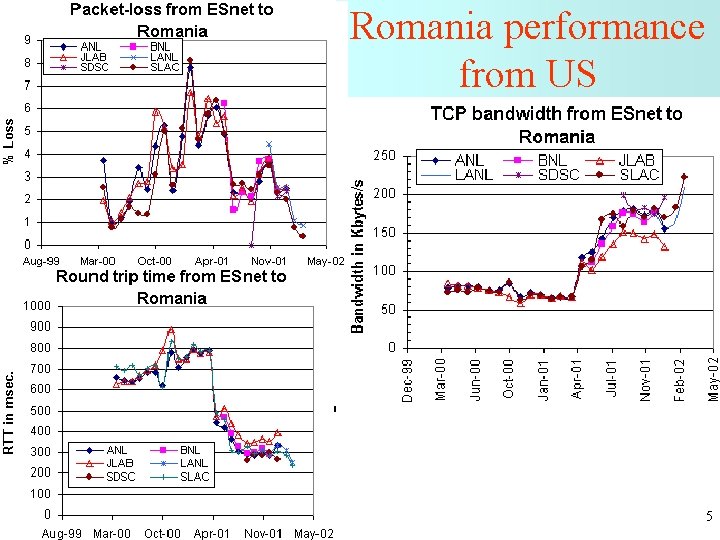
Romania performance from US 5
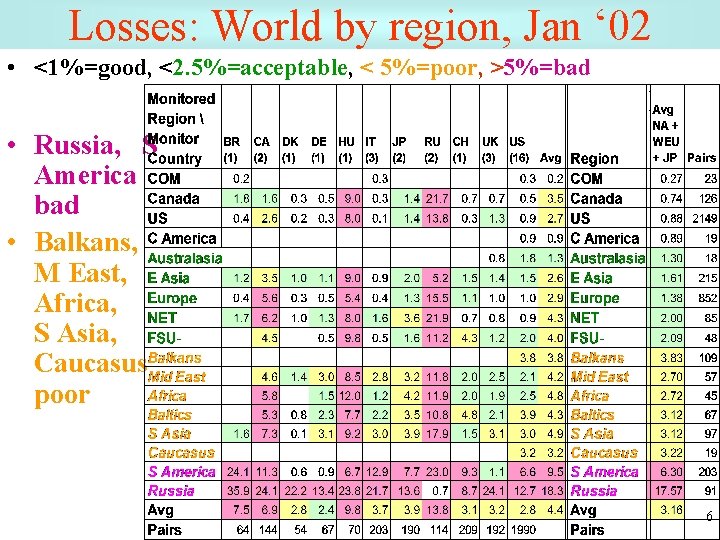
Losses: World by region, Jan ‘ 02 • <1%=good, <2. 5%=acceptable, < 5%=poor, >5%=bad • Russia, S America bad • Balkans, M East, Africa, S Asia, Caucasus poor 6
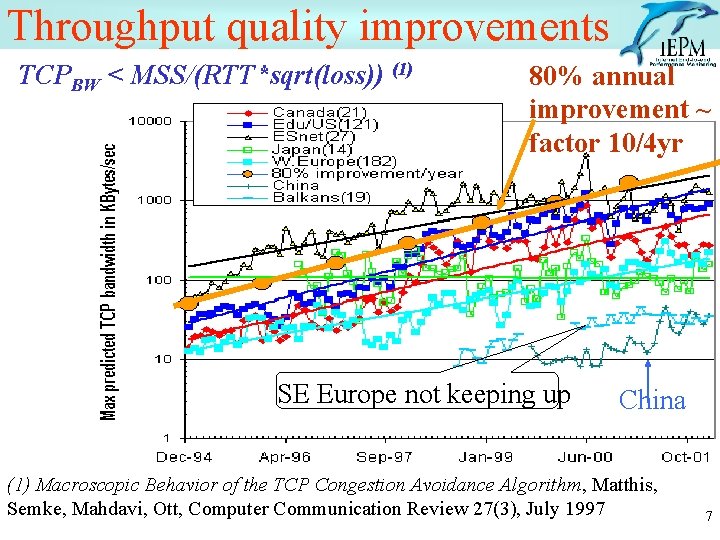
Throughput quality improvements TCPBW < MSS/(RTT*sqrt(loss)) (1) 80% annual improvement ~ factor 10/4 yr SE Europe not keeping up China (1) Macroscopic Behavior of the TCP Congestion Avoidance Algorithm, Matthis, Semke, Mahdavi, Ott, Computer Communication Review 27(3), July 1997 7
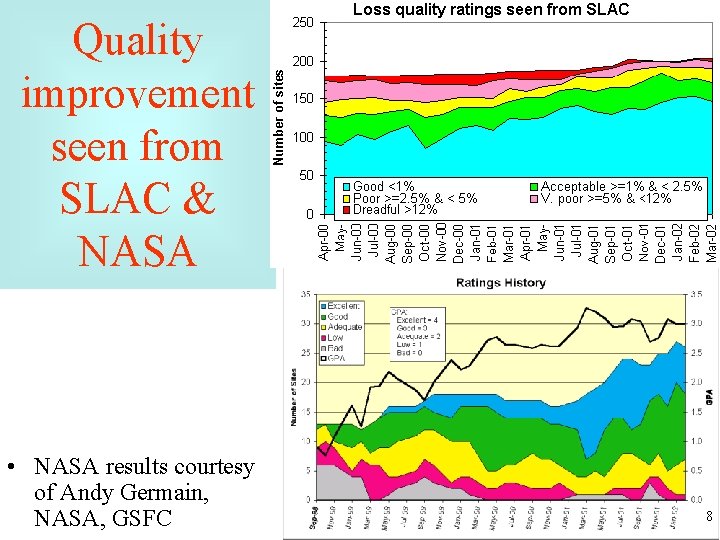
Quality improvement seen from SLAC & NASA • NASA results courtesy of Andy Germain, NASA, GSFC 8
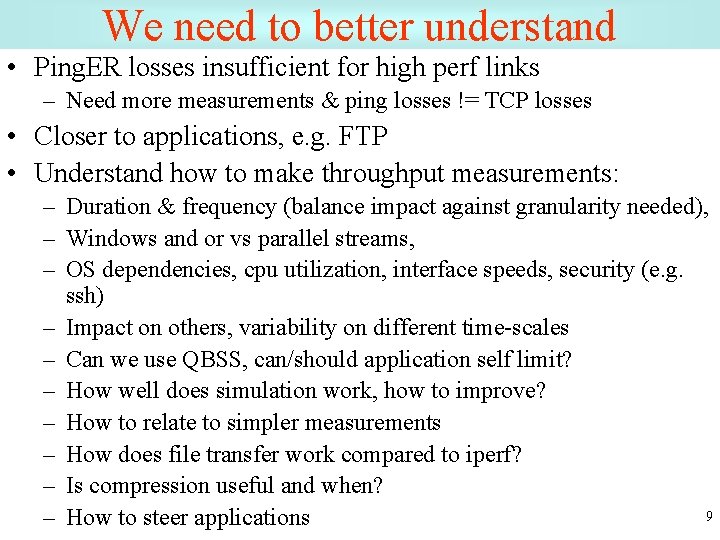
We need to better understand • Ping. ER losses insufficient for high perf links – Need more measurements & ping losses != TCP losses • Closer to applications, e. g. FTP • Understand how to make throughput measurements: – Duration & frequency (balance impact against granularity needed), – Windows and or vs parallel streams, – OS dependencies, cpu utilization, interface speeds, security (e. g. ssh) – Impact on others, variability on different time-scales – Can we use QBSS, can/should application self limit? – How well does simulation work, how to improve? – How to relate to simpler measurements – How does file transfer work compared to iperf? – Is compression useful and when? 9 – How to steer applications
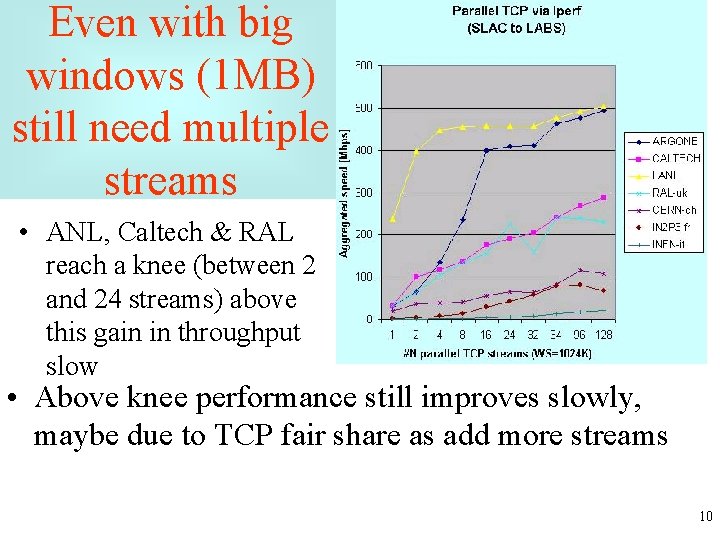
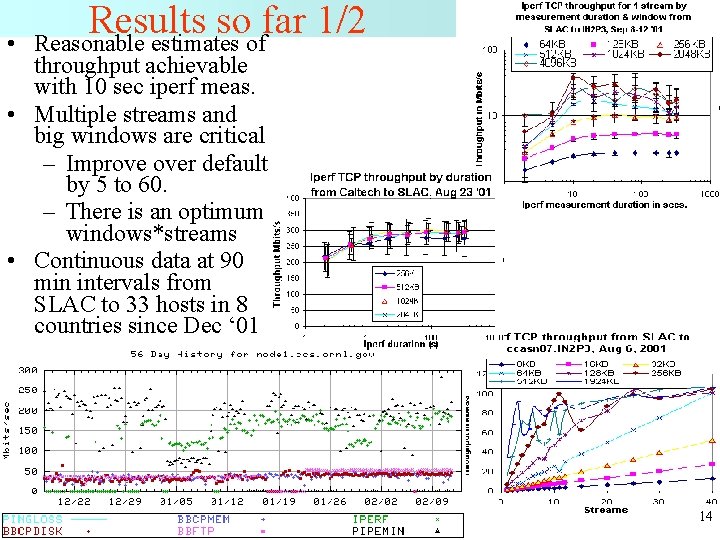
Even with big windows (1 MB) still need multiple streams • ANL, Caltech & RAL reach a knee (between 2 and 24 streams) above this gain in throughput slow • Above knee performance still improves slowly, maybe due to TCP fair share as add more streams 10
IEPM-BW: Main issues being addressed • Provide a simple, robust infrastructure for: – Continuous/persistent and one-off measurement of high network AND application performance – management infrastructure – flexible remote host configuration • Optimize impact of measurements – Duration, frequency of active measurements, and use passive • Integrate standard set of measurements including: ping, traceroute, pipechar, iperf, bbcp … • Allow/encourage adding measure/app tools • Develop tools to gather, reduce, analyze, and publicly report on the measurements: – Web accessible data, tables, time series, scatterplots, histograms, forecasts … • Compare, evaluate, validate various measurement tools and strategies (minimize impact on others, effects of app self rate limiting, Qo. S, compression…), find better/simpler tools, choose best set • Provide simple forecasting tools to aid applications and to adapt the active measurement frequency • Provide tool suite for high throughput monitoring and prediction 11
IEPM-BW Deliverables • Understand identify resources needed to achieve high throughput performance for Grid and other data intensive applications • Provide access to archival and near real-time data and results for eyeballs and applications: – planning and expectation setting, see effects of upgrades – assist in trouble-shooting problems by identifying what is impacted, time and magnitude of changes and anomalies – as input for application steering (e. g. data grid bulk data transfer), changing configuration parameters – for prediction and further analysis • Identify critical changes in performance, record and notify administrators and/or users • Provide a platform for evaluating new network tools (e. g. pathrate, pathload, Grid. FTP, INCITE, UDPmon …) • Provide measurement/analysis/reporting suite for Grid & hi-perf sites 12
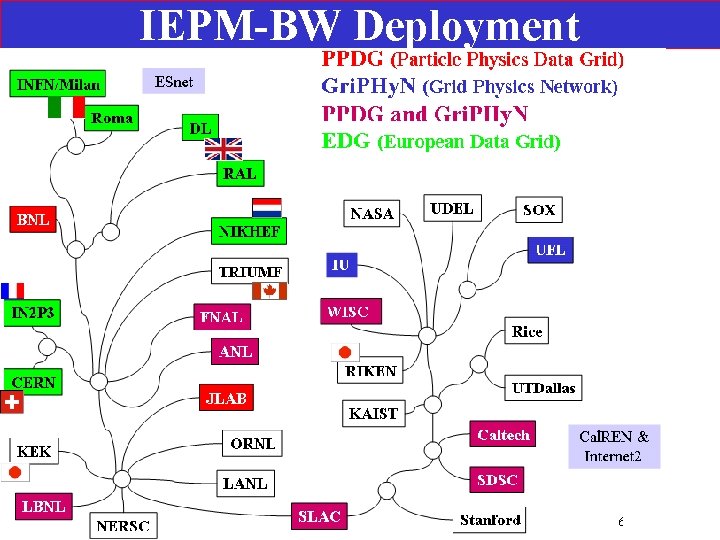
IEPM-BW Deployment
• Results so far 1/2 Reasonable estimates of throughput achievable with 10 sec iperf meas. • Multiple streams and big windows are critical – Improve over default by 5 to 60. – There is an optimum windows*streams • Continuous data at 90 min intervals from SLAC to 33 hosts in 8 countries since Dec ‘ 01 14
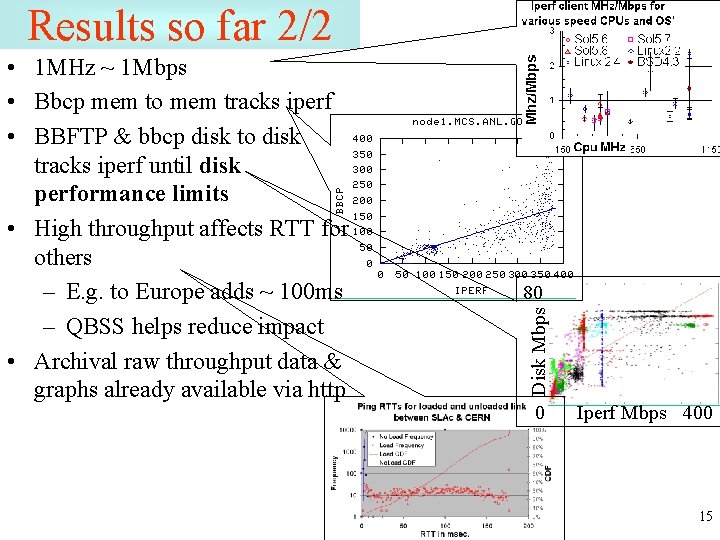
Results so far 2/2 80 Disk Mbps • 1 MHz ~ 1 Mbps • Bbcp mem to mem tracks iperf • BBFTP & bbcp disk to disk tracks iperf until disk performance limits • High throughput affects RTT for others – E. g. to Europe adds ~ 100 ms – QBSS helps reduce impact • Archival raw throughput data & graphs already available via http 0 Iperf Mbps 400 15
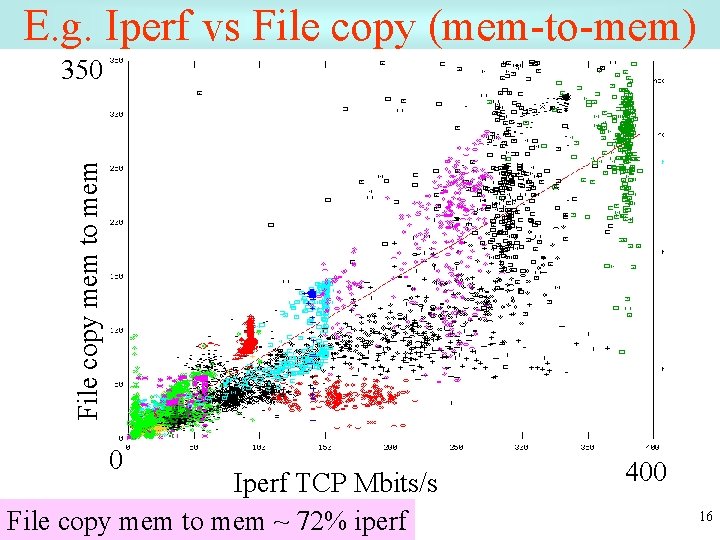
E. g. Iperf vs File copy (mem-to-mem) File copy mem to mem 350 0 Iperf TCP Mbits/s File copy mem to mem ~ 72% iperf 400 16
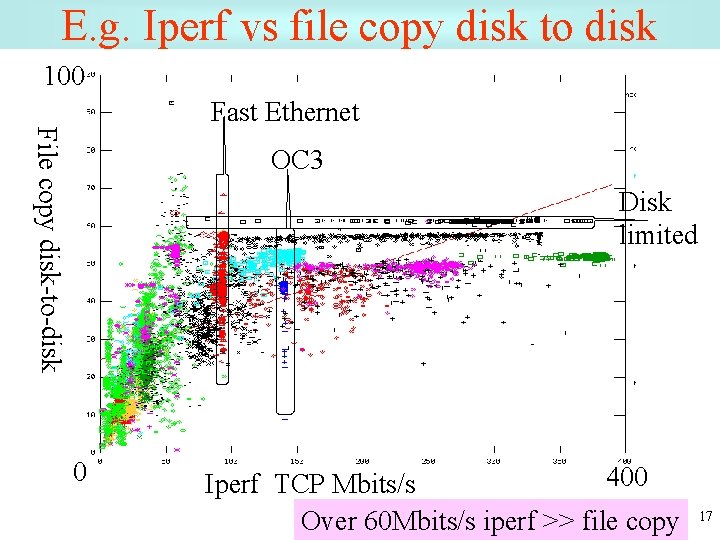
E. g. Iperf vs file copy disk to disk 100 Fast Ethernet File copy disk-to-disk OC 3 Disk limited 0 400 Iperf TCP Mbits/s Over 60 Mbits/s iperf >> file copy 17
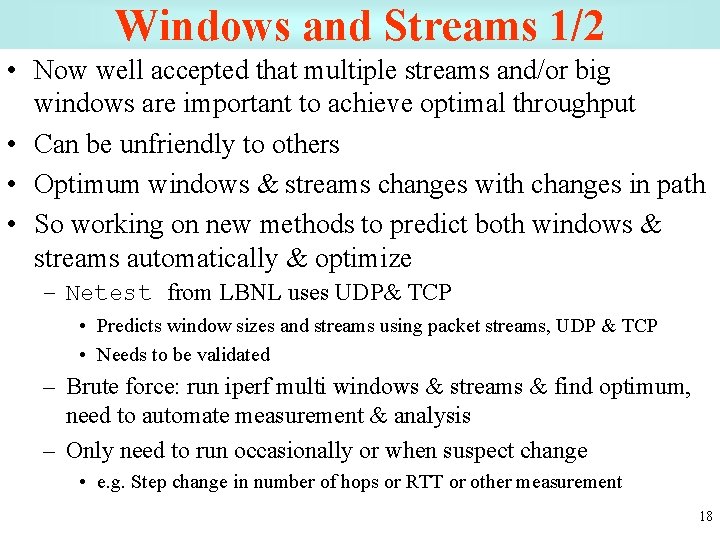
Windows and Streams 1/2 • Now well accepted that multiple streams and/or big windows are important to achieve optimal throughput • Can be unfriendly to others • Optimum windows & streams changes with changes in path • So working on new methods to predict both windows & streams automatically & optimize – Netest from LBNL uses UDP& TCP • Predicts window sizes and streams using packet streams, UDP & TCP • Needs to be validated – Brute force: run iperf multi windows & streams & find optimum, need to automate measurement & analysis – Only need to run occasionally or when suspect change • e. g. Step change in number of hops or RTT or other measurement 18
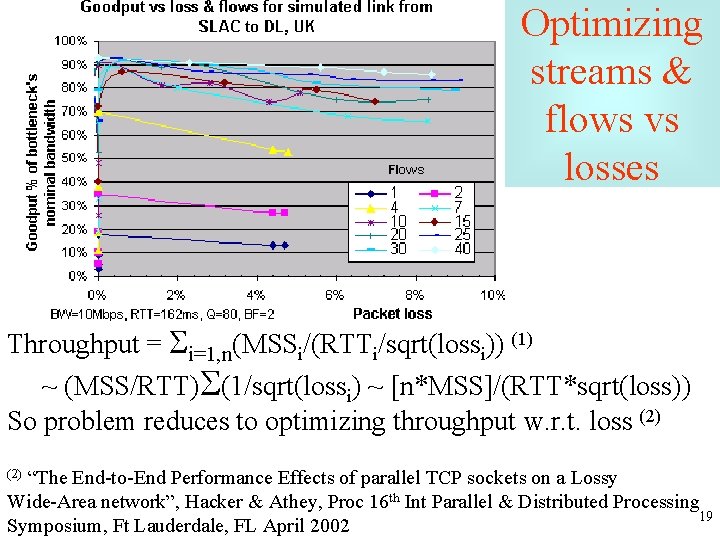
Optimizing streams & flows vs losses Throughput = Si=1, n(MSSi/(RTTi/sqrt(lossi)) (1) ~ (MSS/RTT)S(1/sqrt(lossi) ~ [n*MSS]/(RTT*sqrt(loss)) So problem reduces to optimizing throughput w. r. t. loss (2) “The End-to-End Performance Effects of parallel TCP sockets on a Lossy Wide-Area network”, Hacker & Athey, Proc 16 th Int Parallel & Distributed Processing 19 Symposium, Ft Lauderdale, FL April 2002 (2)
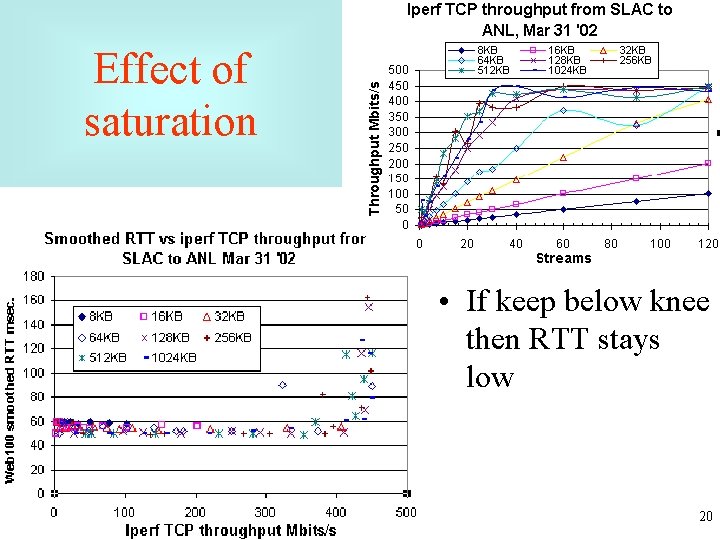
Effect of saturation • If keep below knee then RTT stays low 20
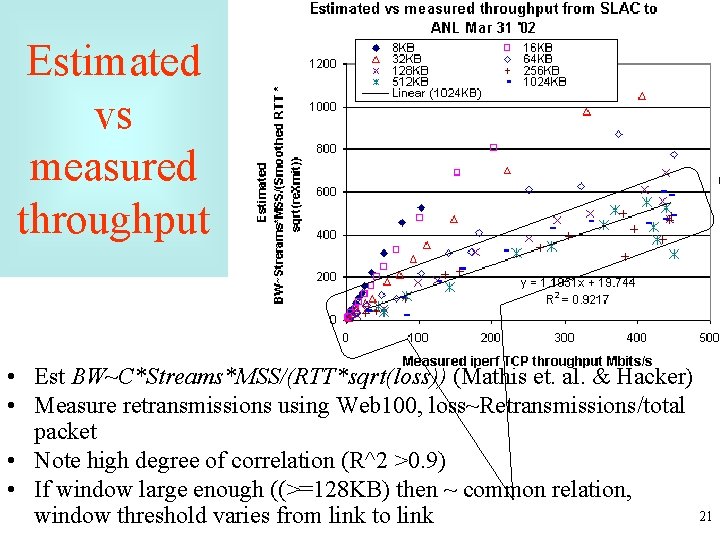
Estimated vs measured throughput • Est BW~C*Streams*MSS/(RTT*sqrt(loss)) (Mathis et. al. & Hacker) • Measure retransmissions using Web 100, loss~Retransmissions/total packet • Note high degree of correlation (R^2 >0. 9) • If window large enough ((>=128 KB) then ~ common relation, 21 window threshold varies from link to link
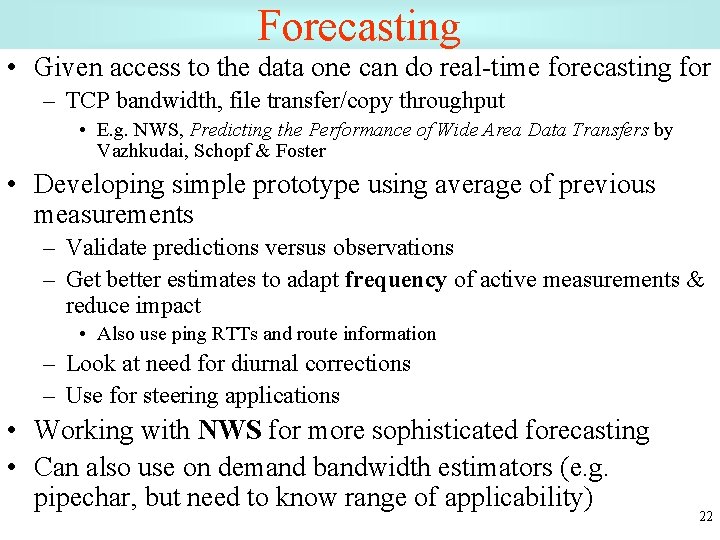
Forecasting • Given access to the data one can do real-time forecasting for – TCP bandwidth, file transfer/copy throughput • E. g. NWS, Predicting the Performance of Wide Area Data Transfers by Vazhkudai, Schopf & Foster • Developing simple prototype using average of previous measurements – Validate predictions versus observations – Get better estimates to adapt frequency of active measurements & reduce impact • Also use ping RTTs and route information – Look at need for diurnal corrections – Use for steering applications • Working with NWS for more sophisticated forecasting • Can also use on demand bandwidth estimators (e. g. pipechar, but need to know range of applicability) 22
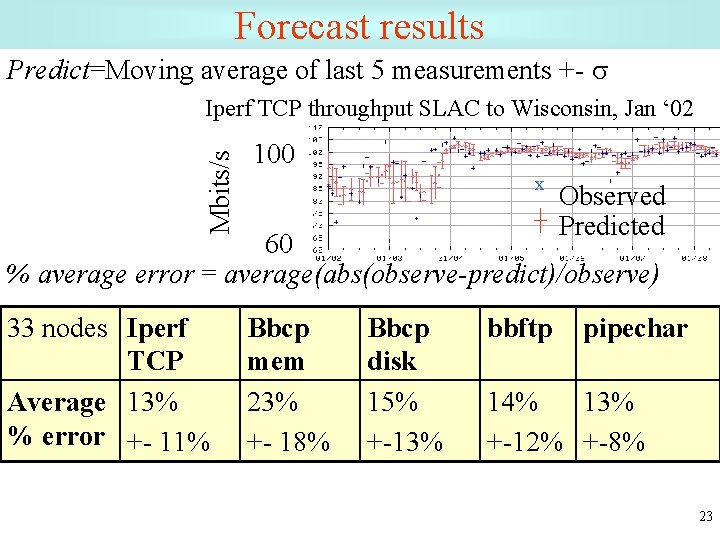
Forecast results Predict=Moving average of last 5 measurements +- s Mbits/s Iperf TCP throughput SLAC to Wisconsin, Jan ‘ 02 100 x Observed Predicted 60 % average error = average(abs(observe-predict)/observe) 33 nodes Iperf TCP Average 13% % error +- 11% Bbcp mem 23% +- 18% Bbcp disk 15% +-13% bbftp pipechar 14% 13% +-12% +-8% 23
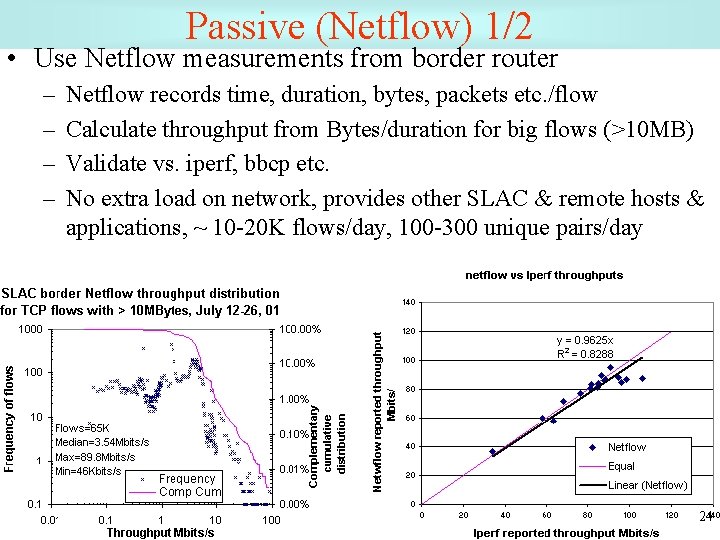
Passive (Netflow) 1/2 • Use Netflow measurements from border router – – Netflow records time, duration, bytes, packets etc. /flow Calculate throughput from Bytes/duration for big flows (>10 MB) Validate vs. iperf, bbcp etc. No extra load on network, provides other SLAC & remote hosts & applications, ~ 10 -20 K flows/day, 100 -300 unique pairs/day 24
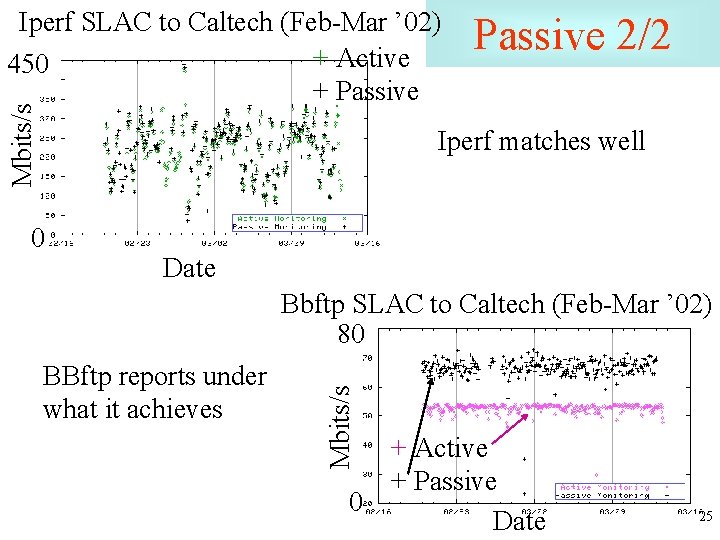
Mbits/s Iperf SLAC to Caltech (Feb-Mar ’ 02) + Active 450 + Passive 2/2 Iperf matches well 0 Date BBftp reports under what it achieves Mbits/s Bbftp SLAC to Caltech (Feb-Mar ’ 02) 80 0 + Active + Passive Date 25
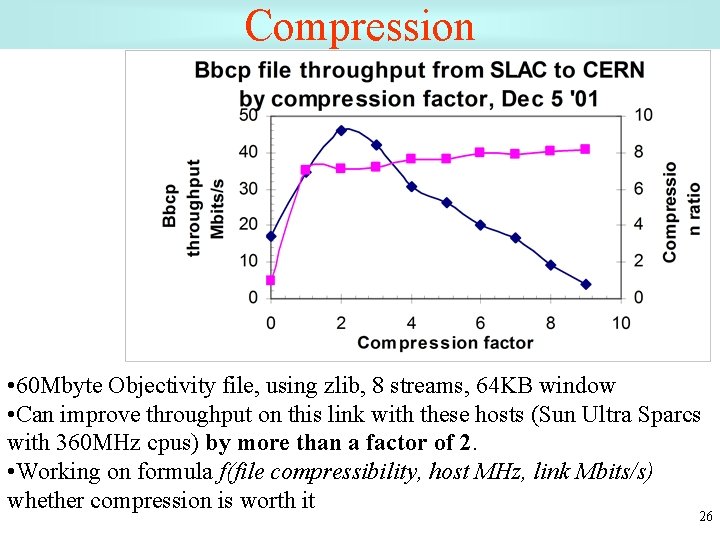
Compression • 60 Mbyte Objectivity file, using zlib, 8 streams, 64 KB window • Can improve throughput on this link with these hosts (Sun Ultra Sparcs with 360 MHz cpus) by more than a factor of 2. • Working on formula f(file compressibility, host MHz, link Mbits/s) whether compression is worth it 26
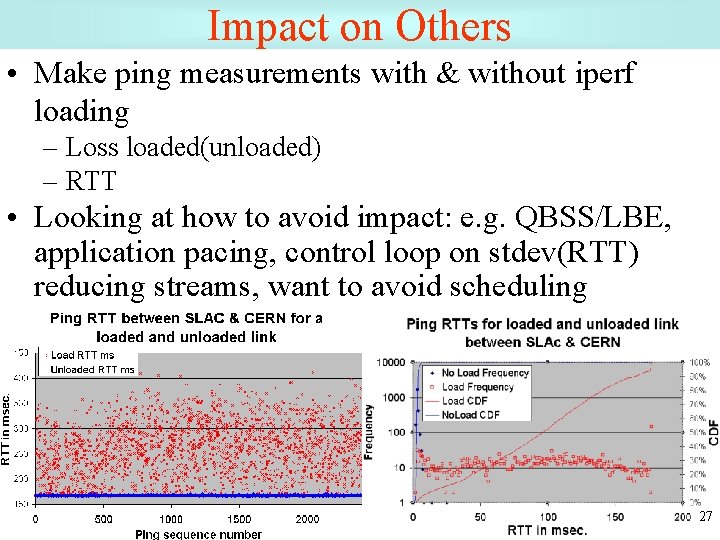
Impact on Others • Make ping measurements with & without iperf loading – Loss loaded(unloaded) – RTT • Looking at how to avoid impact: e. g. QBSS/LBE, application pacing, control loop on stdev(RTT) reducing streams, want to avoid scheduling 27
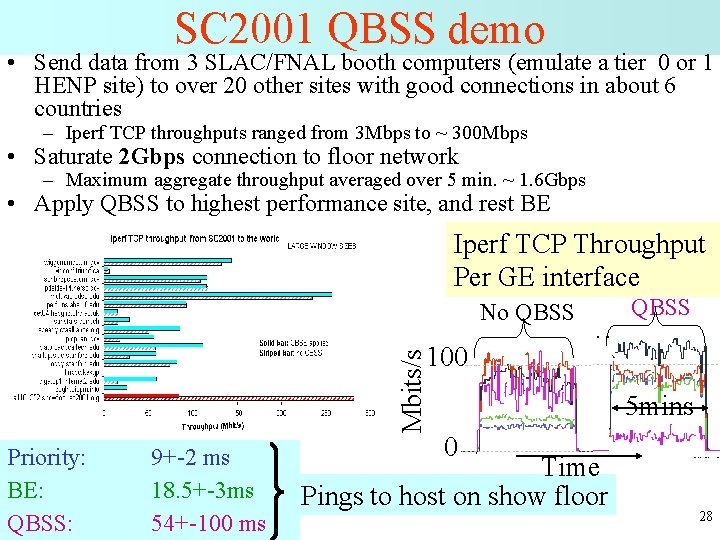
SC 2001 QBSS demo • Send data from 3 SLAC/FNAL booth computers (emulate a tier 0 or 1 HENP site) to over 20 other sites with good connections in about 6 countries – Iperf TCP throughputs ranged from 3 Mbps to ~ 300 Mbps • Saturate 2 Gbps connection to floor network – Maximum aggregate throughput averaged over 5 min. ~ 1. 6 Gbps • Apply QBSS to highest performance site, and rest BE Iperf TCP Throughput Per GE interface No QBSS Mbits/s 100 Priority: BE: QBSS: 9+-2 ms 18. 5+-3 ms 54+-100 ms 5 mins 0 Time Pings to host on show floor 28
Possible HEP usage of QBSS • Apply priority to lower volume interactive voice/video-conferencing and real time control • Apply QBSS to high volume data replication • Leave the rest as Best Effort • Since 40 -65% of bytes to/from SLAC come from a single application, we have modified to enable setting of TOS bits • Need to identify bottlenecks and implement QBSS there • Bottlenecks tend to be at edges so hope to try with a few HEP sites 29
Possible scenario • Ba. Bar user wants to transfer large volume (e. g. TByte) of data from SLAC to IN 2 P 3: – Select initial windows and streams from a table of pre-measured optimal values, or use an on demand tool (extended iperf), or reasonable default if none available • Application uses data volume to be transferred and simple forecast to estimate how much time is needed – Forecasts from active archive, Netflow, on demand use one-end bandwidth estimation tools (e. g. pipechar, NWS TCP throughput estimator) – If estimate duration is longer than some threshold, then more careful duration estimate is made using diurnal forecasting – Application reports to user who decides whether to proceed • Application turns on QBSS and starts transferring – For long measurements, provide progress feedback, using progress so far, Netflow measurements of this flow for last few half hours, diurnal corrections etc. – If falling behind required duration, turn off QBSS, go to best effort – If throughput drops off below some threshold, check for other sites 30
Experiences • Getting ssh accounts and resources on remote hosts – Tremendous variation in account procedures from site to site, takes up to 7 weeks, requires knowing somebody who cares, sites are becoming increasingly circumspect – Steep learning curve on ssh, different versions • Getting disk space for file copies (100 s Mbytes) – Diversity of OSs, userids, directory structures, where to find perl, iperf. . . , contacts • Required database to track – Also anonymizes hostnames, tracks code versions, whether to execute command (e. g. no ping if site blocks ping) & with what options, • Developed tools to download software and to check remote configurations – Remote server (e. g. iperf) crashes: • Start & kill server remotely for each measurement – Commands lock up or never end: – Time out all commands • Some commands (e. g. pipechar) take a long time, so run infrequently • AFS tokens to allow access to. ssh identity timed out, used trscron – Protocol port blocking – Ssh following Xmas attacks; bbftp, iperf ports, big variation between sites – Wrote analyses to recognize and worked with site contacts • Ongoing issue, especially with increasing need for security, and since we want to measure inside firewalls close to real applications • Simple tool built for tracking problems 31
• • Next steps Develop/extend management, analysis, reporting, navigating tools – improve robustness, manageability, workaround ssh anomalies Get improved forecasters and quantify how they work, provide tools to access Optimize intervals (using forecasts, and lighter weight measurements) and durations Evaluate use of compression Evaluate self rate limiting application (bbcp) Tie in passive Netflow measurements Add grid. FTP (with Allcock@ANL), UDPmon (RHJ@manchester) & new BW measurers – netest (Jin@LBNL), INCITE (Reidi@Rice), pathrate, pathload (Dovropolis@Udel) – Make early data available via http to interested & “friendly” researchers – CAIDA for correlation and validation of Pipechar & iperf etc. (sent documentaion) – NWS forecasting with UCSB (sent documentation) • • • Understand correlations & validate various tools, choose optimum set Make data available by std methods (e. g. MDS, GMA, …) – with Dantong@BNL, Jenny Schopf@ANL & Tierney@LBNL Make tools portable, set up other monitoring sites, e. g. PPDG sites – Working with INFN/Trieste to port – Work with NIMI/GIMI to evaluate deploying dedicated engines – More uniformity, easier management, greater access granularity & authorization • Still need non dedicated: • Want measurements from real application hosts, closer to real end user • Some apps may not be ported to GIMI OS – Not currently funded for GIMI engines – Use same analysis, reporting etc. 32
More Information • IEPM/Ping. ER home site: – www-iepm. slac. stanford. edu/ • Bulk throughput site: – www-iepm. slac. stanford. edu/monitoring/bulk/ • SC 2001 & high throughput measurements – www-iepm. slac. stanford. edu/monitoring/bulk/sc 2001/ • Transfer tools: – – http: //dast. nlanr. net/Projects/Iperf/release. html http: //doc. in 2 p 3. fr/bbftp/ www. slac. stanford. edu/~abh/bbcp/ http: //hepwww. rl. ac. uk/Adye/talks/010402 -ftp/html/sld 015. htm • TCP Tuning: – www. ncne. nlanr. net/training/presentations/tcp-tutorial. ppt – www-didc. lbl. gov/tcp-wan. html • QBSS measurements – www-iepm. slac. stanford. edu/monitoring/qbss/measure. html 33
Further slides 34
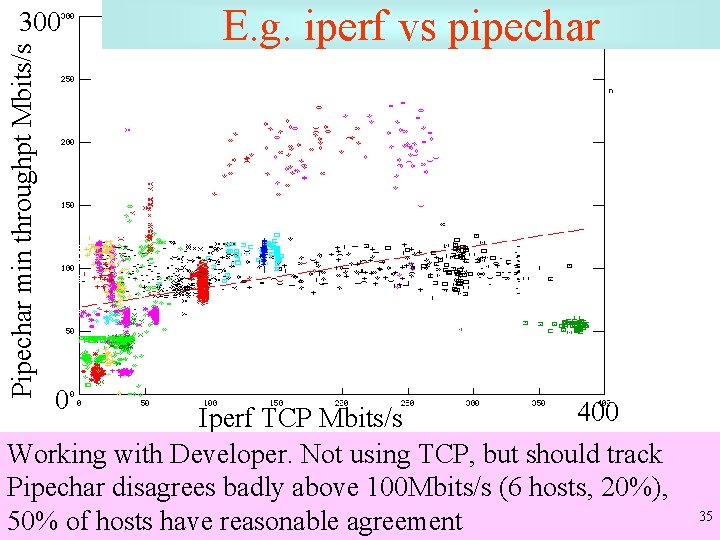
Pipechar min throughpt Mbits/s 300 E. g. iperf vs pipechar 0 400 Iperf TCP Mbits/s Working with Developer. Not using TCP, but should track Pipechar disagrees badly above 100 Mbits/s (6 hosts, 20%), 50% of hosts have reasonable agreement 35
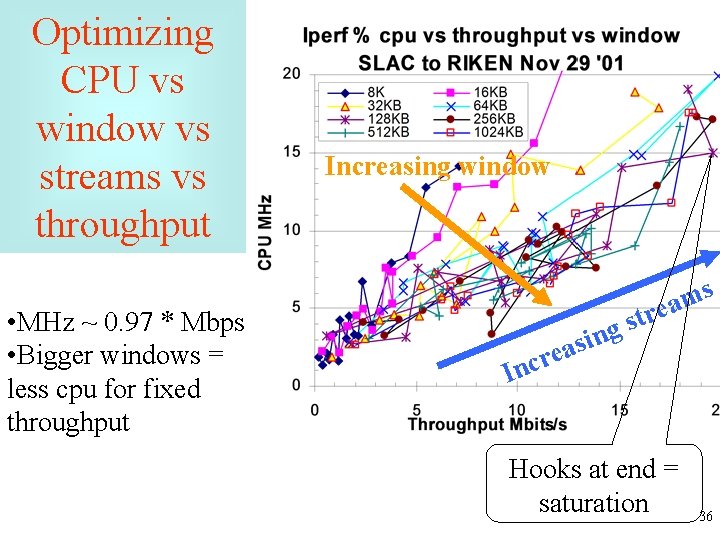
Optimizing CPU vs window vs streams vs throughput • MHz ~ 0. 97 * Mbps • Bigger windows = less cpu for fixed throughput Increasing window s m ea r t s g in s a re Inc Hooks at end = saturation 36
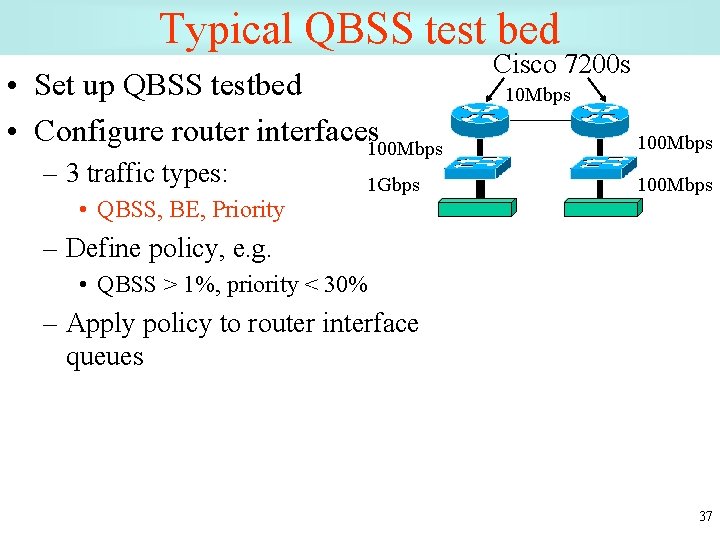
Typical QBSS test bed • Set up QBSS testbed • Configure router interfaces 100 Mbps – 3 traffic types: 1 Gbps Cisco 7200 s 10 Mbps 100 Mbps • QBSS, BE, Priority – Define policy, e. g. • QBSS > 1%, priority < 30% – Apply policy to router interface queues 37
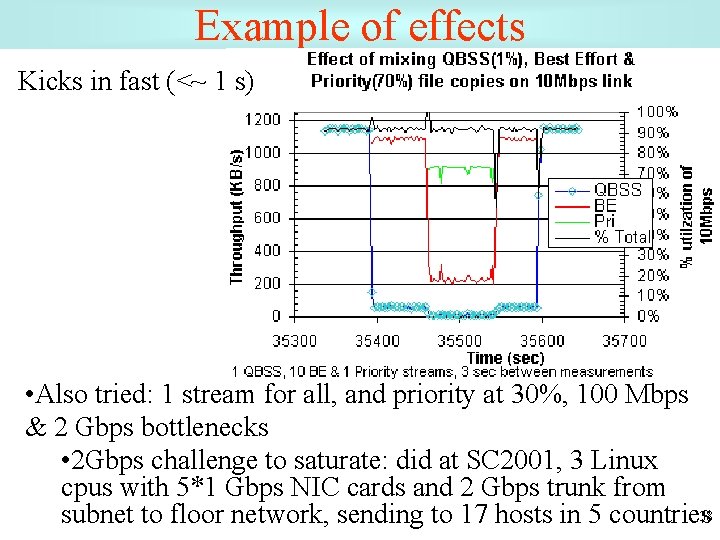
Example of effects Kicks in fast (<~ 1 s) • Also tried: 1 stream for all, and priority at 30%, 100 Mbps & 2 Gbps bottlenecks • 2 Gbps challenge to saturate: did at SC 2001, 3 Linux cpus with 5*1 Gbps NIC cards and 2 Gbps trunk from subnet to floor network, sending to 17 hosts in 5 countries 38
Impact on response time (RTT) • Run ping with Iperf loading with various Qo. S settings, iperf ~ 93 Mbps – No iperf ping avg RTT ~ 300 usec (regardless of Qo. S) – Iperf = QBSS, ping=BE or Priority: RTT~550 usec • 70% greater than unloaded – Iperf=Ping Qo. S (exc. Priority) then RTT~5 msec • > factor of 10 larger RTT than unloaded 39
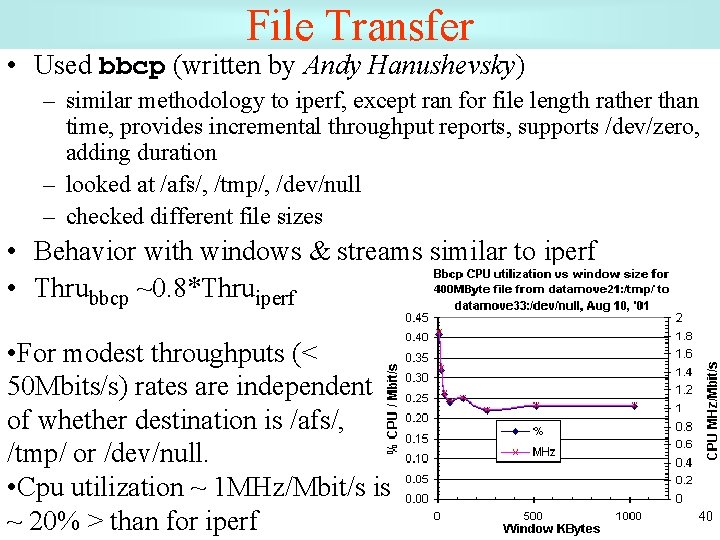
File Transfer • Used bbcp (written by Andy Hanushevsky) – similar methodology to iperf, except ran for file length rather than time, provides incremental throughput reports, supports /dev/zero, adding duration – looked at /afs/, /tmp/, /dev/null – checked different file sizes • Behavior with windows & streams similar to iperf • Thrubbcp ~0. 8*Thruiperf • For modest throughputs (< 50 Mbits/s) rates are independent of whether destination is /afs/, /tmp/ or /dev/null. • Cpu utilization ~ 1 MHz/Mbit/s is ~ 20% > than for iperf 40
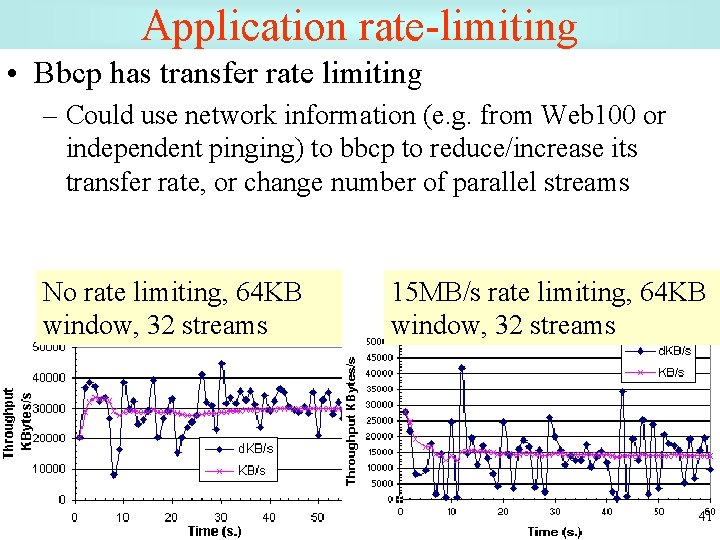
Application rate-limiting • Bbcp has transfer rate limiting – Could use network information (e. g. from Web 100 or independent pinging) to bbcp to reduce/increase its transfer rate, or change number of parallel streams No rate limiting, 64 KB window, 32 streams 15 MB/s rate limiting, 64 KB window, 32 streams 41