
A New Industrial Age At the end of
- Slides: 6
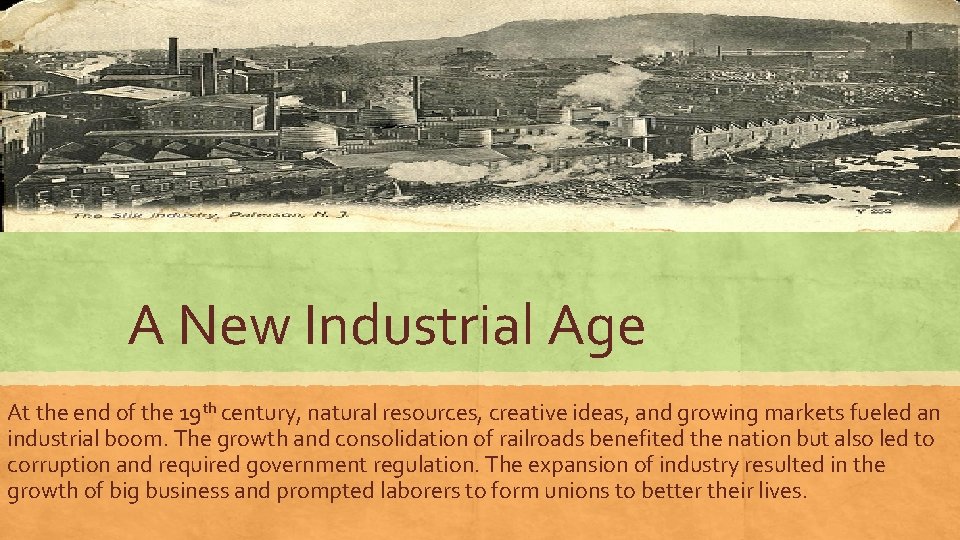
A New Industrial Age At the end of the 19 th century, natural resources, creative ideas, and growing markets fueled an industrial boom. The growth and consolidation of railroads benefited the nation but also led to corruption and required government regulation. The expansion of industry resulted in the growth of big business and prompted laborers to form unions to better their lives.
Do Now ▪What name would you give the present age? (Ex. Age of the Car, Age of the Computer) Consider the technology that exerts the most influence on all aspects of American life, such as the way the Railroad played a similar role in the late th 19 century.
Learning Goals Essential Question ▪ What impact did scientific discoveries and manufacturing processes have on the nature of work, the American labor movement, and American businesses? Objectives ▪ Explain how the abundance of natural resources, new recovery and refining methods, and new uses for them led to intensive industrialization. ▪ Identify inventions that changed the way people lived and worked.
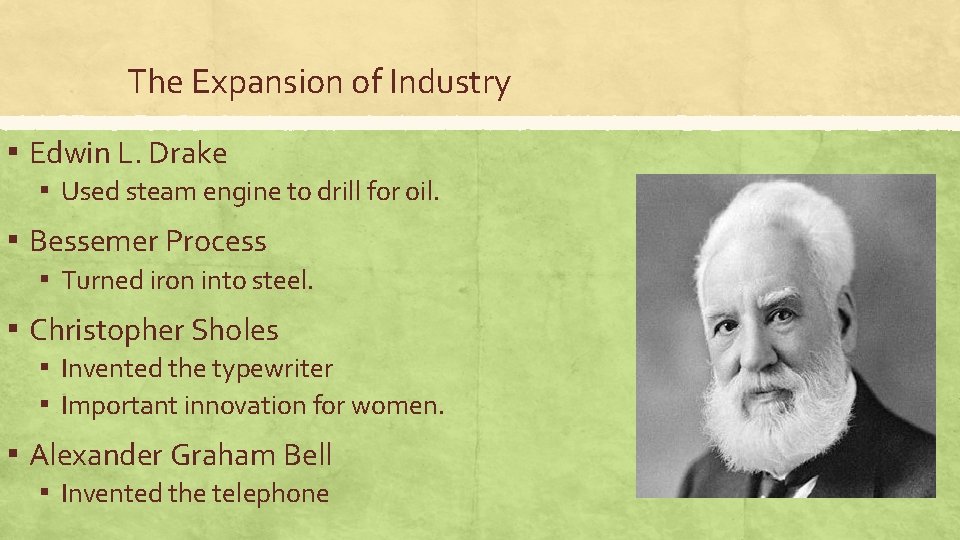
The Expansion of Industry ▪ Edwin L. Drake ▪ Used steam engine to drill for oil. ▪ Bessemer Process ▪ Turned iron into steel. ▪ Christopher Sholes ▪ Invented the typewriter ▪ Important innovation for women. ▪ Alexander Graham Bell ▪ Invented the telephone
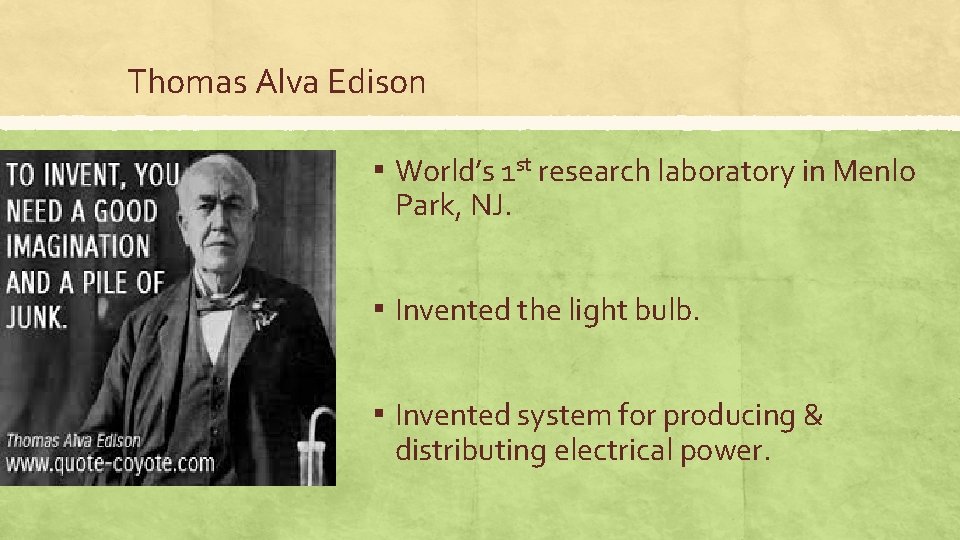
Thomas Alva Edison ▪ World’s 1 st research laboratory in Menlo Park, NJ. ▪ Invented the light bulb. ▪ Invented system for producing & distributing electrical power.
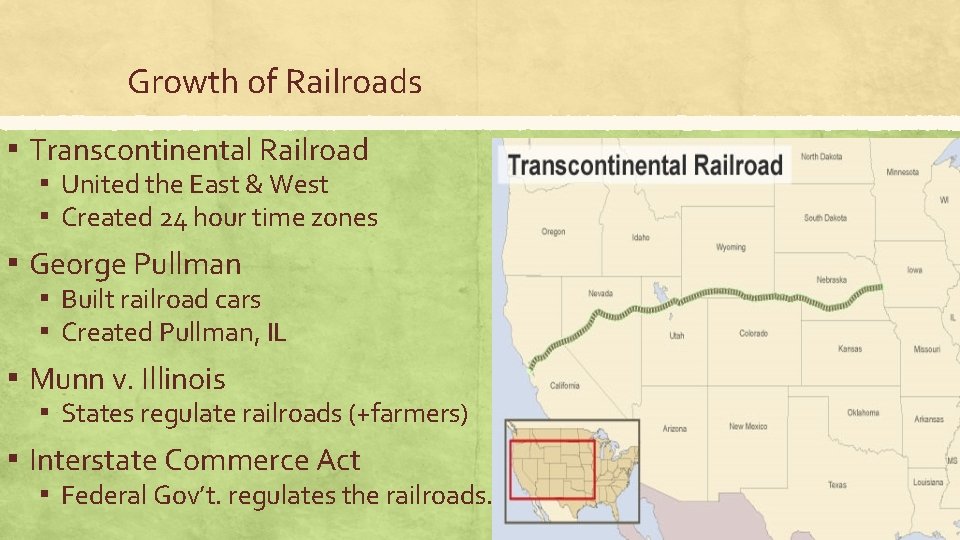
Growth of Railroads ▪ Transcontinental Railroad ▪ United the East & West ▪ Created 24 hour time zones ▪ George Pullman ▪ Built railroad cars ▪ Created Pullman, IL ▪ Munn v. Illinois ▪ States regulate railroads (+farmers) ▪ Interstate Commerce Act ▪ Federal Gov’t. regulates the railroads.