
A New Design for a Tunable External Cavity

A New Design for a Tunable External Cavity Diode Laser J. W. Lyons, M. D. Mendiola and B. D. De. Paola
An Abstract “We have designed and built a robust tunable external cavity diode laser that is easily constructed from commercial components. It requires only minimal, low tolerance machining, allowing for increased streamlining and ease of construction. The design also allows for the most commons types of laser diode packages, adding versatility. ”
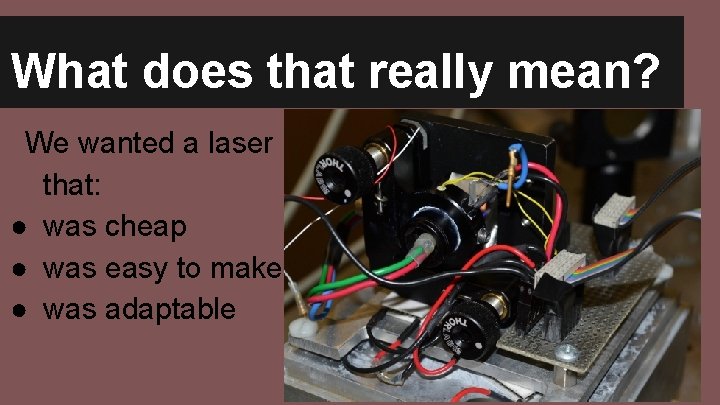
What does that really mean? We wanted a laser that: ● was cheap ● was easy to make ● was adaptable

What’s the Laser For? ● Using these for our MOTRIMS experiment o o MOT=Magneto Optical Trap RIMS= Recoil Ion Momentum Spectroscopy ● We use this to directly observe the populations in energy levels
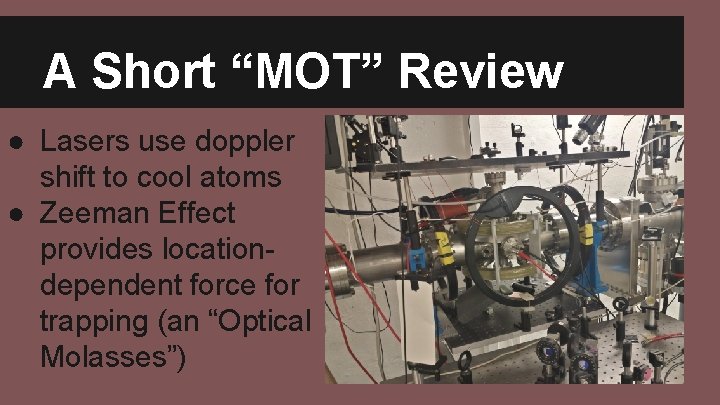
A Short “MOT” Review ● Lasers use doppler shift to cool atoms ● Zeeman Effect provides locationdependent force for trapping (an “Optical Molasses”)
A Short “RIMS” Review ● A beam on Na+ ions are fired at Rubidium 87 ● Rb absorb an electron=momentum change ● Number of ions at each location gives population count of energy levels
Laser Construction ● ● Coarse and fine control of diffraction grating Control temperature Simplify wiring Accomodate other diodes
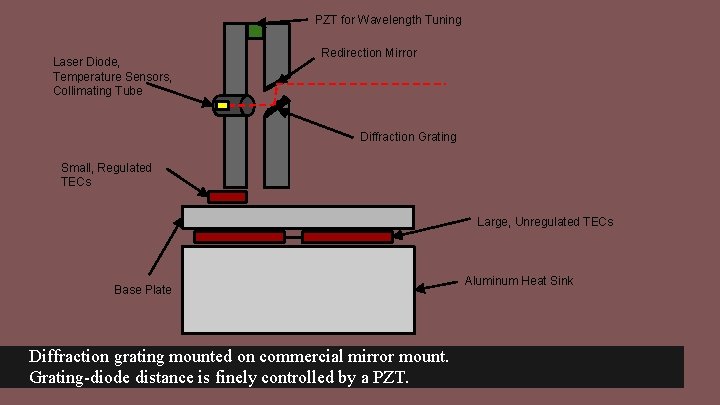
PZT for Wavelength Tuning Laser Diode, Temperature Sensors, Collimating Tube Redirection Mirror Diffraction Grating Small, Regulated TECs Large, Unregulated TECs Base Plate Diffraction grating mounted on commercial mirror mount. Grating-diode distance is finely controlled by a PZT. Aluminum Heat Sink
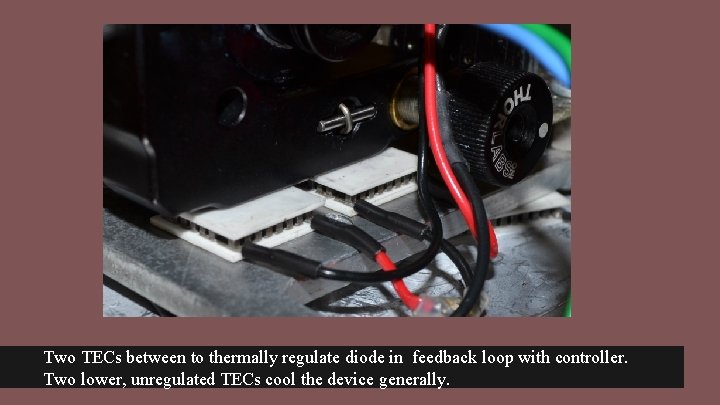
Two TECs between to thermally regulate diode in feedback loop with controller. Two lower, unregulated TECs cool the device generally.
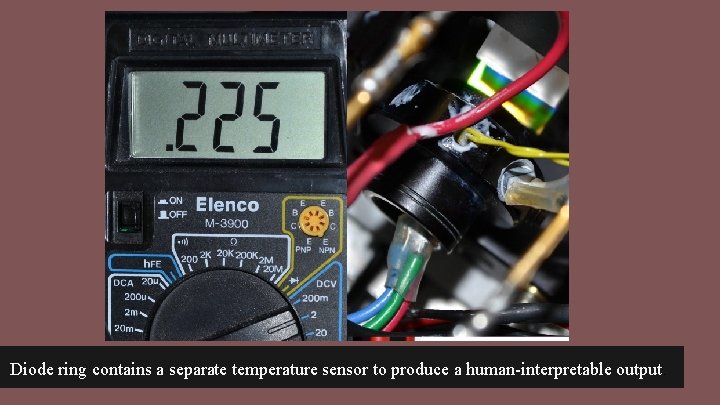
Diode ring contains a separate temperature sensor to produce a human-interpretable output.
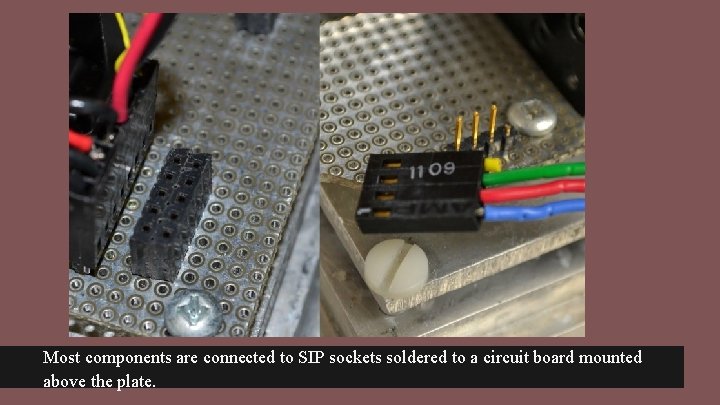
Most components are connected to SIP sockets soldered to a circuit board mounted above the plate.
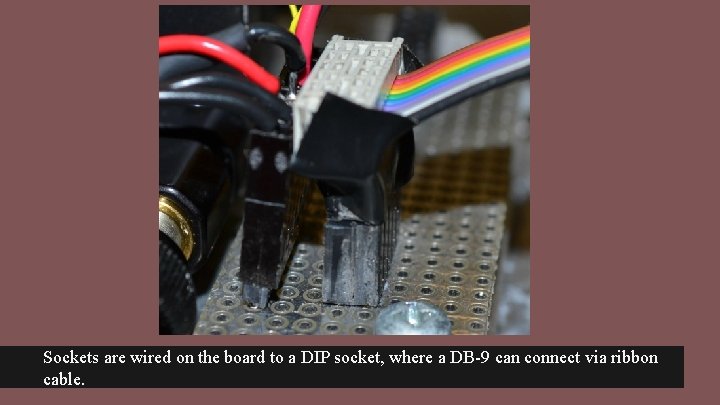
Sockets are wired on the board to a DIP socket, where a DB-9 can connect via ribbon cable.
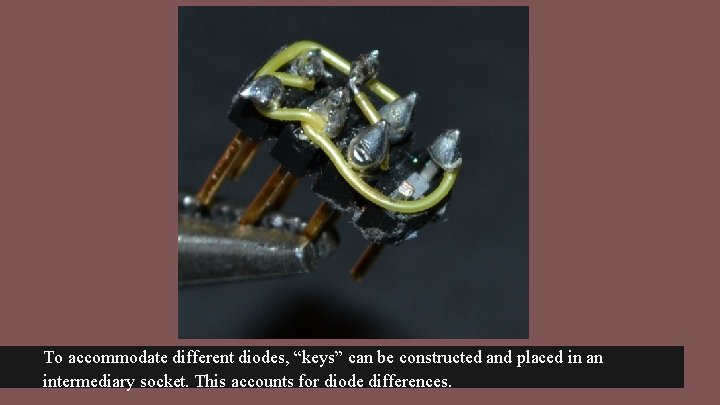
To accommodate different diodes, “keys” can be constructed and placed in an intermediary socket. This accounts for diode differences.
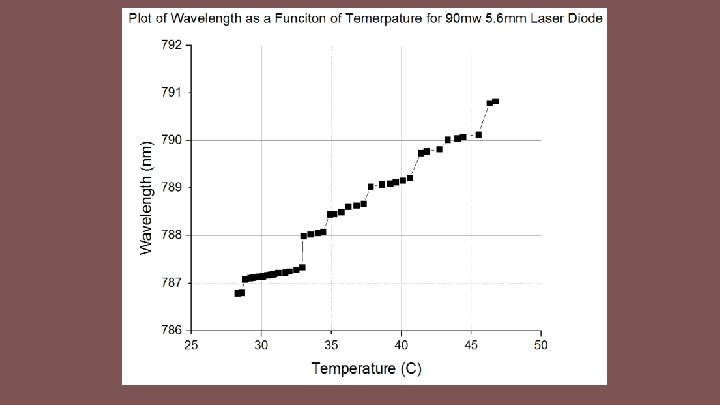

Features ● Very simple design ● Only a small amount of machining required (all low tolerance) ● Adaptable for many different diodes ● Capable of very effectively regulating internal temperature ● Easy to disassemble/reassemble for troubleshooting and maintenance ● Additional mirror eliminates beam steering during tuning

Acknowledgements Thank you to: ● Dr. De. Paola ● Madilena ● K-State ● NSF
- Slides: 16