
A New Classification System to Report Complications in
- Slides: 18
A New Classification System to Report Complications in Growing Spine Surgery: A Multicenter Consensus Study John T. Smith, MD, Charles Johnston, MD, David Skaggs, MD, John Flynn, MD, Michael Vitale, MD A joint effort of the CWSDSG and GSSG
Disclosures Consultant: Depuy-Synthes spine § Royalties: VEPTR 2 device § Board Member: CWSDRF § § Study supported by a grant from OREF
Complications in growing spine surgery Common § Variable consequences on the course of care § Lack a standardized reporting system § Difficult to compare results §
Purpose Develop consensus for a new classification system for reporting complications in growing spine surgery § Pilot study to evaluate ‘ease of use’ of the system §
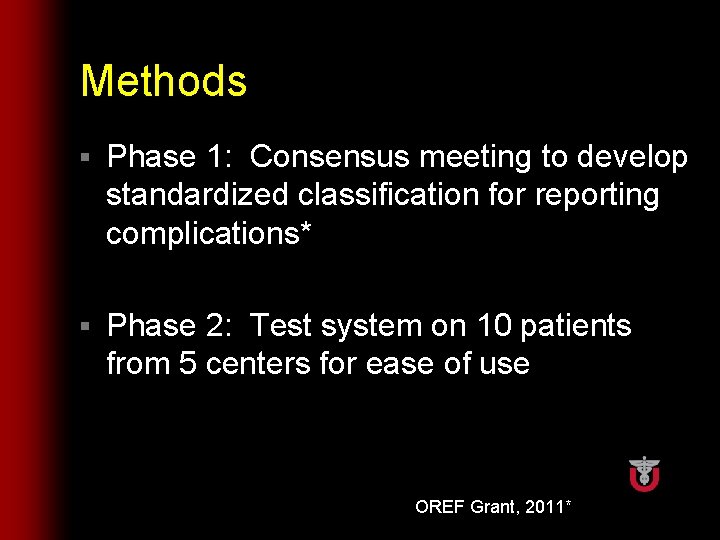
Methods § Phase 1: Consensus meeting to develop standardized classification for reporting complications* § Phase 2: Test system on 10 patients from 5 centers for ease of use OREF Grant, 2011*
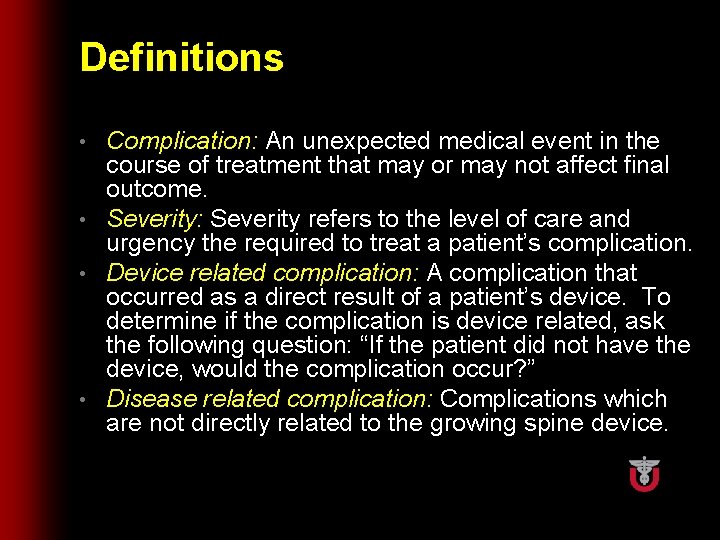
Definitions Complication: An unexpected medical event in the course of treatment that may or may not affect final outcome. • Severity: Severity refers to the level of care and urgency the required to treat a patient’s complication. • Device related complication: A complication that occurred as a direct result of a patient’s device. To determine if the complication is device related, ask the following question: “If the patient did not have the device, would the complication occur? ” • Disease related complication: Complications which are not directly related to the growing spine device. •
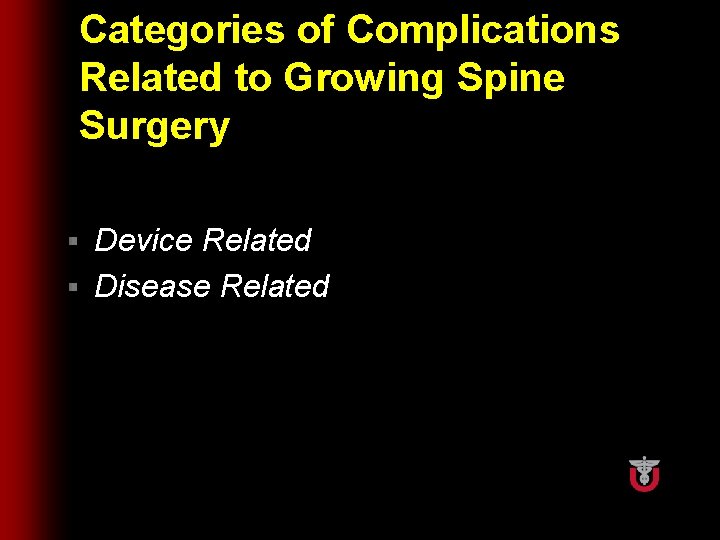
Categories of Complications Related to Growing Spine Surgery Device Related § Disease Related §
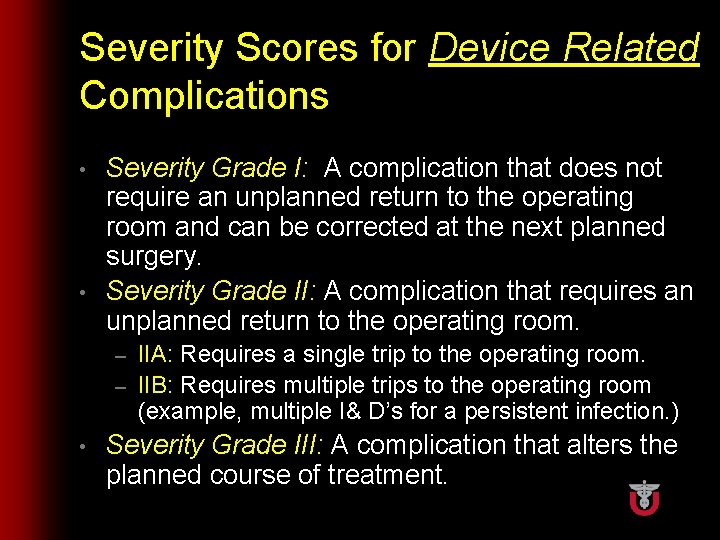
Severity Scores for Device Related Complications Severity Grade I: A complication that does not require an unplanned return to the operating room and can be corrected at the next planned surgery. • Severity Grade II: A complication that requires an unplanned return to the operating room. • IIA: Requires a single trip to the operating room. – IIB: Requires multiple trips to the operating room (example, multiple I& D’s for a persistent infection. ) – • Severity Grade III: A complication that alters the planned course of treatment.
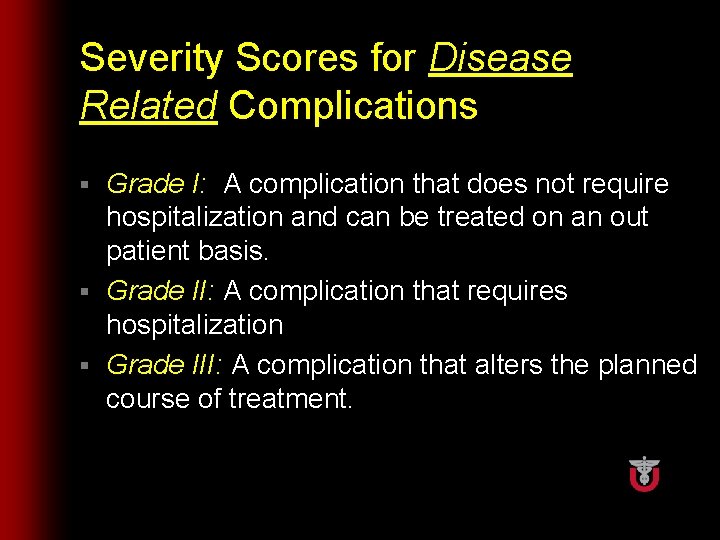
Severity Scores for Disease Related Complications Grade I: A complication that does not require hospitalization and can be treated on an out patient basis. § Grade II: A complication that requires hospitalization § Grade III: A complication that alters the planned course of treatment. §
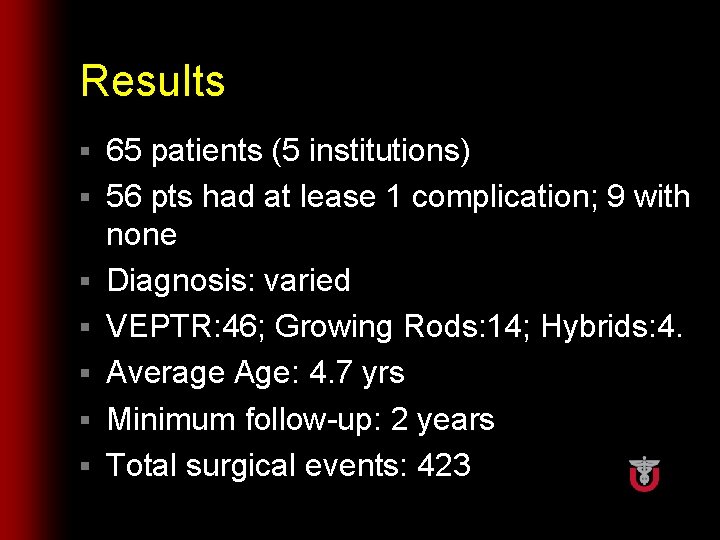
Results § § § § 65 patients (5 institutions) 56 pts had at lease 1 complication; 9 with none Diagnosis: varied VEPTR: 46; Growing Rods: 14; Hybrids: 4. Average Age: 4. 7 yrs Minimum follow-up: 2 years Total surgical events: 423
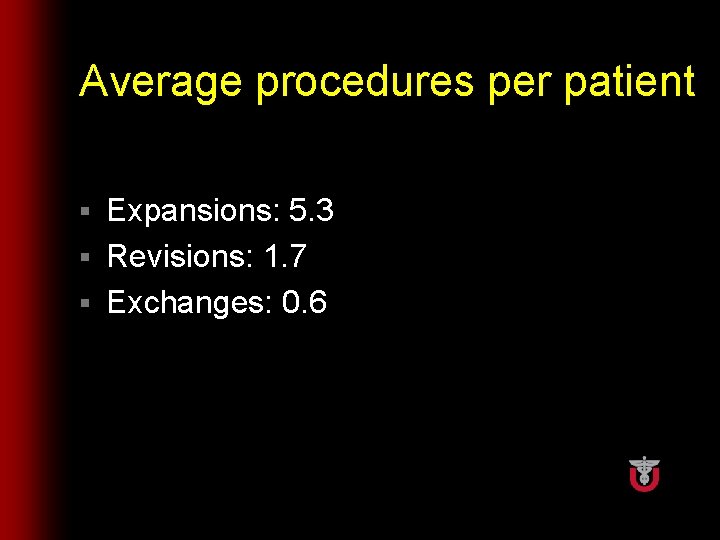
Average procedures per patient Expansions: 5. 3 § Revisions: 1. 7 § Exchanges: 0. 6 §
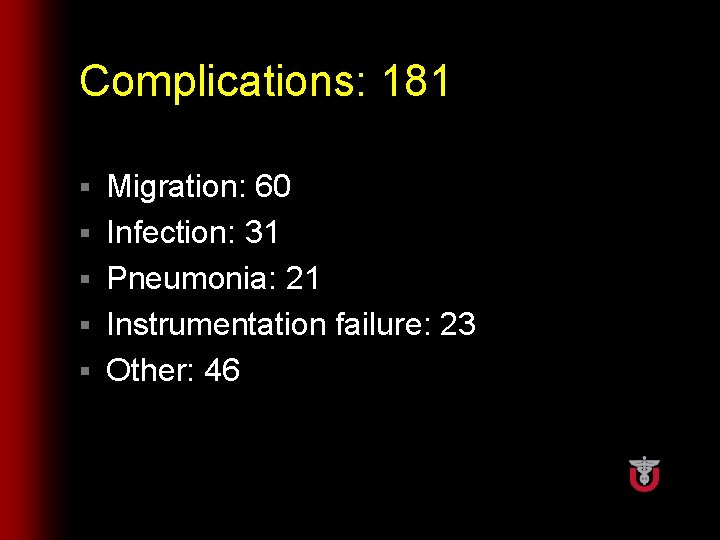
Complications: 181 § § § Migration: 60 Infection: 31 Pneumonia: 21 Instrumentation failure: 23 Other: 46
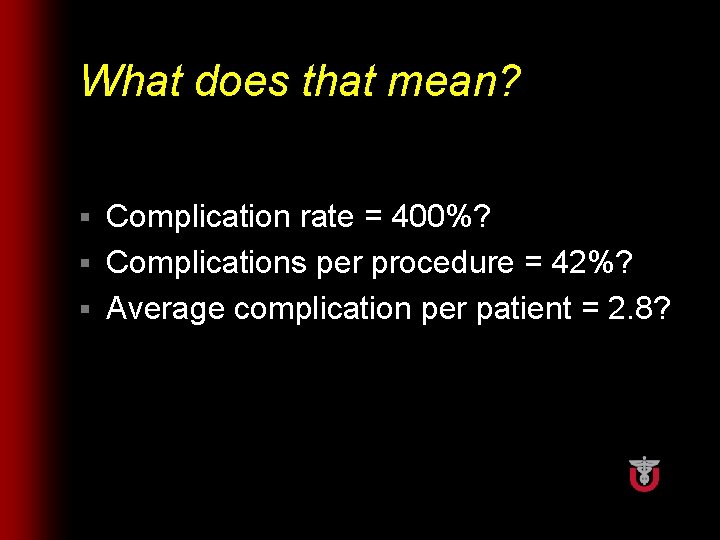
What does that mean? Complication rate = 400%? § Complications per procedure = 42%? § Average complication per patient = 2. 8? §
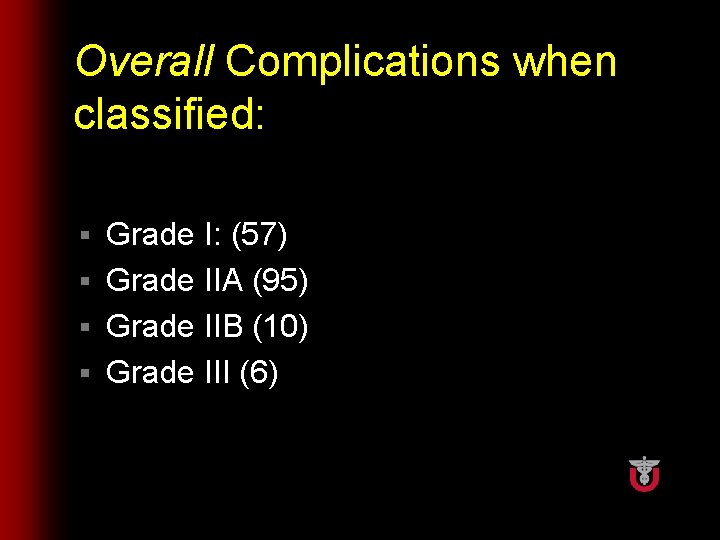
Overall Complications when classified: Grade I: (57) § Grade IIA (95) § Grade IIB (10) § Grade III (6) §
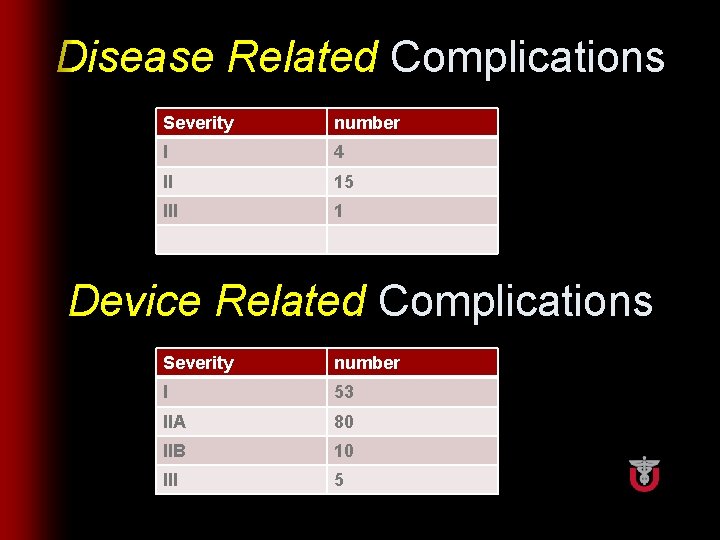
Disease Related Complications Severity number I 4 II 15 III 1 Device Related Complications Severity number I 53 IIA 80 IIB 10 III 5
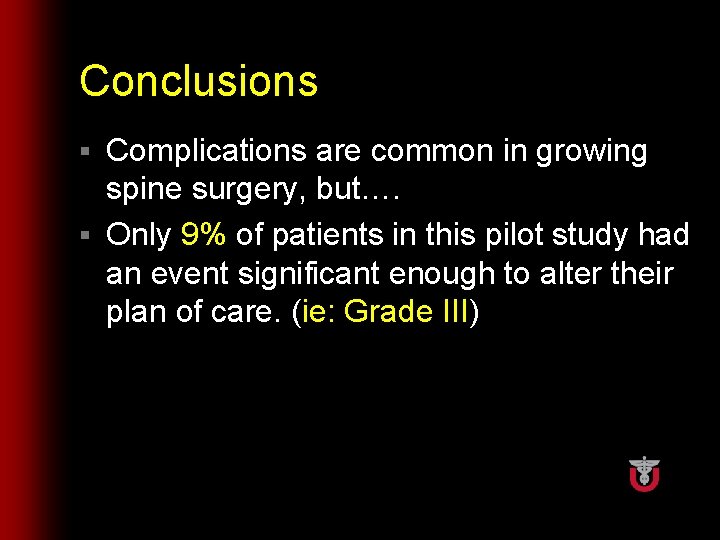
Conclusions Complications are common in growing spine surgery, but…. § Only 9% of patients in this pilot study had an event significant enough to alter their plan of care. (ie: Grade III) §
Conclusions Complications are expected in growing spine surgery…. . § Classification was easy to use § Provides meaningful information regarding the impact of an adverse event on the overall plan of care § Allows for comparison of different techniques §
Thank you