
A new classification of calcified plaques in patients
- Slides: 16
A new classification of calcified plaques in patients with ACS Ik-Kyung Jang, MD, Ph. D Professor of Medicine, Harvard Medical School Michael and Kathyn Park Endowed Chair in Cardiology Sugiyama T. JACC Intv 2019
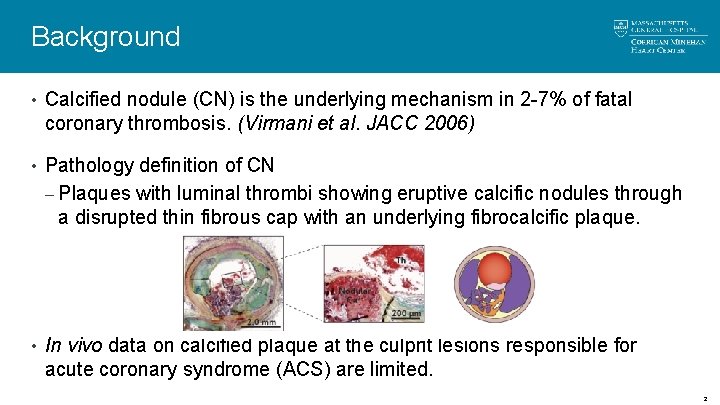
Background • Calcified nodule (CN) is the underlying mechanism in 2 -7% of fatal coronary thrombosis. (Virmani et al. JACC 2006) • Pathology definition of CN – Plaques with luminal thrombi showing eruptive calcific nodules through a disrupted thin fibrous cap with an underlying fibrocalcific plaque. • In vivo data on calcified plaque at the culprit lesions responsible for acute coronary syndrome (ACS) are limited. 2
Objective • To conduct detailed analysis of the calcified culprit plaques in patients with ACS § Prevalence of calcified plaque in living patients § Identification of subtypes and their prevalence § Pathobiology of subtypes § Clinical significance 3
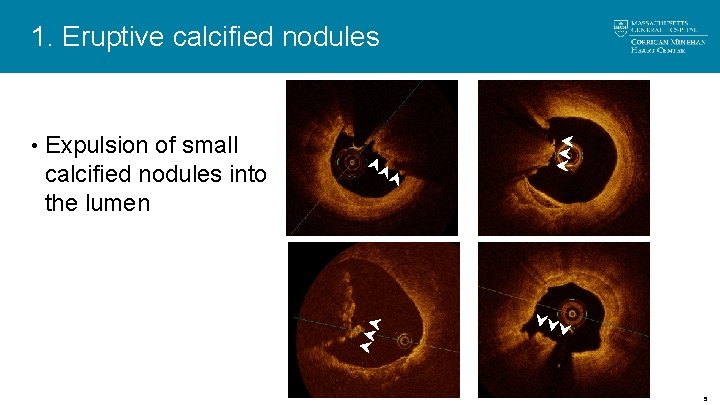
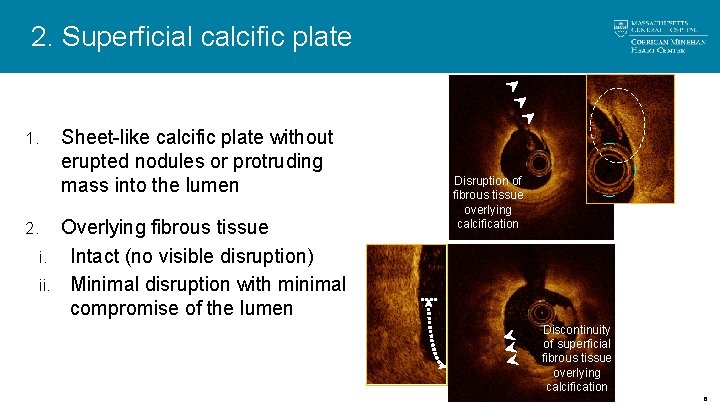
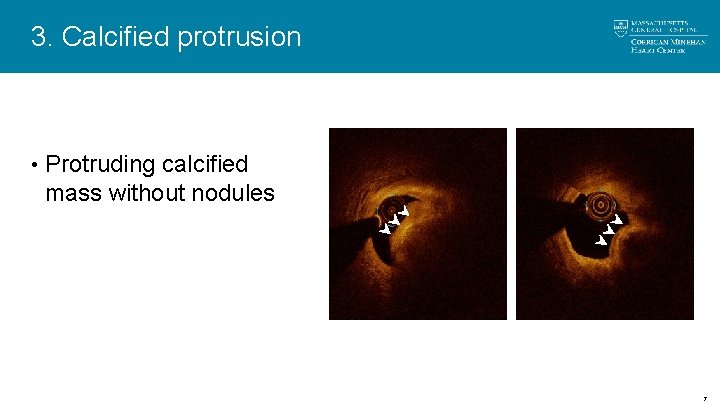
Inclusion criteria • OCT definition: Presence of superficial substantive calcification at the culprit site without evidence of ruptured lipid plaque • 1220 Culprit lesion in ACS patients were analyzed. • Type of calcified plaque 1. Eruptive calcified nodules 2. Superficial calcific plate 3. Calcified protrusion 4
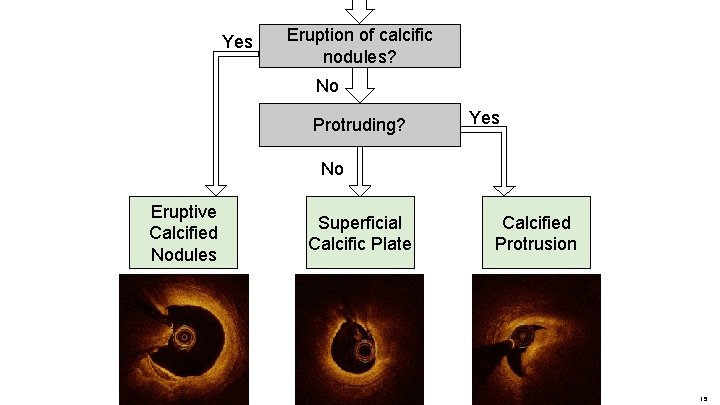
1. Eruptive calcified nodules • Expulsion of small calcified nodules into the lumen 5
2. Superficial calcific plate 1. Sheet-like calcific plate without erupted nodules or protruding mass into the lumen Overlying fibrous tissue i. Intact (no visible disruption) ii. Minimal disruption with minimal compromise of the lumen 2. Disruption of fibrous tissue overlying calcification Discontinuity of superficial fibrous tissue overlying calcification 6
3. Calcified protrusion • Protruding calcified mass without nodules 7
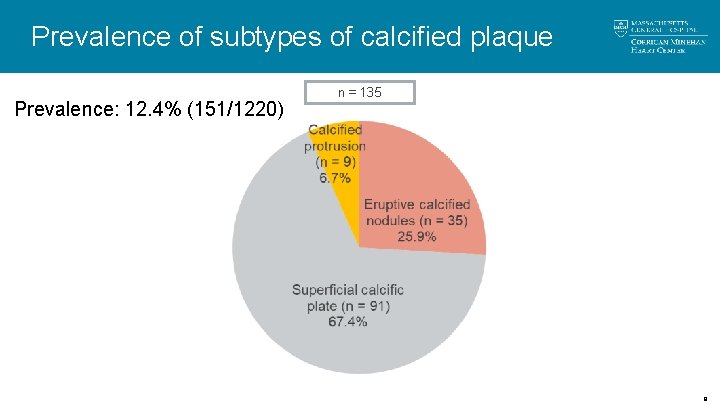
Prevalence of subtypes of calcified plaque Prevalence: 12. 4% (151/1220) n = 135 8
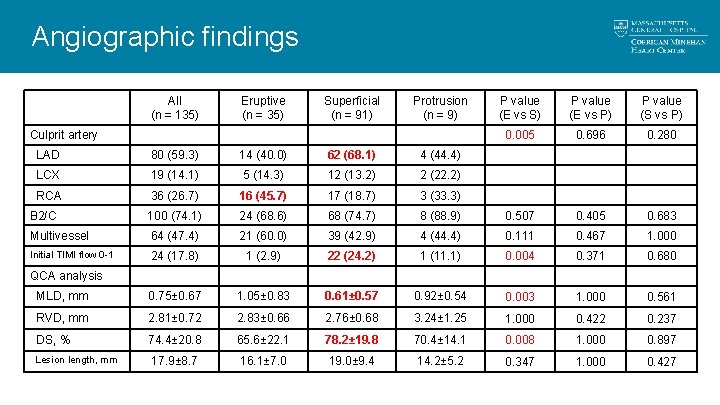
Angiographic findings All (n = 135) Eruptive (n = 35) Superficial (n = 91) Protrusion (n = 9) Culprit artery P value (E vs S) P value (E vs P) P value (S vs P) 0. 005 0. 696 0. 280 LAD 80 (59. 3) 14 (40. 0) 62 (68. 1) 4 (44. 4) LCX 19 (14. 1) 5 (14. 3) 12 (13. 2) 2 (22. 2) RCA 36 (26. 7) 16 (45. 7) 17 (18. 7) 3 (33. 3) B 2/C 100 (74. 1) 24 (68. 6) 68 (74. 7) 8 (88. 9) 0. 507 0. 405 0. 683 Multivessel 64 (47. 4) 21 (60. 0) 39 (42. 9) 4 (44. 4) 0. 111 0. 467 1. 000 Initial TIMI flow 0 -1 24 (17. 8) 1 (2. 9) 22 (24. 2) 1 (11. 1) 0. 004 0. 371 0. 680 MLD, mm 0. 75± 0. 67 1. 05± 0. 83 0. 61± 0. 57 0. 92± 0. 54 0. 003 1. 000 0. 561 RVD, mm 2. 81± 0. 72 2. 83± 0. 66 2. 76± 0. 68 3. 24± 1. 25 1. 000 0. 422 0. 237 DS, % 74. 4± 20. 8 65. 6± 22. 1 78. 2± 19. 8 70. 4± 14. 1 0. 008 1. 000 0. 897 17. 9± 8. 7 16. 1± 7. 0 19. 0± 9. 4 14. 2± 5. 2 0. 347 1. 000 0. 427 QCA analysis Lesion length, mm
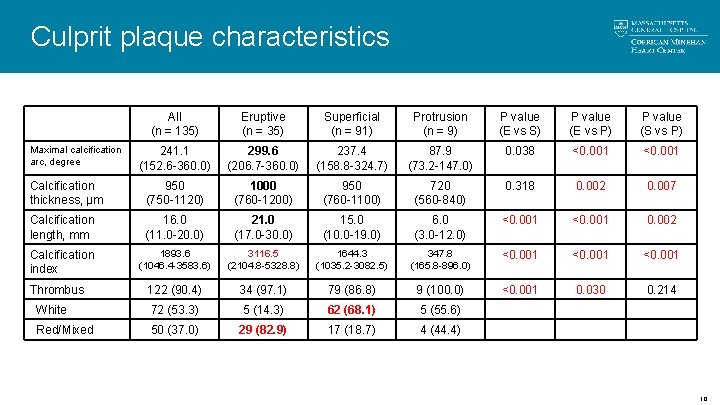
Culprit plaque characteristics All (n = 135) Eruptive (n = 35) Superficial (n = 91) Protrusion (n = 9) P value (E vs S) P value (E vs P) P value (S vs P) 241. 1 (152. 6 -360. 0) 299. 6 (206. 7 -360. 0) 237. 4 (158. 8 -324. 7) 87. 9 (73. 2 -147. 0) 0. 038 <0. 001 Calcification thickness, μm 950 (750 -1120) 1000 (760 -1200) 950 (760 -1100) 720 (560 -840) 0. 318 0. 002 0. 007 Calcification length, mm 16. 0 (11. 0 -20. 0) 21. 0 (17. 0 -30. 0) 15. 0 (10. 0 -19. 0) 6. 0 (3. 0 -12. 0) <0. 001 0. 002 Calcification index 1893. 6 (1046. 4 -3583. 6) 3116. 5 (2104. 8 -5328. 8) 1644. 3 (1035. 2 -3082. 5) 347. 8 (165. 8 -896. 0) <0. 001 122 (90. 4) 34 (97. 1) 79 (86. 8) 9 (100. 0) <0. 001 0. 030 0. 214 White 72 (53. 3) 5 (14. 3) 62 (68. 1) 5 (55. 6) Red/Mixed 50 (37. 0) 29 (82. 9) 17 (18. 7) 4 (44. 4) Maximal calcification arc, degree Thrombus 10
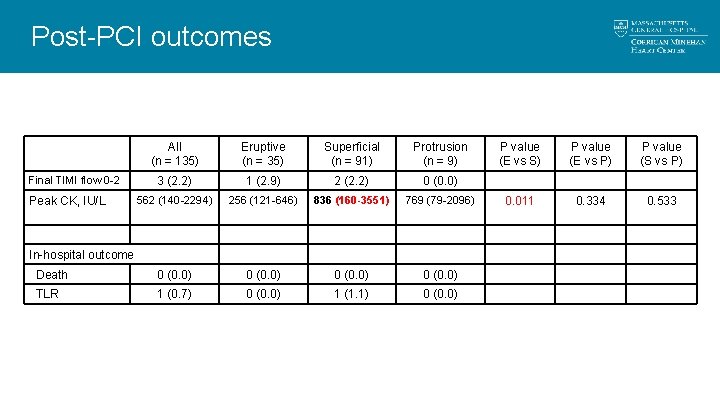
Post-PCI outcomes All (n = 135) Eruptive (n = 35) Superficial (n = 91) Protrusion (n = 9) 3 (2. 2) 1 (2. 9) 2 (2. 2) 0 (0. 0) 562 (140 -2294) 256 (121 -646) 836 (160 -3551) 769 (79 -2096) Death 0 (0. 0) TLR 1 (0. 7) 0 (0. 0) 1 (1. 1) 0 (0. 0) Final TIMI flow 0 -2 Peak CK, IU/L In-hospital outcome P value (E vs S) P value (E vs P) P value (S vs P) 0. 011 0. 334 0. 533
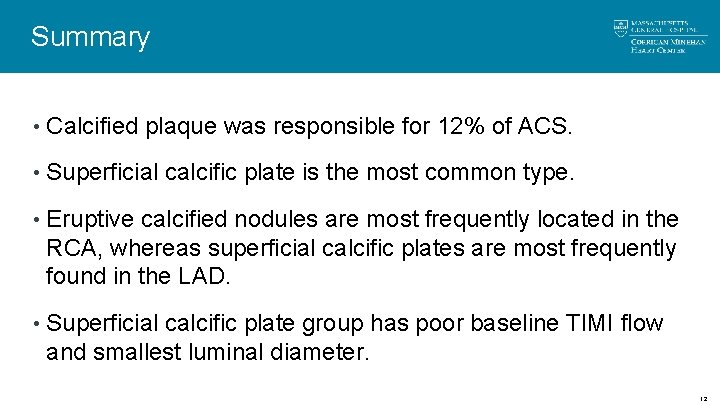
Summary • Calcified plaque was responsible for 12% of ACS. • Superficial calcific plate is the most common type. • Eruptive calcified nodules are most frequently located in the RCA, whereas superficial calcific plates are most frequently found in the LAD. • Superficial calcific plate group has poor baseline TIMI flow and smallest luminal diameter. 12
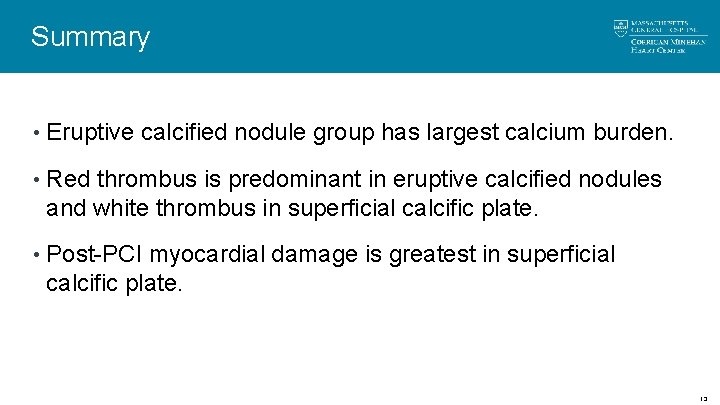
Summary • Eruptive calcified nodule group has largest calcium burden. • Red thrombus is predominant in eruptive calcified nodules and white thrombus in superficial calcific plate. • Post-PCI myocardial damage is greatest in superficial calcific plate. 13
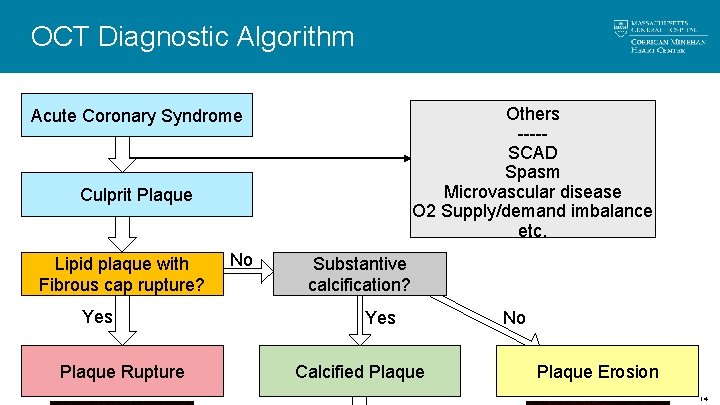
OCT Diagnostic Algorithm Others ----SCAD Spasm Microvascular disease O 2 Supply/demand imbalance etc. Acute Coronary Syndrome Culprit Plaque Lipid plaque with Fibrous cap rupture? Yes Plaque Rupture No Substantive calcification? Yes Calcified Plaque No Plaque Erosion 14
Yes Eruption of calcific nodules? No Protruding? Yes No Eruptive Calcified Nodules Superficial Calcific Plate Calcified Protrusion 15
16