
A New Approach to Modeling Primary Healthcare Workforce
![[ideal-staffing] ex: State of Utah](https://slidetodoc.com/presentation_image_h2/96df39c83f234c337cdc94c26f245866/image-21.jpg "[ideal-staffing] ex: State of Utah")

- Slides: 24
A New Approach to Modeling Primary Healthcare Workforce Needs: Using Data to Improve Planning and Allocation of State Resources to Respond to Population Health Needs in Utah Michael K. Magill, MD Director, Utah Area Health Education Centers Program Professor and Chair Emeritus, Department of Family and Preventive Medicine University of Utah School of Medicine Clark Ruttinger, MPA, MBA Director of Workforce Research Utah Medical Education Council
Objectives By the end of this presentation, participants will be able to: • Describe why a new model of primary care workforce modeling is needed • Compare workforce modeling based on ratios of providers to population to modeling population health needs addressed by inter-professional teams • Explain how key users can adapt the model to meet workforce needs of different populations (rural vs. urban)
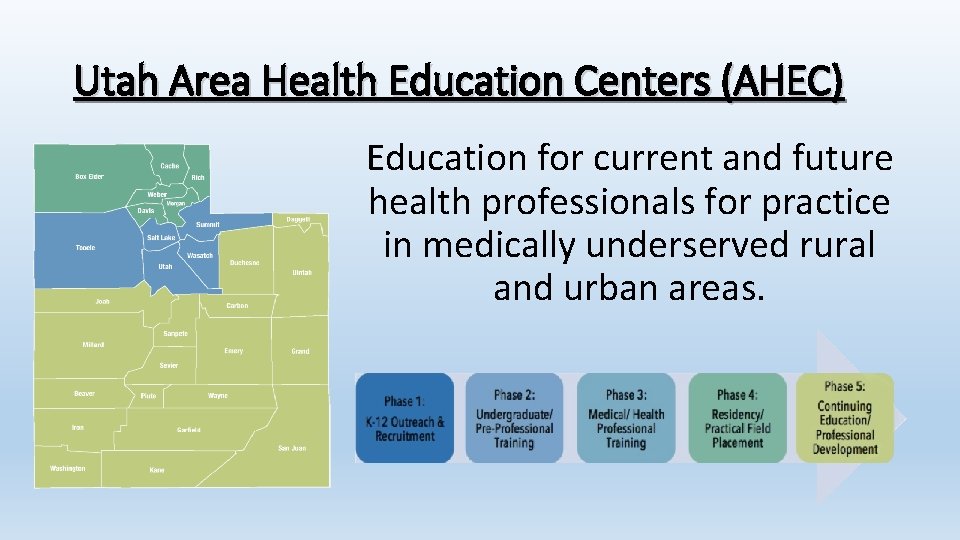
Utah Area Health Education Centers (AHEC) Education for current and future health professionals for practice in medically underserved rural and urban areas.
Utah Medical Education Council Health care workforce analyses: training capacity and graduate medical education (GME) financing policies. • Since 1997 • “Advise the State Board of Regents and the Legislature on the status and needs of health care professionals in training” • “Assess and meet changing market and education needs” • 2014 - Designated Utah’s Nursing Workforce Information Center https: //umec. utah. gov/
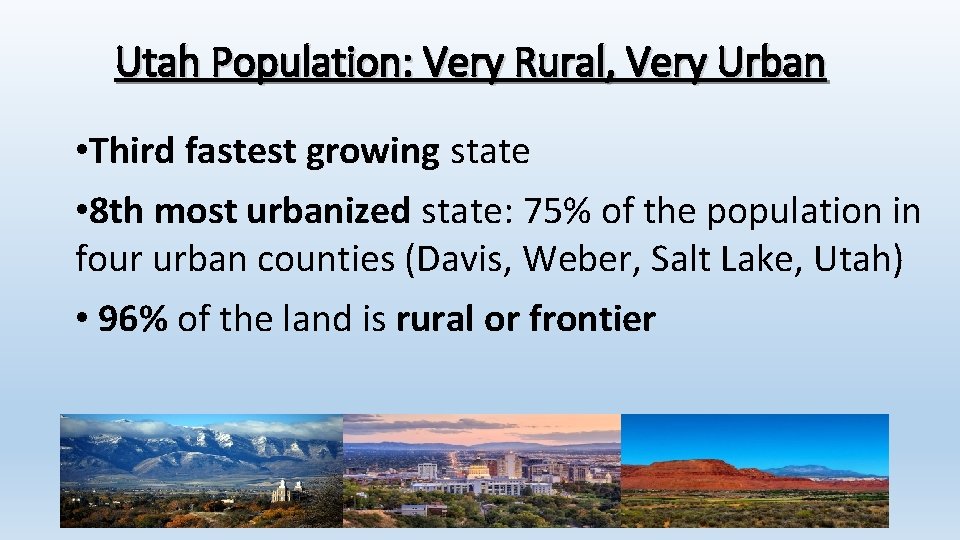
Utah Population: Very Rural, Very Urban • Third fastest growing state • 8 th most urbanized state: 75% of the population in four urban counties (Davis, Weber, Salt Lake, Utah) • 96% of the land is rural or frontier
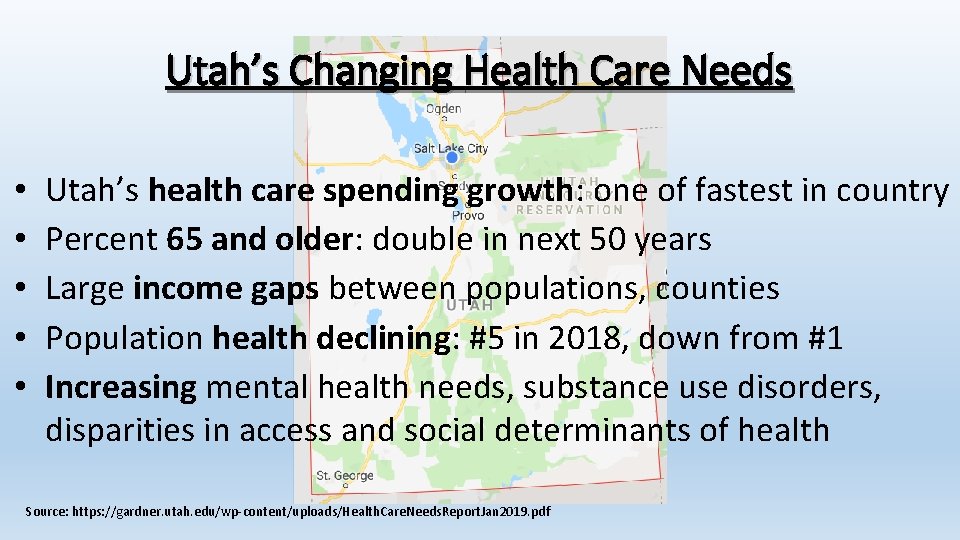
Utah’s Changing Health Care Needs • • • Utah’s health care spending growth: one of fastest in country Percent 65 and older: double in next 50 years Large income gaps between populations, counties Population health declining: #5 in 2018, down from #1 Increasing mental health needs, substance use disorders, disparities in access and social determinants of health Source: https: //gardner. utah. edu/wp-content/uploads/Health. Care. Needs. Report. Jan 2019. pdf
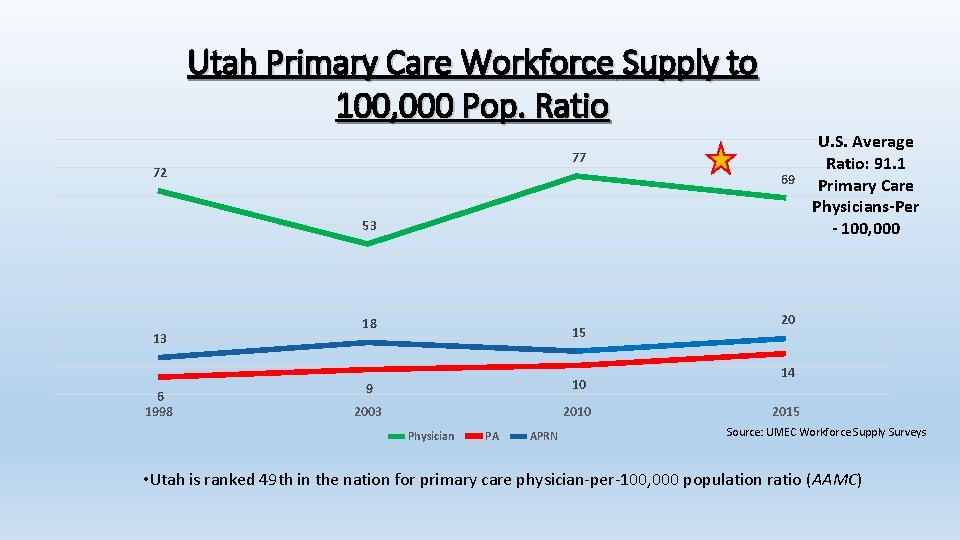
Utah Primary Care Workforce Supply to 100, 000 Pop. Ratio 77 72 69 53 13 6 1998 18 15 9 10 2003 2010 Physician PA APRN U. S. Average Ratio: 91. 1 Primary Care Physicians-Per - 100, 000 20 14 2015 Source: UMEC Workforce Supply Surveys • Utah is ranked 49 th in the nation for primary care physician-per-100, 000 population ratio (AAMC)
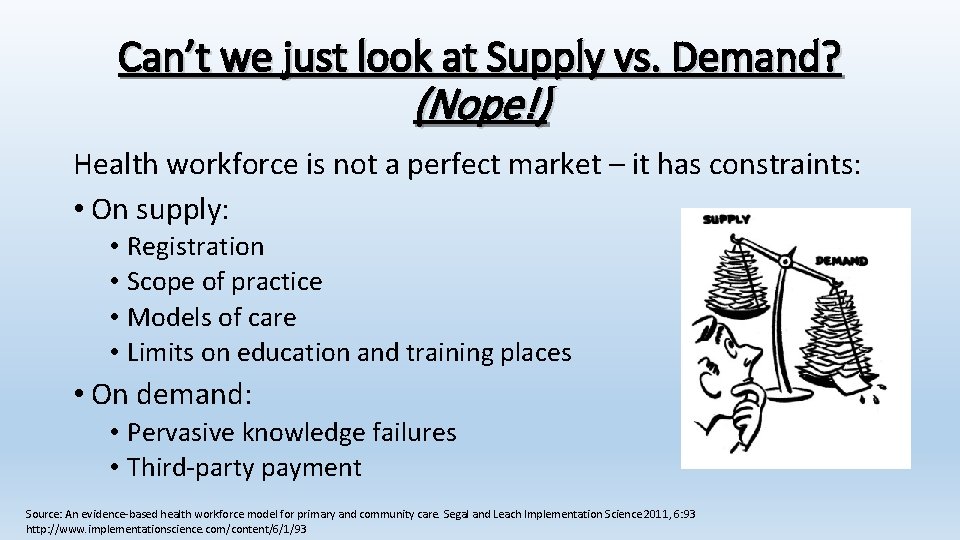
Can’t we just look at Supply vs. Demand? (Nope!) Health workforce is not a perfect market – it has constraints: • On supply: • Registration • Scope of practice • Models of care • Limits on education and training places • On demand: • Pervasive knowledge failures • Third-party payment Source: An evidence-based health workforce model for primary and community care. Segal and Leach Implementation Science 2011, 6: 93 http: //www. implementationscience. com/content/6/1/93
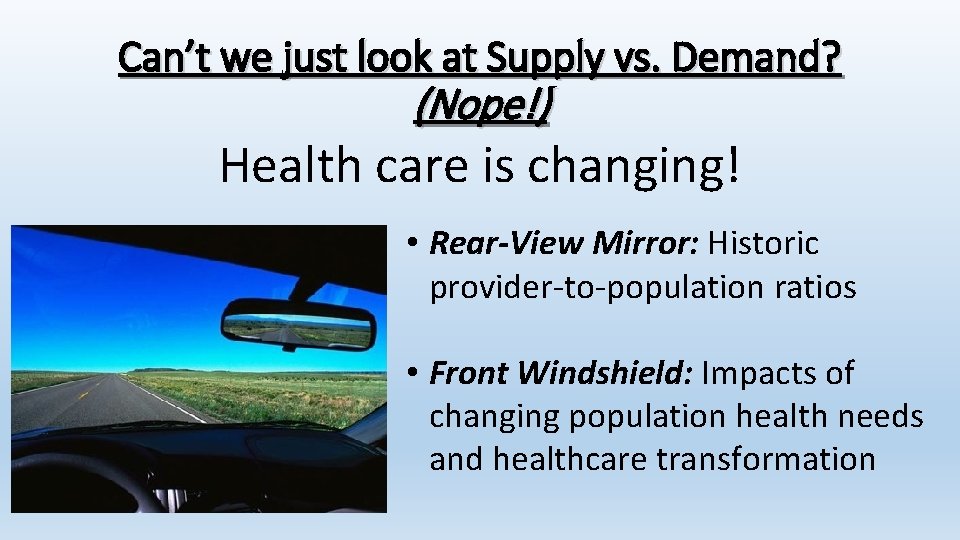
Can’t we just look at Supply vs. Demand? (Nope!) Health care is changing! • Rear-View Mirror: Historic provider-to-population ratios • Front Windshield: Impacts of changing population health needs and healthcare transformation
Looking out the Front Windshield: Foundation for a new Primary Care Workforce Model • Control cost of care: 18% of GDP and rising • Primary care: key to reduce cost and improve quality • Team based care and value payment old single-discipline models of workforce need are obsolete • Resource allocation should be driven by: • Needs of the population: Chronic, Acute, Preventive care • Evolving models of care delivery and professional roles: population management, team roles, documentation
So… We Need a More Comprehensive Approach!
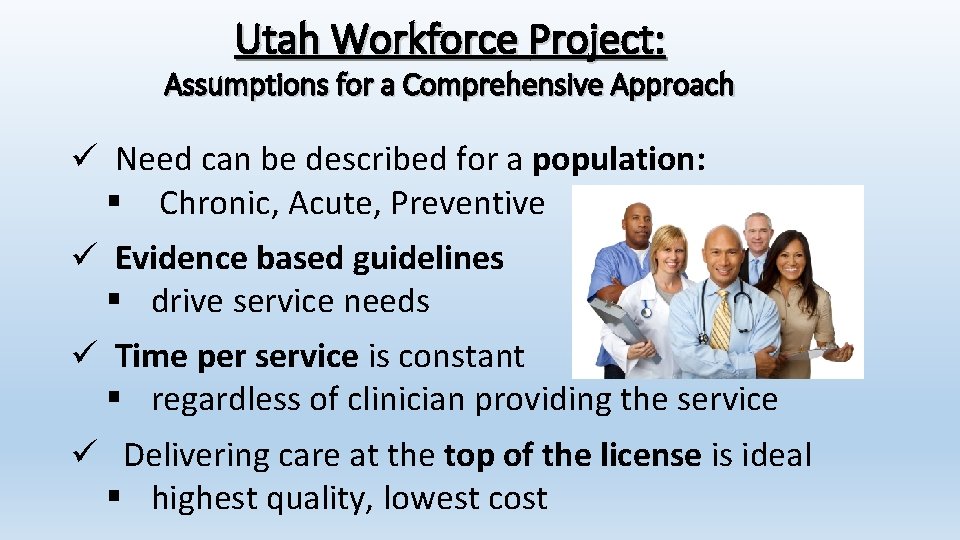
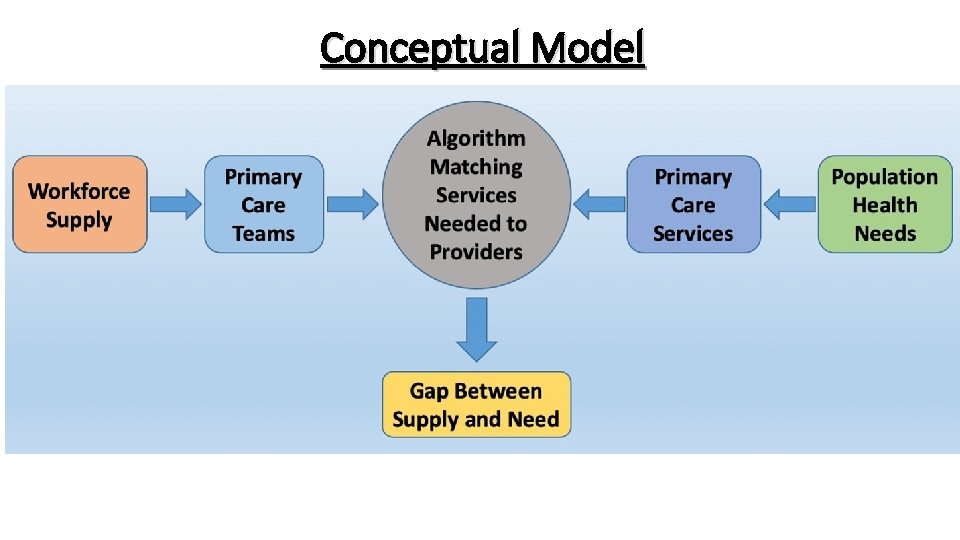
Utah Workforce Project: Assumptions for a Comprehensive Approach ü Need can be described for a population: § Chronic, Acute, Preventive ü Evidence based guidelines § drive service needs ü Time per service is constant § regardless of clinician providing the service ü Delivering care at the top of the license is ideal § highest quality, lowest cost
Conceptual Model
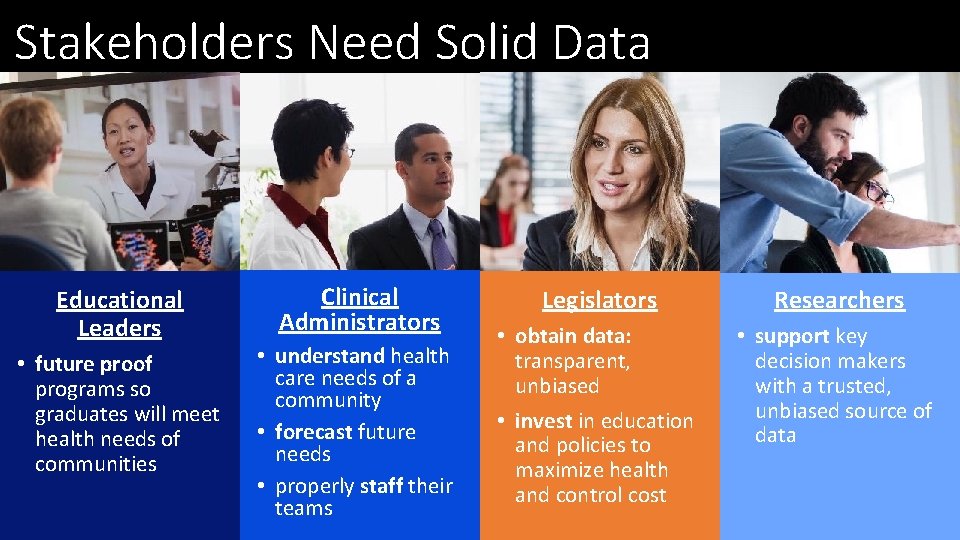
Stakeholders Need Solid Data Educational Leaders • future proof programs so graduates will meet health needs of communities Clinical Administrators • understand health care needs of a community • forecast future needs • properly staff their teams Legislators Researchers • obtain data: transparent, unbiased • invest in education and policies to maximize health and control cost • support key decision makers with a trusted, unbiased source of data
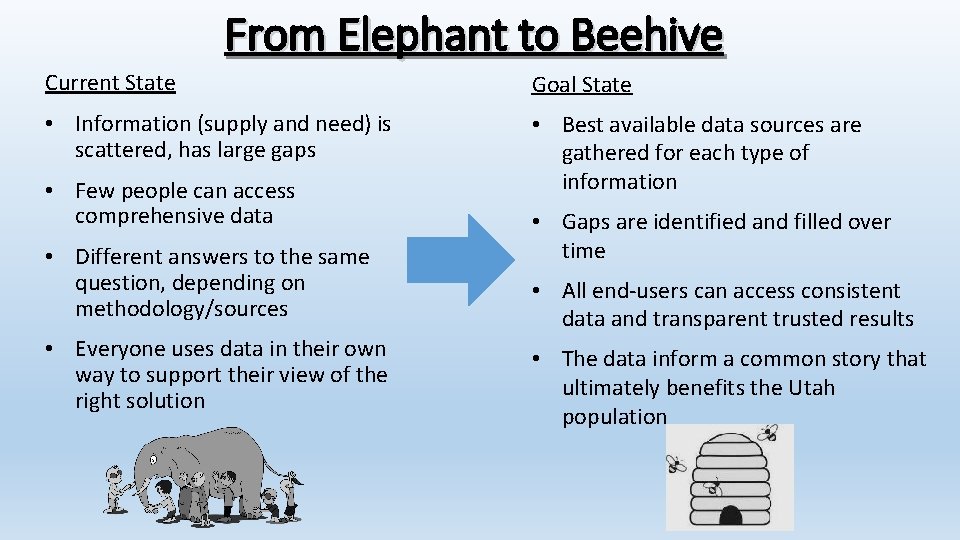
From Elephant to Beehive Current State Goal State • Information (supply and need) is scattered, has large gaps • Best available data sources are gathered for each type of information • Few people can access comprehensive data • Different answers to the same question, depending on methodology/sources • Everyone uses data in their own way to support their view of the right solution • Gaps are identified and filled over time • All end-users can access consistent data and transparent trusted results • The data inform a common story that ultimately benefits the Utah population
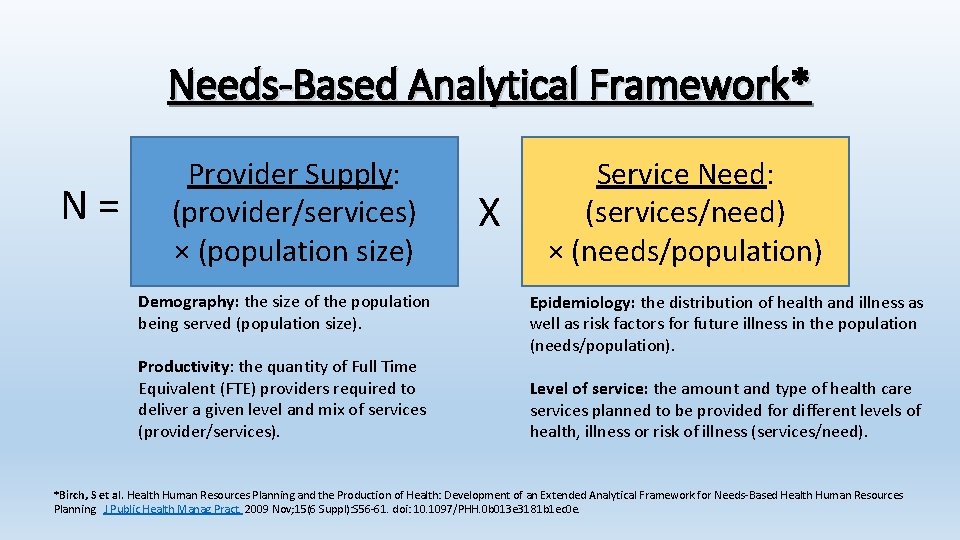
Needs-Based Analytical Framework* N= Provider Supply: (provider/services) × (population size) Demography: the size of the population being served (population size). Productivity: the quantity of Full Time Equivalent (FTE) providers required to deliver a given level and mix of services (provider/services). X Service Need: (services/need) × (needs/population) Epidemiology: the distribution of health and illness as well as risk factors for future illness in the population (needs/population). Level of service: the amount and type of health care services planned to be provided for different levels of health, illness or risk of illness (services/need). *Birch, S et al. Health Human Resources Planning and the Production of Health: Development of an Extended Analytical Framework for Needs-Based Health Human Resources Planning. J Public Health Manag Pract. 2009 Nov; 15(6 Suppl): S 56 -61. doi: 10. 1097/PHH. 0 b 013 e 3181 b 1 ec 0 e.
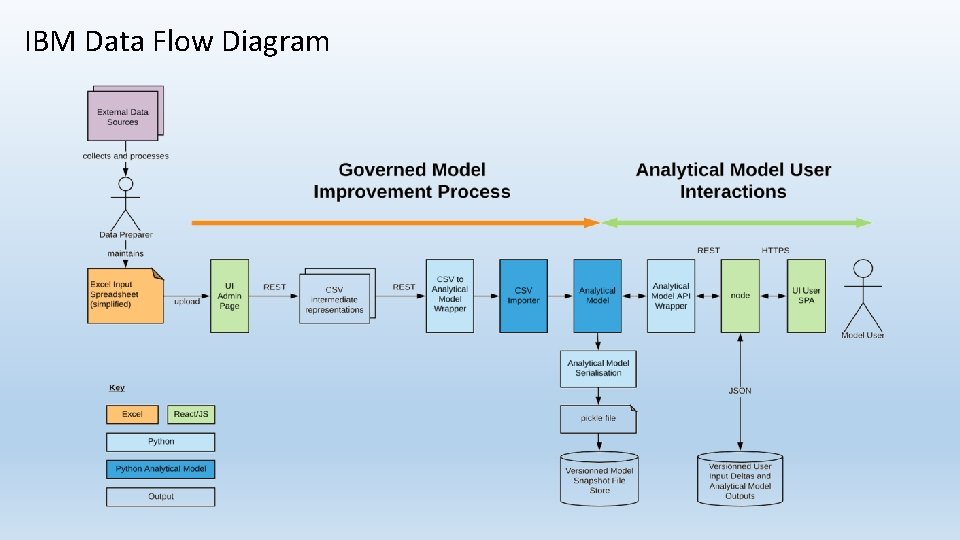
IBM Data Flow Diagram
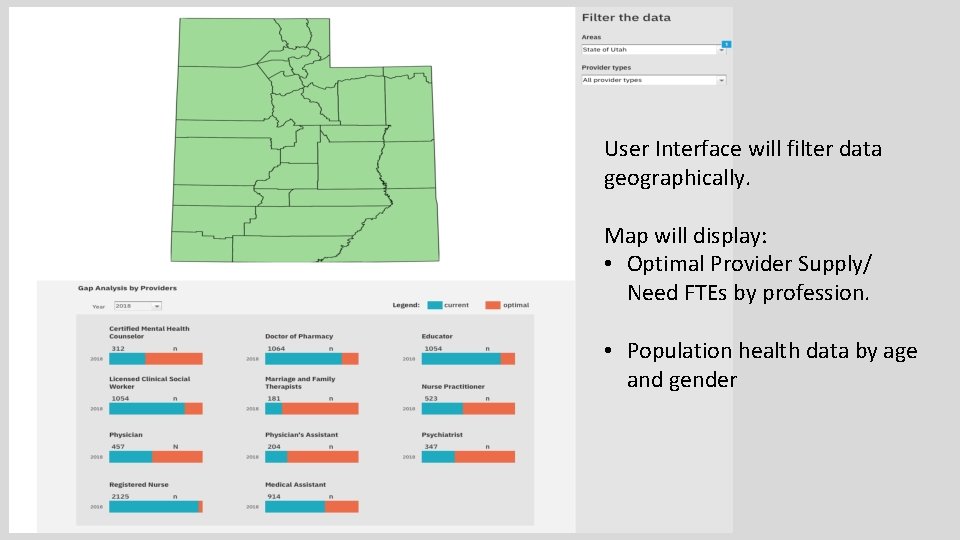
User Interface will filter data geographically. Map will display: • Optimal Provider Supply/ Need FTEs by profession. • Population health data by age and gender
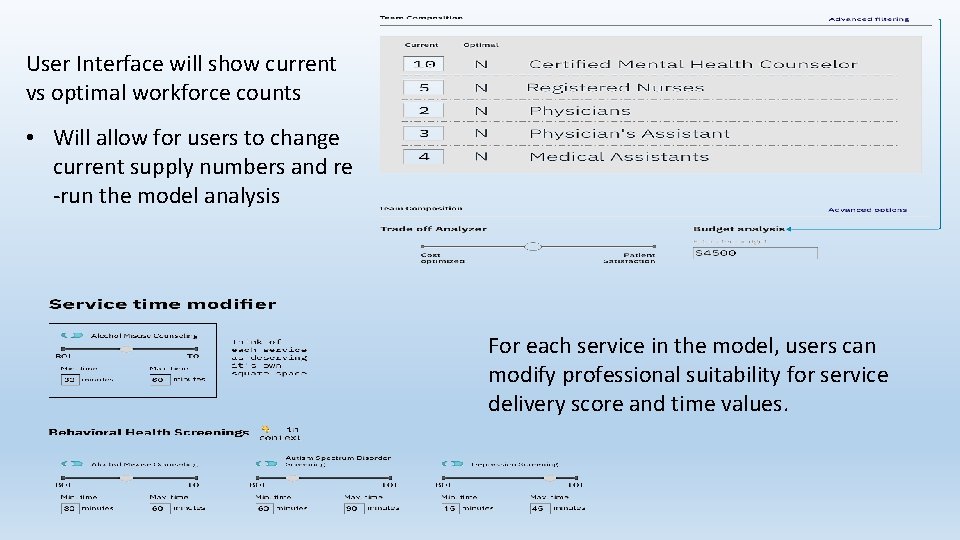
User Interface will show current vs optimal workforce counts • Will allow for users to change current supply numbers and re -run the model analysis For each service in the model, users can modify professional suitability for service delivery score and time values.
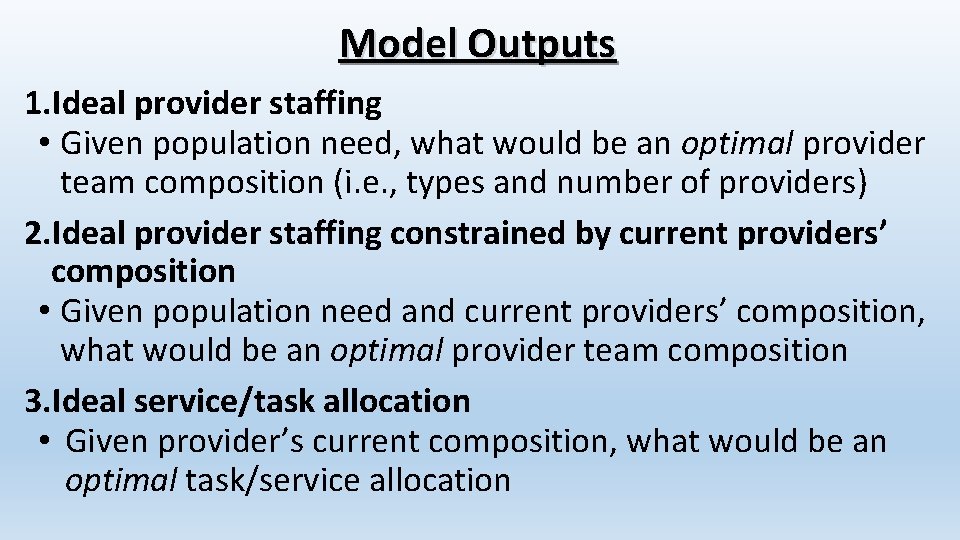
Model Outputs 1. Ideal provider staffing • Given population need, what would be an optimal provider team composition (i. e. , types and number of providers) 2. Ideal provider staffing constrained by current providers’ composition • Given population need and current providers’ composition, what would be an optimal provider team composition 3. Ideal service/task allocation • Given provider’s current composition, what would be an optimal task/service allocation
[ideal-staffing] ex: State of Utah
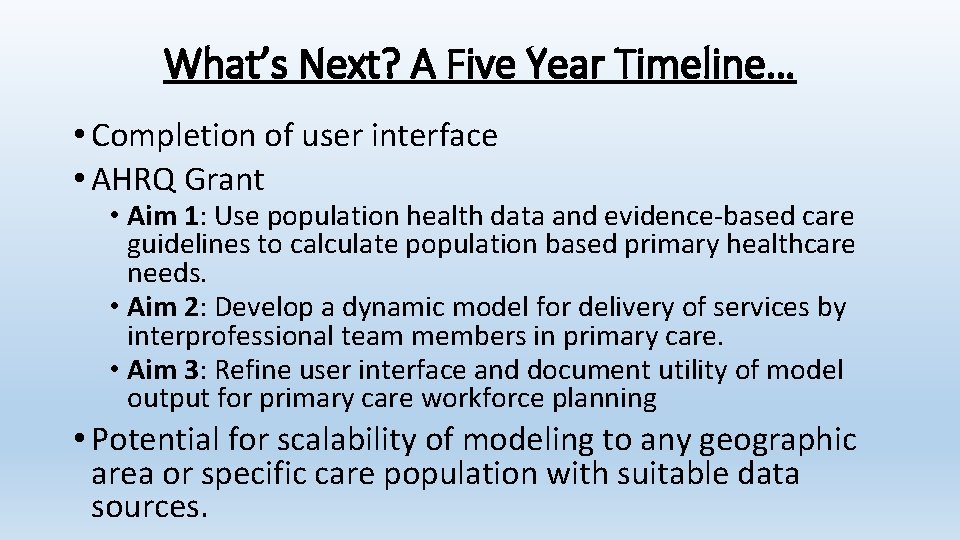
What’s Next? A Five Year Timeline… • Completion of user interface • AHRQ Grant • Aim 1: Use population health data and evidence-based care guidelines to calculate population based primary healthcare needs. • Aim 2: Develop a dynamic model for delivery of services by interprofessional team members in primary care. • Aim 3: Refine user interface and document utility of model output for primary care workforce planning • Potential for scalability of modeling to any geographic area or specific care population with suitable data sources.
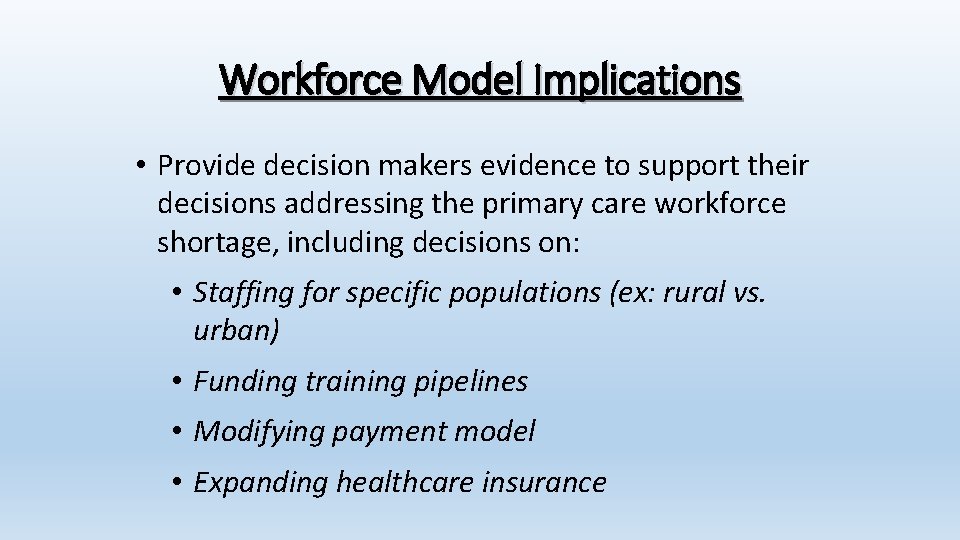
Workforce Model Implications • Provide decision makers evidence to support their decisions addressing the primary care workforce shortage, including decisions on: • Staffing for specific populations (ex: rural vs. urban) • Funding training pipelines • Modifying payment model • Expanding healthcare insurance
Thank you!