
A negatively stained preparation of parvovirus seen by
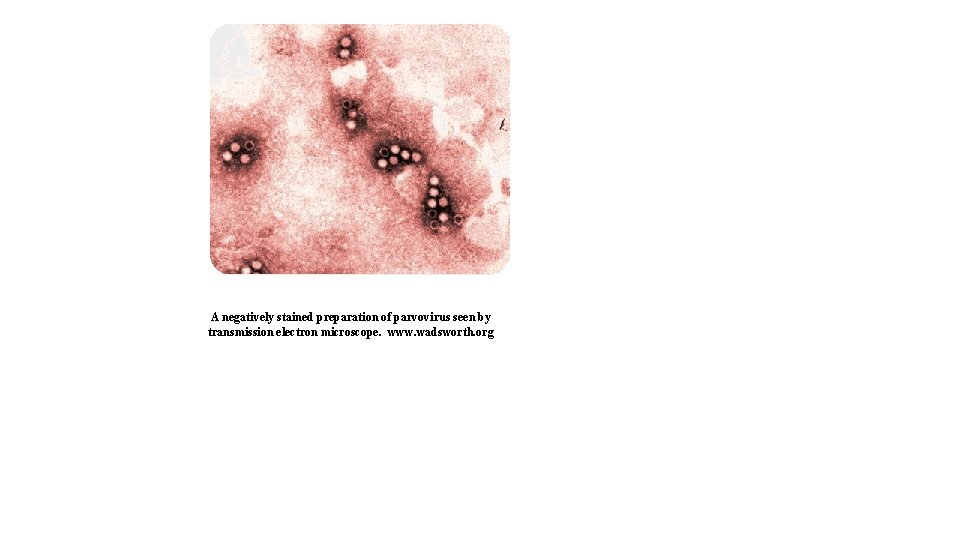
A negatively stained preparation of parvovirus seen by transmission electron microscope. www. wadsworth. org

Properties of Parvoviruses • Structure • Icosahedral • 18 -26 nm diameter • Single-stranded DNA, 5. 6 kb • Two proteins • Nonenveloped

Human parvoviruses • B 19 • Bocavirus • can cause acute respiratory disease, which may become severe in young children • Adeno-associated viruses (AAVs) • infect humans • replicate with a second “helper” virus, usually an adenovirus
B 19 • Replication in human cells restricted to erythroid progenitor cells • Adult bone marrow • Fetal liver • Transmission by close contact • Airborne droplets • 50% of a household may become infected • 10 -60% of students in school outbreaks
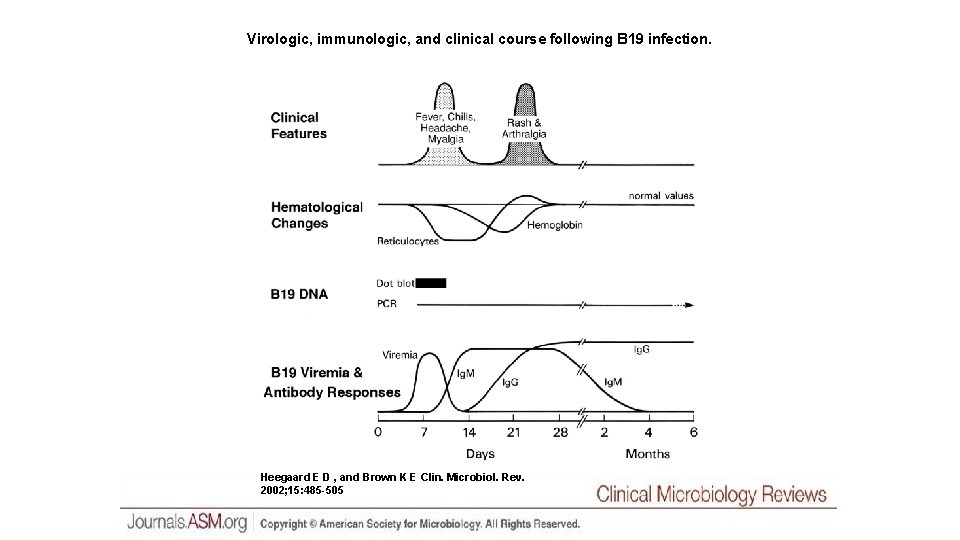
Virologic, immunologic, and clinical course following B 19 infection. Heegaard E D , and Brown K E Clin. Microbiol. Rev. 2002; 15: 485 -505

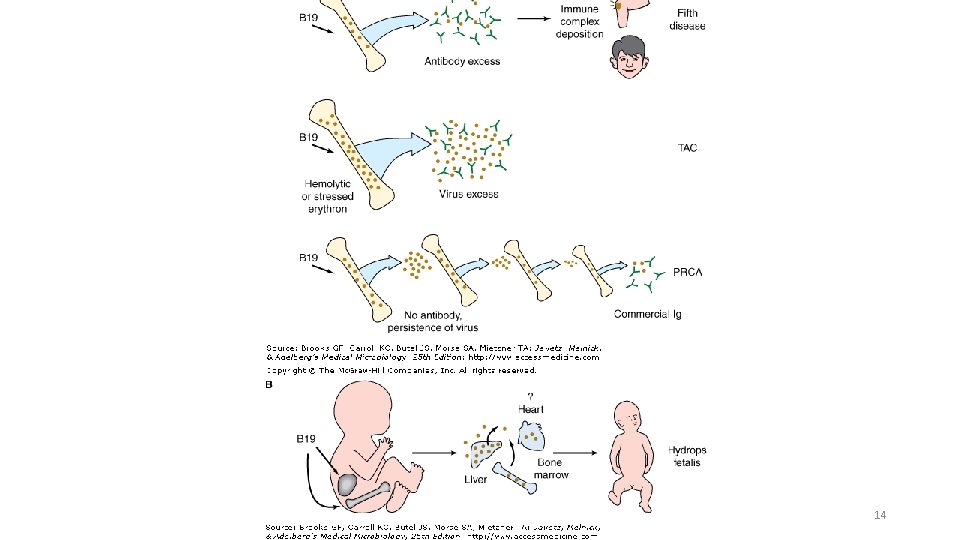
Parvovirus B-19 Infections in Humans • Diseases 1. Fifth disease (cutaneous rash) 2. Transient aplastic crisis (severe acute anemia) 3. Pure red cell aplasia (chronic anemia) 4. Hydrops fetalis (fatal fetal anemia) Fifth Disease (parvovirus B 19)
Fifth Disease Six separate childhood exanthems were defined from what was once called the “measles” (Early 20 th Century) 1 st Measles (rubeola) Morbillivirus 2 nd Scarlet fever (Streptococcus pyogenes ) 3 rd Rubella (German measles) 4 th Atypical scarlet fever Duke Filatow's disease staph 5 th Erythema infectiosum 6 th Roseola herpesviruses (HHV-6 and HHV-7) Exanthem = rash Fifth disease is the only one still called by this name

Symptoms – Fifth Disease • Incubation 7 -10 days • Lasts 5 -7 days • Three Phases • First phase –peak level of virus and RBC destruction • • Fever Malaise Chills Bright red, raised “slap cheek” rash
Symptoms – Fifth Disease �Second phase – rash and arthralgia ○ ○ ○ Virus has disappeared – no longer infectious Caused by immune complexes in the capillaries of the skin Appears at presence of parvovirus Ig. M Erythematous maculopapular rash on arms and trunk Fades into a lace-like reticular pattern �Third phase ○ Frequent clearing and recurrences for weeks ○ Due to stimuli such as exercise, irritation, or overheating of skin from bathing or sunlight.
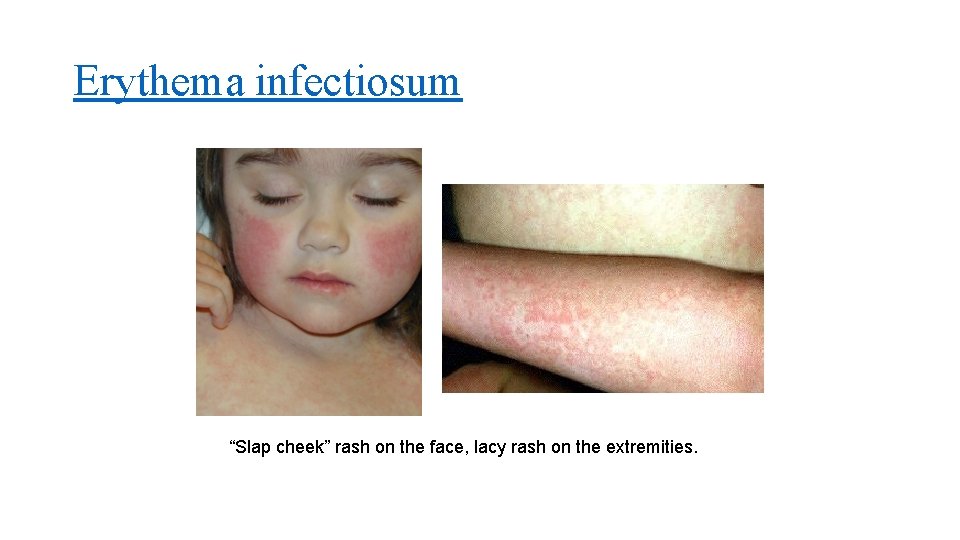
Erythema infectiosum “Slap cheek” rash on the face, lacy rash on the extremities.
Parvovirus Infections in Humans • Transient aplastic crisis (TAC) • B 19 infection of those with other hemolytic anemias • Sickle cell disease • Thalassemias • Can complicate crises • Sometimes fatal
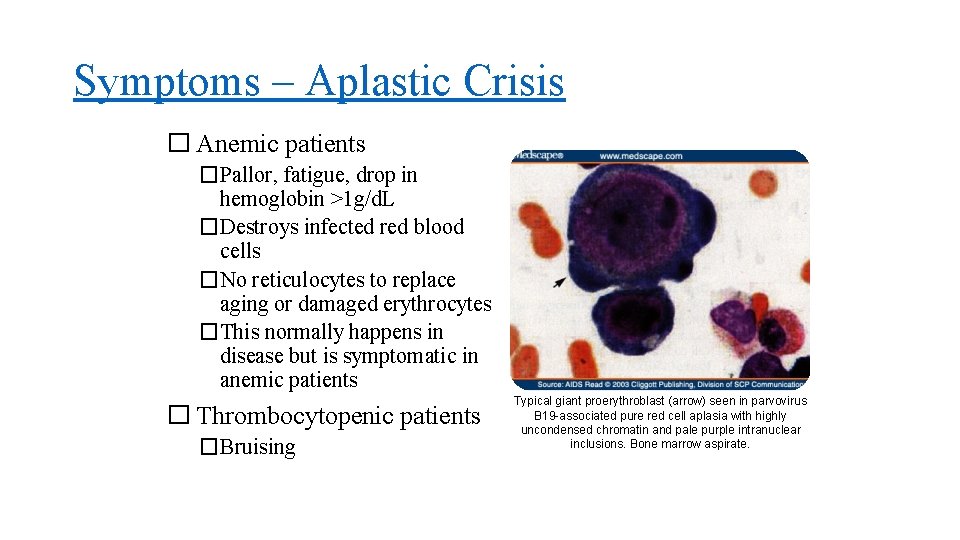
Symptoms – Aplastic Crisis � Anemic patients �Pallor, fatigue, drop in hemoglobin >1 g/d. L �Destroys infected red blood cells �No reticulocytes to replace aging or damaged erythrocytes �This normally happens in disease but is symptomatic in anemic patients � Thrombocytopenic patients �Bruising Typical giant proerythroblast (arrow) seen in parvovirus B 19 -associated pure red cell aplasia with highly uncondensed chromatin and pale purple intranuclear inclusions. Bone marrow aspirate.
Parvovirus Infections in Humans • Pure Red Cell Anemia (PRCA) • Can cause persistent infection in bone marrow • Suppress red cell maturation • Leads to anemia • Hydrops Fetalis: Infection during pregnancy • Can cause fetal anemia • Usually not fatal to fetus
14
Laboratory Diagnosis • PCR is most sensitive • Most useful during viremia • Otherwise, requires tissue biopsy or bone marrow tap • Serological testing for Ig. M • Determines recent infection • Ig. G testing is not informative
- Slides: 15