
A Monte Carlo Approach to Estimating Impacts from




- Slides: 19
A Monte Carlo Approach to Estimating Impacts from Highly Intermittent Sources on Short Term Standards Clint Bowman and Ranil Dhammapala, State of Washington, Department of Ecology
Estimating Impacts from Highly Intermittent Sources on Short Term Standards Problem Description Modeling Approaches Support for Statistical Approach Recipe Compute Requirements
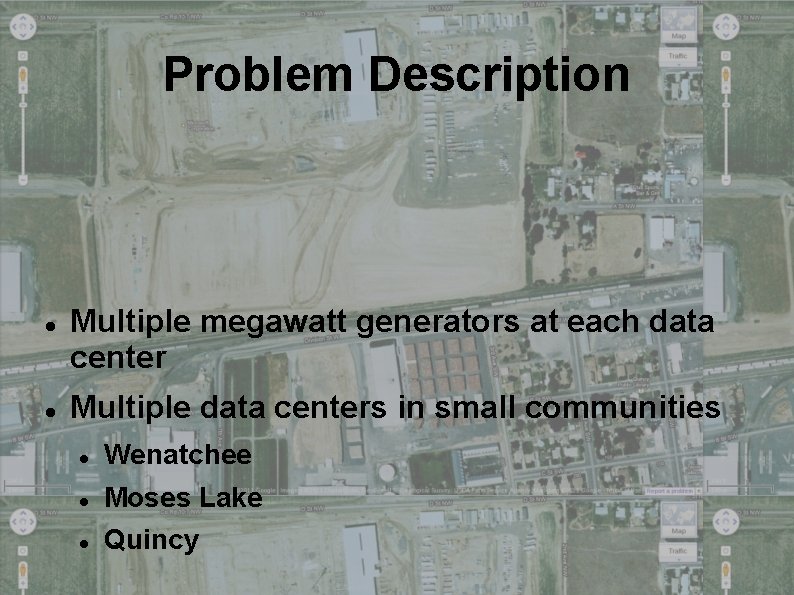
Problem Description Multiple megawatt generators at each data center Multiple data centers in small communities Wenatchee Moses Lake Quincy
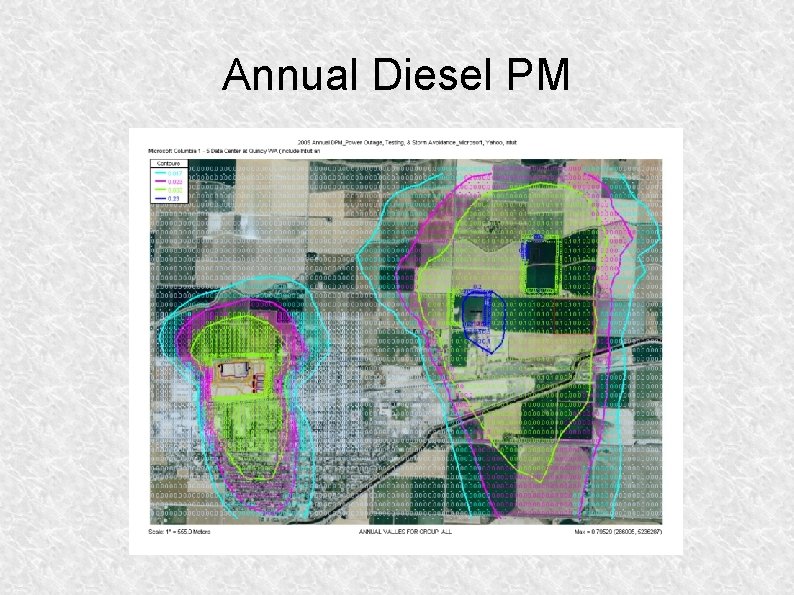
Annual Diesel PM
Problem Description (2) Standard defined over several years Standard defined as percentile (98 th) Sources are highly intermittent (1 – 2 % duty cycle) Ground level impact dependent on meteorology Source operation not correlated with dispersion conditions
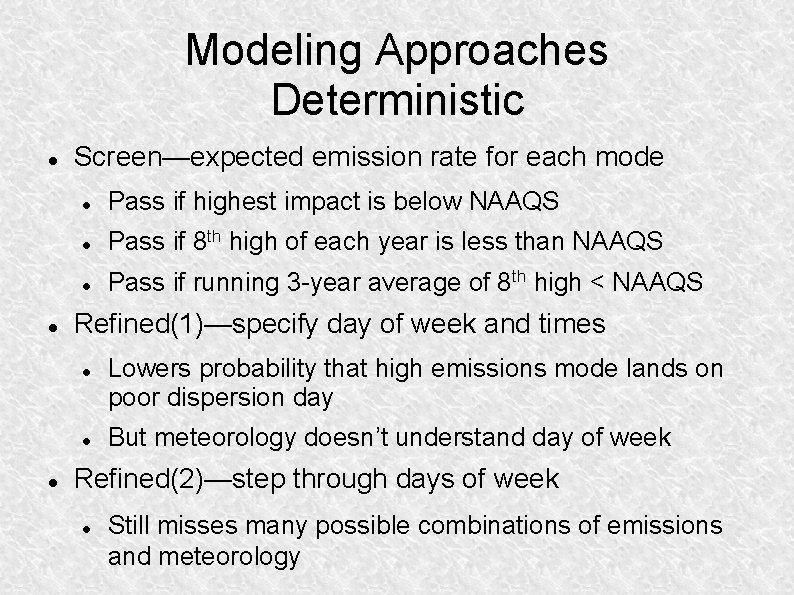
Modeling Approaches Deterministic Screen—expected emission rate for each mode Pass if highest impact is below NAAQS Pass if 8 th high of each year is less than NAAQS Pass if running 3 -year average of 8 th high < NAAQS Refined(1)—specify day of week and times Lowers probability that high emissions mode lands on poor dispersion day But meteorology doesn’t understand day of week Refined(2)—step through days of week Still misses many possible combinations of emissions and meteorology
Rely on Recent Experience
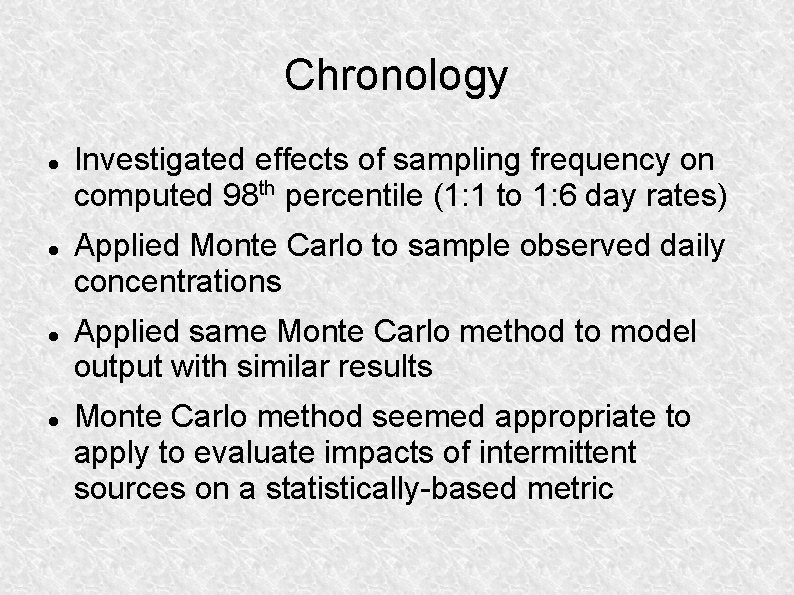
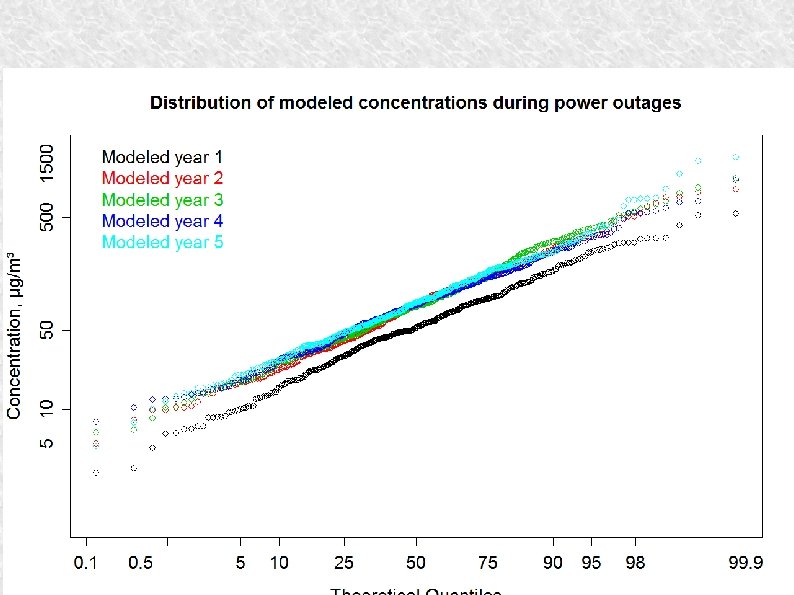
Chronology Investigated effects of sampling frequency on computed 98 th percentile (1: 1 to 1: 6 day rates) Applied Monte Carlo to sample observed daily concentrations Applied same Monte Carlo method to model output with similar results Monte Carlo method seemed appropriate to apply to evaluate impacts of intermittent sources on a statistically-based metric
Support for Statistical Approach Numerical experiments Previous application to problems in: Physical sciences Engineering Biology Applied statistics Finance Telecommunications
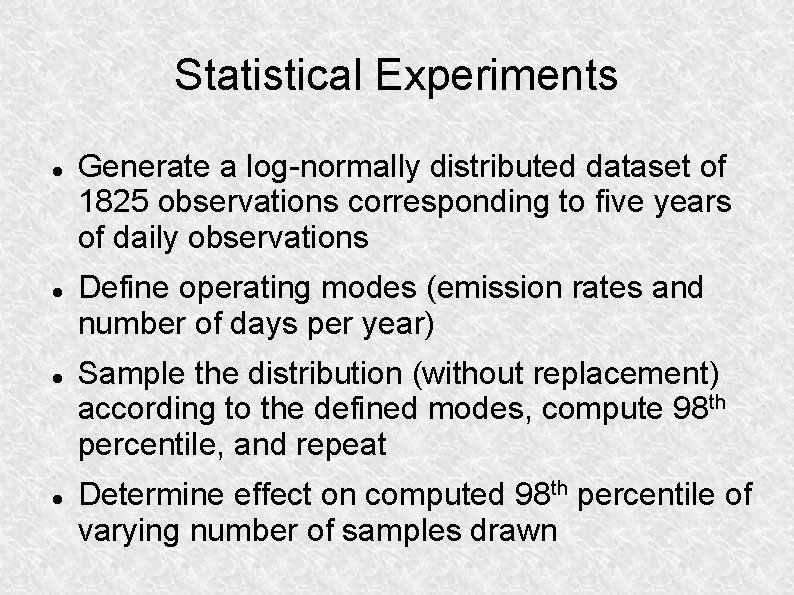
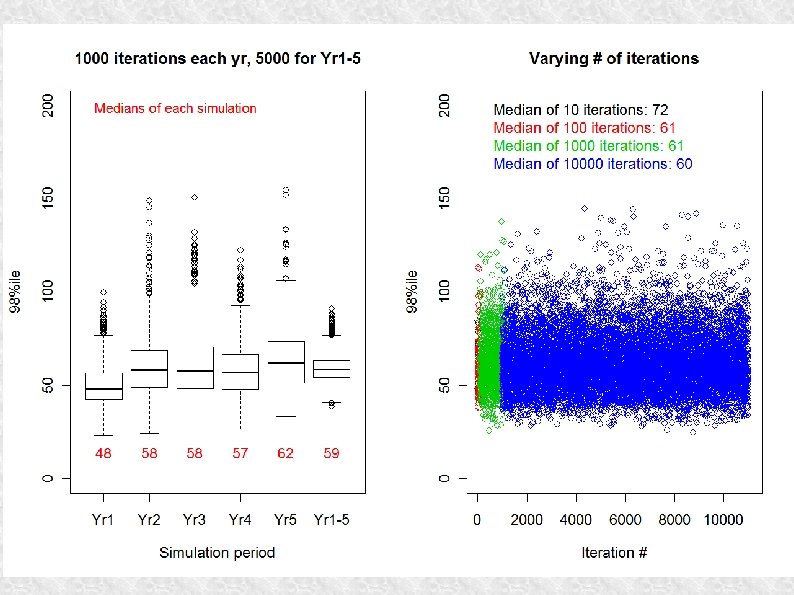
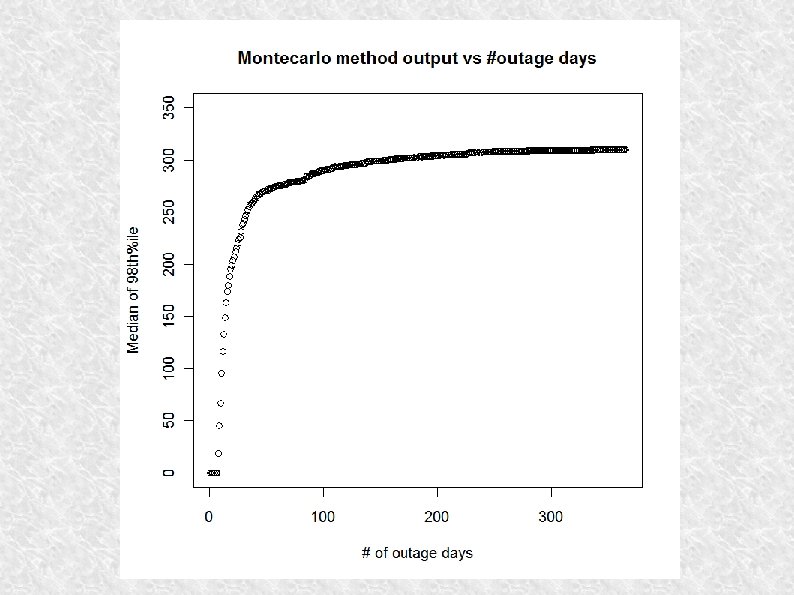
Statistical Experiments Generate a log-normally distributed dataset of 1825 observations corresponding to five years of daily observations Define operating modes (emission rates and number of days per year) Sample the distribution (without replacement) according to the defined modes, compute 98 th percentile, and repeat Determine effect on computed 98 th percentile of varying number of samples drawn
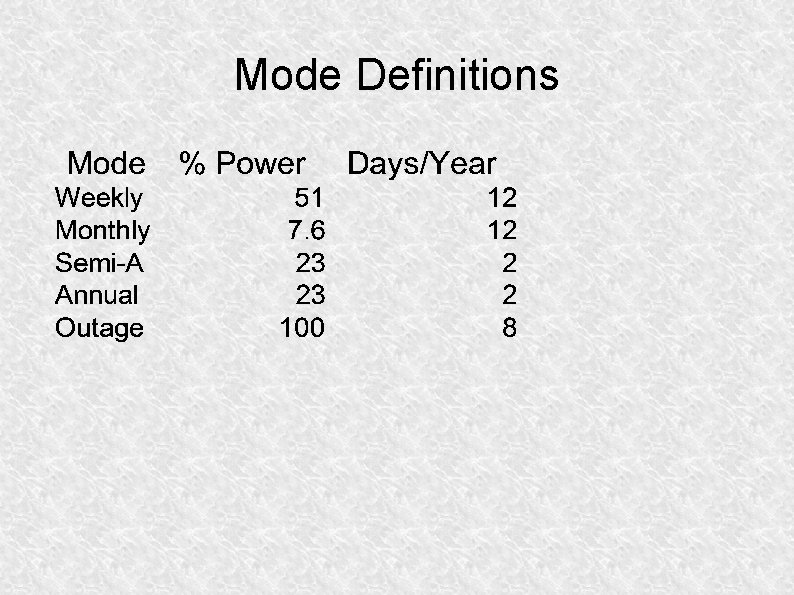
Mode Definitions
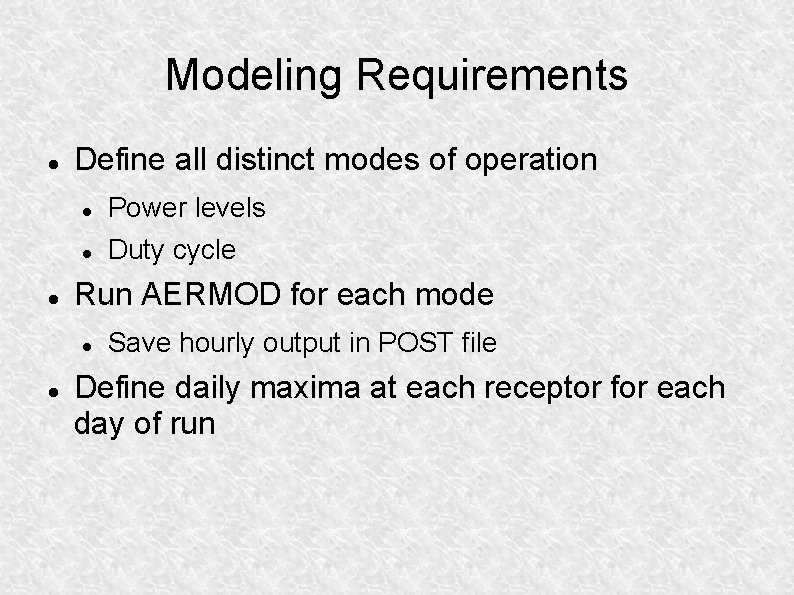
Modeling Requirements Define all distinct modes of operation Power levels Duty cycle Run AERMOD for each mode Save hourly output in POST file Define daily maxima at each receptor for each day of run
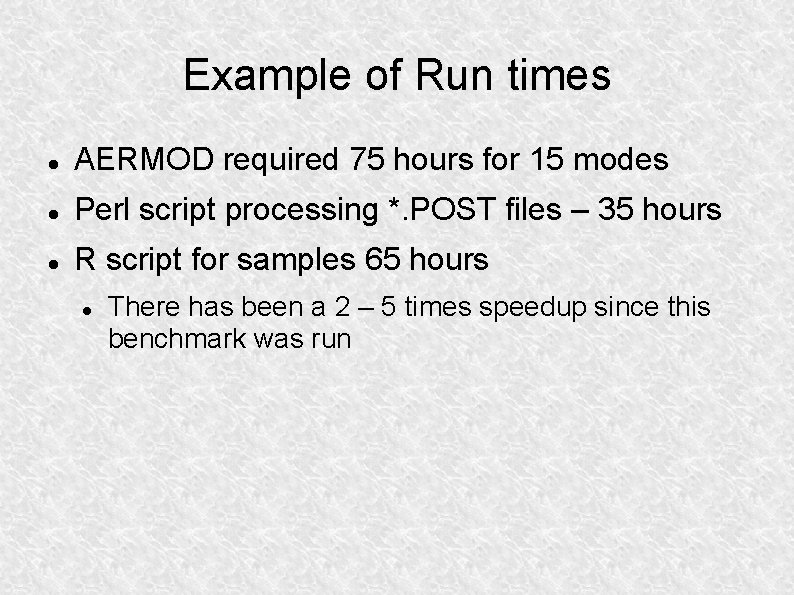
Example of Run times AERMOD required 75 hours for 15 modes Perl script processing *. POST files – 35 hours R script for samples 65 hours There has been a 2 – 5 times speedup since this benchmark was run
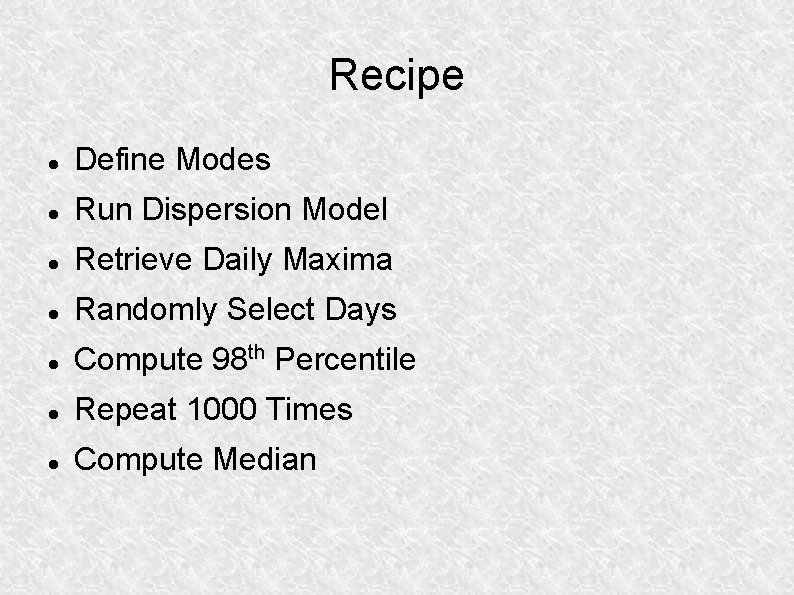
Recipe Define Modes Run Dispersion Model Retrieve Daily Maxima Randomly Select Days Compute 98 th Percentile Repeat 1000 Times Compute Median