
A Model For Understanding Family Systems and Dynamics

- Slides: 17
A Model For Understanding Family Systems and Dynamics Systems theory Dissipative Systems theory l l NURN 308 Professional Seminar for RNs
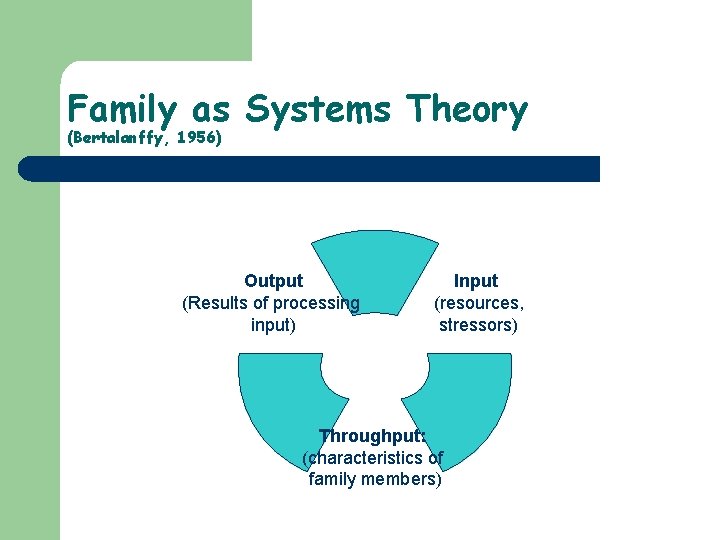
Family as Systems Theory (Bertalanffy, 1956) Output (Results of processing input) Input (resources, stressors) Throughput: (characteristics of family members)
□ Thermodynamically open system Family as □ Operating in disequilibrium Dissipative System □ Exchanges energy, matter, and/or increasing disorder (entropy) □ Spontaneous appearance of symmetry breaking, and formation of complex, sometimes chaotic, structures where interactive particles exhibit relationships. Ilya Perogine, 1977, Nobel prize winner
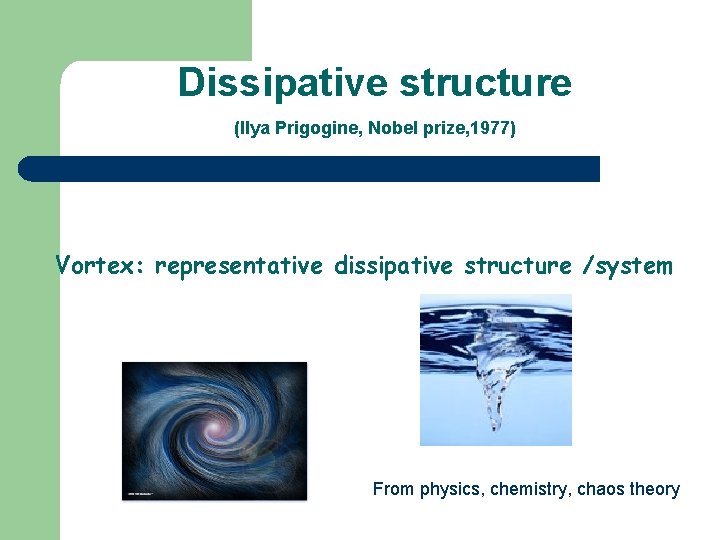
Dissipative structure (Ilya Prigogine, Nobel prize, 1977) Vortex: representative dissipative structure /system From physics, chemistry, chaos theory
Family Roles l Perfect child/hero: role=takes care of; l Lost child: role=good child; l Scapegoat: role=distraction; l Designated problem child; provides crises. l Mascot: role=fun. l Rarely taken seriously; may be baby of the family Sense of worth and success from helping others; successful, but ‘imposter syndrome’ loner; control/comfort through food independent; quiet;
Dysfunctional Family Rules l l l No talk rule: don’t talk, don’t feel, don’t trust Enmeshment…unclear ‘boundaries’ Rationalizing Backlog of emotion Intellectualizing
Historical Therapy Perspectives l l l <50 s, 60 s, 70 s: Sx belonged to only to individual; thus individual therapy. Later 70 s, 80 s: Sx are tactical, i. e. they serve a purpose; intentional Later 80 s and >present: paradigm shift: Sx reside within system; adaptive processes that don’t work (i. e. a component part that doesn’t function); a blockage
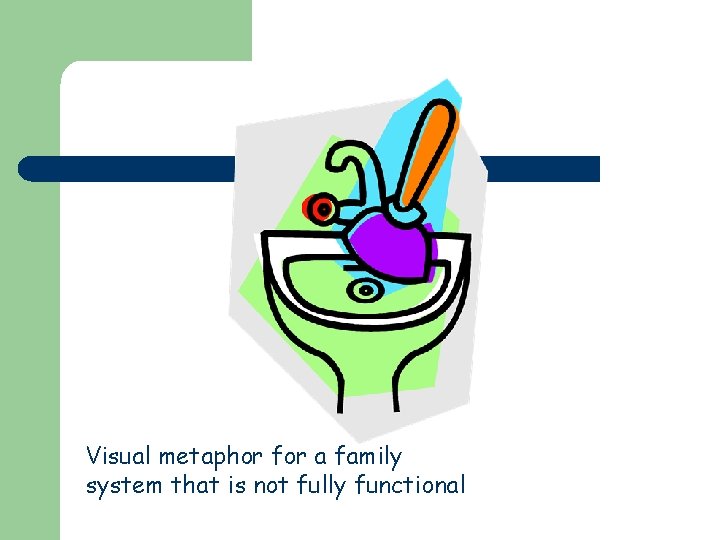
Visual metaphor for a family system that is not fully functional
Recovery l l I didn’t cause it I can’t control it l I can cope
Functional Families l l Homeostatic balance, flexibility Adapts to change Emotional problems function of each member, not just one Emotional contact maintained
Functional Families l l Fusion (boundary issues) avoided Differences encouraged for personal growth Age appropriate responsibility Care taking w/rational thought, affect
What are advantages to using family models?
Today’s Special Recipes: Dinner at the Homesick Restaurant l Crab Salad: Take one mother with an attitude of displaced anger over husband disserting family. Throw in a destroyed family whose emotional well-being has been devastated.
Today’s Specials l 7 Layer Dysfunctional Salad: Lay a bed of displaced anger and isolation, mix in low selfesteem and co-dependence, spread destructive attitudes and a sprinkle of verbal/physical abusiveness. Just enough for a whole family!
Today’s Specials l 3 Mile Island Wings: A physically and emotionally abusive mother, served with Bleu cheese on the side. For the occasional dose of compassion.
Today’s Specials l Upside Down Cake: Because nothing ever seems to go right l Elizabeth Taylor Spritzer: One poorly blended daughter, a dash of marriages with a splash of children
Other theories l l Neugarten: best known for adult development re: events and timing: “on time-off time” concept Erikson Bowen others