
A MIDSUMMER NIGHTS DREAMACT 1 SCENE 1 Imagery
- Slides: 9
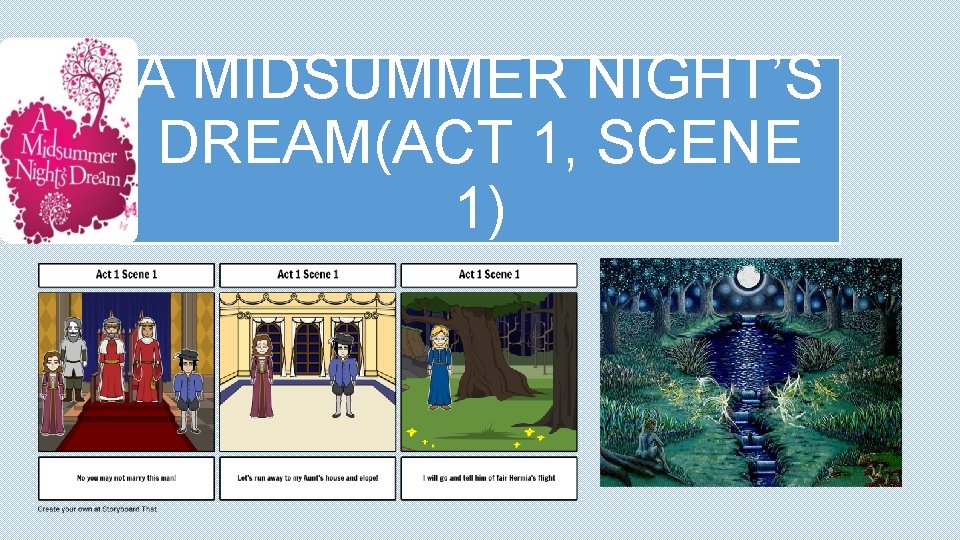
A MIDSUMMER NIGHT’S DREAM(ACT 1, SCENE 1)
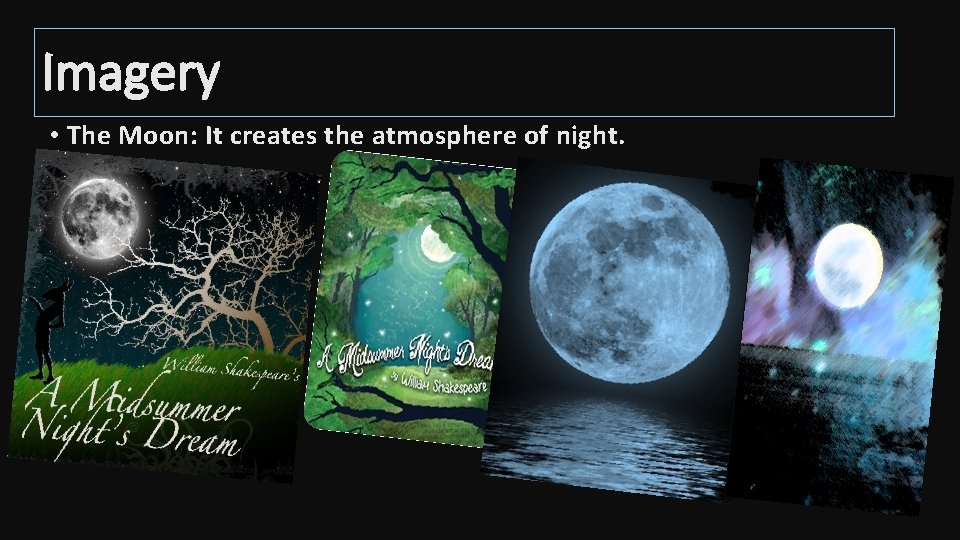
Imagery • The Moon: It creates the atmosphere of night.
MOON QUOTES Now, fair Hippolyta, our nuptial hour Draws on apace. Four happy days bring in Another moon. But, O, methinks how slow This old moon wanes! she lingers my desires Like to a stepdame or a dowager Long withering out a young man's revenue. - Theseus: Theseus Act I. 1. 1 -6 Four nights will quickly dream away And then the moon, like a silver bow New-bent in heaven, Shall behold the night Of our solemnities - Hippolyta
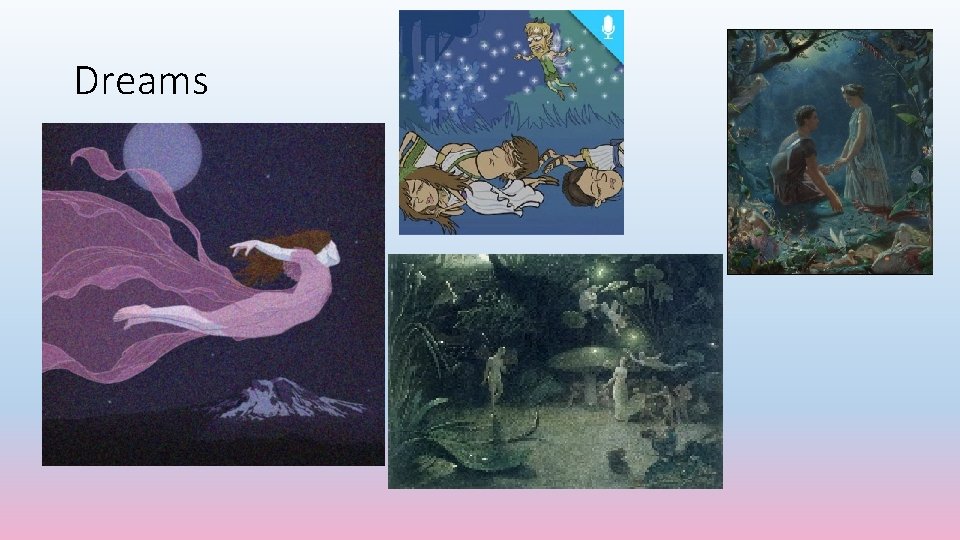
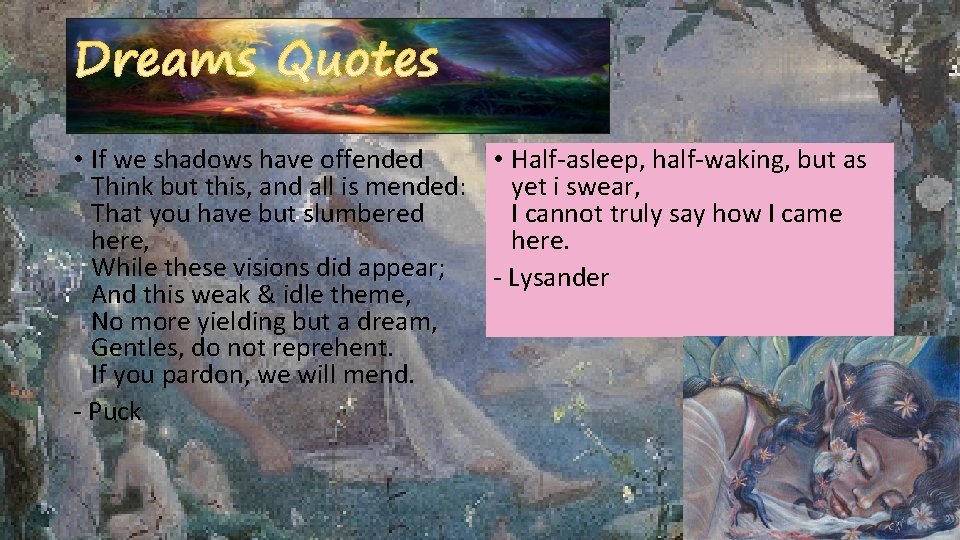
Dreams
• If we shadows have offended • Half-asleep, half-waking, but as Think but this, and all is mended: yet i swear, That you have but slumbered I cannot truly say how I came here, here. While these visions did appear; - Lysander And this weak & idle theme, No more yielding but a dream, Gentles, do not reprehent. If you pardon, we will mend. - Puck
Examples of forms of Irony: Situational, Verbal, and Dramatic irony • "Hippolyta, I wooed thee with my sword and won thy love doing thee injuries " (I. i. 17 -8) • "I give him curses, yet he gives me love" (I. i. 201) • "The more I hate him, the more he follows me around" (I. i. 203) • "Fear not, my lord. Your servant shall do so!" (II. . ii. 276)- Said by Puck who the audience knows to be a mischievous character. • "I see their knavery. This is to make an ass of me, to / fright me, if they could“- Bottom
Examples of Allusion: My good Lysander! I swear to thee, by Cupid's strongest bow, By his best arrow, with the golden head, By the simplicity of Venus' doves, By that which knitteth souls and prospers loves, And by that fire which burn'd the Carthage Queen, When the false Trojan under sail was seen, By all the vows that ever men have broke, In number more than ever women spoke, In that same place thou hast appointed me, Tomorrow truly will I meet with thee. This is an allusion to Vergil's Aeneid, in which he describes Dido's love for Aeneas, a Trojan hero. The fire and burning here refers to what happens when Aeneas sails away for Italy: Dido, the Carthage Queen, throws herself onto a burning funeral pyre. Hermia uses these allusions, vows, and devotional words to strengthen the promise she makes to meet Lysander in the forest.
ALLUSIONS CONTINUED "Cupid, all armed. A certain aim he took At a fair vestal thronéd by the west" "Apollo flies and Daphne holds the chase The dove pursues the griffin, in the mild hind“ -Hermia is telling Lysander that she loves him by saying that she has been struck by Cupid's golden tipped arrow (the one that causes love) "This was lofty! Now name the rest of the players. This is Ercles' vein, a tyrant's vein. A lover is more condoling. "
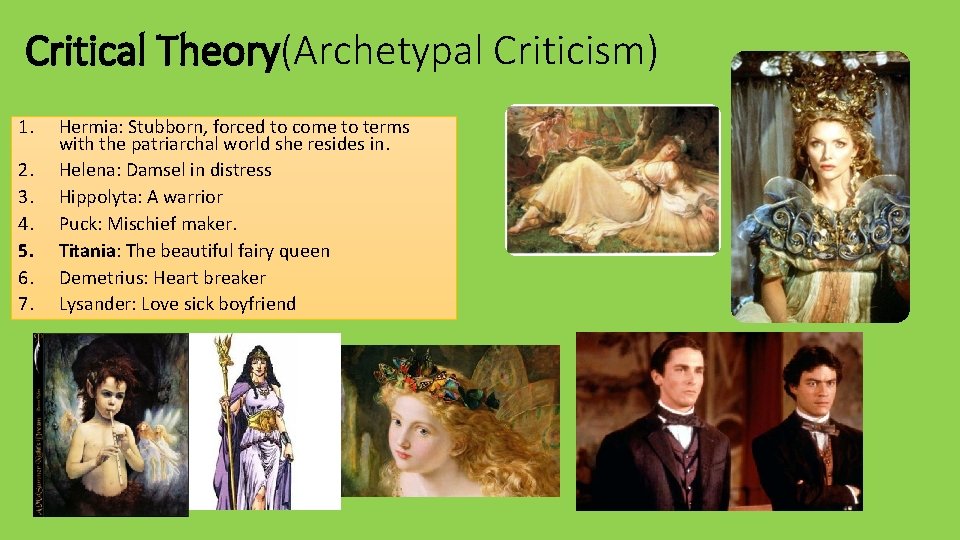
Critical Theory(Archetypal Criticism) 1. 2. 3. 4. 5. 6. 7. Hermia: Stubborn, forced to come to terms with the patriarchal world she resides in. Helena: Damsel in distress Hippolyta: A warrior Puck: Mischief maker. Titania: The beautiful fairy queen Demetrius: Heart breaker Lysander: Love sick boyfriend