
A Microbenchmark Suite for AMD GPUs Ryan Taylor
A Micro-benchmark Suite for AMD GPUs Ryan Taylor Xiaoming Li
Motivation • To understand behavior of major kernel characteristics – – – ALU: Fetch Ratio Read Latency Write Latency Register Usage Domain Size Cache Effect • Use micro-benchmarks as guidelines for general optimizations • Little to no useful micro-benchmarks exist for AMD GPUs • Look at multiple generations of AMD GPU (RV 670, RV 770, RV 870)
Hardware Background • Current AMD GPU: – Scalable SIMD (Compute) Engines: • Thread processors per SIMD engine – RV 770 and RV 870 => 16 TPs/SIMD engine – 5 -wide VLIW processors (compute cores) – Threads run in Wavefronts • Multiple threads per Wavefront depending on architecture – RV 770 and RV 870 => 64 Threads/Wavefront • Threads organized into quads per thread processor • Two Wavefront slots/SIMD engine (odd and even)
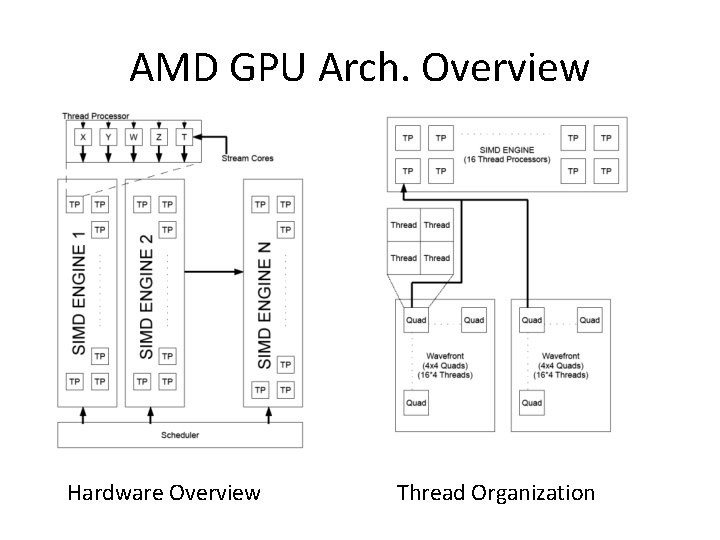
AMD GPU Arch. Overview Hardware Overview Thread Organization
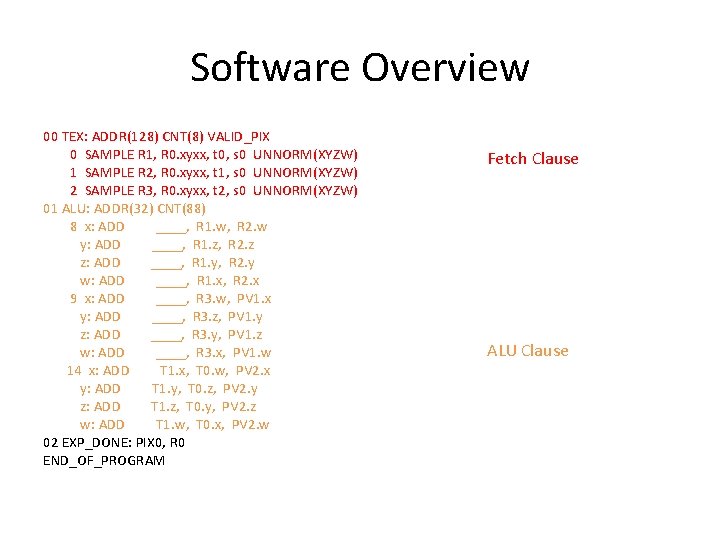
Software Overview 00 TEX: ADDR(128) CNT(8) VALID_PIX 0 SAMPLE R 1, R 0. xyxx, t 0, s 0 UNNORM(XYZW) 1 SAMPLE R 2, R 0. xyxx, t 1, s 0 UNNORM(XYZW) 2 SAMPLE R 3, R 0. xyxx, t 2, s 0 UNNORM(XYZW) 01 ALU: ADDR(32) CNT(88) 8 x: ADD ____, R 1. w, R 2. w y: ADD ____, R 1. z, R 2. z z: ADD ____, R 1. y, R 2. y w: ADD ____, R 1. x, R 2. x 9 x: ADD ____, R 3. w, PV 1. x y: ADD ____, R 3. z, PV 1. y z: ADD ____, R 3. y, PV 1. z w: ADD ____, R 3. x, PV 1. w 14 x: ADD T 1. x, T 0. w, PV 2. x y: ADD T 1. y, T 0. z, PV 2. y z: ADD T 1. z, T 0. y, PV 2. z w: ADD T 1. w, T 0. x, PV 2. w 02 EXP_DONE: PIX 0, R 0 END_OF_PROGRAM Fetch Clause ALU Clause
Code Generation • Use CAL/IL (Compute Abstraction Layer/Intermediate Language) – CAL: API interface to GPU – IL: Intermediate Language • Virtual registers – Low level programmable GPGPU solution for AMD GPUs – Greater control of CAL compiler produced ISA – Greater control of register usage • Each benchmark uses the same pattern of operations (register usage differs slightly)
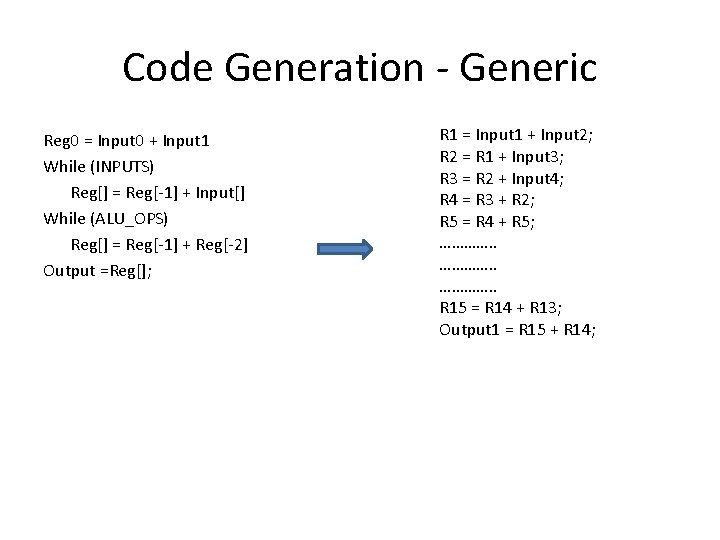
Code Generation - Generic Reg 0 = Input 0 + Input 1 While (INPUTS) Reg[] = Reg[-1] + Input[] While (ALU_OPS) Reg[] = Reg[-1] + Reg[-2] Output =Reg[]; R 1 = Input 1 + Input 2; R 2 = R 1 + Input 3; R 3 = R 2 + Input 4; R 4 = R 3 + R 2; R 5 = R 4 + R 5; …………. . R 15 = R 14 + R 13; Output 1 = R 15 + R 14;
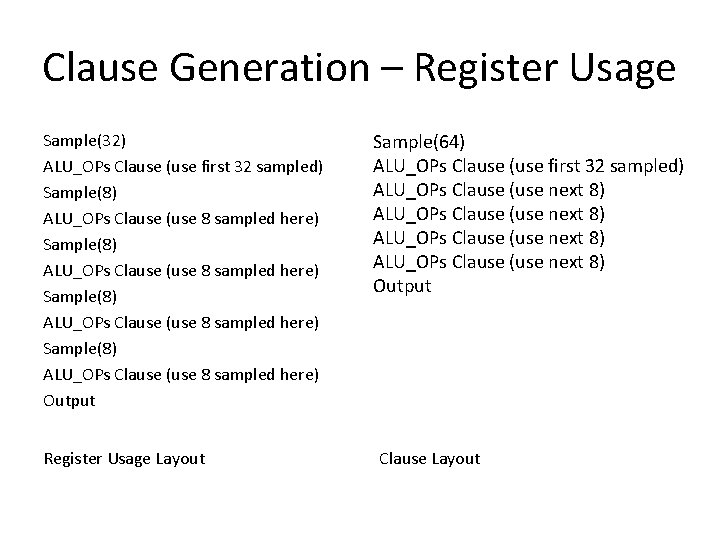
Clause Generation – Register Usage Sample(32) ALU_OPs Clause (use first 32 sampled) Sample(8) ALU_OPs Clause (use 8 sampled here) Output Register Usage Layout Sample(64) ALU_OPs Clause (use first 32 sampled) ALU_OPs Clause (use next 8) Output Clause Layout
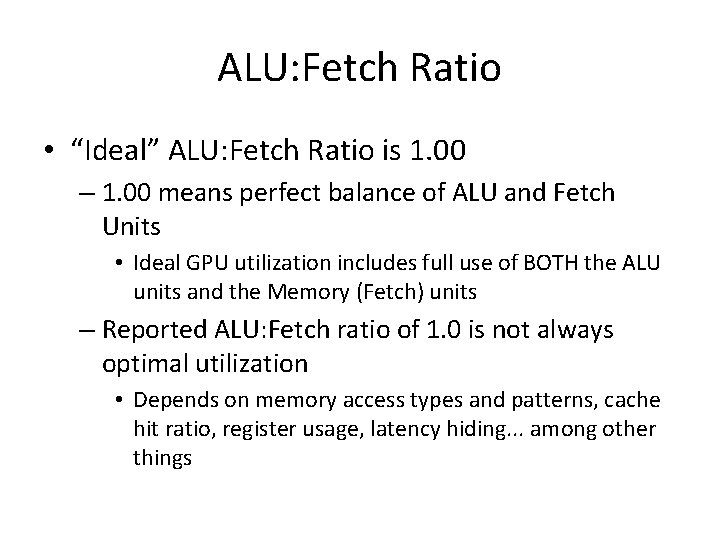
ALU: Fetch Ratio • “Ideal” ALU: Fetch Ratio is 1. 00 – 1. 00 means perfect balance of ALU and Fetch Units • Ideal GPU utilization includes full use of BOTH the ALU units and the Memory (Fetch) units – Reported ALU: Fetch ratio of 1. 0 is not always optimal utilization • Depends on memory access types and patterns, cache hit ratio, register usage, latency hiding. . . among other things
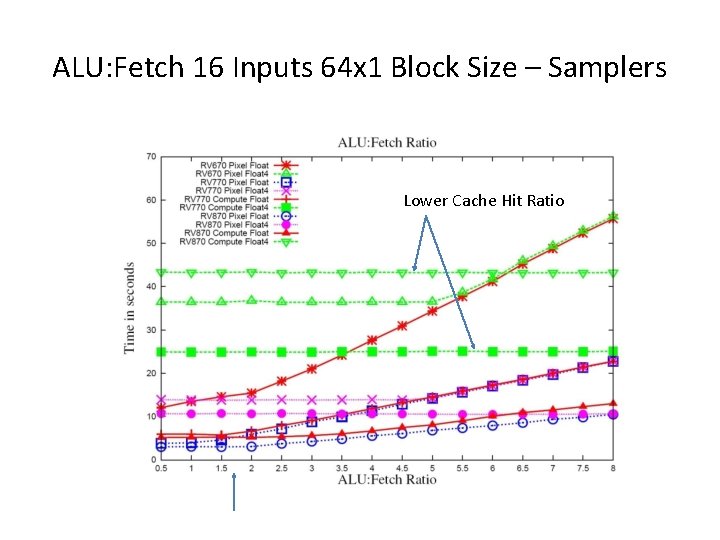
ALU: Fetch 16 Inputs 64 x 1 Block Size – Samplers Lower Cache Hit Ratio
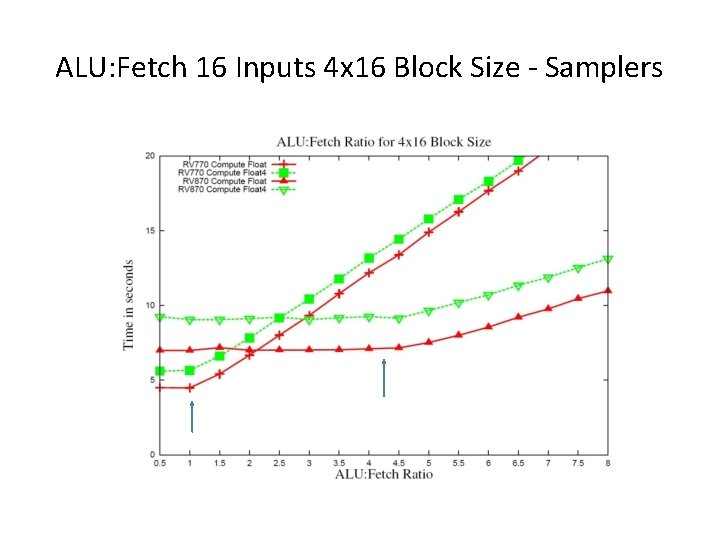
ALU: Fetch 16 Inputs 4 x 16 Block Size - Samplers
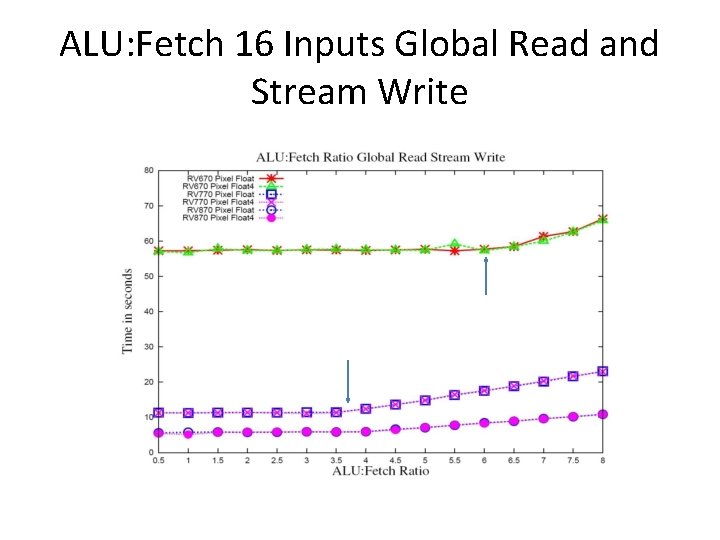
ALU: Fetch 16 Inputs Global Read and Stream Write
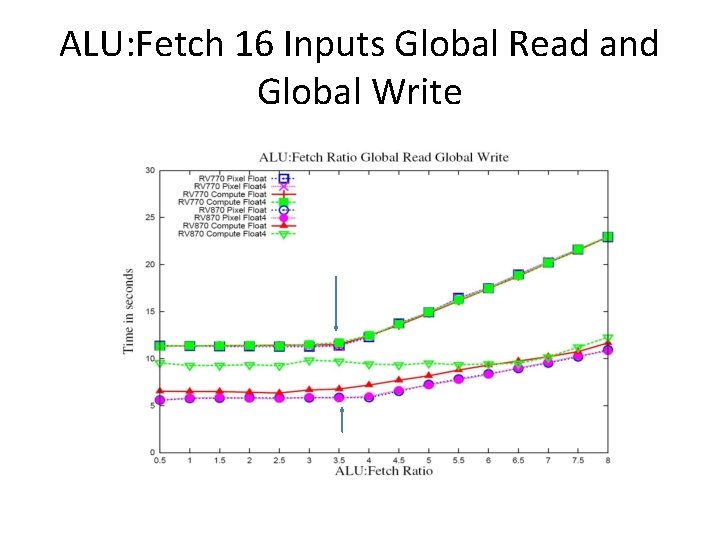
ALU: Fetch 16 Inputs Global Read and Global Write
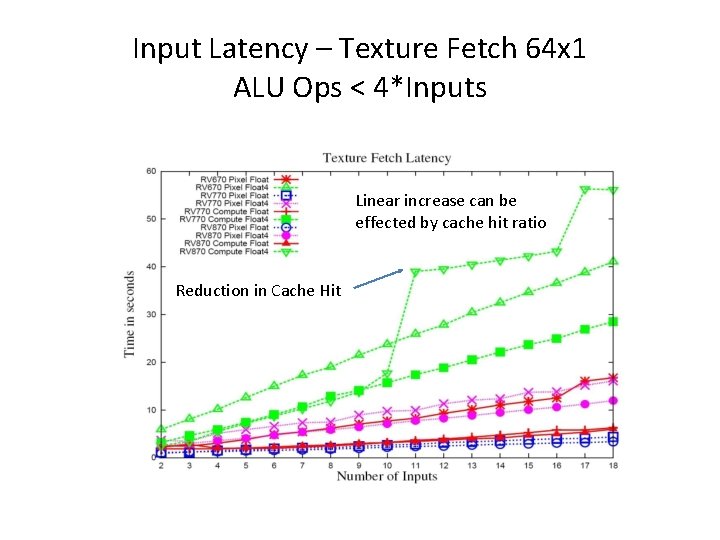
Input Latency – Texture Fetch 64 x 1 ALU Ops < 4*Inputs Linear increase can be effected by cache hit ratio Reduction in Cache Hit
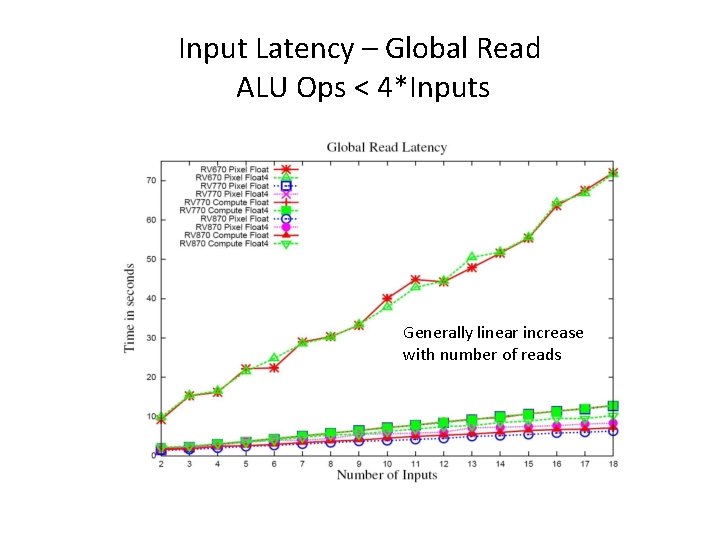
Input Latency – Global Read ALU Ops < 4*Inputs Generally linear increase with number of reads
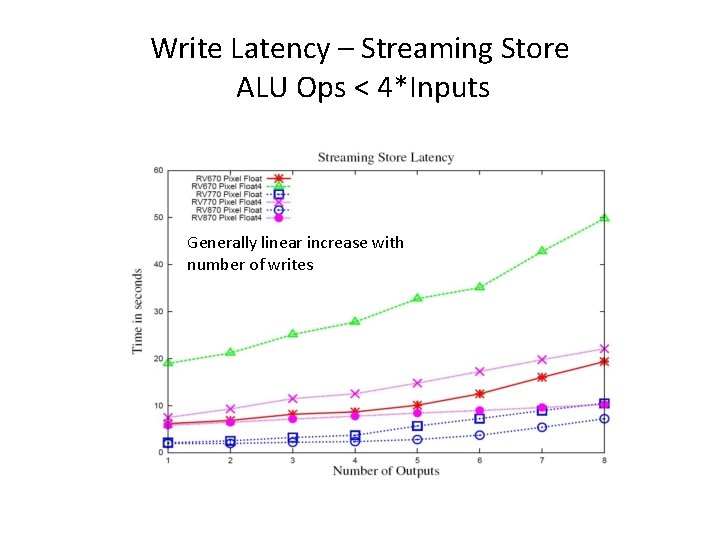
Write Latency – Streaming Store ALU Ops < 4*Inputs Generally linear increase with number of writes
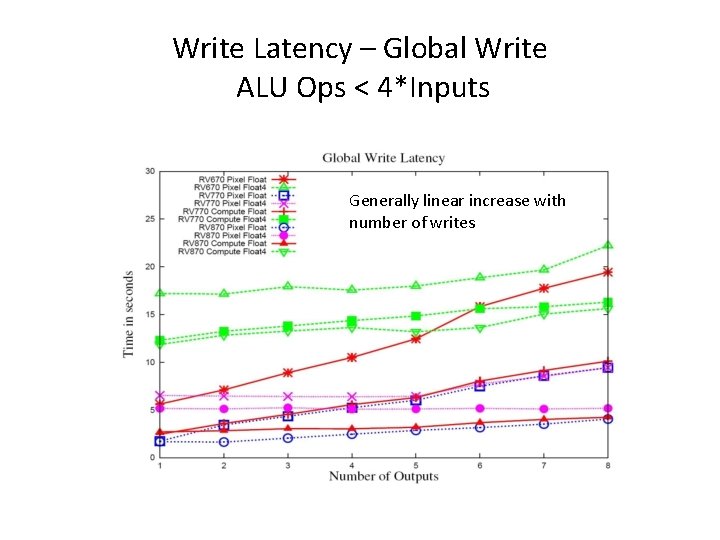
Write Latency – Global Write ALU Ops < 4*Inputs Generally linear increase with number of writes
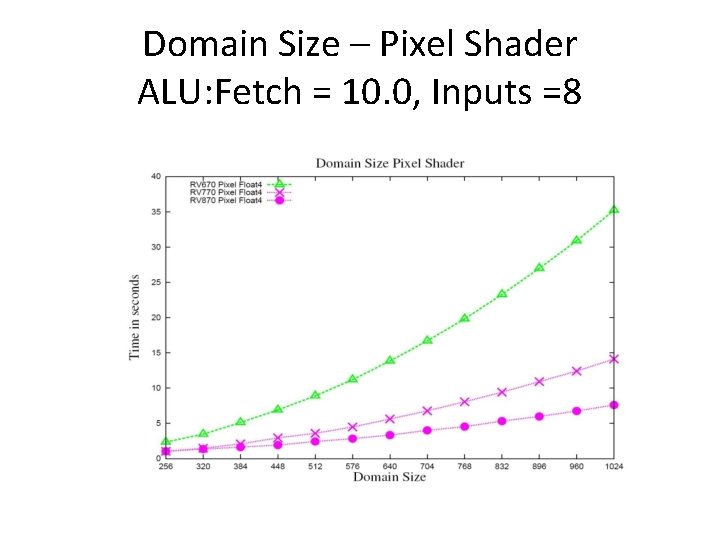
Domain Size – Pixel Shader ALU: Fetch = 10. 0, Inputs =8
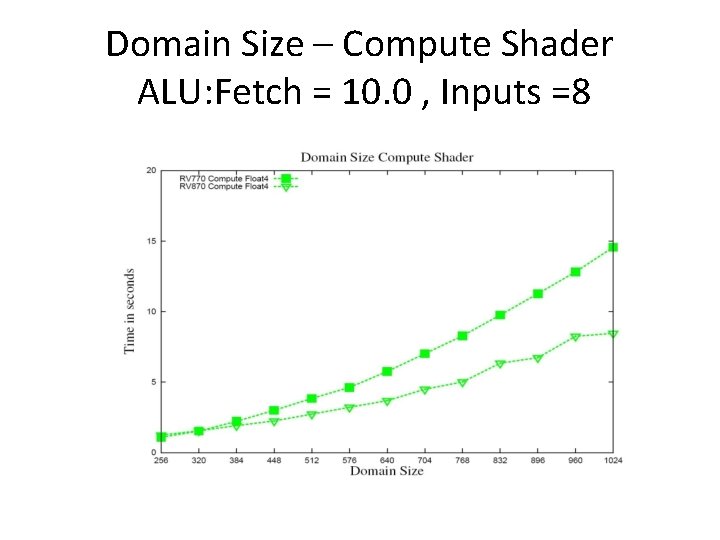
Domain Size – Compute Shader ALU: Fetch = 10. 0 , Inputs =8
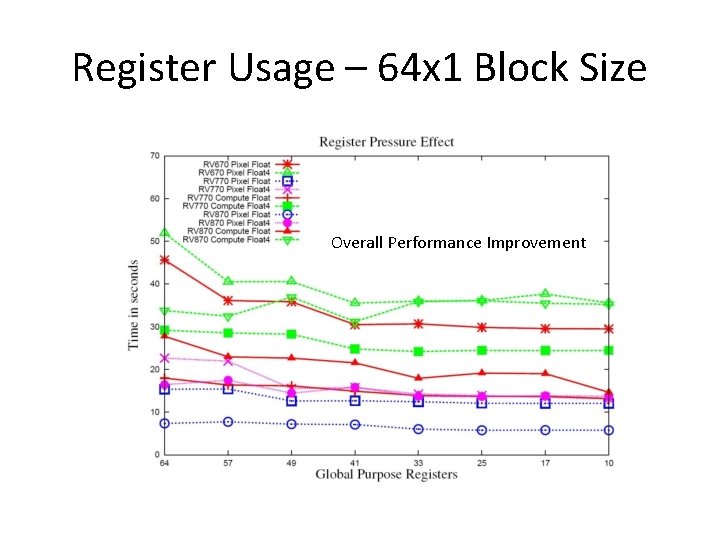
Register Usage – 64 x 1 Block Size Overall Performance Improvement
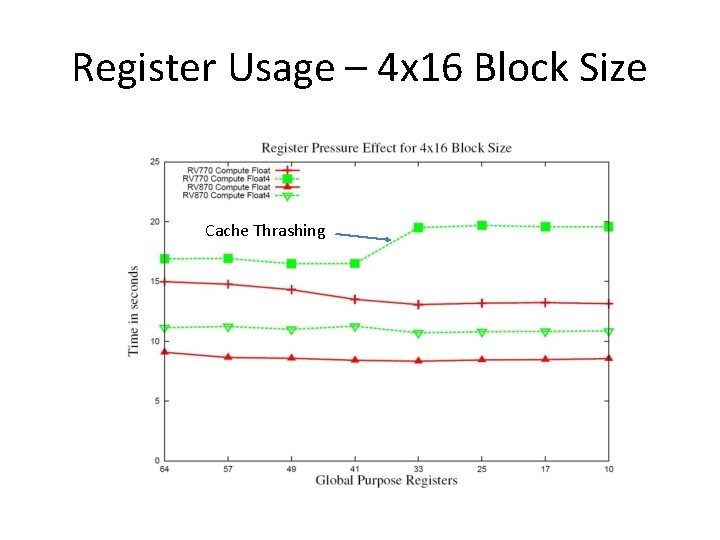
Register Usage – 4 x 16 Block Size Cache Thrashing
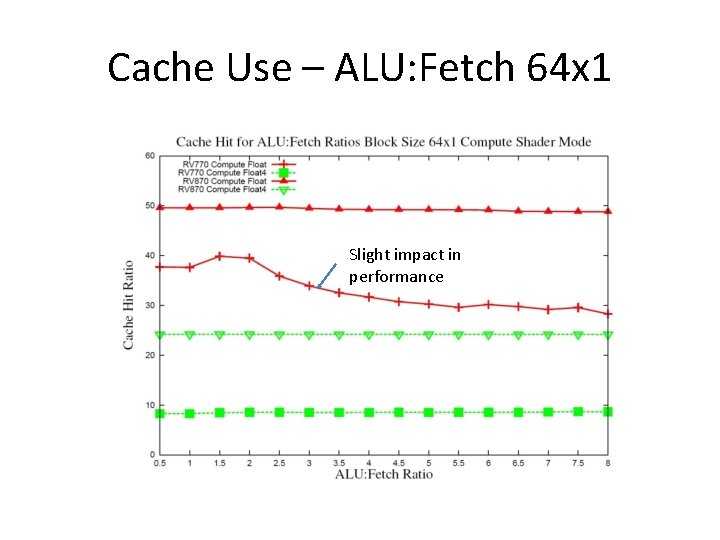
Cache Use – ALU: Fetch 64 x 1 Slight impact in performance
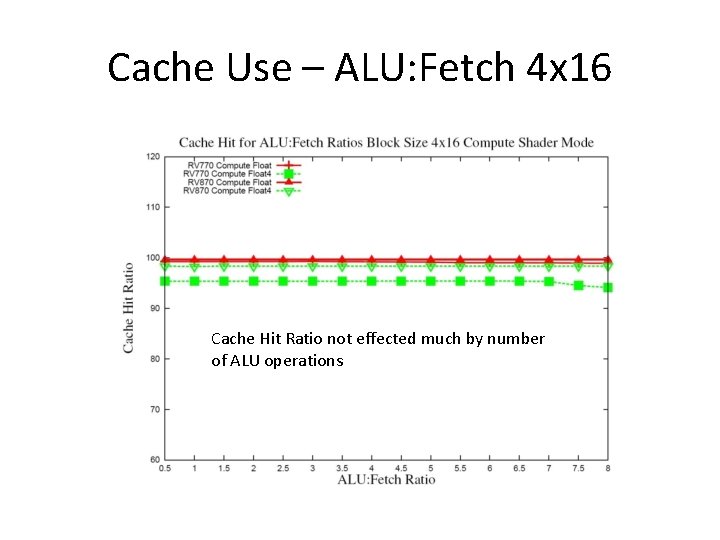
Cache Use – ALU: Fetch 4 x 16 Cache Hit Ratio not effected much by number of ALU operations
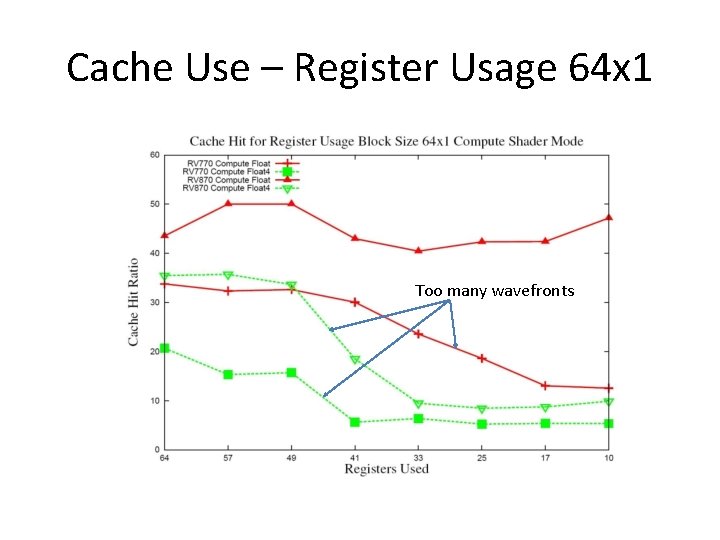
Cache Use – Register Usage 64 x 1 Too many wavefronts
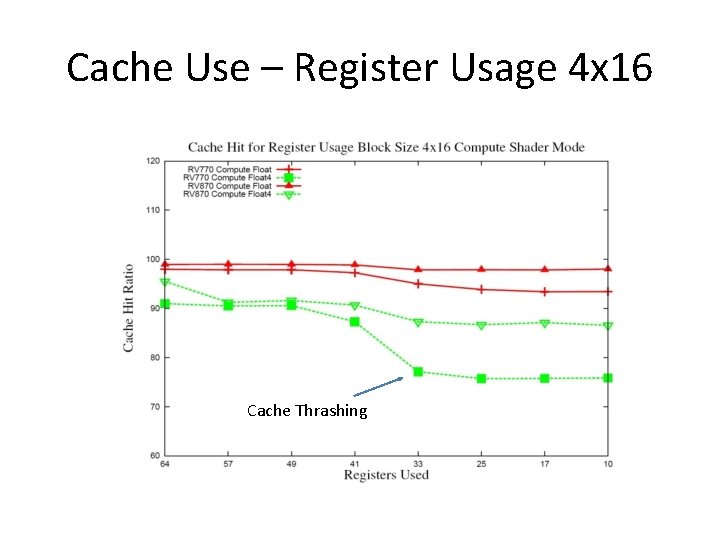
Cache Use – Register Usage 4 x 16 Cache Thrashing
Conclusion/Future Work • Conclusion – Attempt to understand behavior based on program characteristics, not specific algorithm • Gives guidelines for more general optimizations – Look at major kernel characteristics • Some features maybe driver/compiler limited and not necessarily hardware limited – Can vary somewhat among versions from driver to driver or compiler to compiler • Future Work – More details such as Local Data Store, Block Size and Wavefronts effects – Analyze more configurations – Build predictable micro-benchmarks for higher level language (ex. Open. CL) – Continue to update behavior with current drivers
- Slides: 26