
A Methodology For Translation JeanPaul Vinay Jean Darbelnet
A Methodology For Translation Jean-Paul Vinay & Jean Darbelnet Teti Sumarni 1102601

Direct & Oblique Translation Direct Translation Borrowing Calque Literal Translation Oblique Translation Transposition Modulation Equivalence Adaptation
Borrowing A word taken directly from another language, e. g. , the English word bulldozer pure borrowing (Rice Cooker) naturalized borrowing (Computer-komputer)
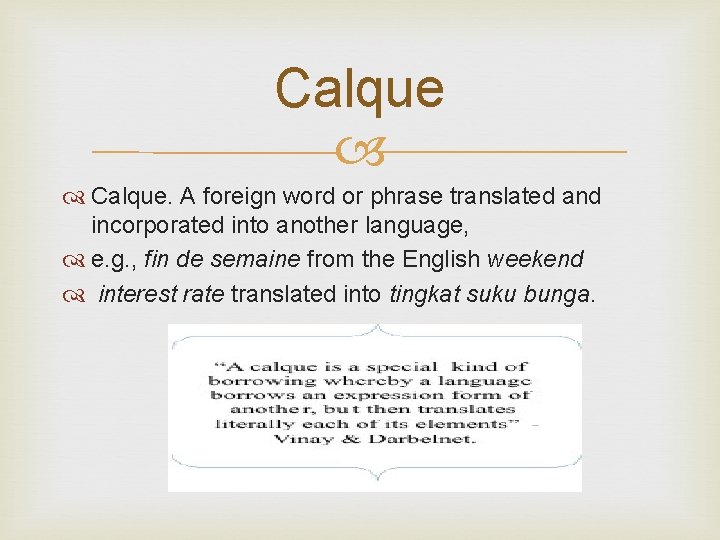
Calque. A foreign word or phrase translated and incorporated into another language, e. g. , fin de semaine from the English weekend interest rate translated into tingkat suku bunga.
Literal Translation Terjemahan Harfiah Literal translation. Word for word translation, e. g. , The ink is on the table and L’encre est sur la table. Literal translation translates the meaning of every word in the original language, understood correctly in context, into its nearest English equivalent, and attempts to express the result with ordinary English word order and style, as far as that is possible without distorting the meaning of the original. The main point is that essentially literal translations attempt to represent the meaning of every word in the original in some way or other in the resulting translation.
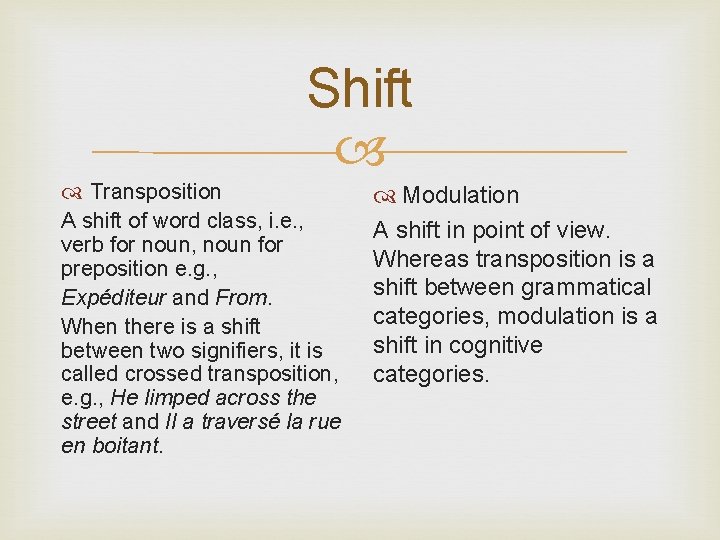
Shift Transposition A shift of word class, i. e. , verb for noun, noun for preposition e. g. , Expéditeur and From. When there is a shift between two signifiers, it is called crossed transposition, e. g. , He limped across the street and Il a traversé la rue en boitant. Modulation A shift in point of view. Whereas transposition is a shift between grammatical categories, modulation is a shift in cognitive categories.
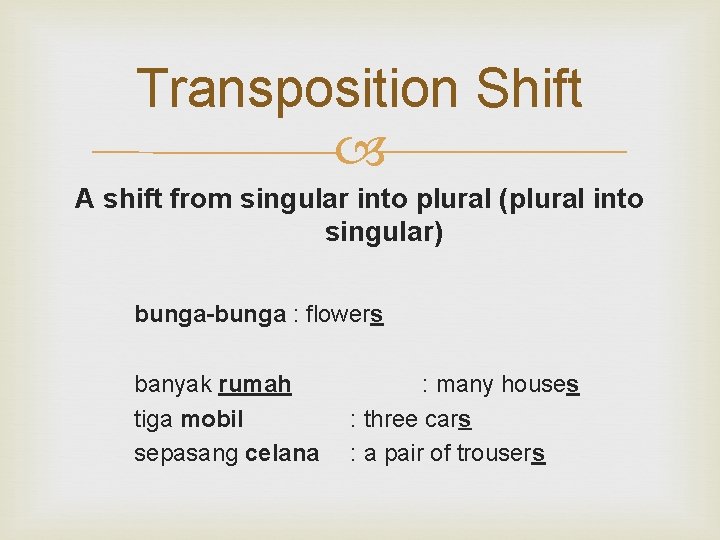
Transposition Shift A shift from singular into plural (plural into singular) bunga-bunga : flowers banyak rumah tiga mobil sepasang celana : many houses : three cars : a pair of trousers
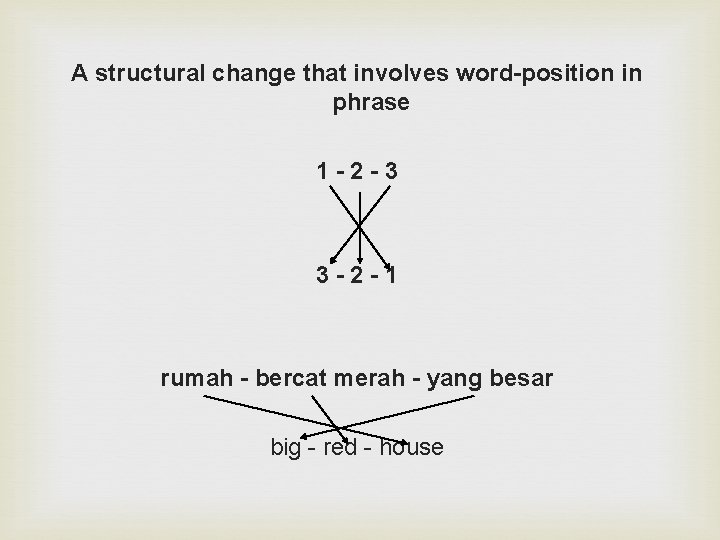
A structural change that involves word-position in phrase 1 -2 -3 3 -2 -1 rumah - bercat merah - yang besar big - red - house
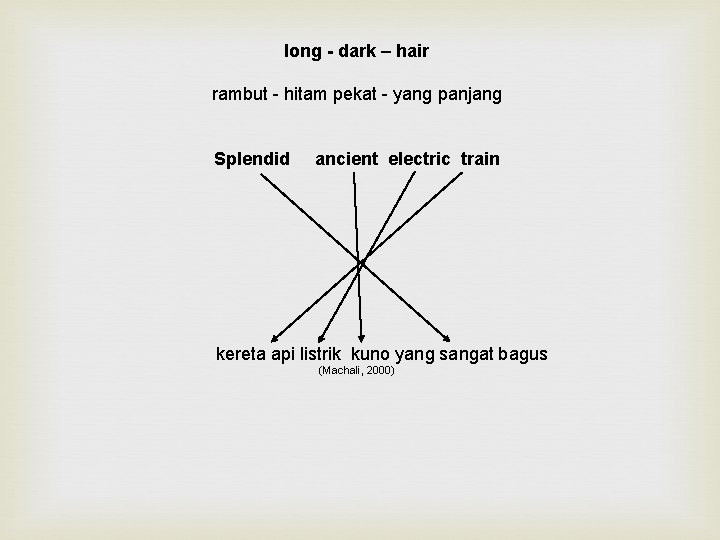
long - dark – hair rambut - hitam pekat - yang panjang Splendid ancient electric train kereta api listrik kuno yang sangat bagus (Machali, 2000)
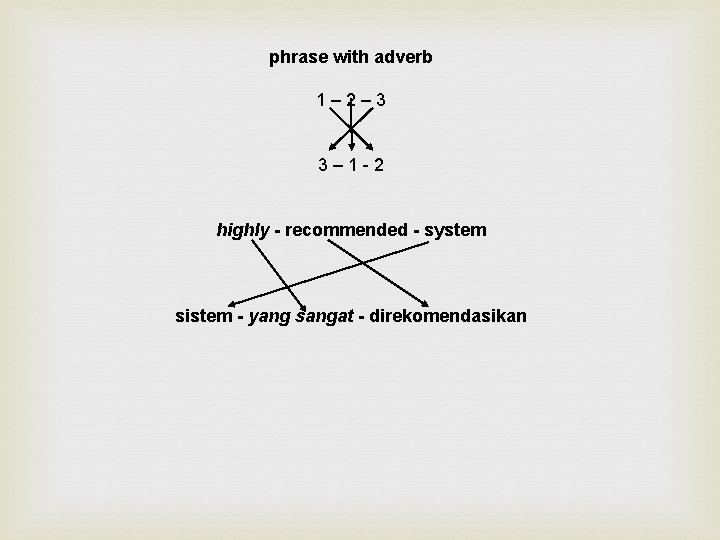
phrase with adverb 1– 2– 3 3– 1 -2 highly - recommended - system sistem - yang sangat - direkomendasikan
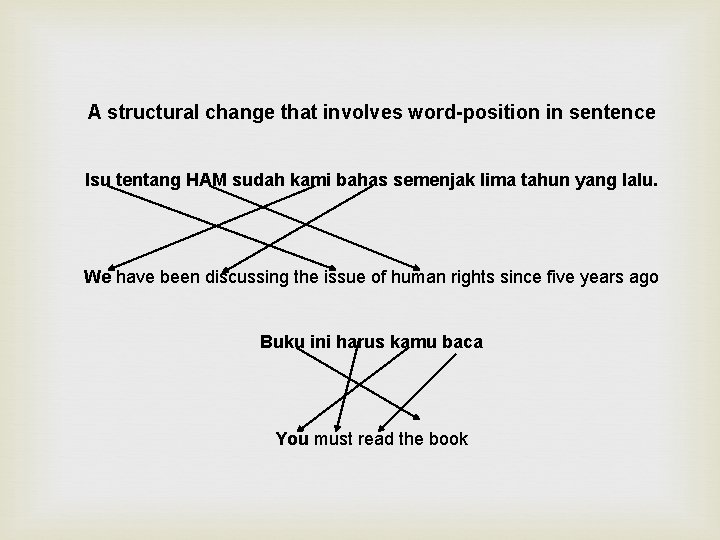
A structural change that involves word-position in sentence Isu tentang HAM sudah kami bahas semenjak lima tahun yang lalu. We have been discussing the issue of human rights since five years ago Buku ini harus kamu baca You must read the book
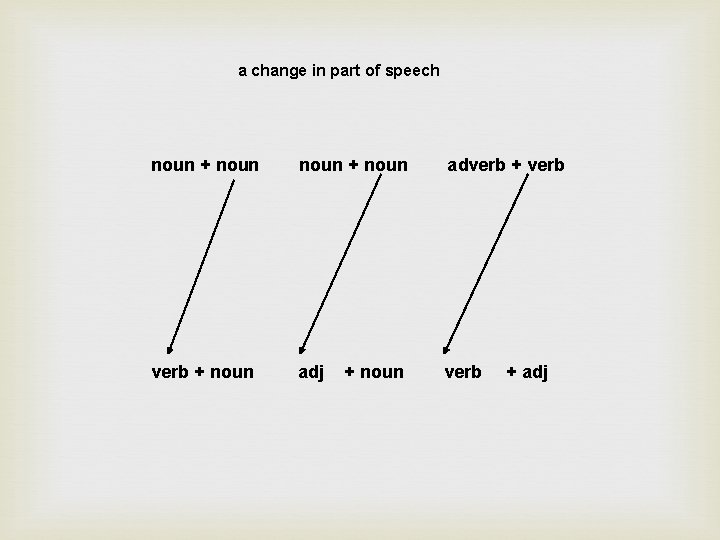
a change in part of speech noun + noun adverb + noun adj verb + noun + adj
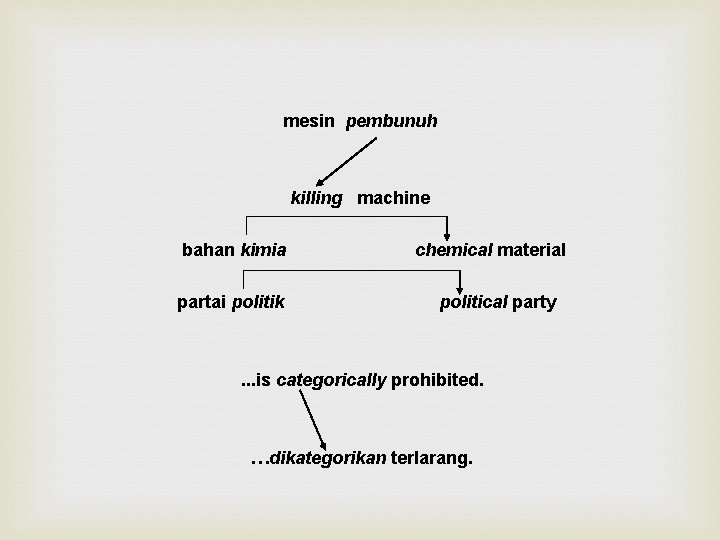
mesin pembunuh killing machine bahan kimia partai politik chemical material political party . . . is categorically prohibited. …dikategorikan terlarang.
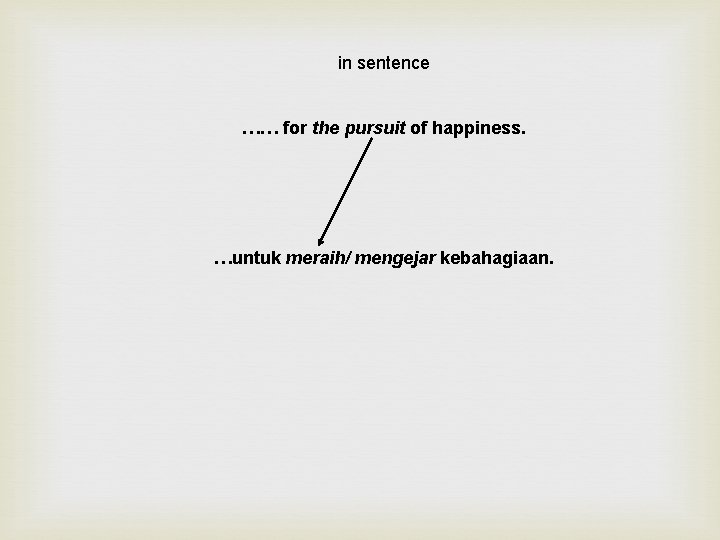
in sentence …… for the pursuit of happiness. …untuk meraih/ mengejar kebahagiaan.
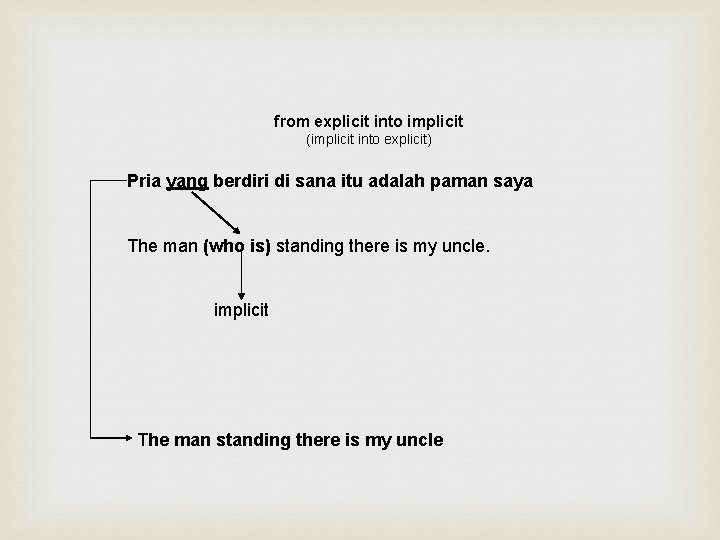
from explicit into implicit (implicit into explicit) Pria yang berdiri di sana itu adalah paman saya The man (who is) standing there is my uncle. implicit The man standing there is my uncle
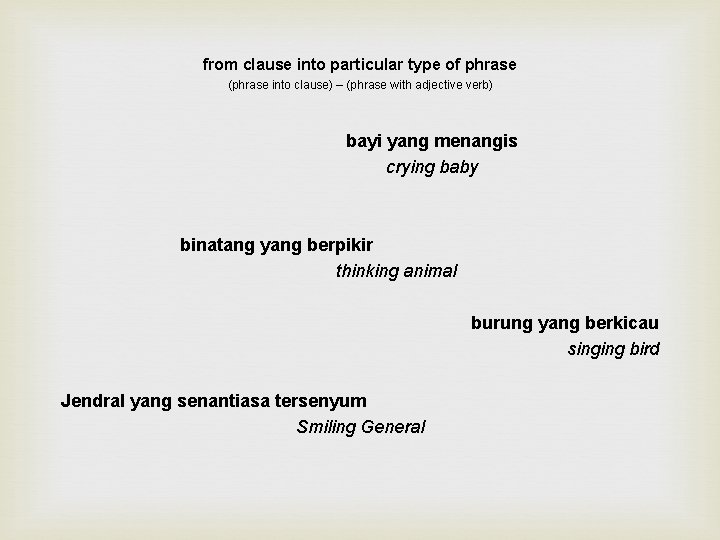
from clause into particular type of phrase (phrase into clause) – (phrase with adjective verb) bayi yang menangis crying baby binatang yang berpikir thinking animal burung yang berkicau singing bird Jendral yang senantiasa tersenyum Smiling General
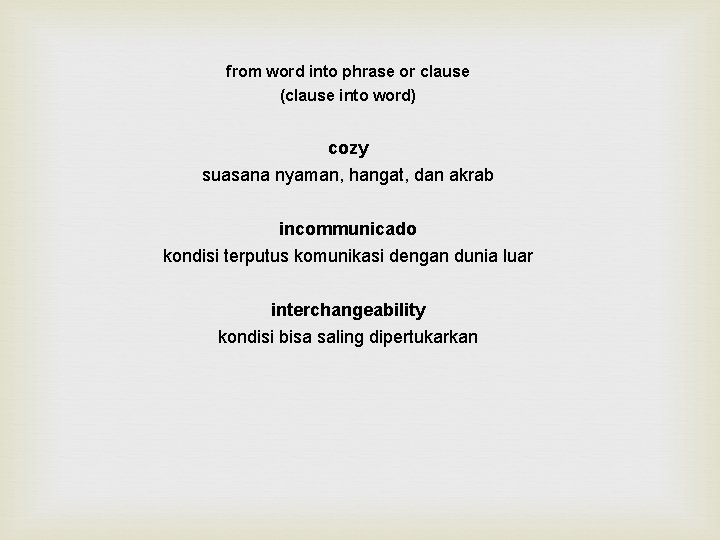
from word into phrase or clause (clause into word) cozy suasana nyaman, hangat, dan akrab incommunicado kondisi terputus komunikasi dengan dunia luar interchangeability kondisi bisa saling dipertukarkan
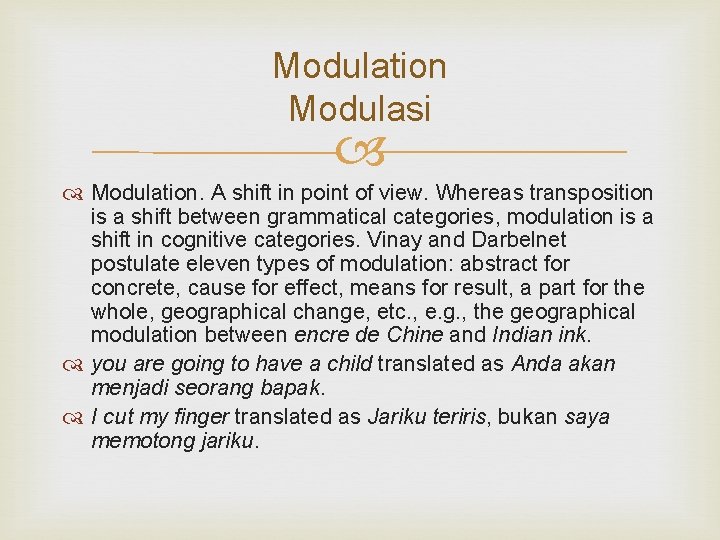
Modulation Modulasi Modulation. A shift in point of view. Whereas transposition is a shift between grammatical categories, modulation is a shift in cognitive categories. Vinay and Darbelnet postulate eleven types of modulation: abstract for concrete, cause for effect, means for result, a part for the whole, geographical change, etc. , e. g. , the geographical modulation between encre de Chine and Indian ink. you are going to have a child translated as Anda akan menjadi seorang bapak. I cut my finger translated as Jariku teriris, bukan saya memotong jariku.
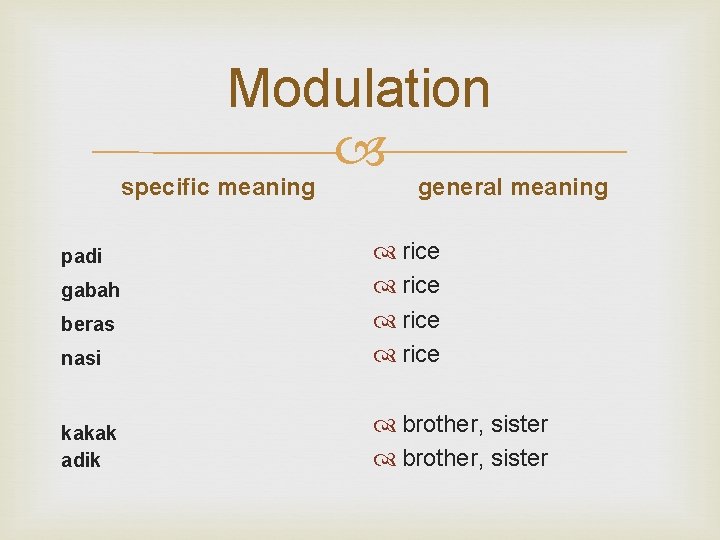
Modulation specific meaning general meaning nasi rice kakak adik brother, sister padi gabah beras
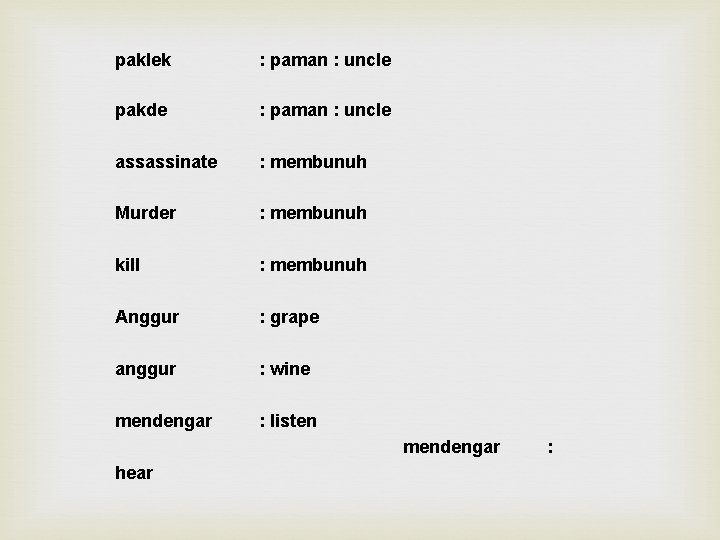
paklek : paman : uncle pakde : paman : uncle assassinate : membunuh Murder : membunuh kill : membunuh Anggur : grape anggur : wine mendengar : listen mendengar hear :
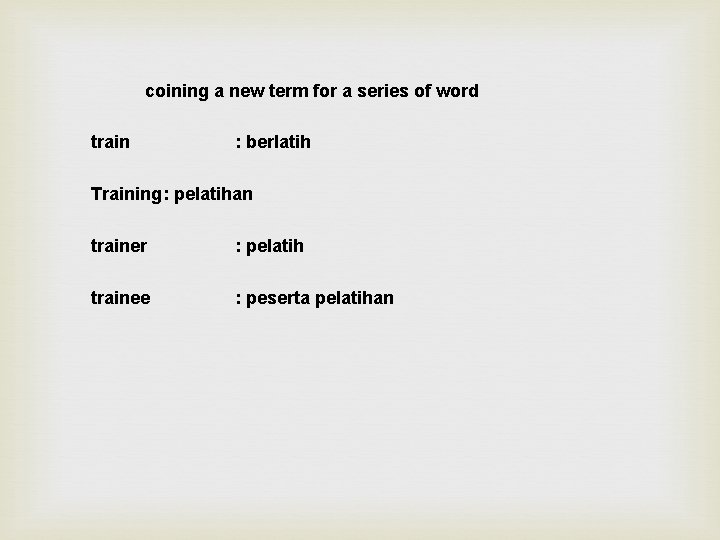
coining a new term for a series of word train : berlatih Training: pelatihan trainer : pelatih trainee : peserta pelatihan
Equivalence. This accounts for the same situation using a completely different phrase, e. g. , the translation of proverbs or idiomatic expressions like, Comme un chien dans un jeu de quilles and Like a bull in a china shop. Vinay and Darbelnet view equivalence-oriented translation as a procedure which replicates the same situation as in the original, whilst using completely different wording. They also suggest that, if this procedure is applied during the translation process, it can maintain the stylistic impact of the SL text in the TL text.

Adaptation. A shift in cultural environment, i. e. , to express the message using a different situation, e. g. cycling for the French, cricket for the English and baseball for the. Americans. Re-writing process of the source text into the target text. Usually applied in translating poetry and drama Replacing cultural elements of the source language by the cultural equivalence in the target language. Example: as white as snow ----- seputih kapas, not seputih salju as snow is not familiar in the target language.

Thank You
- Slides: 24