
A method of study combining words and images
A method of study combining words and images.
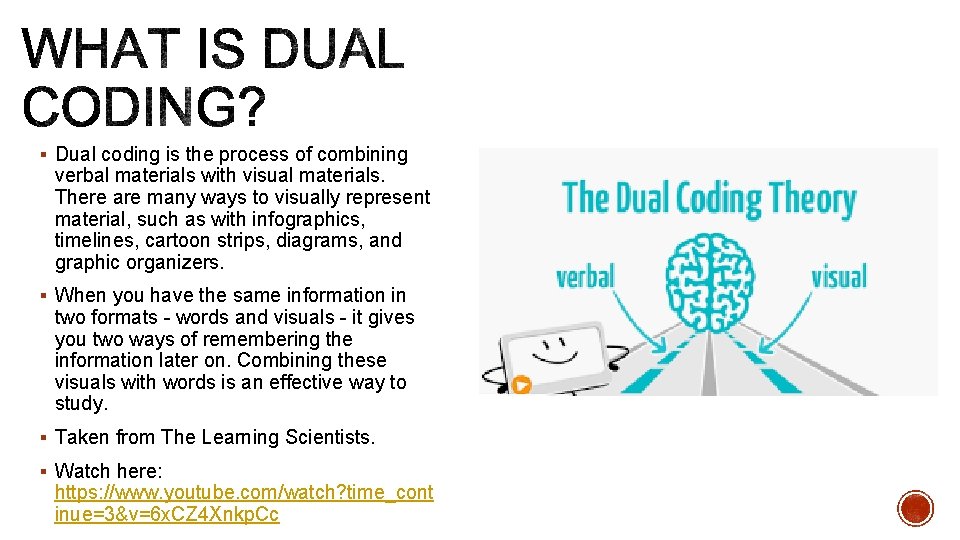
§ Dual coding is the process of combining verbal materials with visual materials. There are many ways to visually represent material, such as with infographics, timelines, cartoon strips, diagrams, and graphic organizers. § When you have the same information in two formats - words and visuals - it gives you two ways of remembering the information later on. Combining these visuals with words is an effective way to study. § Taken from The Learning Scientists. § Watch here: https: //www. youtube. com/watch? time_cont inue=3&v=6 x. CZ 4 Xnkp. Cc

§ When you are looking over your class notes/knowledge organisers/revision guides, find visuals that go along with the information and compare the visuals directly to the words. § Ask yourself: § How are the words describing what is in the visuals? § How do the visuals represent what is described in the text?
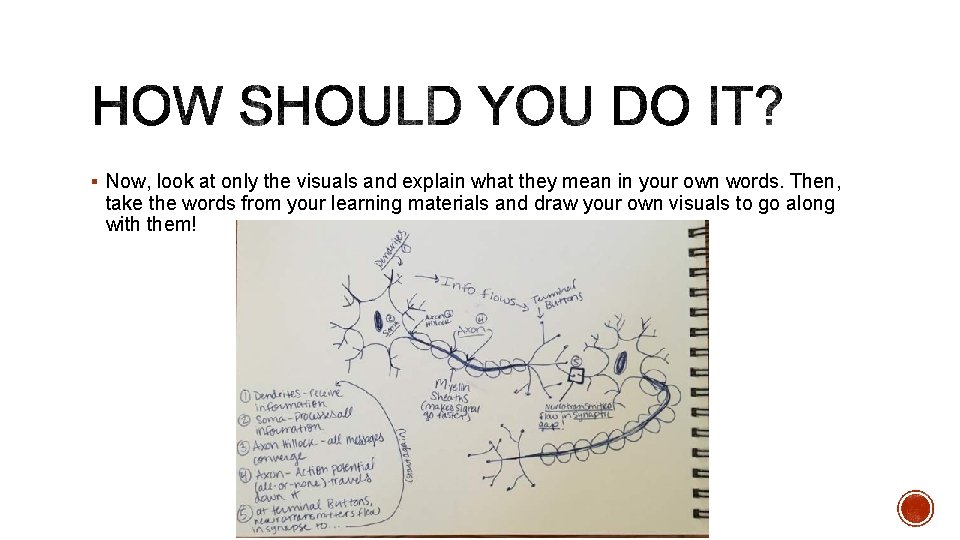
§ Now, look at only the visuals and explain what they mean in your own words. Then, take the words from your learning materials and draw your own visuals to go along with them!
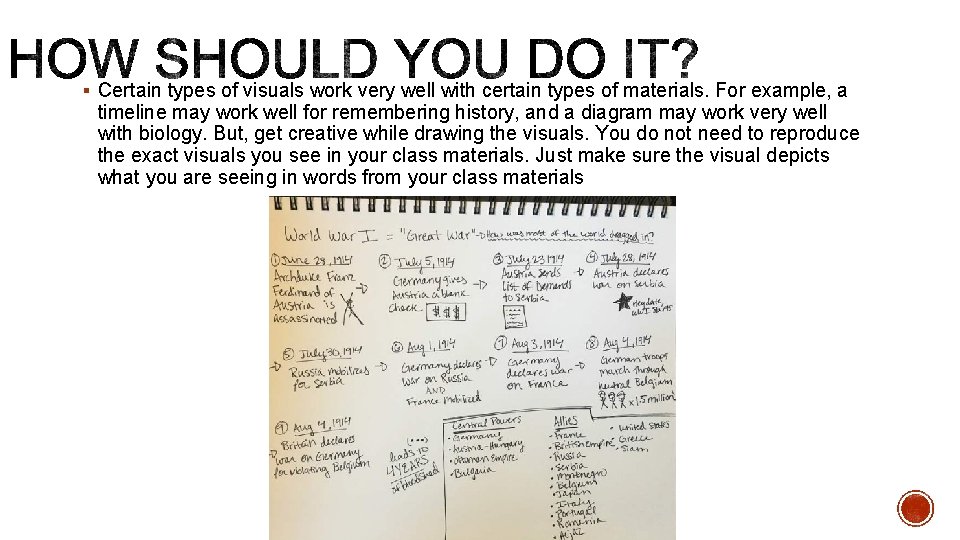
§ Certain types of visuals work very well with certain types of materials. For example, a timeline may work well for remembering history, and a diagram may work very well with biology. But, get creative while drawing the visuals. You do not need to reproduce the exact visuals you see in your class materials. Just make sure the visual depicts what you are seeing in words from your class materials
§ After you have compared visuals and words describing the idea you are trying to learn, it’s time to start retrieving the information on your own. § Work your way up to the point where you can put away your learning materials and both write out the ideas in words and draw pictures, diagrams, or other graphics to go along with them. § Essentially, you need to be doing some retrieval practice. § Further information: http: //www. learningscientists. org/blog/2016/9/1 -1
- Slides: 7