
A Method of ECG Interpretation Measurements usually made
- Slides: 18
A "Method" of ECG Interpretation Ø Measurements (usually made in frontal plane leads): Ø Rhythm Analysis Ø Conduction Analysis Ø Waveform Description Ø Frontal Plane QRS Axis 24/11/2020 1
1. Measurements (usually made in frontal plane leads): 24/11/2020 2
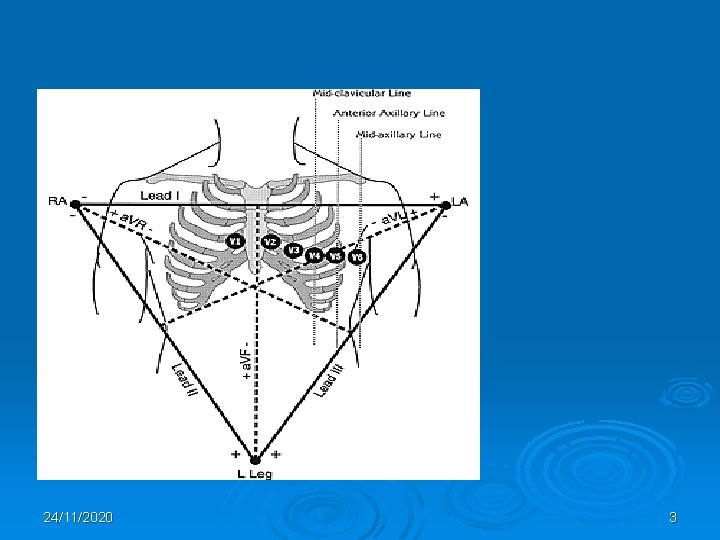
24/11/2020 3
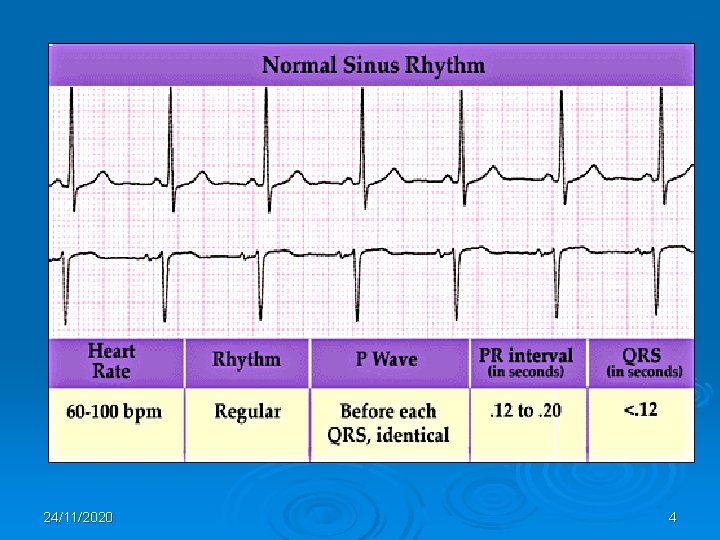
24/11/2020 4
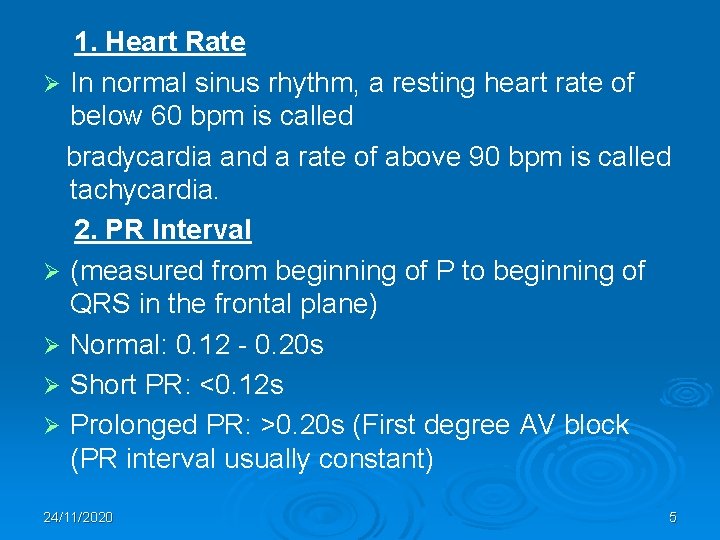
1. Heart Rate Ø In normal sinus rhythm, a resting heart rate of below 60 bpm is called bradycardia and a rate of above 90 bpm is called tachycardia. 2. PR Interval Ø (measured from beginning of P to beginning of QRS in the frontal plane) Ø Normal: 0. 12 - 0. 20 s Ø Short PR: <0. 12 s Ø Prolonged PR: >0. 20 s (First degree AV block (PR interval usually constant) 24/11/2020 5
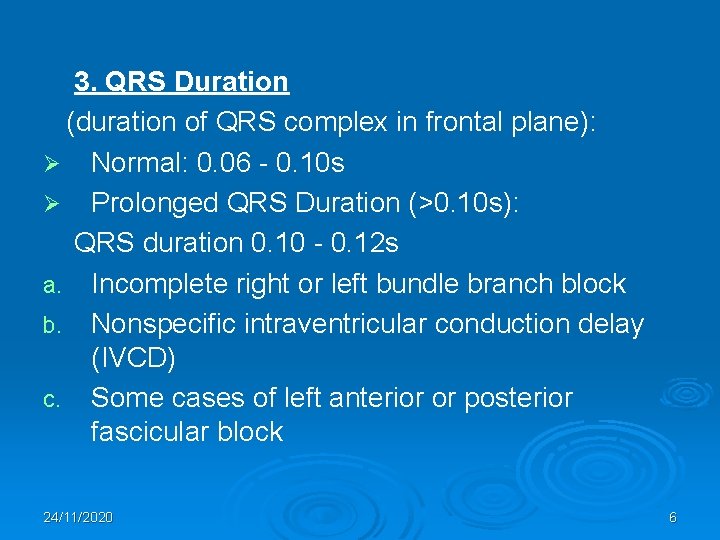
3. QRS Duration (duration of QRS complex in frontal plane): Ø Normal: 0. 06 - 0. 10 s Ø Prolonged QRS Duration (>0. 10 s): QRS duration 0. 10 - 0. 12 s a. Incomplete right or left bundle branch block b. Nonspecific intraventricular conduction delay (IVCD) c. Some cases of left anterior or posterior fascicular block 24/11/2020 6
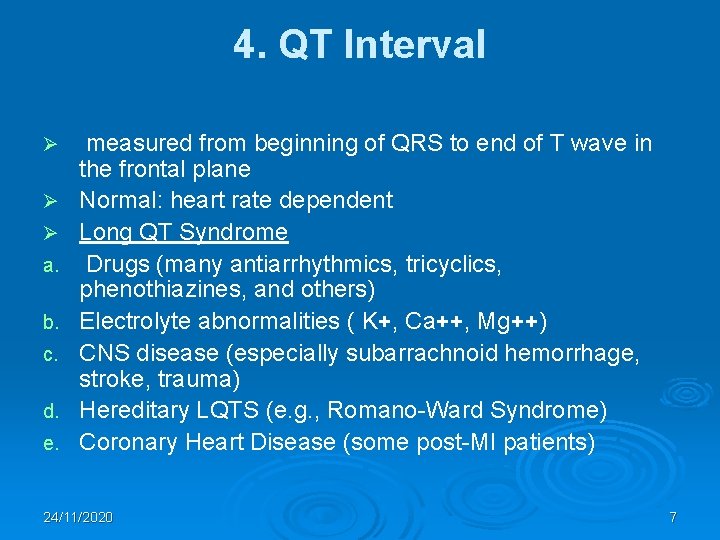
4. QT Interval Ø Ø Ø a. b. c. d. e. measured from beginning of QRS to end of T wave in the frontal plane Normal: heart rate dependent Long QT Syndrome Drugs (many antiarrhythmics, tricyclics, phenothiazines, and others) Electrolyte abnormalities ( K+, Ca++, Mg++) CNS disease (especially subarrachnoid hemorrhage, stroke, trauma) Hereditary LQTS (e. g. , Romano-Ward Syndrome) Coronary Heart Disease (some post-MI patients) 24/11/2020 7
Ø Heart rate (state atrial and ventricular, if different) Ø PR interval (from beginning of P to beginning of QRS) Ø QRS duration (width of most representative QRS) 24/11/2020 8
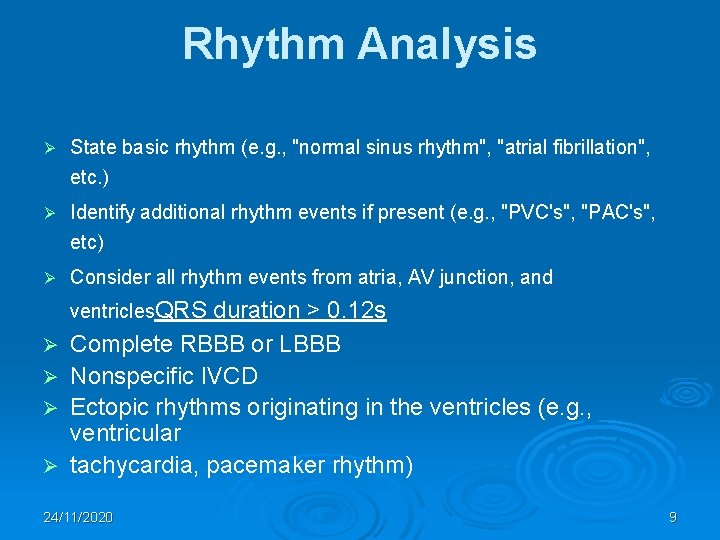
Rhythm Analysis Ø State basic rhythm (e. g. , "normal sinus rhythm", "atrial fibrillation", etc. ) Ø Identify additional rhythm events if present (e. g. , "PVC's", "PAC's", etc) Ø Consider all rhythm events from atria, AV junction, and ventricles. QRS Ø Ø duration > 0. 12 s Complete RBBB or LBBB Nonspecific IVCD Ectopic rhythms originating in the ventricles (e. g. , ventricular tachycardia, pacemaker rhythm) 24/11/2020 9
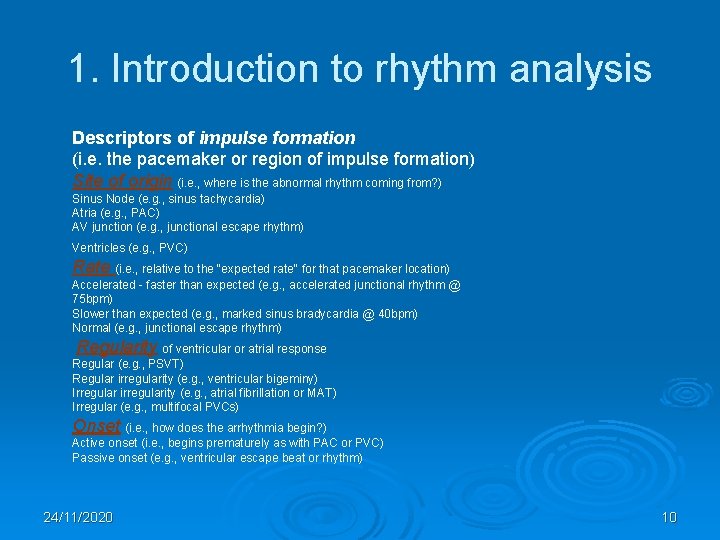
1. Introduction to rhythm analysis Descriptors of impulse formation (i. e. the pacemaker or region of impulse formation) Site of origin (i. e. , where is the abnormal rhythm coming from? ) Sinus Node (e. g. , sinus tachycardia) Atria (e. g. , PAC) AV junction (e. g. , junctional escape rhythm) Ventricles (e. g. , PVC) Rate (i. e. , relative to the "expected rate" for that pacemaker location) Accelerated - faster than expected (e. g. , accelerated junctional rhythm @ 75 bpm) Slower than expected (e. g. , marked sinus bradycardia @ 40 bpm) Normal (e. g. , junctional escape rhythm) Regularity of ventricular or atrial response Regular (e. g. , PSVT) Regular irregularity (e. g. , ventricular bigeminy) Irregular irregularity (e. g. , atrial fibrillation or MAT) Irregular (e. g. , multifocal PVCs) Onset (i. e. , how does the arrhythmia begin? ) Active onset (i. e. , begins prematurely as with PAC or PVC) Passive onset (e. g. , ventricular escape beat or rhythm) 24/11/2020 10
Ø State basic rhythm (e. g. , "normal sinus rhythm", "atrial fibrillation", etc. ) Ø Identify additional rhythm events if present (e. g. , "PVC's", "PAC's", etc) Ø Consider all rhythm events from atria, AV junction, and ventricles 24/11/2020 11
3. Conduction Analysis Ø Normal"conduction implies normal sinoatrial (SA), atrio-ventricular (AV), and Ø intraventricular (IV) conduction. 24/11/2020 12
4. Waveform Description Ø Ø Ø Carefully analyze the 12 -lead ECG for abnormalities in each of the waveforms in the order in which they appear: P-waves, QRS complexes, ST segments, T waves, and the U waves. P waves : are they too wide, too tall, look funny QRS complexes: look for pathologic Q waves abnormal voltage ST segments : look for abnormal ST elevation and/or depression. T waves : look for abnormally inverted T waves. U waves : look for prominent or inverted U waves. 24/11/2020 13
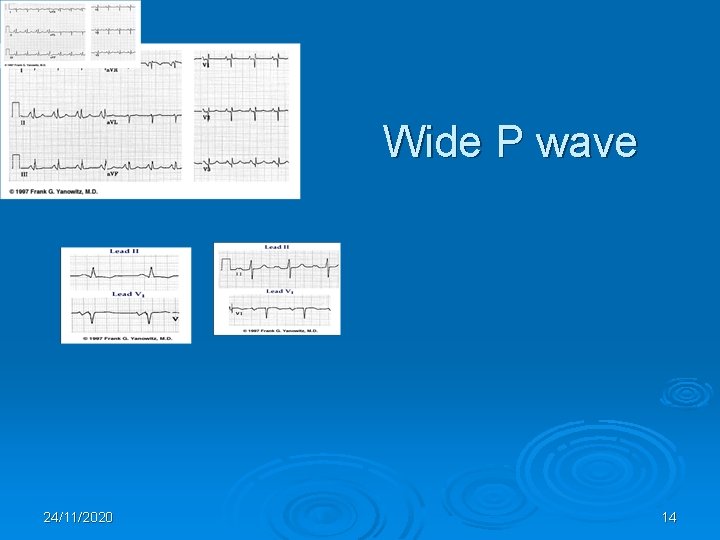
Wide P wave 24/11/2020 14
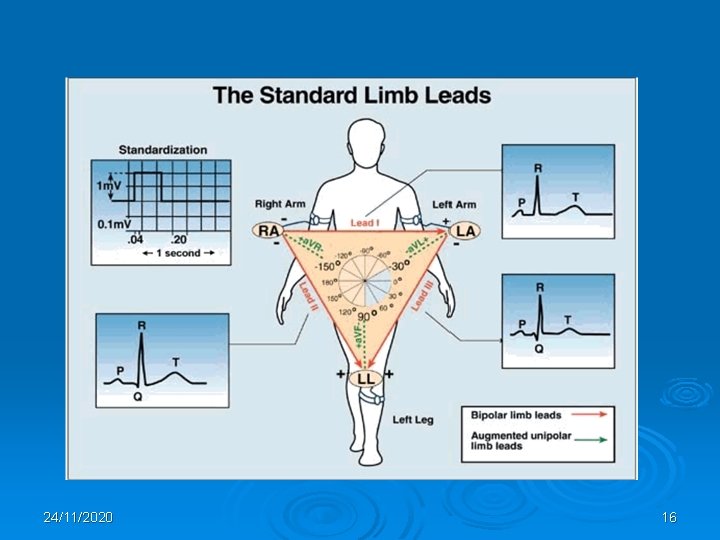
5. Frontal Plane QRS Axis Ø Normal: -30 degrees to +90 degrees Abnormalities in the QRS Axis: Ø Left Axis Deviation (LAD): > -30 o (i. e. , lead II is mostly 'negative') Ø Right Axis Deviation (RAD): > +90 o (i. e. , lead I is mostly 'negative') Ø Bizarre QRS axis: +150 o to -90 o (i. e. , lead I and lead II are both negative) 24/11/2020 15
24/11/2020 16
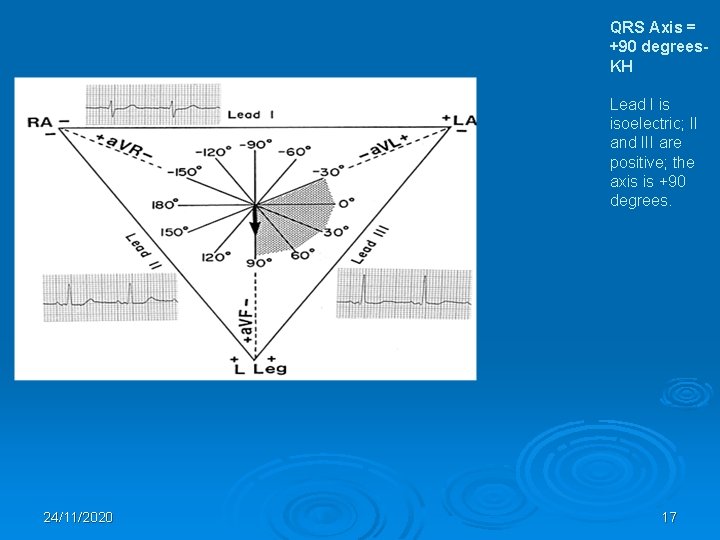
QRS Axis = +90 degrees. KH Lead I is isoelectric; II and III are positive; the axis is +90 degrees. 24/11/2020 17
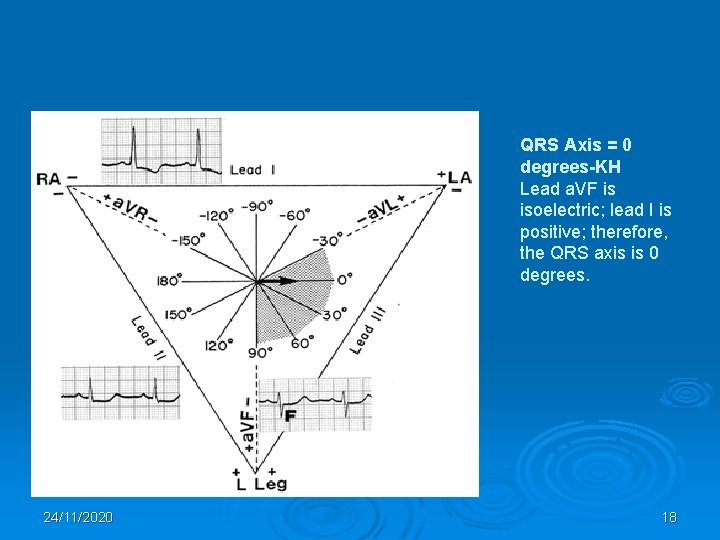
QRS Axis = 0 degrees-KH Lead a. VF is isoelectric; lead I is positive; therefore, the QRS axis is 0 degrees. 24/11/2020 18