
A Match Likelihood Ratio for DNA Comparison American

- Slides: 18
A Match Likelihood Ratio for DNA Comparison American Academy of Forensic Sciences February, 2009 Mark W Perlin, Ph. D, MD, Ph. D Cybergenetics, Corp Pittsburgh, PA USA Cybergenetics © 2003 -2009
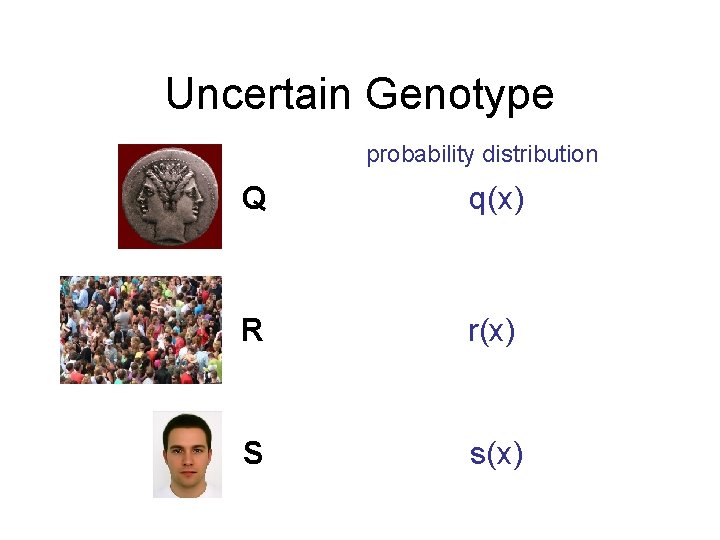
Uncertain Genotype probability distribution Q q(x) R r(x) S s(x)
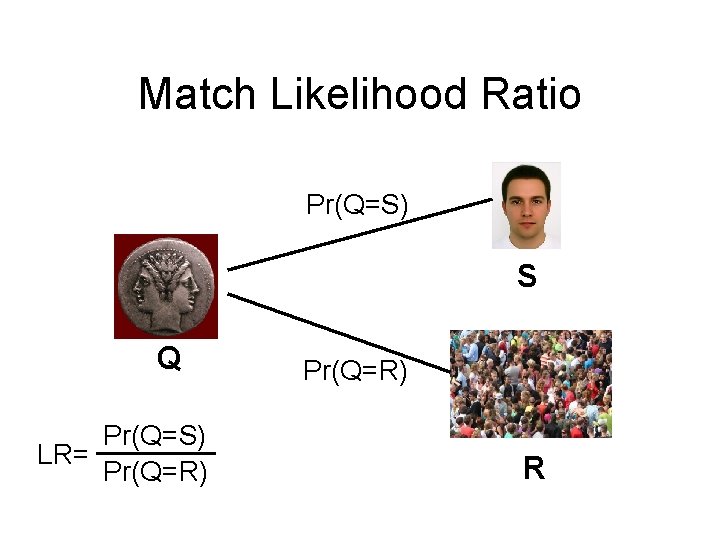
Match Likelihood Ratio Pr(Q=S) S Q Pr(Q=S) LR= Pr(Q=R) R
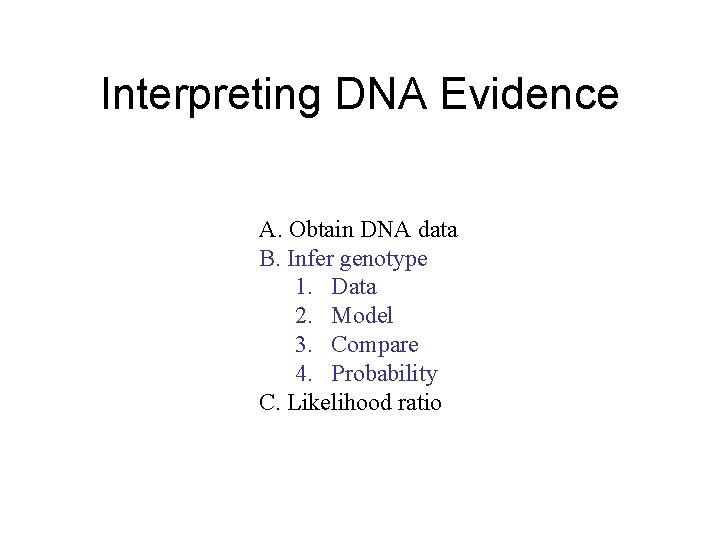
Interpreting DNA Evidence A. Obtain DNA data B. Infer genotype 1. Data 2. Model 3. Compare 4. Probability C. Likelihood ratio
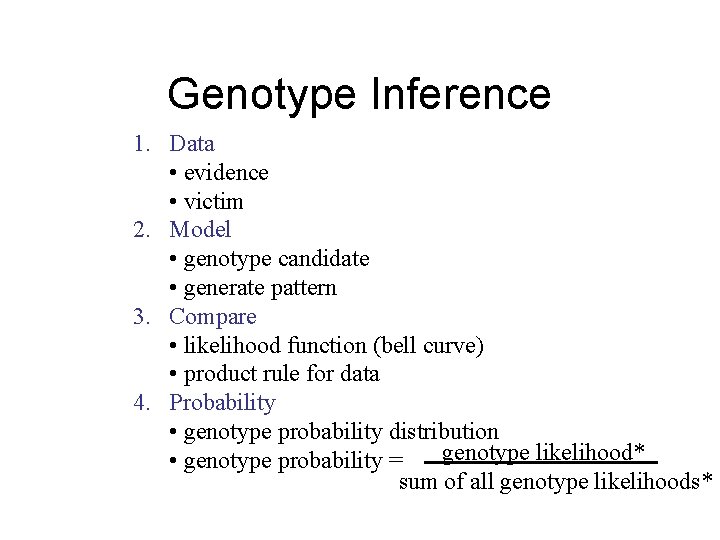
Genotype Inference 1. Data • evidence • victim 2. Model • genotype candidate • generate pattern 3. Compare • likelihood function (bell curve) • product rule for data 4. Probability • genotype probability distribution genotype likelihood* • genotype probability = sum of all genotype likelihoods*
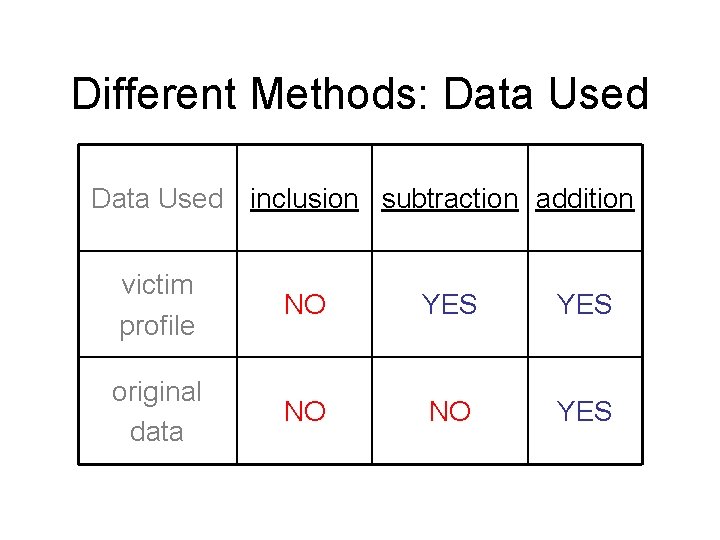
Different Methods: Data Used inclusion subtraction addition victim profile NO YES original data NO NO YES
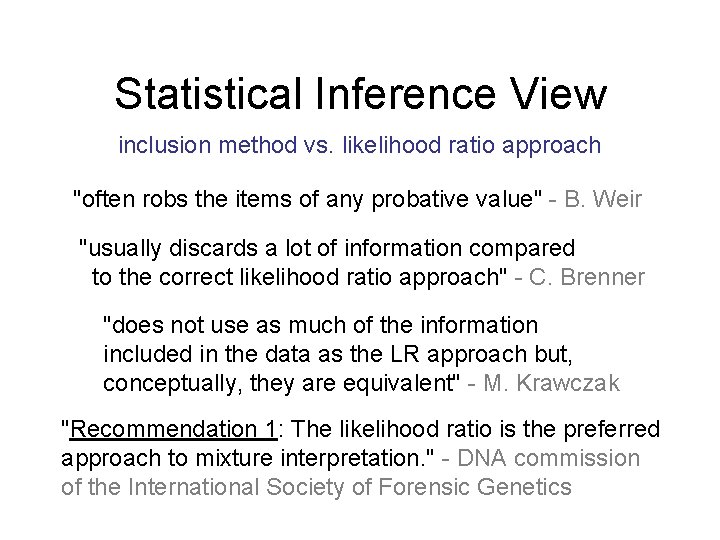
Statistical Inference View inclusion method vs. likelihood ratio approach "often robs the items of any probative value" - B. Weir "usually discards a lot of information compared to the correct likelihood ratio approach" - C. Brenner "does not use as much of the information included in the data as the LR approach but, conceptually, they are equivalent" - M. Krawczak "Recommendation 1: The likelihood ratio is the preferred approach to mixture interpretation. " - DNA commission of the International Society of Forensic Genetics
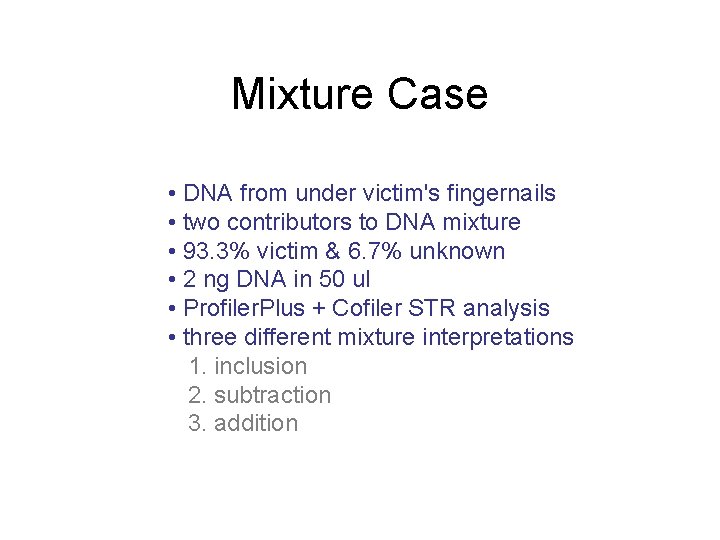
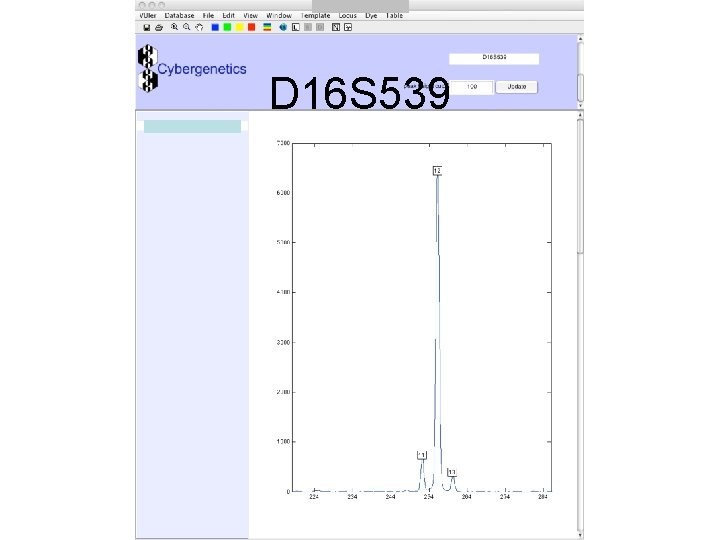
Mixture Case • DNA from under victim's fingernails • two contributors to DNA mixture • 93. 3% victim & 6. 7% unknown • 2 ng DNA in 50 ul • Profiler. Plus + Cofiler STR analysis • three different mixture interpretations 1. inclusion 2. subtraction 3. addition
D 16 S 539
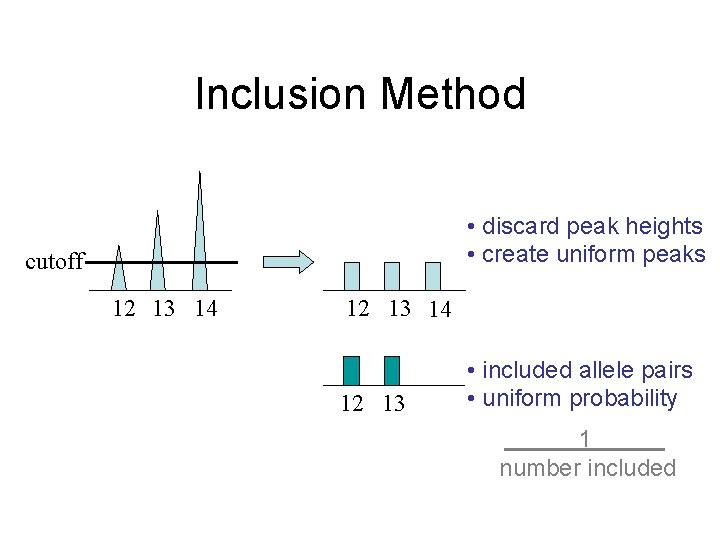
Inclusion Method • discard peak heights • create uniform peaks cutoff 12 13 14 12 13 • included allele pairs • uniform probability 1 number included
'Inclusion' LR at D 16 S 539
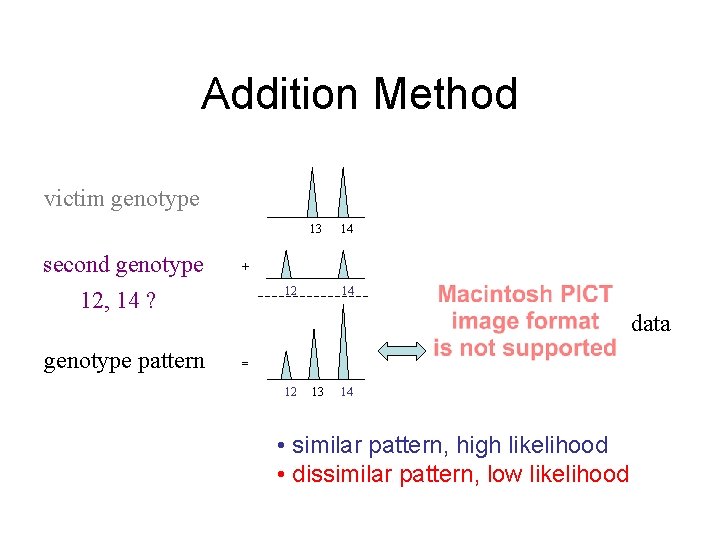
Addition Method victim genotype 13 second genotype 12, 14 ? genotype pattern 14 + 12 14 data = 12 13 14 • similar pattern, high likelihood • dissimilar pattern, low likelihood
'Addition' LR at D 16 S 539
Information 10 thousand (4) 10 million (7) 100 billion (11) 10 quadrillion (16)
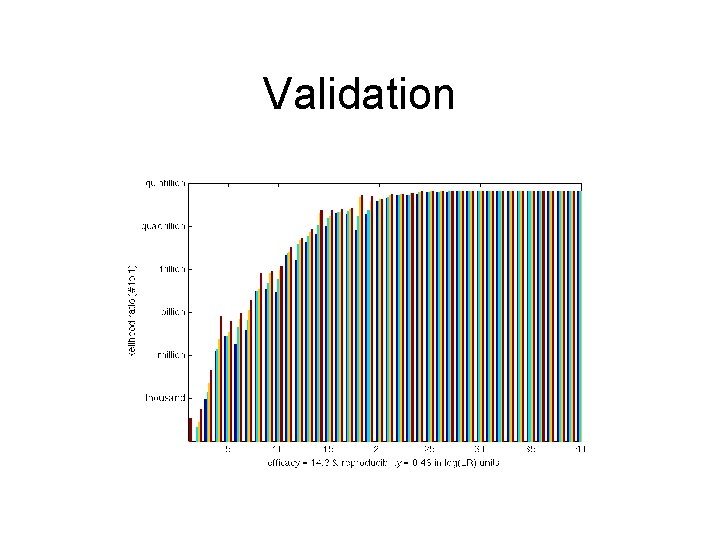
Validation
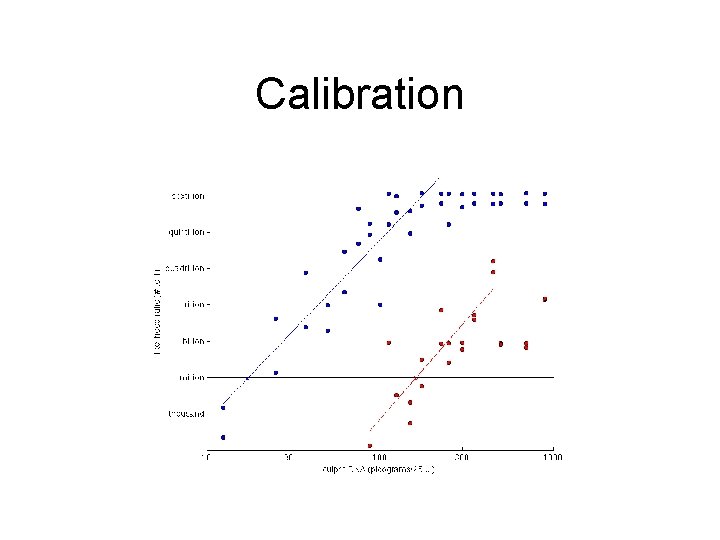
Calibration
Bibliography • Quantitative STR Peak Information • Genotype Probability Distributions • Computer Interpretation of STR Data • Statistical Modeling and Computation • Likelihood Ratio Literature • Mixture Interpretation Admissibility • Computer Systems for Quantitative DNA Mixture Deconvolution • True. Allele Casework Publications
Conclusions: MLR • a useful tool for determining identification information with uncertain genotypes • works well on forensic mixture cases • enables quantitative validation, calibration, and comparison of genotype inference methods • based on generally accepted scientific principles