
A Mass Balance Approach to Evaluate Salinity Sources
A Mass Balance Approach to Evaluate Salinity Sources in the Turlock Groundwater Sub-basin Presentation to Technical Advisory Committee, Central Valley Salinity Alternatives for Long-Term Sustainability (CV-SALTS) October 29, 2009 Erler & Kalinowski, Inc.
Presentation Outline • Study Objectives • Turlock Groundwater Sub-basin • Overview of Mass Balance Approach • TDS Trends in Groundwater • Salinity Management Considerations • Conclusions
Objectives • Determine Relative Impacts of Major Salinity Inputs to the Groundwater Basin • Understand How the Basin Responds to Changes in Major Salinity Inputs
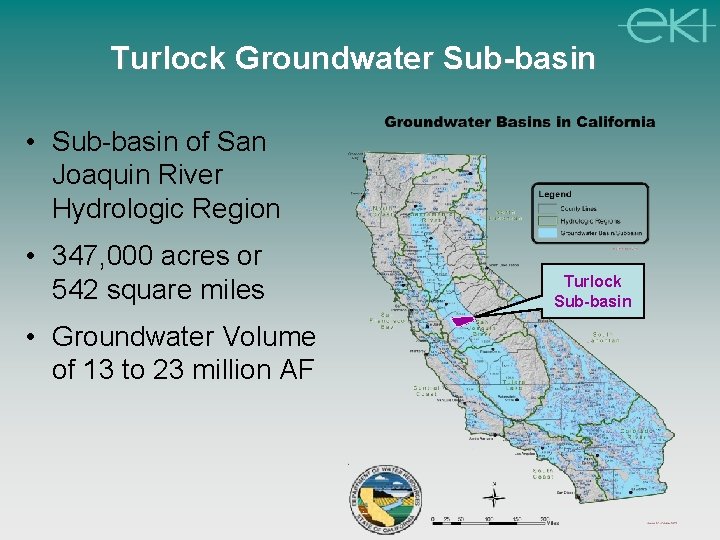
Turlock Groundwater Sub-basin • Sub-basin of San Joaquin River Hydrologic Region • 347, 000 acres or 542 square miles • Groundwater Volume of 13 to 23 million AF Turlock Sub-basin
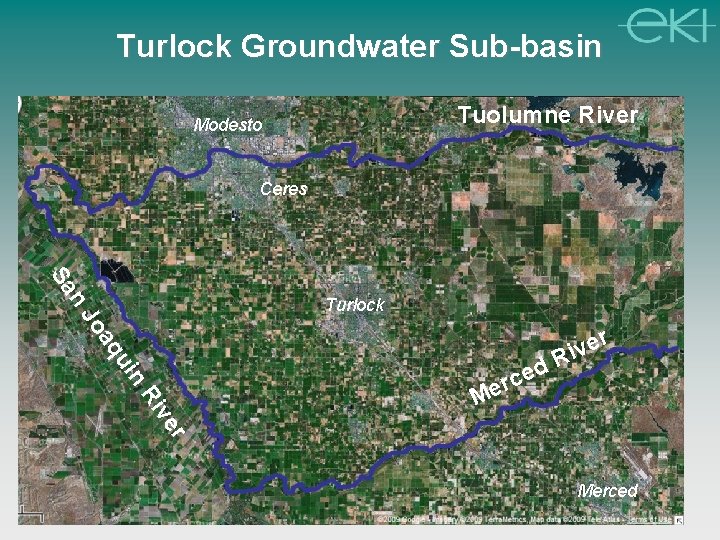
Turlock Groundwater Sub-basin Tuolumne River Modesto Ceres Sa n Turlock aq Jo n ui d r ve Ri e c r Me r e v Ri Merced
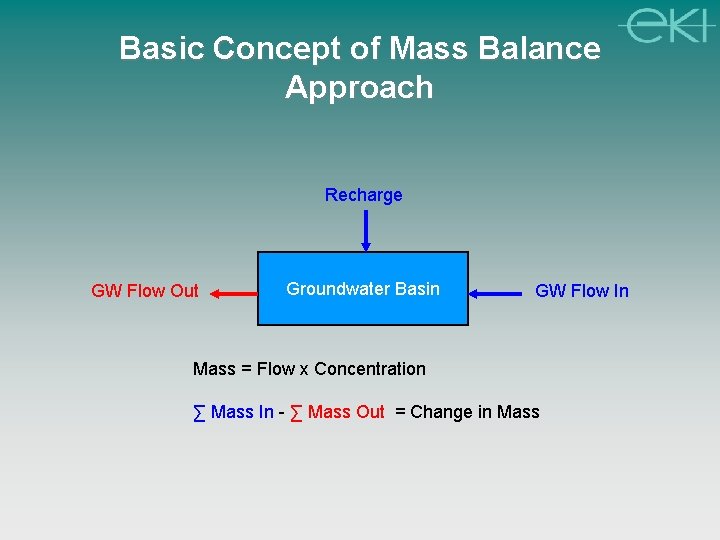
Basic Concept of Mass Balance Approach Recharge GW Flow Out Groundwater Basin GW Flow In Mass = Flow x Concentration ∑ Mass In - ∑ Mass Out = Change in Mass
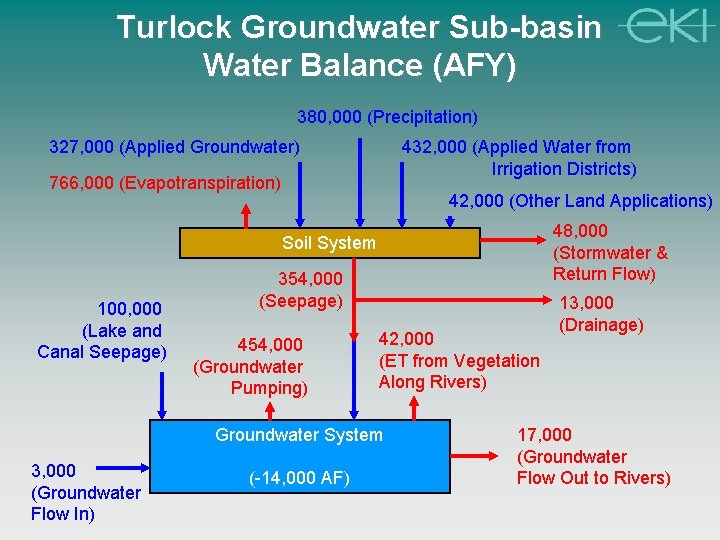
Turlock Groundwater Sub-basin Water Balance (AFY) 380, 000 (Precipitation) 327, 000 (Applied Groundwater) 432, 000 (Applied Water from Irrigation Districts) 766, 000 (Evapotranspiration) 42, 000 (Other Land Applications) 48, 000 (Stormwater & Return Flow) Soil System 100, 000 (Lake and Canal Seepage) 354, 000 (Seepage) 454, 000 (Groundwater Pumping) 42, 000 (ET from Vegetation Along Rivers) Groundwater System 3, 000 (Groundwater Flow In) (-14, 000 AF) 13, 000 (Drainage) 17, 000 (Groundwater Flow Out to Rivers)
Major Salinity Sources • Municipalities & Publically Owned Treatment Works (POTWs) • Food Processors • Confined Animals Feeding Operations (CAFOs) including Forage Crops • Irrigated Agriculture (Food Crops) • Mineral Dissolution • Not Considered in This Preliminary Evaluation: – septic tanks – landfills – upwelling of deep saline groundwater
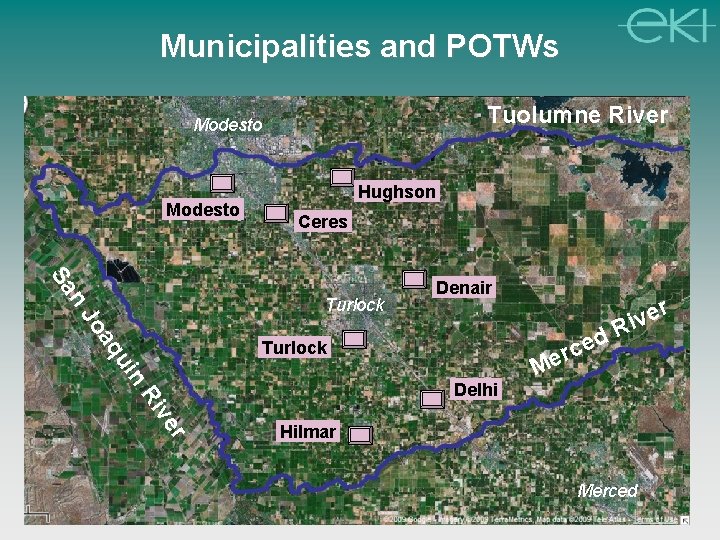
Municipalities and POTWs Tuolumne River Modesto Hughson Ceres Sa n Turlock Denair aq Jo r d e c er Turlock n ui r ve Ri Delhi e v i R M Hilmar Merced
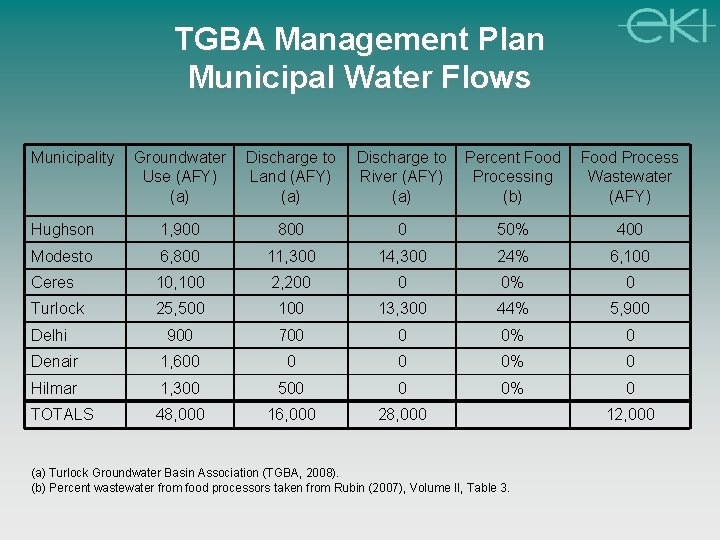
TGBA Management Plan Municipal Water Flows Municipality Groundwater Use (AFY) (a) Discharge to Land (AFY) (a) Discharge to River (AFY) (a) Percent Food Processing (b) Food Process Wastewater (AFY) Hughson 1, 900 800 0 50% 400 Modesto 6, 800 11, 300 14, 300 24% 6, 100 Ceres 10, 100 2, 200 0 0% 0 Turlock 25, 500 13, 300 44% 5, 900 700 0 0% 0 Denair 1, 600 0 0 0% 0 Hilmar 1, 300 500 0 0% 0 TOTALS 48, 000 16, 000 28, 000 Delhi (a) Turlock Groundwater Basin Association (TGBA, 2008). (b) Percent wastewater from food processors taken from Rubin (2007), Volume II, Table 3. 12, 000
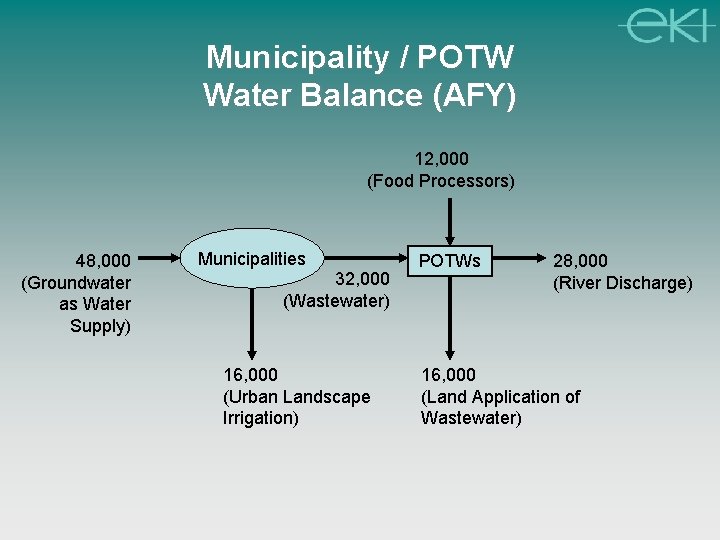
Municipality / POTW Water Balance (AFY) 12, 000 (Food Processors) 48, 000 (Groundwater as Water Supply) Municipalities 32, 000 (Wastewater) 16, 000 (Urban Landscape Irrigation) POTWs 28, 000 (River Discharge) 16, 000 (Land Application of Wastewater)
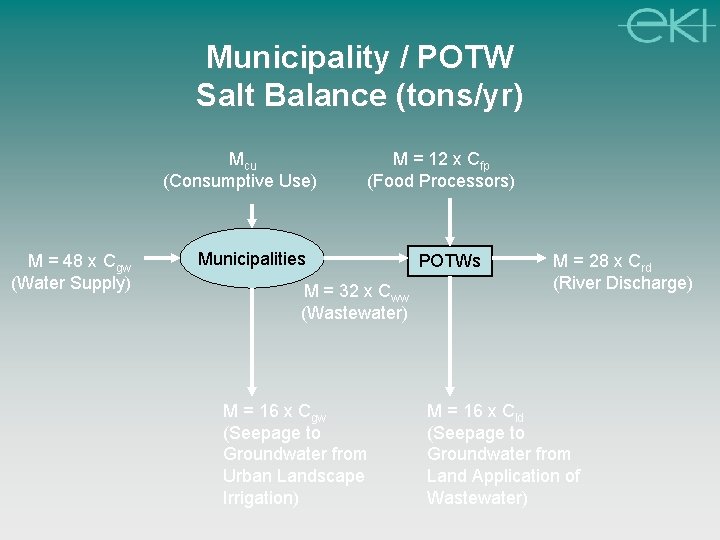
Municipality / POTW Salt Balance (tons/yr) Mcu (Consumptive Use) M = 48 x Cgw (Water Supply) M = 12 x Cfp (Food Processors) Municipalities M = 32 x Cww (Wastewater) M = 16 x Cgw (Seepage to Groundwater from Urban Landscape Irrigation) POTWs M = 28 x Crd (River Discharge) M = 16 x Cld (Seepage to Groundwater from Land Application of Wastewater)
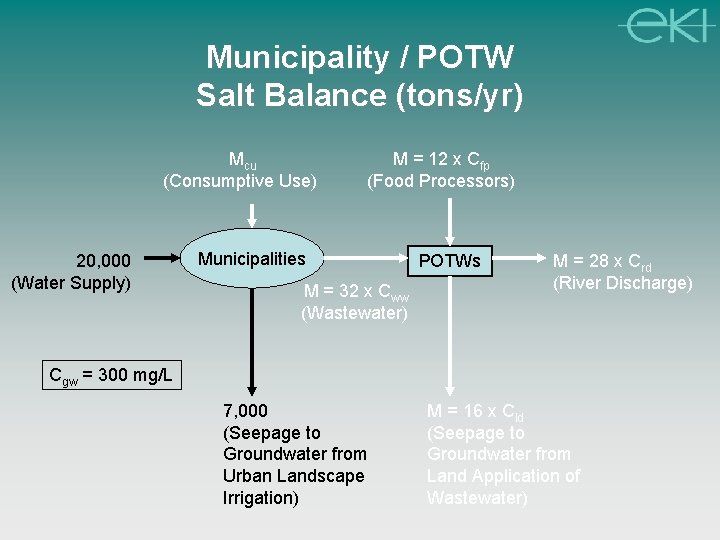
Municipality / POTW Salt Balance (tons/yr) Mcu (Consumptive Use) 20, 000 (Water Supply) M = 12 x Cfp (Food Processors) Municipalities M = 32 x Cww (Wastewater) POTWs M = 28 x Crd (River Discharge) Cgw = 300 mg/L 7, 000 (Seepage to Groundwater from Urban Landscape Irrigation) M = 16 x Cld (Seepage to Groundwater from Land Application of Wastewater)
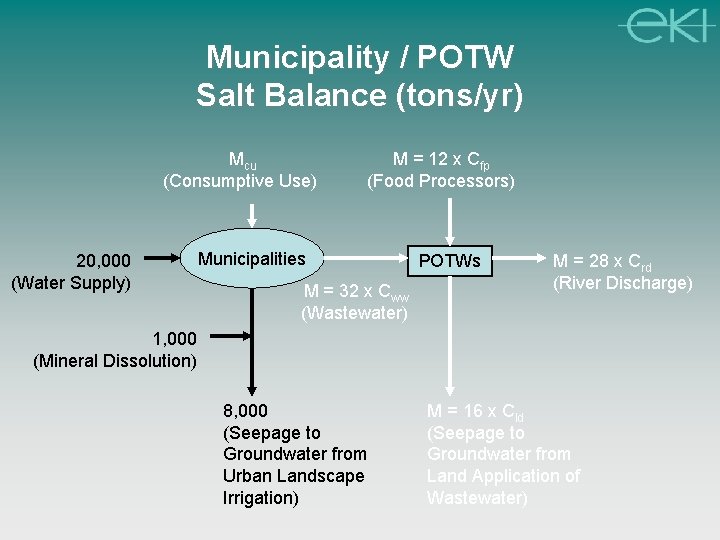
Municipality / POTW Salt Balance (tons/yr) Mcu (Consumptive Use) 20, 000 (Water Supply) M = 12 x Cfp (Food Processors) Municipalities M = 32 x Cww (Wastewater) POTWs M = 28 x Crd (River Discharge) 1, 000 (Mineral Dissolution) 8, 000 (Seepage to Groundwater from Urban Landscape Irrigation) M = 16 x Cld (Seepage to Groundwater from Land Application of Wastewater)
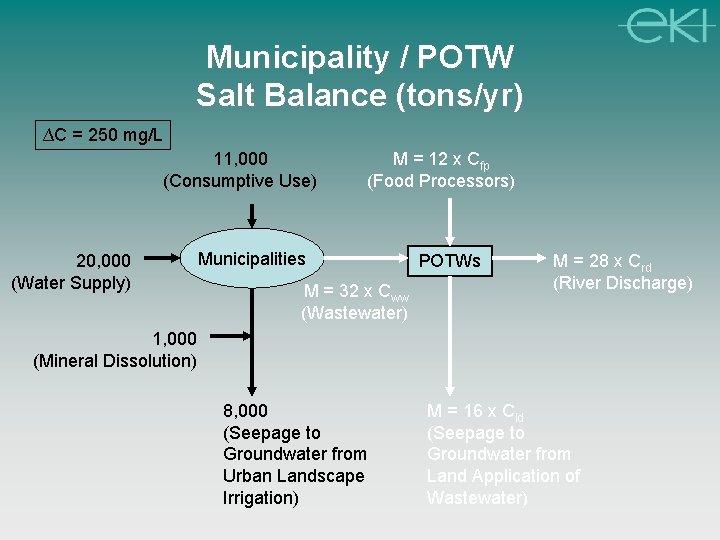
Municipality / POTW Salt Balance (tons/yr) ∆C = 250 mg/L 11, 000 (Consumptive Use) 20, 000 (Water Supply) M = 12 x Cfp (Food Processors) Municipalities M = 32 x Cww (Wastewater) POTWs M = 28 x Crd (River Discharge) 1, 000 (Mineral Dissolution) 8, 000 (Seepage to Groundwater from Urban Landscape Irrigation) M = 16 x Cld (Seepage to Groundwater from Land Application of Wastewater)
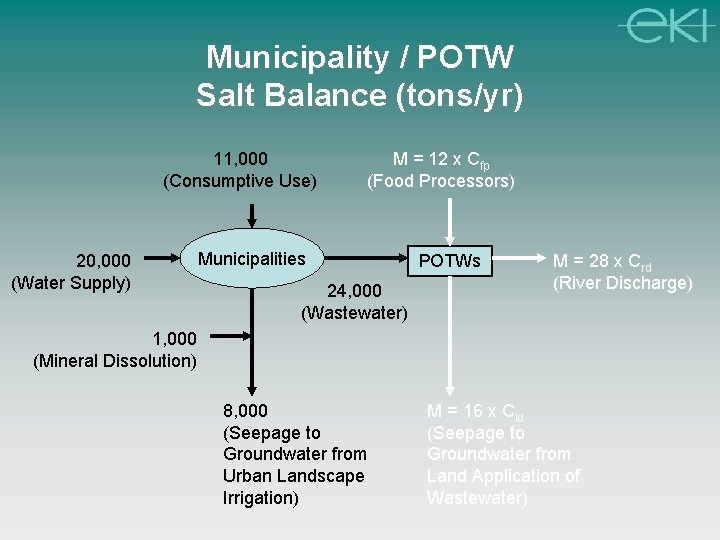
Municipality / POTW Salt Balance (tons/yr) 11, 000 (Consumptive Use) 20, 000 (Water Supply) M = 12 x Cfp (Food Processors) Municipalities 24, 000 (Wastewater) POTWs M = 28 x Crd (River Discharge) 1, 000 (Mineral Dissolution) 8, 000 (Seepage to Groundwater from Urban Landscape Irrigation) M = 16 x Cld (Seepage to Groundwater from Land Application of Wastewater)
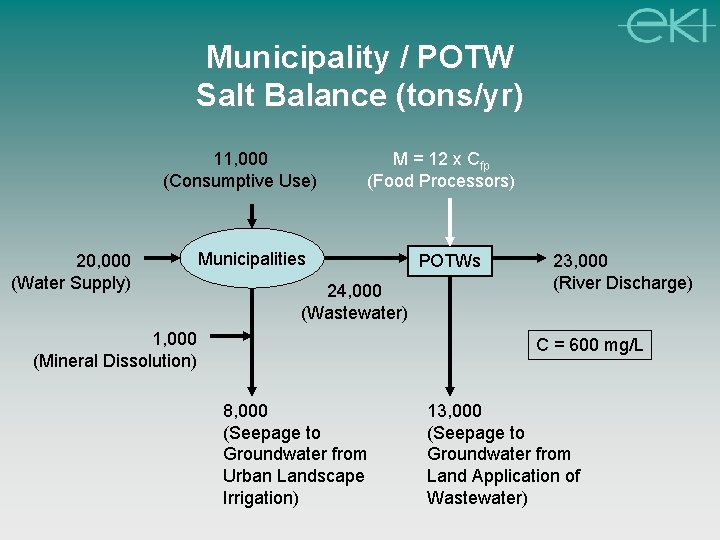
Municipality / POTW Salt Balance (tons/yr) 11, 000 (Consumptive Use) 20, 000 (Water Supply) M = 12 x Cfp (Food Processors) Municipalities 24, 000 (Wastewater) 1, 000 (Mineral Dissolution) POTWs 23, 000 (River Discharge) C = 600 mg/L 8, 000 (Seepage to Groundwater from Urban Landscape Irrigation) 13, 000 (Seepage to Groundwater from Land Application of Wastewater)
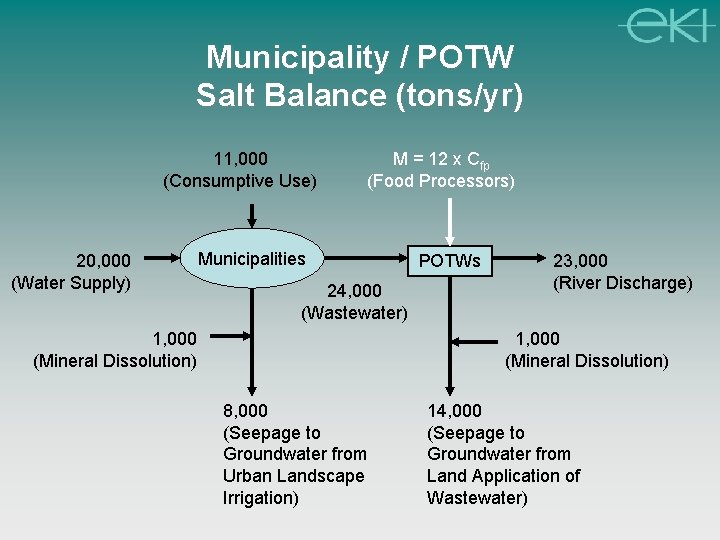
Municipality / POTW Salt Balance (tons/yr) 11, 000 (Consumptive Use) 20, 000 (Water Supply) M = 12 x Cfp (Food Processors) Municipalities 24, 000 (Wastewater) 1, 000 (Mineral Dissolution) POTWs 23, 000 (River Discharge) 1, 000 (Mineral Dissolution) 8, 000 (Seepage to Groundwater from Urban Landscape Irrigation) 14, 000 (Seepage to Groundwater from Land Application of Wastewater)
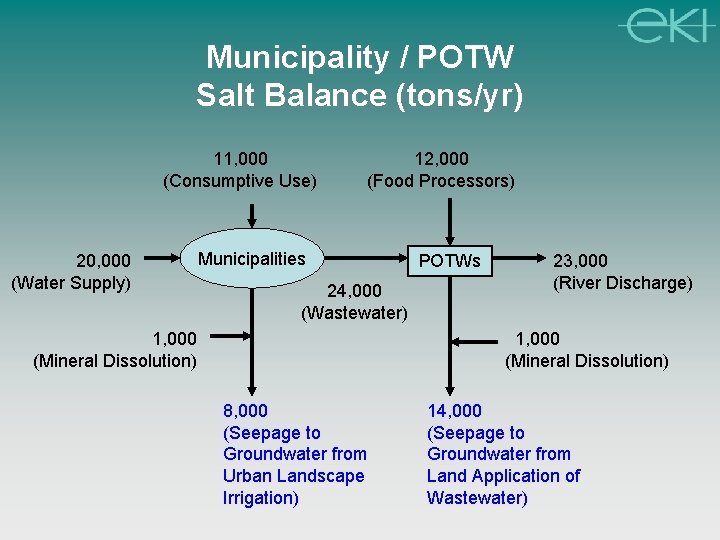
Municipality / POTW Salt Balance (tons/yr) 11, 000 (Consumptive Use) 20, 000 (Water Supply) 12, 000 (Food Processors) Municipalities 24, 000 (Wastewater) 1, 000 (Mineral Dissolution) POTWs 23, 000 (River Discharge) 1, 000 (Mineral Dissolution) 8, 000 (Seepage to Groundwater from Urban Landscape Irrigation) 14, 000 (Seepage to Groundwater from Land Application of Wastewater)
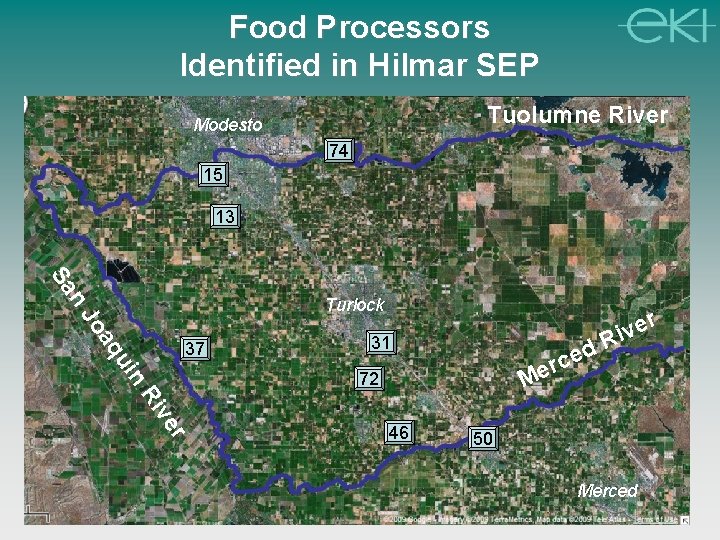
Food Processors Identified in Hilmar SEP Tuolumne River Modesto 74 15 13 Sa n Turlock aq Jo 37 r 31 n ui d e c er e v i R M 72 r ve Ri 46 50 Merced
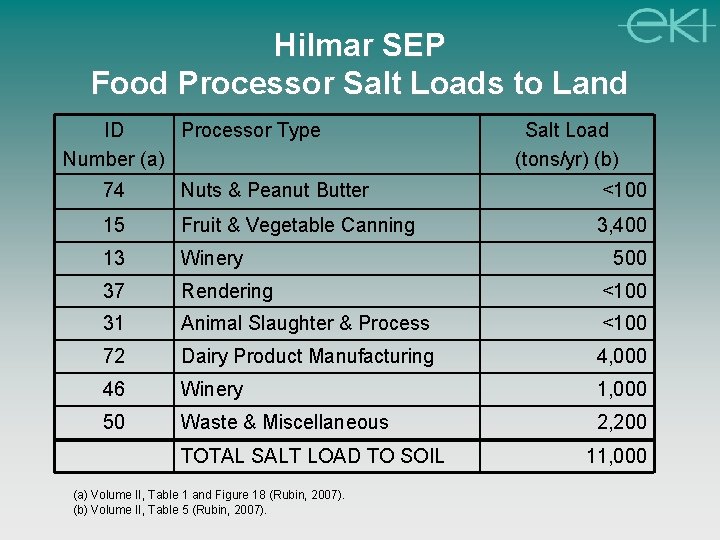
Hilmar SEP Food Processor Salt Loads to Land ID Processor Type Number (a) Salt Load (tons/yr) (b) 74 Nuts & Peanut Butter <100 15 Fruit & Vegetable Canning 3, 400 13 Winery 37 Rendering <100 31 Animal Slaughter & Process <100 72 Dairy Product Manufacturing 4, 000 46 Winery 1, 000 50 Waste & Miscellaneous 2, 200 TOTAL SALT LOAD TO SOIL (a) Volume II, Table 1 and Figure 18 (Rubin, 2007). (b) Volume II, Table 5 (Rubin, 2007). 500 11, 000
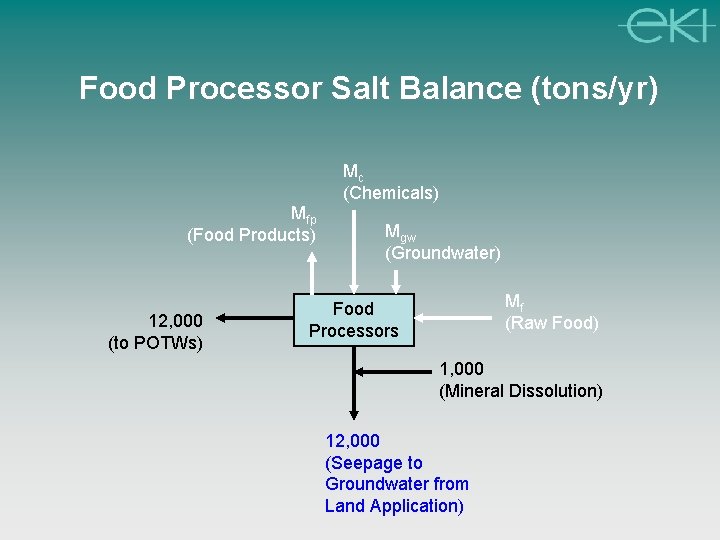
Food Processor Salt Balance (tons/yr) Mc (Chemicals) Mfp (Food Products) 12, 000 (to POTWs) Mgw (Groundwater) Mf (Raw Food) Food Processors 1, 000 (Mineral Dissolution) 12, 000 (Seepage to Groundwater from Land Application)
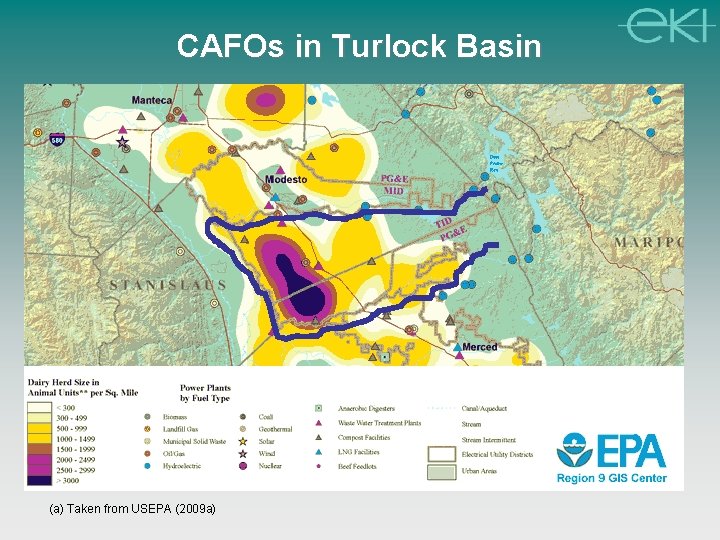
CAFOs in Turlock Basin (a) Taken from USEPA (2009 a)
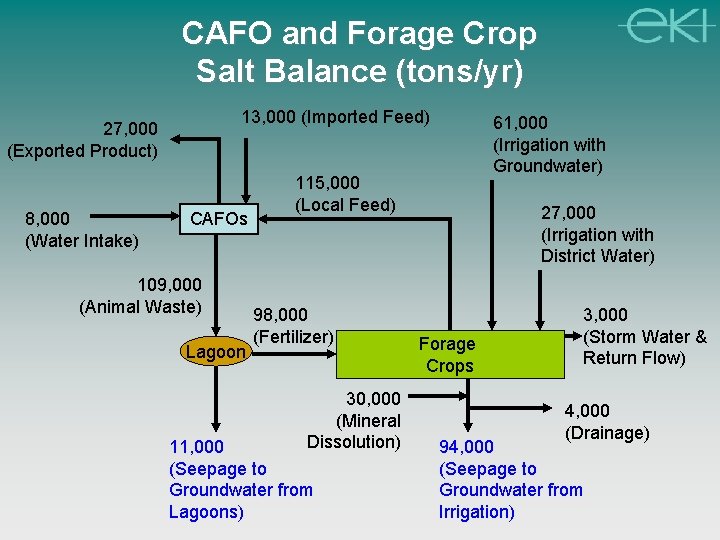
CAFO and Forage Crop Salt Balance (tons/yr) 13, 000 (Imported Feed) 27, 000 (Exported Product) 8, 000 (Water Intake) CAFOs 109, 000 (Animal Waste) Lagoon 61, 000 (Irrigation with Groundwater) 115, 000 (Local Feed) 98, 000 (Fertilizer) 30, 000 (Mineral Dissolution) 11, 000 (Seepage to Groundwater from Lagoons) 27, 000 (Irrigation with District Water) Forage Crops 3, 000 (Storm Water & Return Flow) 4, 000 (Drainage) 94, 000 (Seepage to Groundwater from Irrigation)
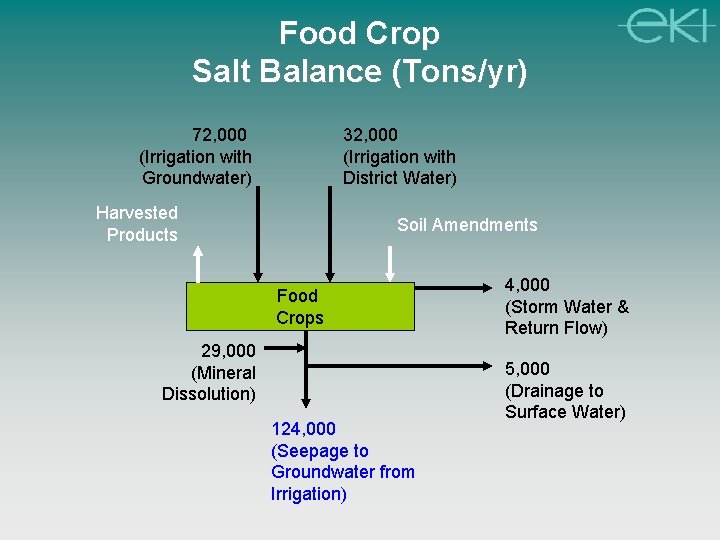
Food Crop Salt Balance (Tons/yr) 72, 000 (Irrigation with Groundwater) 32, 000 (Irrigation with District Water) Harvested Products Soil Amendments Food Crops 29, 000 (Mineral Dissolution) 124, 000 (Seepage to Groundwater from Irrigation) 4, 000 (Storm Water & Return Flow) 5, 000 (Drainage to Surface Water)
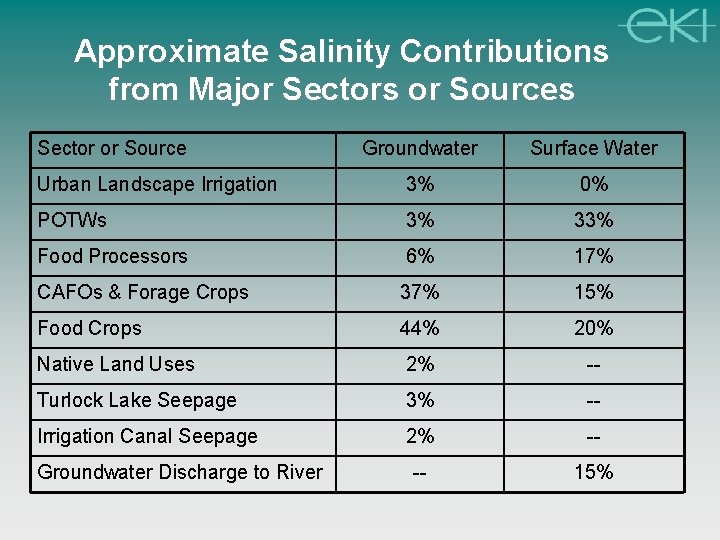
Approximate Salinity Contributions from Major Sectors or Sources Sector or Source Groundwater Surface Water Urban Landscape Irrigation 3% 0% POTWs 3% 33% Food Processors 6% 17% CAFOs & Forage Crops 37% 15% Food Crops 44% 20% Native Land Uses 2% -- Turlock Lake Seepage 3% -- Irrigation Canal Seepage 2% -- -- 15% Groundwater Discharge to River
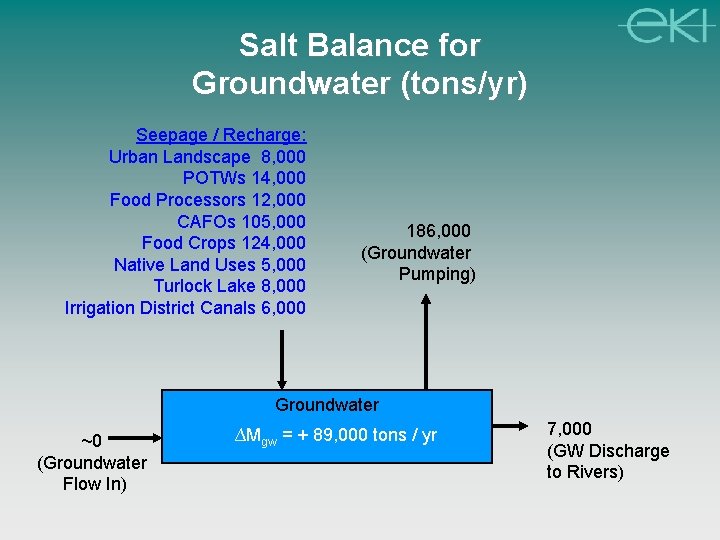
Salt Balance for Groundwater (tons/yr) Seepage / Recharge: Urban Landscape 8, 000 POTWs 14, 000 Food Processors 12, 000 CAFOs 105, 000 Food Crops 124, 000 Native Land Uses 5, 000 Turlock Lake 8, 000 Irrigation District Canals 6, 000 186, 000 (Groundwater Pumping) Groundwater ~0 (Groundwater Flow In) ∆Mgw = + 89, 000 tons / yr 7, 000 (GW Discharge to Rivers)
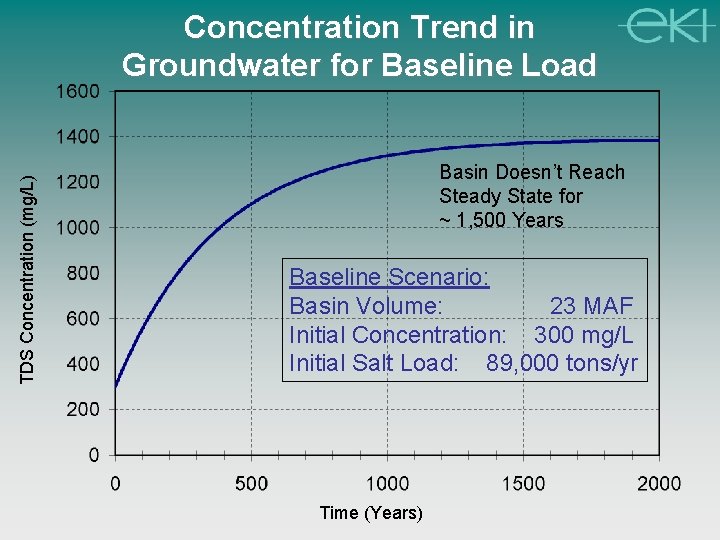
TDS Concentration (mg/L) Concentration Trend in Groundwater for Baseline Load Basin Doesn’t Reach Steady State for ~ 1, 500 Years Baseline Scenario: Basin Volume: 23 MAF Initial Concentration: 300 mg/L Initial Salt Load: 89, 000 tons/yr Time (Years)
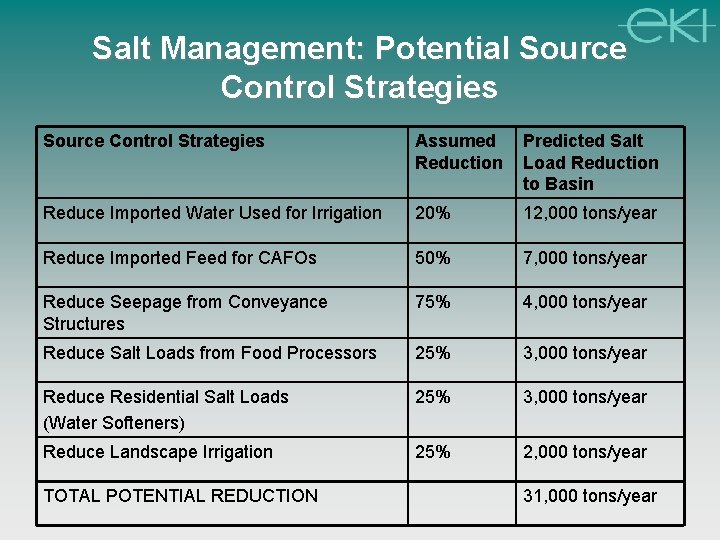
Salt Management: Potential Source Control Strategies Assumed Reduction Predicted Salt Load Reduction to Basin Reduce Imported Water Used for Irrigation 20% 12, 000 tons/year Reduce Imported Feed for CAFOs 50% 7, 000 tons/year Reduce Seepage from Conveyance Structures 75% 4, 000 tons/year Reduce Salt Loads from Food Processors 25% 3, 000 tons/year Reduce Residential Salt Loads (Water Softeners) 25% 3, 000 tons/year Reduce Landscape Irrigation 25% 2, 000 tons/year TOTAL POTENTIAL REDUCTION 31, 000 tons/year
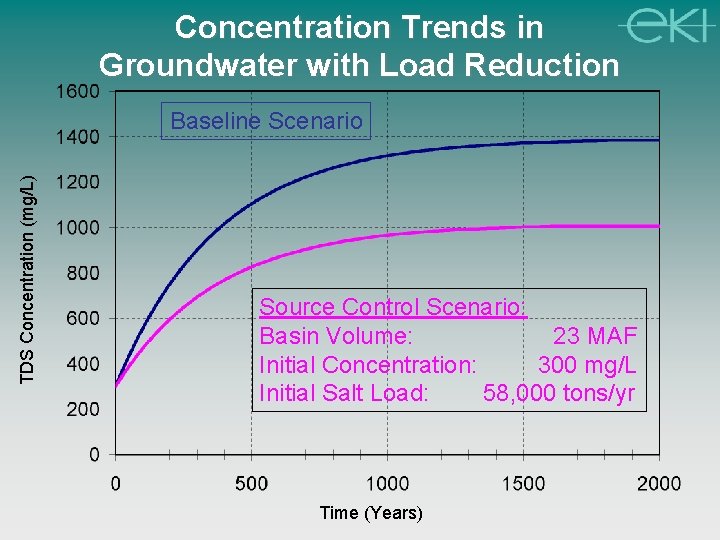
Concentration Trends in Groundwater with Load Reduction TDS Concentration (mg/L) Baseline Scenario Source Control Scenario: Basin Volume: 23 MAF Initial Concentration: 300 mg/L Initial Salt Load: 58, 000 tons/yr Time (Years)
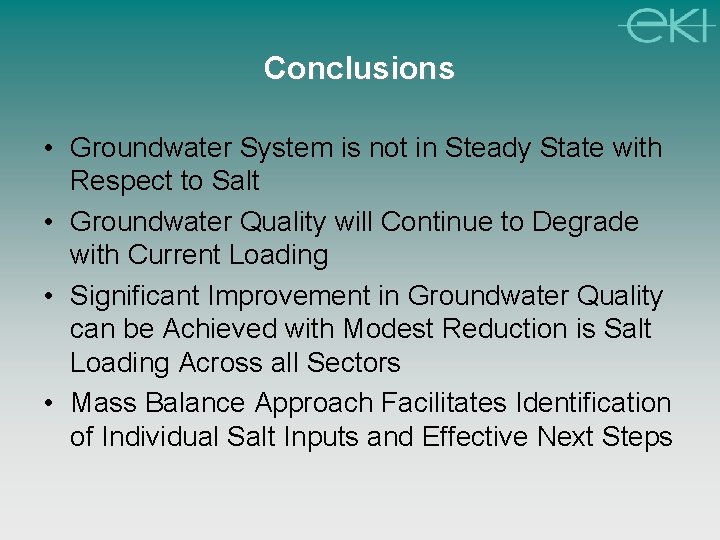
Conclusions • Groundwater System is not in Steady State with Respect to Salt • Groundwater Quality will Continue to Degrade with Current Loading • Significant Improvement in Groundwater Quality can be Achieved with Modest Reduction is Salt Loading Across all Sectors • Mass Balance Approach Facilitates Identification of Individual Salt Inputs and Effective Next Steps
- Slides: 31