
A lingual surface of all anterior teeth B


A- lingual surface of all anterior teeth B- Round- point tapering fissure bur in an accelerated-speed contra-angle handpiece with water coolant
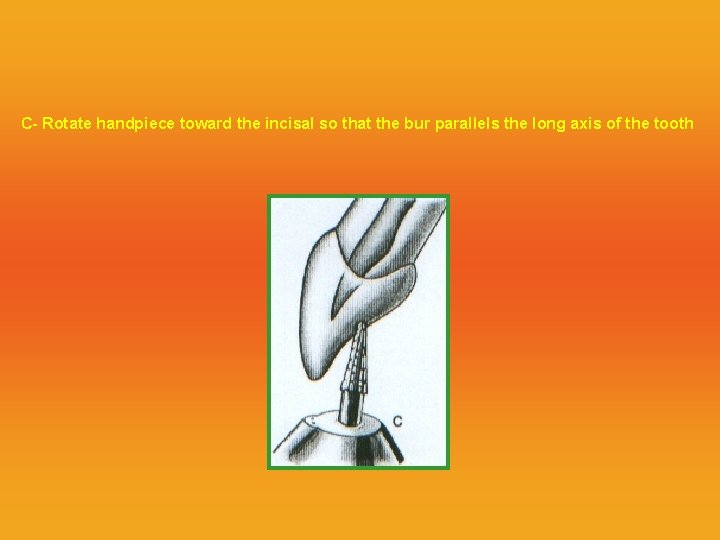
C- Rotate handpiece toward the incisal so that the bur parallels the long axis of the tooth
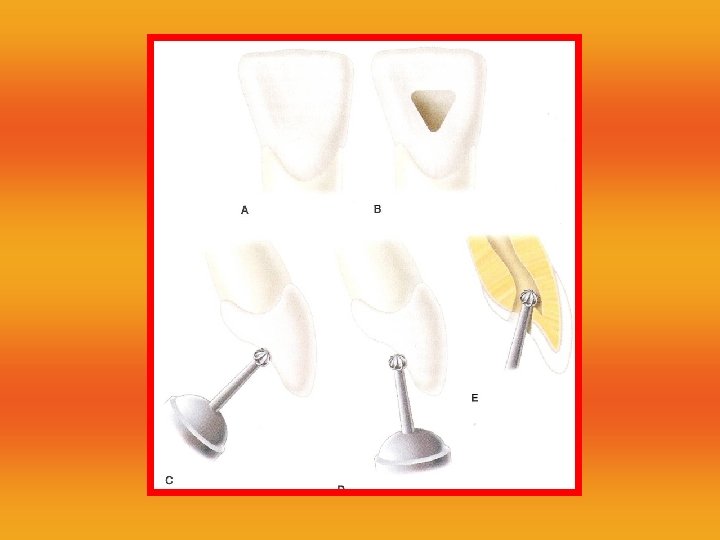

Lingual shoulder removal
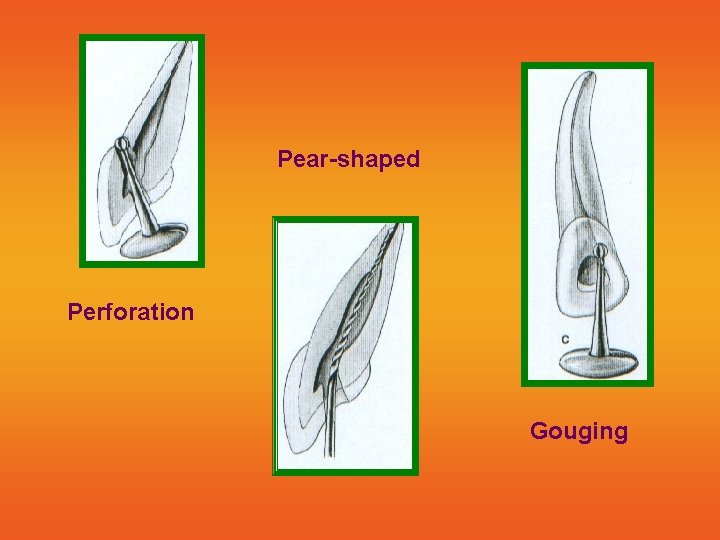
Pear-shaped Perforation Gouging

Discoloration Ledge

Access opening of premolar teeth A- Entrance is always gained through the occlusal surface at all posterior teeth. Initial penetration is made parallel to the long axis of the tooth in the exact center of the central groove of the maxillary premolars
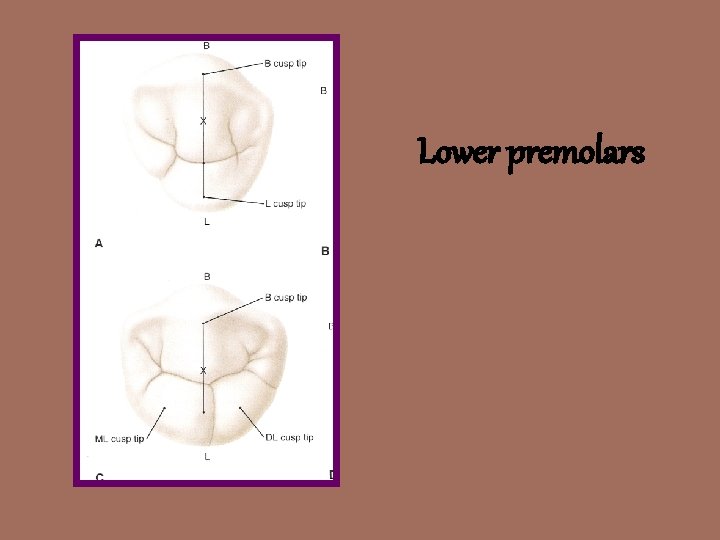
Lower premolars
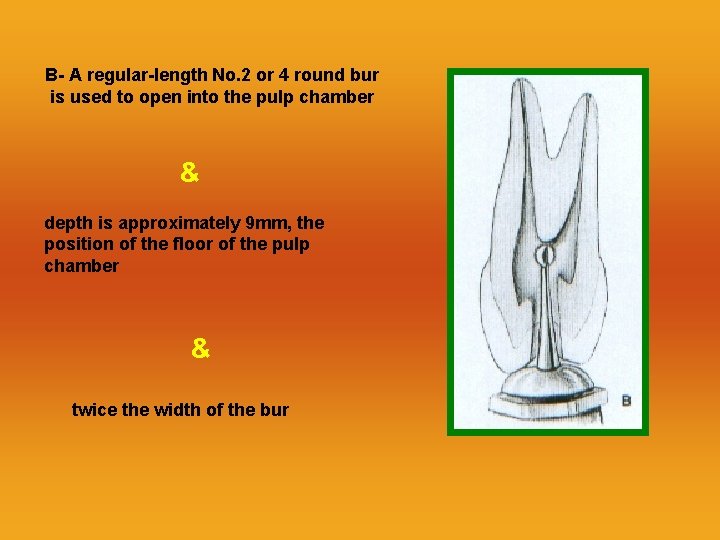
B- A regular-length No. 2 or 4 round bur is used to open into the pulp chamber & depth is approximately 9 mm, the position of the floor of the pulp chamber & twice the width of the bur
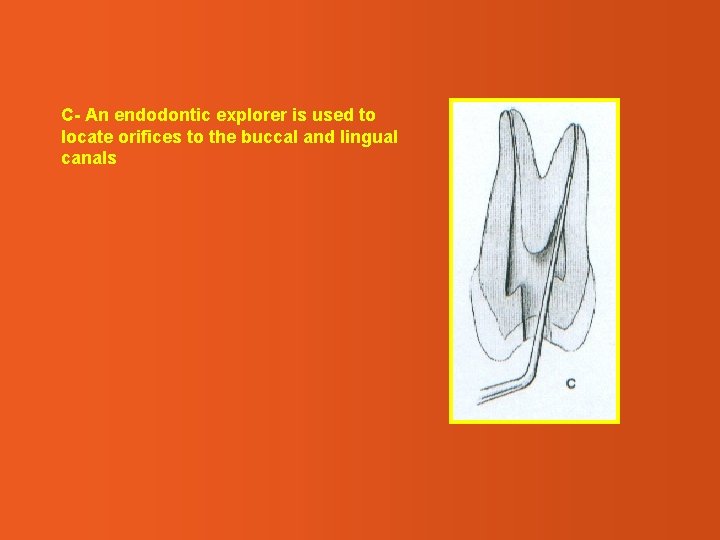
C- An endodontic explorer is used to locate orifices to the buccal and lingual canals
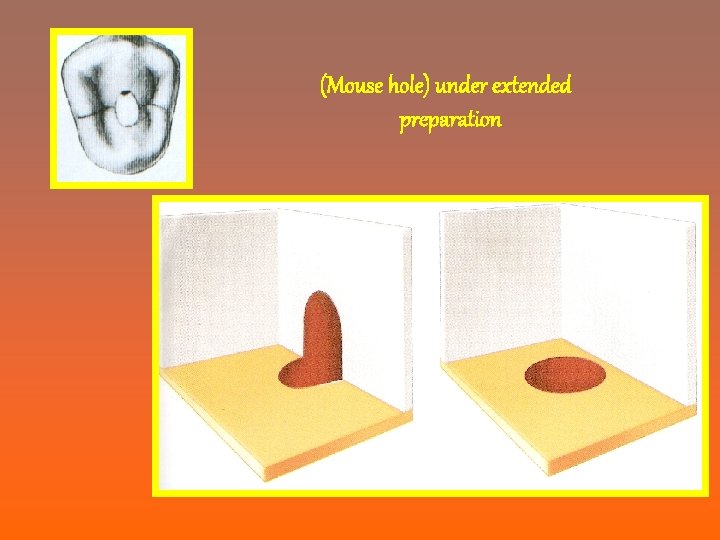
(Mouse hole) under extended preparation
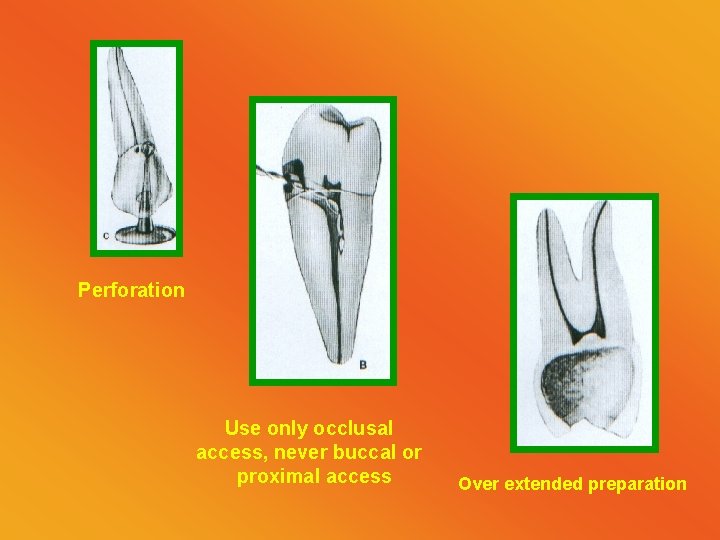
Perforation Use only occlusal access, never buccal or proximal access Over extended preparation
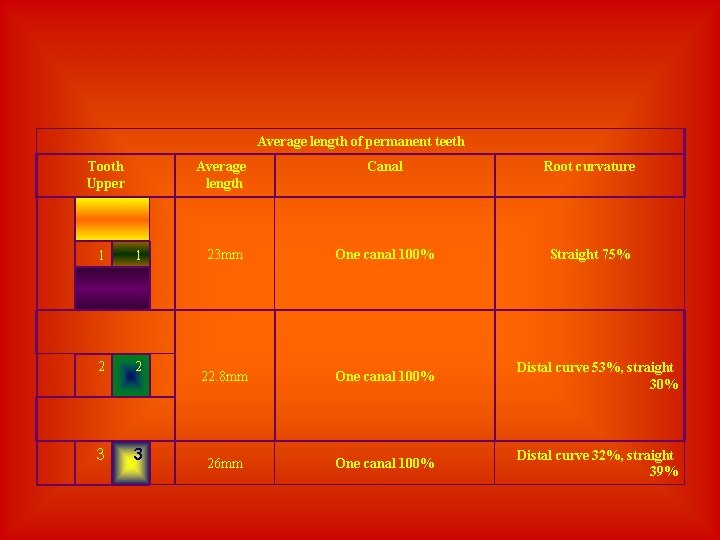
Average length of permanent teeth Tooth Upper 1 1 2 2 3 3 Average length Canal Root curvature 23 mm One canal 100% Straight 75% 22. 8 mm One canal 100% Distal curve 53%, straight 30% 26 mm One canal 100% Distal curve 32%, straight 39%
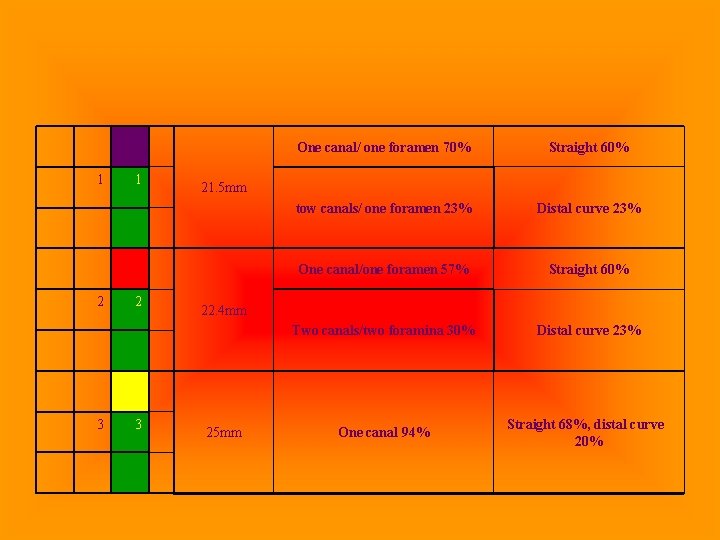
1 2 3 One canal/ one foramen 70% Straight 60% tow canals/ one foramen 23% Distal curve 23% One canal/one foramen 57% Straight 60% Two canals/two foramina 30% Distal curve 23% One canal 94% Straight 68%, distal curve 20% 21. 5 mm 22. 4 mm 25 mm
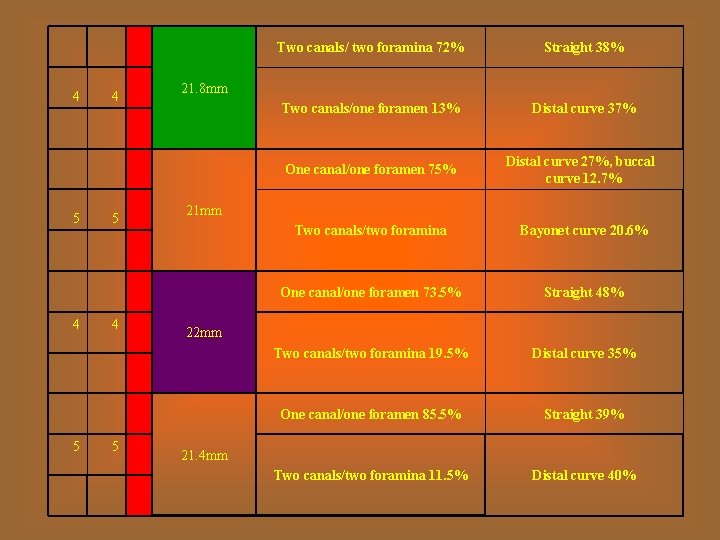
4 5 4 5 Two canals/ two foramina 72% Straight 38% Two canals/one foramen 13% Distal curve 37% One canal/one foramen 75% Distal curve 27%, buccal curve 12. 7% Two canals/two foramina Bayonet curve 20. 6% One canal/one foramen 73. 5% Straight 48% Two canals/two foramina 19. 5% Distal curve 35% One canal/one foramen 85. 5% Straight 39% Two canals/two foramina 11. 5% Distal curve 40% 21. 8 mm 21 mm 22 mm 21. 4 mm

Thank you
- Slides: 17