
A Linear and Quadratic Time Frequency Analysis of

![What happens here? Frequency [Hz] Randomly changing polarization : Convection-induced GWs Slowly changing polarization](https://slidetodoc.com/presentation_image_h2/dba51dc2d016b44f247d639d9e9834b5/image-9.jpg "What happens here? Frequency [Hz] Randomly changing polarization : Convection-induced GWs Slowly changing polarization")
- Slides: 20
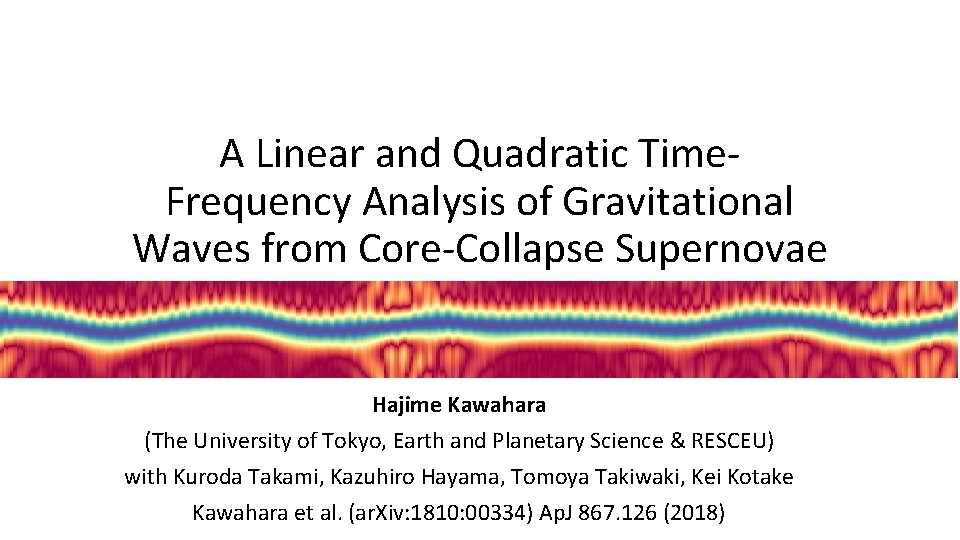
A Linear and Quadratic Time. Frequency Analysis of Gravitational Waves from Core-Collapse Supernovae Hajime Kawahara (The University of Tokyo, Earth and Planetary Science & RESCEU) with Kuroda Takami, Kazuhiro Hayama, Tomoya Takiwaki, Kei Kotake Kawahara et al. (ar. Xiv: 1810: 00334) Ap. J 867. 126 (2018)
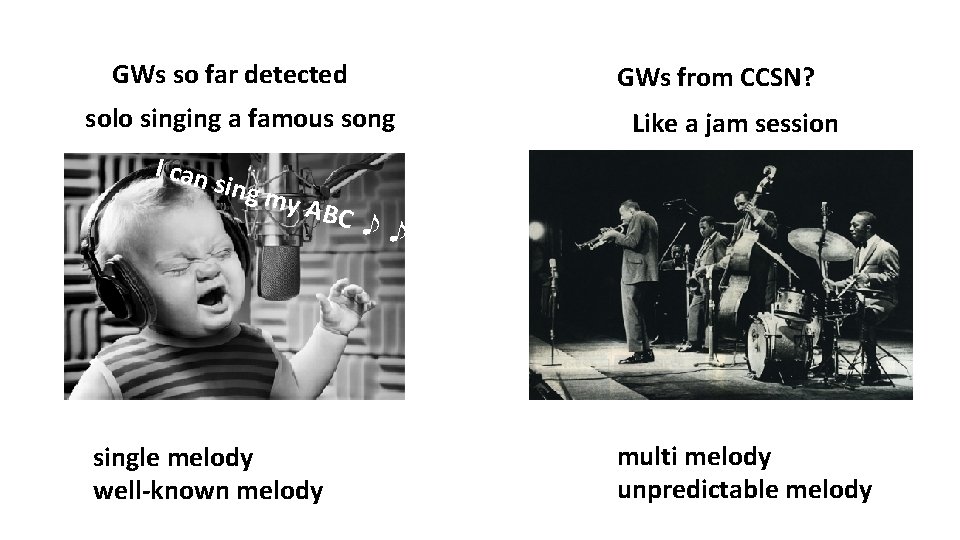
GWs so far detected GWs from CCSN? solo singing a famous song I can sing m y ABC single melody well-known melody Like a jam session ♪♪ multi melody unpredictable melody
BH-BH, NS-NS merger well-studied single mode GW 170817 GW from SNe poorly-studied multi mode GW from CCSN simulation Kuroda+2016
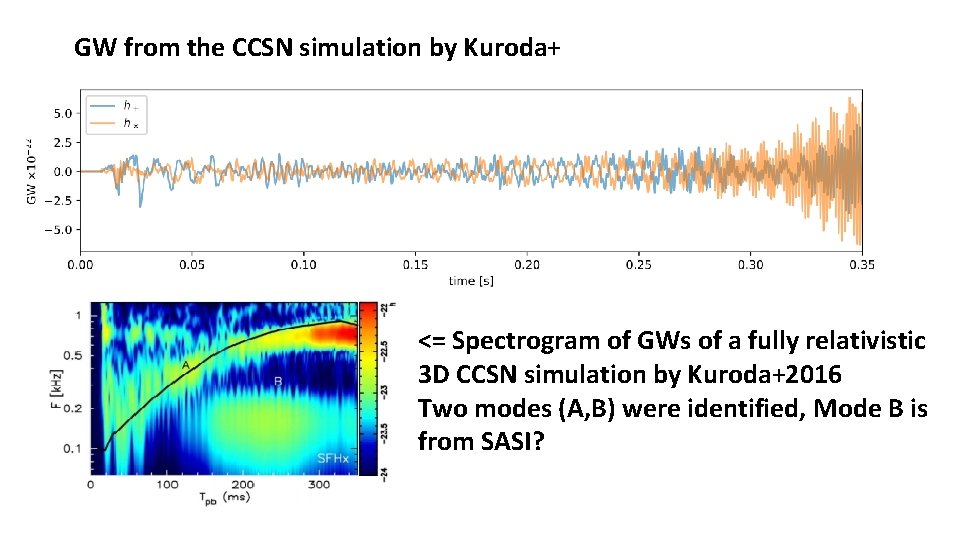
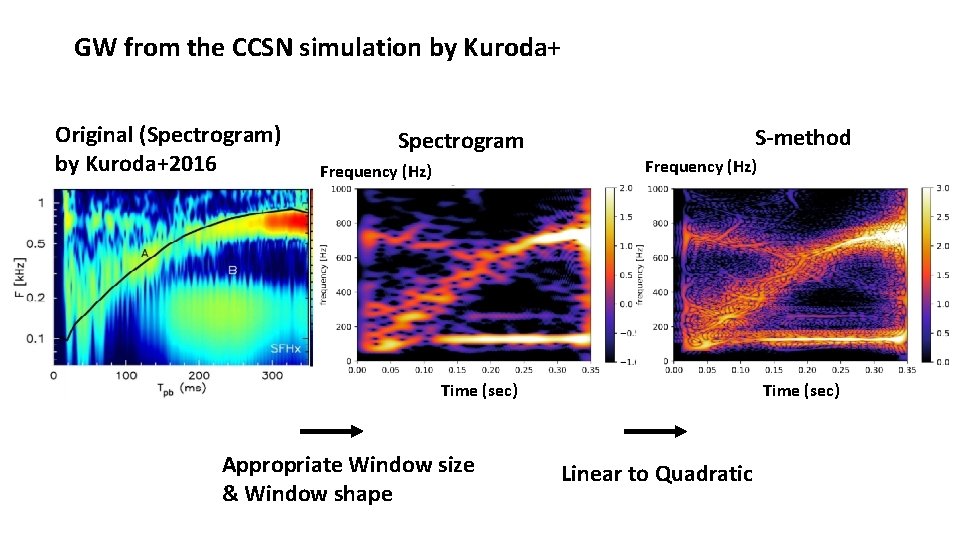
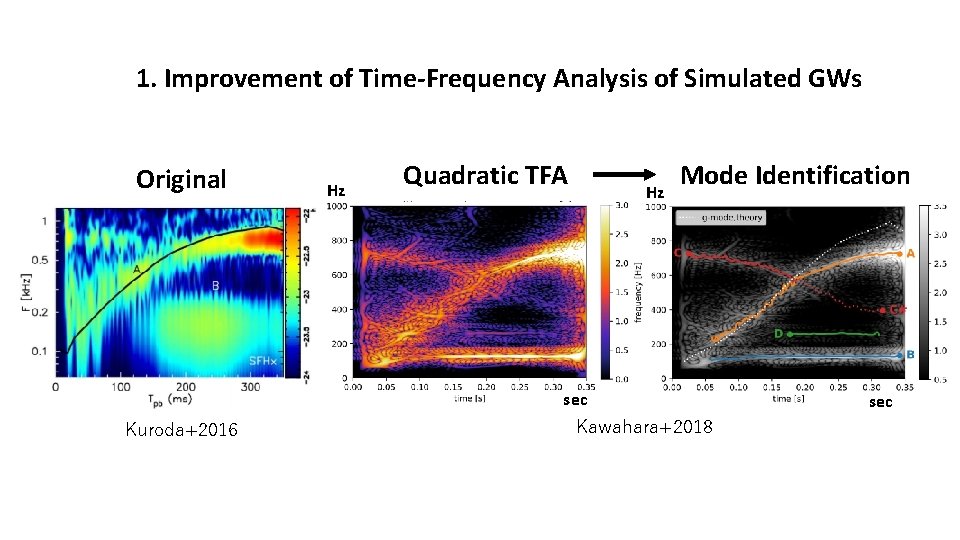
GW from the CCSN simulation by Kuroda+ <= Spectrogram of GWs of a fully relativistic 3 D CCSN simulation by Kuroda+2016 Two modes (A, B) were identified, Mode B is from SASI?
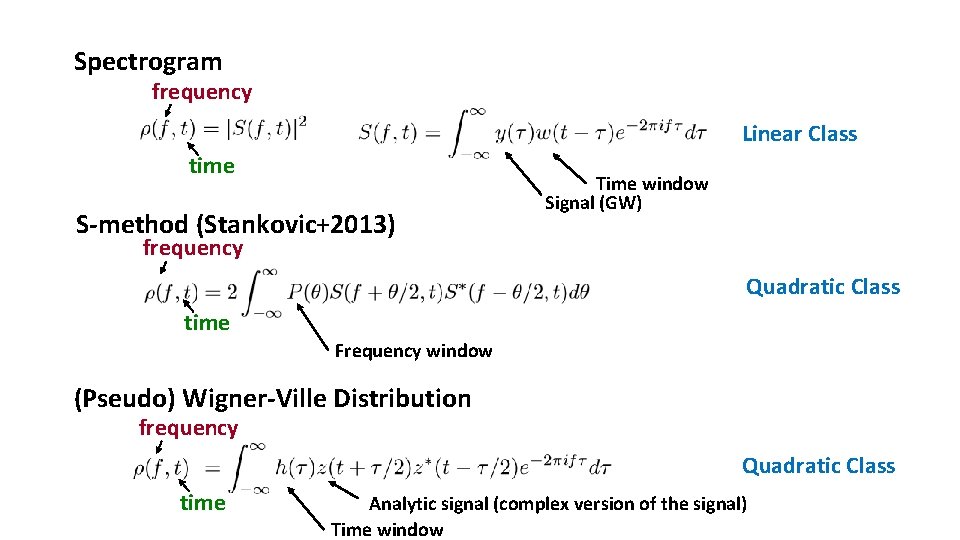
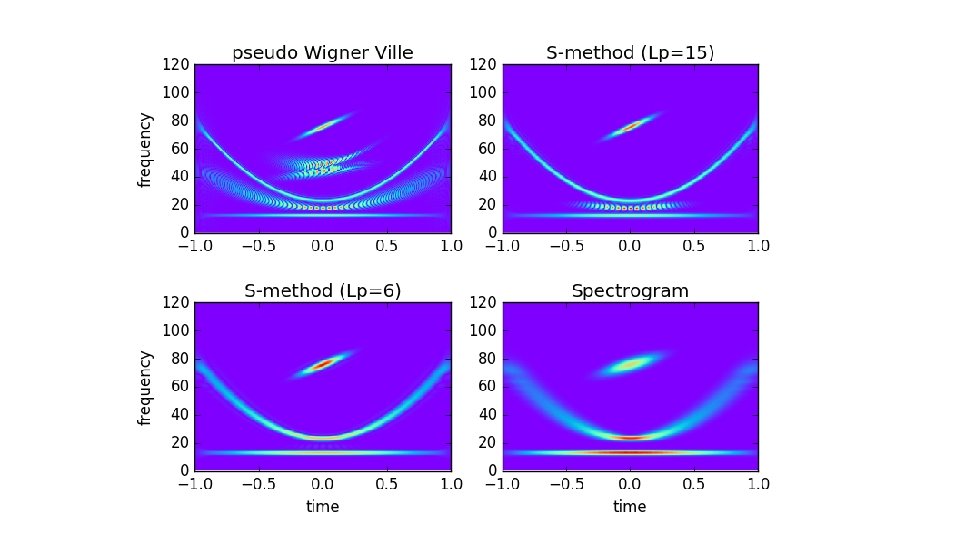
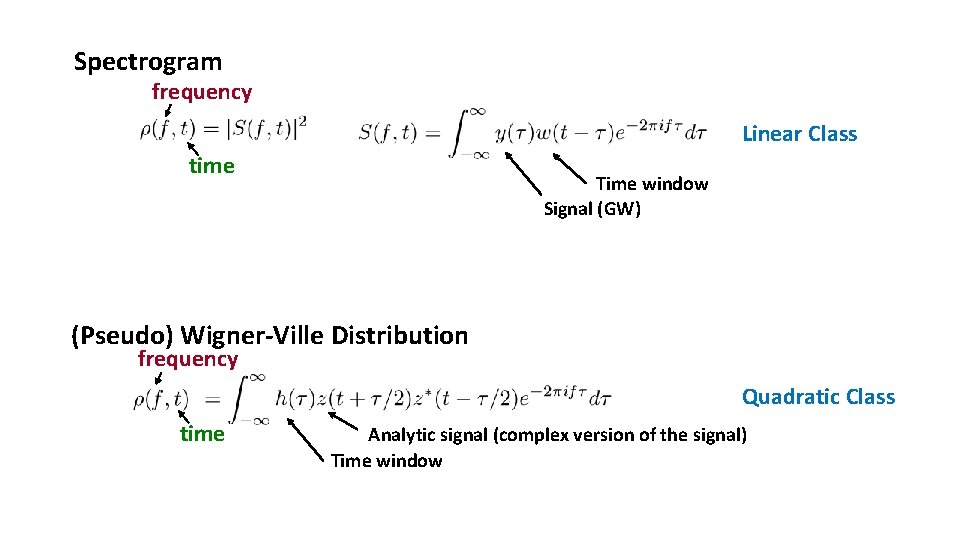
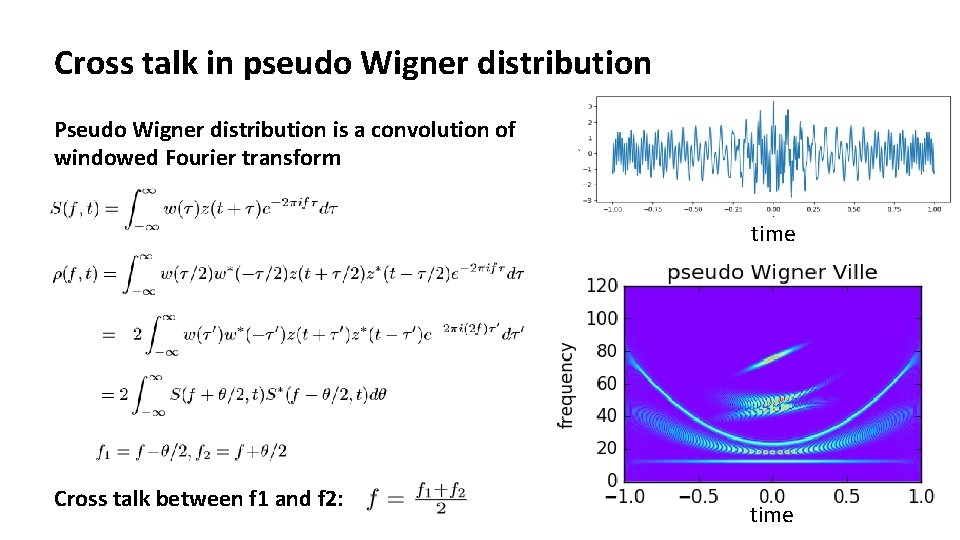
Spectrogram frequency Linear Class time S-method (Stankovic+2013) Time window Signal (GW) frequency Quadratic Class time Frequency window (Pseudo) Wigner-Ville Distribution frequency Quadratic Class time Analytic signal (complex version of the signal) Time window
GW from the CCSN simulation by Kuroda+ Original (Spectrogram) by Kuroda+2016 S-method Spectrogram Frequency (Hz) Time (sec) Appropriate Window size & Window shape Time (sec) Linear to Quadratic
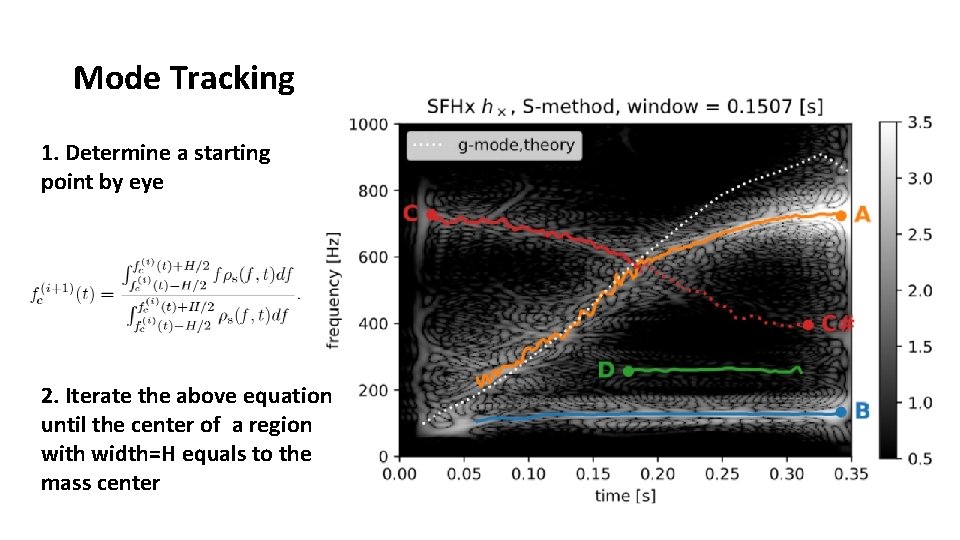
Mode Tracking 1. Determine a starting point by eye 2. Iterate the above equation until the center of a region with width=H equals to the mass center
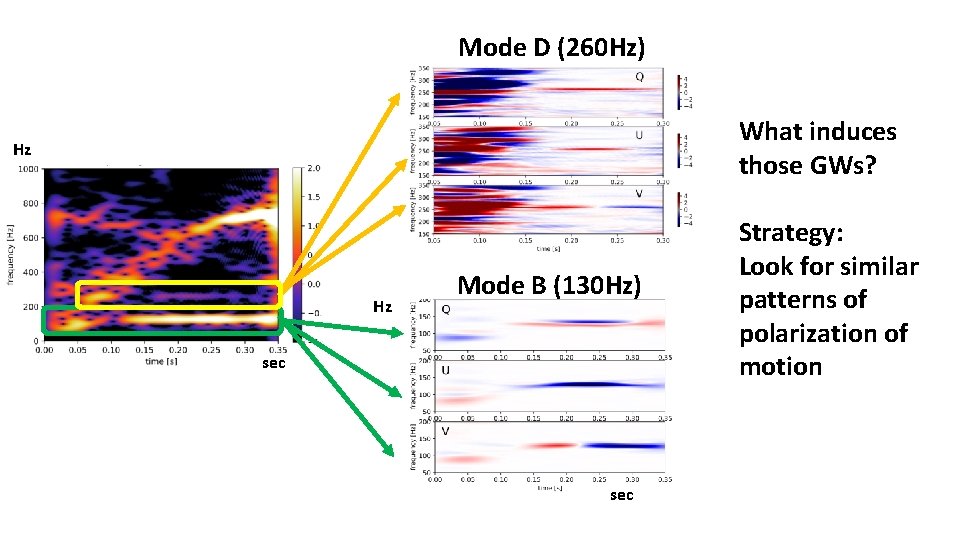
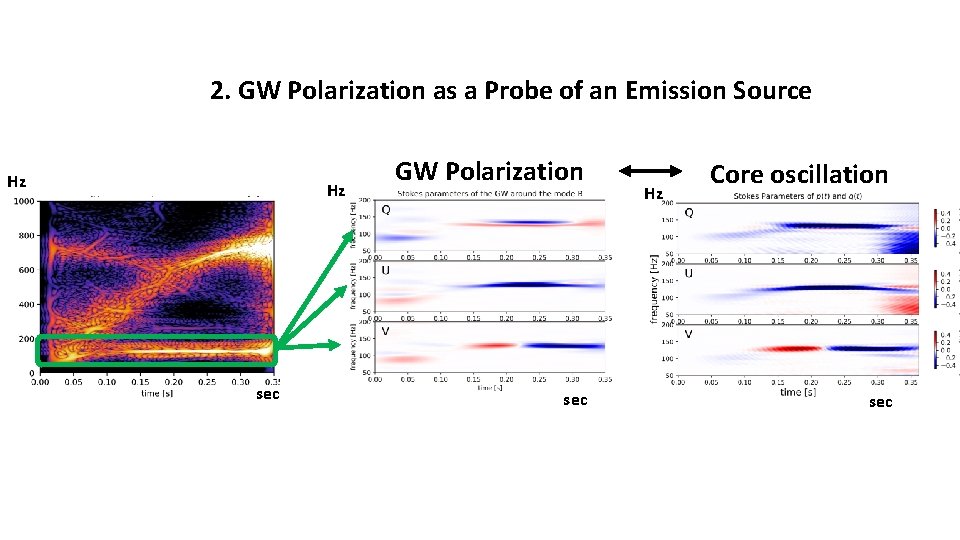
What happens here? Frequency [Hz] Randomly changing polarization : Convection-induced GWs Slowly changing polarization : Quasi static oscillation Time [s]
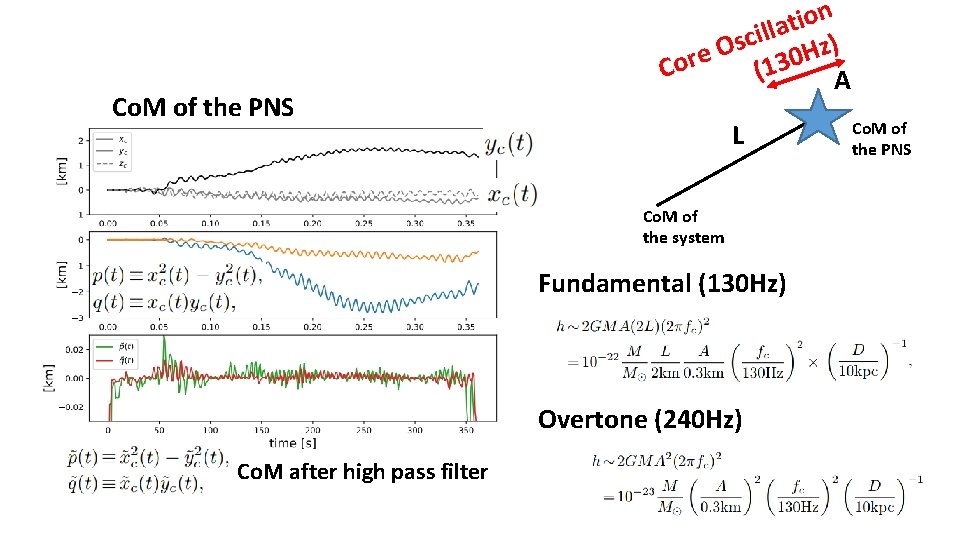
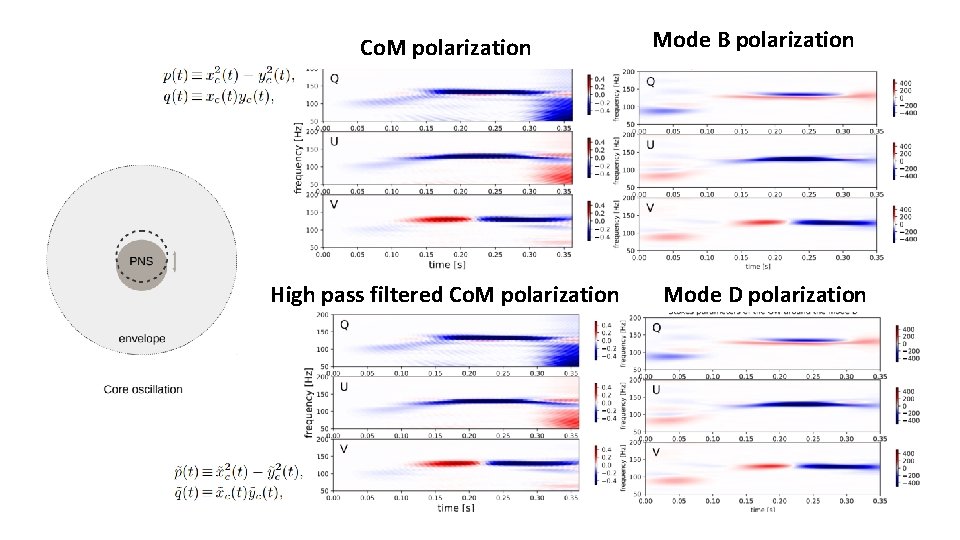
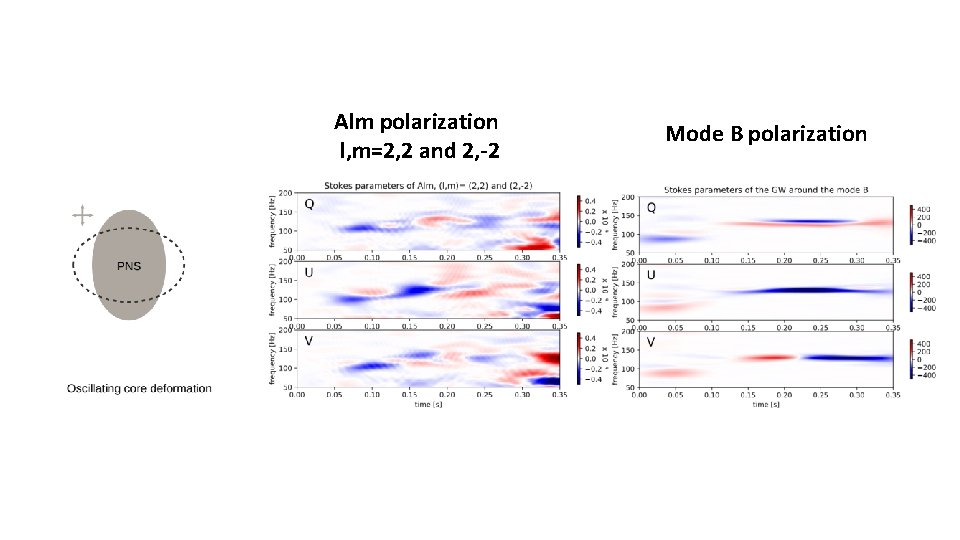
Mode D (260 Hz) What induces those GWs? Hz Hz Mode B (130 Hz) sec Strategy: Look for similar patterns of polarization of motion
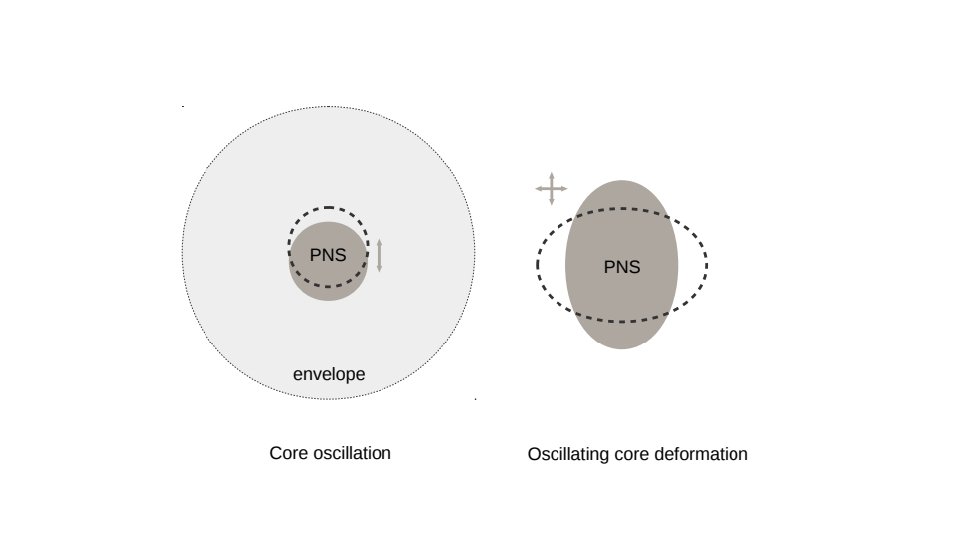
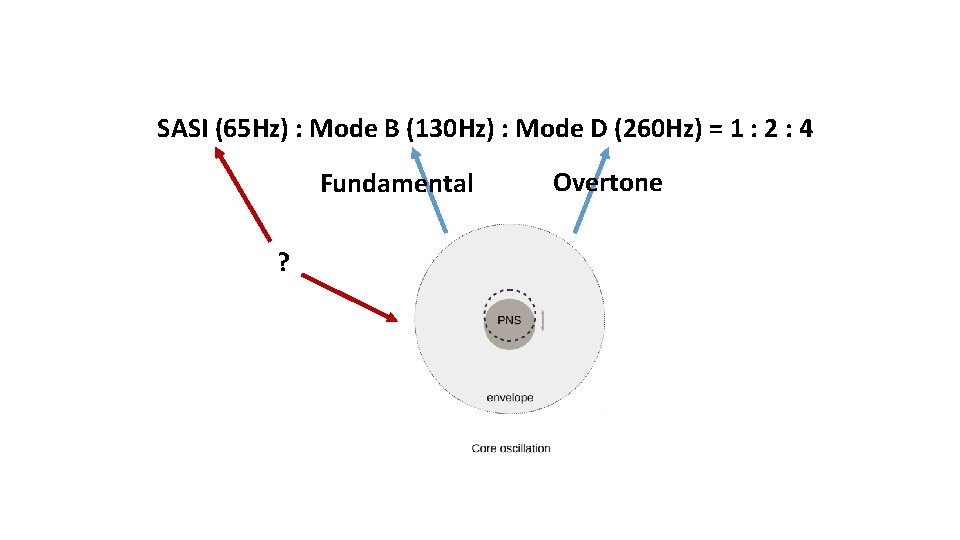
Co. M of the PNS n o i t illa z) c s O H e 0 r 3 o C (1 A L Co. M of the system Fundamental (130 Hz) Overtone (240 Hz) Co. M after high pass filter Co. M of the PNS
Co. M polarization High pass filtered Co. M polarization Mode B polarization Mode D polarization
Alm polarization l, m=2, 2 and 2, -2 Mode B polarization
SASI (65 Hz) : Mode B (130 Hz) : Mode D (260 Hz) = 1 : 2 : 4 Fundamental ? Overtone
Summary Sophisticated Time-Frequency Analysis of the relativistic simulation of CCSN identified 2 new modes The Polarization TFA is a useful tool to identify the origin of the GW emission even in simulation The core oscillation (shifted from the simulation center) explains the polarization/amplitude of the quasi static mode and its overtone Our TFA package ( ) is available here: https: //github. com/Hajime. Kawahara/juwvid
1. Improvement of Time-Frequency Analysis of Simulated GWs Original Hz Quadratic TFA Hz Mode Identification sec Kuroda+2016 Kawahara+2018 sec
Spectrogram frequency Linear Class time Time window Signal (GW) (Pseudo) Wigner-Ville Distribution frequency Quadratic Class time Analytic signal (complex version of the signal) Time window
Cross talk in pseudo Wigner distribution Pseudo Wigner distribution is a convolution of windowed Fourier transform time Cross talk between f 1 and f 2: time
2. GW Polarization as a Probe of an Emission Source Hz Hz sec GW Polarization sec Hz Core oscillation sec