
A LEVEL PHYSICS Year 1 StressStrain Graphs A
- Slides: 10
A LEVEL PHYSICS Year 1 Stress-Strain Graphs A* A B C Be able to interpret simple stress -strain curves and know how they differ from force-extension graphs (grade b) I can describe how stress is related to force, and strain is related to extension (grade b) I can calculate stress, strain and Young Modulus for a range of situations (grade a) B/C Target A/A* Target EP EP AEP EP
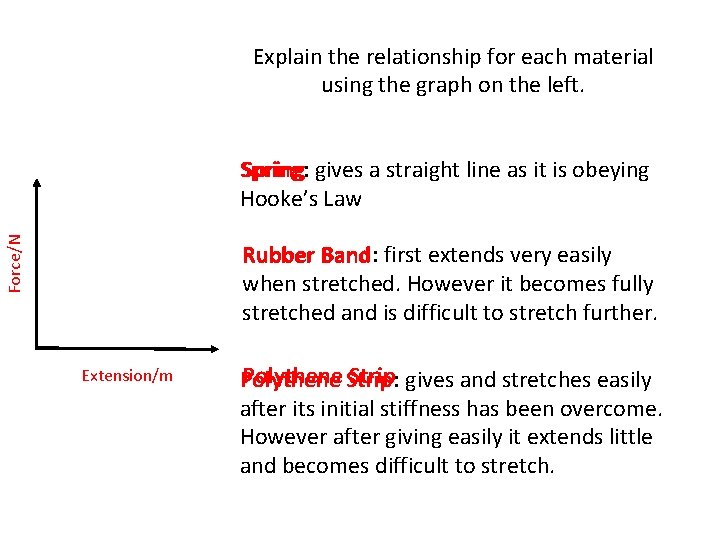
Explain the relationship for each material using the graph on the left. Force/N Spring gives a straight line as it is obeying Spring: Hooke’s Law Band: first extends very easily Rubber Band when stretched. However it becomes fully stretched and is difficult to stretch further. Extension/m Polythene Strip: Strip gives and stretches easily Polythene after its initial stiffness has been overcome. However after giving easily it extends little and becomes difficult to stretch.
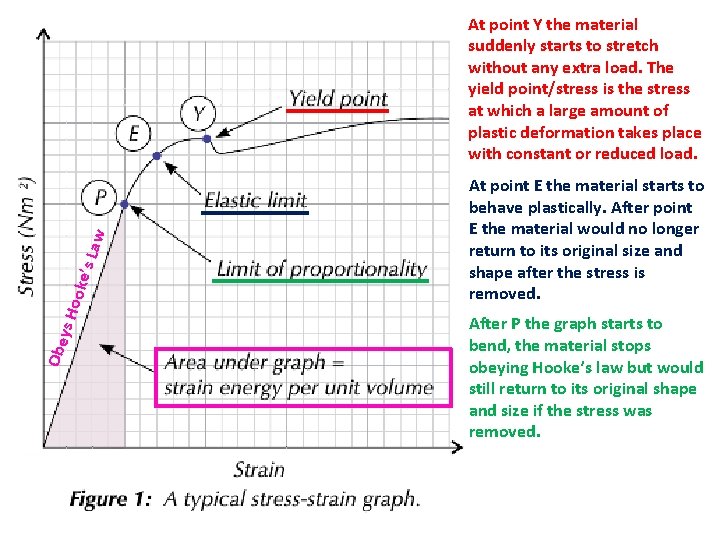
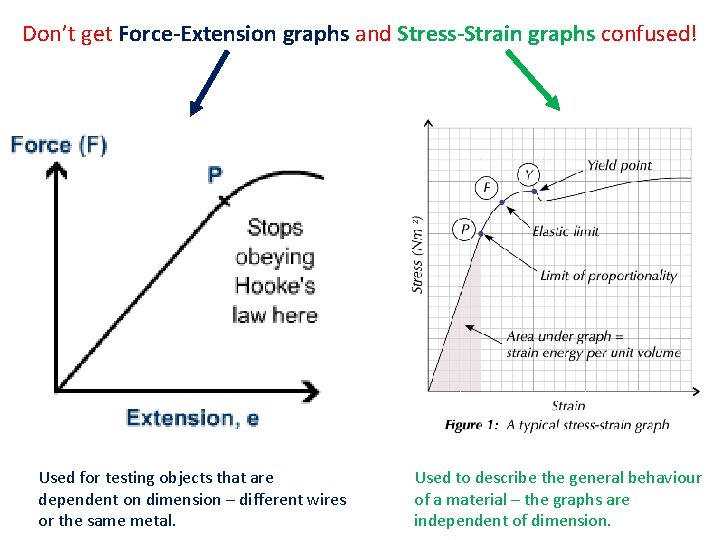
Obe ys H ook e’s L aw At point Y the material suddenly starts to stretch without any extra load. The yield point/stress is the stress at which a large amount of plastic deformation takes place with constant or reduced load. At point E the material starts to behave plastically. After point E the material would no longer return to its original size and shape after the stress is removed. After P the graph starts to bend, the material stops obeying Hooke’s law but would still return to its original shape and size if the stress was removed.
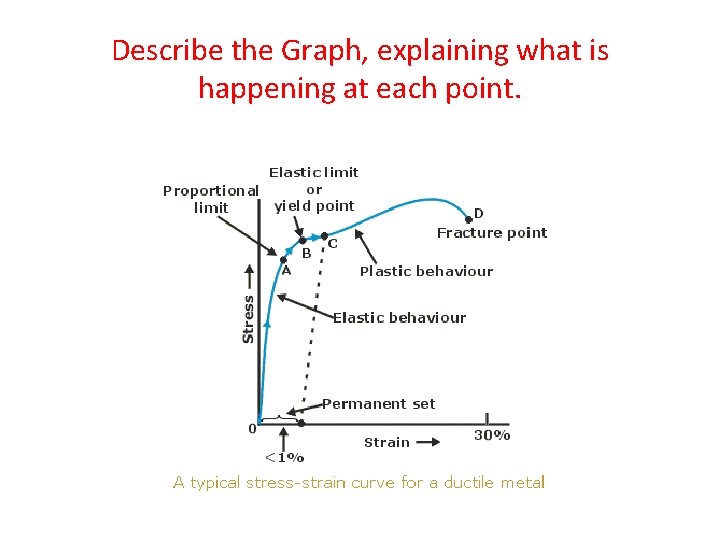
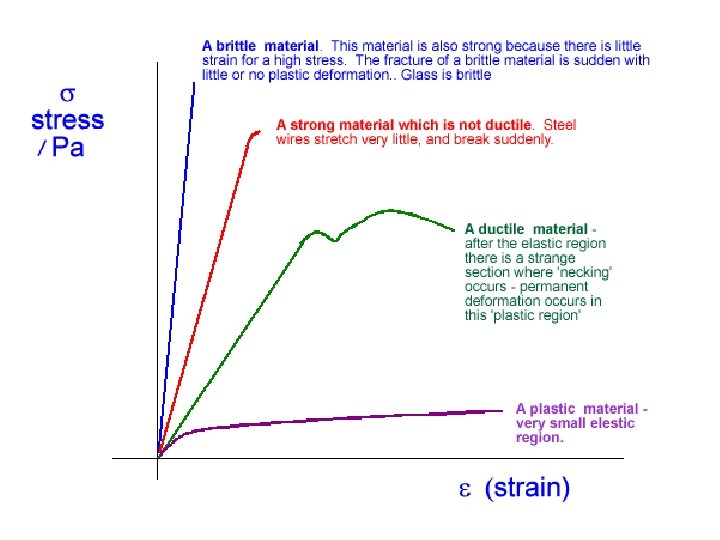
Describe the Graph, explaining what is happening at each point.
Turn to pg. 191 in AQA • Read from Stress-strain curves for different materials. • Answer questions 1 to 4.
Don’t get Force-Extension graphs and Stress-Strain graphs confused! Used for testing objects that are dependent on dimension – different wires or the same metal. Used to describe the general behaviour of a material – the graphs are independent of dimension.
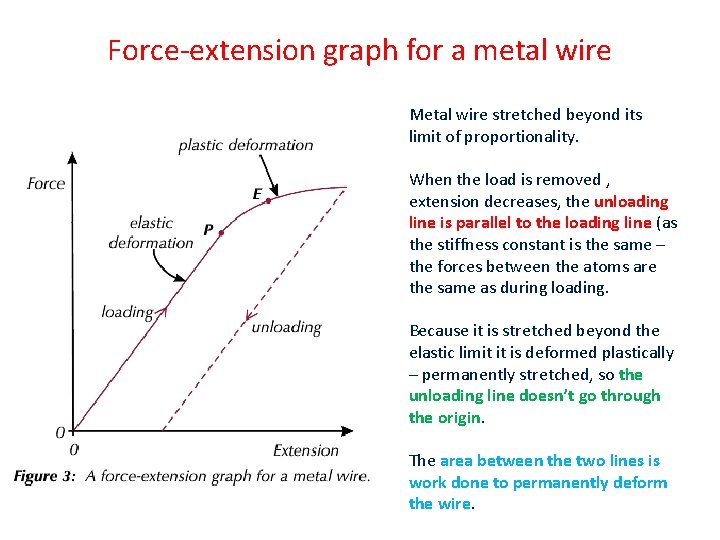
Force-extension graph for a metal wire Metal wire stretched beyond its limit of proportionality. When the load is removed , extension decreases, the unloading line is parallel to the loading line (as the stiffness constant is the same – the forces between the atoms are the same as during loading. Because it is stretched beyond the elastic limit it is deformed plastically – permanently stretched, so the unloading line doesn’t go through the origin. The area between the two lines is work done to permanently deform the wire.
Turn to pg. 189 Turn to pg. 192
Q. 1 and 2 pg. 183 then Analysis of tensile testing experiments worksheet