
A Letter to my future self Writing to
- Slides: 17
A Letter to my future self
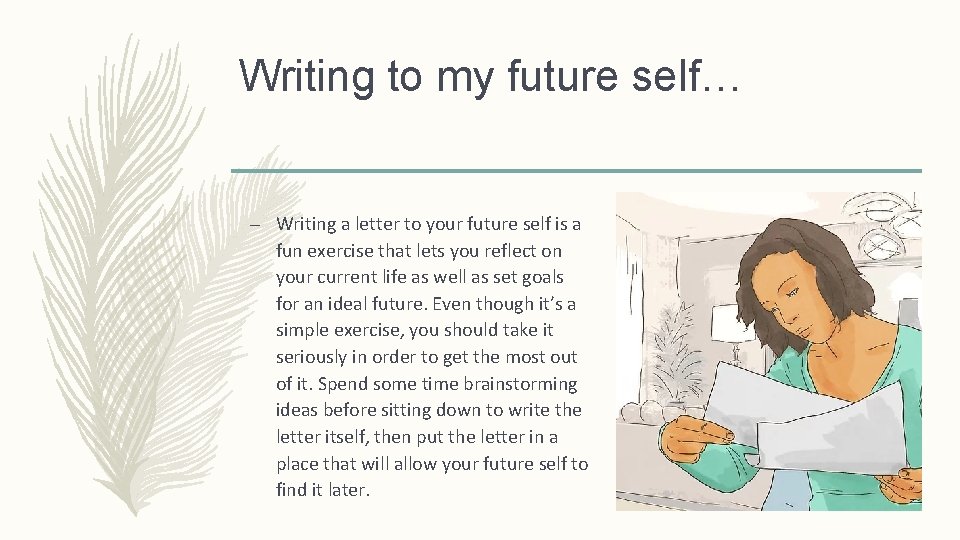
Writing to my future self… – Writing a letter to your future self is a fun exercise that lets you reflect on your current life as well as set goals for an ideal future. Even though it’s a simple exercise, you should take it seriously in order to get the most out of it. Spend some time brainstorming ideas before sitting down to write the letter itself, then put the letter in a place that will allow your future self to find it later.
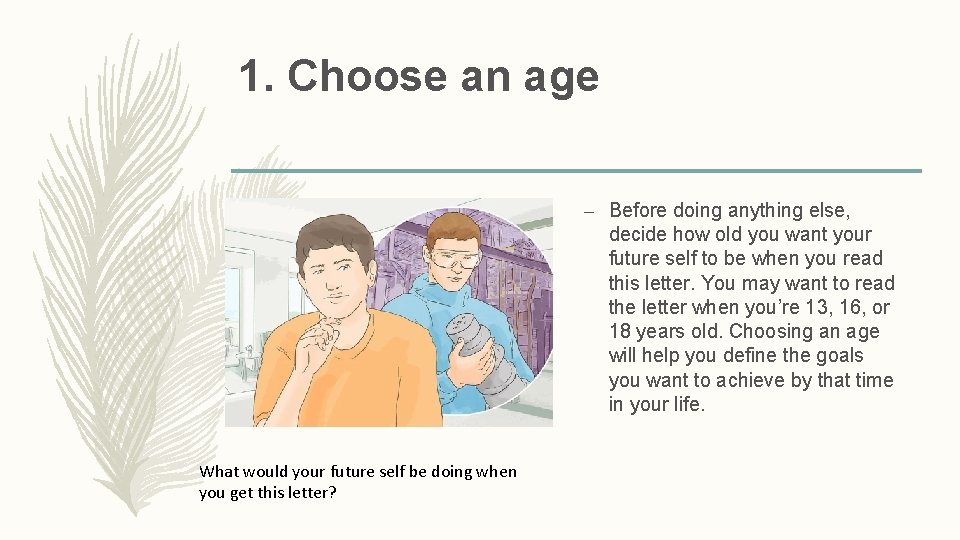
1. Choose an age – Before doing anything else, decide how old you want your future self to be when you read this letter. You may want to read the letter when you’re 13, 16, or 18 years old. Choosing an age will help you define the goals you want to achieve by that time in your life. What would your future self be doing when you get this letter?
Questions to ask before writing to your future self? How old will I be? What will I still love doing? Do I have an idea of what I will have accomplished, personally or professionally, by that age? What will I wish I had appreciated more when I was younger? Where will my friends be? What will I wish I had spent less time worrying about? What will I be doing? What will my attitude be towards life? Will I be working, going to school, writing a novel, playing football professionally? What will I be most proud of? How will I have changed for the better? What will I still have on my “bucket list”?
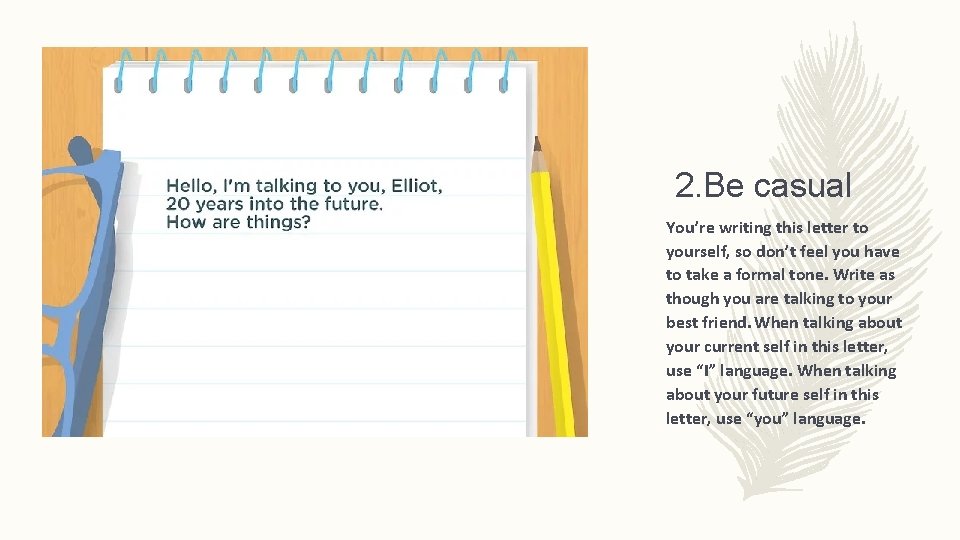
2. Be casual You’re writing this letter to yourself, so don’t feel you have to take a formal tone. Write as though you are talking to your best friend. When talking about your current self in this letter, use “I” language. When talking about your future self in this letter, use “you” language.
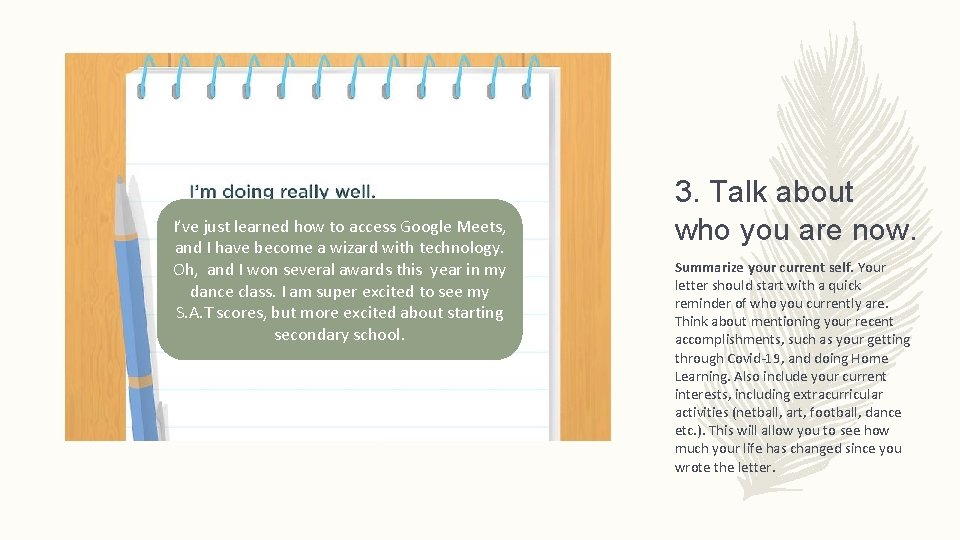
I’ve just learned how to access Google Meets, and I have become a wizard with technology. Oh, and I won several awards this year in my dance class. I am super excited to see my S. A. T scores, but more excited about starting secondary school. 3. Talk about who you are now. Summarize your current self. Your letter should start with a quick reminder of who you currently are. Think about mentioning your recent accomplishments, such as your getting through Covid-19, and doing Home Learning. Also include your current interests, including extracurricular activities (netball, art, football, dance etc. ). This will allow you to see how much your life has changed since you wrote the letter.
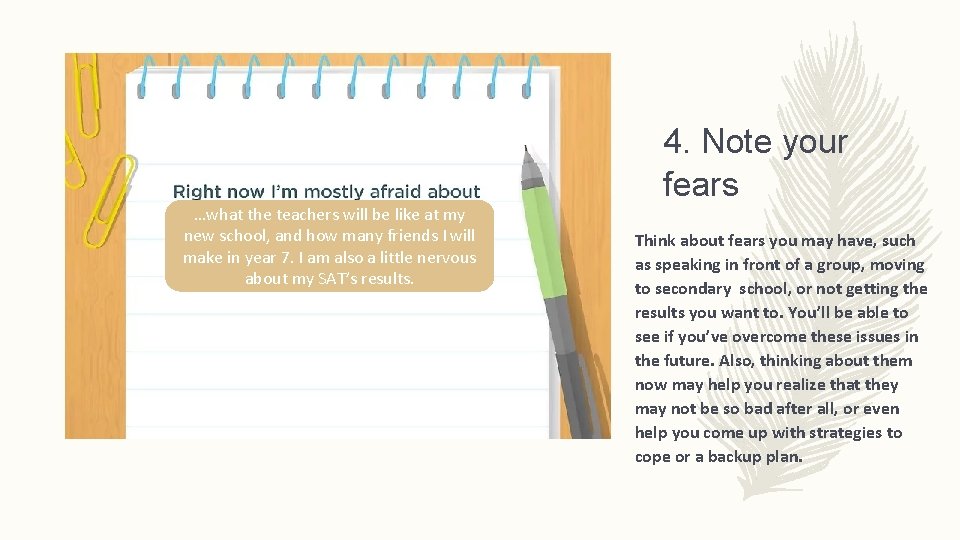
…what the teachers will be like at my new school, and how many friends I will make in year 7. I am also a little nervous about my SAT’s results. 4. Note your fears Think about fears you may have, such as speaking in front of a group, moving to secondary school, or not getting the results you want to. You’ll be able to see if you’ve overcome these issues in the future. Also, thinking about them now may help you realize that they may not be so bad after all, or even help you come up with strategies to cope or a backup plan.
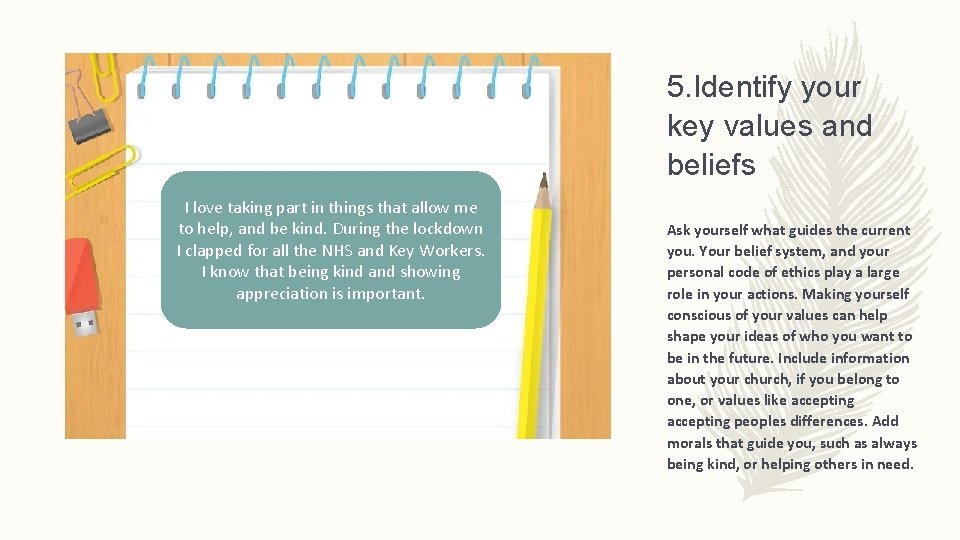
5. Identify your key values and beliefs I love taking part in things that allow me to help, and be kind. During the lockdown I clapped for all the NHS and Key Workers. I know that being kind and showing appreciation is important. Ask yourself what guides the current you. Your belief system, and your personal code of ethics play a large role in your actions. Making yourself conscious of your values can help shape your ideas of who you want to be in the future. Include information about your church, if you belong to one, or values like accepting peoples differences. Add morals that guide you, such as always being kind, or helping others in need.
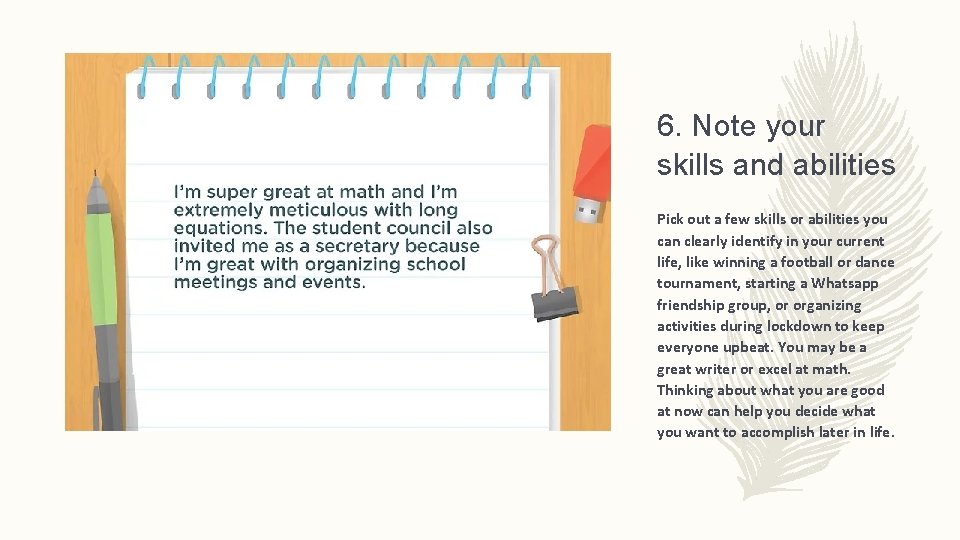
6. Note your skills and abilities Pick out a few skills or abilities you can clearly identify in your current life, like winning a football or dance tournament, starting a Whatsapp friendship group, or organizing activities during lockdown to keep everyone upbeat. You may be a great writer or excel at math. Thinking about what you are good at now can help you decide what you want to accomplish later in life.
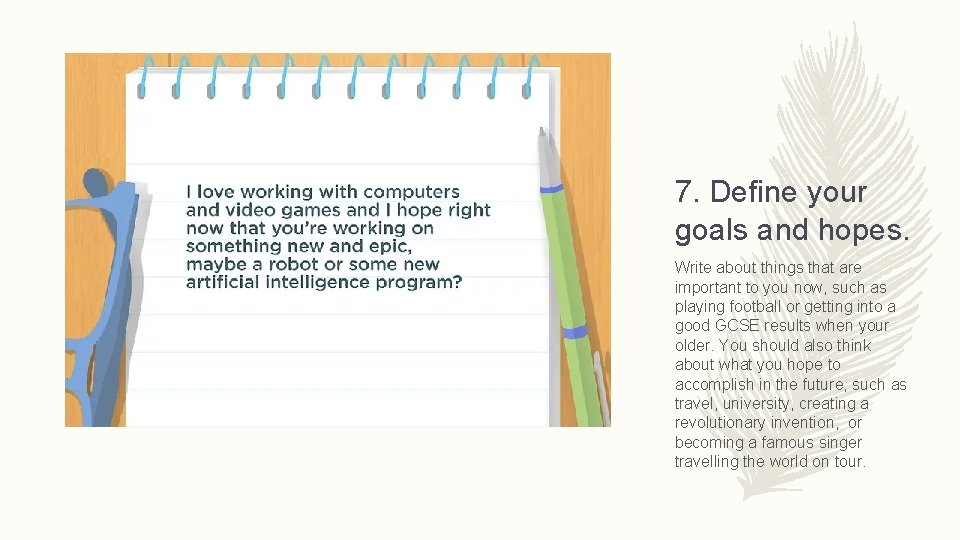
7. Define your goals and hopes. Write about things that are important to you now, such as playing football or getting into a good GCSE results when your older. You should also think about what you hope to accomplish in the future, such as travel, university, creating a revolutionary invention, or becoming a famous singer travelling the world on tour.
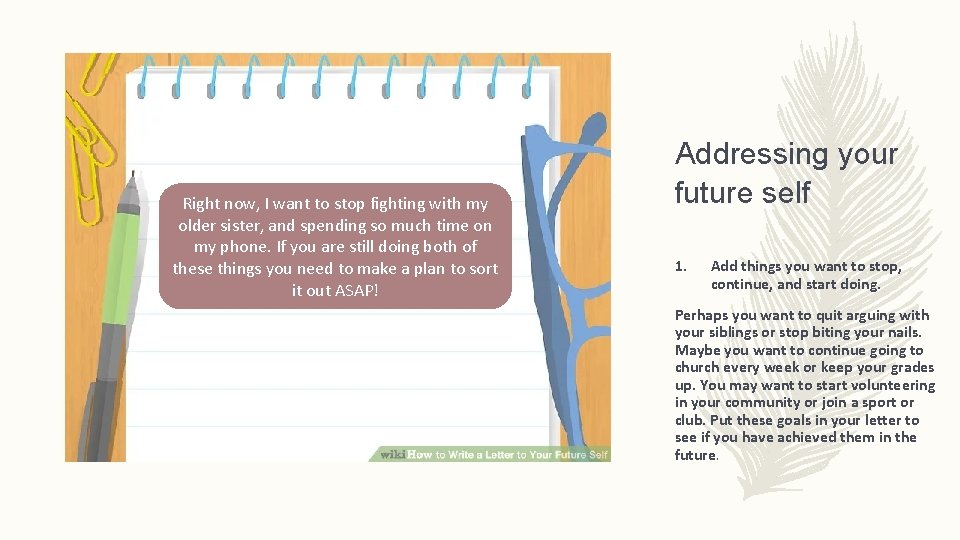
Right now, I want to stop fighting with my older sister, and spending so much time on my phone. If you are still doing both of these things you need to make a plan to sort it out ASAP! Addressing your future self 1. Add things you want to stop, continue, and start doing. Perhaps you want to quit arguing with your siblings or stop biting your nails. Maybe you want to continue going to church every week or keep your grades up. You may want to start volunteering in your community or join a sport or club. Put these goals in your letter to see if you have achieved them in the future.
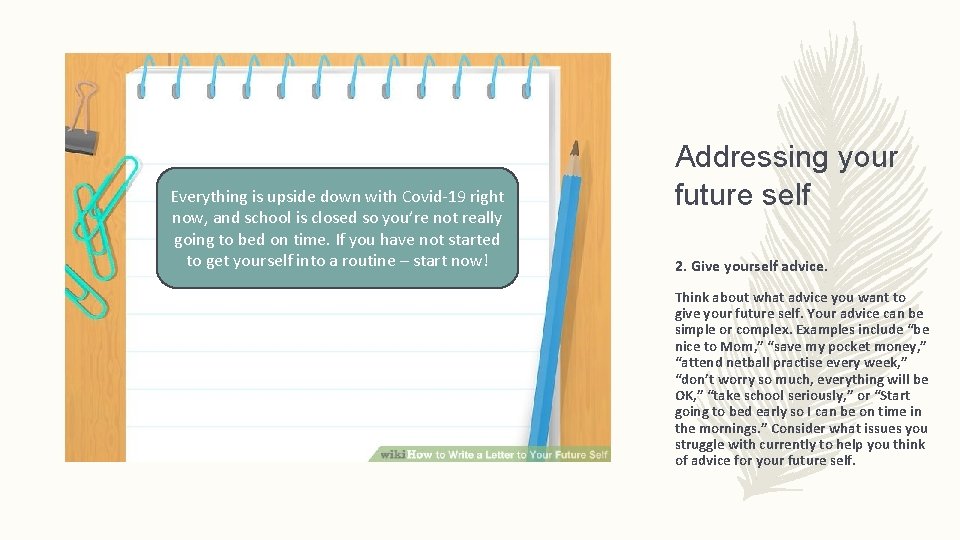
Everything is upside down with Covid-19 right now, and school is closed so you’re not really going to bed on time. If you have not started to get yourself into a routine – start now! Addressing your future self 2. Give yourself advice. Think about what advice you want to give your future self. Your advice can be simple or complex. Examples include “be nice to Mom, ” “save my pocket money, ” “attend netball practise every week, ” “don’t worry so much, everything will be OK, ” “take school seriously, ” or “Start going to bed early so I can be on time in the mornings. ” Consider what issues you struggle with currently to help you think of advice for your future self.
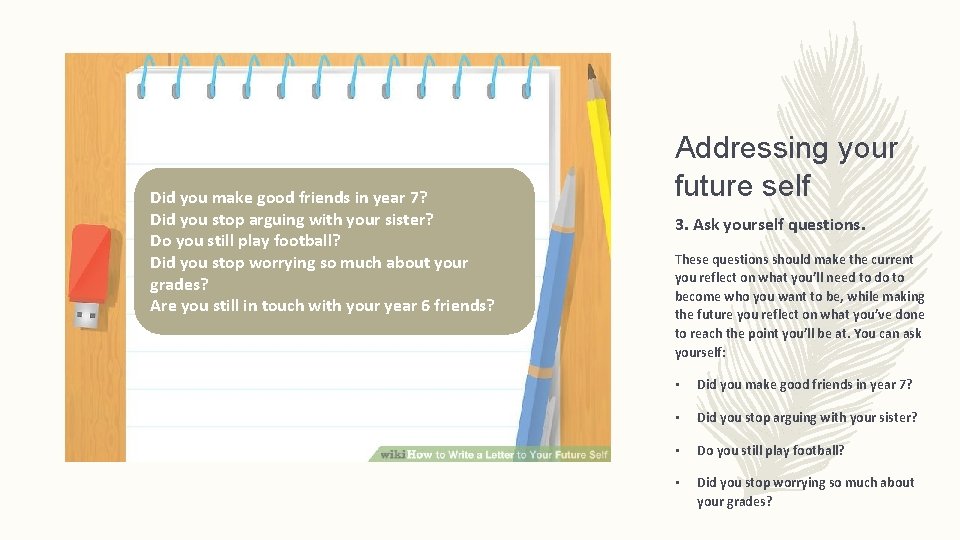
Did you make good friends in year 7? Did you stop arguing with your sister? Do you still play football? Did you stop worrying so much about your grades? Are you still in touch with your year 6 friends? Addressing your future self 3. Ask yourself questions. These questions should make the current you reflect on what you’ll need to do to become who you want to be, while making the future you reflect on what you’ve done to reach the point you’ll be at. You can ask yourself: • Did you make good friends in year 7? • Did you stop arguing with your sister? • Do you still play football? • Did you stop worrying so much about your grades?
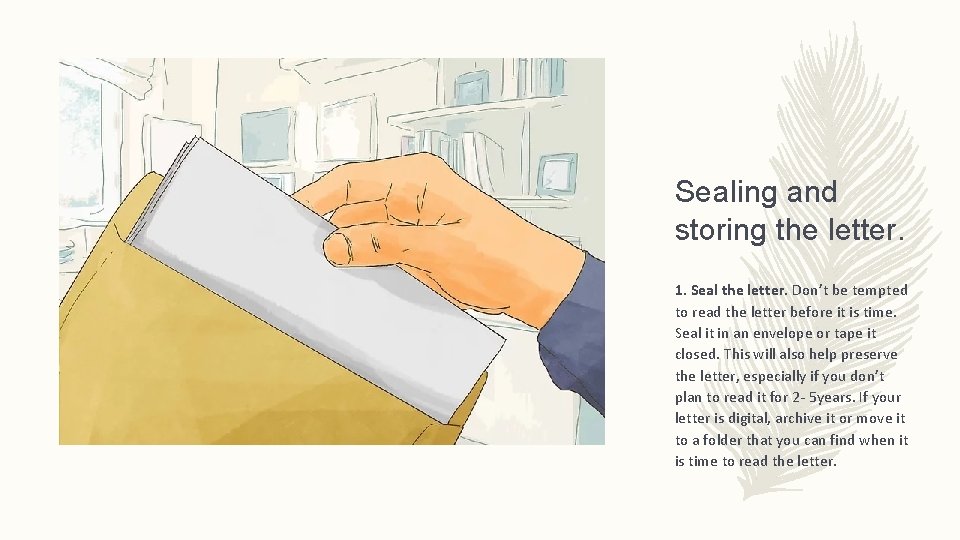
Sealing and storing the letter. 1. Seal the letter. Don’t be tempted to read the letter before it is time. Seal it in an envelope or tape it closed. This will also help preserve the letter, especially if you don’t plan to read it for 2 - 5 years. If your letter is digital, archive it or move it to a folder that you can find when it is time to read the letter.
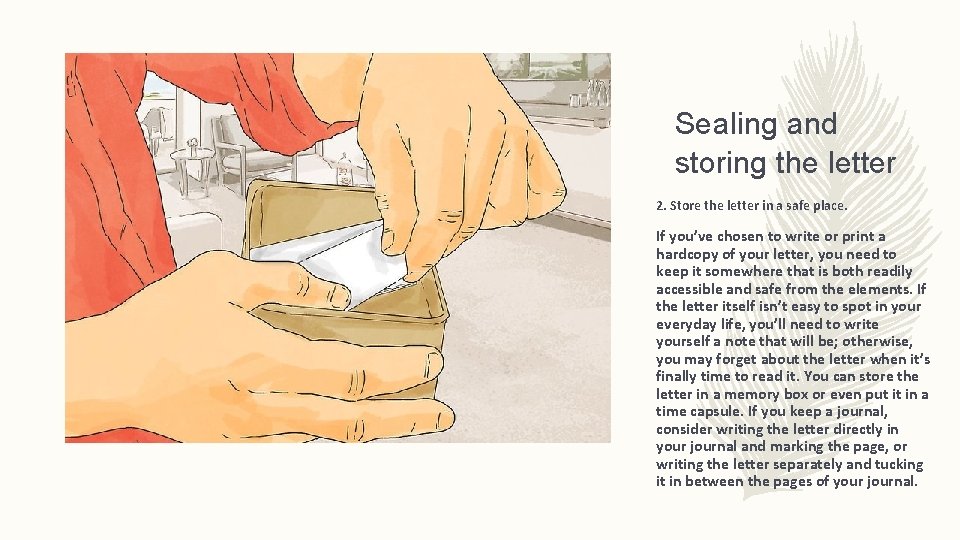
Sealing and storing the letter 2. Store the letter in a safe place. If you’ve chosen to write or print a hardcopy of your letter, you need to keep it somewhere that is both readily accessible and safe from the elements. If the letter itself isn’t easy to spot in your everyday life, you’ll need to write yourself a note that will be; otherwise, you may forget about the letter when it’s finally time to read it. You can store the letter in a memory box or even put it in a time capsule. If you keep a journal, consider writing the letter directly in your journal and marking the page, or writing the letter separately and tucking it in between the pages of your journal.
Your Task – Write a letter to your future self – Use the points and guidance in this power point to help you – Remember to ask yourself reflective questions ( see slide 4) Places to create your letter – Use a journal if you have one to write your letter in – Create an email to yourself and send the letter to yourself in your email – Hand write on a piece of note paper and seal in an envelope
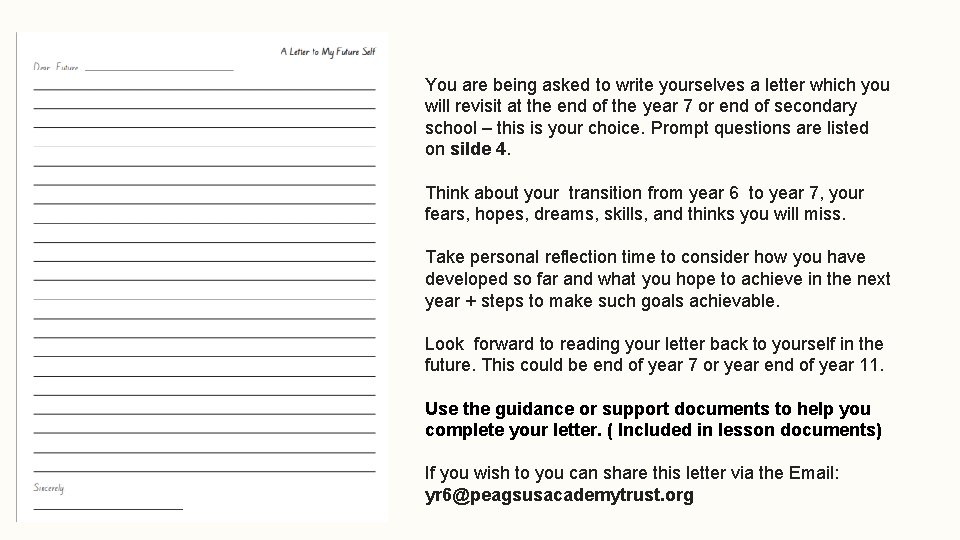
You are being asked to write yourselves a letter which you will revisit at the end of the year 7 or end of secondary school – this is your choice. Prompt questions are listed on silde 4. Think about your transition from year 6 to year 7, your fears, hopes, dreams, skills, and thinks you will miss. Take personal reflection time to consider how you have developed so far and what you hope to achieve in the next year + steps to make such goals achievable. Look forward to reading your letter back to yourself in the future. This could be end of year 7 or year end of year 11. Use the guidance or support documents to help you complete your letter. ( Included in lesson documents) If you wish to you can share this letter via the Email: yr 6@peagsusacademytrust. org