
A Learning Walk through Midtown West From the
- Slides: 42
A Learning Walk through Midtown West From the PS 212 School Leadership Team
The mission of PS 212/Midtown West is to provide a child-centered environment that will inspire and challenge all of our students to become independent thinkers, problem solvers and lifelong learners. We are dedicated to establishing a collaborative spirit among parents, faculty and staff to ensure that all children reach their academic goals.
The School Leadership Team (SLT) is comprised of staff members, the Principal, the PTA President, four parent representatives and one alternate. The parent body elects the SLT members at the general PTA meeting in June. Each segment of the school population is represented, i. e. , lower (Pre-K, K & 1 st), middle (2 nd & 3 rd), and upper (4 th & 5 th) grades. We strive to ensure that the diversity of the school is reflected in the SLT.
Rigor - students from Pre-K to 5 th grade will explore content deeply and wrestle with complicated ideas, showing measurable growth in math and literacy. Curriculum & assessment - GOALS teachers will participate in meetings in which student work, curriculum, and assessments from grades preceding/following their loop are analyzed to better understand the needs of students, using rubrics, revised curriculum maps and revised assessments. Enrichment - students will participate in enrichment activities to enhance their learning experiences in the classroom, resulting in increased interest and involvement in academic classroom-based activities.
What did we do? A pair of SLT parents accompanied by an SLT teacher walked through classrooms for each goal • Observations – classroom layout, materials, displays of student work • Questioning • Note taking • Photographs/Video •
Pre-K Kindergarten 1 st grade 2 nd grade 3 rd grade 4 th grade 5 th grade The following pages will show you what we discovered about all three goals through words and pictures. We hope this presentation gives you another window into the values and the curriculum across the grades and loops at MTW, as you visit the classrooms.
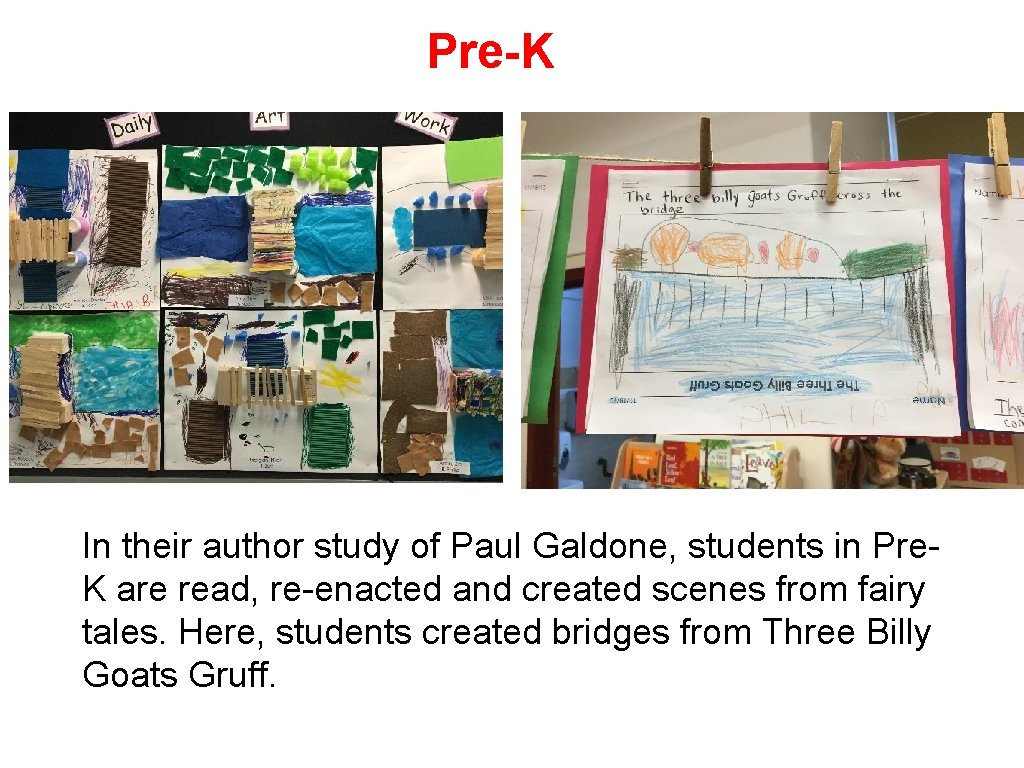
Pre-K In their author study of Paul Galdone, students in Pre. K are read, re-enacted and created scenes from fairy tales. Here, students created bridges from Three Billy Goats Gruff.
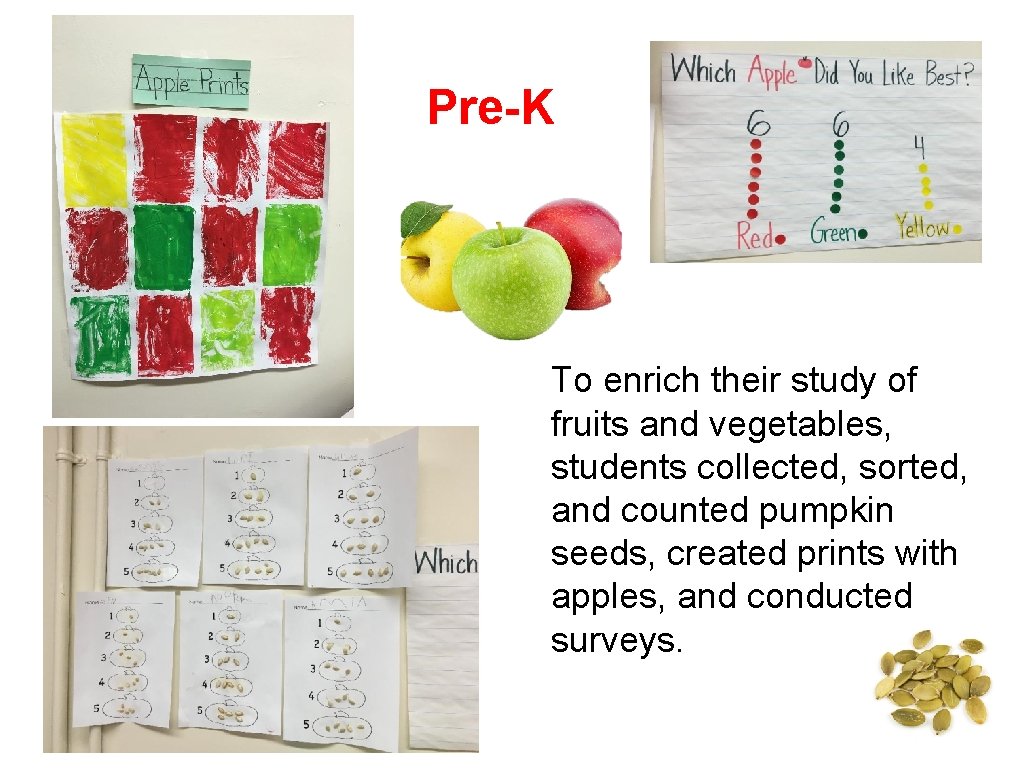
Pre-K To enrich their study of fruits and vegetables, students collected, sorted, and counted pumpkin seeds, created prints with apples, and conducted surveys.
What teachers told us • In the first year of pre-K at MTW, lessons were based on “emergent” content, relying on students’ interests to direct class activities. • This year, lessons and weekly plans have become more structured with mini-studies around family, community, folk tales, and transportation that echo K-1 and beyond. • Changes arose out of loop meetings and in collaborative creation of curriculum maps.
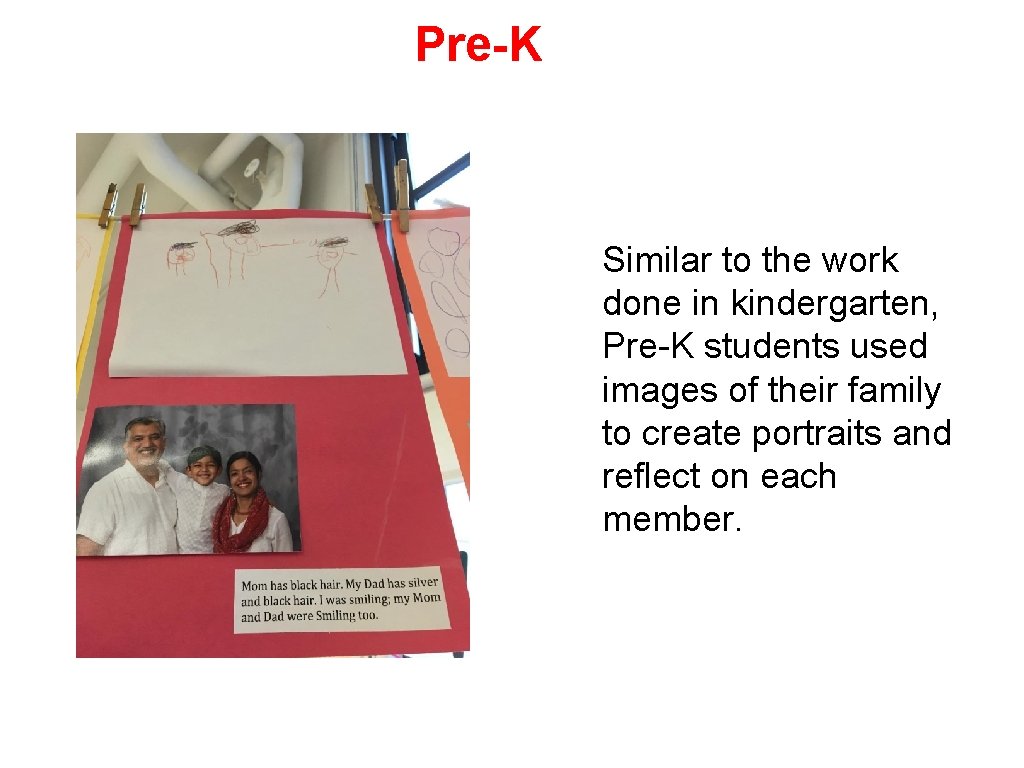
Pre-K Similar to the work done in kindergarten, Pre-K students used images of their family to create portraits and reflect on each member.
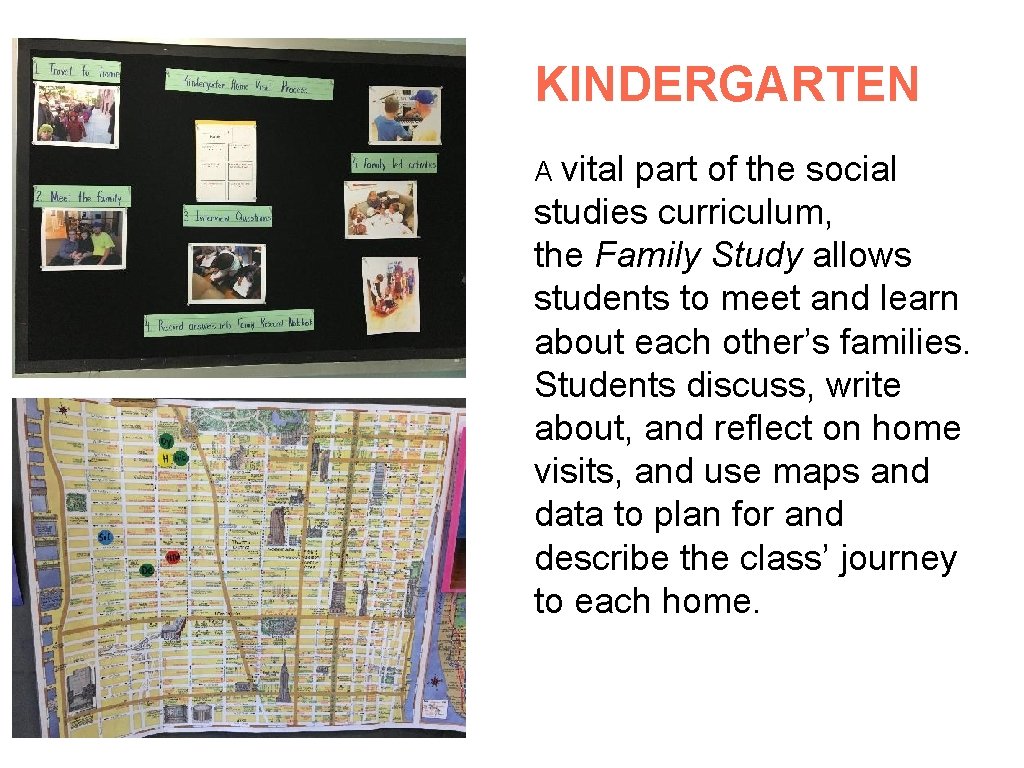
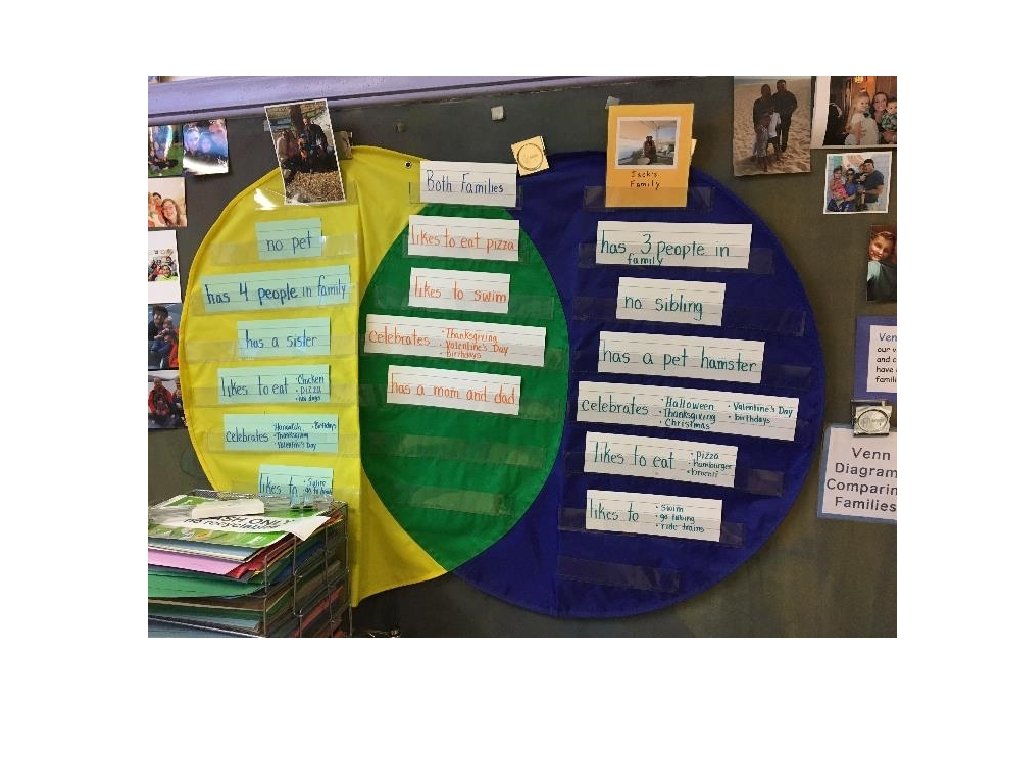
KINDERGARTEN A vital part of the social studies curriculum, the Family Study allows students to meet and learn about each other’s families. Students discuss, write about, and reflect on home visits, and use maps and data to plan for and describe the class’ journey to each home.
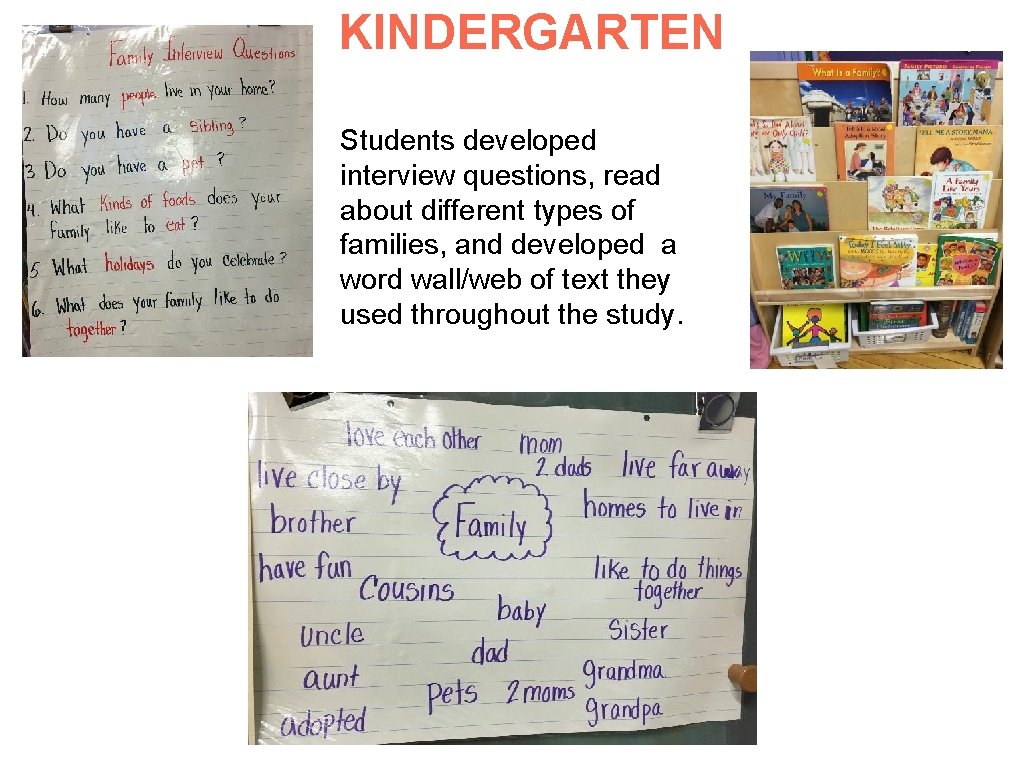
KINDERGARTEN Students developed interview questions, read about different types of families, and developed a word wall/web of text they used throughout the study.
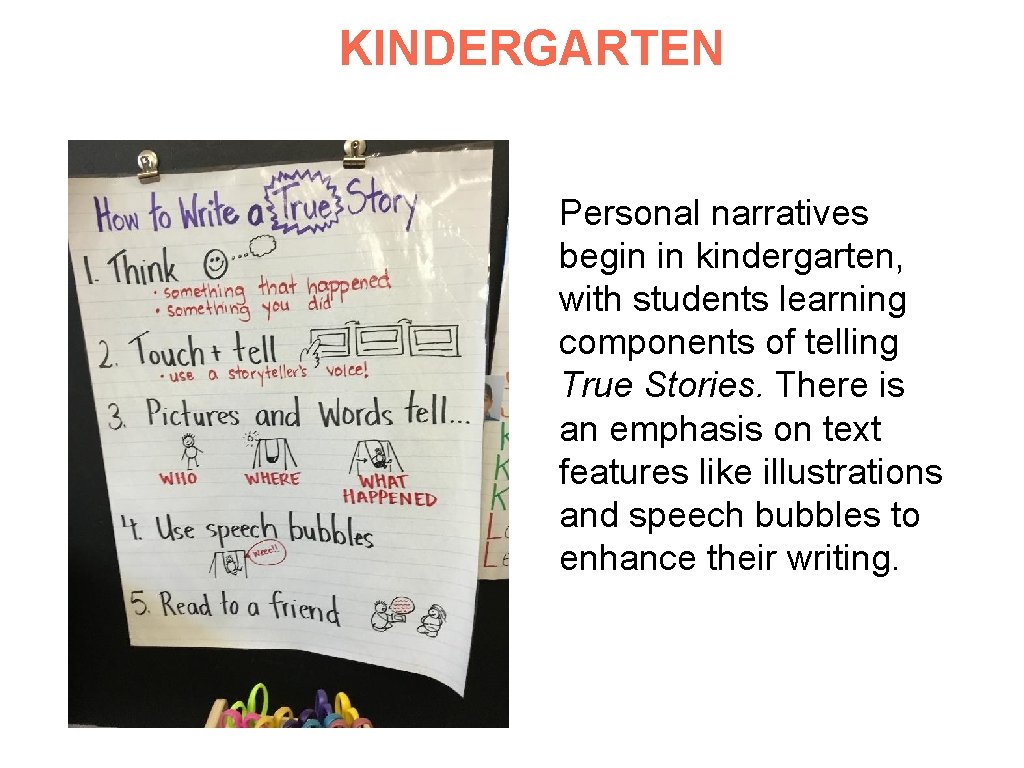
KINDERGARTEN Personal narratives begin in kindergarten, with students learning components of telling True Stories. There is an emphasis on text features like illustrations and speech bubbles to enhance their writing.
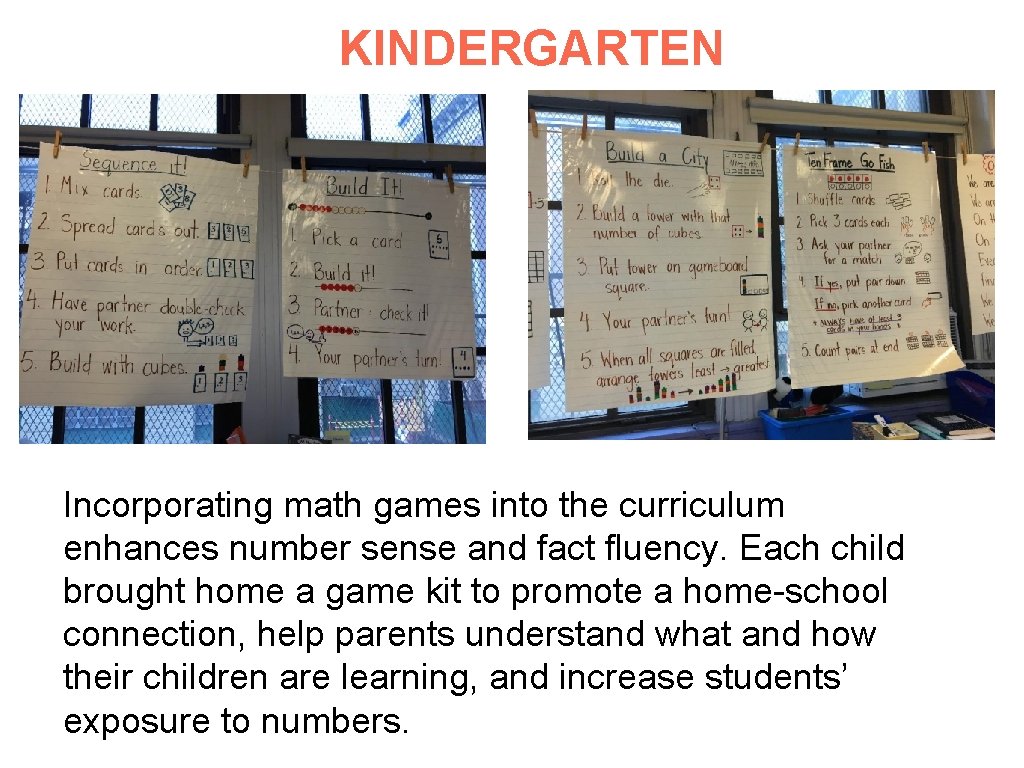
KINDERGARTEN Incorporating math games into the curriculum enhances number sense and fact fluency. Each child brought home a game kit to promote a home-school connection, help parents understand what and how their children are learning, and increase students’ exposure to numbers.
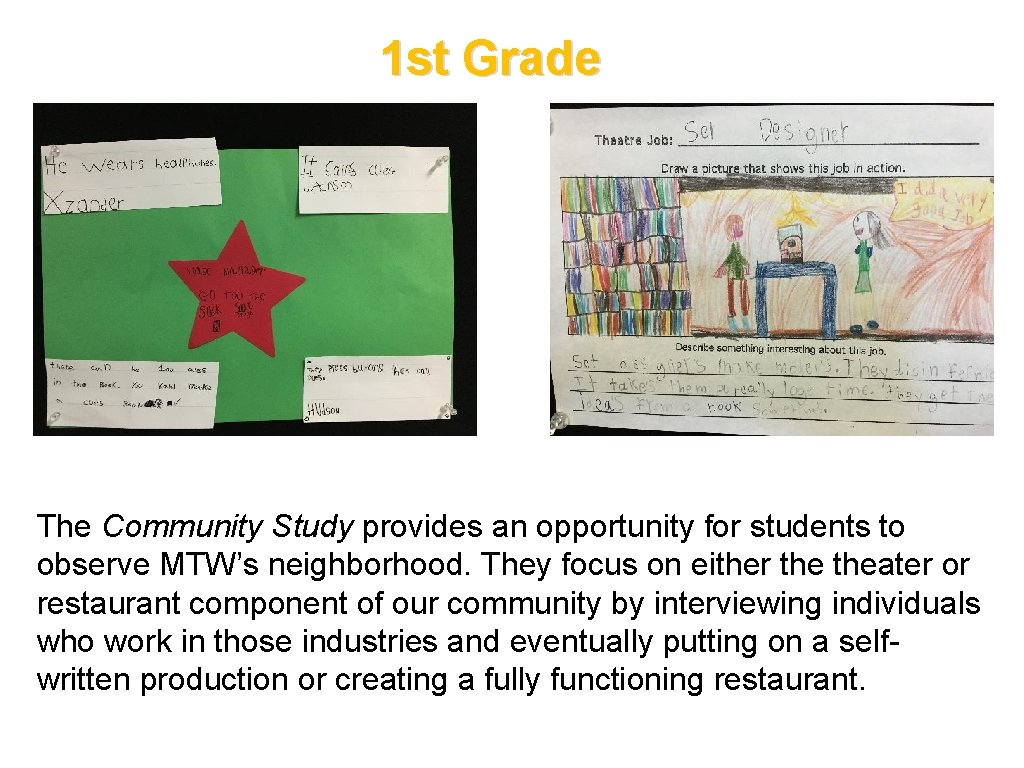
1 st Grade The Community Study provides an opportunity for students to observe MTW’s neighborhood. They focus on either theater or restaurant component of our community by interviewing individuals who work in those industries and eventually putting on a selfwritten production or creating a fully functioning restaurant.
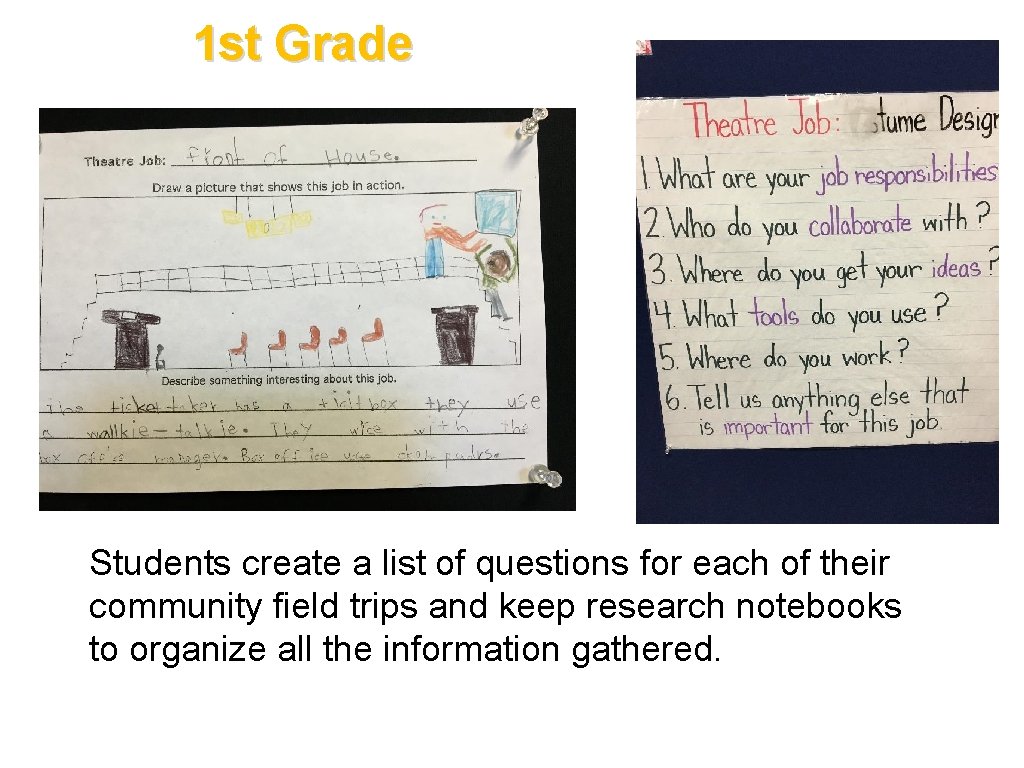
1 st Grade Students create a list of questions for each of their community field trips and keep research notebooks to organize all the information gathered.
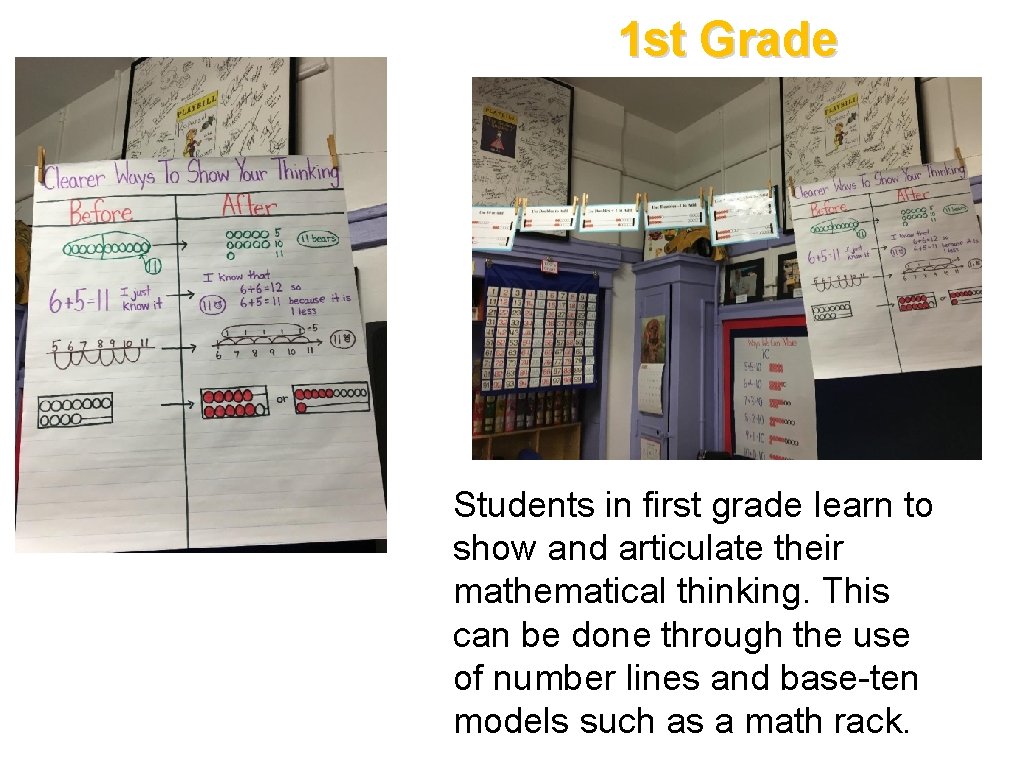
1 st Grade Students in first grade learn to show and articulate their mathematical thinking. This can be done through the use of number lines and base-ten models such as a math rack.
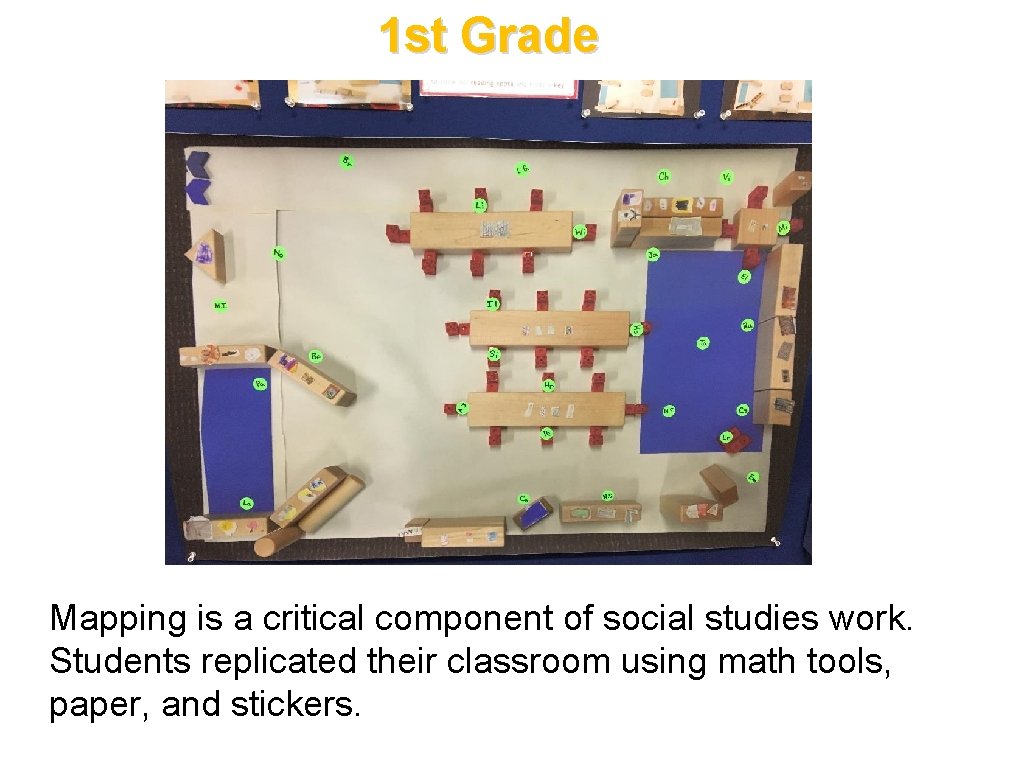
1 st Grade Mapping is a critical component of social studies work. Students replicated their classroom using math tools, paper, and stickers.
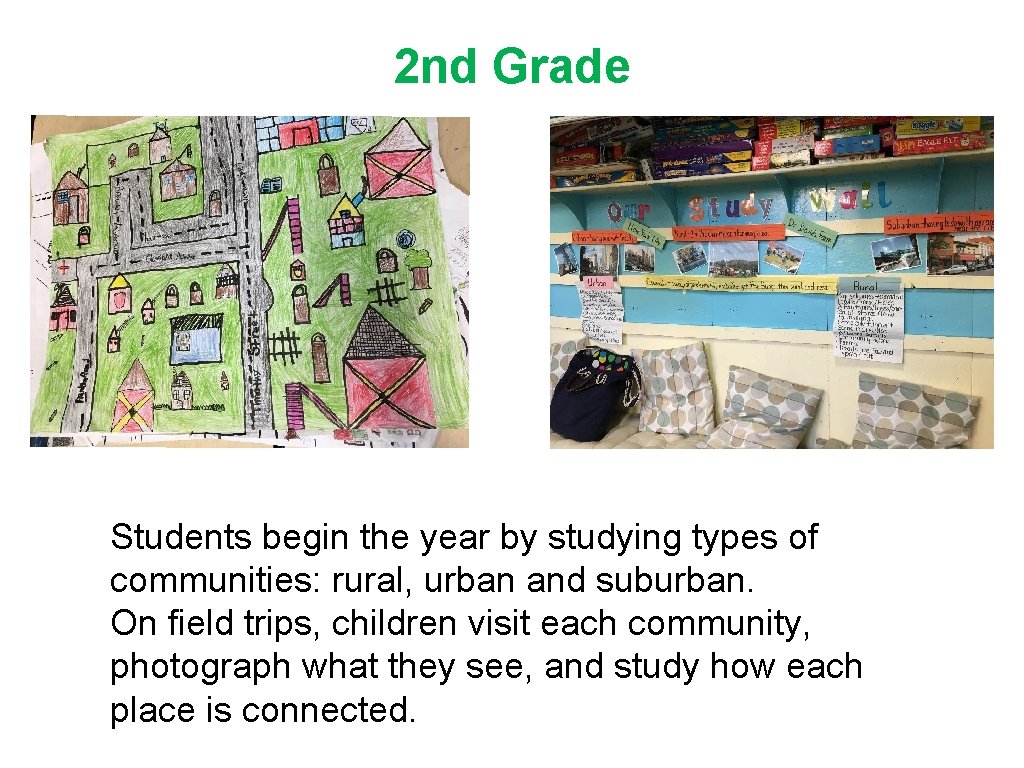
2 nd Grade Students begin the year by studying types of communities: rural, urban and suburban. On field trips, children visit each community, photograph what they see, and study how each place is connected.
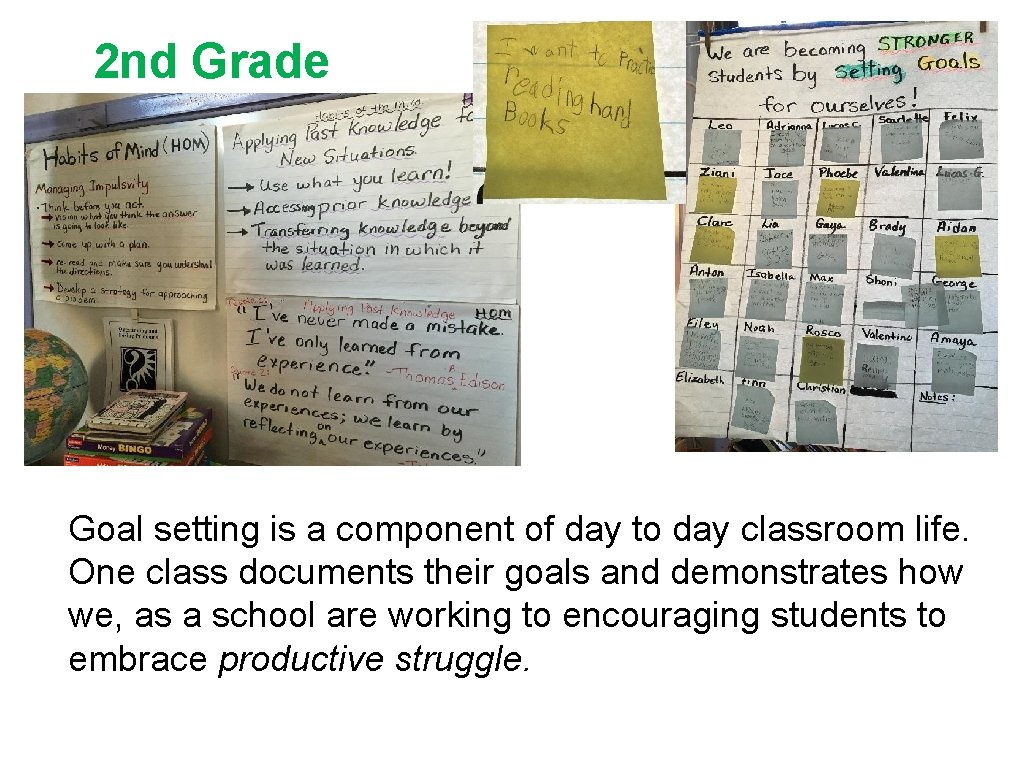
2 nd Grade Goal setting is a component of day to day classroom life. One class documents their goals and demonstrates how we, as a school are working to encouraging students to embrace productive struggle.
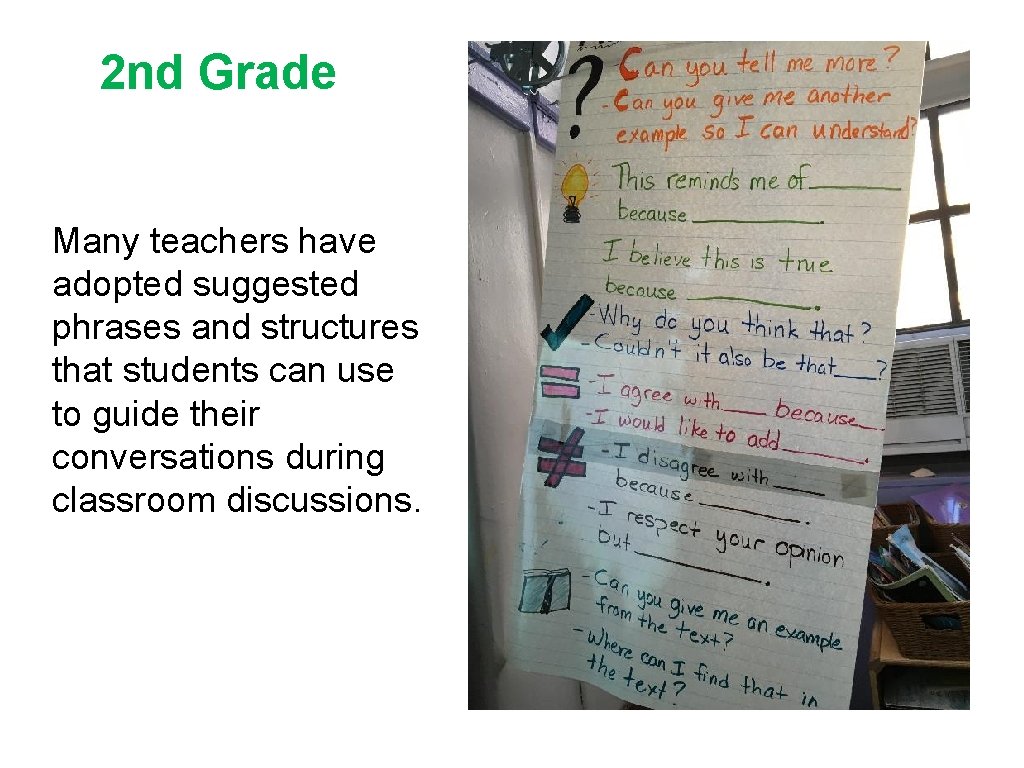
2 nd Grade Many teachers have adopted suggested phrases and structures that students can use to guide their conversations during classroom discussions.
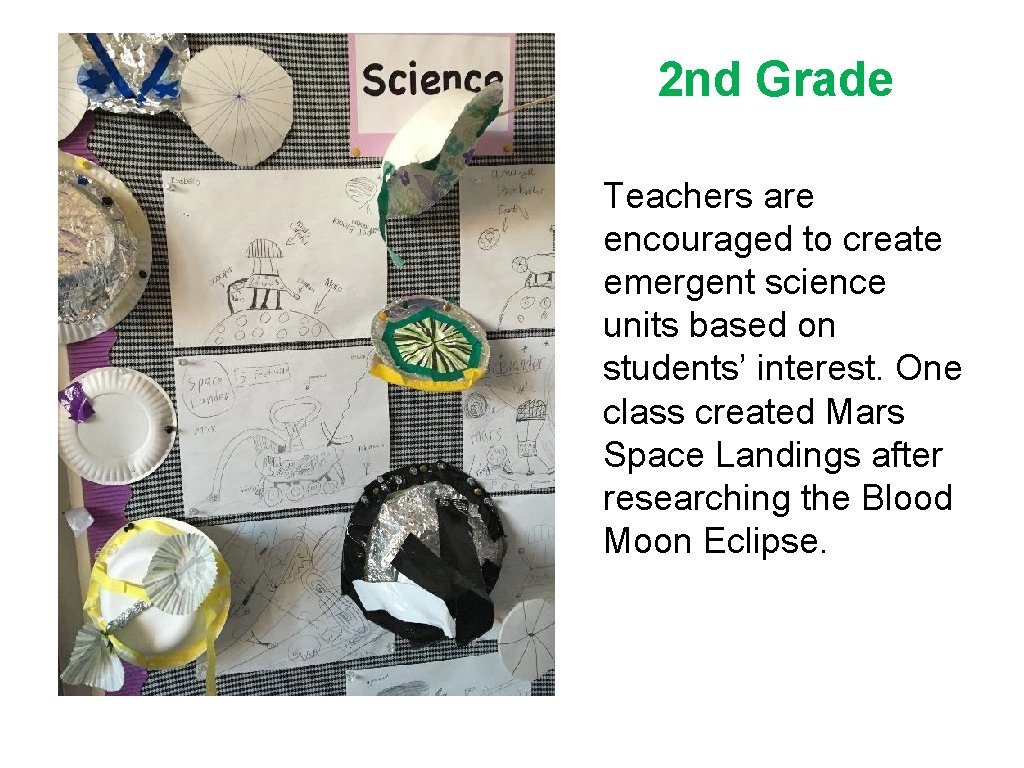
2 nd Grade Teachers are encouraged to create emergent science units based on students’ interest. One class created Mars Space Landings after researching the Blood Moon Eclipse.
What teachers told us Developing and using curriculum • • maps The maps cover • the unit of learning • big idea, topics, content • essential questions for the unit, • specific activities • specific math, literacy, or science/sensory goals Consistent across classroom by grade, created across loops and in coordination across all grades.
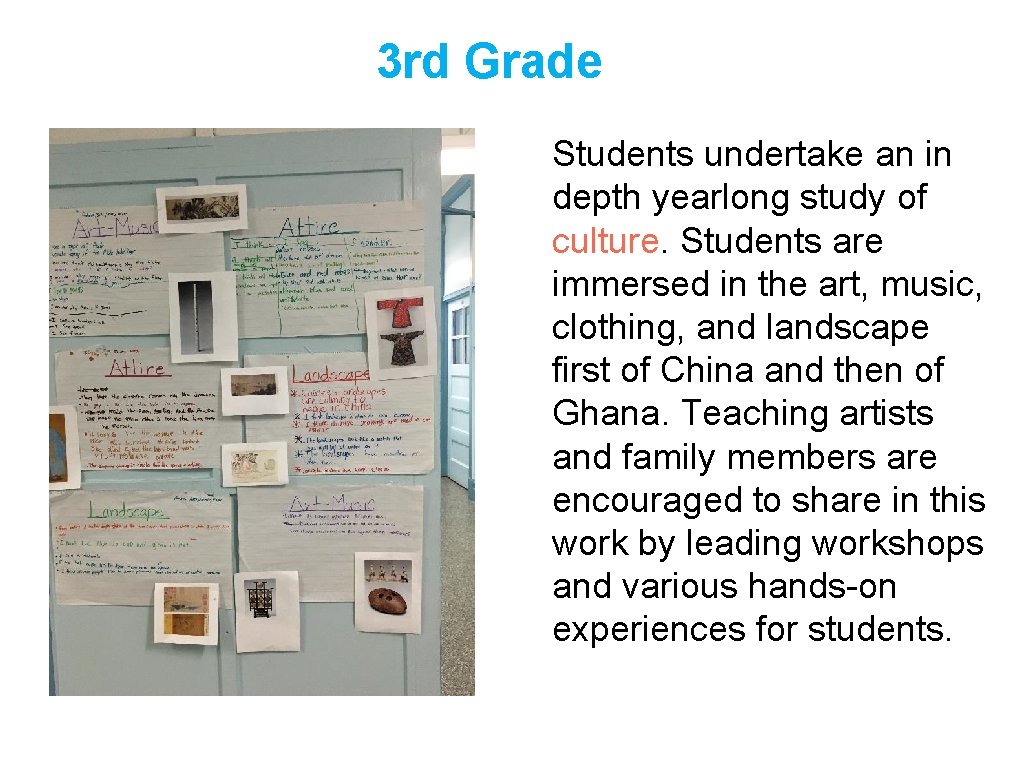
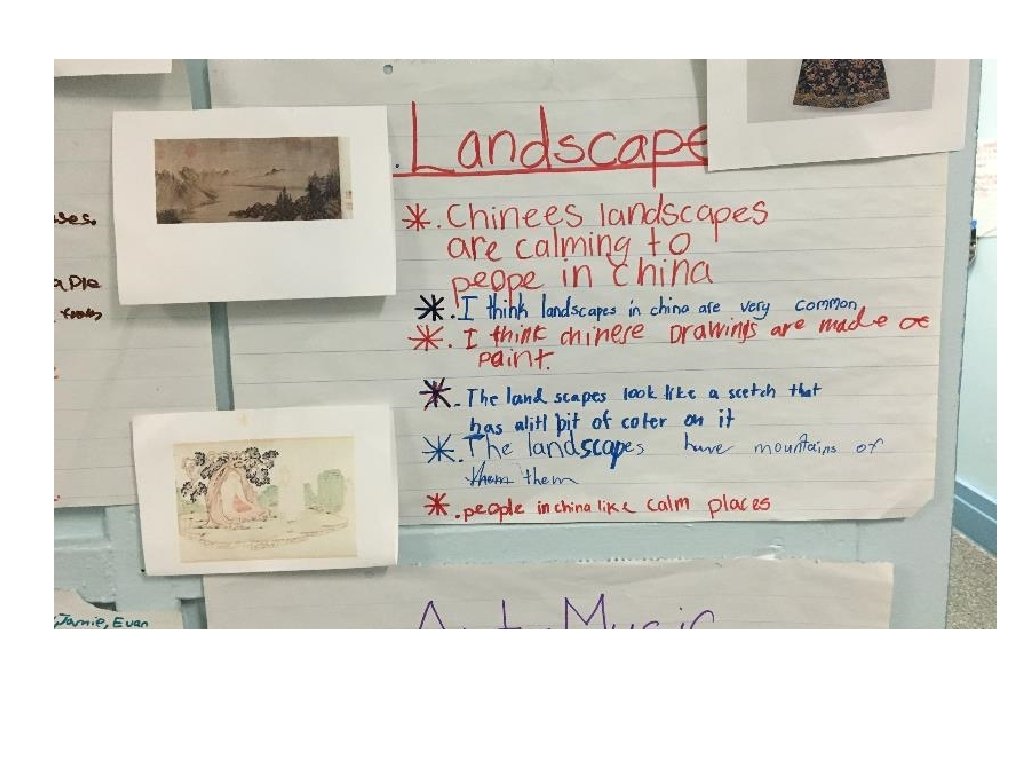
3 rd Grade Students undertake an in depth yearlong study of culture. Students are immersed in the art, music, clothing, and landscape first of China and then of Ghana. Teaching artists and family members are encouraged to share in this work by leading workshops and various hands-on experiences for students.
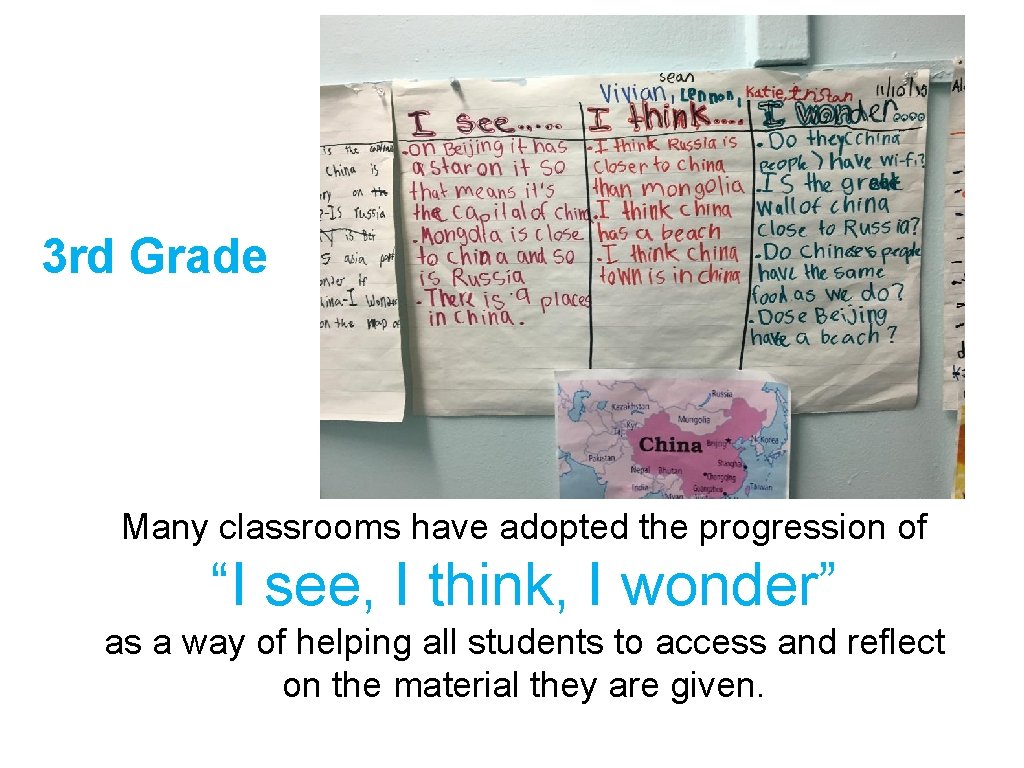
3 rd Grade Many classrooms have adopted the progression of “I see, I think, I wonder” as a way of helping all students to access and reflect on the material they are given.
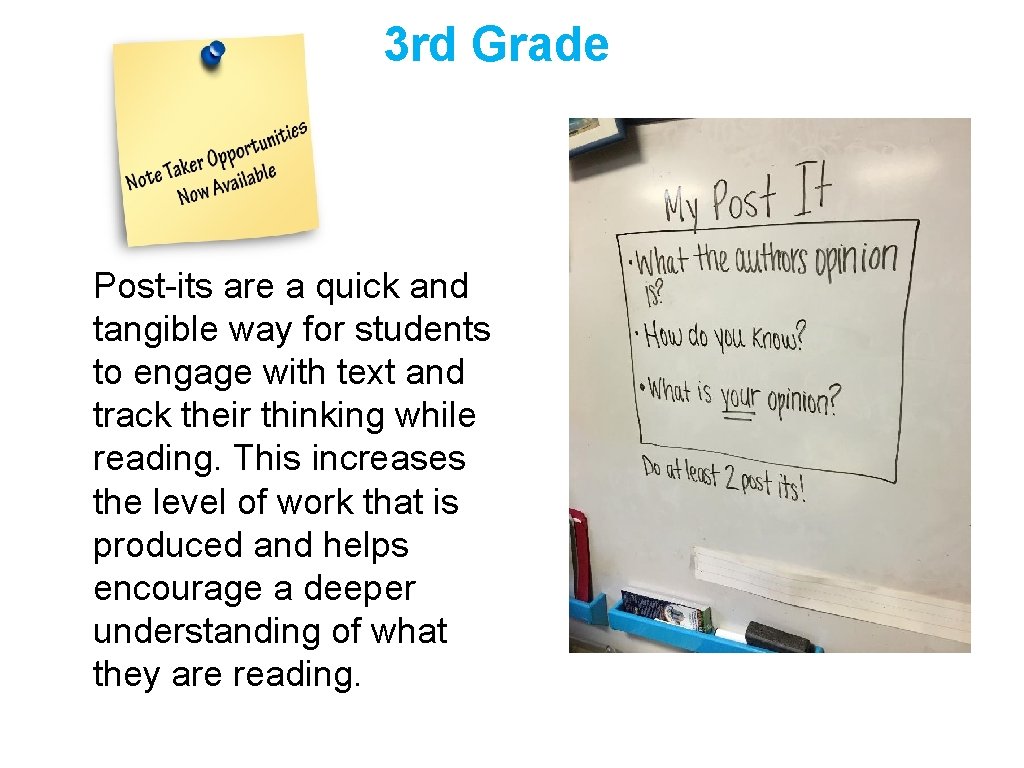
3 rd Grade Post-its are a quick and tangible way for students to engage with text and track their thinking while reading. This increases the level of work that is produced and helps encourage a deeper understanding of what they are reading.
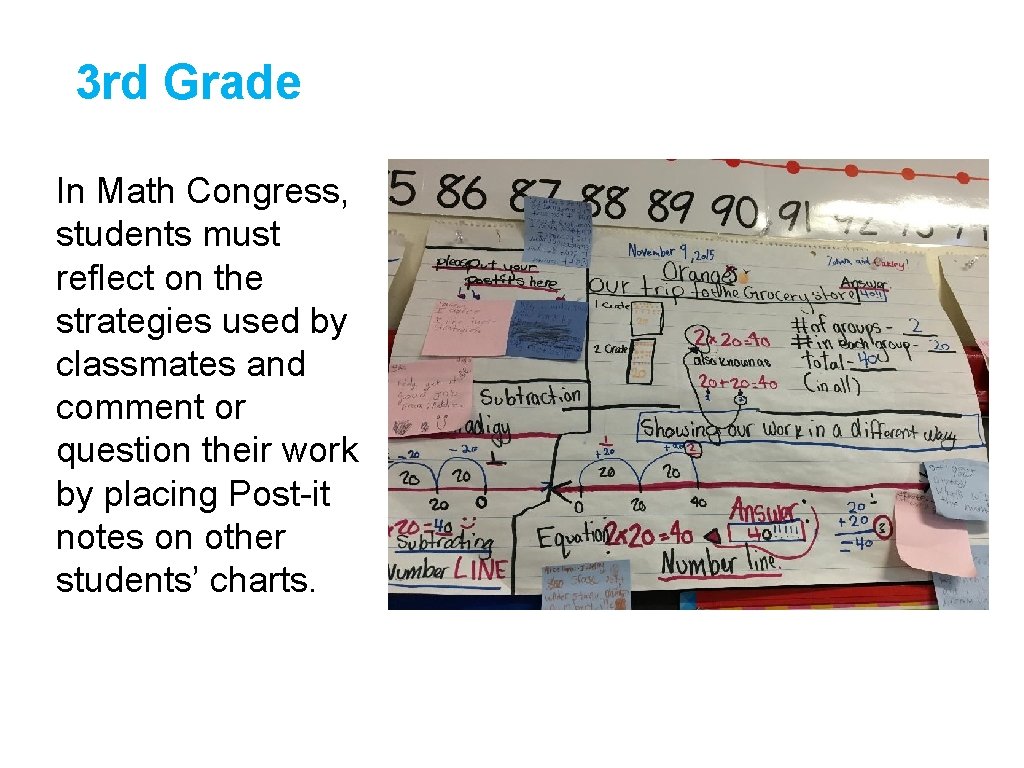
3 rd Grade In Math Congress, students must reflect on the strategies used by classmates and comment or question their work by placing Post-it notes on other students’ charts.
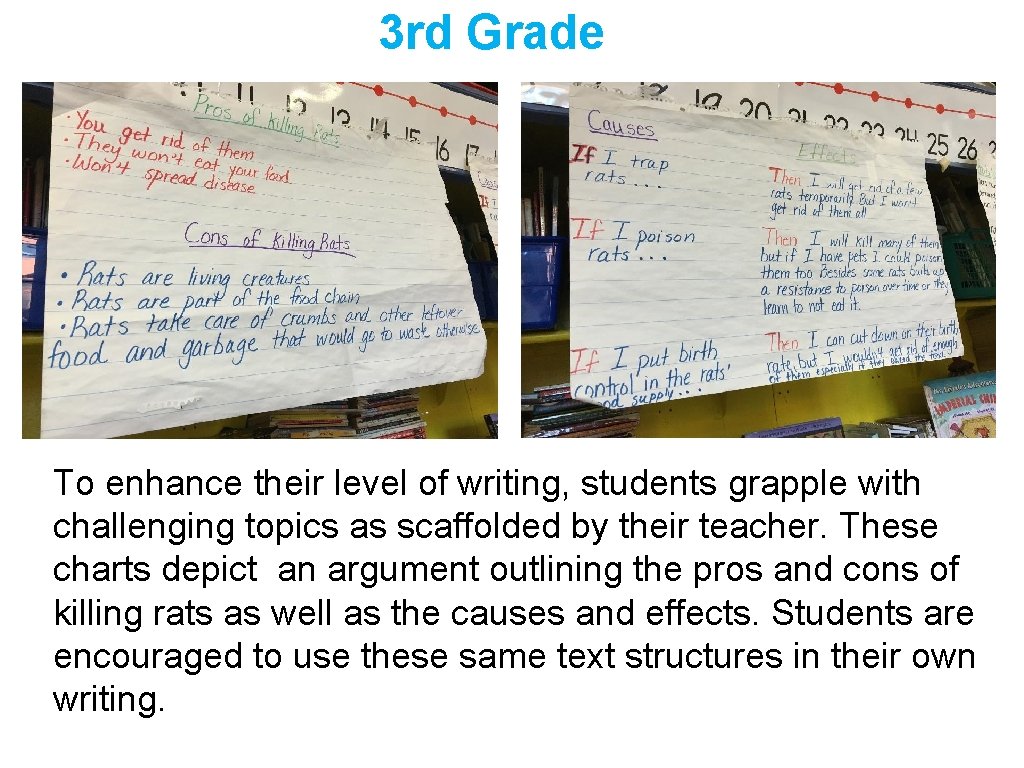
3 rd Grade To enhance their level of writing, students grapple with challenging topics as scaffolded by their teacher. These charts depict an argument outlining the pros and cons of killing rats as well as the causes and effects. Students are encouraged to use these same text structures in their own writing.
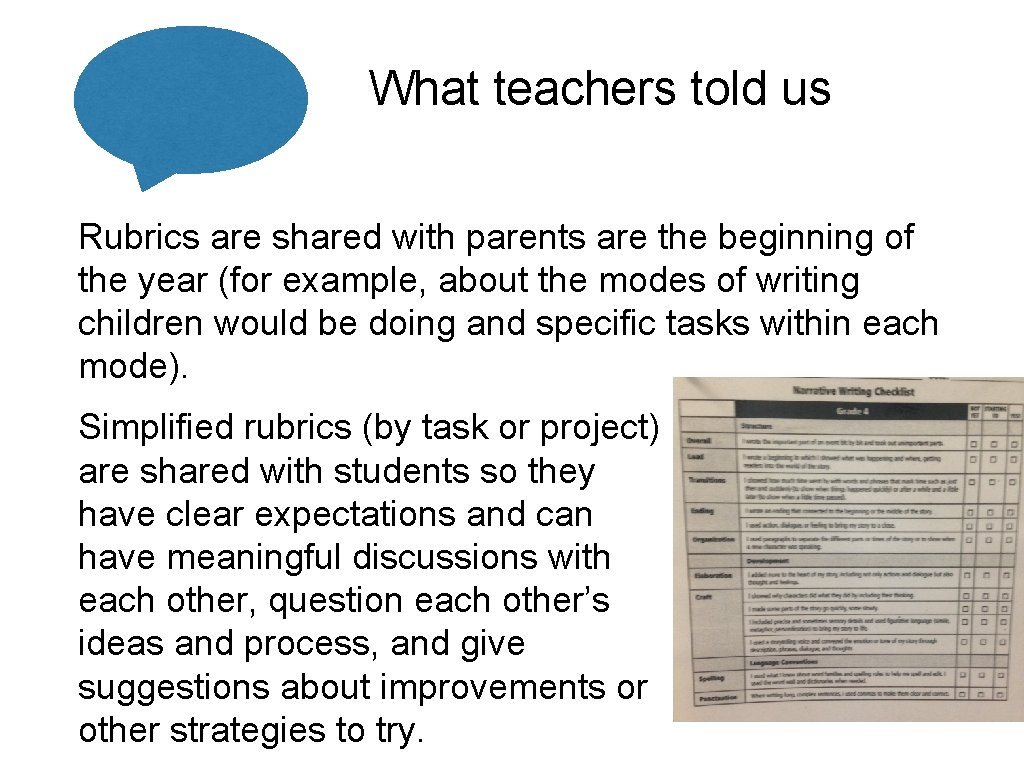
What teachers told us Rubrics are shared with parents are the beginning of the year (for example, about the modes of writing children would be doing and specific tasks within each mode). Simplified rubrics (by task or project) are shared with students so they have clear expectations and can have meaningful discussions with each other, question each other’s ideas and process, and give suggestions about improvements or other strategies to try.
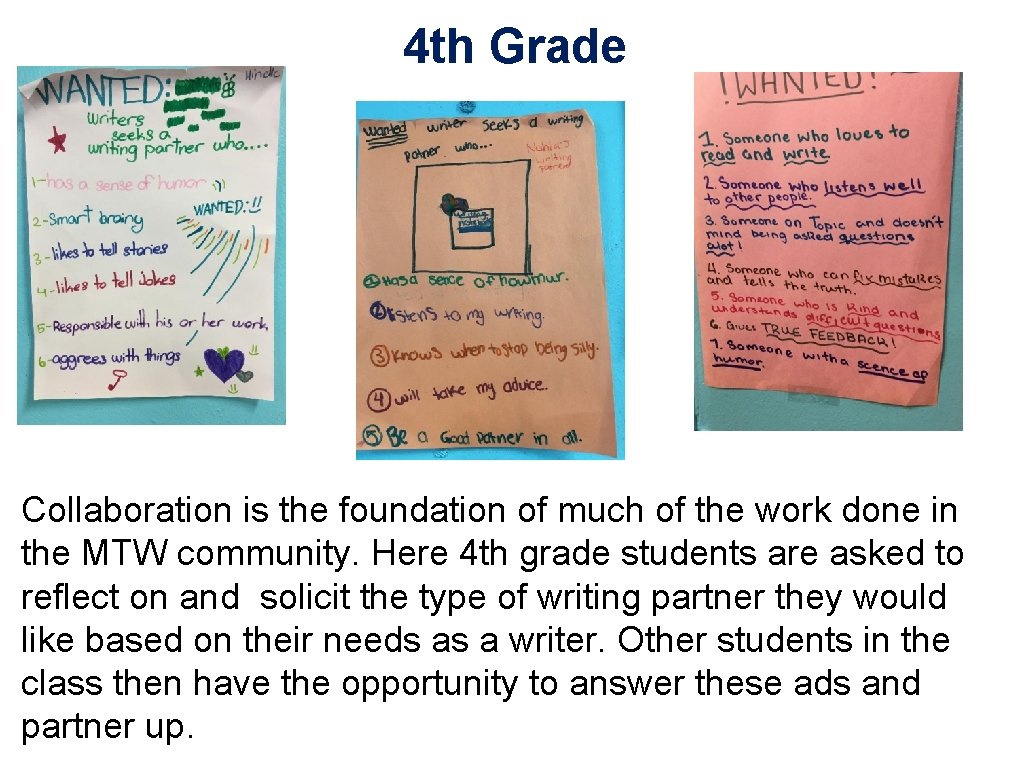
4 th Grade Collaboration is the foundation of much of the work done in the MTW community. Here 4 th grade students are asked to reflect on and solicit the type of writing partner they would like based on their needs as a writer. Other students in the class then have the opportunity to answer these ads and partner up.
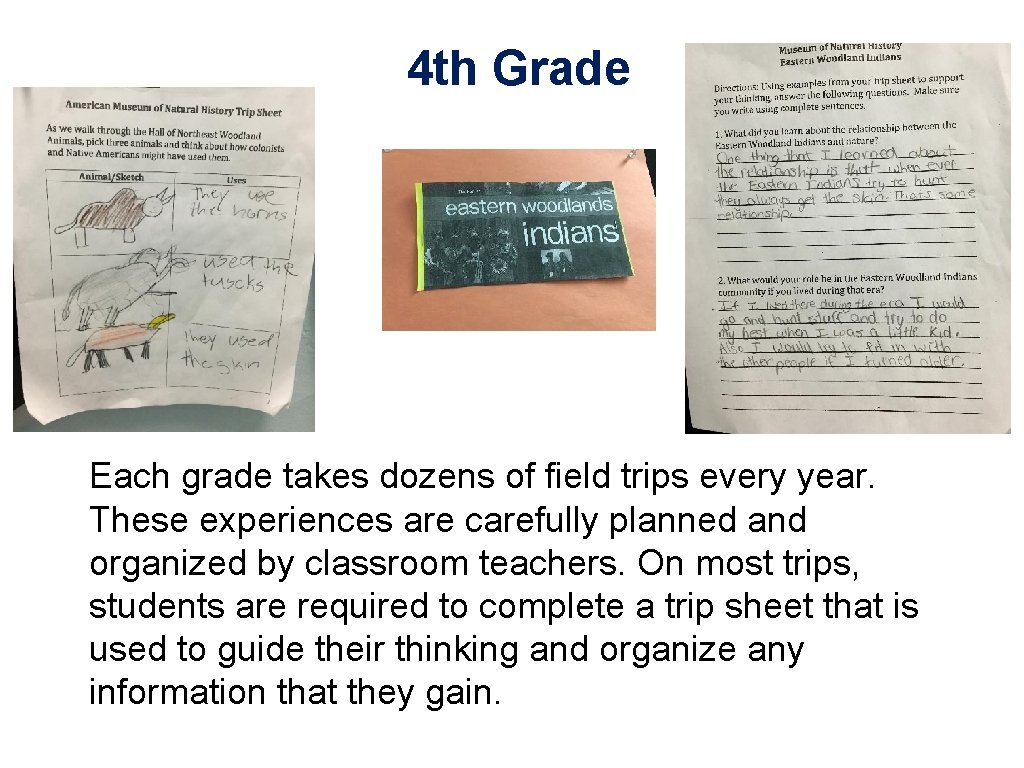
4 th Grade Each grade takes dozens of field trips every year. These experiences are carefully planned and organized by classroom teachers. On most trips, students are required to complete a trip sheet that is used to guide their thinking and organize any information that they gain.
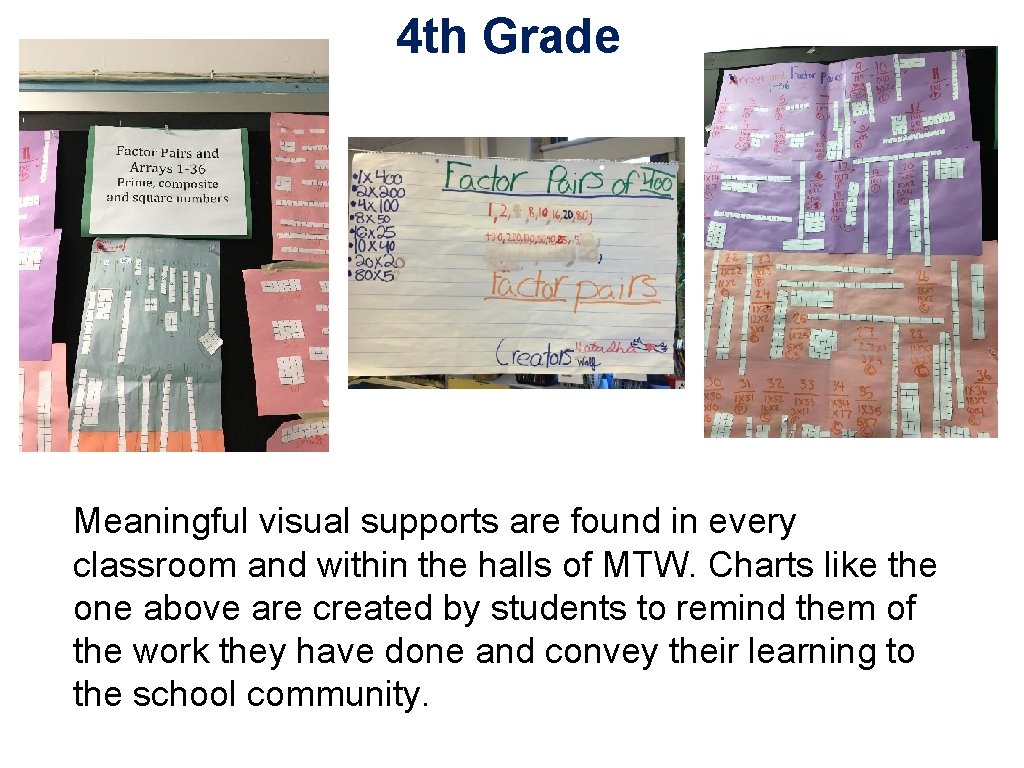
4 th Grade Meaningful visual supports are found in every classroom and within the halls of MTW. Charts like the one above are created by students to remind them of the work they have done and convey their learning to the school community.
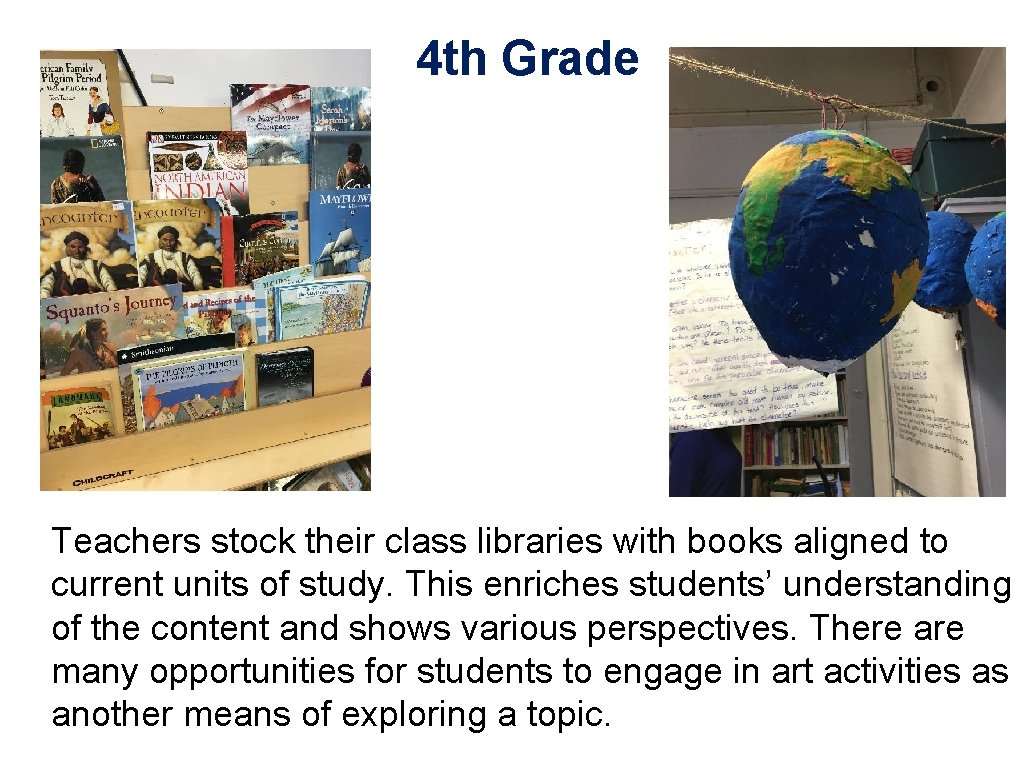
4 th Grade Teachers stock their class libraries with books aligned to current units of study. This enriches students’ understanding of the content and shows various perspectives. There are many opportunities for students to engage in art activities as another means of exploring a topic.
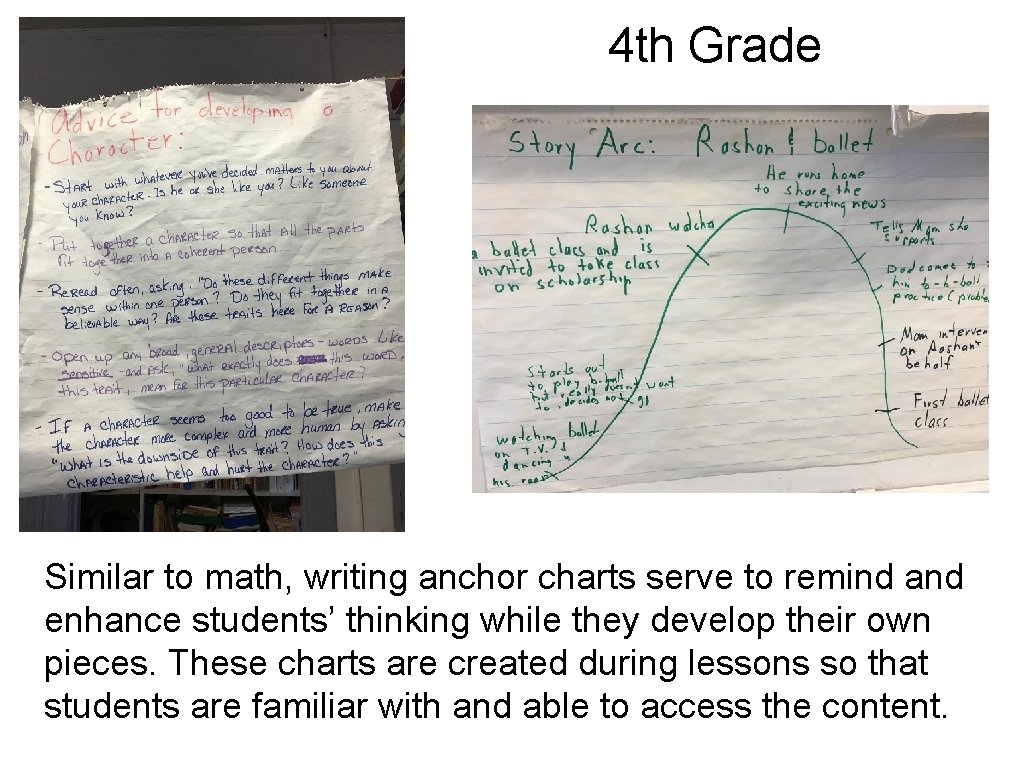
4 th Grade Similar to math, writing anchor charts serve to remind and enhance students’ thinking while they develop their own pieces. These charts are created during lessons so that students are familiar with and able to access the content.
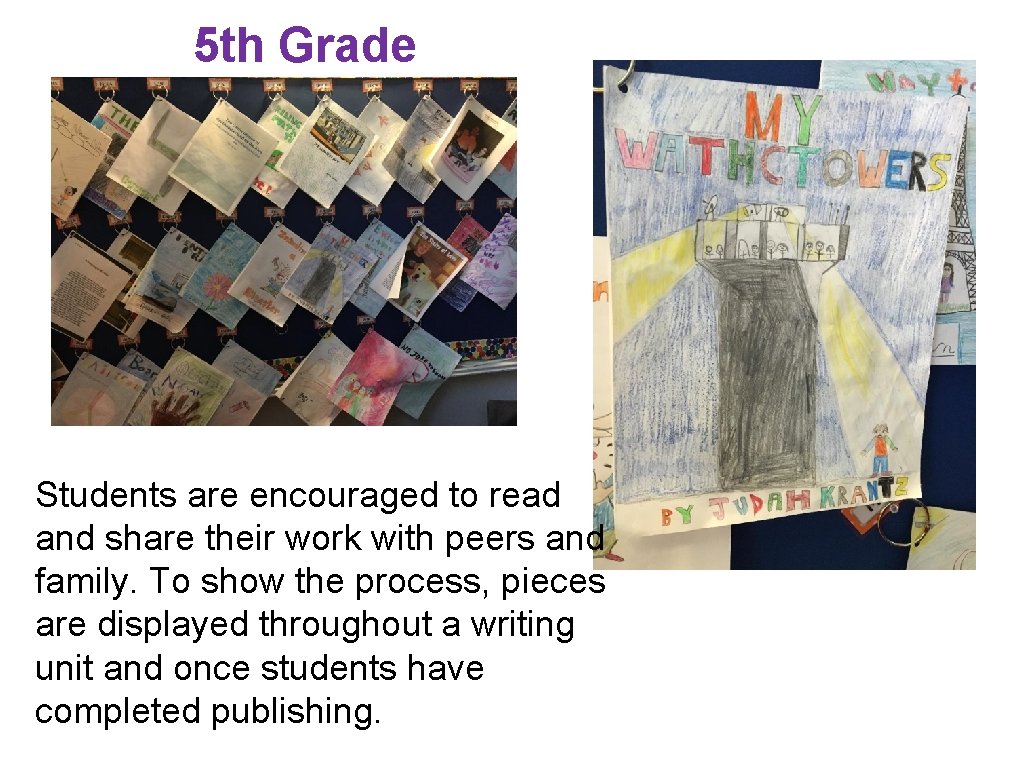
5 th Grade Students are encouraged to read and share their work with peers and family. To show the process, pieces are displayed throughout a writing unit and once students have completed publishing.
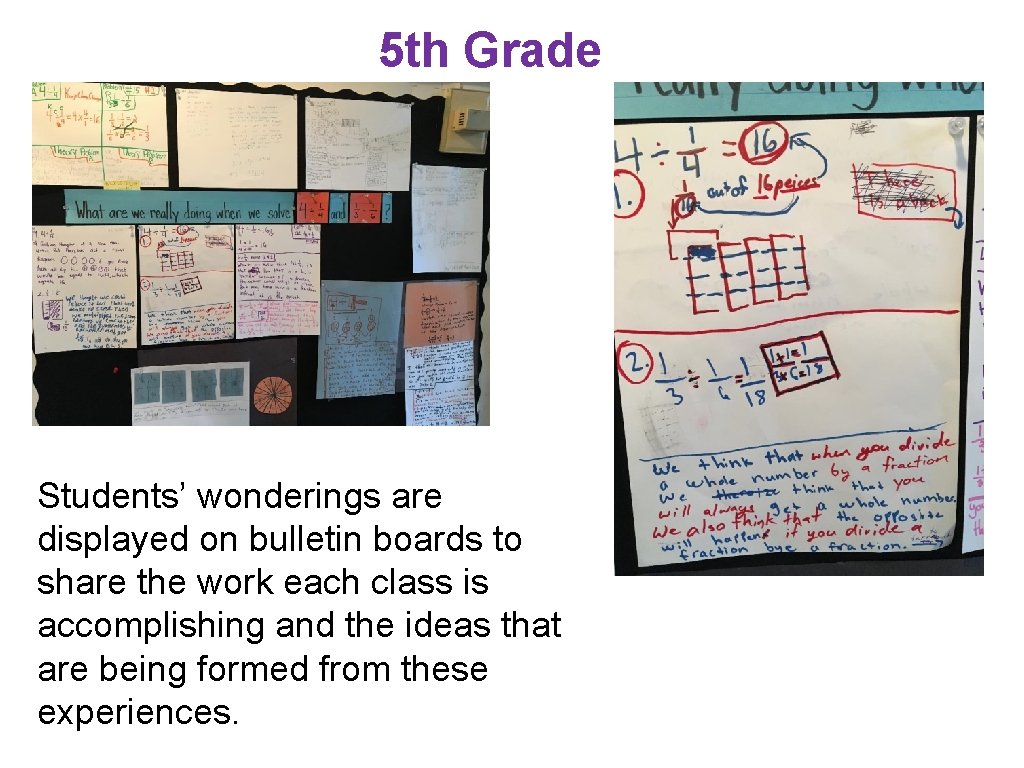
5 th Grade Students’ wonderings are displayed on bulletin boards to share the work each class is accomplishing and the ideas that are being formed from these experiences.
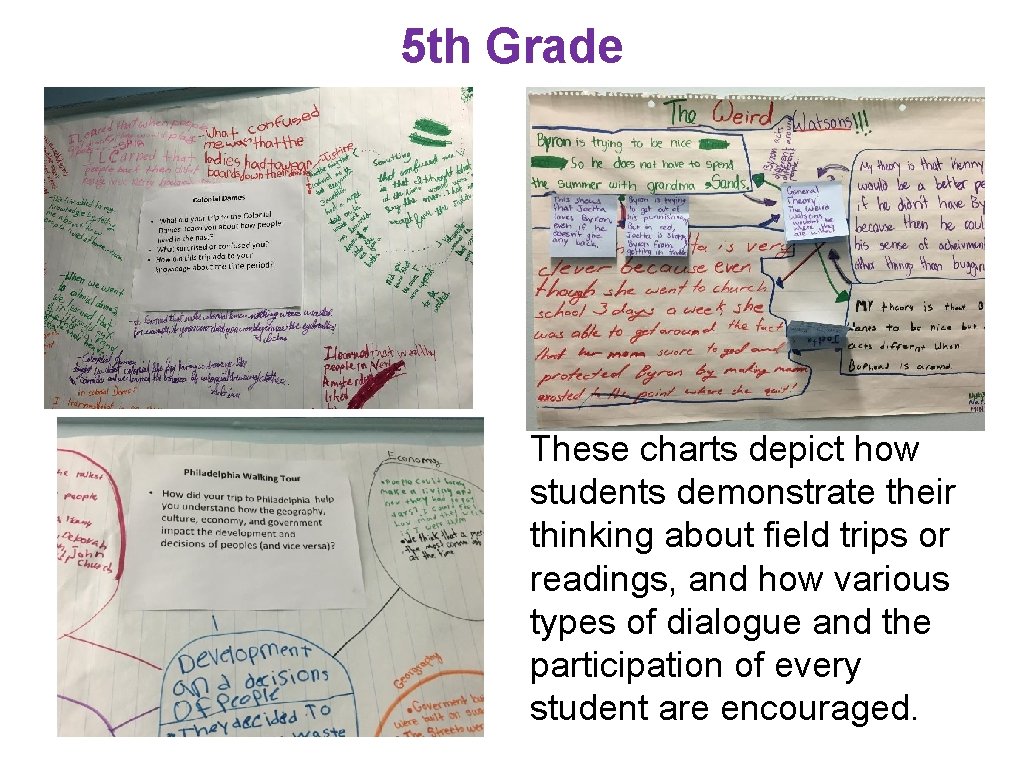
5 th Grade These charts depict how students demonstrate their thinking about field trips or readings, and how various types of dialogue and the participation of every student are encouraged.
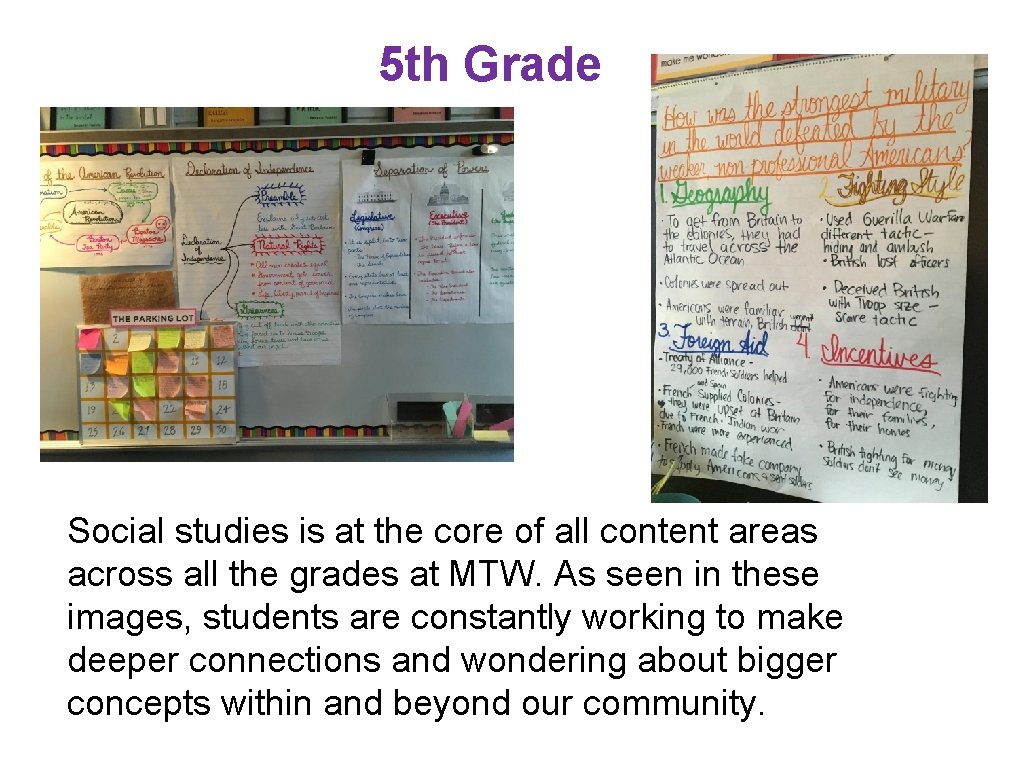
5 th Grade Social studies is at the core of all content areas across all the grades at MTW. As seen in these images, students are constantly working to make deeper connections and wondering about bigger concepts within and beyond our community.
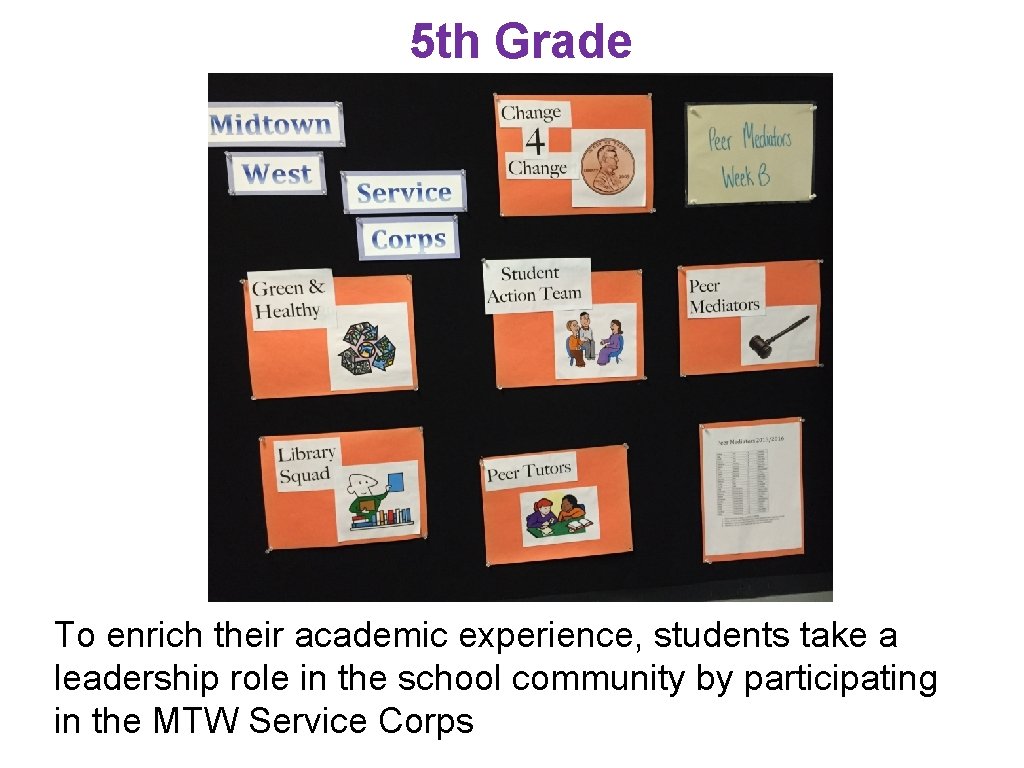
5 th Grade To enrich their academic experience, students take a leadership role in the school community by participating in the MTW Service Corps