
A LEARNING HEALTH CARE SYSTEM using data to
- Slides: 21
A LEARNING HEALTH CARE SYSTEM; using data to improve local health services and patient care. Dr. Victoria Palin Research Associate The University of Manchester victoria. palin@manchester. ac. uk @ v 1 kki_p @CHCNorth #datasaveslives
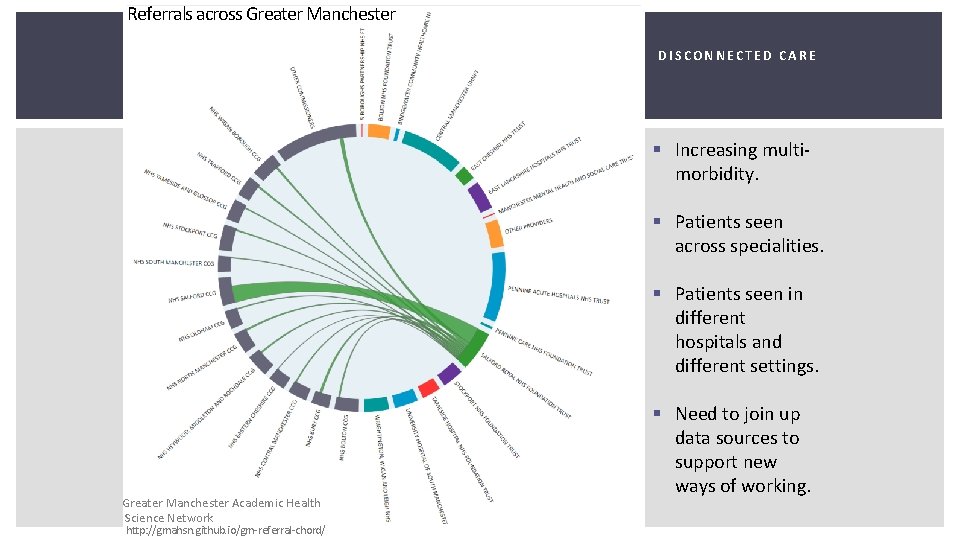
Referrals across Greater Manchester DISCONNECTED CARE § Increasing multimorbidity. § Patients seen across specialities. § Patients seen in different hospitals and different settings. Greater Manchester Academic Health Science Network http: //gmahsn. github. io/gm-referral-chord/ § Need to join up data sources to support new ways of working.
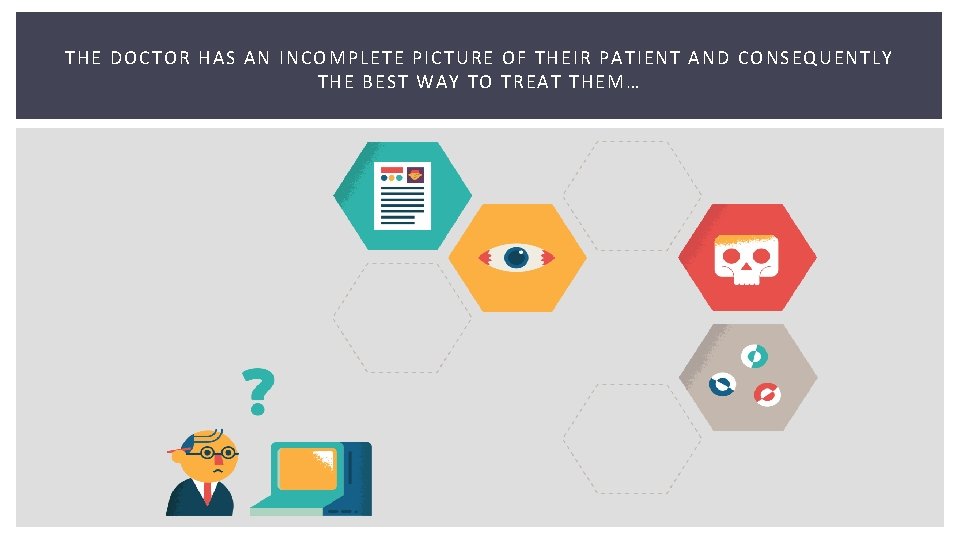
THE DOCTOR HAS AN INCOMPLETE PICTURE OF THEIR PATIENT AND CONSEQUENTLY THE BEST WAY TO TREAT THEM…
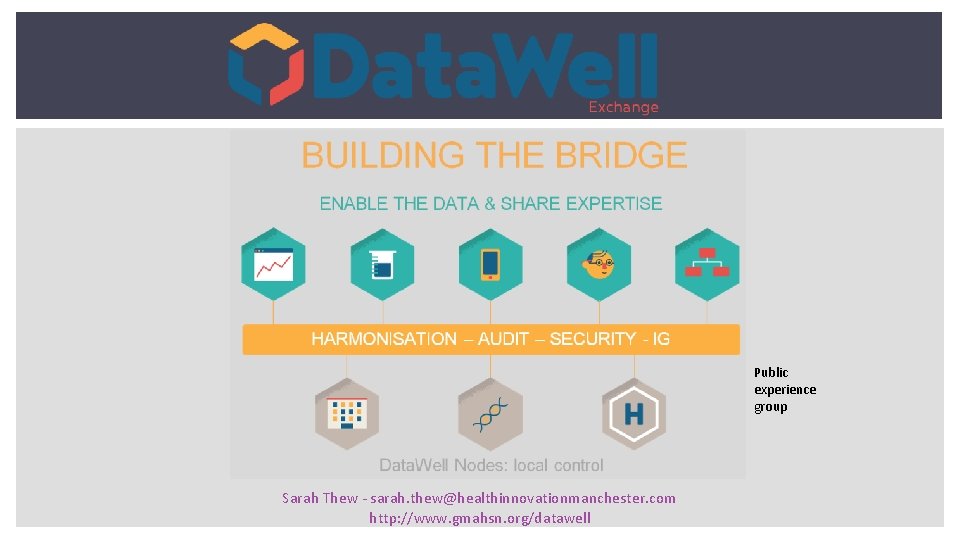
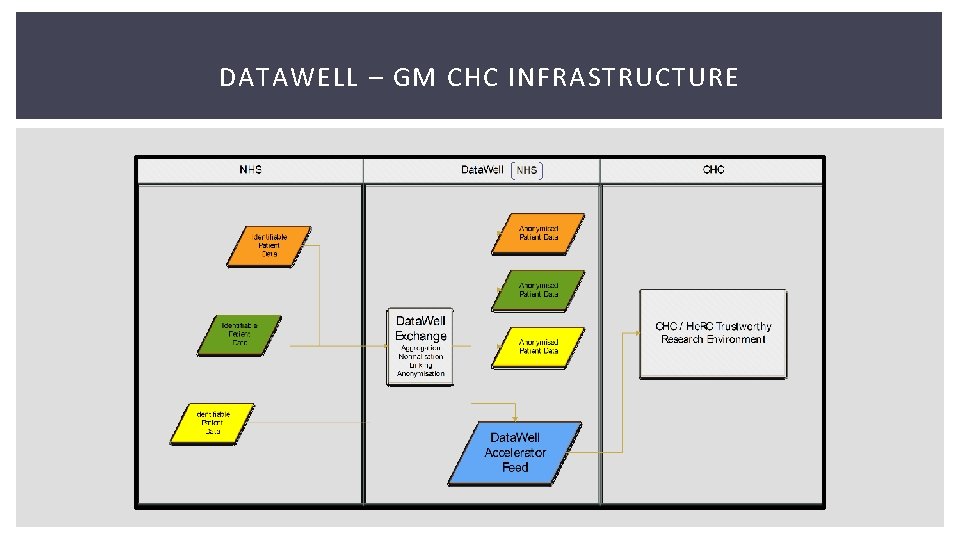
email - sarah. thew@healthinnovationmanchester. com Data. Well is the agreed Greater Manchester digital infrastructure that enables doctors and care professionals in the region to share and view the patient information they need, when they need it, to improve care. DW is designed to co-exist with current systems and facilitate the integration of data between different systems, with no central data warehouse. The information exchange allowing individual data controllers to retain control of their own information, choosing what data items to share, with whom and to what purpose. The potential to support the use of data to improve health, care and services through research and planning. There will be a better understanding of regional health with the ability stratify risk and identify risk.
Public experience group Sarah Thew - sarah. thew@healthinnovationmanchester. com http: //www. gmahsn. org/datawell
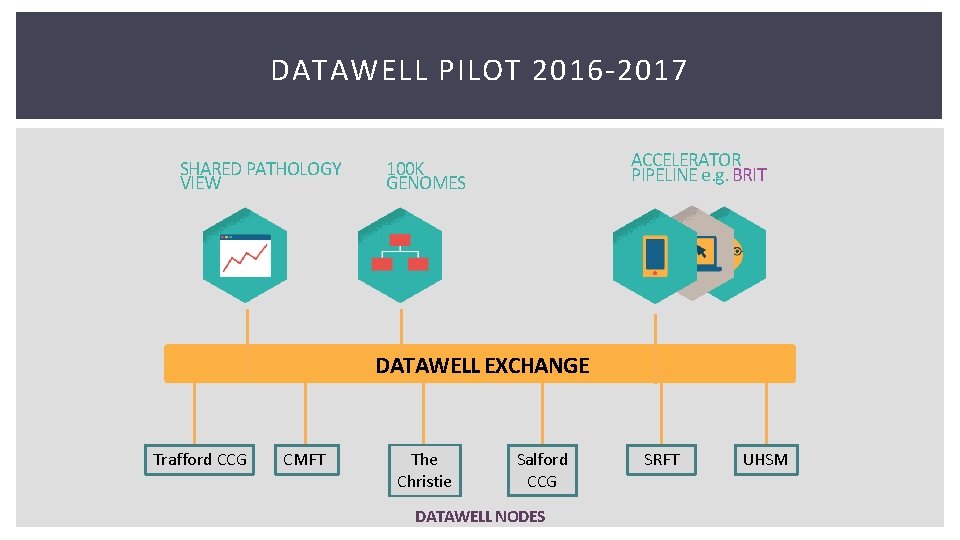
DATAWELL PILOT 2016 -2017 SHARED PATHOLOGY VIEW ACCELERATOR PIPELINE e. g. BRIT 100 K GENOMES DATAWELL EXCHANGE Trafford CCG CMFT The Christie Salford CCG DATAWELL NODES SRFT UHSM
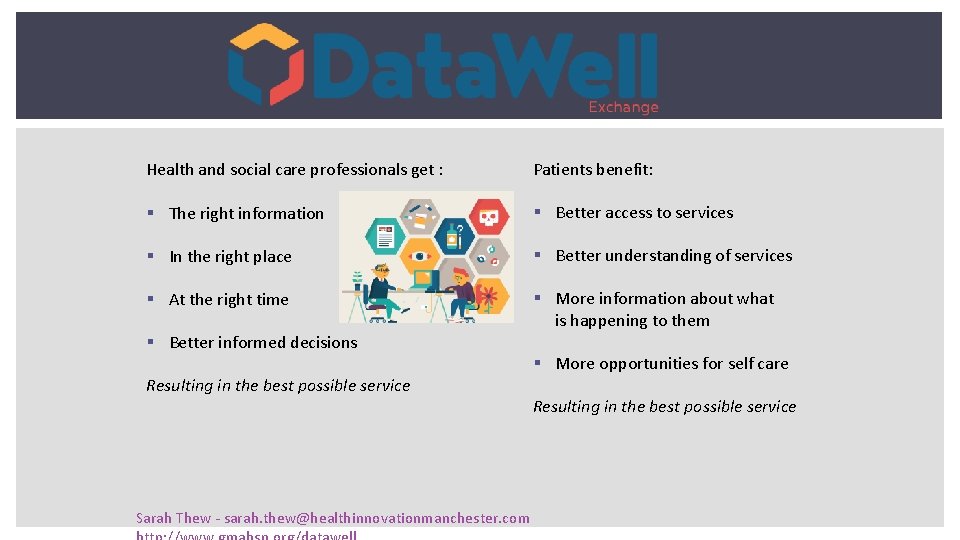
Health and social care professionals get : Patients benefit: § The right information § Better access to services § In the right place § Better understanding of services § At the right time § More information about what is happening to them § Better informed decisions Resulting in the best possible service Sarah Thew - sarah. thew@healthinnovationmanchester. com § More opportunities for self care Resulting in the best possible service
CONNECTED HEALTH CITIES Connected Health Cities (CHC) is a new project that unites local health data and advanced technology to improve health services for patients in Northern England. By making better use of the information and technology that already exists in our health and social care system we can improve the health of patients and ensure services are more joined-up. By working with patients, health practitioners and experts in digital health we will deliver research that is relevant, effective and has a real impact on public health.
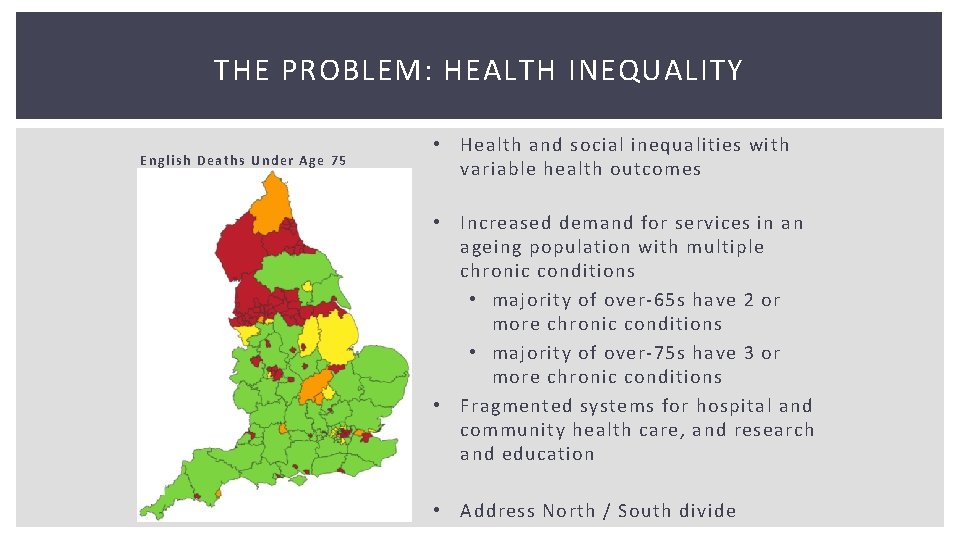
THE PROBLEM: HEALTH INEQUALITY English Deaths Under Age 75 • Health and social inequalities with variable health outcomes • Increased demand for services in an ageing population with multiple chronic conditions • majority of over-65 s have 2 or more chronic conditions • majority of over-75 s have 3 or more chronic conditions • Fragmented systems for hospital and community health care, and research and education • Address North / South divide
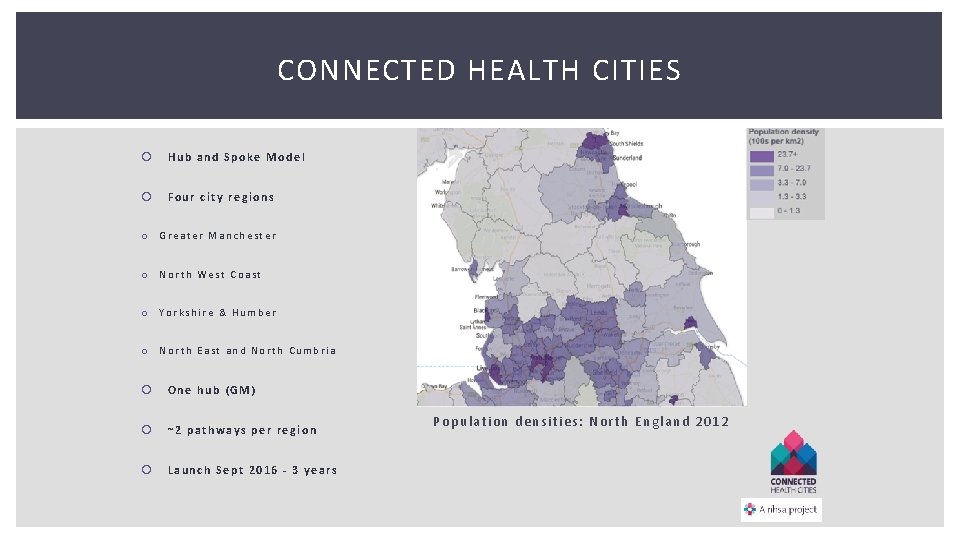
CONNECTED HEALTH CITIES Hub and Spoke Model Four city regions o Greater Manchester o North West Coast o Yorkshire & Humber o North East and North Cumbria One hub (GM) ~2 pathways per region Launch Sept 2016 - 3 years Population densities: North England 2012
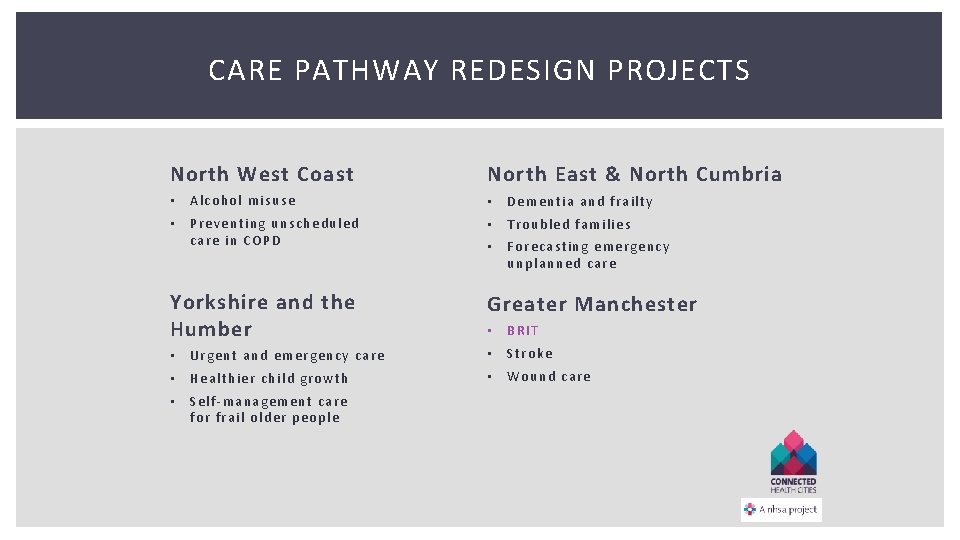
CARE PATHWAY REDESIGN PROJECTS North West Coast North East & North Cumbria • Alcohol misuse • Dementia and frailty • Preventing unscheduled care in COPD • Troubled families • Forecasting emergency unplanned care Yorkshire and the Humber Greater Manchester • BRIT • Urgent and emergency care • Stroke • Healthier child growth • Wound care • Self-management care for frail older people
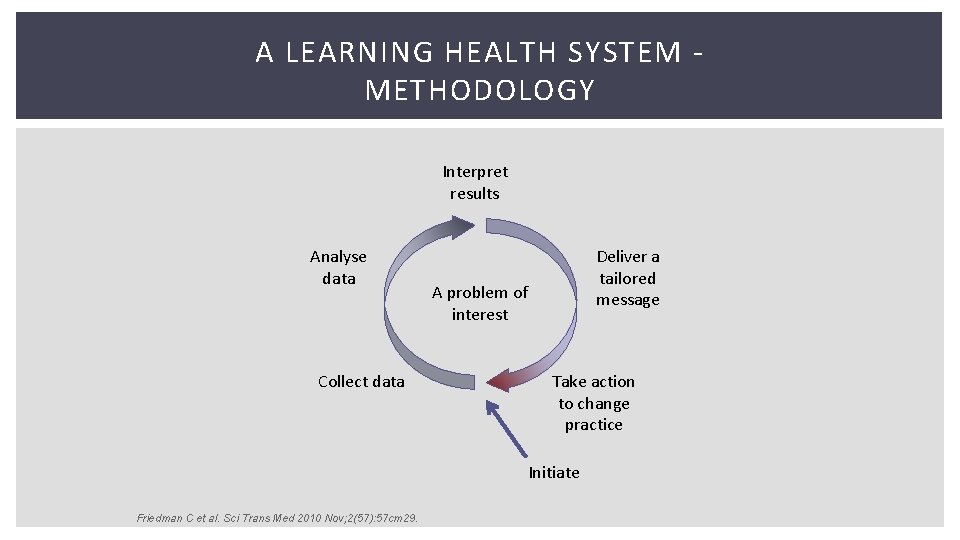
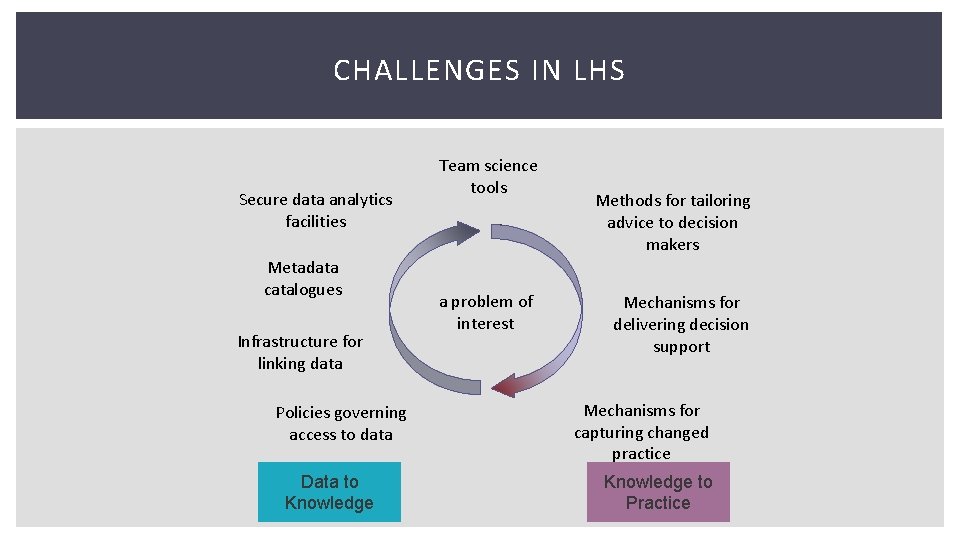
A LEARNING HEALTH SYSTEM METHODOLOGY Interpret results Analyse data Collect data Deliver a tailored message A problem of interest Take action to change practice Initiate Friedman C et al. Sci Trans Med 2010 Nov; 2(57): 57 cm 29.
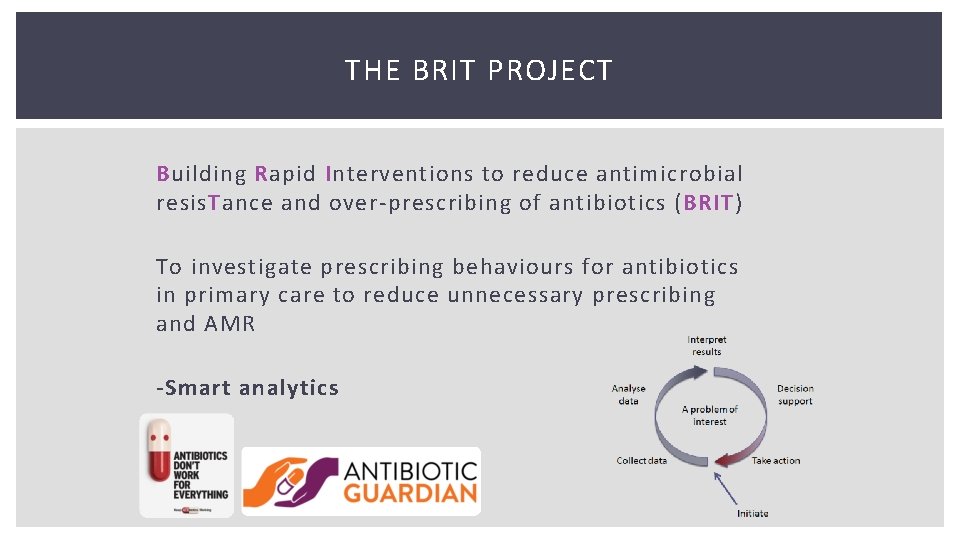
THE BRIT PROJECT Building Rapid Interventions to reduce antimicrobial resis. Tance and over-prescribing of antibiotics (BRIT) To investigate prescribing behaviours for antibiotics in primary care to reduce unnecessary prescribing and AMR -Smart analytics
BRIT Antimicrobial resistance (AMR) is on the rise. Dame Sally Davies (chief medical officer) “Antimicrobial resistance poses a catastrophic threat. If we don’t act now, any one of us could go into hospital in 20 years for minor surgery and die because of an ordinary infection that can’t be treated by antibiotics”. 13 th October 2017. BRIT is in development to provide actionable information to the clinical team.
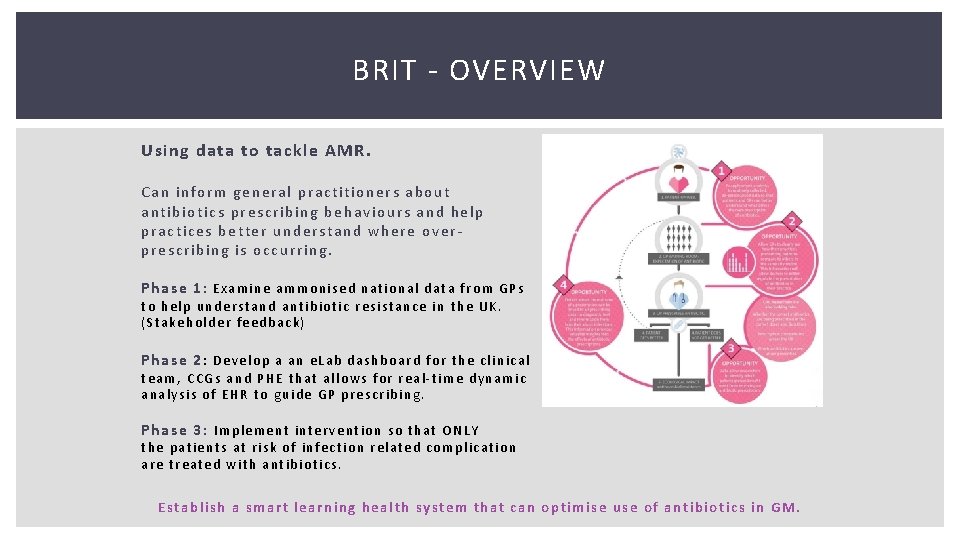
BRIT - OVERVIEW Using data to tackle AMR. Can inform general practitioners about antibiotics prescribing behaviours and help practices better understand where overprescribing is occurring. Phase 1: E x a m i n e a m m o n i s e d n a t i o n a l d a t a f r o m G P s to help understand antibiotic resistance in the UK. (Stakeholder feedback) Phase 2 : D e v e l o p a a n e L a b d a s h b o a r d f o r t h e c l i n i c a l team, CCGs and PHE that allows for real-time dynamic analysis of EHR to guide GP prescribing. Phase 3: I m p l e m e n t i n t e r v e n t i o n s o t h a t O N L Y the patients at risk of infection related complication are treated with antibiotics. Establish a smart learning health system that can optimise use of antibiotics in GM.
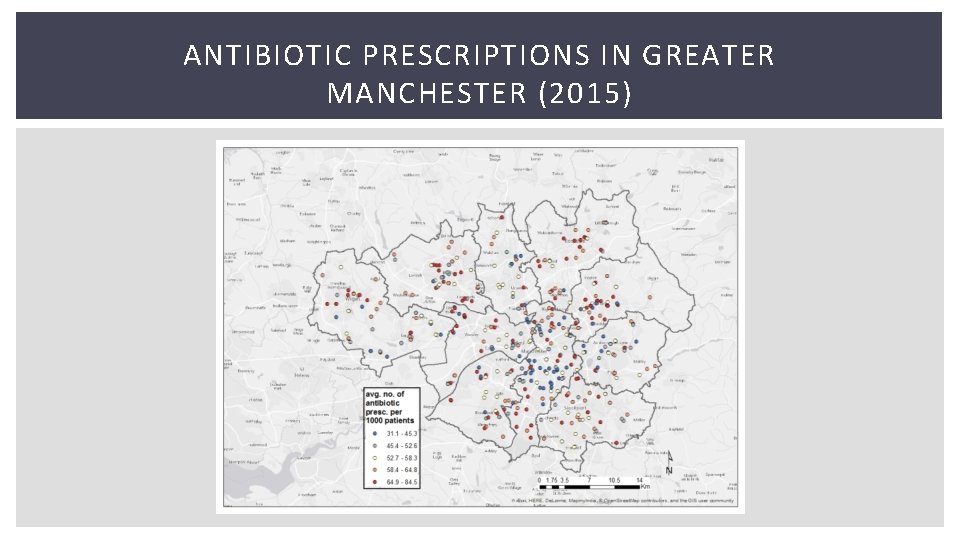
ANTIBIOTIC PRESCRIPTIONS IN GREATER MANCHESTER (2015)
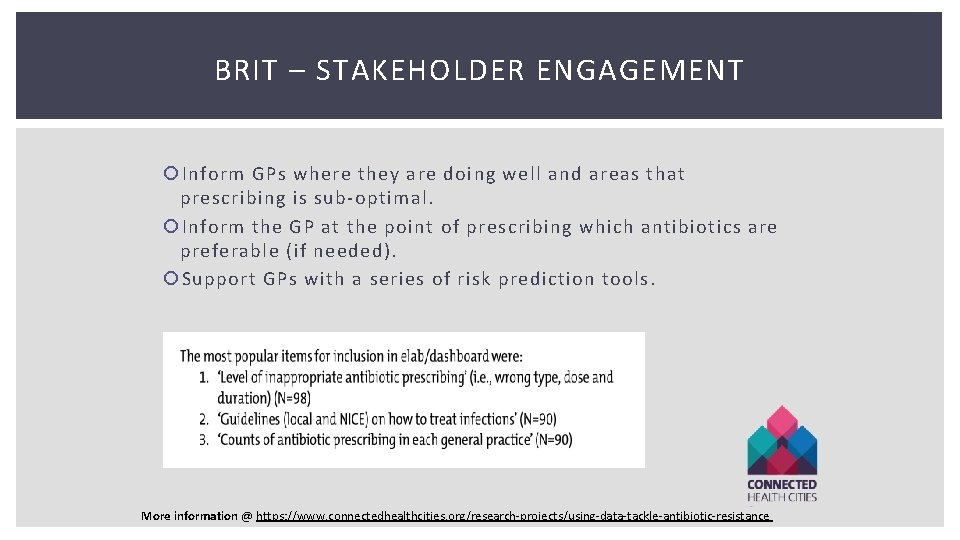
BRIT – STAKEHOLDER ENGAGEMENT Inform GPs where they are doing well and areas that prescribing is sub-optimal. Inform the GP at the point of prescribing which antibiotics are preferable (if needed). Support GPs with a series of risk prediction tools. More information @ https: //www. connectedhealthcities. org/research-projects/using-data-tackle-antibiotic-resistance
FUTURE DEVELOPMENTS § Round up the development phase. § Testing phase of intervention implementation. § Full roll out across GM and Wirral. § Provide actionable information to the clinical team. § Ultimately improving patient care, whilst preserving what few antibiotics we have left. Research Real world evidence Real time evaluation
THANK YOU FOR LISTENING Data. Well Sarah Thew sarah. thew@healthinnovationmanchester. com http: //www. gmahsn. org/datawell BRIT Principle Investigator: Professor Tjeerd van Staa tjeerd. vanstaa@manchester. ac. uk Dr. Victoria Palin Research Associate The University of Manchester victoria. palin@manchester. ac. uk @ v 1 kki_p @CHCNorth #datasaveslives More information @ https: //www. connectedhealthcities. org/research-projects/using-data-tackle-antibiotic-resistance
DATAWELL – GM CHC INFRASTRUCTURE
CHALLENGES IN LHS Secure data analytics facilities Metadata catalogues Infrastructure for linking data Policies governing access to data Data to Knowledge Team science tools a problem of interest Methods for tailoring advice to decision makers Mechanisms for delivering decision support Mechanisms for capturing changed practice Knowledge to Practice