
A Laser Based Alignment System for the CLIC

A Laser Based Alignment System for the CLIC project Guillaume Stern CLIC workshop at CERN January 28, 2015
Outline • • • Introduction Description of the laser alignment system Challenge of the Ph. D thesis Experiment results Conclusion 2
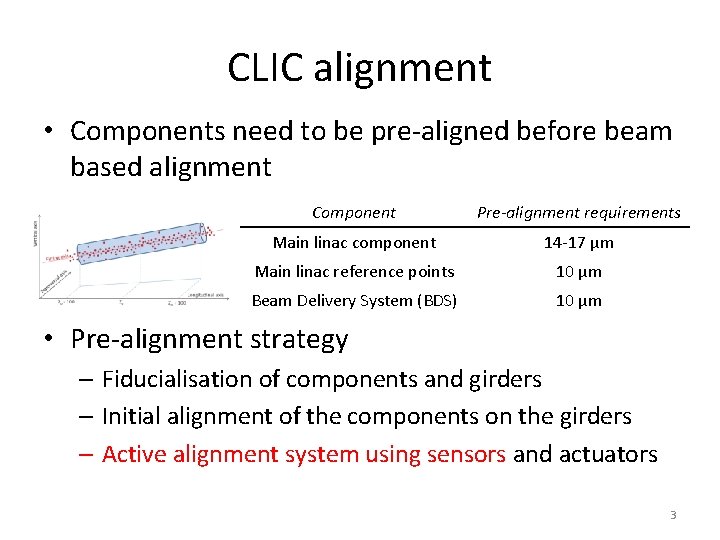
CLIC alignment • Components need to be pre-aligned before beam based alignment Component Pre-alignment requirements Main linac component 14 -17 µm Main linac reference points 10 µm Beam Delivery System (BDS) 10 µm • Pre-alignment strategy – Fiducialisation of components and girders – Initial alignment of the components on the girders – Active alignment system using sensors and actuators 3

Problem • Existing systems (e. g. based on stretched wire) not fully satisfying because of cost, difficult implementation • Existing systems to be compared with a system based on different principle 4
Proposal of solution • Laser beam as straight line reference • Camera combined with open/close shutter to measure distance between laser beam and components to be aligned • Project name: LAMBDA project (Laser Alignment Multipoint Based Design Approach) 5
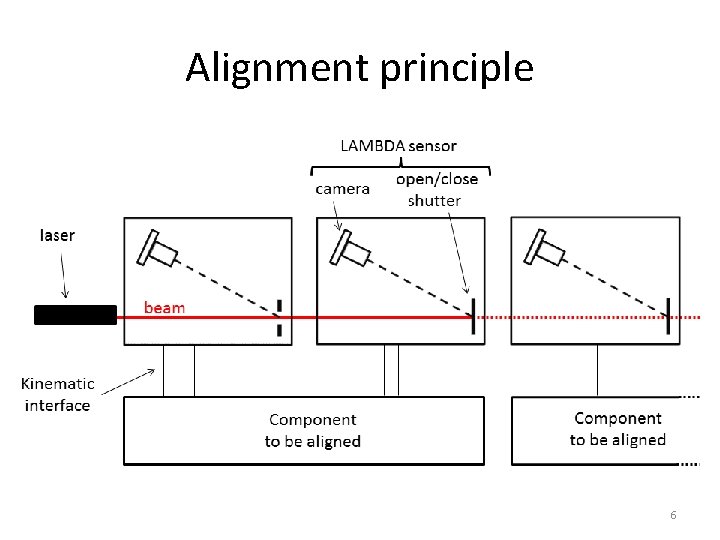
Alignment principle 6
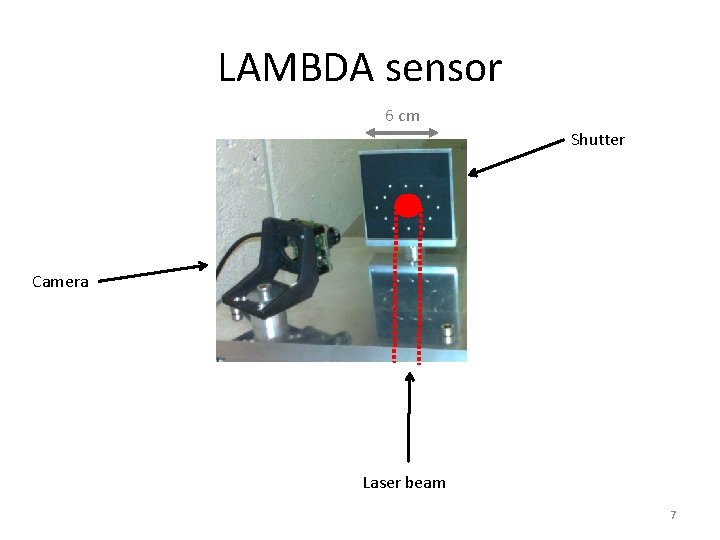
LAMBDA sensor 6 cm Shutter Camera Laser beam 7
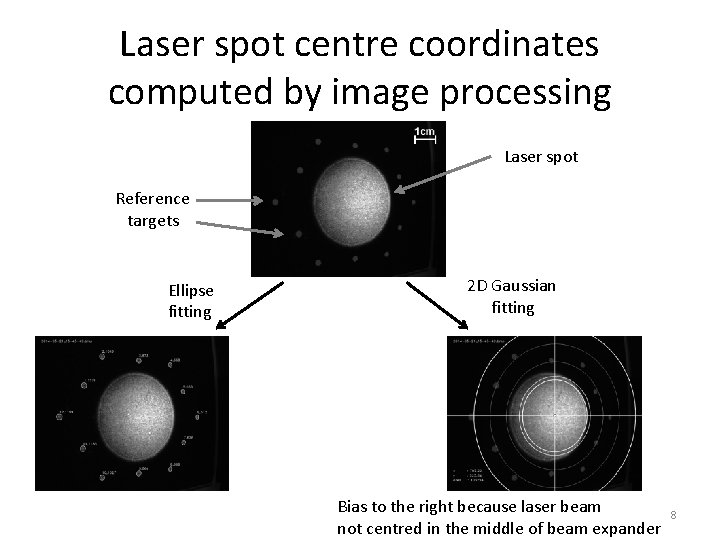
Laser spot centre coordinates computed by image processing Laser spot Reference targets Ellipse fitting 2 D Gaussian fitting Bias to the right because laser beam not centred in the middle of beam expander 8
LAMBDA sensor requirements • • • Compact Compatible with its environment Low cost Measurement repeatability 1 µm Measurement accuracy 5 µm 9
Challenge • Determine sources of uncertainty – Laser beam as straight line reference? – Measurement of laser spot on shutter? – Sensor in its environment? • Estimate and minimise uncertainty by experiments and simulations 10
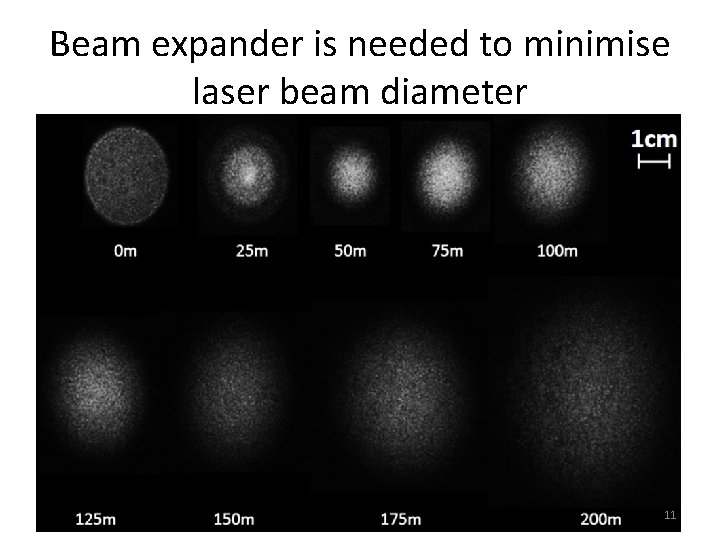
Beam expander is needed to minimise laser beam diameter 11
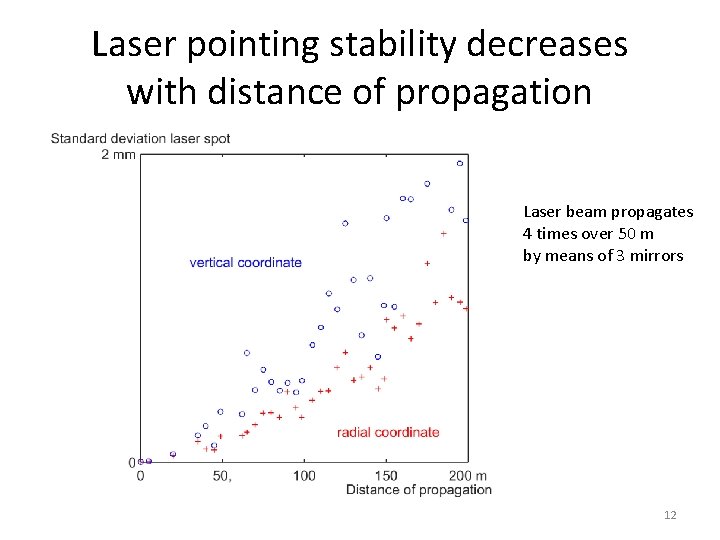
Laser pointing stability decreases with distance of propagation Laser beam propagates 4 times over 50 m by means of 3 mirrors 12
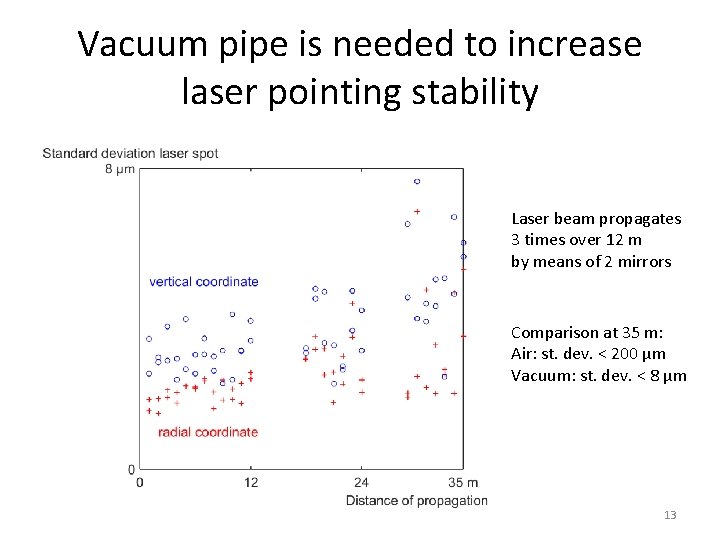
Vacuum pipe is needed to increase laser pointing stability Laser beam propagates 3 times over 12 m by means of 2 mirrors Comparison at 35 m: Air: st. dev. < 200 µm Vacuum: st. dev. < 8 µm 13
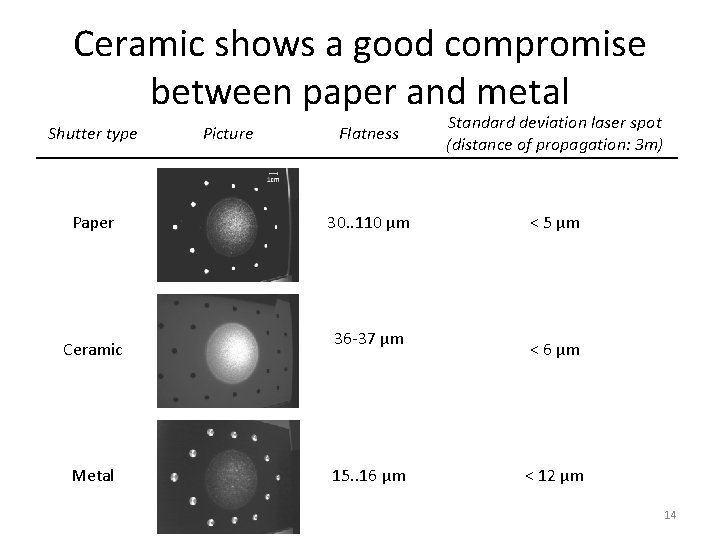
Ceramic shows a good compromise between paper and metal Shutter type Paper Ceramic Metal Picture Flatness Standard deviation laser spot (distance of propagation: 3 m) 30. . 110 µm < 5 µm 36 -37 µm 15. . 16 µm < 12 µm 14
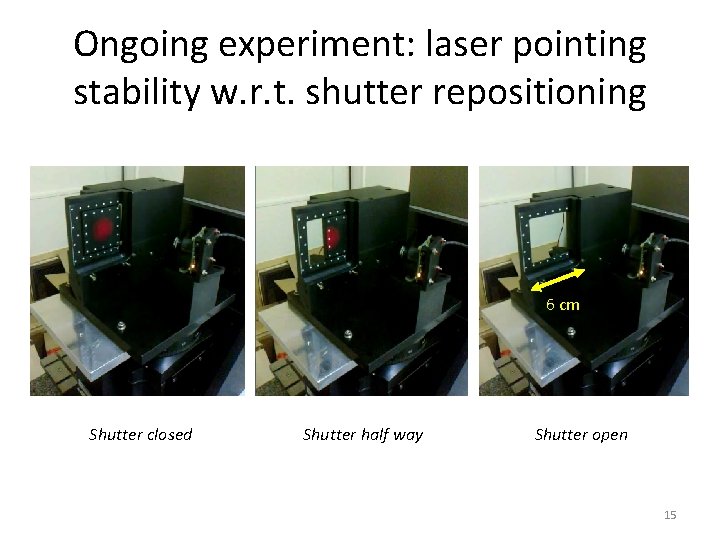
Ongoing experiment: laser pointing stability w. r. t. shutter repositioning 6 cm Shutter closed Shutter half way Shutter open 15
Conclusion • Laser based alignment system studied to align magnets with 10 µm accuracy over 200 m • Sensor = camera + open/close shutter • Lessons learnt from experiments – Beam expander and vacuum pipe needed – Ceramic shutter good compromise • Next steps – Experiments on shutter repositioning – Simulations to complete the experiments – Calibration protocol for sensor – Thesis report 16
- Slides: 16