
A KINEMATIC HARDENING MODEL WITH DEGRADATION OF STRUCTURE
- Slides: 10
A KINEMATIC HARDENING MODEL WITH DEGRADATION OF STRUCTURE – APPLICATION TO SOFT NATURAL CLAYS Béatrice A Baudet University College London
INTRODUCTION · Natural clays have a different microstructure or structure to that of clays reconstituted in the laboratory. · In most clays, particularly soft clays, this structure breaks with plastic strain; this is termed destructuration. · A simple model including structure is proposed, with only three new parameters which can be derived from a single set of test data.
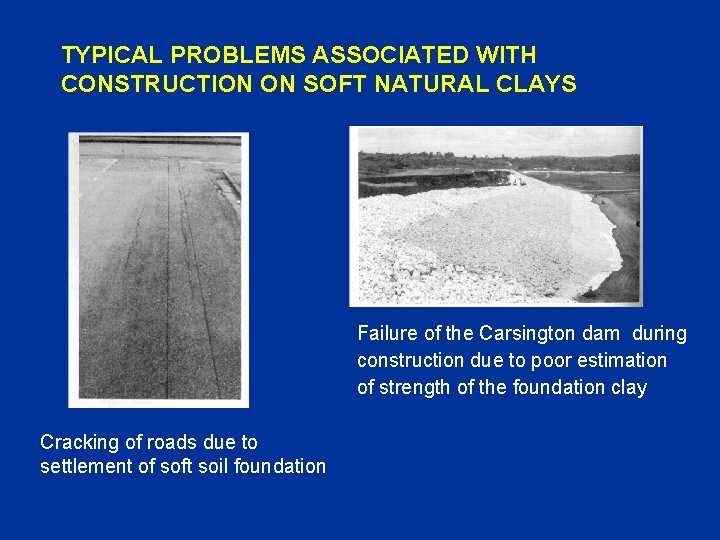
TYPICAL PROBLEMS ASSOCIATED WITH CONSTRUCTION ON SOFT NATURAL CLAYS Failure of the Carsington dam during construction due to poor estimation of strength of the foundation clay Cracking of roads due to settlement of soft soil foundation
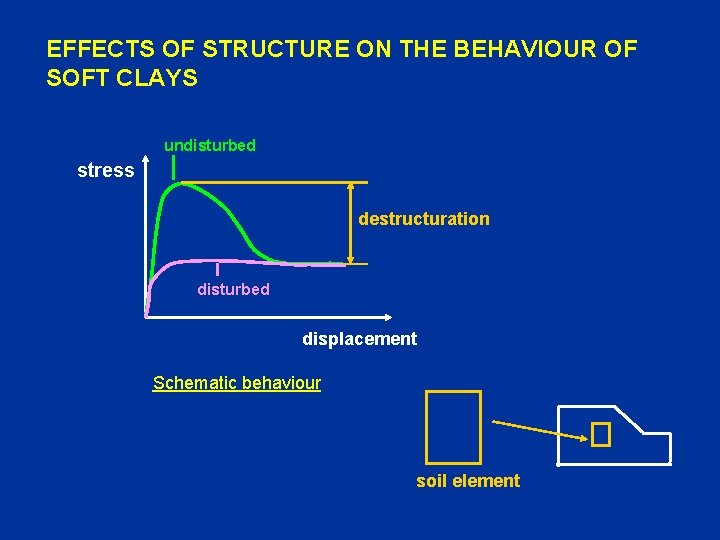
EFFECTS OF STRUCTURE ON THE BEHAVIOUR OF SOFT CLAYS undisturbed stress destructuration disturbed displacement Schematic behaviour soil element
SOFT NATURAL CLAYS · Shear strength < 50 k. Pa · Structure: combination of - fabric (stable elements) - bonding (unstable elements)
THE S 3 -SKH MODEL · Based on an existing model, the 3 -SKH model, developed for stiff clays with a stable structure (Stallebrass & Taylor, 1997) · All effects of structure described by the size of the state boundary surface
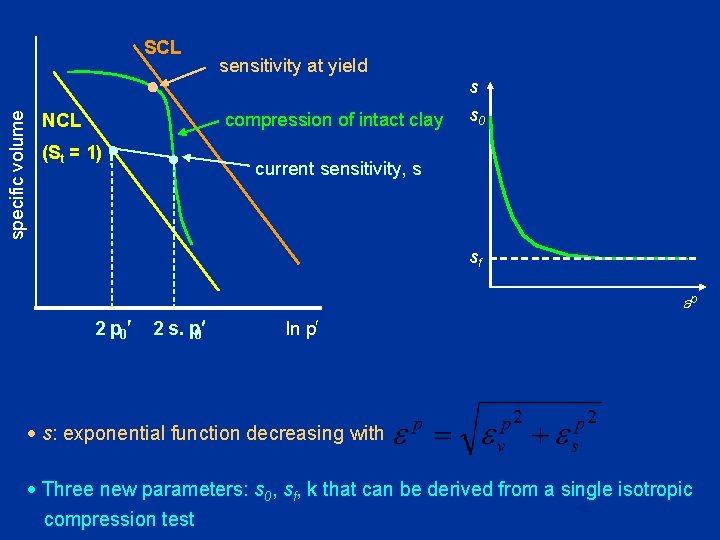
specific volume SCL sensitivity at yield compression of intact clay NCL (St = 1) s s 0 current sensitivity, s sf ep 2 p 0¢ 2 s. p 0¢ ln p¢ · s: exponential function decreasing with · Three new parameters: s 0, sf, k that can be derived from a single isotropic compression test
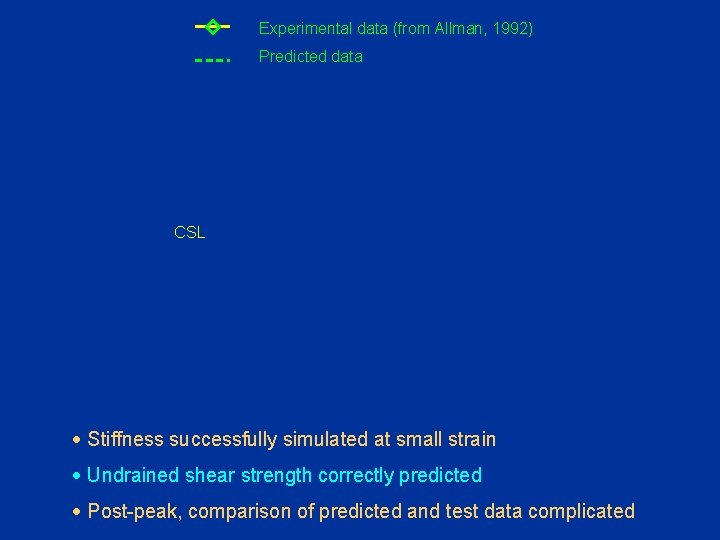
Experimental data (from Allman, 1992) Predicted data CSL · Stiffness successfully simulated at small strain · Undrained shear strength correctly predicted · Post-peak, comparison of predicted and test data complicated
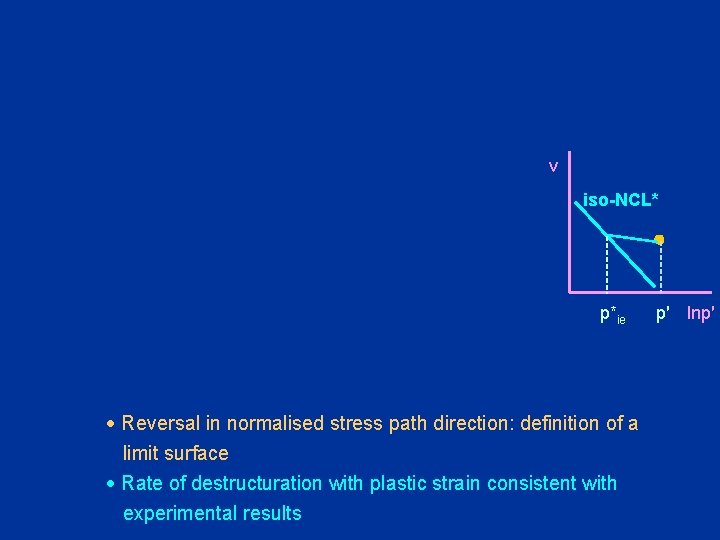
v iso-NCL* p*ie · Reversal in normalised stress path direction: definition of a limit surface · Rate of destructuration with plastic strain consistent with experimental results p′ lnp′
CONCLUSIONS · A simple model including structure in the size of the state boundary surface is sufficient to describe the behaviour of natural soils in triaxial space · The new model (S 3 -SKH model) requires only three additional parameters to the base model which can be derived from a single isotropic test · Need to investigate how soil structure degrades in general stress space and whether the features of behaviour found in general stress space can be generated by simply extrapolating the model from axisymmetric to general space