
A Journey to a Process Enabled Workplace Jonathan
A Journey to a Process Enabled Workplace Jonathan Walker Manager Operations Excellence – c. LEAN® jnwa@novonordisk. com
2 Novo Nordisk at a glance • • • 23, 600 employees in 79 countries A world leader in diabetes care since 1923 Leading position in: • Haemostasis management • Growth hormone therapy • Hormone replacement therapy • • Total net turnover (2006): 7. 1 billion USD Committed to environmental and social responsibility
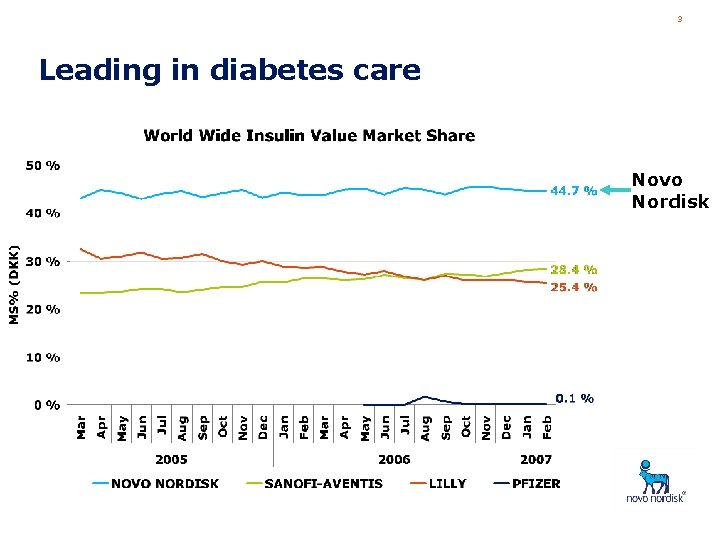
3 Leading in diabetes care Novo Nordisk
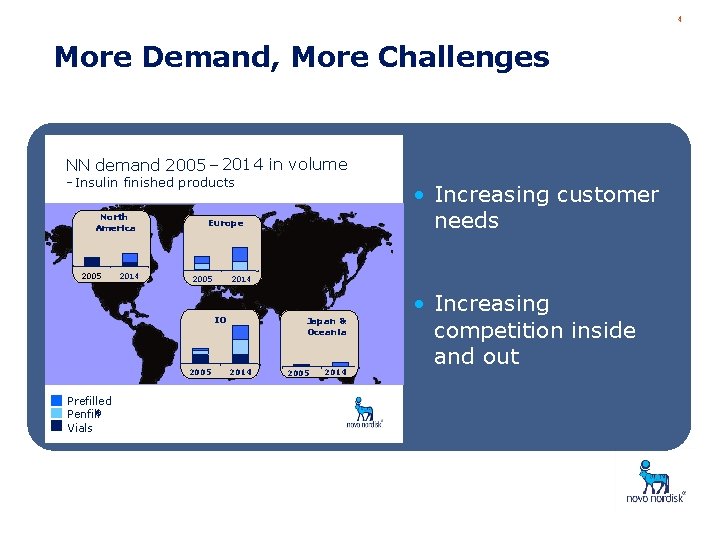
4 More Demand, More Challenges NN demand 2005 – 2014 in volume - Insulin finished products North America 2005 2014 Europe 2005 2014 IO 2005 Prefilled Slide no 6 • ® Confidential - Work in Progress • Penfill Vials • Increasing customer needs Japan & Oceania 2014 2005 2014 • Increasing competition inside and out
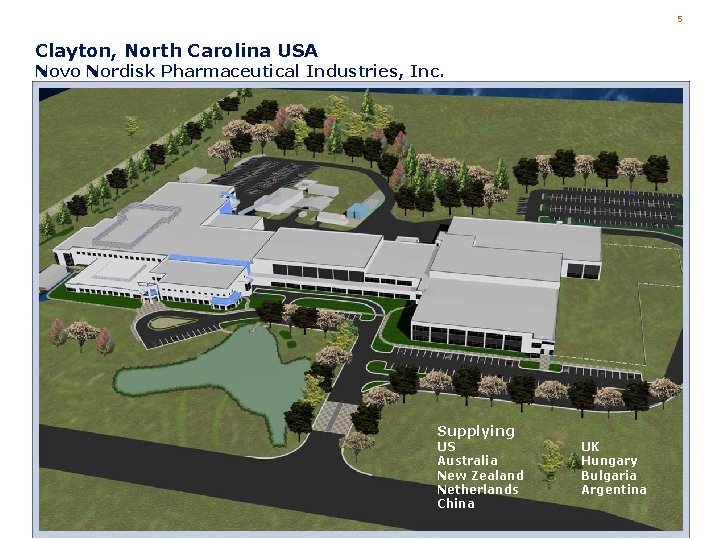
5 Clayton, North Carolina USA Novo Nordisk Pharmaceutical Industries, Inc. Supplying US Australia New Zealand Netherlands China UK Hungary Bulgaria Argentina
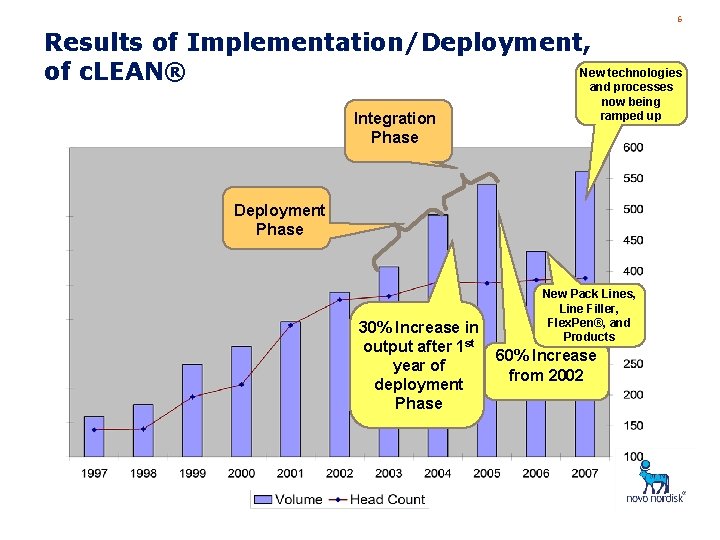
6 Results of Implementation/Deployment, New technologies of c. LEAN® and processes now being ramped up Integration Phase Deployment Phase 30% Increase in output after 1 st year of deployment Phase New Pack Lines, Line Filler, Flex. Pen®, and Products 60% Increase from 2002
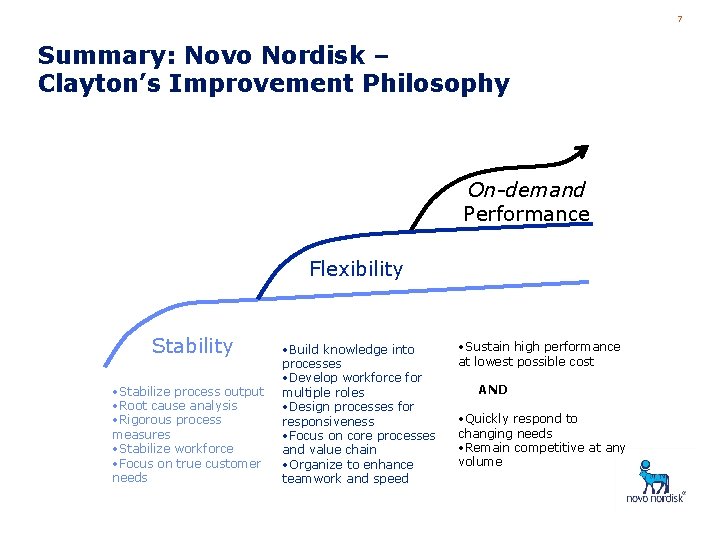
7 Summary: Novo Nordisk – Clayton’s Improvement Philosophy On-demand Performance Flexibility Stability • Stabilize process output • Root cause analysis • Rigorous process measures • Stabilize workforce • Focus on true customer needs • Build knowledge into processes • Develop workforce for multiple roles • Design processes for responsiveness • Focus on core processes and value chain • Organize to enhance teamwork and speed • Sustain high performance at lowest possible cost AND • Quickly respond to changing needs • Remain competitive at any volume
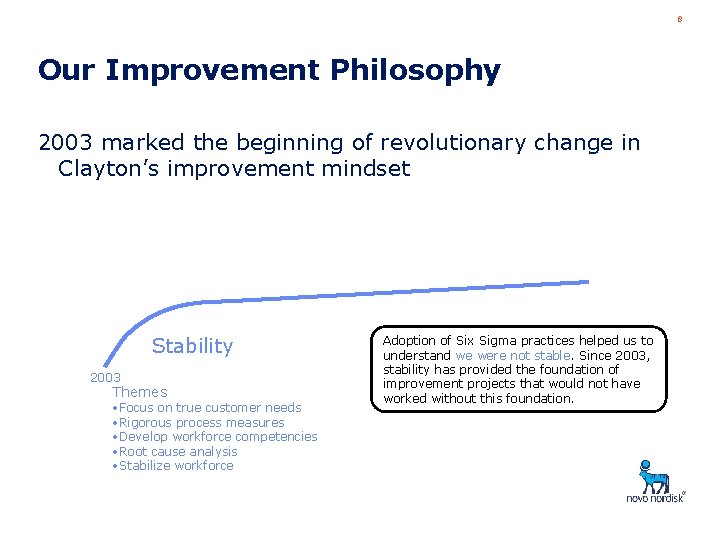
8 Our Improvement Philosophy 2003 marked the beginning of revolutionary change in Clayton’s improvement mindset Stability 2003 Themes • Focus on true customer needs • Rigorous process measures • Develop workforce competencies • Root cause analysis • Stabilize workforce Adoption of Six Sigma practices helped us to understand we were not stable. Since 2003, stability has provided the foundation of improvement projects that would not have worked without this foundation.
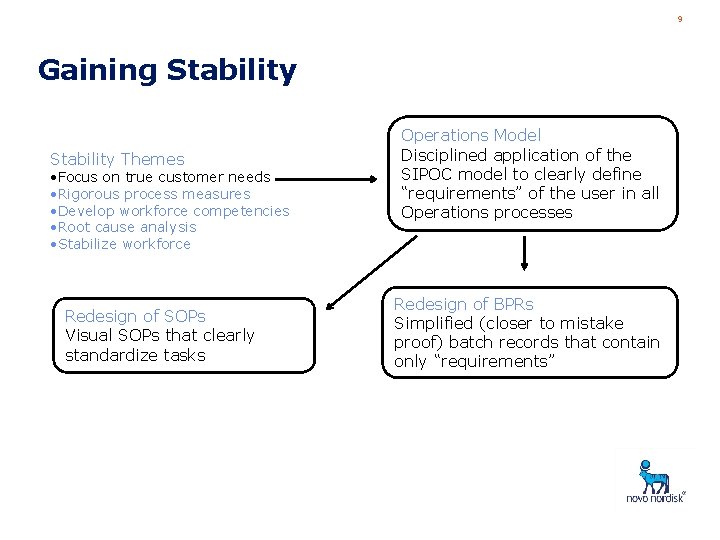
9 Gaining Stability Themes • Focus on true customer needs • Rigorous process measures • Develop workforce competencies • Root cause analysis • Stabilize workforce Redesign of SOPs Visual SOPs that clearly standardize tasks Operations Model Disciplined application of the SIPOC model to clearly define “requirements” of the user in all Operations processes Redesign of BPRs Simplified (closer to mistake proof) batch records that contain only “requirements”
10 The Need for Change • Inefficient and Unfocused SOPs/BPRs • • Little agreement on what was critical and why Business vs. Compliance requirements Unstandardized setups and practices on shop-floor No infrastructure for process improvements • Increasing Production Volumes • Processes were not scalable. • Batch release overwhelmed by documentation nonconformities, and by rework of batch documentation
11 How to Change? • Go Back to Basics • What does our process look like? • What are our critical parameters and how/where do we control them? • Instructions vs. Records: separate them • Obvious workplace • Create an Infrastructure for Improvement • Make SOPs Useful • Establish a process that will capture and enforce best practices.

12 Example Process Alignment—Process Control System Cont’d Q 8 Process Map • The set of sequential and parallel activities which assure the Customer requirements & process purpose is met if performed properly • Shows individual as well as cross-functional accountability Show you do your job Q 2 Q 3 Q 1 Show the purpose of your job contributes to the core processes and satisfying the customer Show what actions you take when there are out-of-control events or Change in Customer Requirement
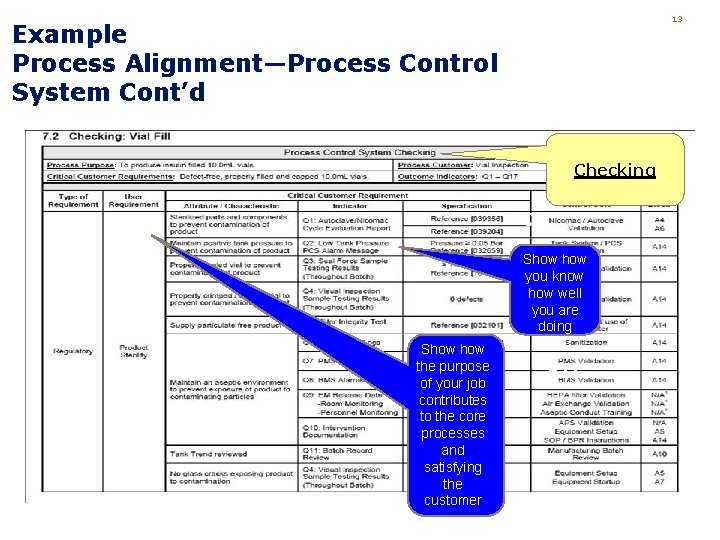
13 Example Process Alignment—Process Control System Cont’d Checking Q 1 Show you know how well you are doing Show the purpose of your job contributes to the core processes and satisfying the customer Q 11
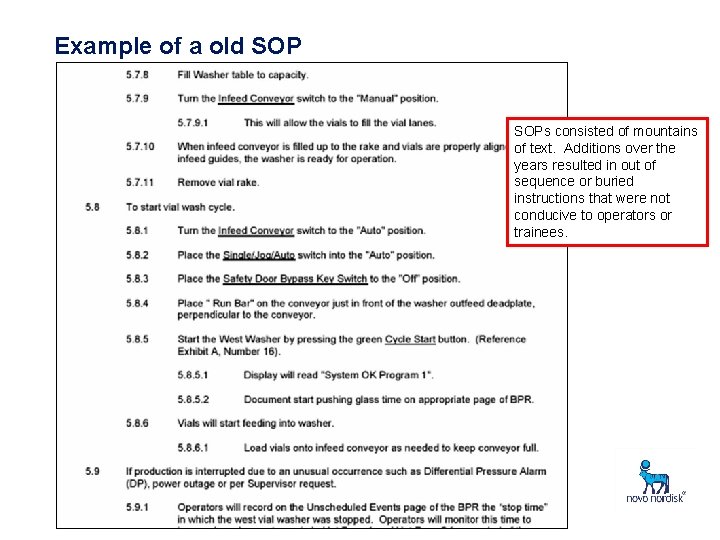
Example of a old SOPs consisted of mountains of text. Additions over the years resulted in out of sequence or buried instructions that were not conducive to operators or trainees.
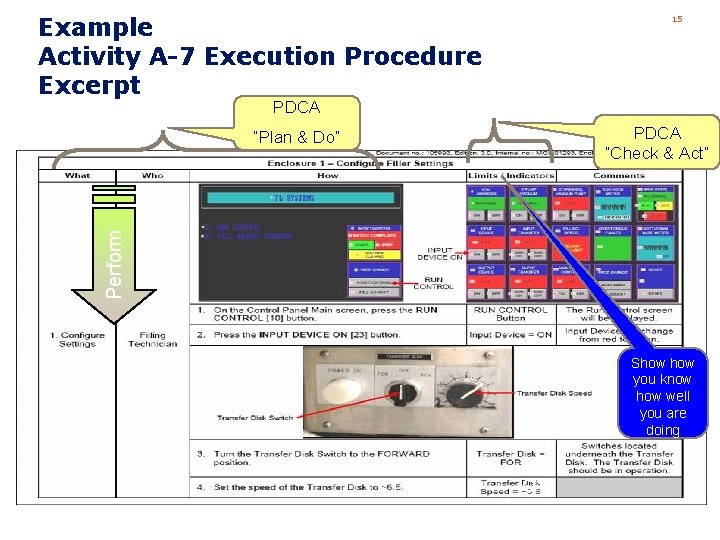
Example Activity A-7 Execution Procedure Excerpt 15 PDCA “Check & Act” Perform “Plan & Do” Show you know how well you are doing Q 2 Q 1
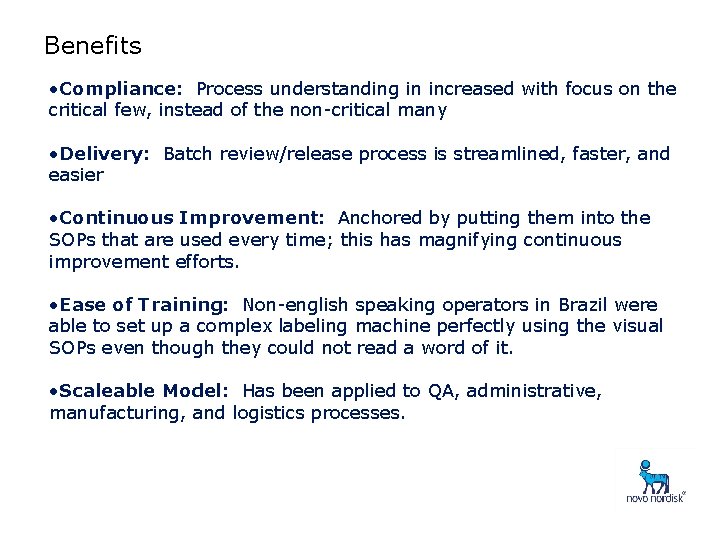
Benefits • Compliance: Process understanding in increased with focus on the critical few, instead of the non-critical many • Delivery: Batch review/release process is streamlined, faster, and easier • Continuous Improvement: Anchored by putting them into the SOPs that are used every time; this has magnifying continuous improvement efforts. • Ease of Training: Non-english speaking operators in Brazil were able to set up a complex labeling machine perfectly using the visual SOPs even though they could not read a word of it. • Scaleable Model: Has been applied to QA, administrative, manufacturing, and logistics processes.
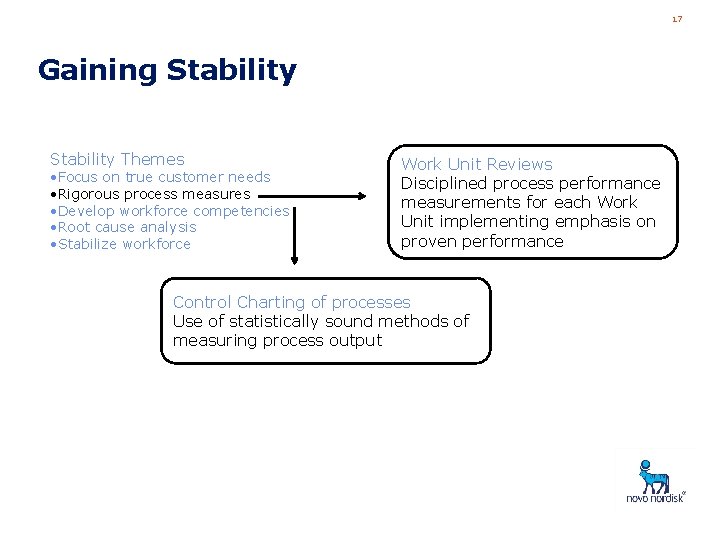
17 Gaining Stability Themes • Focus on true customer needs • Rigorous process measures • Develop workforce competencies • Root cause analysis • Stabilize workforce Work Unit Reviews Disciplined process performance measurements for each Work Unit implementing emphasis on proven performance Control Charting of processes Use of statistically sound methods of measuring process output
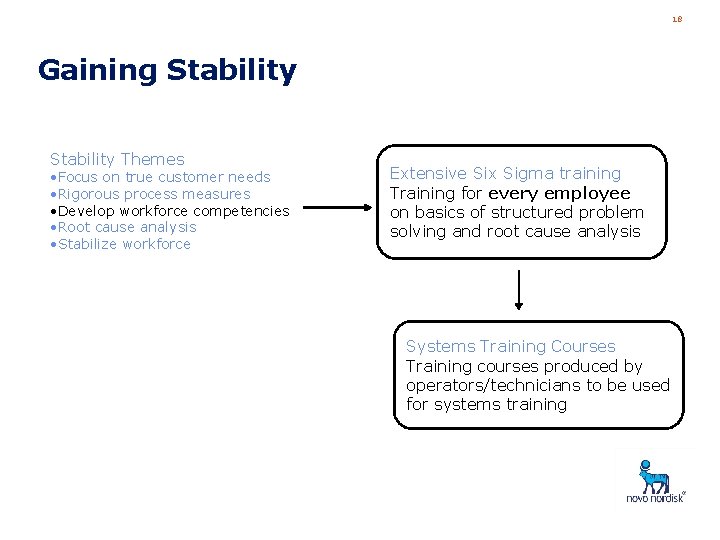
18 Gaining Stability Themes • Focus on true customer needs • Rigorous process measures • Develop workforce competencies • Root cause analysis • Stabilize workforce Extensive Six Sigma training Training for every employee on basics of structured problem solving and root cause analysis Systems Training Courses Training courses produced by operators/technicians to be used for systems training
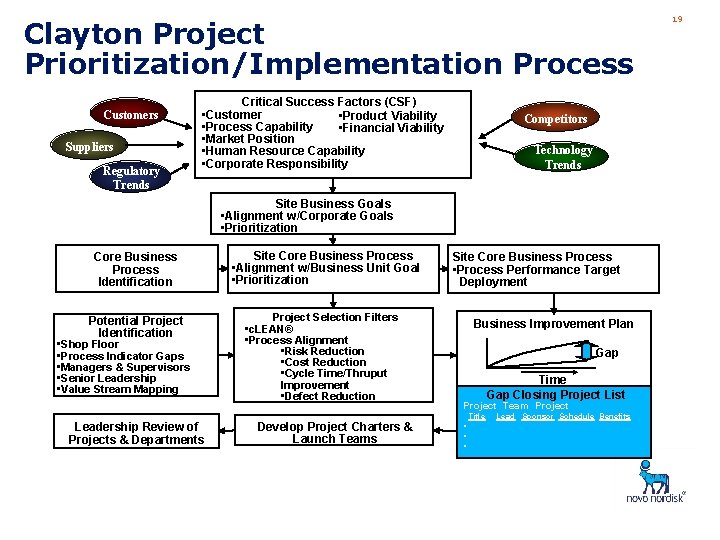
Clayton Project Prioritization/Implementation Process Customers Suppliers Regulatory Trends Critical Success Factors (CSF) • Customer • Product Viability • Process Capability • Financial Viability • Market Position • Human Resource Capability • Corporate Responsibility Competitors Technology Trends Site Business Goals • Alignment w/Corporate Goals • Prioritization Core Business Process Identification Potential Project Identification • Shop Floor • Process Indicator Gaps • Managers & Supervisors • Senior Leadership • Value Stream Mapping Leadership Review of Projects & Departments Site Core Business Process • Alignment w/Business Unit Goal • Prioritization Project Selection Filters • c. LEAN® • Process Alignment • Risk Reduction • Cost Reduction • Cycle Time/Thruput Improvement • Defect Reduction Develop Project Charters & Launch Teams Site Core Business Process • Process Performance Target Deployment Business Improvement Plan Gap Time Gap Closing Project List Project Team Project • • • Title . Lead Sponsor Schedule Benefits 19
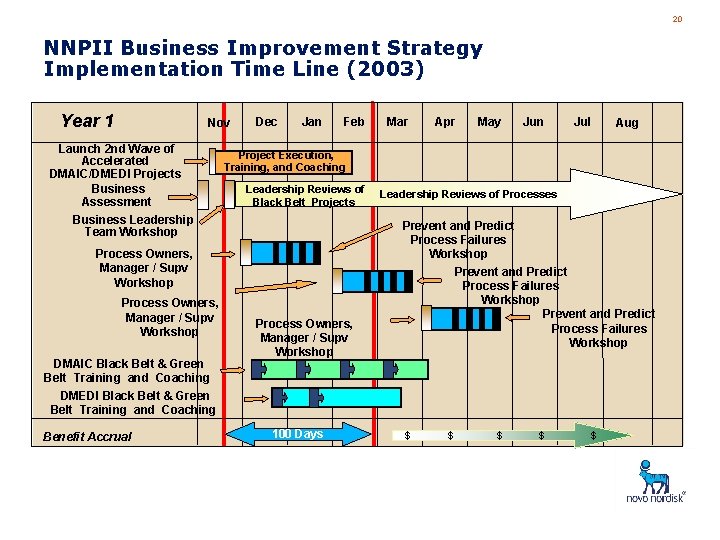
20 NNPII Business Improvement Strategy Implementation Time Line (2003) Year 1 Nov Launch 2 nd Wave of Accelerated DMAIC/DMEDI Projects Business Assessment Dec Jan Feb Leadership Reviews of Black Belt Projects Process Owners, Manager / Supv Workshop DMAIC Black Belt & Green Belt Training and Coaching DMEDI Black Belt & Green Belt Training and Coaching Benefit Accrual Apr May Jun Jul Aug Project Execution, Training, and Coaching Business Leadership Team Workshop Process Owners, Manager / Supv Workshop Mar Process Owners, Manager / Supv Workshop 100 Days Leadership Reviews of Processes Prevent and Predict Process Failures Workshop $ $ $
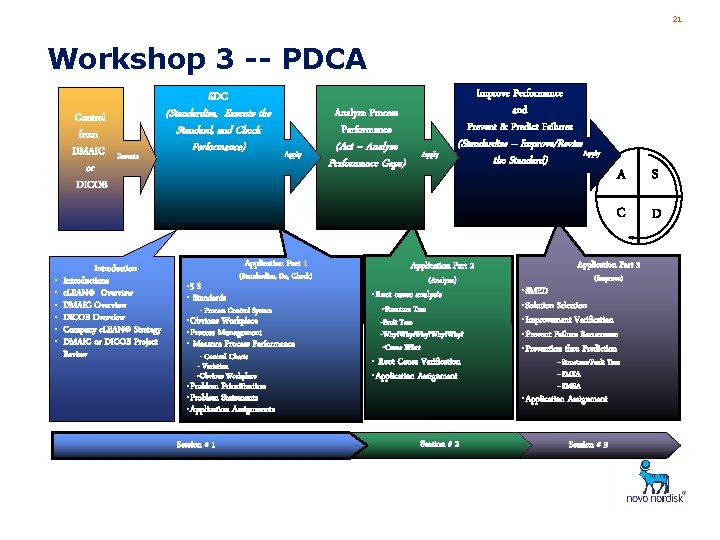
21 Workshop 3 -- PDCA SDC Control from DMAIC or DICOB • • • Execute Introductions c. LEAN® Overview DMAIC Overview DICOB Overview Company c. LEAN® Strategy DMAIC or DICOB Project Review (Standardize, Execute the Standard, and Check Performance) Improve Performance and Prevent & Predict Failures Analyze Process Performance Apply Application Part 1 (Act – Analyze Performance Gaps) Apply (Standardize – Improve/Revise Apply the Standard) - Process Control System Application Part 2 (Analyze) • Root cause analysis -Structure Tree - Control Charts - Variation -Obvious Workplace • Root Cause Verification • Application Assignment • 5 S • Standards (Standardize, Do, Check) • Obvious Workplace • Process Management • Measure Process Performance • Problem Prioritization • Problem Statements • Application Assignments Session # 1 -Fault Tree -Why? Why: Why? -Cause Effect S C D Application Part 3 (Improve) • SMED • Solution Selection • Improvement Verification • Prevent Failure Recurrence • Prevention thru Prediction –Structure/Fault Tree –FMEA –EMEA • Application Assignment Session # 2 A Session # 3
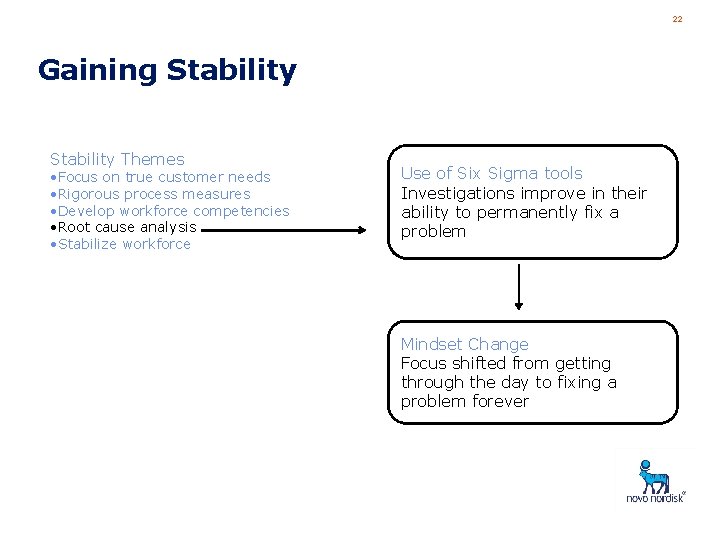
22 Gaining Stability Themes • Focus on true customer needs • Rigorous process measures • Develop workforce competencies • Root cause analysis • Stabilize workforce Use of Six Sigma tools Investigations improve in their ability to permanently fix a problem Mindset Change Focus shifted from getting through the day to fixing a problem forever
23 Gaining Stability Themes • Focus on true customer needs • Rigorous process measures • Develop workforce competencies • Root cause analysis • Stabilize workforce Operator Bonus Performance driven, quarterly payouts with real-time communication of progress
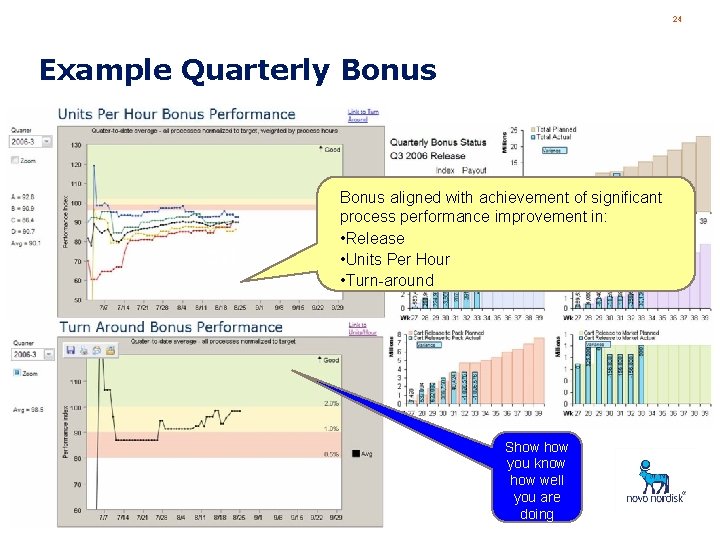
24 Example Quarterly Bonus Q 11 Bonus aligned with achievement of significant process performance improvement in: • Release • Units Per Hour • Turn-around Q 1 Show you know how well you are doing
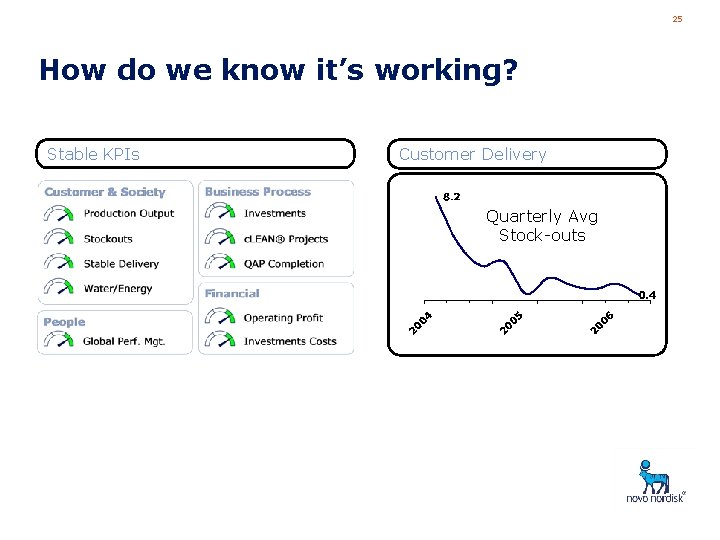
25 How do we know it’s working? Stable KPIs Customer Delivery Quarterly Avg Stock-outs
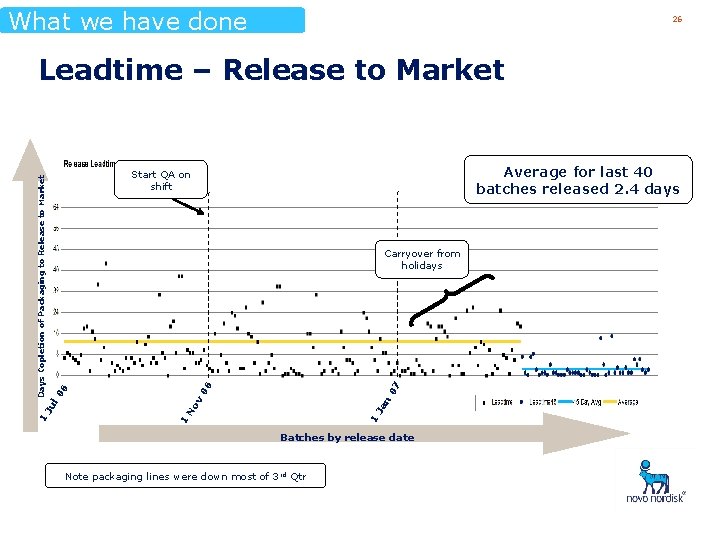
What we have done 26 07 1 Ja n No v 6 06 Carryover from holidays 1 1 Average for last 40 batches released 2. 4 days Start QA on shift Ju l 0 Days Copletion of Packaging to Release to Market Leadtime – Release to Market Batches by release date Note packaging lines were down most of 3 rd Qtr
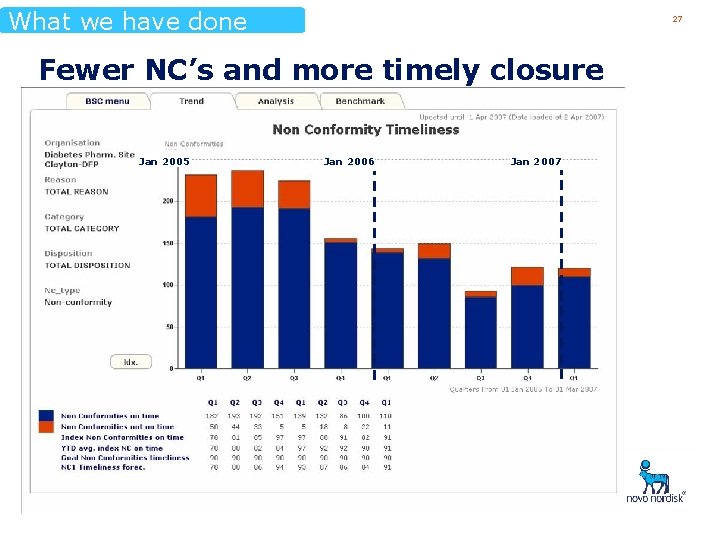
What we have done 27 Fewer NC’s and more timely closure Jan 2005 Jan 2006 Jan 2007
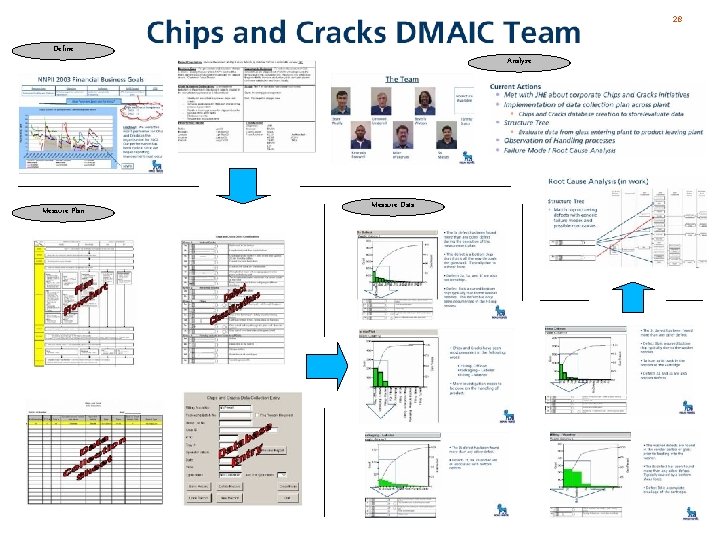
28 Define Measure Plan Analyze Measure Data
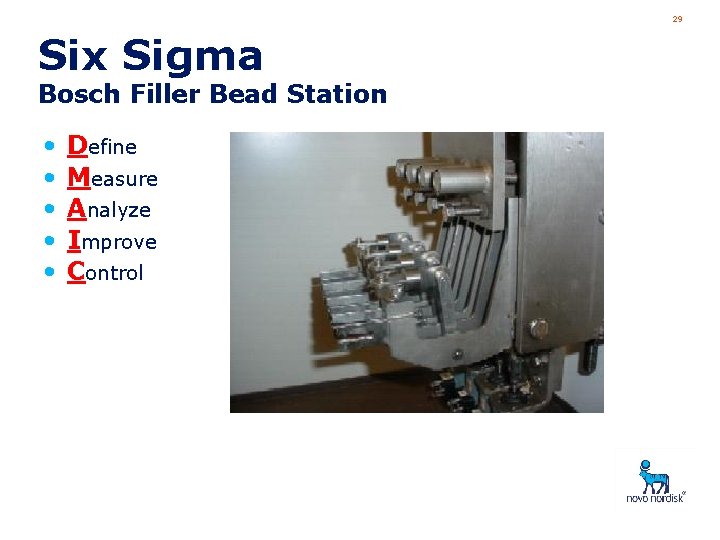
29 Six Sigma Bosch Filler Bead Station • • • Define Measure Analyze Improve Control
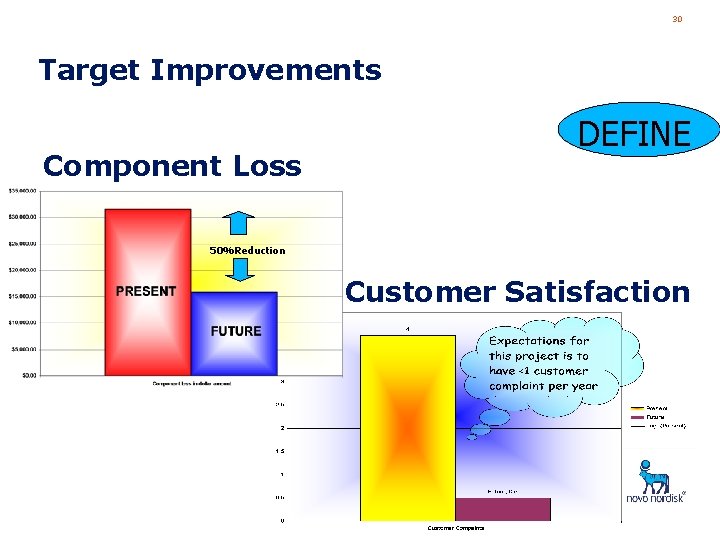
30 Target Improvements Component Loss DEFINE 50%Reduction Customer Satisfaction
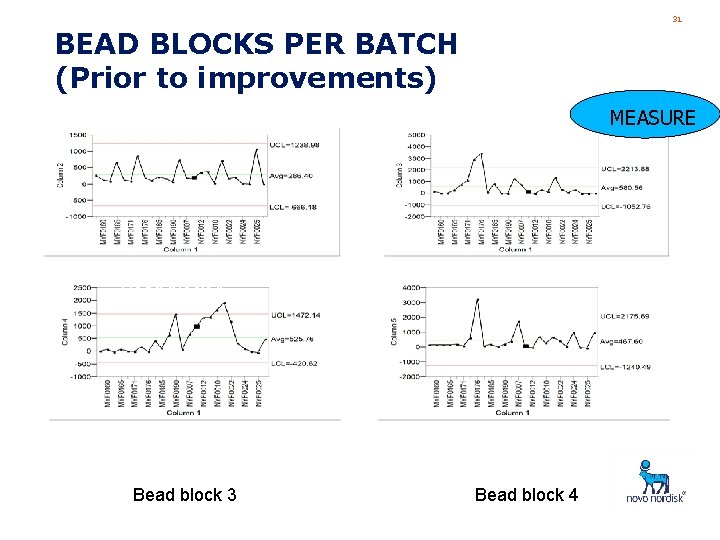
31 BEAD BLOCKS PER BATCH (Prior to improvements) MEASURE Bead block 1 Bead block 3 Bead block 2 Bead block 4
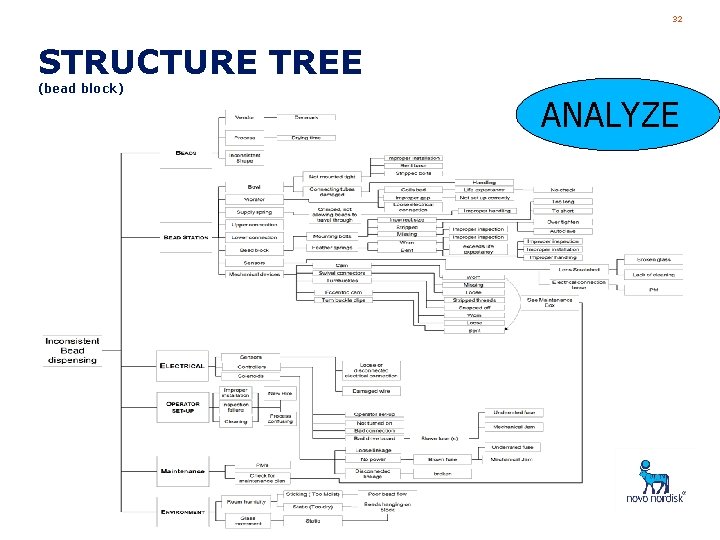
32 STRUCTURE TREE (bead block) ANALYZE
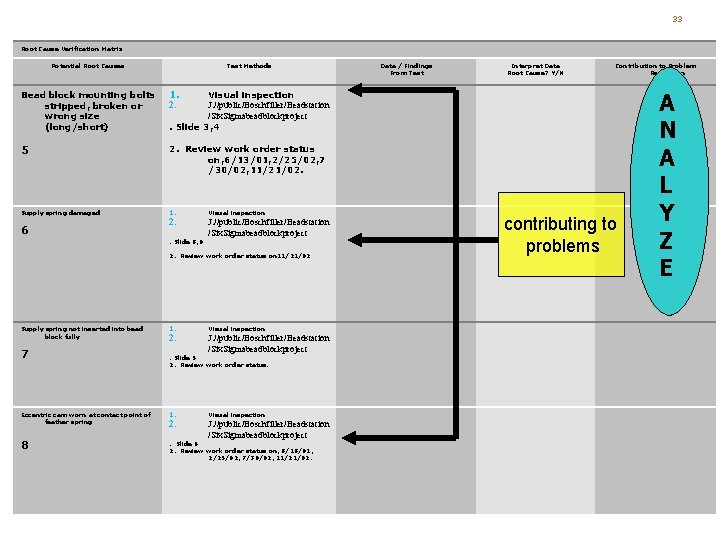
33 Root Cause Verification Matrix Potential Root Causes Test Methods Bead block mounting bolts stripped, broken or wrong size (long/short) 1. 2. 5 2. Review work order status on, 6/13/01, 2/25/02, 7 /30/02, 11/21/02. Supply spring damaged 1. Visual inspection 2. J: //public/Boschfiller/Beadstation /Six. Sigmabeadblockproject 6 2. Review work order status on 11/21/02 7 Interpret Data Root Cause? Y/N Contribution to Problem Resolution Visual inspection J: //public/Boschfiller/Beadstation /Six. Sigmabeadblockproject. Slide 3, 4 . Slide 8, 9 Supply spring not inserted into bead block fully Data / Findings From Test 1. Visual inspection 2. J: //public/Boschfiller/Beadstation /Six. Sigmabeadblockproject . Slide 5 2. Review work order status. Eccentric cam worn at contact point of feather spring 1. Visual inspection 2. 8 J: //public/Boschfiller/Beadstation /Six. Sigmabeadblockproject . Slide 6 2. Review work order status on, 8/18/01, 2/25/02, 7/30/02, 11/21/02. contributing to problems A N A L Y Z E
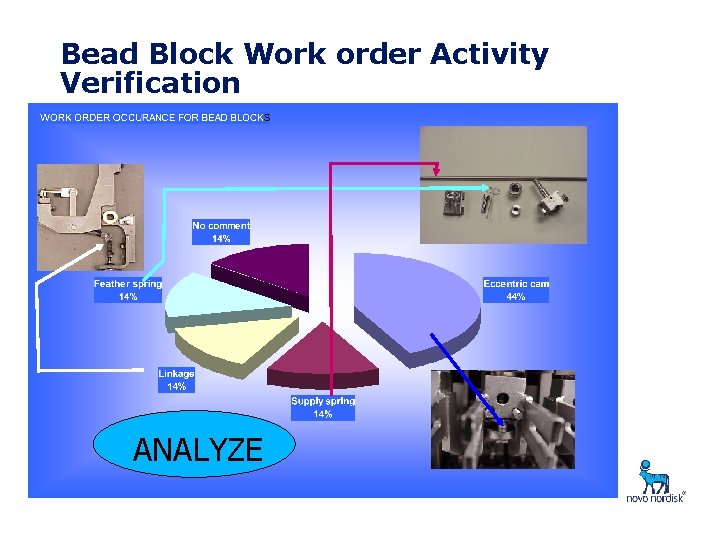
Bead Block Work order Activity Verification ANALYZE
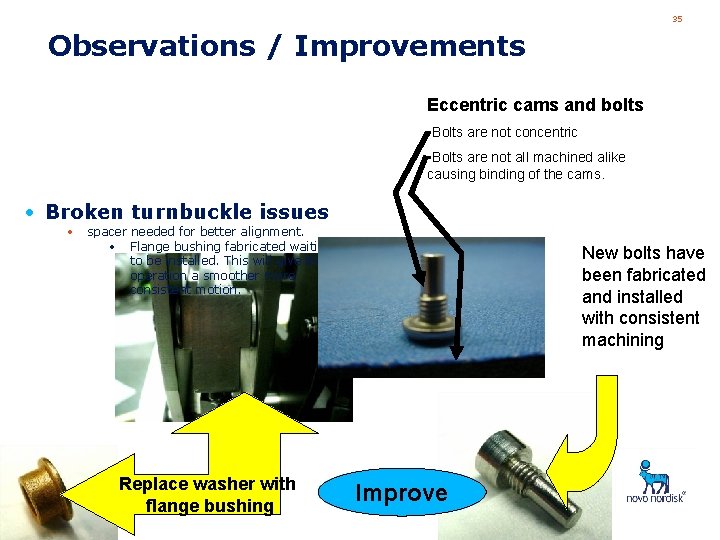
35 Observations / Improvements Eccentric cams and bolts • Bolts are not concentric • Bolts are not all machined alike causing binding of the cams. • Broken turnbuckle issues • spacer needed for better alignment. • Flange bushing fabricated waiting to be installed. This will give the operation a smoother more consistent motion. Replace washer with flange bushing New bolts have been fabricated and installed with consistent machining Improve
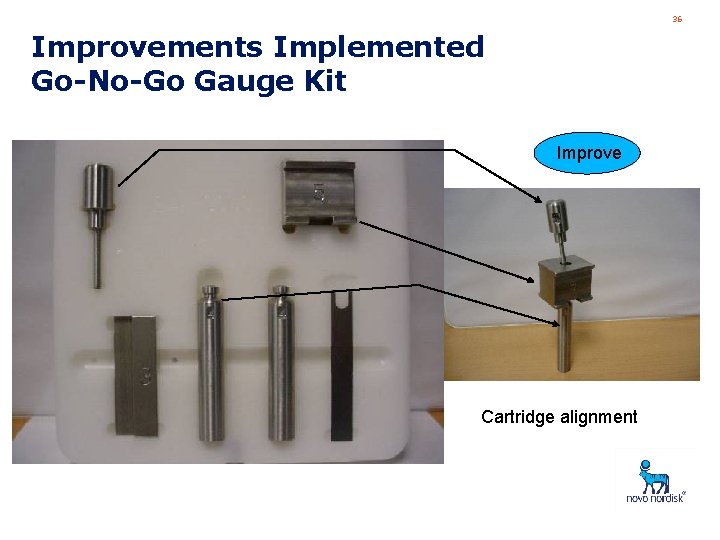
36 Improvements Implemented Go-No-Go Gauge Kit Improve Cartridge alignment
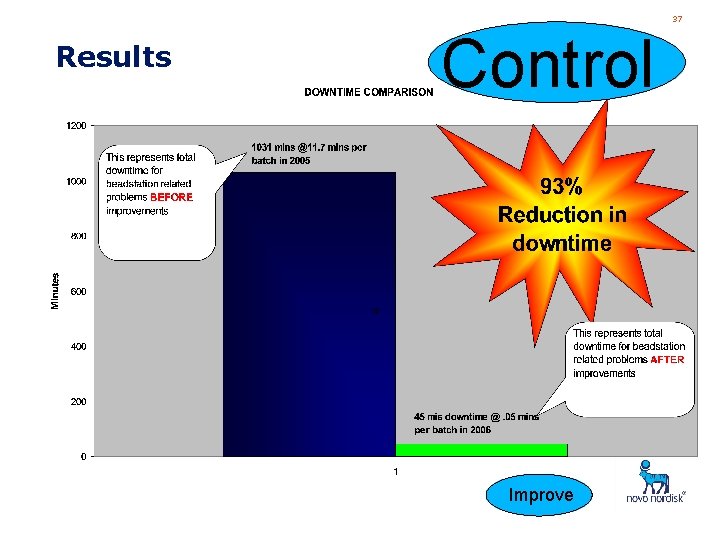
37 Results Control Improve
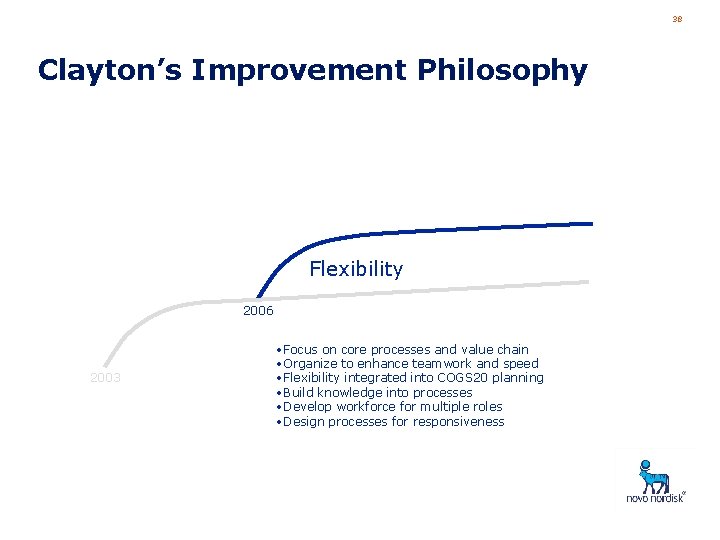
38 Clayton’s Improvement Philosophy Flexibility 2006 2003 • Focus on core processes and value chain • Organize to enhance teamwork and speed • Flexibility integrated into COGS 20 planning • Build knowledge into processes • Develop workforce for multiple roles • Design processes for responsiveness
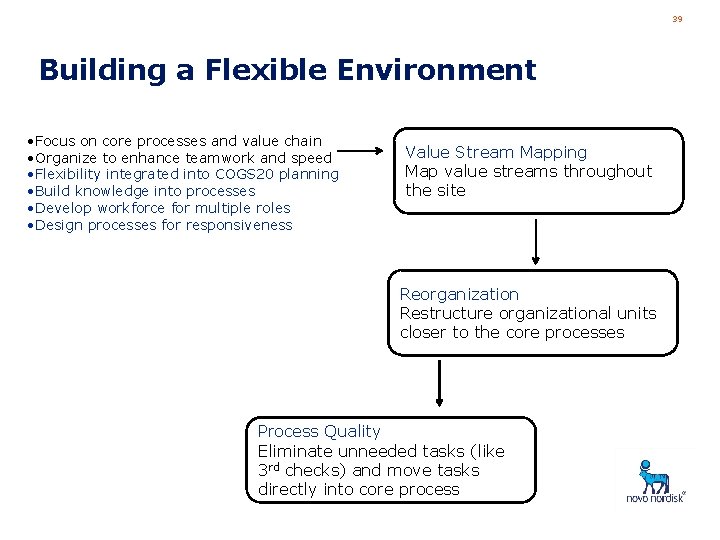
39 Building a Flexible Environment • Focus on core processes and value chain • Organize to enhance teamwork and speed • Flexibility integrated into COGS 20 planning • Build knowledge into processes • Develop workforce for multiple roles • Design processes for responsiveness Value Stream Mapping Map value streams throughout the site Reorganization Restructure organizational units closer to the core processes Process Quality Eliminate unneeded tasks (like 3 rd checks) and move tasks directly into core process
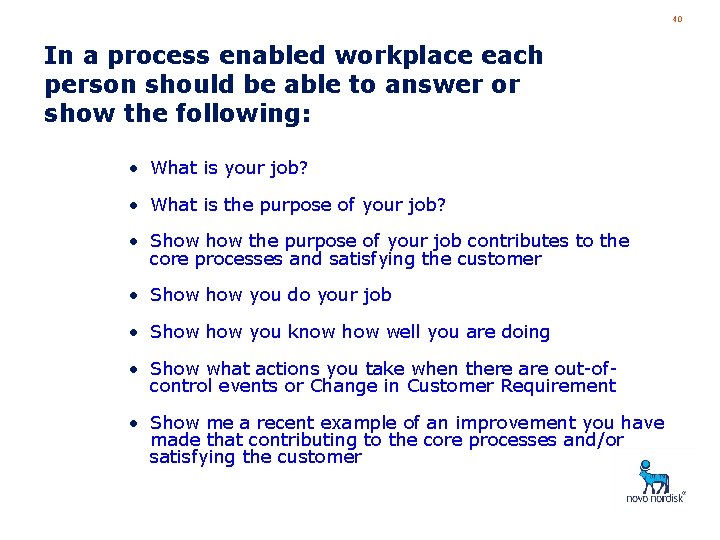
40 In a process enabled workplace each person should be able to answer or show the following: • What is your job? • What is the purpose of your job? • Show the purpose of your job contributes to the core processes and satisfying the customer • Show you do your job • Show you know how well you are doing • Show what actions you take when there are out-ofcontrol events or Change in Customer Requirement • Show me a recent example of an improvement you have made that contributing to the core processes and/or satisfying the customer
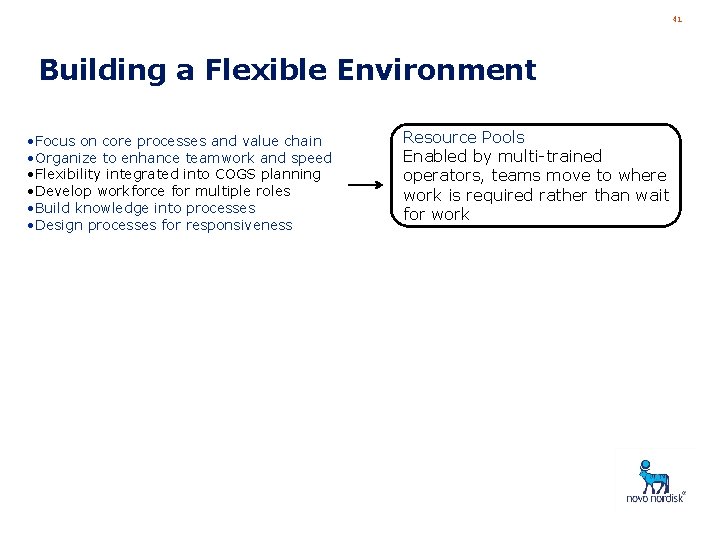
41 Building a Flexible Environment • Focus on core processes and value chain • Organize to enhance teamwork and speed • Flexibility integrated into COGS planning • Develop workforce for multiple roles • Build knowledge into processes • Design processes for responsiveness Resource Pools Enabled by multi-trained operators, teams move to where work is required rather than wait for work
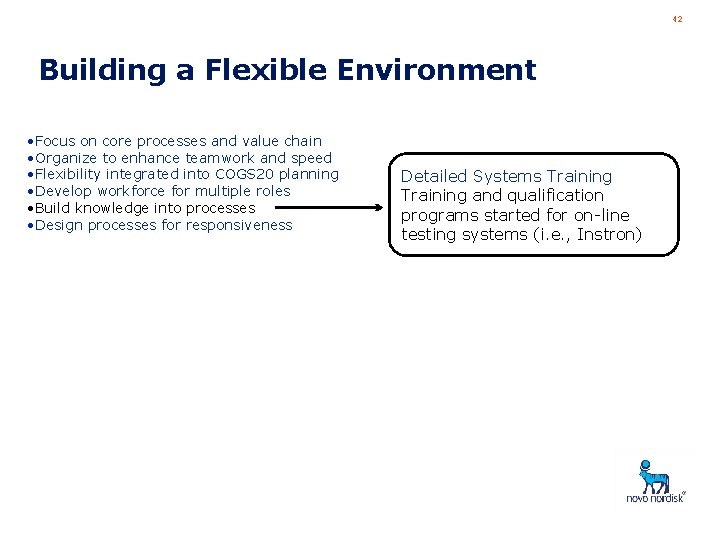
42 Building a Flexible Environment • Focus on core processes and value chain • Organize to enhance teamwork and speed • Flexibility integrated into COGS 20 planning • Develop workforce for multiple roles • Build knowledge into processes • Design processes for responsiveness Detailed Systems Training and qualification programs started for on-line testing systems (i. e. , Instron)
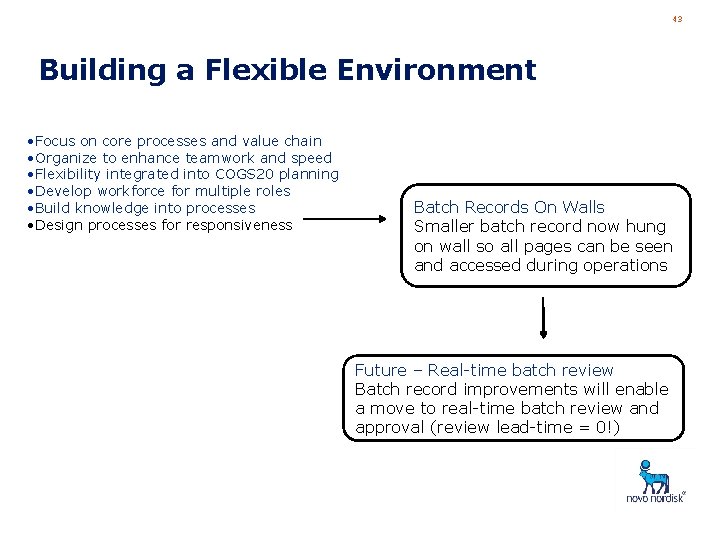
43 Building a Flexible Environment • Focus on core processes and value chain • Organize to enhance teamwork and speed • Flexibility integrated into COGS 20 planning • Develop workforce for multiple roles • Build knowledge into processes • Design processes for responsiveness Batch Records On Walls Smaller batch record now hung on wall so all pages can be seen and accessed during operations Future – Real-time batch review Batch record improvements will enable a move to real-time batch review and approval (review lead-time = 0!)
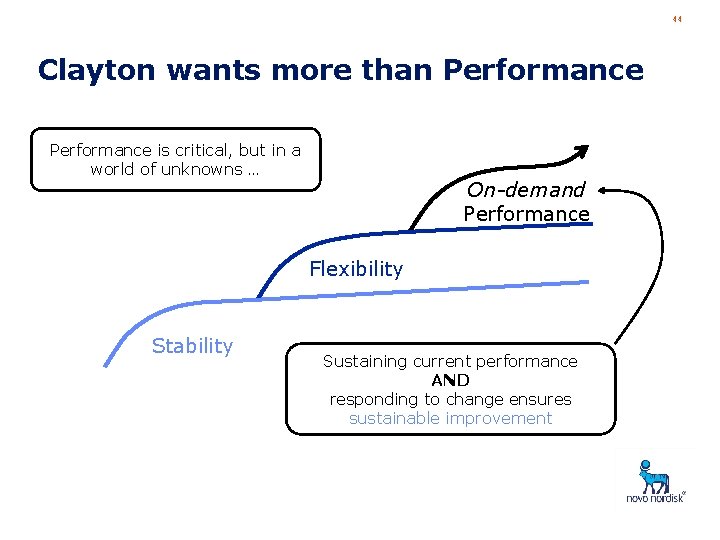
44 Clayton wants more than Performance is critical, but in a world of unknowns … On-demand Performance Flexibility Stability Sustaining current performance AND responding to change ensures sustainable improvement
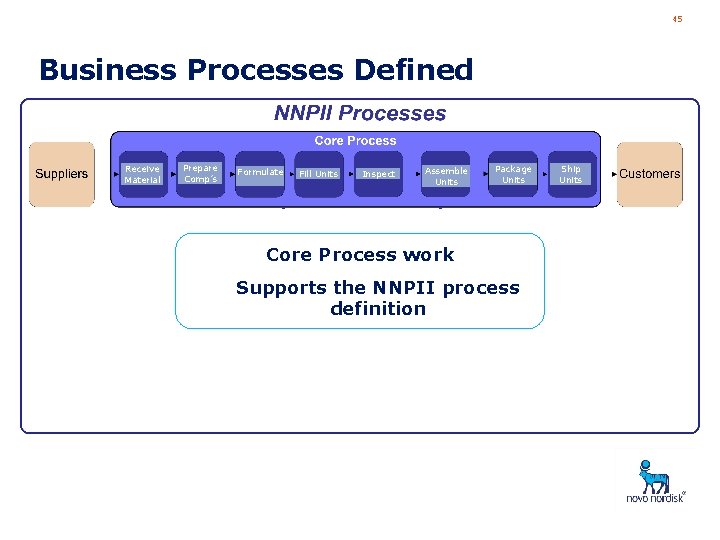
45 Business Processes Defined Receive Material Prepare Comp’s Formulate Fill Units Inspect Assemble Units Package Units Core Process work Supports the NNPII process definition Ship Units
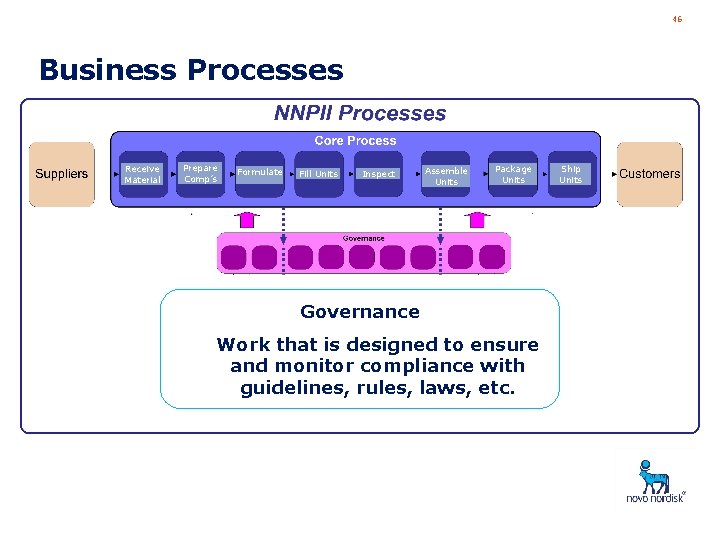
46 Business Processes Receive Material Prepare Comp’s Formulate Fill Units Inspect Assemble Units Package Units Governance Work that is designed to ensure and monitor compliance with guidelines, rules, laws, etc. Ship Units
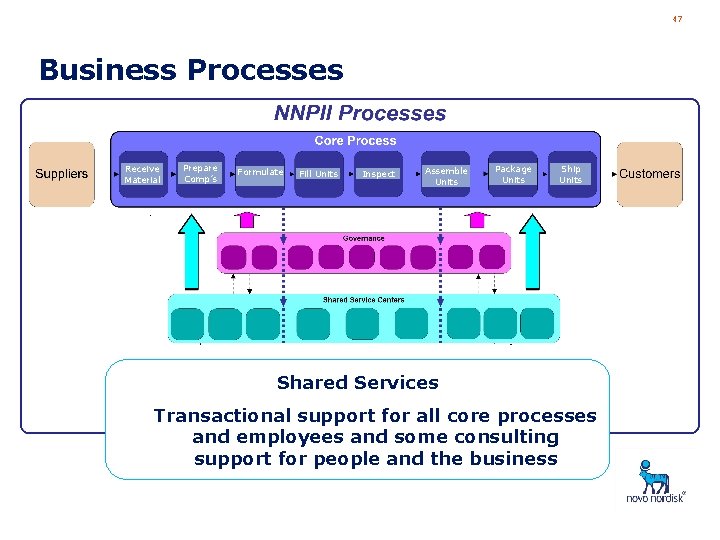
47 Business Processes Receive Material Prepare Comp’s Formulate Fill Units Inspect Assemble Units Package Units Ship Units Shared Services Transactional support for all core processes and employees and some consulting support for people and the business
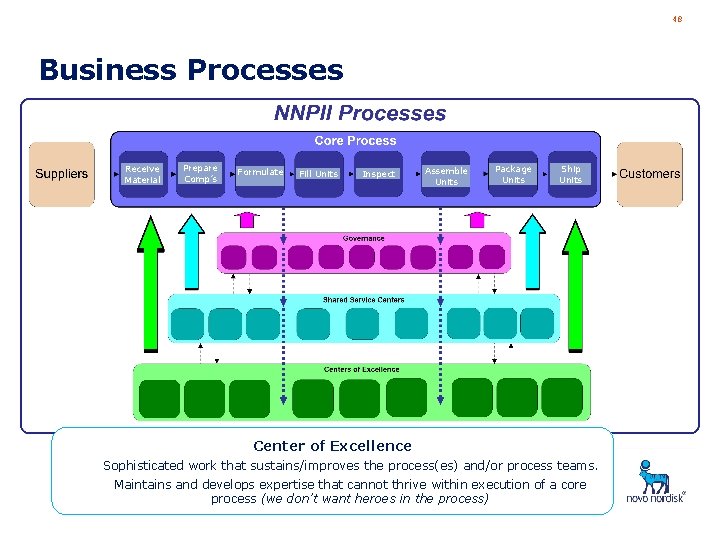
48 Business Processes Receive Material Prepare Comp’s Formulate Fill Units Inspect Assemble Units Package Units Ship Units Center of Excellence Sophisticated work that sustains/improves the process(es) and/or process teams. Maintains and develops expertise that cannot thrive within execution of a core process (we don’t want heroes in the process)
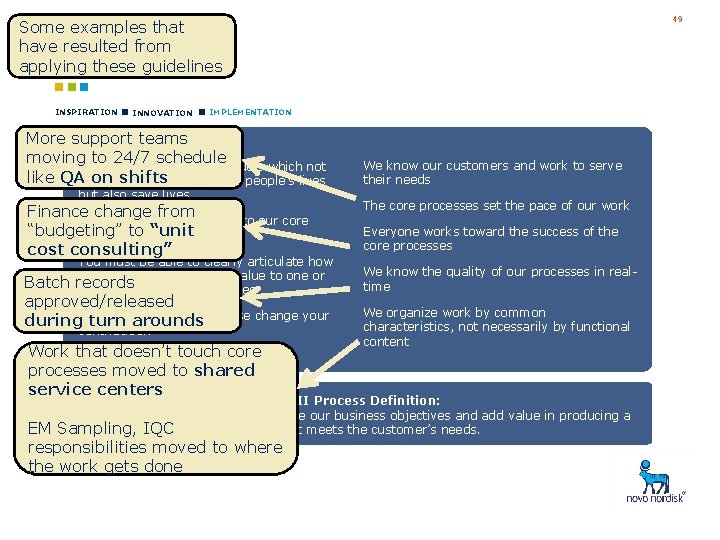
49 Some examples that have resulted from Guidelines applying these guidelines for designing our processes and workplace that support success INSPIRATION INNOVATION IMPLEMENTATION More support teams moving. Atto 24/7 schedule NNPII we all make products which not like QAonly onimprove shiftsthe quality of people’s lives but also save lives Finance change from We do this by contributing to our core “budgeting” to “unit processes cost consulting” We know our customers and work to serve their needs The core processes set the pace of our work Everyone works toward the success of the core processes You must be able to clearly articulate how you contribute by adding value to one or records more of these core processes We know the quality of our processes in realtime contribution We organize work by common characteristics, not necessarily by functional content Batch approved/released you cannot do this, please change your during. If turn arounds Work that doesn’t touch core processes moved to shared service centers NNPII Process Definition: Self-supporting activities that achieve our business objectives and add value in producing a Sampling, IQC product that meets the customer’s needs. EM responsibilities moved to where the work gets done
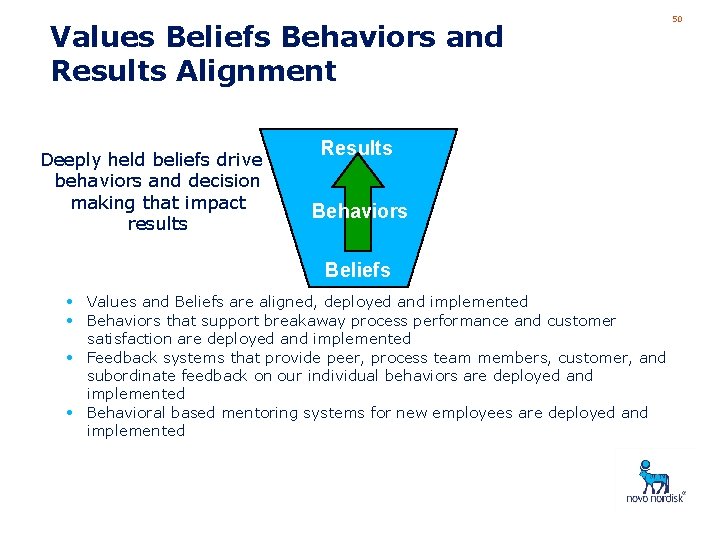
Values Beliefs Behaviors and Results Alignment Deeply held beliefs drive behaviors and decision making that impact results Results Behaviors Beliefs • Values and Beliefs are aligned, deployed and implemented • Behaviors that support breakaway process performance and customer satisfaction are deployed and implemented • Feedback systems that provide peer, process team members, customer, and subordinate feedback on our individual behaviors are deployed and implemented • Behavioral based mentoring systems for new employees are deployed and implemented 50
51 Values, Beliefs, and Behaviors Alignment Implementation • Conduct of Operations Workshops • Standardize selected operations/maintenance practices • Standardize behaviors • Teambuilding Workshops • Workshops to build strong working relationships Q 10 • Feedback System to Sustain Relationships • Team member to team member feedback • Team to team leader feedback
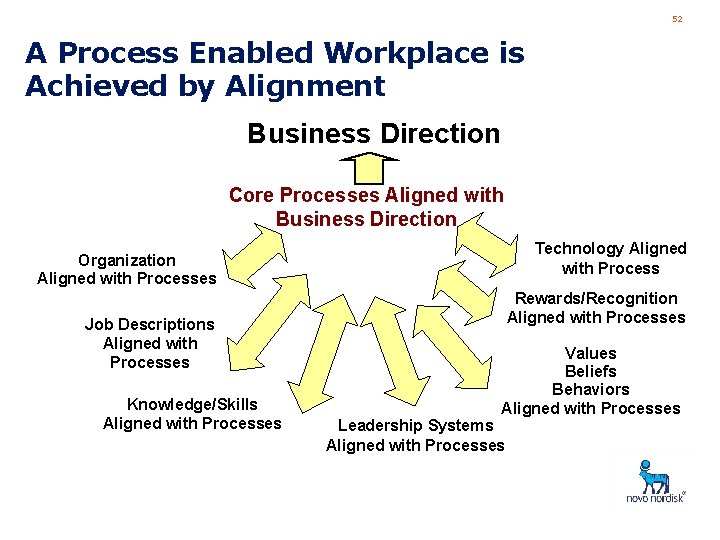
52 A Process Enabled Workplace is Achieved by Alignment Business Direction Core Processes Aligned with Business Direction Technology Aligned with Process Organization Aligned with Processes Job Descriptions Aligned with Processes Knowledge/Skills Aligned with Processes Rewards/Recognition Aligned with Processes Values Beliefs Behaviors Aligned with Processes Leadership Systems Aligned with Processes
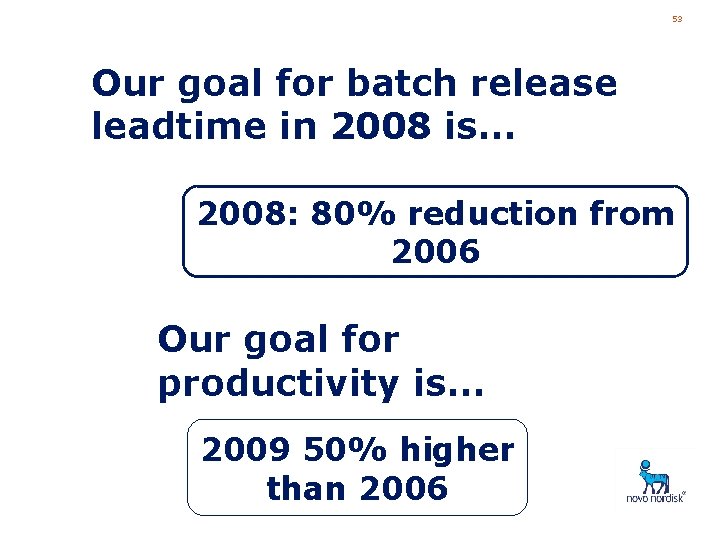
53 Our goal for batch release leadtime in 2008 is… 2008: 80% reduction from 2006 Our goal for productivity is… 2009 50% higher than 2006
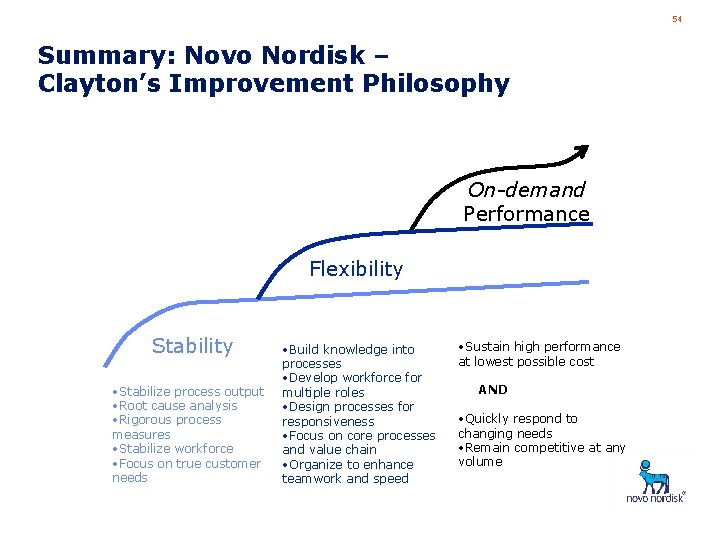
54 Summary: Novo Nordisk – Clayton’s Improvement Philosophy On-demand Performance Flexibility Stability • Stabilize process output • Root cause analysis • Rigorous process measures • Stabilize workforce • Focus on true customer needs • Build knowledge into processes • Develop workforce for multiple roles • Design processes for responsiveness • Focus on core processes and value chain • Organize to enhance teamwork and speed • Sustain high performance at lowest possible cost AND • Quickly respond to changing needs • Remain competitive at any volume
A Journey to a Process Enabled Workplace Jonathan Walker Manager Operations Excellence – c. LEAN® jnwa@novonordisk. com
- Slides: 55