
A Joint Cognitive Systems perspective Consequences for an

- Slides: 18
A Joint Cognitive Systems perspective – Consequences for an ASAS Human Factors research agenda Fredrik Barchéus, KTH Lena Mårtensson, KTH Anthony Smoker, IFATCA A Joint Cognitive Systems perspective Consequences for an ASAS Human Factors research agenda
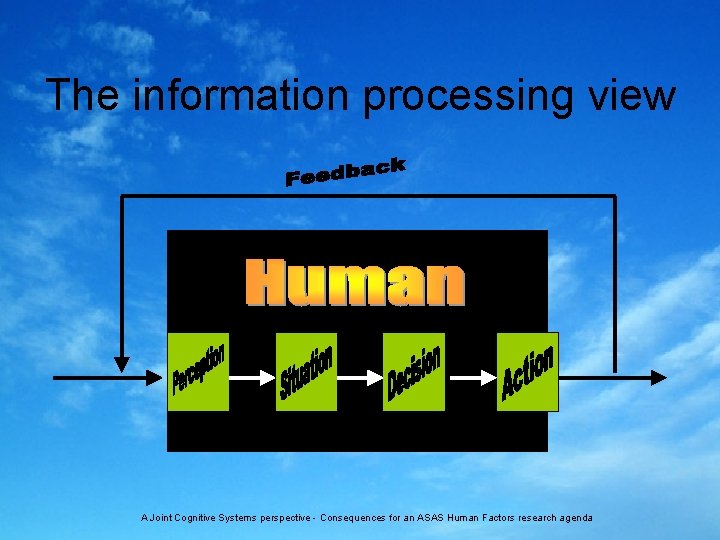
The information processing view A Joint Cognitive Systems perspective - Consequences for an ASAS Human Factors research agenda
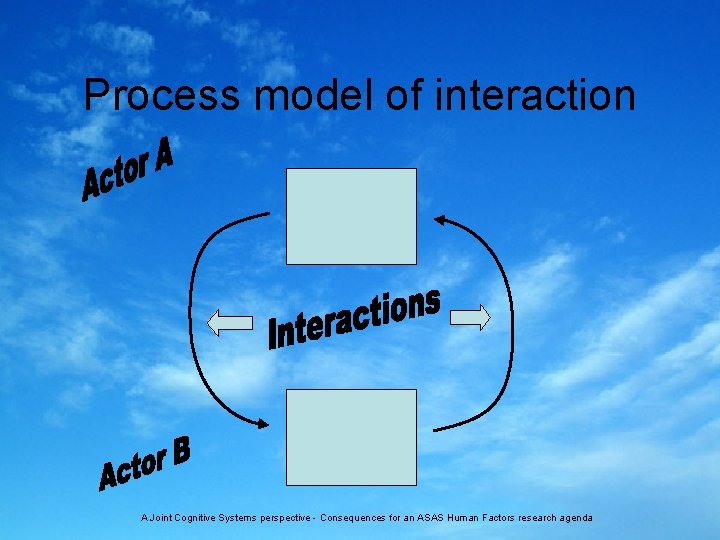
Process model of interaction A Joint Cognitive Systems perspective - Consequences for an ASAS Human Factors research agenda
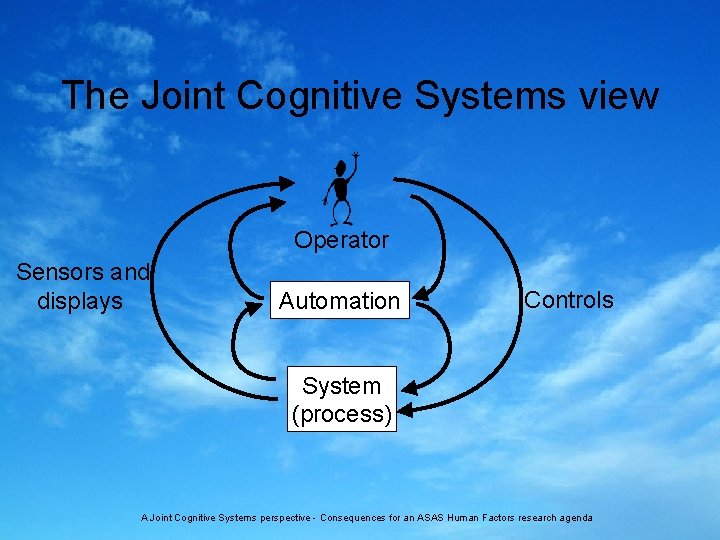
The Joint Cognitive Systems view Operator Sensors and displays Automation Controls System (process) A Joint Cognitive Systems perspective - Consequences for an ASAS Human Factors research agenda
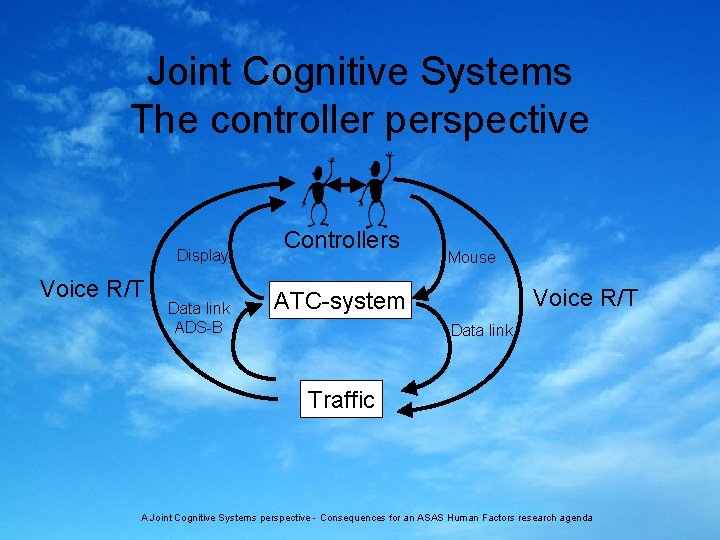
Joint Cognitive Systems The controller perspective Display Voice R/T Data link ADS-B Controllers Mouse Voice R/T ATC-system Data link Traffic A Joint Cognitive Systems perspective - Consequences for an ASAS Human Factors research agenda
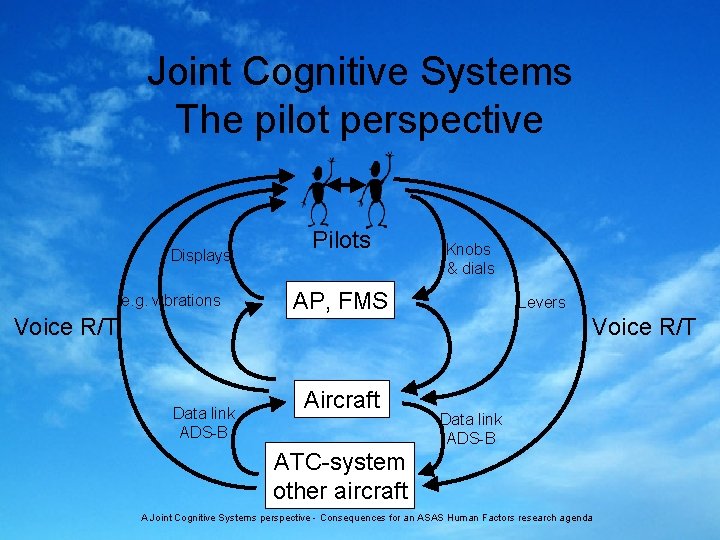
Joint Cognitive Systems The pilot perspective Displays e. g. vibrations Voice R/T Data link ADS-B Pilots Knobs & dials AP, FMS Aircraft Levers Voice R/T Data link ADS-B ATC-system other aircraft A Joint Cognitive Systems perspective - Consequences for an ASAS Human Factors research agenda
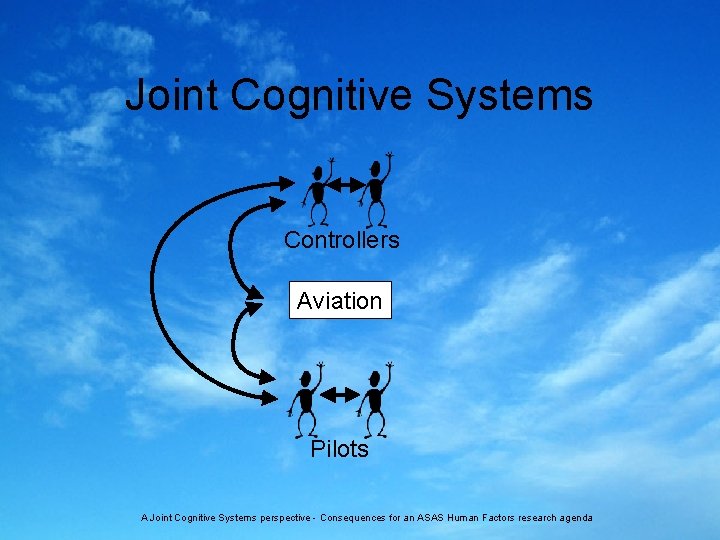
Joint Cognitive Systems Controllers Aviation Pilots A Joint Cognitive Systems perspective - Consequences for an ASAS Human Factors research agenda
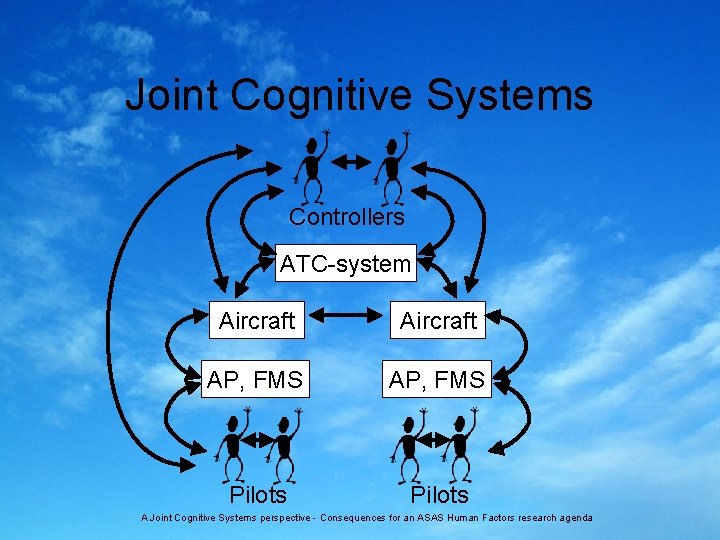
Joint Cognitive Systems Controllers ATC-system Aircraft AP, FMS Pilots A Joint Cognitive Systems perspective - Consequences for an ASAS Human Factors research agenda
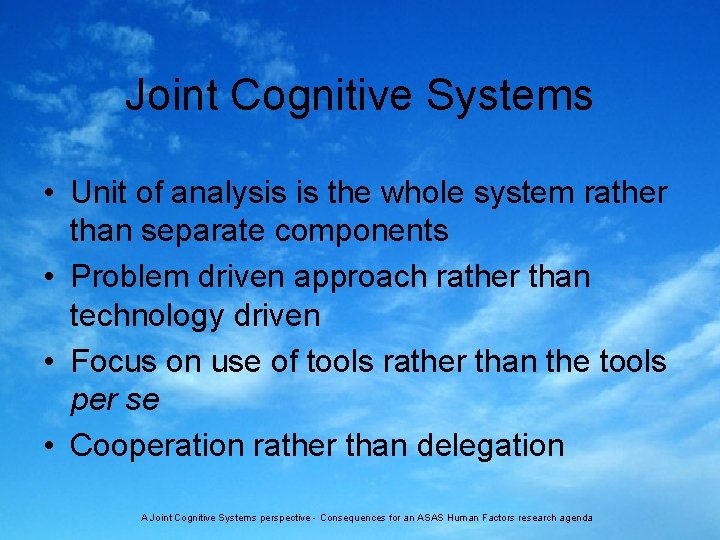
Joint Cognitive Systems • Unit of analysis is the whole system rather than separate components • Problem driven approach rather than technology driven • Focus on use of tools rather than the tools per se • Cooperation rather than delegation A Joint Cognitive Systems perspective - Consequences for an ASAS Human Factors research agenda
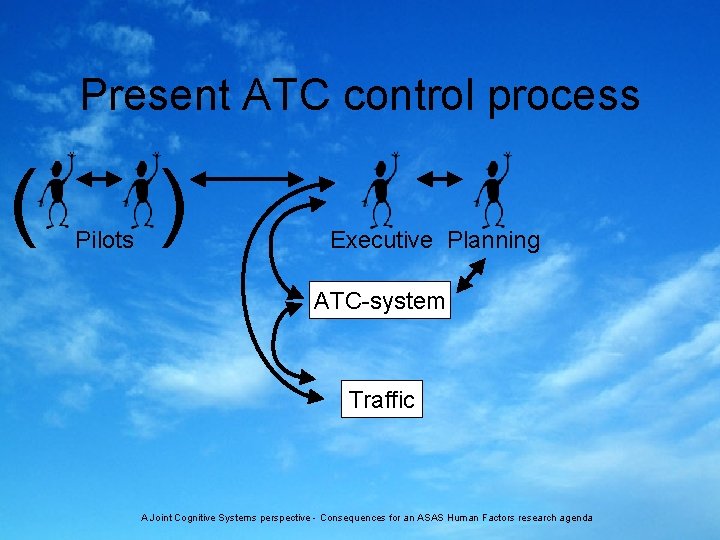
Present ATC control process ( Pilots ) Executive Planning ATC-system Traffic A Joint Cognitive Systems perspective - Consequences for an ASAS Human Factors research agenda
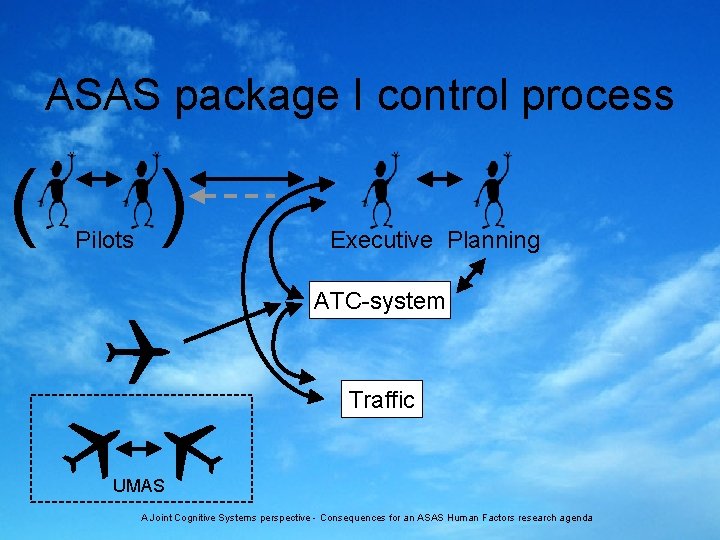
ASAS package I control process Pilots ) UMAS ( Executive Planning ATC-system Traffic A Joint Cognitive Systems perspective - Consequences for an ASAS Human Factors research agenda
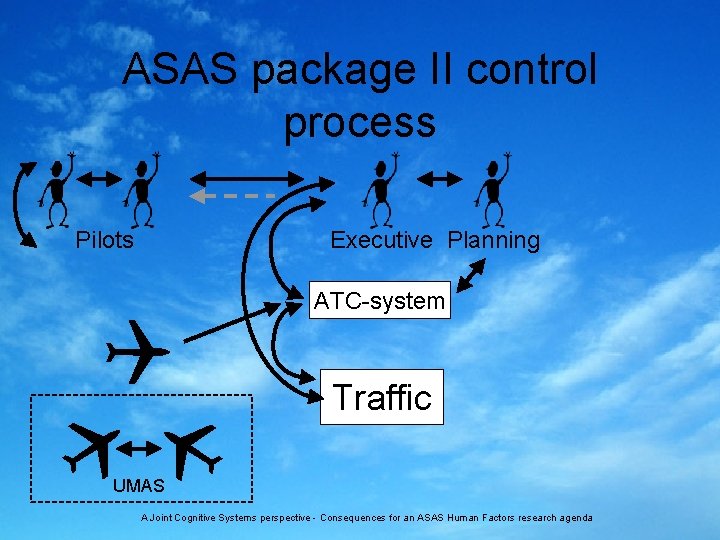
ASAS package II control process Executive Planning Pilots UMAS ATC-system Traffic A Joint Cognitive Systems perspective - Consequences for an ASAS Human Factors research agenda
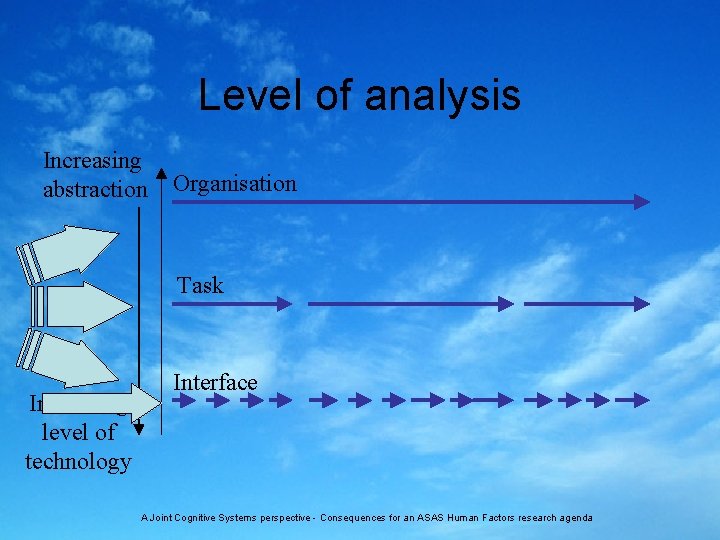
Level of analysis Increasing abstraction Organisation Task Increasing level of technology Interface A Joint Cognitive Systems perspective - Consequences for an ASAS Human Factors research agenda
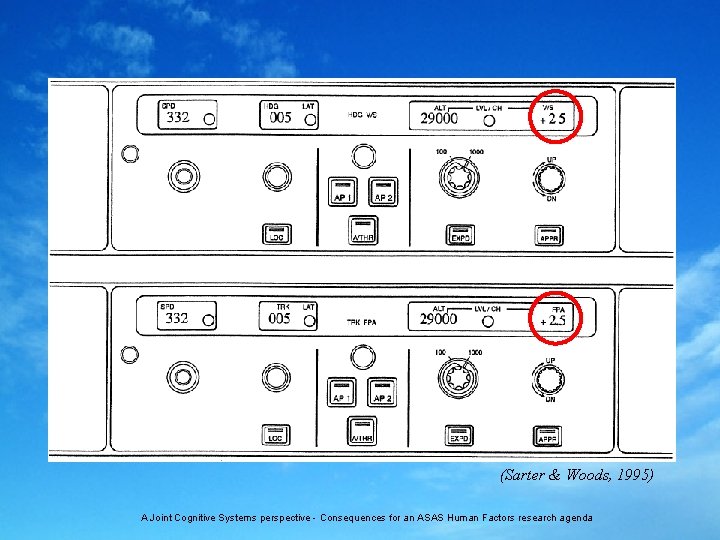
(Sarter & Woods, 1995) A Joint Cognitive Systems perspective - Consequences for an ASAS Human Factors research agenda
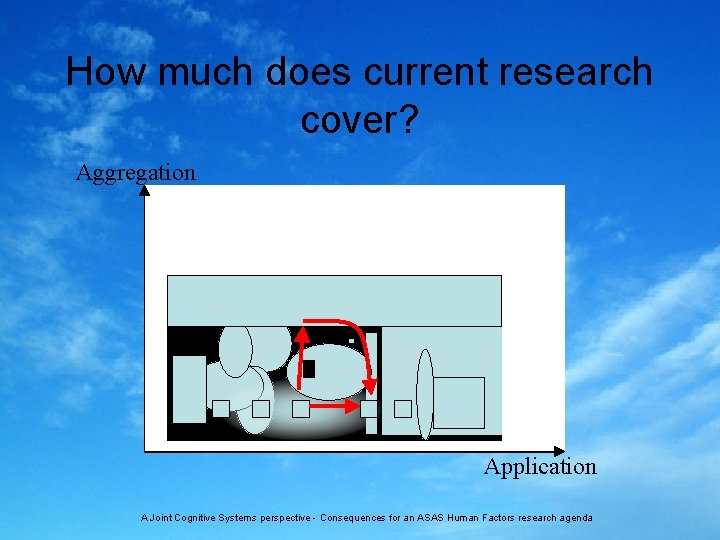
How much does current research cover? Aggregation Application A Joint Cognitive Systems perspective - Consequences for an ASAS Human Factors research agenda
To what extent is ASAS research coordinated? • • • ASAS-TN 2 Dissemination between projects Co-operation and partnerships Informal knowledge-sharing. . . • Is that enough? A Joint Cognitive Systems perspective - Consequences for an ASAS Human Factors research agenda
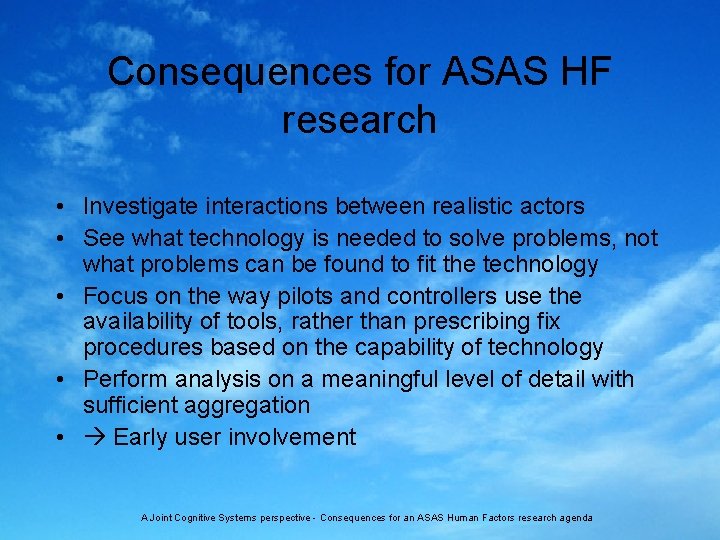
Consequences for ASAS HF research • Investigate interactions between realistic actors • See what technology is needed to solve problems, not what problems can be found to fit the technology • Focus on the way pilots and controllers use the availability of tools, rather than prescribing fix procedures based on the capability of technology • Perform analysis on a meaningful level of detail with sufficient aggregation • Early user involvement A Joint Cognitive Systems perspective - Consequences for an ASAS Human Factors research agenda
Thank you for listening! A Joint Cognitive Systems perspective - Consequences for an ASAS Human Factors research agenda