
A hyphae of mycorrhizal fungi root hair root
- Slides: 2
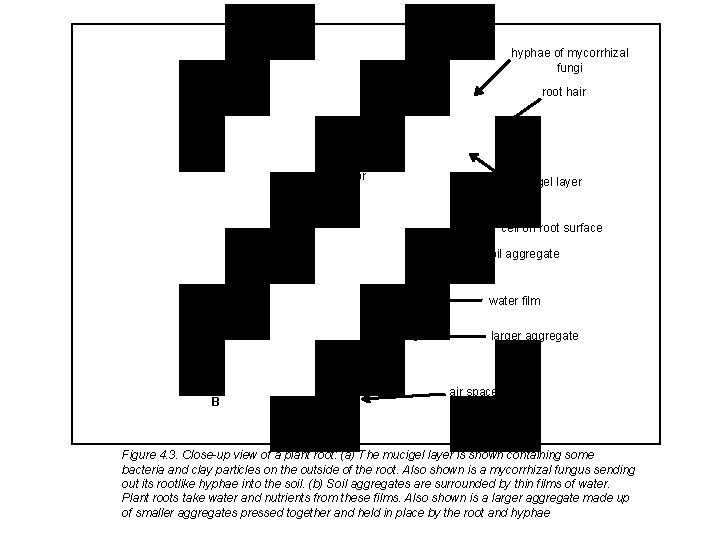
A hyphae of mycorrhizal fungi root hair root interior mucigel layer cell on root surface soil aggregate water film larger aggregate B air space Figure 4. 3. Close-up view of a plant root: (a) The mucigel layer is shown containing some bacteria and clay particles on the outside of the root. Also shown is a mycorrhizal fungus sending out its rootlike hyphae into the soil. (b) Soil aggregates are surrounded by thin films of water. Plant roots take water and nutrients from these films. Also shown is a larger aggregate made up of smaller aggregates pressed together and held in place by the root and hyphae
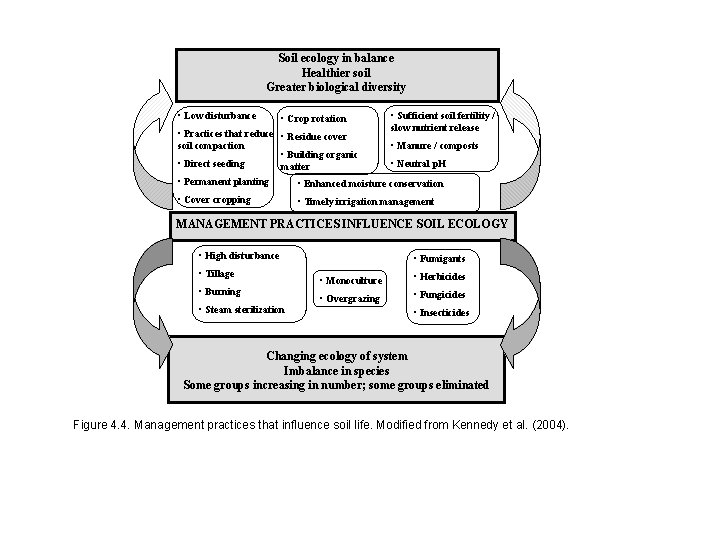
Soil ecology in balance Healthier soil Greater biological diversity • Low disturbance • Crop rotation • Sufficient soil fertility / slow nutrient release • Practices that reduce • Residue cover soil compaction • Manure / composts • Building organic • Direct seeding • Neutral p. H matter • Permanent planting • Enhanced moisture conservation • Cover cropping • Timely irrigation management MANAGEMENT PRACTICES INFLUENCE SOIL ECOLOGY • High disturbance • Tillage • Burning • Steam sterilization • Fumigants • Monoculture • Herbicides • Overgrazing • Fungicides • Insecticides Changing ecology of system Imbalance in species Some groups increasing in number; some groups eliminated Figure 4. 4. Management practices that influence soil life. Modified from Kennedy et al. (2004).