
A Human Economy Max Lawson Oxfam 1 What

- Slides: 33
A Human Economy Max Lawson, Oxfam 1
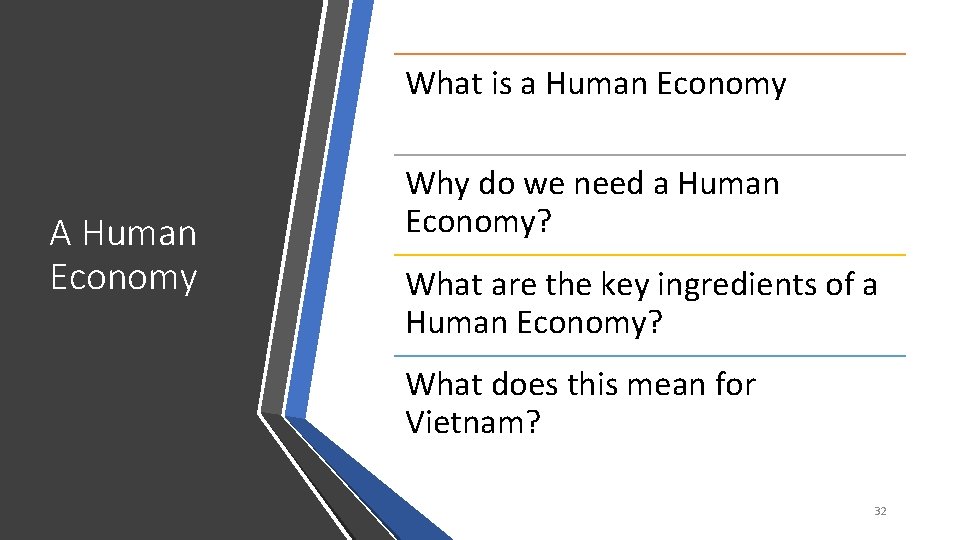
What is a Human Economy A Human Economy Why do we need a Human Economy? What are the key ingredients of a Human Economy? What does this mean for Vietnam? 2
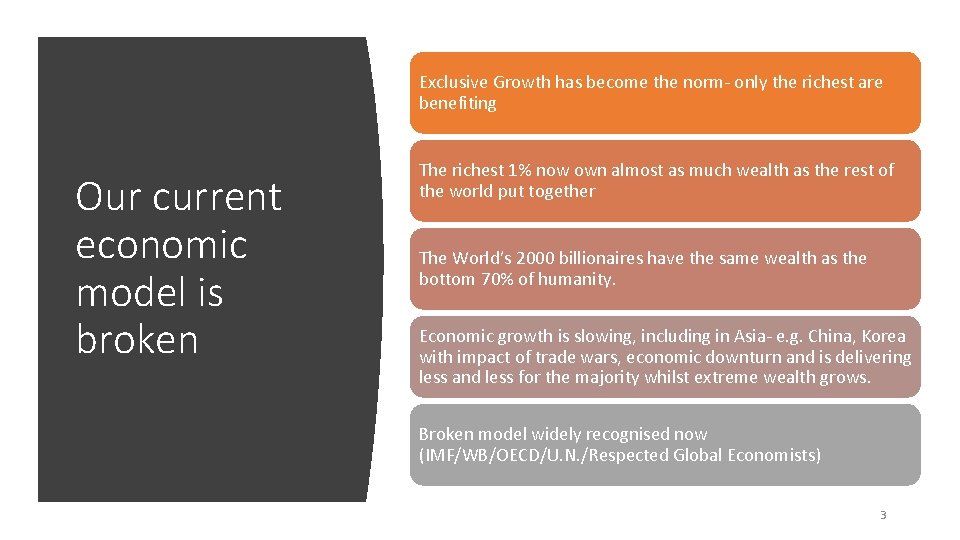
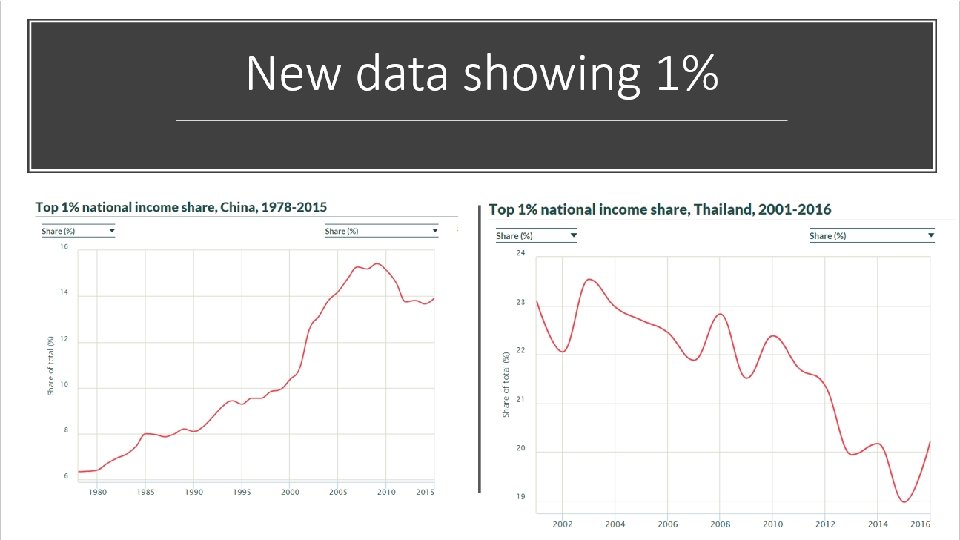
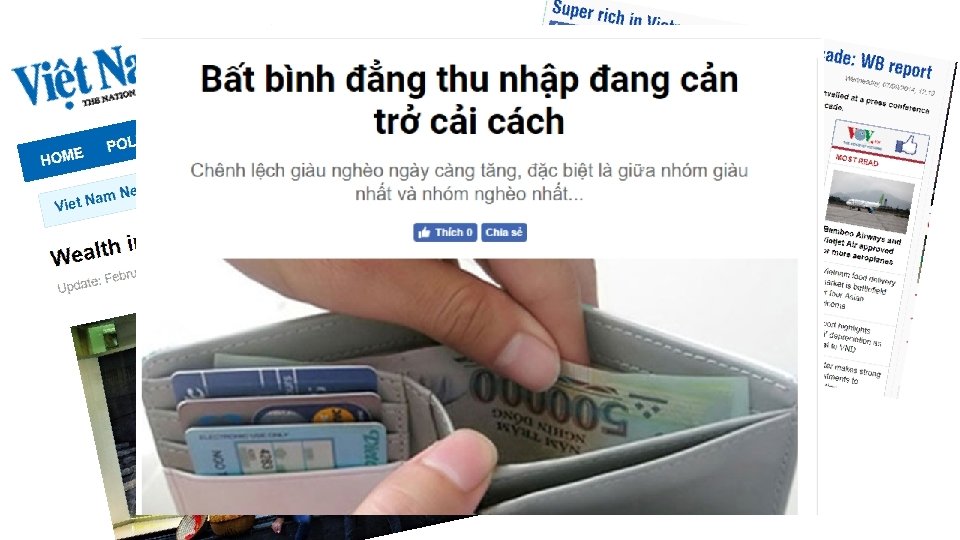
Exclusive Growth has become the norm- only the richest are benefiting Our current economic model is broken The richest 1% now own almost as much wealth as the rest of the world put together The World’s 2000 billionaires have the same wealth as the bottom 70% of humanity. Economic growth is slowing, including in Asia- e. g. China, Korea with impact of trade wars, economic downturn and is delivering less and less for the majority whilst extreme wealth grows. Broken model widely recognised now (IMF/WB/OECD/U. N. /Respected Global Economists) 3
4
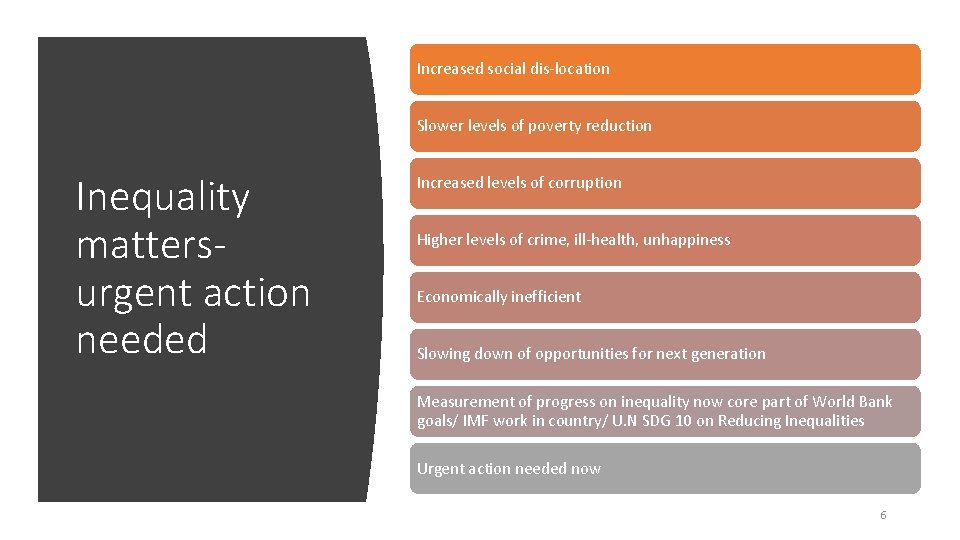
Increased social dis-location Slower levels of poverty reduction Inequality mattersurgent action needed Increased levels of corruption Higher levels of crime, ill-health, unhappiness Economically inefficient Slowing down of opportunities for next generation Measurement of progress on inequality now core part of World Bank goals/ IMF work in country/ U. N SDG 10 on Reducing Inequalities Urgent action needed now 6
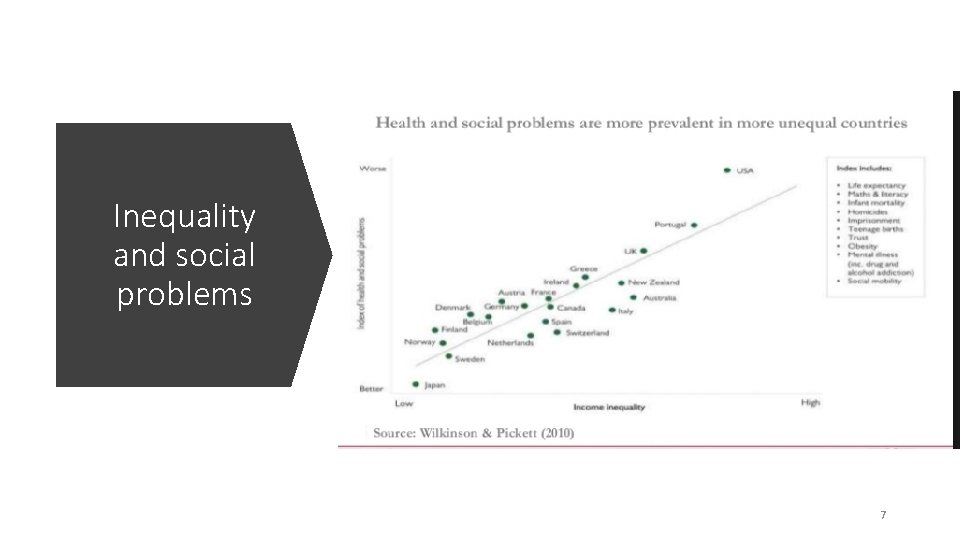
Inequality and social problems 7
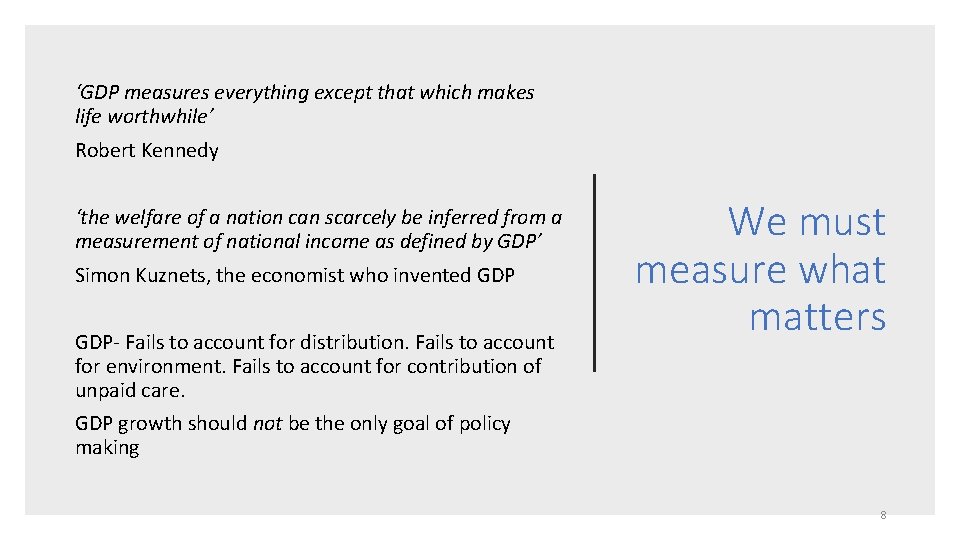
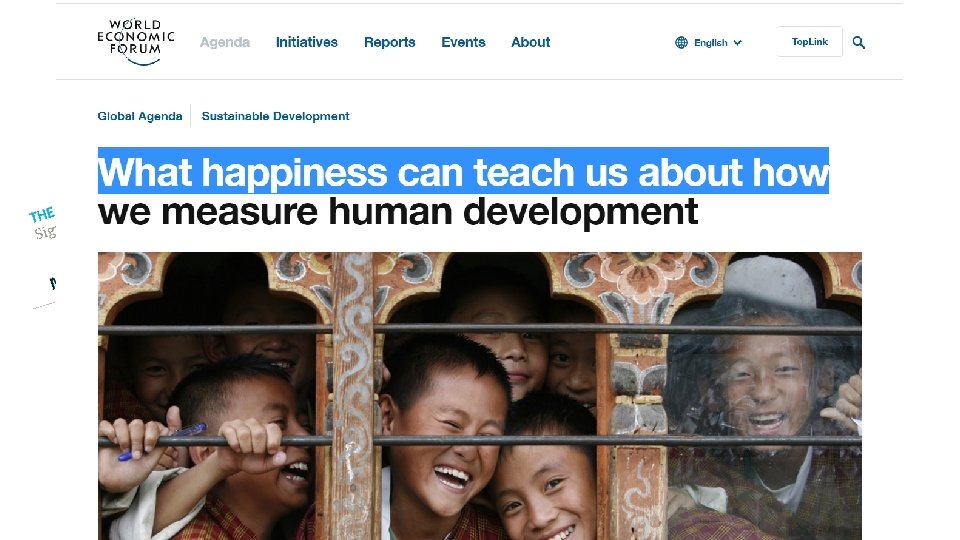
‘GDP measures everything except that which makes life worthwhile’ Robert Kennedy ‘the welfare of a nation can scarcely be inferred from a measurement of national income as defined by GDP’ Simon Kuznets, the economist who invented GDP- Fails to account for distribution. Fails to account for environment. Fails to account for contribution of unpaid care. We must measure what matters GDP growth should not be the only goal of policy making 8
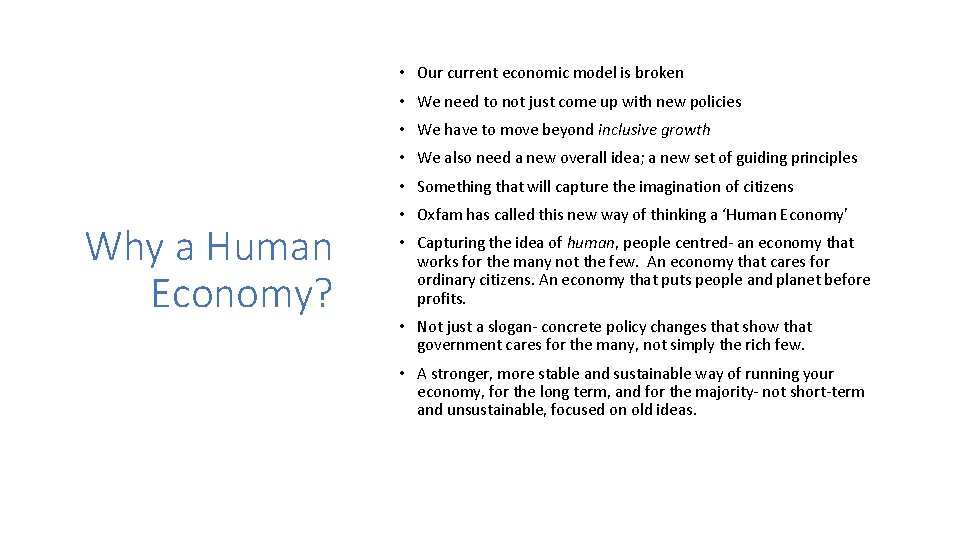
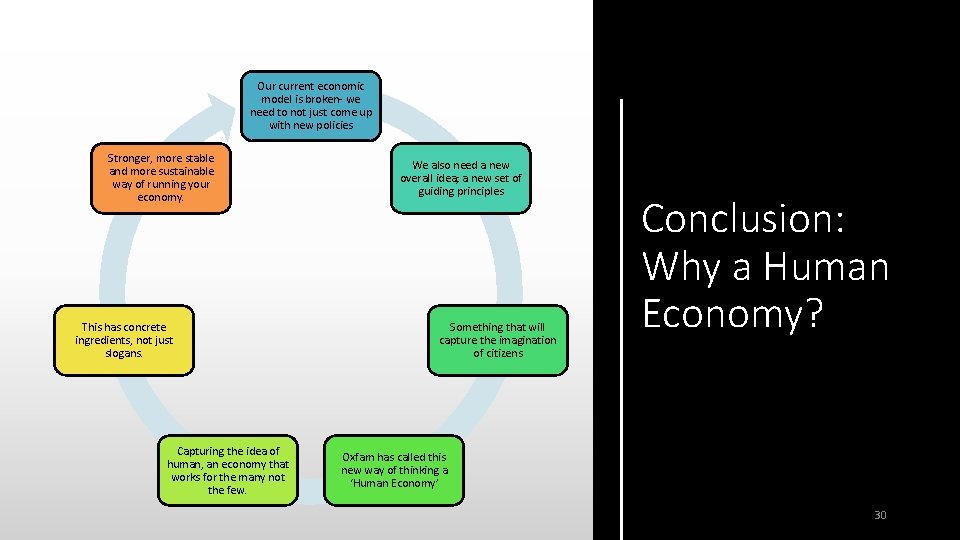
• Our current economic model is broken • We need to not just come up with new policies • We have to move beyond inclusive growth • We also need a new overall idea; a new set of guiding principles • Something that will capture the imagination of citizens Why a Human Economy? • Oxfam has called this new way of thinking a ‘Human Economy’ • Capturing the idea of human, people centred- an economy that works for the many not the few. An economy that cares for ordinary citizens. An economy that puts people and planet before profits. • Not just a slogan- concrete policy changes that show that government cares for the many, not simply the rich few. • A stronger, more stable and sustainable way of running your economy, for the long term, and for the majority- not short-term and unsustainable, focused on old ideas.
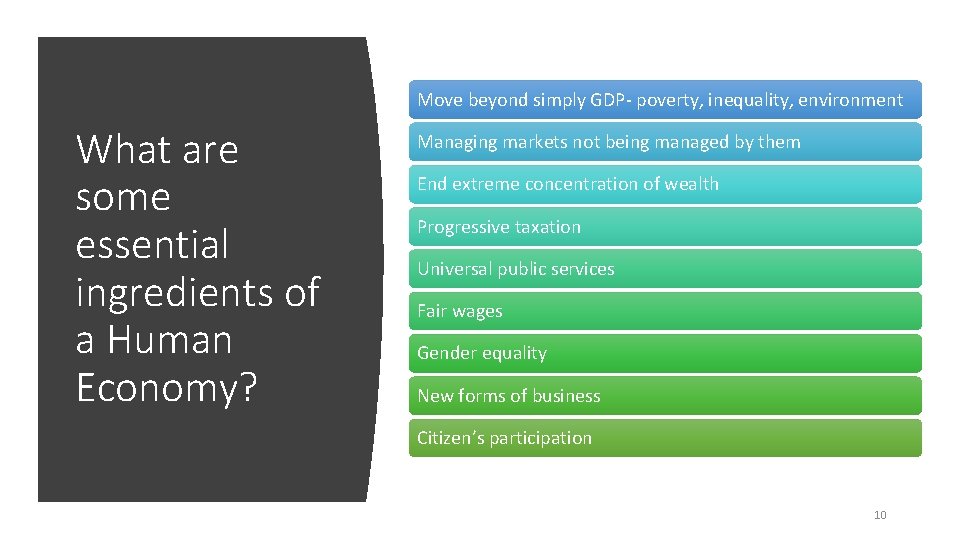
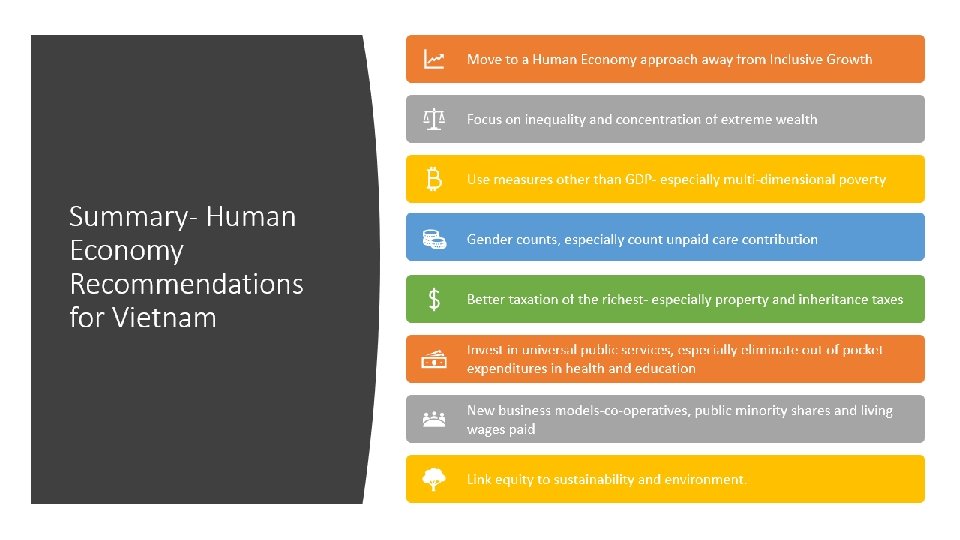
Move beyond simply GDP- poverty, inequality, environment What are some essential ingredients of a Human Economy? Managing markets not being managed by them End extreme concentration of wealth Progressive taxation Universal public services Fair wages Gender equality New forms of business Citizen’s participation 10
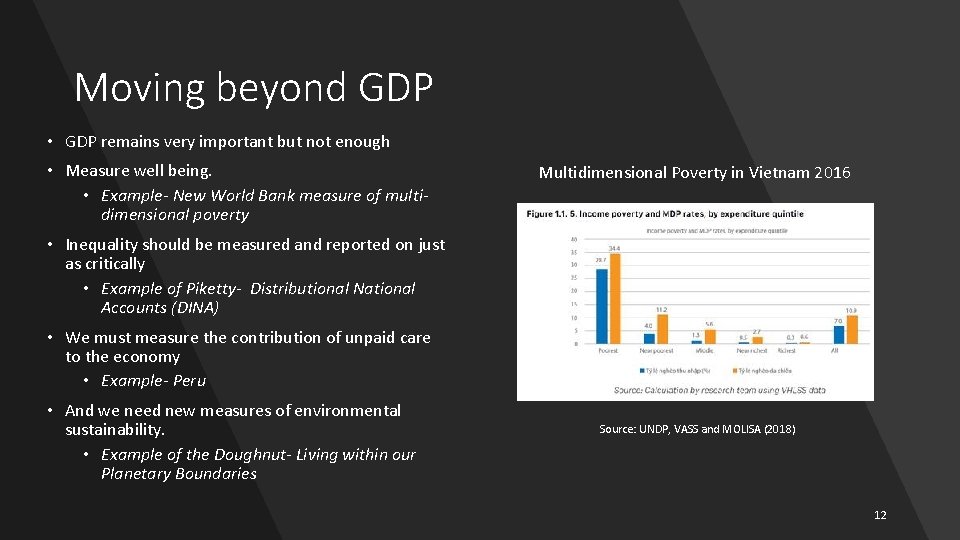
Moving beyond GDP • GDP remains very important but not enough • Measure well being. • Example- New World Bank measure of multidimensional poverty Multidimensional Poverty in Vietnam 2016 • Inequality should be measured and reported on just as critically • Example of Piketty- Distributional National Accounts (DINA) • We must measure the contribution of unpaid care to the economy • Example- Peru • And we need new measures of environmental sustainability. • Example of the Doughnut- Living within our Planetary Boundaries Source: UNDP, VASS and MOLISA (2018) 12
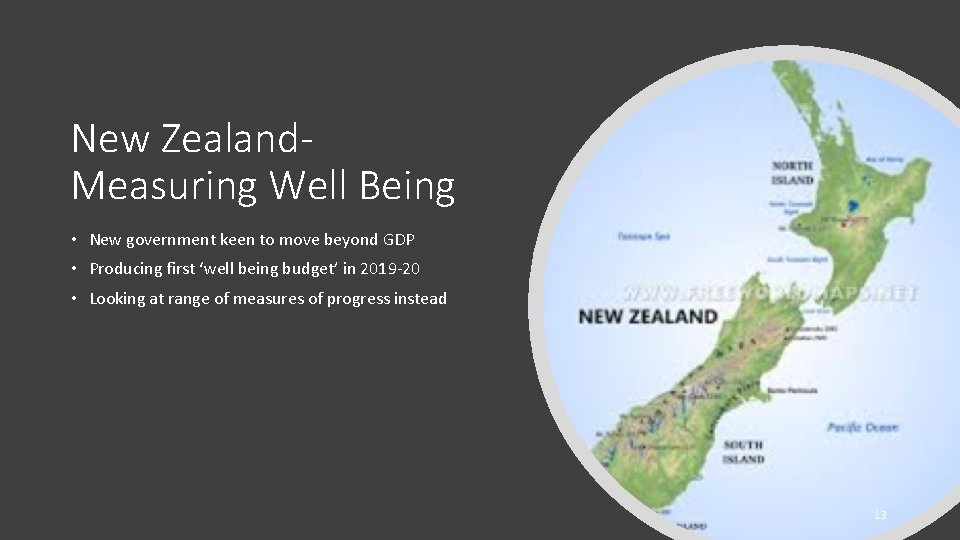
New Zealand. Measuring Well Being • New government keen to move beyond GDP • Producing first ‘well being budget’ in 2019 -20 • Looking at range of measures of progress instead 13
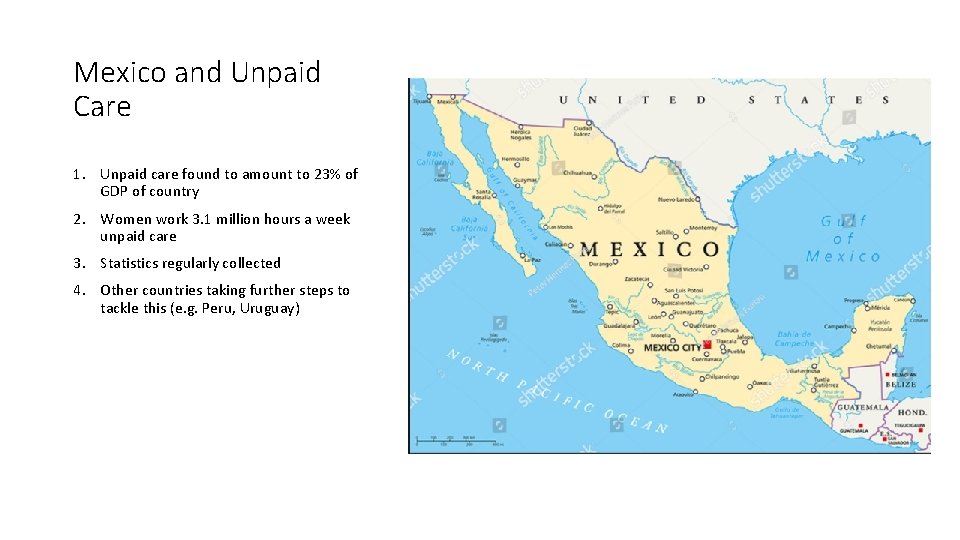
Mexico and Unpaid Care 1. Unpaid care found to amount to 23% of GDP of country 2. Women work 3. 1 million hours a week unpaid care 3. Statistics regularly collected 4. Other countries taking further steps to tackle this (e. g. Peru, Uruguay)
Managing Markets • Markets can be incredible engines of prosperity • But we cannot let the engine drive the car • The logic of ever more free markets is flawed- neoliberal thinking has been discredited • In fact all successful countries actively manage markets and are involved in the economy. Example of Japan. • Unprecedented challenges, in particular climate change, mean that active management of markets more necessary than ever. 15
End Extreme Concentration of Wealth • Extreme wealth undermines economies • It undermines not just scale of economic growth but durability too • It leads to the capture of politics • It undermines social cohesion • It changes economic policy to benefit the few not the many • It reduces domestic demand is counter productive 16
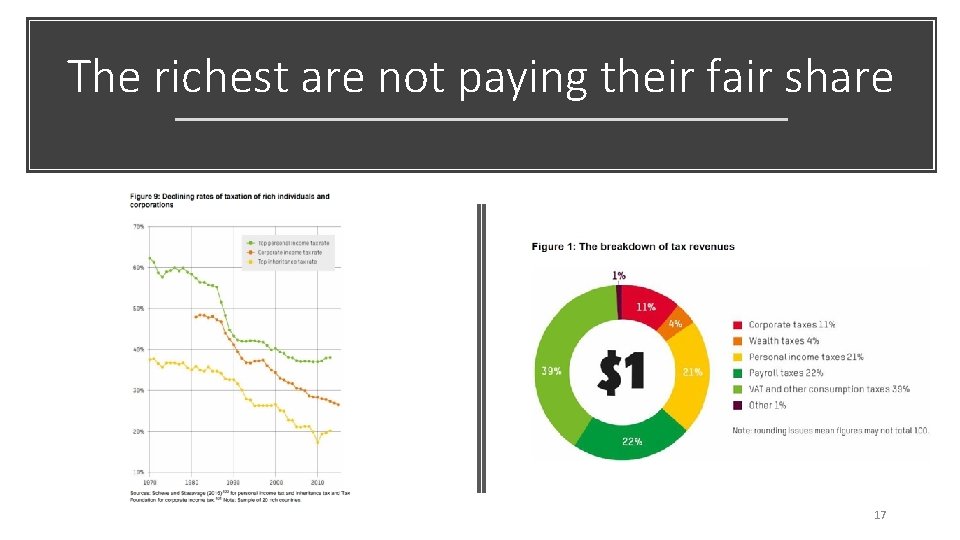
The richest are not paying their fair share 17
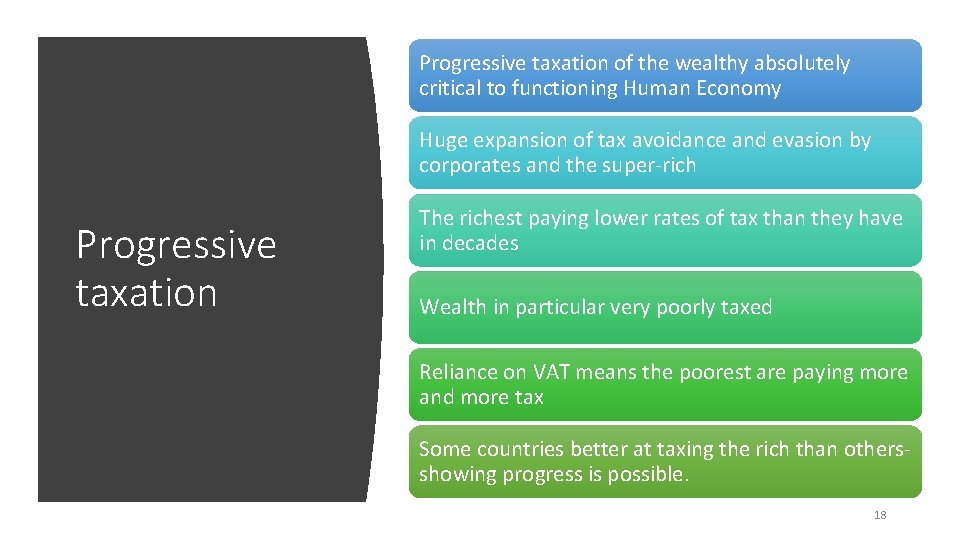
Progressive taxation of the wealthy absolutely critical to functioning Human Economy Huge expansion of tax avoidance and evasion by corporates and the super-rich Progressive taxation The richest paying lower rates of tax than they have in decades Wealth in particular very poorly taxed Reliance on VAT means the poorest are paying more and more tax Some countries better at taxing the rich than othersshowing progress is possible. 18
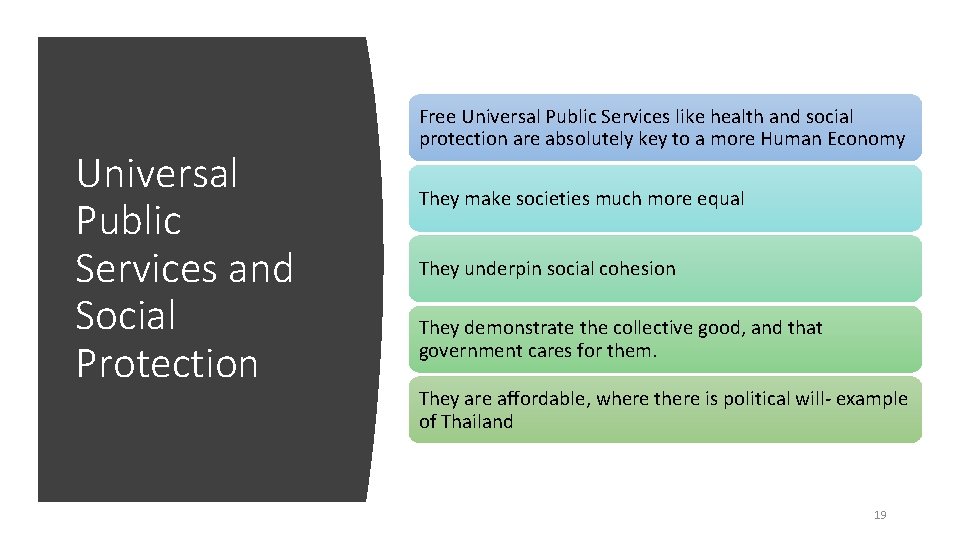
Universal Public Services and Social Protection Free Universal Public Services like health and social protection are absolutely key to a more Human Economy They make societies much more equal They underpin social cohesion They demonstrate the collective good, and that government cares for them. They are affordable, where there is political will- example of Thailand 19
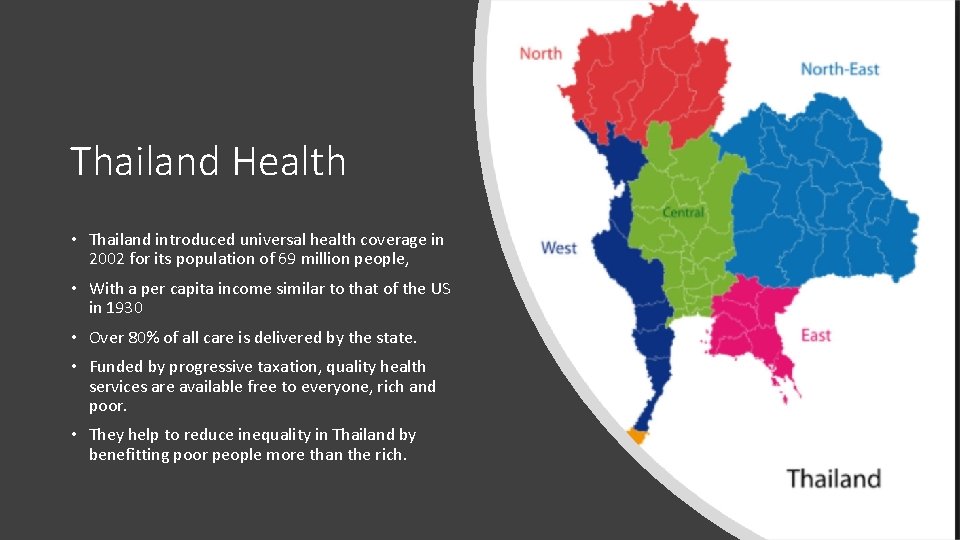
Thailand Health • Thailand introduced universal health coverage in 2002 for its population of 69 million people, • With a per capita income similar to that of the US in 1930 • Over 80% of all care is delivered by the state. • Funded by progressive taxation, quality health services are available free to everyone, rich and poor. • They help to reduce inequality in Thailand by benefitting poor people more than the rich. 20
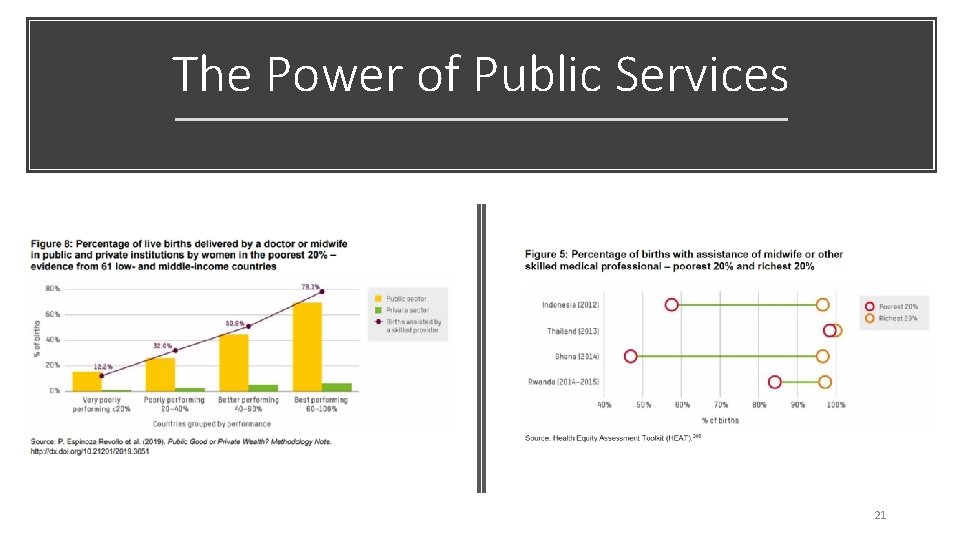
The Power of Public Services 21
Power of public services for inclusive growth and Human Economy • According World Bank (2019), in 2018, if Vietnam achieved complete education and full health, GDP per worker or productivity could be around 1. 5 times as high, or 4. 14% of annual growth in worker productivity every year for 10 years.
Fair wages • Exclusive economy has seen returns to capital outweigh returns to labour. • This is economically dangerous • Low wages hurt the economy. Women in particular. • A living wage is at the heart of a Human Economy • Better conditions for workersshorter hours, more protection. 23
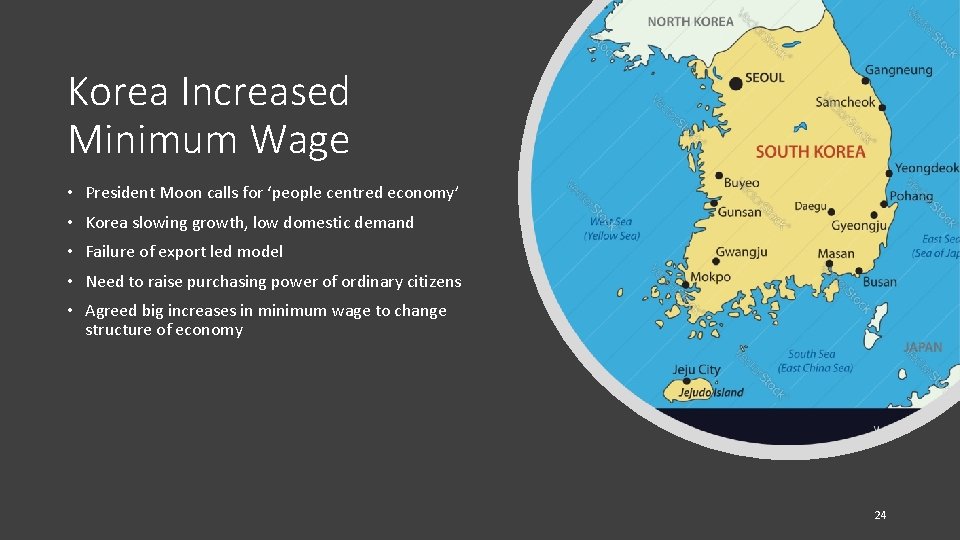
Korea Increased Minimum Wage • President Moon calls for ‘people centred economy’ • Korea slowing growth, low domestic demand • Failure of export led model • Need to raise purchasing power of ordinary citizens • Agreed big increases in minimum wage to change structure of economy 24
Gender equality and economic inequality closely linked Gender equality Not simply about social attitudes or the correct laws Also an economic issue- women can be a huge driver of inclusive economic growth To do this we need to fully calculate and measure regularly the contribution of unpaid care to the economy, and take steps to redistribute it, using public services. 25
New Business Models • The shareholder, stock market model of businesses does not work • New business models, which put workers and consumers first are needed. • Public ownership or part public ownership remains a key part of any economy • Other models like co-operatives can be extremely powerful and must be actively supported Mondragon: • a Spanish multinational cooperative that has a turnover of $13 billion and • employs 74, 000 people. • Decision making is democratic, job security is promoted • the highest paid earns no more than nine times the lowest. 26
Citizen’s participation • A Human Economy is an accountable one • Where ordinary citizens have their say in governance • Where the influence of the rich and powerful on policy making is minimised • Where government is transparent and accountable to all citizens. 27
28
29
Our current economic model is broken- we need to not just come up with new policies Stronger, more stable and more sustainable way of running your economy. This has concrete ingredients, not just slogans. Capturing the idea of human, an economy that works for the many not the few. We also need a new overall idea; a new set of guiding principles Something that will capture the imagination of citizens Conclusion: Why a Human Economy? Oxfam has called this new way of thinking a ‘Human Economy’ 30
31
What is a Human Economy A Human Economy Why do we need a Human Economy? What are the key ingredients of a Human Economy? What does this mean for Vietnam? 32
Thank you 33