
A How to Guide TM Why Every presentation
- Slides: 7
A How to Guide TM
Why? Every presentation is given for a purpose, even if it’s only to share information. What? What do you want the audience to know, believe, or to do after the presentation?
Tailor your presentation to their needs. • What is your audience’s level of experience or knowledge about your topic? • What is the general education level and age of your audience? • What is your audiences attitude towards the topic you are speaking about? Concerns? Fears? Objections? • What questions might the audience ask?
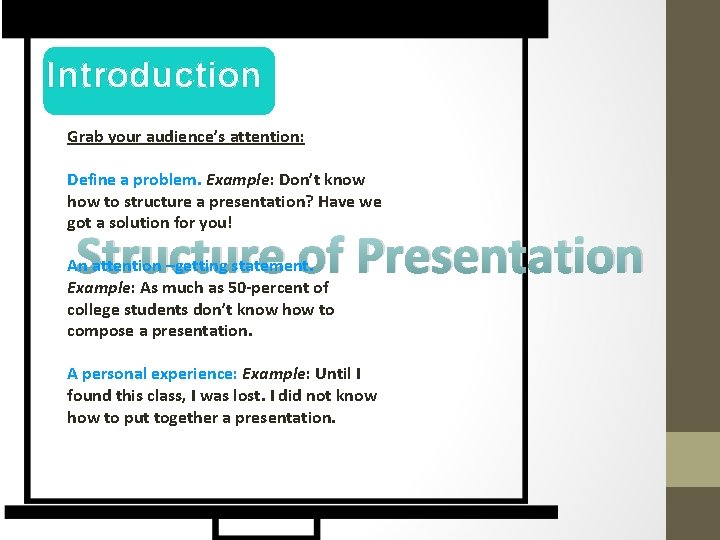
Introduction Grab your audience’s attention: Define a problem. Example: Don’t know how to structure a presentation? Have we got a solution for you! Structure of Presentation An attention –getting statement. Example: As much as 50 -percent of college students don’t know how to compose a presentation. A personal experience: Example: Until I found this class, I was lost. I did not know how to put together a presentation.
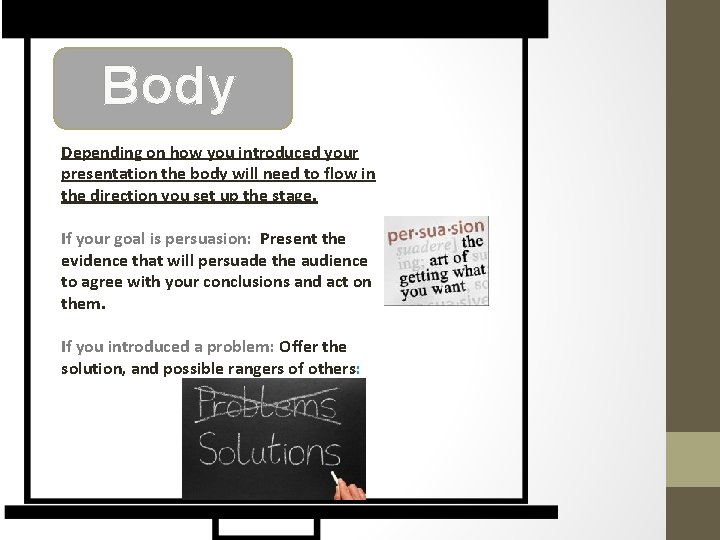
Body Depending on how you introduced your presentation the body will need to flow in the direction you set up the stage. If your goal is persuasion: Present the evidence that will persuade the audience to agree with your conclusions and act on them. If you introduced a problem: Offer the solution, and possible rangers of others:
• Eye Contact: The best way to establish rapport with your audience is through eye contact. • Movement: Animate the presentation with physical movement. Take a step or two to one side. But not too much! You! • Gestures: Gestures animate your presentation and help you communicate your message. • Voice: Use your voice to your advantage. Vocal inflection: The rise and fall of your voice at different times. Projection: PROJECT!!! I CAN’T HEAR YOU IN THE BACK! • Pace: Be aware of the speed at which you deliver your presenation. Go nice and steady.