
A History of Portraiture What Is A Portrait

- Slides: 16
A History of Portraiture
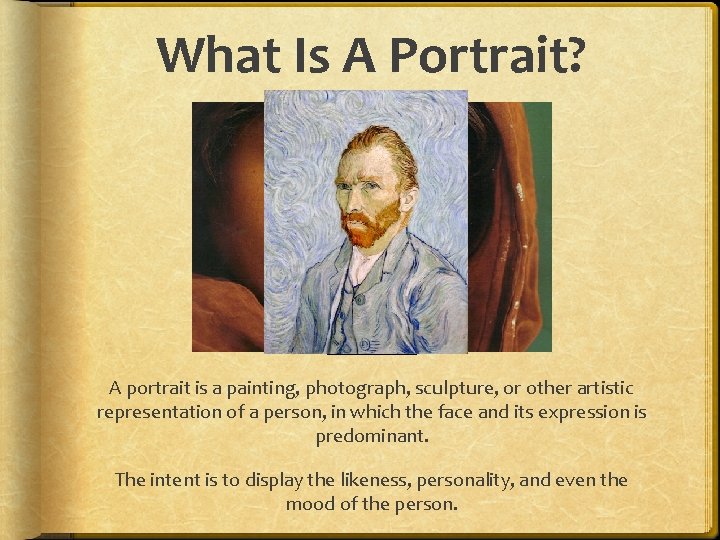
What Is A Portrait? A portrait is a painting, photograph, sculpture, or other artistic representation of a person, in which the face and its expression is predominant. The intent is to display the likeness, personality, and even the mood of the person.
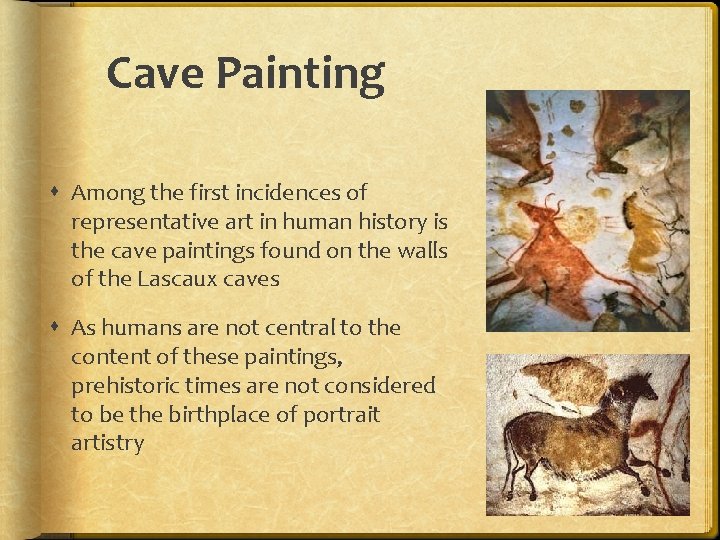
Cave Painting Among the first incidences of representative art in human history is the cave paintings found on the walls of the Lascaux caves As humans are not central to the content of these paintings, prehistoric times are not considered to be the birthplace of portrait artistry
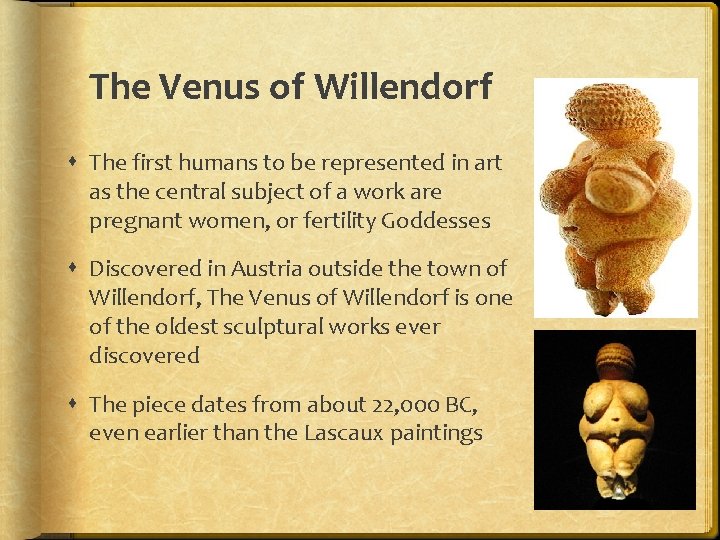
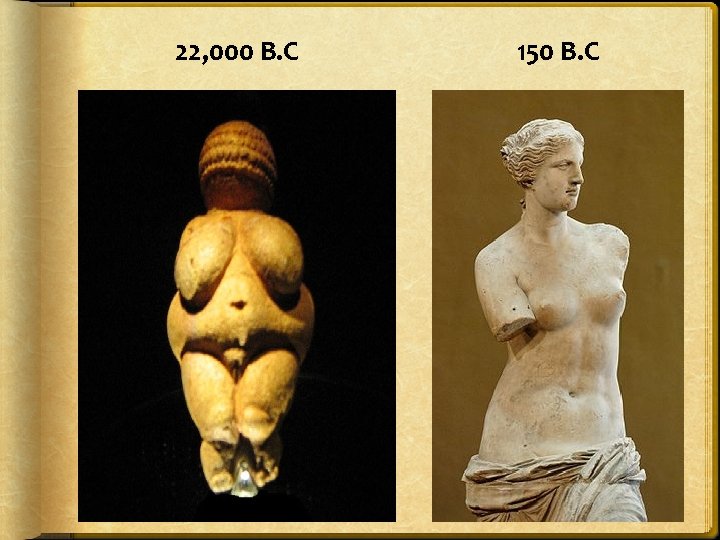
The Venus of Willendorf The first humans to be represented in art as the central subject of a work are pregnant women, or fertility Goddesses Discovered in Austria outside the town of Willendorf, The Venus of Willendorf is one of the oldest sculptural works ever discovered The piece dates from about 22, 000 BC, even earlier than the Lascaux paintings
Egypt It was in Egypt, where living Pharaohs were given God-like status, that historic portraiture began Images of Deities and Pharaohs were painted and carved in places of spiritual importance, such as temples, tombs, and palaces Frontalism, the technique utilized by Egyptian painters who rendered human subjects, stressed the importance of the Pharaoh’s profile In frontalism, the subject’s body faces forward, but his head is turned to the side, with the eye on the viewer’s side being fully visible.
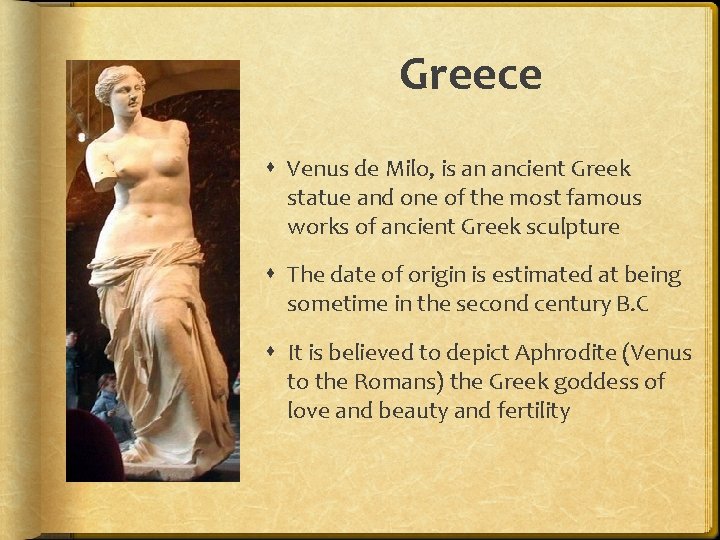
Greece Venus de Milo, is an ancient Greek statue and one of the most famous works of ancient Greek sculpture The date of origin is estimated at being sometime in the second century B. C It is believed to depict Aphrodite (Venus to the Romans) the Greek goddess of love and beauty and fertility
22, 000 B. C 150 B. C
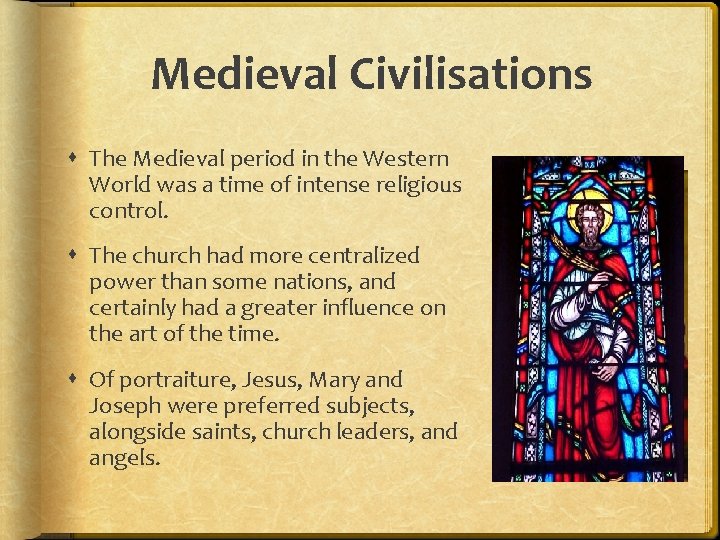
Medieval Civilisations The Medieval period in the Western World was a time of intense religious control. The church had more centralized power than some nations, and certainly had a greater influence on the art of the time. Of portraiture, Jesus, Mary and Joseph were preferred subjects, alongside saints, church leaders, and angels.
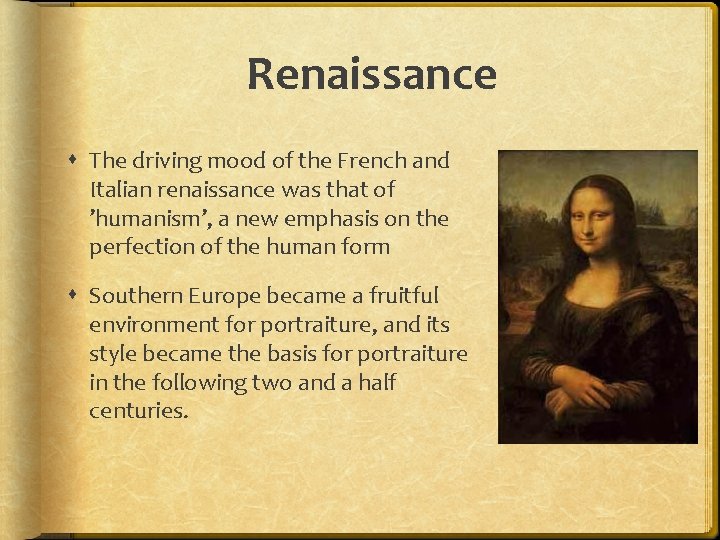
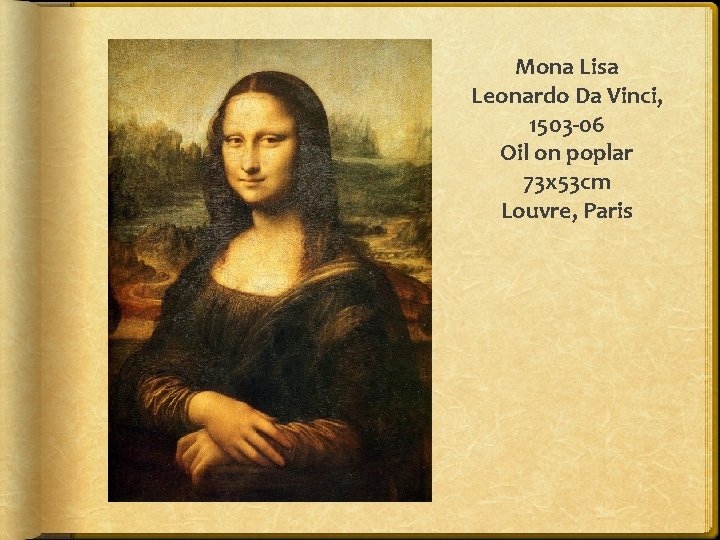
Renaissance The driving mood of the French and Italian renaissance was that of ’humanism’, a new emphasis on the perfection of the human form Southern Europe became a fruitful environment for portraiture, and its style became the basis for portraiture in the following two and a half centuries.
Mona Lisa Leonardo Da Vinci, 1503 -06 Oil on poplar 73 x 53 cm Louvre, Paris
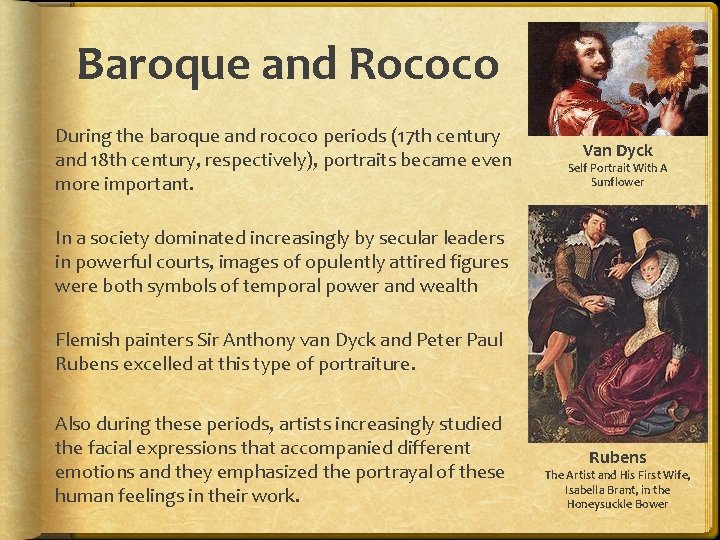
Baroque and Rococo During the baroque and rococo periods (17 th century and 18 th century, respectively), portraits became even more important. Van Dyck Self Portrait With A Sunflower In a society dominated increasingly by secular leaders in powerful courts, images of opulently attired figures were both symbols of temporal power and wealth Flemish painters Sir Anthony van Dyck and Peter Paul Rubens excelled at this type of portraiture. Also during these periods, artists increasingly studied the facial expressions that accompanied different emotions and they emphasized the portrayal of these human feelings in their work. Rubens The Artist and His First Wife, Isabella Brant, in the Honeysuckle Bower
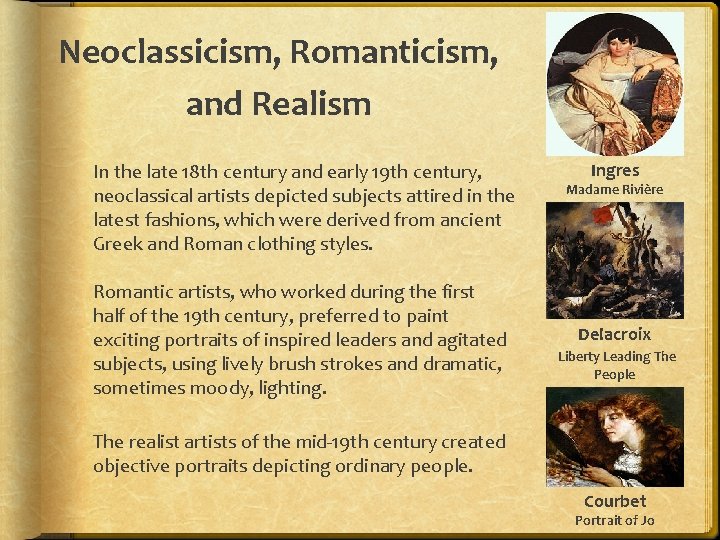
Neoclassicism, Romanticism, and Realism In the late 18 th century and early 19 th century, neoclassical artists depicted subjects attired in the latest fashions, which were derived from ancient Greek and Roman clothing styles. Romantic artists, who worked during the first half of the 19 th century, preferred to paint exciting portraits of inspired leaders and agitated subjects, using lively brush strokes and dramatic, sometimes moody, lighting. Ingres Madame Rivière Delacroix Liberty Leading The People The realist artists of the mid-19 th century created objective portraits depicting ordinary people. Courbet Portrait of Jo
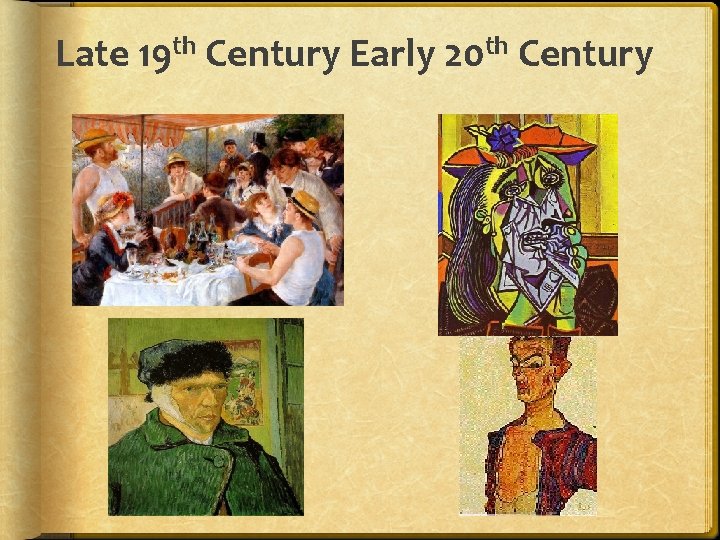
Late 19 th Century Early 20 th Century
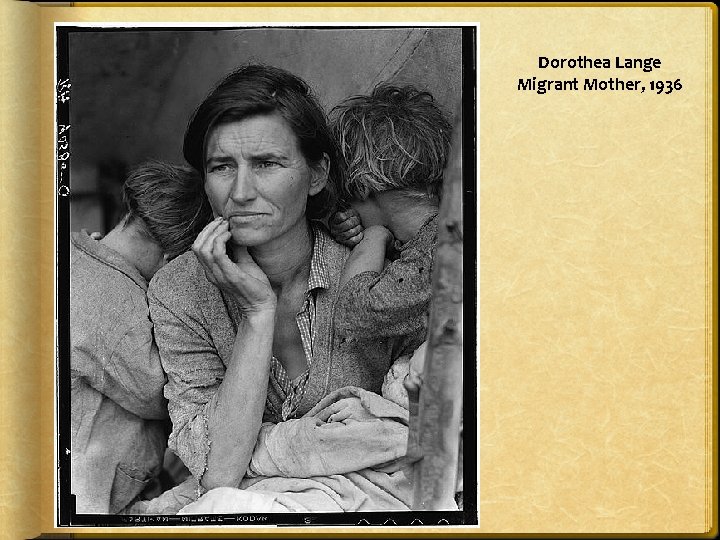
Dorothea Lange Migrant Mother, 1936
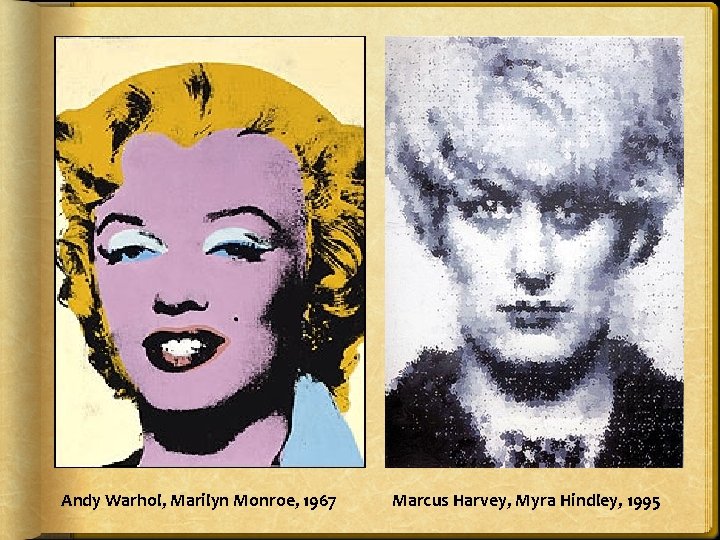
Andy Warhol, Marilyn Monroe, 1967 Marcus Harvey, Myra Hindley, 1995
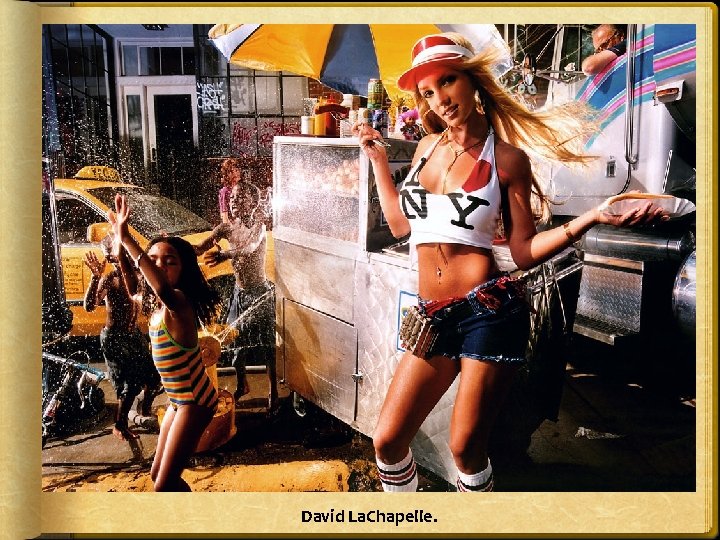
David La. Chapelle.