
A HighSpeed Towing Tank for Hydrodynamics and Cavitation


- Slides: 10
A High-Speed Towing Tank for Hydrodynamics and Cavitation Experiments Hong-Hui Shi, Xiao-Ping Zhang, Su-Yun Zhou, Bo Chen, Ruo-Ling Dong, Li-Te Zhang College of Mechanical Engineering & Automation, Zhejiang Sci-Tech University, Hangzhou 310018, Zhejiang Province, China The 8 th Int. Symp. on Cavitation, Singapore, 14 -16 August 2012
Interest of Research w Towing tank is a very useful tool to study hydrodynamics of ships and underwater vehicles. The disadvantage of conventional towing tanks is that the towing velocity is low and has usually only a few meters per second. Therefore, towing tank is not suitable for cavitation research, especially natural cavitation. The basic idea of this paper is to find a way of increasing towing velocity in cavitation flow regime. If this can be achieved, many cavitation experiments, that are difficult or impossible in water tunnels, will be able to be done in towing tanks.
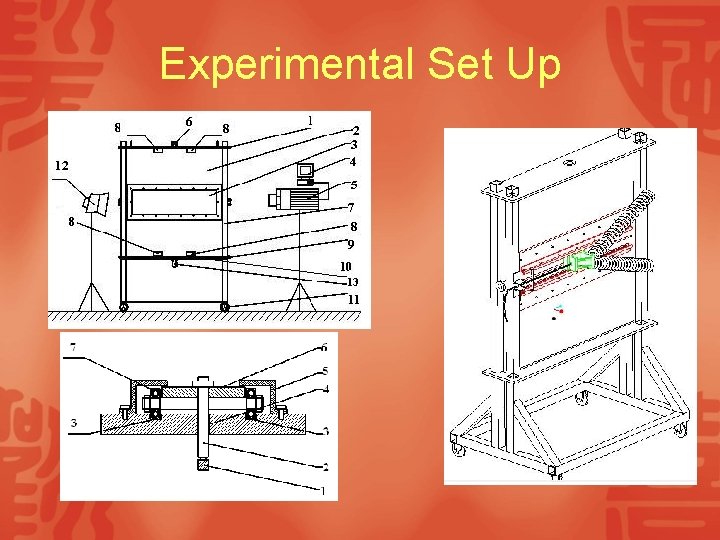
Experimental Set Up
Photo of the Test Facility
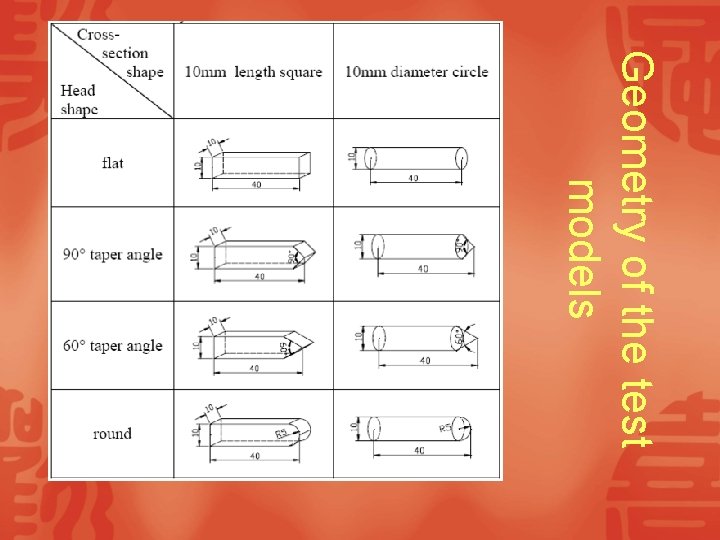
Geometry of the test models
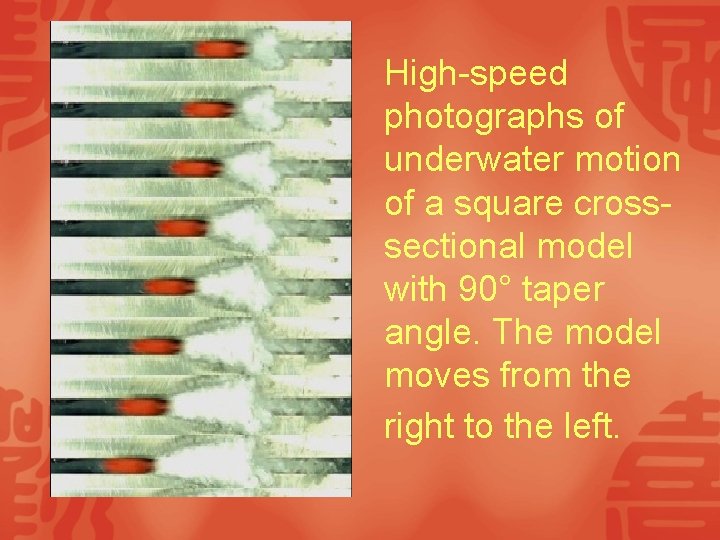
High-speed photographs of underwater motion of a square crosssectional model with 90° taper angle. The model moves from the right to the left.
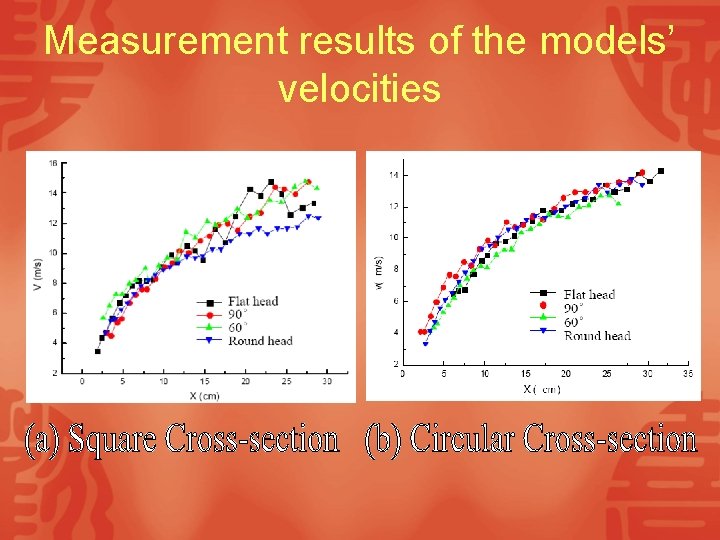
Measurement results of the models’ velocities
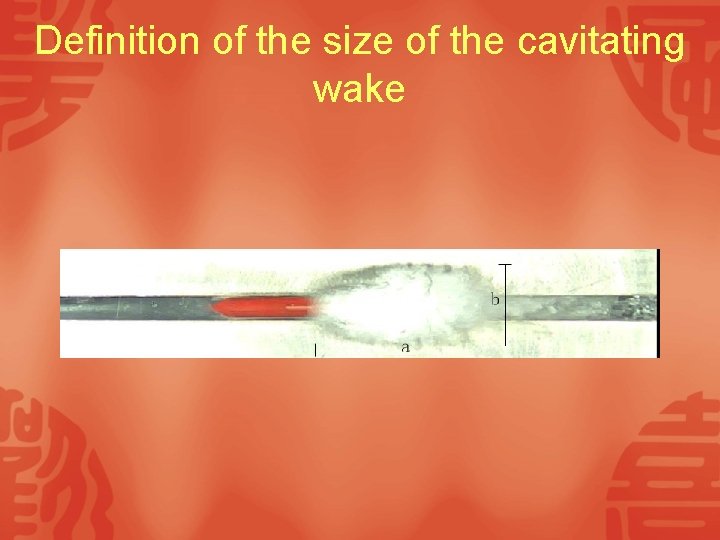
Definition of the size of the cavitating wake
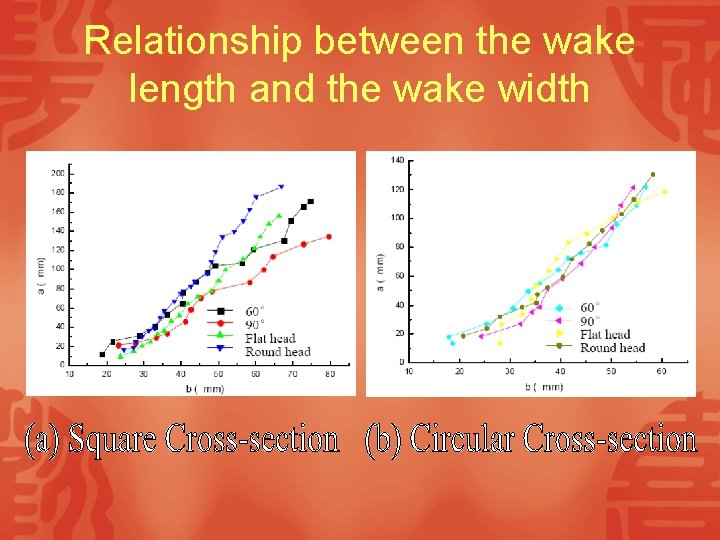
Relationship between the wake length and the wake width
Conclusions w A new type of high speed towing tank has been successfully developed at our laboratory. Within the distance of 30 cm, the test models can be accelerated to about 14 -15 m/s. The maximum towing speed can reach about 18 m/s. w Through velocity and acceleration measurements of 8 test models, it has been found that among the square models, the one with 90º taper angle has the best hydroballistic behavior and keeps a relatively high velocity. w Even the head shape of the model does not influence the velocity and displacement of the body, it does influence the shape of the wake cavity. However, for circular models, the wake cavities can eventually reach similarity whereas the wake cavities for square models can not.