
A GuidelinesBased Approach to Peripheral Arterial Disease Robert
A Guidelines-Based Approach to Peripheral Arterial Disease Robert T. Eberhardt, MD Associate Professor of Medicine Boston University School of Medicine Director of Medical Vascular Services Boston Medical Center No disclosures related to presentation

Evidence-Based Principles to Guide Diagnosis and Treatment • 2005 ACC/AHA Guidelines for the Management of Peripheral Arterial Disease • 2007 Inter-Societal Consensus for the Management of PAD (TASC II) • 2011 ACC/AHA Focused Updated Guidelines for Peripheral Arterial Disease
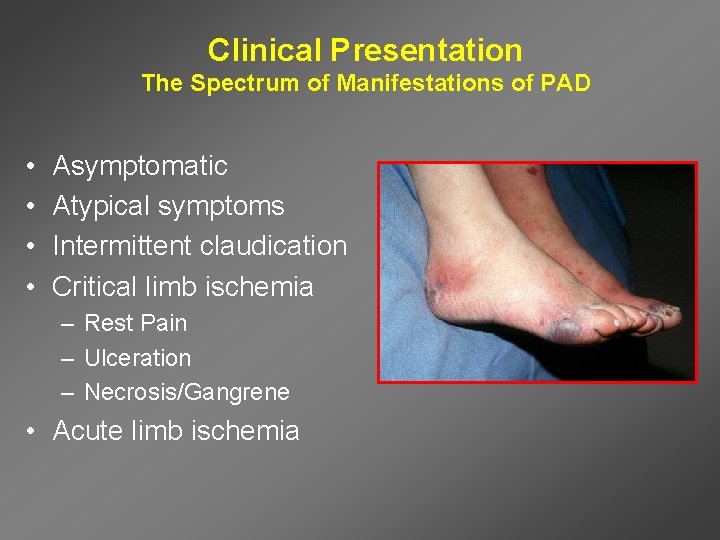
Clinical Presentation The Spectrum of Manifestations of PAD • • Asymptomatic Atypical symptoms Intermittent claudication Critical limb ischemia – Rest Pain – Ulceration – Necrosis/Gangrene • Acute limb ischemia
PAD Case #1 • A 74 year old female presents to initiate primary care without complaints • She has a history of smoking for 40 years, HTN and “borderline” DM • Medications include clonidine • Exam reveals BP of 140/86 with non-palpable distal pulses but otherwise no vascular findings • Labs with LDL of 138 mg/dl and Hg. A 1 C of 8. 4

Why do we care about her diagnosis of PAD?

Prevalence of PAD in the US 16 PAD currently affects 8 – 12 million Americans. Prevalence (Millions) 14 12 8– 12 10 13 8 6 4 2 5. 4 0 Stroke PAD CHD* CHD = coronary heart disease. PAD = peripheral arterial disease. * Includes myocardial infarction and angina pectoris. American Heart Association. Heart Disease and Stroke Statistics— 2005 Update. 2005. By 2050, the prevalence is expected to reach 19 million.
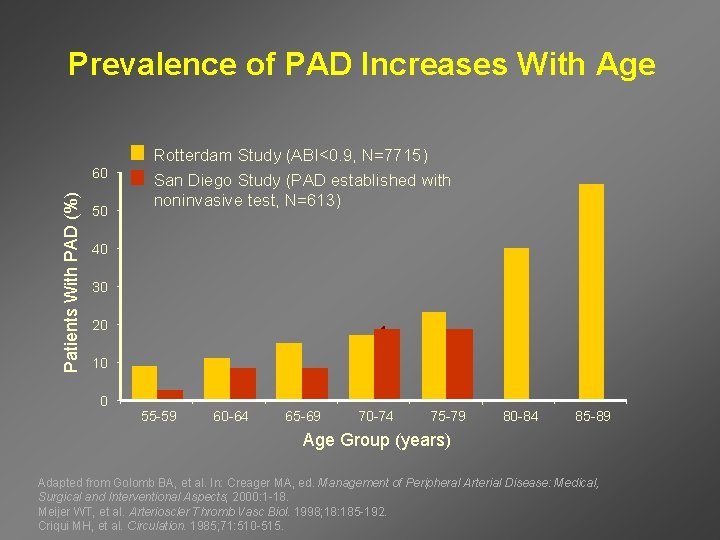
Prevalence of PAD Increases With Age Patients With PAD (%) 60 50 Rotterdam Study (ABI<0. 9, N=7715) San Diego Study (PAD established with noninvasive test, N=613) 40 30 20 10 0 55 -59 60 -64 65 -69 70 -74 75 -79 80 -84 85 -89 Age Group (years) Adapted from Golomb BA, et al. In: Creager MA, ed. Management of Peripheral Arterial Disease: Medical, Surgical and Interventional Aspects; 2000: 1 -18. Meijer WT, et al. Arterioscler Thromb Vasc Biol. 1998; 18: 185 -192. Criqui MH, et al. Circulation. 1985; 71: 510 -515.
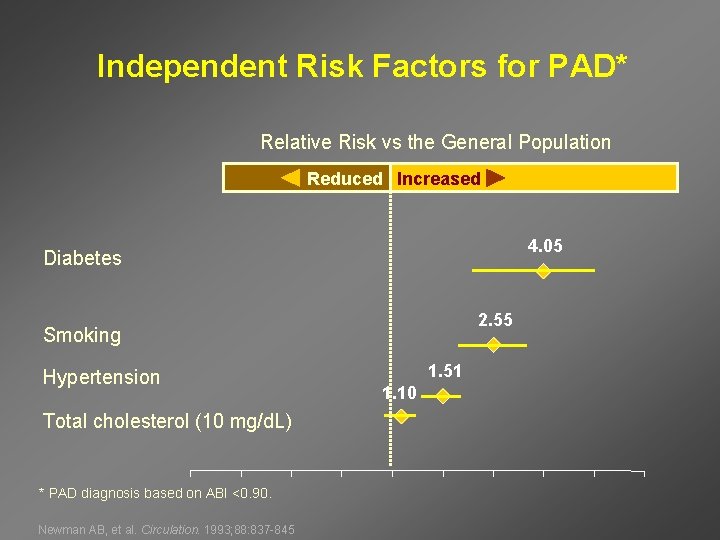
Independent Risk Factors for PAD* Relative Risk vs the General Population Reduced Increased 4. 05 Diabetes 2. 55 Smoking Hypertension Total cholesterol (10 mg/d. L) * PAD diagnosis based on ABI <0. 90. Newman AB, et al. Circulation. 1993; 88: 837 -845 1. 51 1. 10
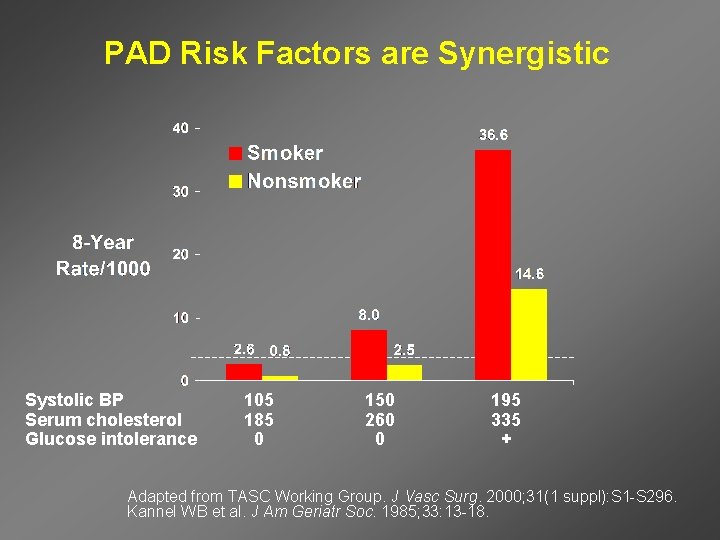
PAD Risk Factors are Synergistic Systolic BP Serum cholesterol Glucose intolerance 105 185 0 150 260 0 195 335 + Adapted from TASC Working Group. J Vasc Surg. 2000; 31(1 suppl): S 1 -S 296. Kannel WB et al. J Am Geriatr Soc. 1985; 33: 13 -18.
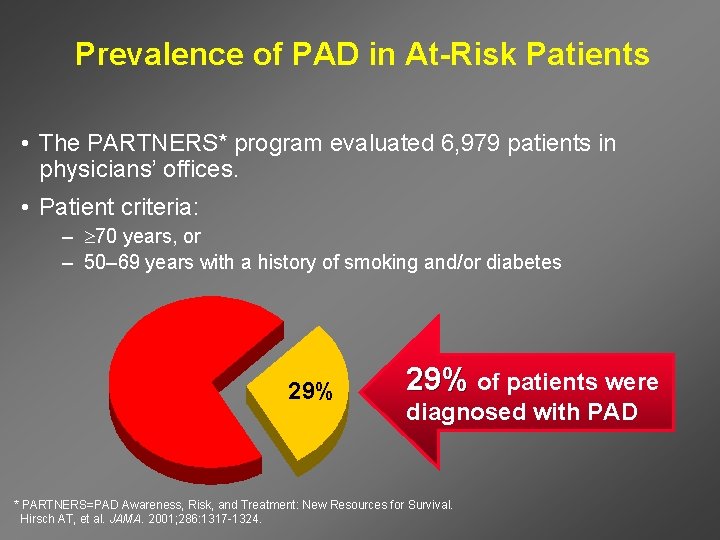
Prevalence of PAD in At-Risk Patients • The PARTNERS* program evaluated 6, 979 patients in physicians’ offices. • Patient criteria: – 70 years, or – 50– 69 years with a history of smoking and/or diabetes 29% of patients were diagnosed with PAD * PARTNERS=PAD Awareness, Risk, and Treatment: New Resources for Survival. Hirsch AT, et al. JAMA. 2001; 286: 1317 -1324.
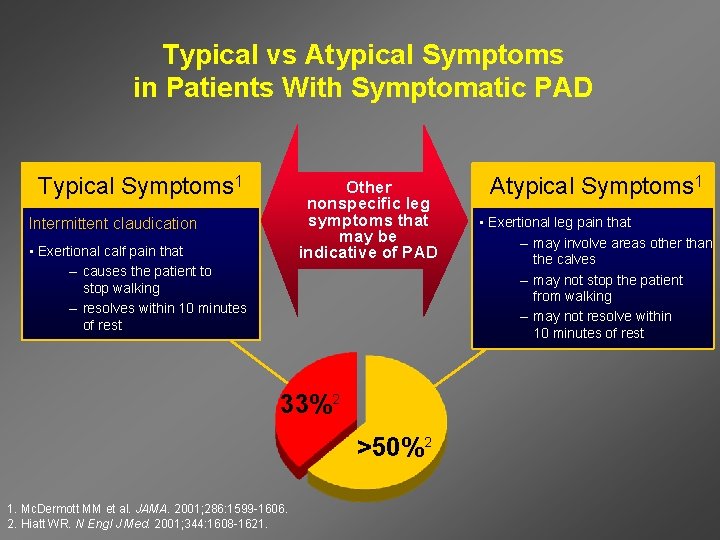
Typical vs Atypical Symptoms in Patients With Symptomatic PAD Typical Symptoms 1 Other nonspecific leg symptoms that may be indicative of PAD Intermittent claudication • Exertional calf pain that – causes the patient to stop walking – resolves within 10 minutes of rest 33%2 >50%2 1. Mc. Dermott MM et al. JAMA. 2001; 286: 1599 -1606. 2. Hiatt WR. N Engl J Med. 2001; 344: 1608 -1621. Atypical Symptoms 1 • Exertional leg pain that – may involve areas other than the calves – may not stop the patient from walking – may not resolve within 10 minutes of rest

Natural History Intermittent Claudication Population > 55 yr Intermittent Claudication 5% Peripheral Vascular Outcomes Worsening Lower Extremity Claudication Bypass Surgery 16% 7% Other Cardiovascular Morbidity/Total Mortality Major Amputation 4% Weitz JI et al. Circulation. 1996; 94: 3026– 3049. Nonfatal Cardiovascular Event (MI/Stroke) 20% 5 -yr Mortality 30% Cardiovascular Cause 75%
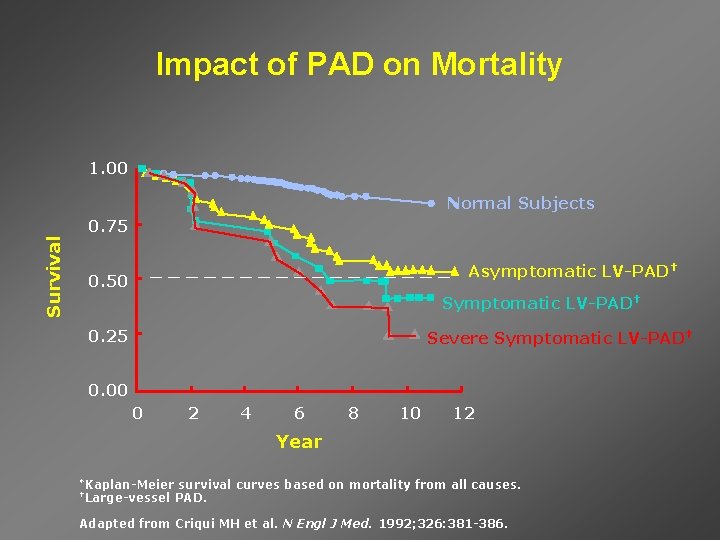
Impact of PAD on Mortality 1. 00 Normal Subjects Survival 0. 75 _________ 0. 50 Asymptomatic LV-PAD† Symptomatic LV-PAD† 0. 25 Severe Symptomatic LV-PAD† 0. 00 0 2 4 6 8 10 12 Year *Kaplan-Meier †Large-vessel survival curves based on mortality from all causes. PAD. Adapted from Criqui MH et al. N Engl J Med. 1992; 326: 381 -386.
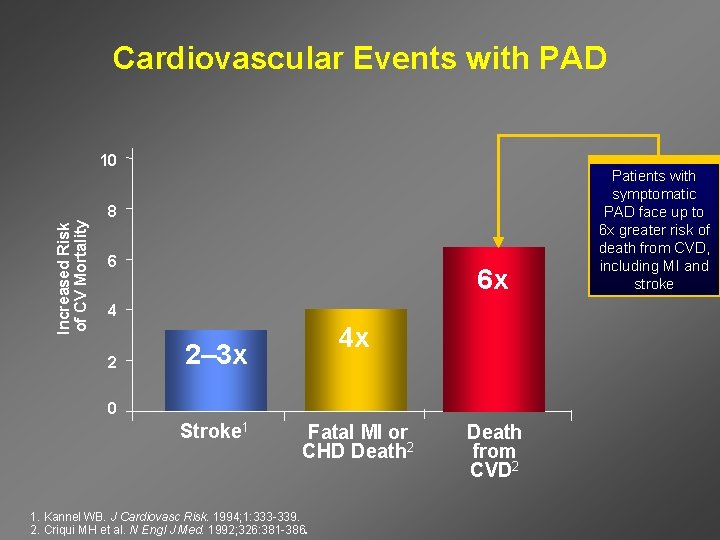
Cardiovascular Events with PAD Increased Risk of CV Mortality 10 8 6 6 x 4 2 4 x 2– 3 x 0 Stroke 1 Fatal MI or CHD Death 2 1. Kannel WB. J Cardiovasc Risk. 1994; 1: 333 -339. 2. Criqui MH et al. N Engl J Med. 1992; 326: 381 -386. Death from CVD 2 Patients with symptomatic PAD face up to 6 x greater risk of death from CVD, including MI and stroke
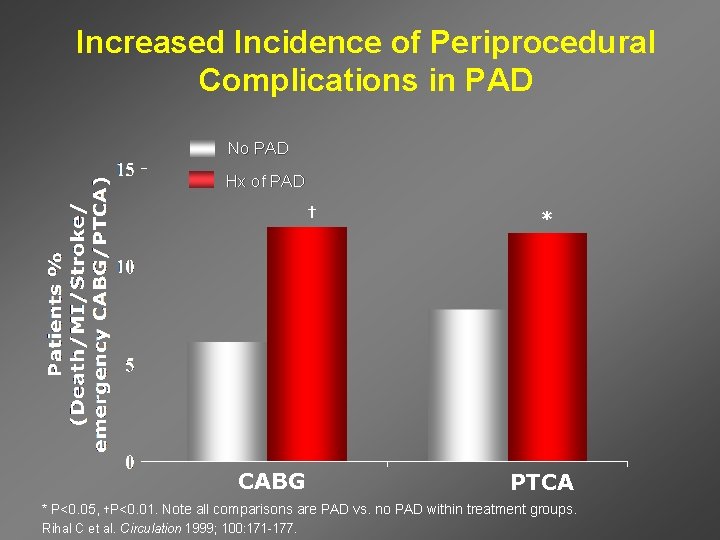
Increased Incidence of Periprocedural Complications in PAD No PAD Hx of PAD † CABG * PTCA * P<0. 05, †P<0. 01. Note all comparisons are PAD vs. no PAD within treatment groups. Rihal C et al. Circulation 1999; 100: 171 -177.
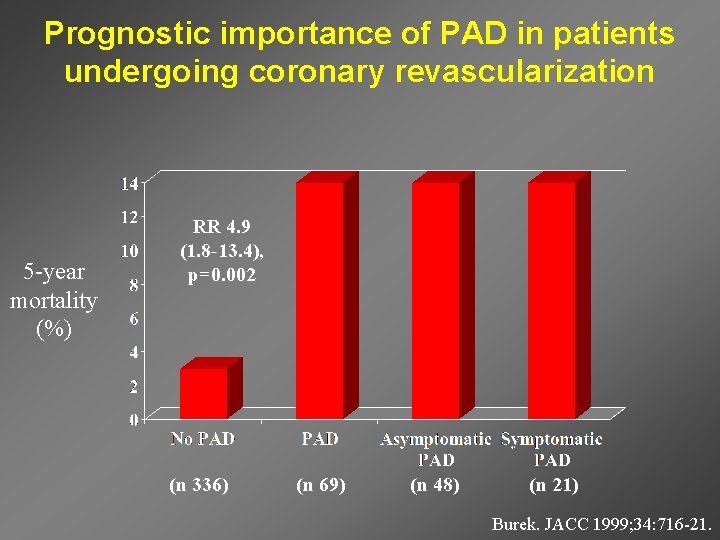
Prognostic importance of PAD in patients undergoing coronary revascularization 5 -year mortality (%) RR 4. 9 (1. 8 -13. 4), p=0. 002 (n 336) (n 69) (n 48) (n 21) Burek. JACC 1999; 34: 716 -21.
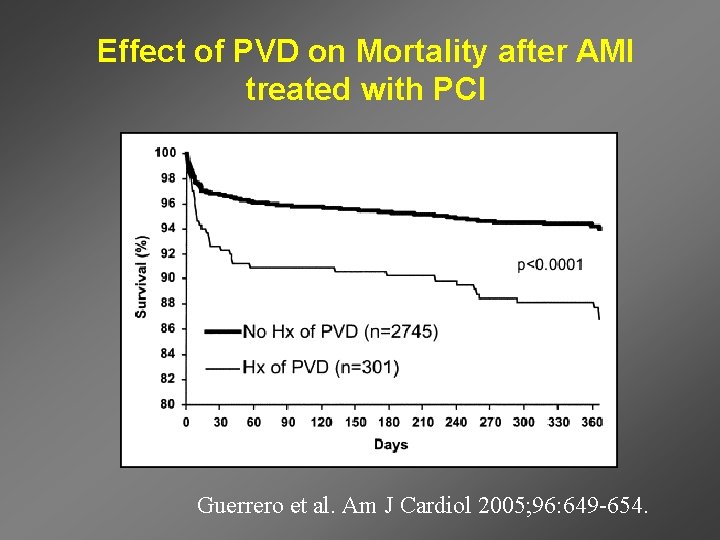
Effect of PVD on Mortality after AMI treated with PCI Guerrero et al. Am J Cardiol 2005; 96: 649 -654.
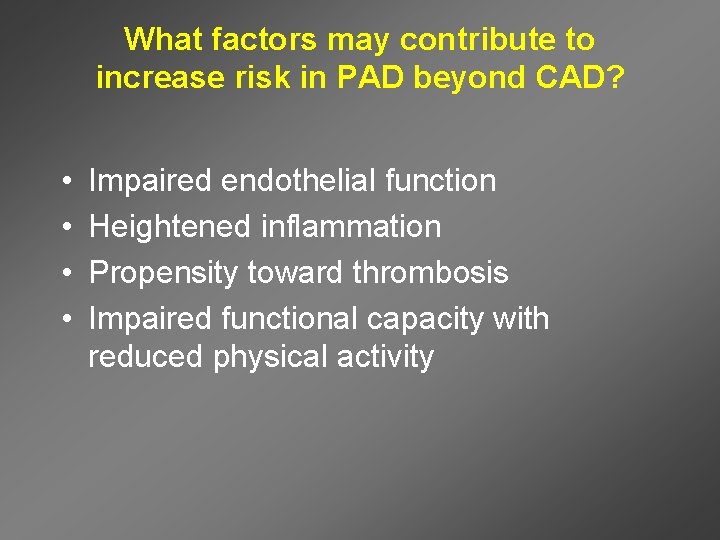
What factors may contribute to increase risk in PAD beyond CAD? • • Impaired endothelial function Heightened inflammation Propensity toward thrombosis Impaired functional capacity with reduced physical activity

What should we be thinking about in her treatment?
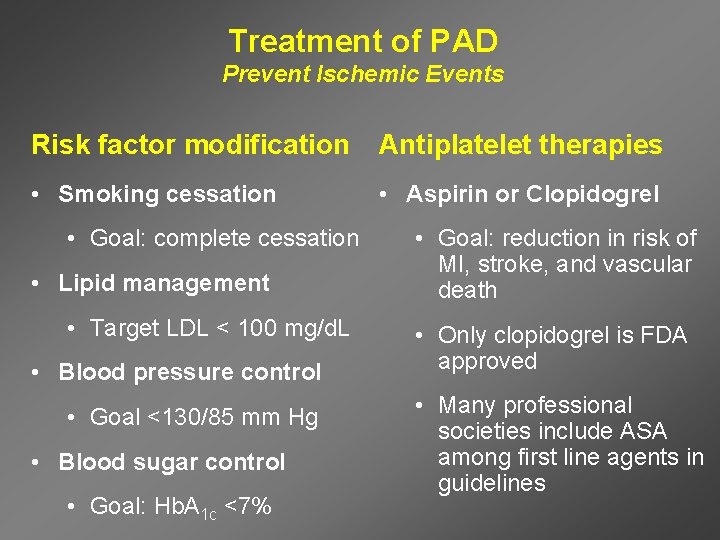
Treatment of PAD Prevent Ischemic Events Risk factor modification Antiplatelet therapies • Smoking cessation • Aspirin or Clopidogrel • Goal: complete cessation • Lipid management • Target LDL < 100 mg/d. L • Blood pressure control • Goal <130/85 mm Hg • Blood sugar control • Goal: Hb. A 1 c <7% • Goal: reduction in risk of MI, stroke, and vascular death • Only clopidogrel is FDA approved • Many professional societies include ASA among first line agents in guidelines
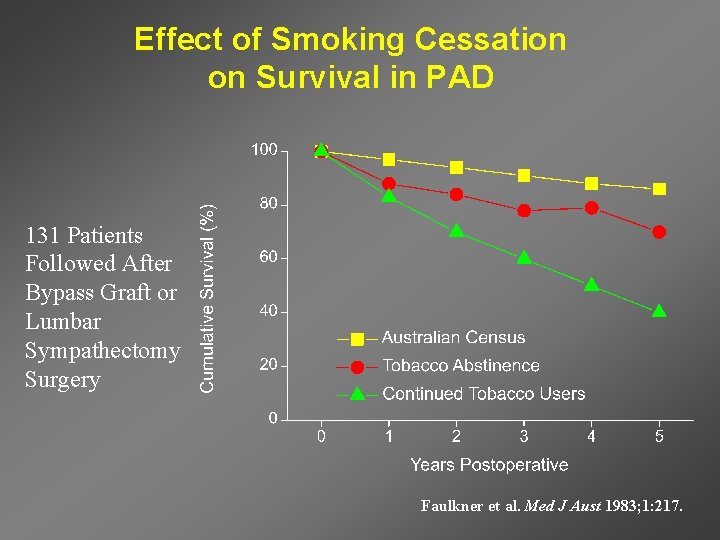
Effect of Smoking Cessation on Survival in PAD 131 Patients Followed After Bypass Graft or Lumbar Sympathectomy Surgery Faulkner et al. Med J Aust 1983; 1: 217.
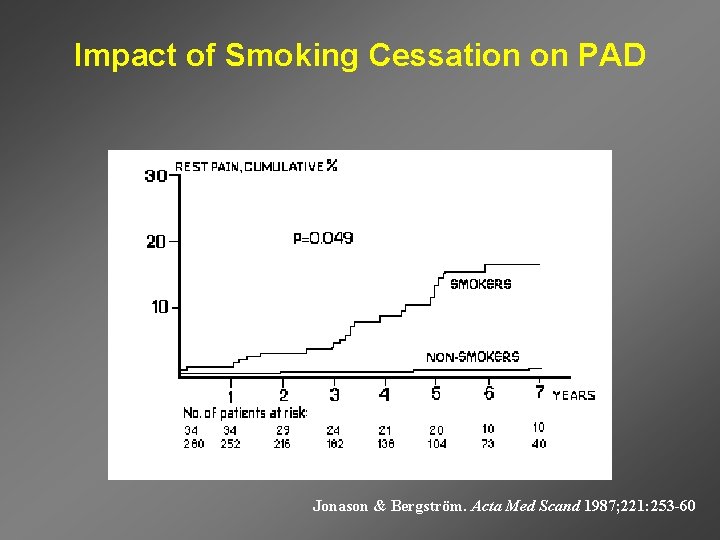
Impact of Smoking Cessation on PAD Jonason & Bergström. Acta Med Scand 1987; 221: 253 -60
![Cholesterol Reduction and the Development of Intermittent Claudication Placebo ] 38% Simvastatin Scandinavian Simvastatin](http://slidetodoc.com/presentation_image_h/84e040c176ca9f12a3e15fcc4ffabcb3/image-23.jpg "Cholesterol Reduction and the Development of Intermittent Claudication Placebo ] 38% Simvastatin Scandinavian Simvastatin")
Cholesterol Reduction and the Development of Intermittent Claudication Placebo ] 38% Simvastatin Scandinavian Simvastatin Survival Study Pedersen et al. Am J Card 1998; 81: 333 -5.
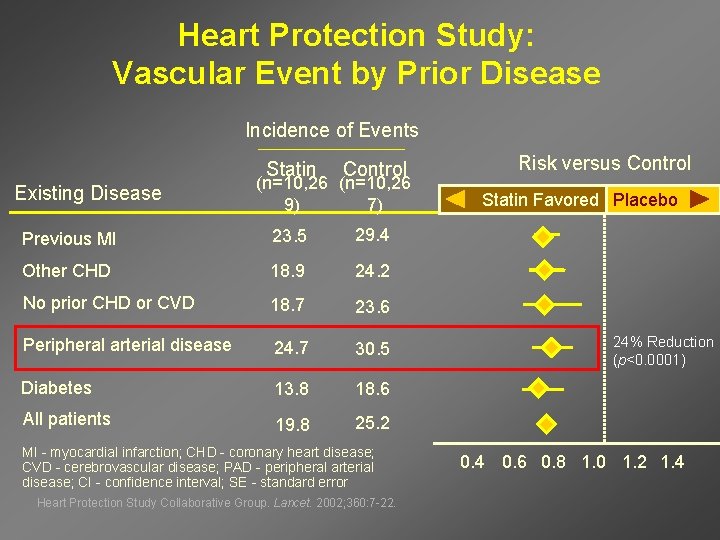
Heart Protection Study: Vascular Event by Prior Disease Incidence of Events Statin Existing Disease Control (n=10, 26 9) 7) Previous MI 23. 5 29. 4 Other CHD 18. 9 24. 2 No prior CHD or CVD 18. 7 23. 6 Peripheral arterial disease 24. 7 30. 5 Diabetes 13. 8 18. 6 All patients 19. 8 25. 2 MI - myocardial infarction; CHD - coronary heart disease; CVD - cerebrovascular disease; PAD - peripheral arterial disease; CI - confidence interval; SE - standard error Heart Protection Study Collaborative Group. Lancet. 2002; 360: 7 -22. Risk versus Control Statin Favored Placebo 24% Reduction (p<0. 0001) 0. 4 0. 6 0. 8 1. 0 1. 2 1. 4
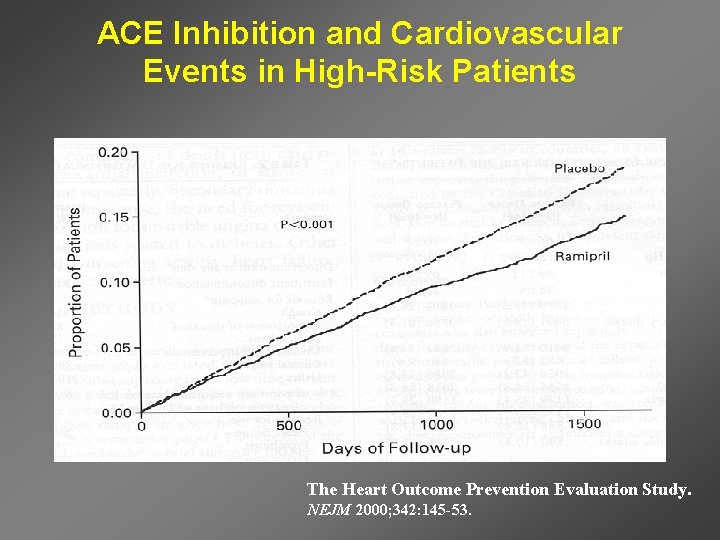
ACE Inhibition and Cardiovascular Events in High-Risk Patients The Heart Outcome Prevention Evaluation Study. NEJM 2000; 342: 145 -53.
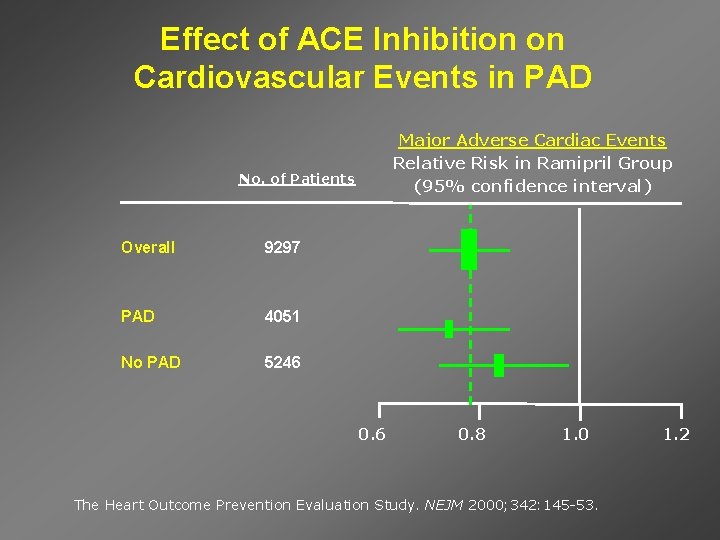
Effect of ACE Inhibition on Cardiovascular Events in PAD Major Adverse Cardiac Events Relative Risk in Ramipril Group (95% confidence interval) No. of Patients Overall 9297 PAD 4051 No PAD 5246 0. 8 1. 0 The Heart Outcome Prevention Evaluation Study. NEJM 2000; 342: 145 -53. 1. 2
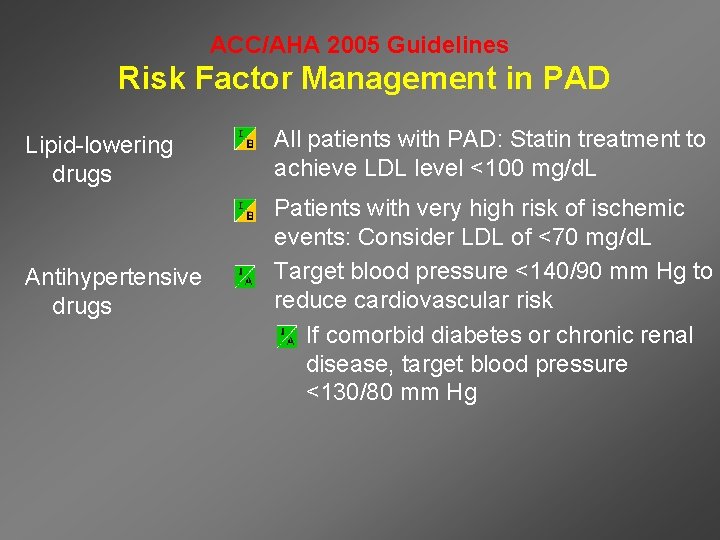
ACC/AHA 2005 Guidelines Risk Factor Management in PAD Lipid-lowering drugs • All patients with PAD: Statin treatment to achieve LDL level <100 mg/d. L Antihypertensive drugs • Patients with very high risk of ischemic events: Consider LDL of <70 mg/d. L • Target blood pressure <140/90 mm Hg to reduce cardiovascular risk – If comorbid diabetes or chronic renal disease, target blood pressure <130/80 mm Hg
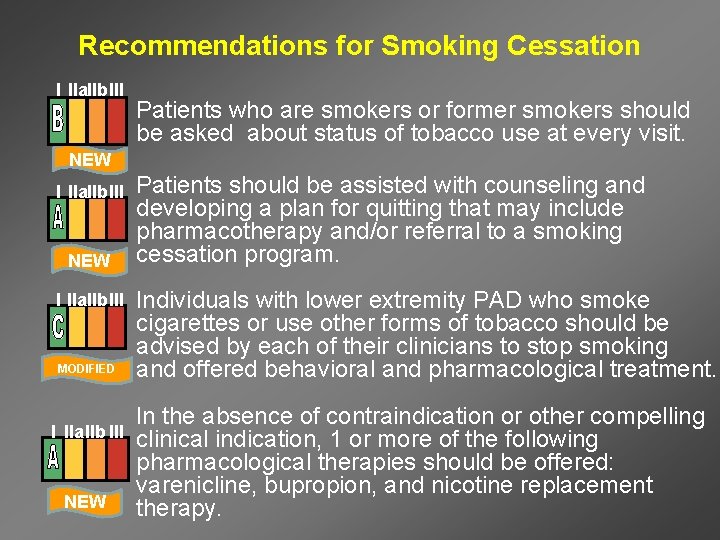
Recommendations for Smoking Cessation I IIa. IIb. III Patients who are smokers or former smokers should be asked about status of tobacco use at every visit. NEW I IIa. IIb. III MODIFIED I IIa. IIb III NEW Patients should be assisted with counseling and developing a plan for quitting that may include pharmacotherapy and/or referral to a smoking cessation program. Individuals with lower extremity PAD who smoke cigarettes or use other forms of tobacco should be advised by each of their clinicians to stop smoking and offered behavioral and pharmacological treatment. In the absence of contraindication or other compelling clinical indication, 1 or more of the following pharmacological therapies should be offered: varenicline, bupropion, and nicotine replacement therapy.
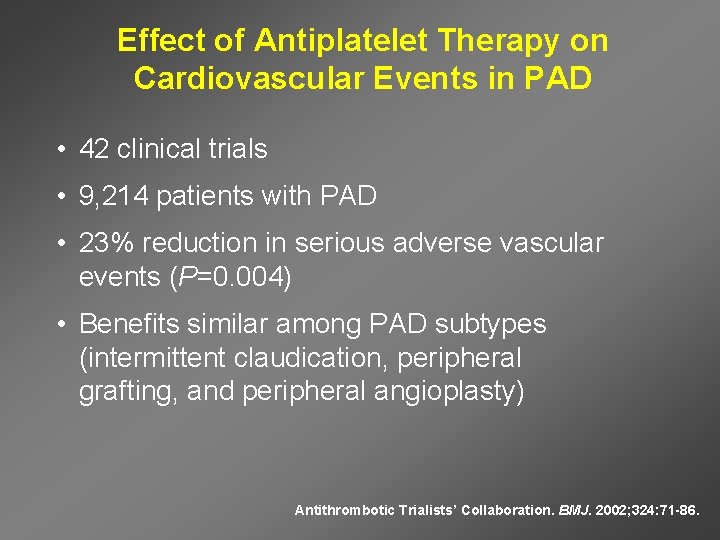
Effect of Antiplatelet Therapy on Cardiovascular Events in PAD • 42 clinical trials • 9, 214 patients with PAD • 23% reduction in serious adverse vascular events (P=0. 004) • Benefits similar among PAD subtypes (intermittent claudication, peripheral grafting, and peripheral angioplasty) Antithrombotic Trialists’ Collaboration. BMJ. 2002; 324: 71 -86.
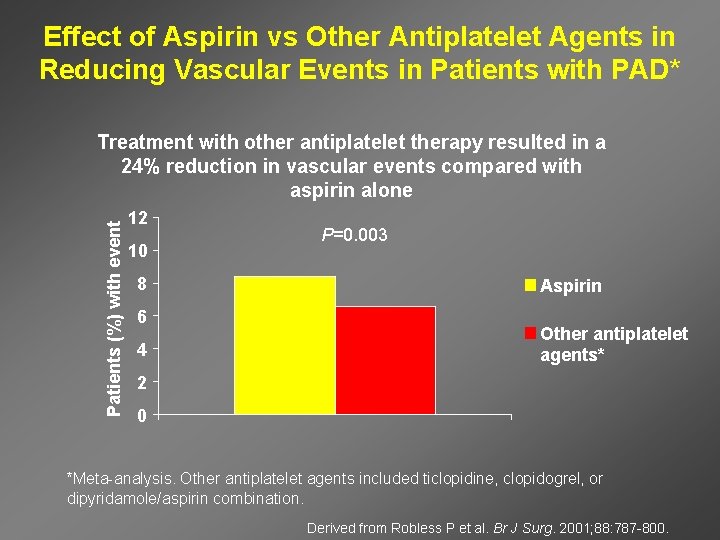
Effect of Aspirin vs Other Antiplatelet Agents in Reducing Vascular Events in Patients with PAD* Patients (%) with event Treatment with other antiplatelet therapy resulted in a 24% reduction in vascular events compared with aspirin alone 12 10 8 6 4 P=0. 003 Aspirin Other antiplatelet agents* 2 0 *Meta-analysis. Other antiplatelet agents included ticlopidine, clopidogrel, or dipyridamole/aspirin combination. Derived from Robless P et al. Br J Surg. 2001; 88: 787 -800.
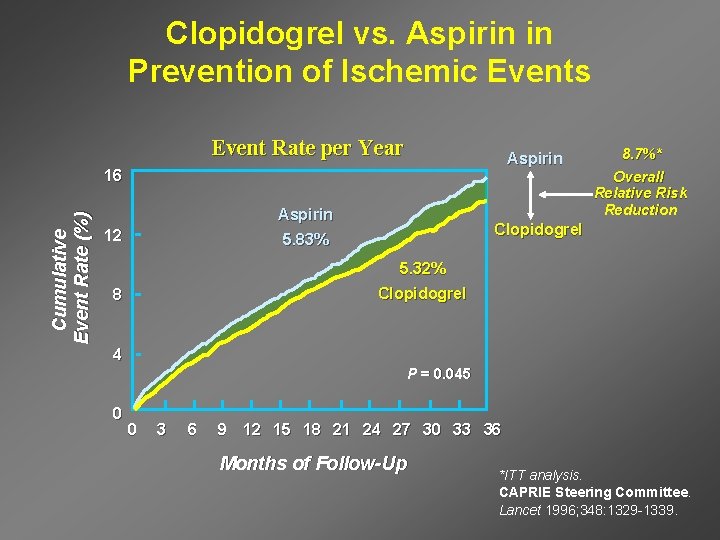
Clopidogrel vs. Aspirin in Prevention of Ischemic Events Event Rate per Year Aspirin Cumulative Event Rate (%) 16 Overall Relative Risk Reduction Aspirin 12 8. 7%* Clopidogrel 5. 83% 5. 32% 8 Clopidogrel 4 P = 0. 045 0 0 3 6 9 12 15 18 21 24 27 30 33 36 Months of Follow-Up *ITT analysis. CAPRIE Steering Committee. Lancet 1996; 348: 1329 -1339.
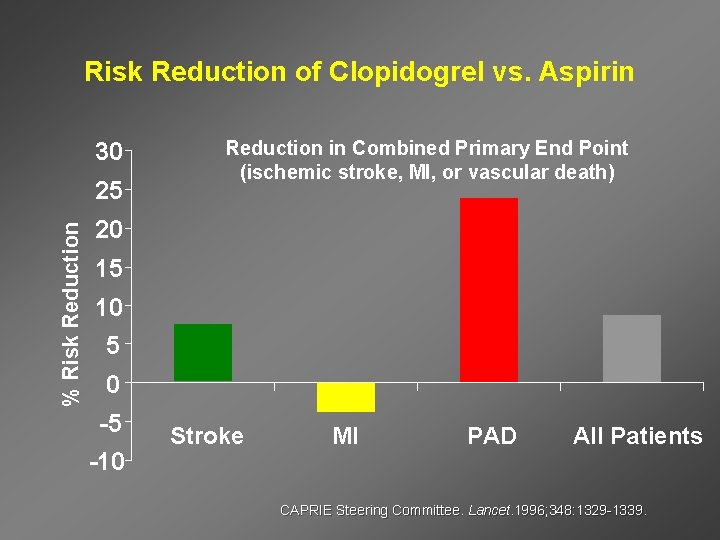
Risk Reduction of Clopidogrel vs. Aspirin 30 % Risk Reduction 25 Reduction in Combined Primary End Point (ischemic stroke, MI, or vascular death) 20 15 10 5 0 -5 -10 Stroke MI PAD All Patients CAPRIE Steering Committee. Lancet. 1996; 348: 1329 -1339.
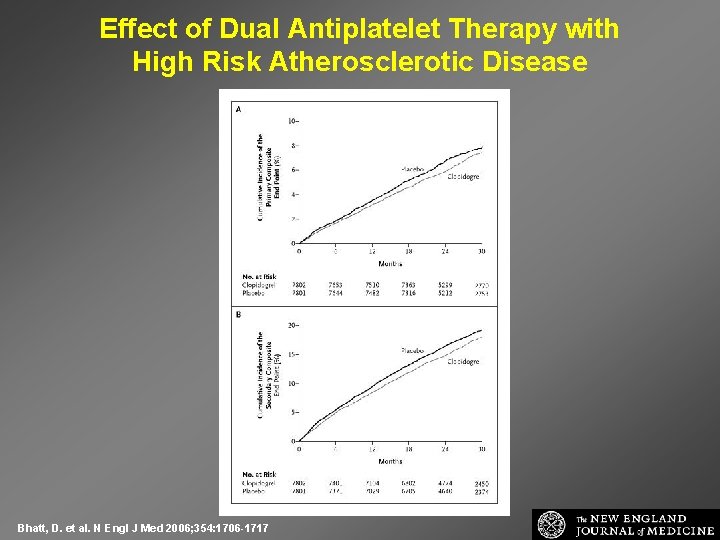
Effect of Dual Antiplatelet Therapy with High Risk Atherosclerotic Disease Bhatt, D. et al. N Engl J Med 2006; 354: 1706 -1717
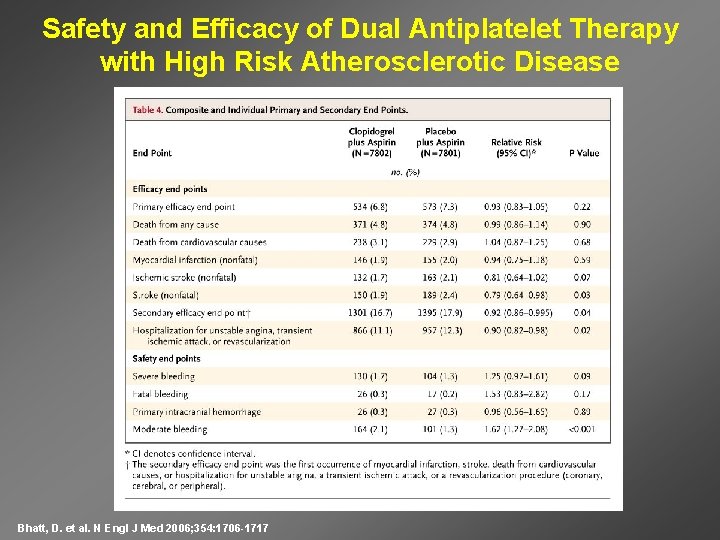
Safety and Efficacy of Dual Antiplatelet Therapy with High Risk Atherosclerotic Disease Bhatt, D. et al. N Engl J Med 2006; 354: 1706 -1717
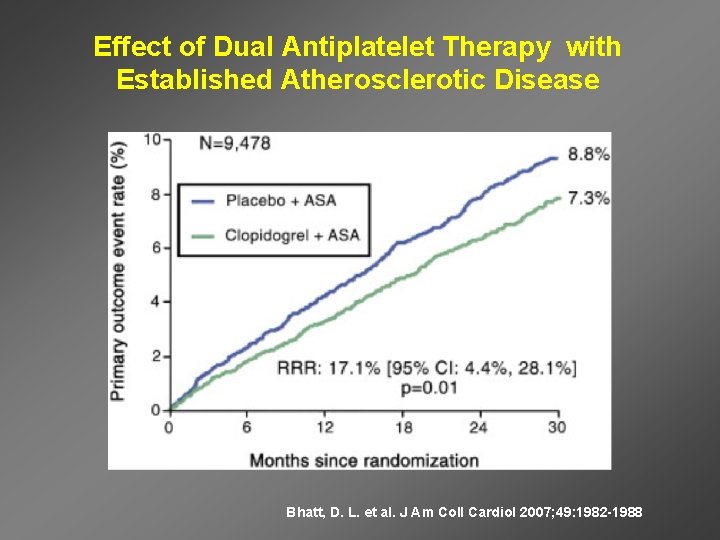
Effect of Dual Antiplatelet Therapy with Established Atherosclerotic Disease Bhatt, D. L. et al. J Am Coll Cardiol 2007; 49: 1982 -1988
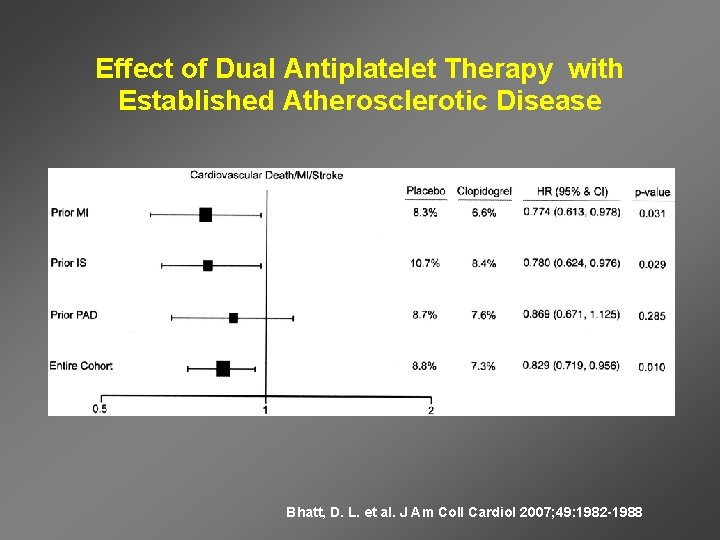
Effect of Dual Antiplatelet Therapy with Established Atherosclerotic Disease Bhatt, D. L. et al. J Am Coll Cardiol 2007; 49: 1982 -1988
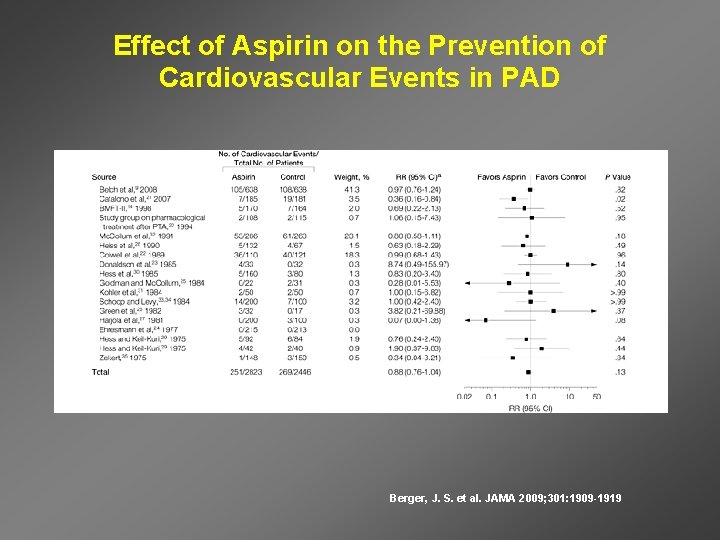
Effect of Aspirin on the Prevention of Cardiovascular Events in PAD Berger, J. S. et al. JAMA 2009; 301: 1909 -1919
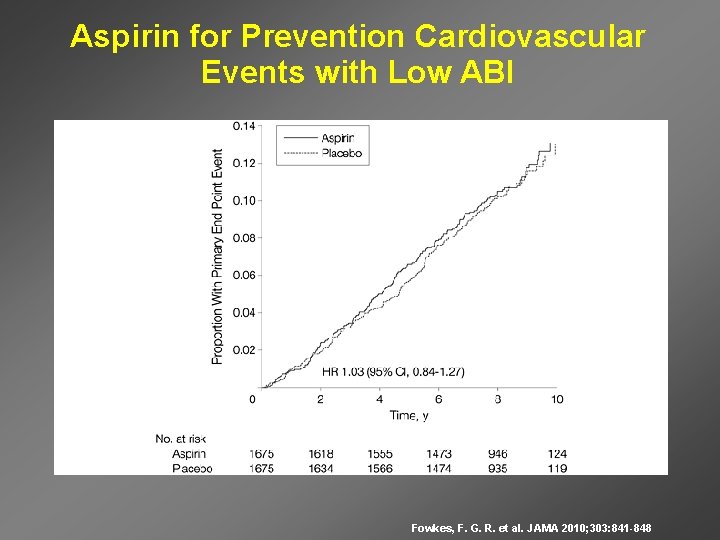
Aspirin for Prevention Cardiovascular Events with Low ABI Fowkes, F. G. R. et al. JAMA 2010; 303: 841 -848

Recommendations for Antiplatelet and Antithrombotic Drugs I IIa IIb III MODIFIED Antiplatelet therapy is indicated to reduce the risk of MI, stroke, and vascular death in symptomatic PAD I IIa IIb III MODIFIED Aspirin, 75 to 325 mg, is recommended as safe and effective antiplatelet therapy. Clopidogrel (75 mg per day) is recommended as a safe and effective alternative antiplatelet therapy to aspirin
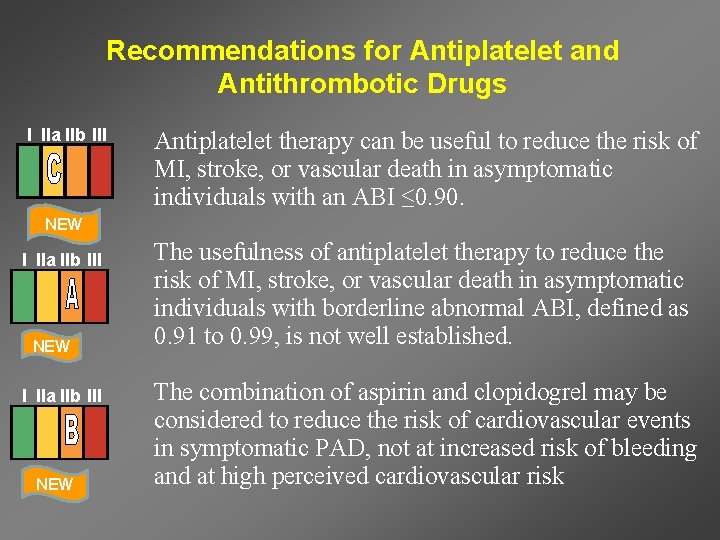
Recommendations for Antiplatelet and Antithrombotic Drugs I IIa IIb III Antiplatelet therapy can be useful to reduce the risk of MI, stroke, or vascular death in asymptomatic individuals with an ABI ≤ 0. 90. NEW I IIa IIb III NEW The usefulness of antiplatelet therapy to reduce the risk of MI, stroke, or vascular death in asymptomatic individuals with borderline abnormal ABI, defined as 0. 91 to 0. 99, is not well established. The combination of aspirin and clopidogrel may be considered to reduce the risk of cardiovascular events in symptomatic PAD, not at increased risk of bleeding and at high perceived cardiovascular risk
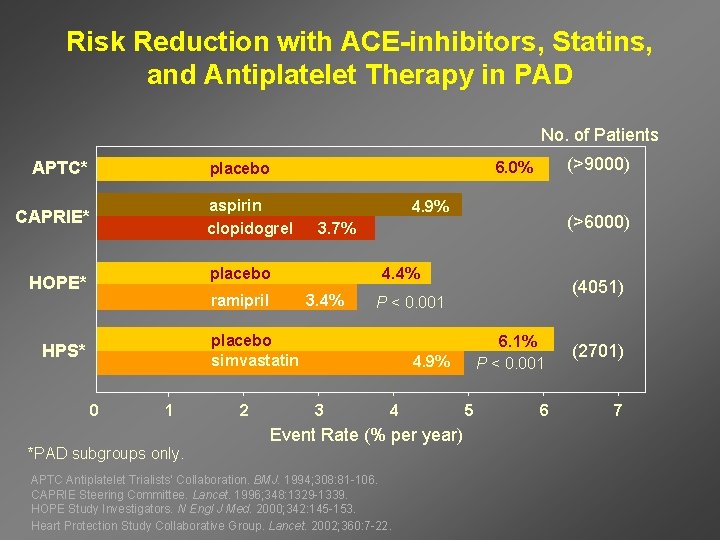
Risk Reduction with ACE-inhibitors, Statins, and Antiplatelet Therapy in PAD No. of Patients APTC* aspirin clopidogrel CAPRIE* 4. 9% ramipril 4. 4% 3. 4% 0 1 *PAD subgroups only. 2 (4051) P < 0. 001 placebo simvastatin HPS* (>6000) 3. 7% placebo HOPE* (>9000) 6. 0% placebo 4. 9% 3 4 Event Rate (% per year) APTC Antiplatelet Trialists’ Collaboration. BMJ. 1994; 308: 81 -106. CAPRIE Steering Committee. Lancet. 1996; 348: 1329 -1339. HOPE Study Investigators. N Engl J Med. 2000; 342: 145 -153. Heart Protection Study Collaborative Group. Lancet. 2002; 360: 7 -22. 5 6. 1% P < 0. 001 (2701) 6 7
PAD Case #2 • A 58 year old male presents with exertional left calf discomfort at ½ block • Symptoms occur reproducibly with exertion and relieved by rest • He has a history of DM, HTN, tobacco use, and known PAD with prior left femoralpopliteal bypass surgery • Medications include lisinopril, metoprolol, atorvastatin, aspirin 81 mg, and metformin. • Exam reveals palpable femoral pulses without bruits, diminished popliteal and distal pulse on left, and no positional color changes or skin breakdown

How do we establish a diagnosis of PAD or assess severity and localize disease?

Common Sites of Claudication Obstruction in Aorta or iliac artery Ischemia in Buttock, hip, thigh Femoral artery or branches Thigh, calf Popliteal artery or distal Calf, ankle, foot
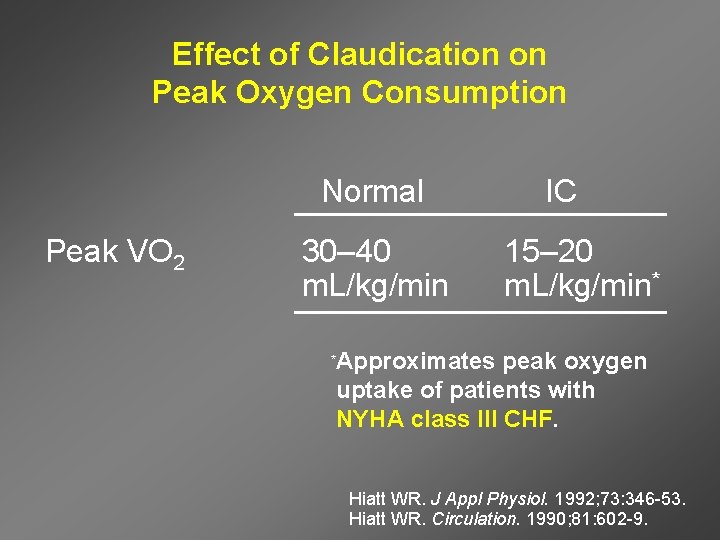
Effect of Claudication on Peak Oxygen Consumption Normal Peak VO 2 30– 40 m. L/kg/min * IC 15– 20 m. L/kg/min* Approximates peak oxygen uptake of patients with NYHA class III CHF. Hiatt WR. J Appl Physiol. 1992; 73: 346 -53. Hiatt WR. Circulation. 1990; 81: 602 -9.

Does the Patient Have Intermittent Claudication? Characteristic of discomfort Location of discomfort Exercise-induced Distance Occurs with standing Action for relief Time to relief Claudication Pseudoclaudication Cramping, tightness, aching, fatigue Same, tingling, burning, numbness Buttock, hip, thigh, calf, foot Same Yes Variable Consistent Variable No Yes Stand Sit, change position Less than 5 minutes Up to 30 minutes
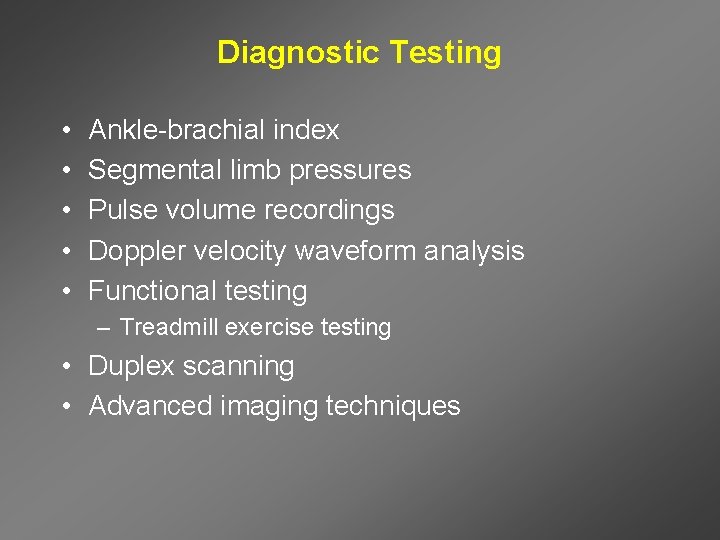
Diagnostic Testing • • • Ankle-brachial index Segmental limb pressures Pulse volume recordings Doppler velocity waveform analysis Functional testing – Treadmill exercise testing • Duplex scanning • Advanced imaging techniques

How to Perform and Calculate the ABI Left Arm Pressure: Right Arm Pressure: ≥ 1. 0 — Normal 0. 81 -0. 90 — Mild Obstruction 0. 41 -0. 80 — Moderate Obstruction ≤ 0. 40 — Severe Obstruction Pressure: PT DP DP Right ABI Higher Right Ankle Pressure Higher Arm Pressure = mm Hg Left ABI Higher Left Ankle Pressure Higher Arm Pressure = mm Hg

Segmental Limb Pressure and Pulse Volume Recordings 150 Brachial 150 170 140 158 116 154 100 152 98 1. 0 0. 64 ABI

ACC/AHA 2005/2011 Guidelines Diagnosis of PAD • Use resting ankle brachial index (ABI) to establish lower extremity PAD diagnosis in those with suspected PAD, MODIFIED defined as individuals with 1 or more of the following: exertional leg symptoms, nonhealing wounds, age ≥ 65 years, or ≥ 50 years with a history of smoking or diabetes. • Use ABI to confirm and diagnosis and establish a baseline in all new patients with PAD, regardless of severity • Use toe-brachial index to establish a diagnosis of PAD in those with non-compressible vessels • Segmental pressure measurements are useful to when anatomic localization of PAD is required to create a therapeutic plan

Establishing the Diagnosis of Intermittent Claudication History and Physical Exam Resting ABI Normal or Indeterminant Treadmill Testing Normal Abnormal (<0. 90) Non-Invasive Testing Normal • Pulse Volume Recording • Doppler Waveform Analysis • Duplex Imaging Abnormal Diagnosis Confirmed Evaluate Other Etiologies • Assess Severity • Initiate Therapy
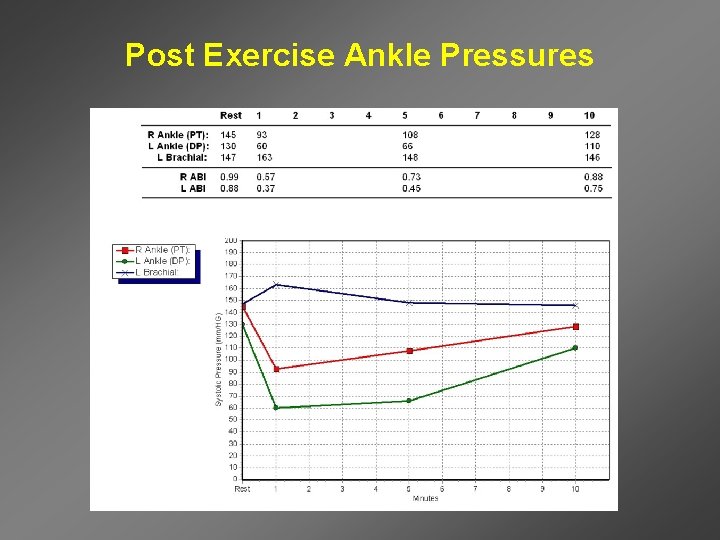
Post Exercise Ankle Pressures
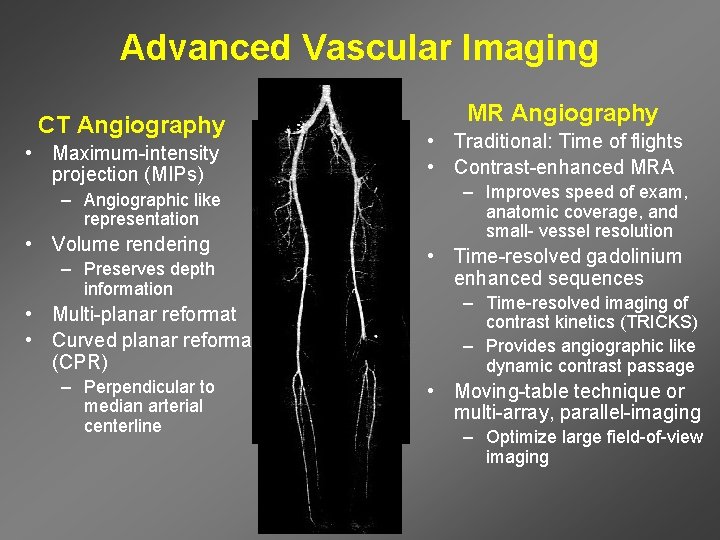
Advanced Vascular Imaging CT Angiography • Maximum-intensity projection (MIPs) – Angiographic like representation • Volume rendering – Preserves depth information • Multi-planar reformat • Curved planar reformat (CPR) – Perpendicular to median arterial centerline MR Angiography • Traditional: Time of flights • Contrast-enhanced MRA – Improves speed of exam, anatomic coverage, and small- vessel resolution • Time-resolved gadolinium enhanced sequences – Time-resolved imaging of contrast kinetics (TRICKS) – Provides angiographic like dynamic contrast passage • Moving-table technique or multi-array, parallel-imaging – Optimize large field-of-view imaging

He is sent for ABI/PVR and arterial duplex revealing ABI 0. 5 on left with femoral-popliteal involvement and an occluded bypass graft What treatments should we offer to those with intermittent claudication?

Treatment of PAD Therapies Based Upon Symptoms Intermittent Claudication Critical limb ischemia • Exercise Therapy • Wound care • Drugs • Antibiotics • Pentoxifylline • Revascularization • Cilostazol • Revascularization • Endovascular • Surgery • Severe disability Goal to provide relief of symptoms Goal to promote limb survival
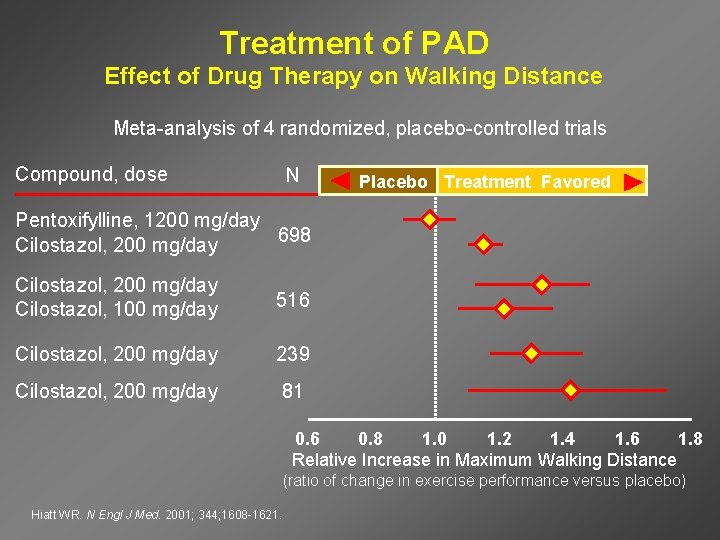
Treatment of PAD Effect of Drug Therapy on Walking Distance Meta-analysis of 4 randomized, placebo-controlled trials Compound, dose N Placebo Treatment Favored Pentoxifylline, 1200 mg/day 698 Cilostazol, 200 mg/day Cilostazol, 100 mg/day 516 Cilostazol, 200 mg/day 239 Cilostazol, 200 mg/day 81 0. 6 0. 8 1. 0 1. 2 1. 4 1. 6 1. 8 Relative Increase in Maximum Walking Distance (ratio of change in exercise performance versus placebo) Hiatt WR. N Engl J Med. 2001; 344; 1608 -1621.
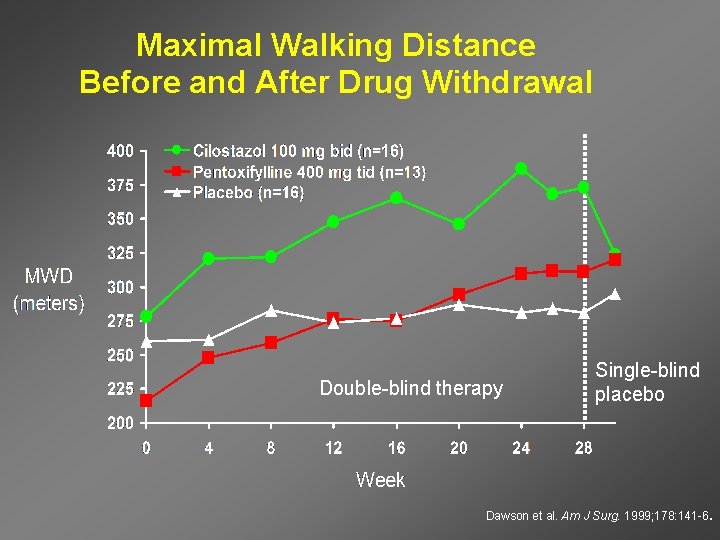
Maximal Walking Distance Before and After Drug Withdrawal Double-blind therapy Single-blind placebo Dawson et al. Am J Surg. 1999; 178: 141 -6.
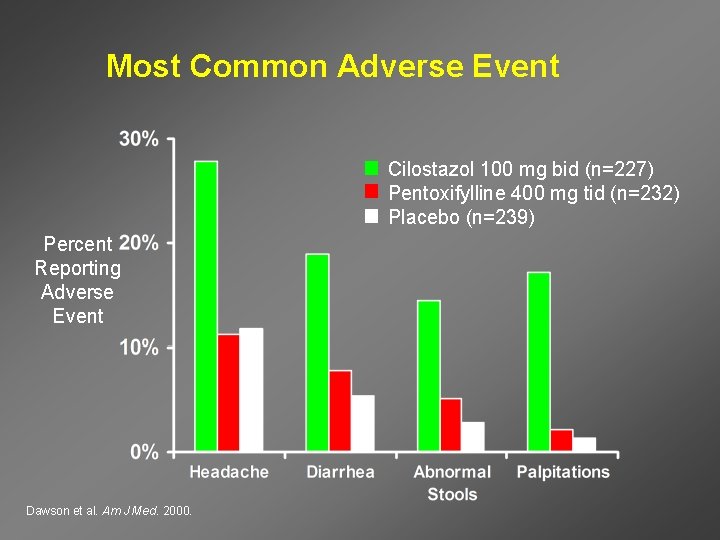
Most Common Adverse Event Cilostazol 100 mg bid (n=227) Pentoxifylline 400 mg tid (n=232) Placebo (n=239) Percent Reporting Adverse Event Dawson et al. Am J Med. 2000.
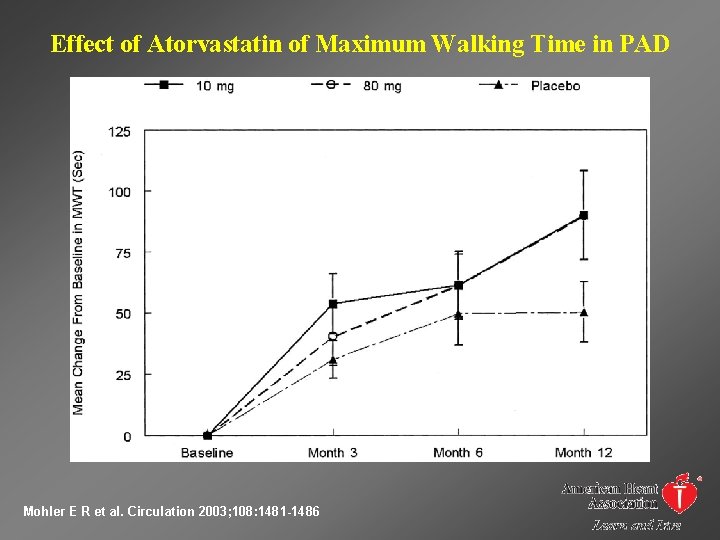
Effect of Atorvastatin of Maximum Walking Time in PAD Mohler E R et al. Circulation 2003; 108: 1481 -1486
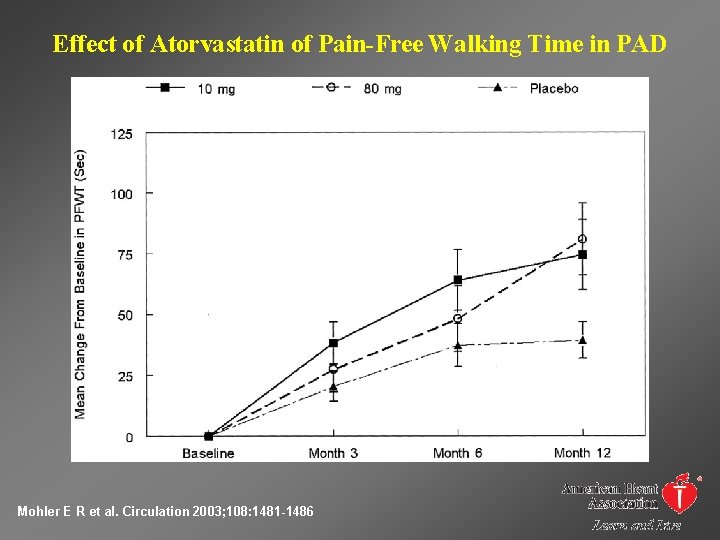
Effect of Atorvastatin of Pain-Free Walking Time in PAD Mohler E R et al. Circulation 2003; 108: 1481 -1486
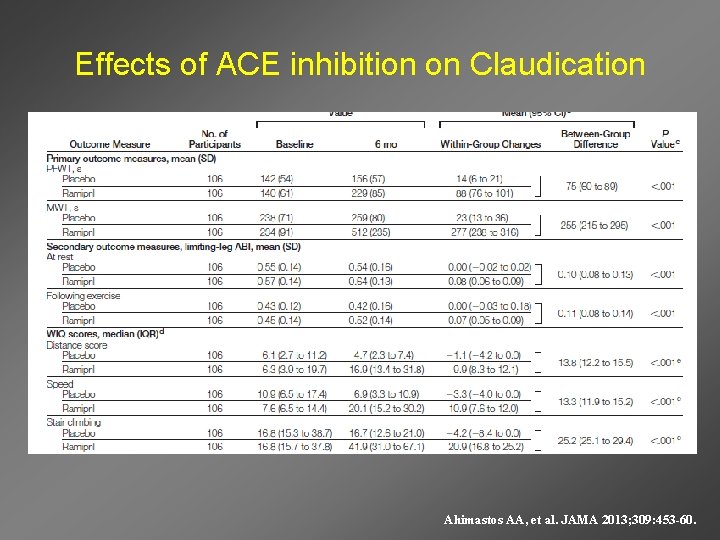
Effects of ACE inhibition on Claudication Ahimastos AA, et al. JAMA 2013; 309: 453 -60.
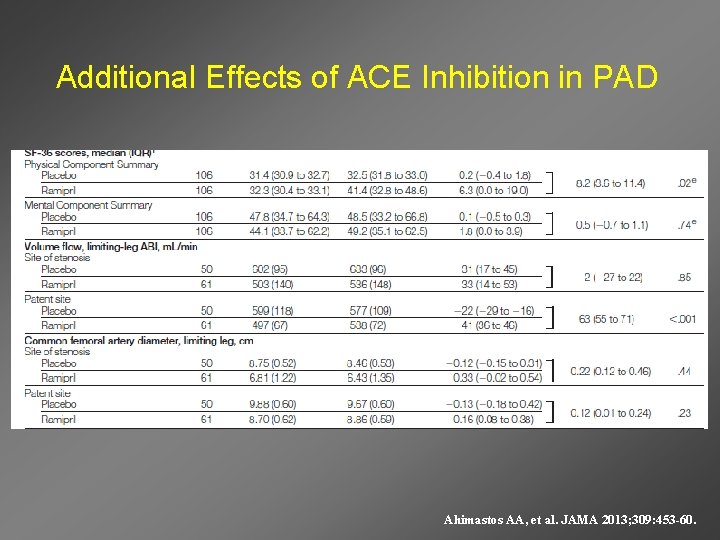
Additional Effects of ACE Inhibition in PAD Ahimastos AA, et al. JAMA 2013; 309: 453 -60.
Exercise for PAD? Your legs hurt when you walk so go out and walk?
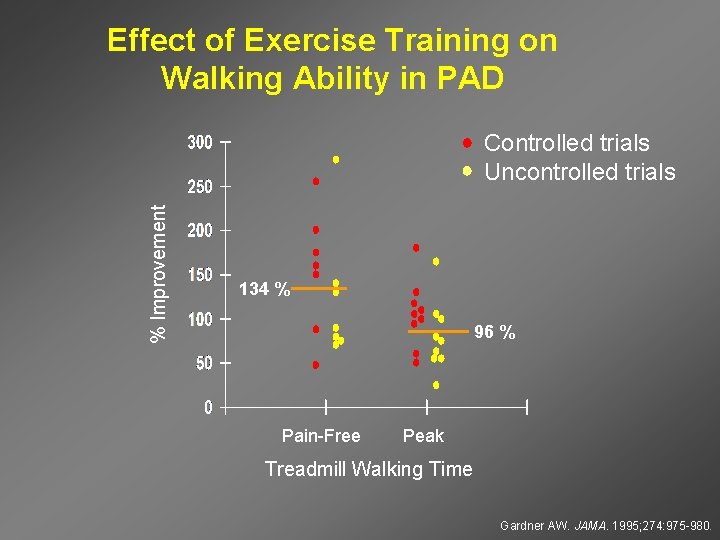
Effect of Exercise Training on Walking Ability in PAD % Improvement Controlled trials Uncontrolled trials 134 % 96 % Pain-Free Peak Treadmill Walking Time Gardner AW. JAMA. 1995; 274: 975 -980.
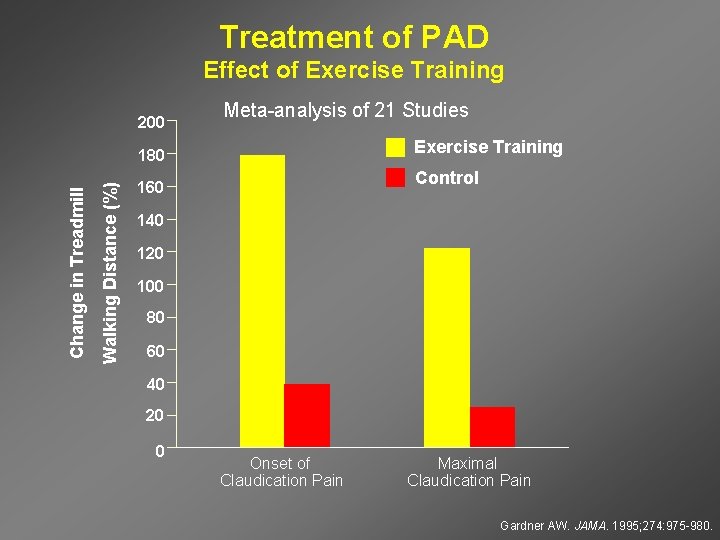
Treatment of PAD Effect of Exercise Training 200 Meta-analysis of 21 Studies Exercise Training Walking Distance (%) Change in Treadmill 180 Control 160 140 120 100 80 60 40 20 0 Onset of Claudication Pain Maximal Claudication Pain Gardner AW. JAMA. 1995; 274: 975 -980.
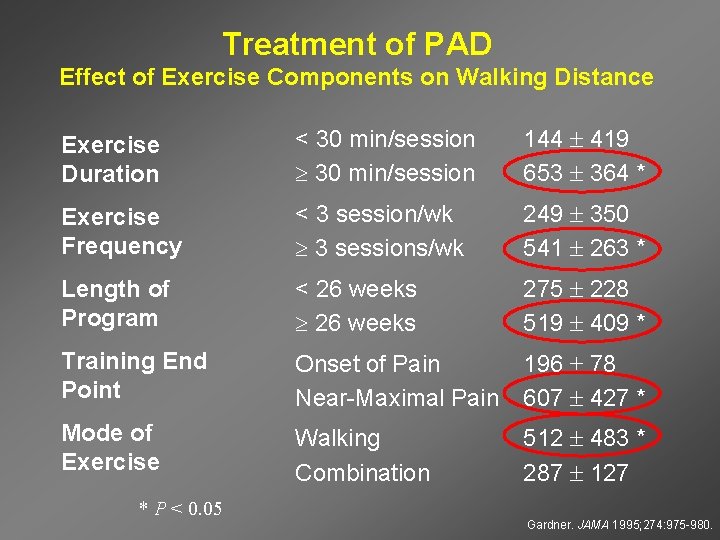
Treatment of PAD Effect of Exercise Components on Walking Distance Exercise Duration < 30 min/session 144 419 653 364 * Exercise Frequency < 3 session/wk 3 sessions/wk 249 350 541 263 * Length of Program < 26 weeks 275 228 519 409 * Training End Point Onset of Pain Near-Maximal Pain 196 78 607 427 * Mode of Exercise Walking Combination 512 483 * 287 127 * P < 0. 05 Gardner. JAMA 1995; 274: 975 -980.

ACC/AHA 2005 Guidelines Treatment of Claudication Exercise • Supervised exercise training should be the initial treatment – 30 -45 minute sessions – 3 or more times per week – At least 12 weeks Drug therapy • Value of unsupervised exercise programs is not well established • Cilostazol 100 mg twice daily – Can improve symptoms & increase walking distance – Indicated for lifestyle-limiting claudication – Contraindicated in patients with heart failure • Pentoxifylline 400 mg three daily – Consider as an alternative to cilostazol – Effectiveness of pentoxifylline is marginal and not well established
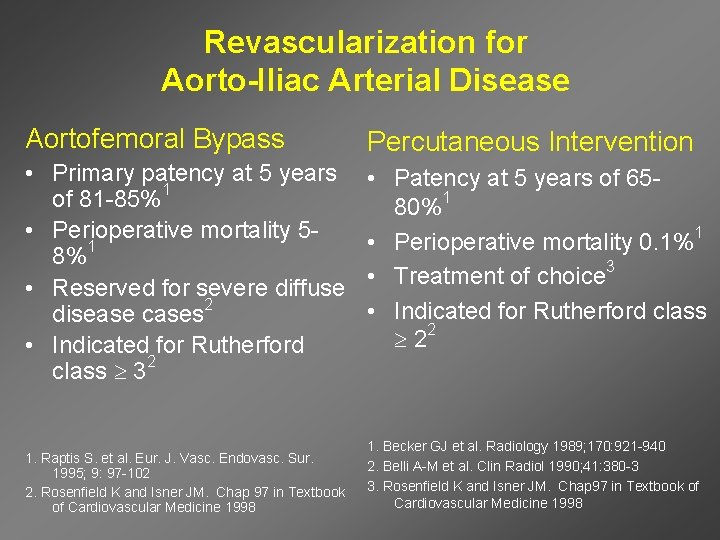
Revascularization for Aorto-Iliac Arterial Disease Aortofemoral Bypass Percutaneous Intervention • Primary patency at 5 years of 81 -85%1 • Perioperative mortality 58%1 • Reserved for severe diffuse disease cases 2 • Indicated for Rutherford class 32 • Patency at 5 years of 6580%1 • Perioperative mortality 0. 1%1 • Treatment of choice 3 • Indicated for Rutherford class 22 1. Raptis S. et al. Eur. J. Vasc. Endovasc. Sur. 1995; 9: 97 -102 2. Rosenfield K and Isner JM. Chap 97 in Textbook of Cardiovascular Medicine 1998 1. Becker GJ et al. Radiology 1989; 170: 921 -940 2. Belli A-M et al. Clin Radiol 1990; 41: 380 -3 3. Rosenfield K and Isner JM. Chap 97 in Textbook of Cardiovascular Medicine 1998
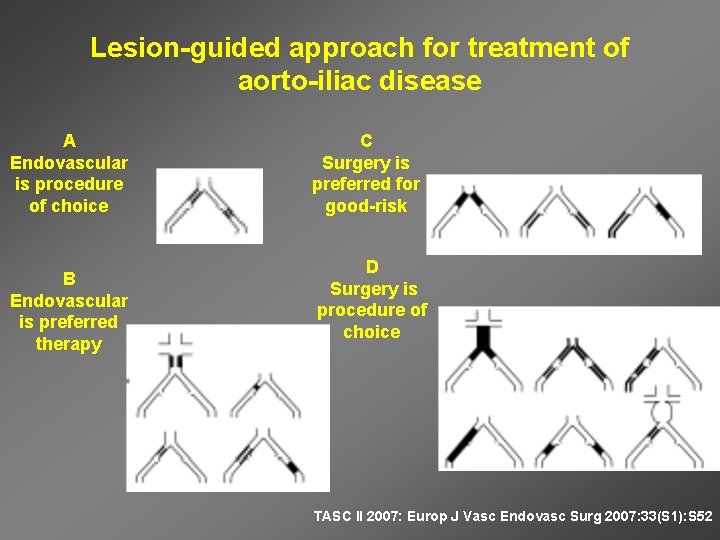
Lesion-guided approach for treatment of aorto-iliac disease A Endovascular is procedure of choice B Endovascular is preferred therapy C Surgery is preferred for good-risk D Surgery is procedure of choice TASC II 2007: Europ J Vasc Endovasc Surg 2007: 33(S 1): S 52

Treatment of PAD Revascularization for Femoro-Popliteal Disease Femoro-Popliteal Bypass Surgery • Primary patency at 5 years of 60 -80% • Autologous veins preferred to synthetic grafts • Perioperative mortality 0 -3% • Indicated for Rutherford class 3 Femoro-Popliteal Angioplasty • Patency at 2 -5 years ranges between 40 -70% • Technical problems due several anatomic issues: • • Occlusions vs stenosis Diffuse disease Adductor canal Disease in run off vessels • Perioperative mortality is very low • Indicated for Rutherford class 2
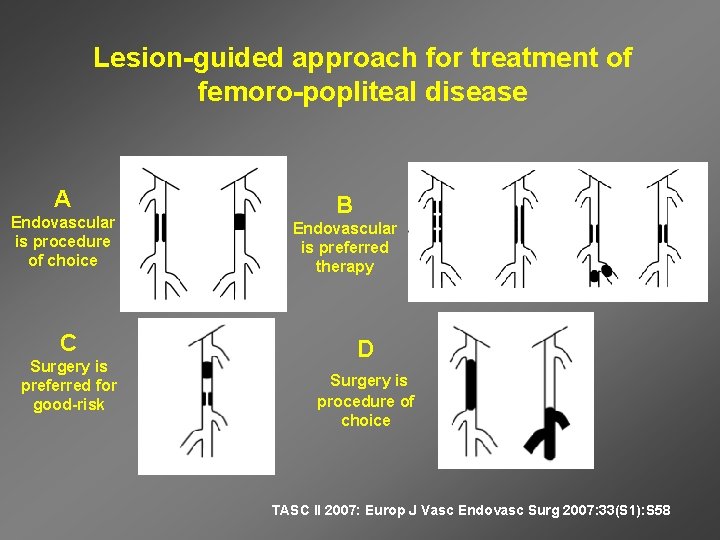
Lesion-guided approach for treatment of femoro-popliteal disease A Endovascular is procedure of choice C Surgery is preferred for good-risk B Endovascular is preferred therapy D Surgery is procedure of choice TASC II 2007: Europ J Vasc Endovasc Surg 2007: 33(S 1): S 58

ACC/AHA 2005 Guidelines Treatment of Claudication Endovascular therapies • Only indicated for patients with – – Vocational or lifestyle-limiting disability; Reasonable likelihood of symptomatic improvement; Prior failure of exercise or pharmacological therapy; and, Favorable risk-benefit ratio • Not indicated as a prophylactic treatment • Preferred method for revascularization of TASC type A iliac and femoropopliteal arterial lesions Surgery • Indicated for patients – With significant functional disability from symptoms – Who are unresponsive to exercise or pharmacotherapy – Who have a reasonable likelihood of symptomatic improvement • Surgical intervention is not indicated to prevent progression to limb-threatening ischemia
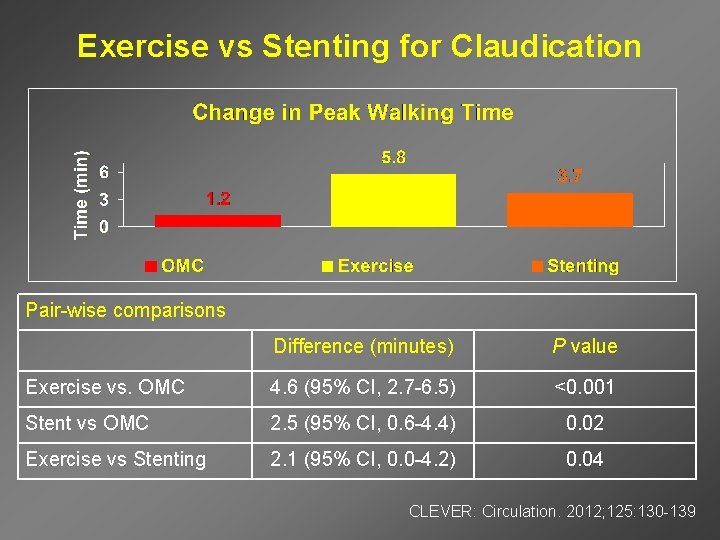
Exercise vs Stenting for Claudication Pair-wise comparisons Difference (minutes) P value Exercise vs. OMC 4. 6 (95% CI, 2. 7 -6. 5) <0. 001 Stent vs OMC 2. 5 (95% CI, 0. 6 -4. 4) 0. 02 Exercise vs Stenting 2. 1 (95% CI, 0. 0 -4. 2) 0. 04 CLEVER: Circulation. 2012; 125: 130 -139
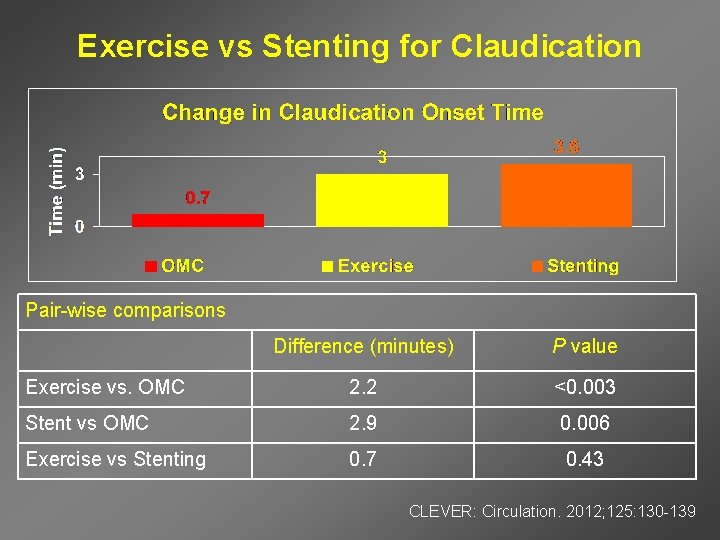
Exercise vs Stenting for Claudication Pair-wise comparisons Difference (minutes) P value Exercise vs. OMC 2. 2 <0. 003 Stent vs OMC 2. 9 0. 006 Exercise vs Stenting 0. 7 0. 43 CLEVER: Circulation. 2012; 125: 130 -139
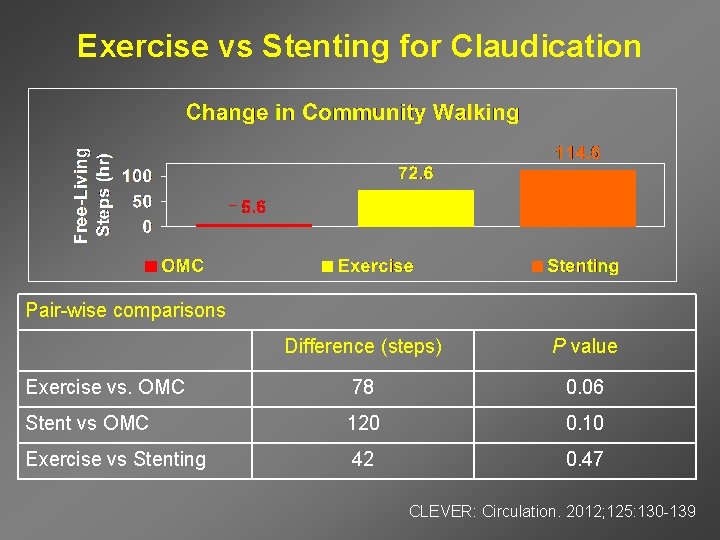
Exercise vs Stenting for Claudication _ Pair-wise comparisons Difference (steps) P value Exercise vs. OMC 78 0. 06 Stent vs OMC 120 0. 10 Exercise vs Stenting 42 0. 47 CLEVER: Circulation. 2012; 125: 130 -139
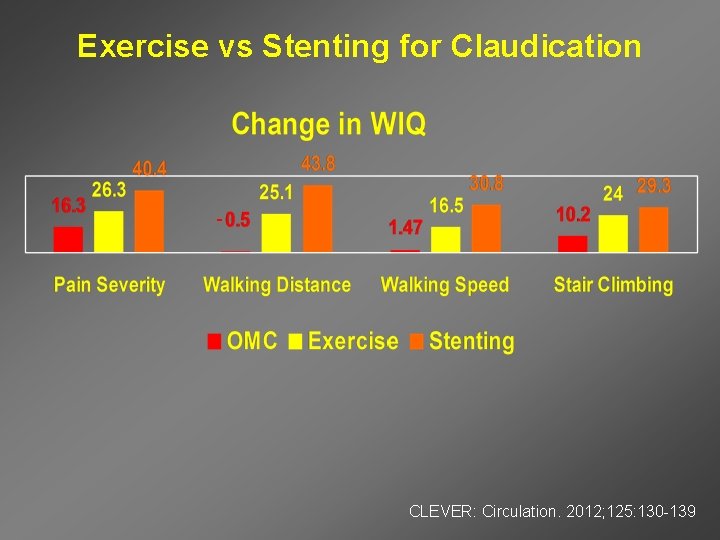
Exercise vs Stenting for Claudication - CLEVER: Circulation. 2012; 125: 130 -139
He is placed on cilostazol 100 mg twice daily and advised to perform interval exercise training but claudication remains at 1 block. So what if initial treatment is inadequate?

Overview of New Technologies Rogers, J. H. et al. Circulation 2007; 116: 2072 -
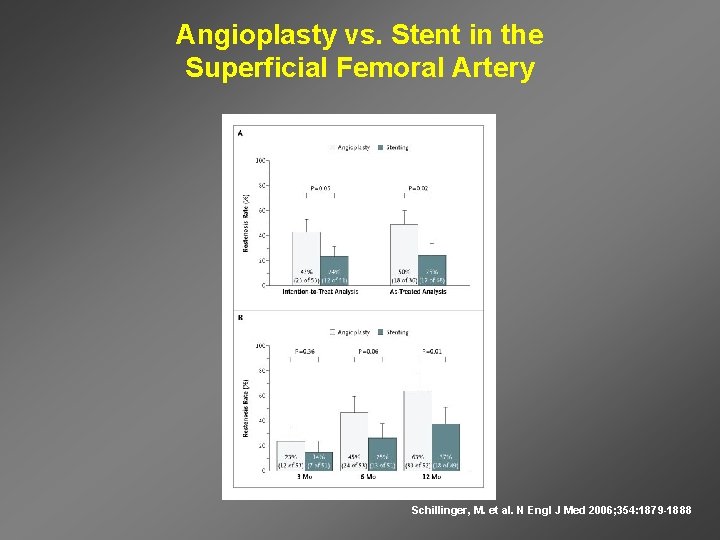
Angioplasty vs. Stent in the Superficial Femoral Artery Schillinger, M. et al. N Engl J Med 2006; 354: 1879 -1888
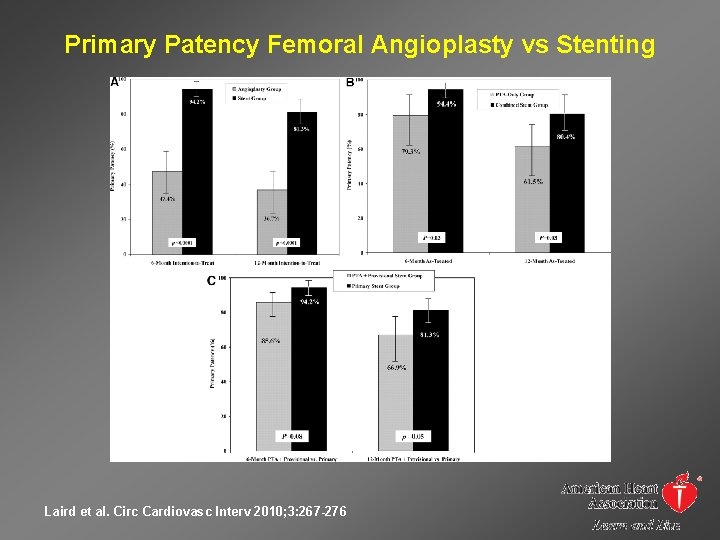
Primary Patency Femoral Angioplasty vs Stenting Laird et al. Circ Cardiovasc Interv 2010; 3: 267 -276
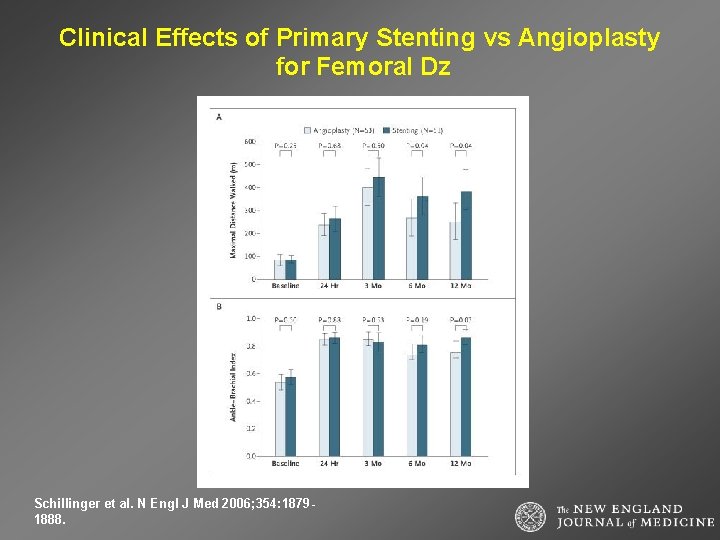
Clinical Effects of Primary Stenting vs Angioplasty for Femoral Dz Schillinger et al. N Engl J Med 2006; 354: 18791888.
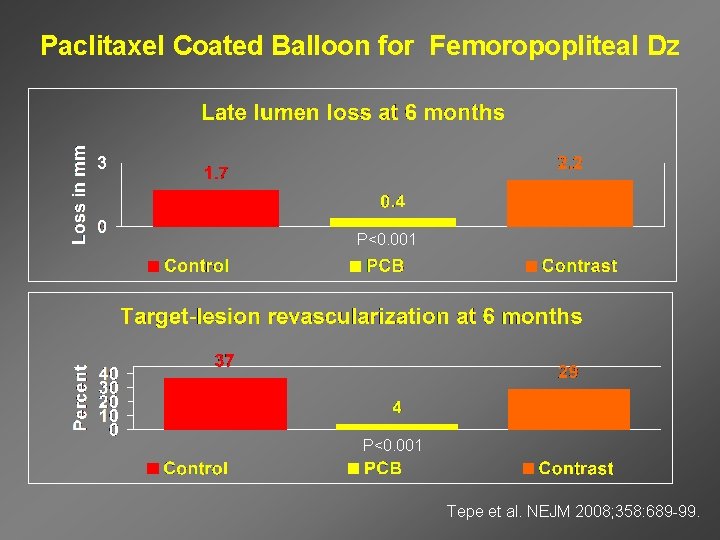
Paclitaxel Coated Balloon for Femoropopliteal Dz P<0. 001 Tepe et al. NEJM 2008; 358: 689 -99.
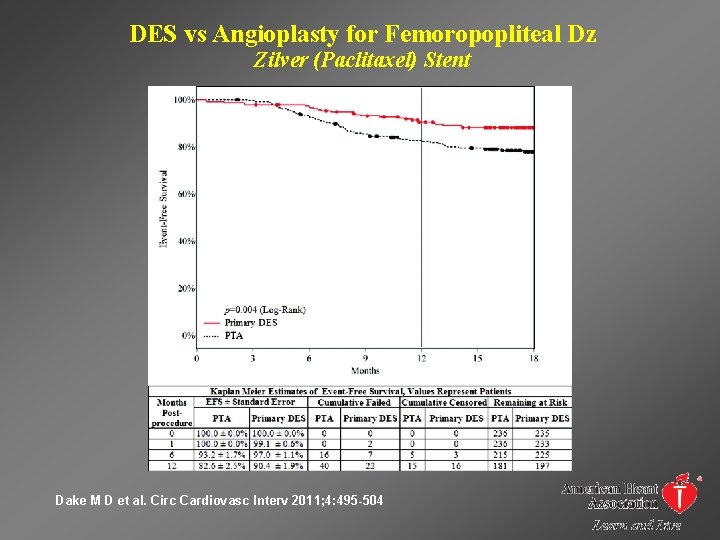
DES vs Angioplasty for Femoropopliteal Dz Zilver (Paclitaxel) Stent Dake M D et al. Circ Cardiovasc Interv 2011; 4: 495 -504
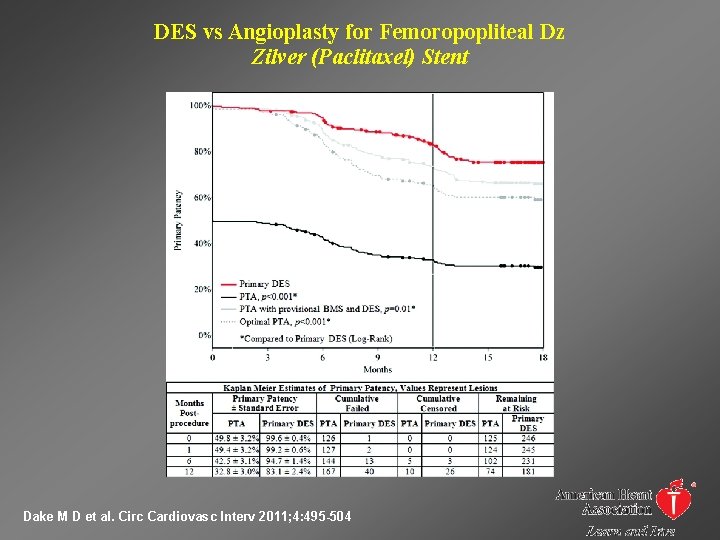
DES vs Angioplasty for Femoropopliteal Dz Zilver (Paclitaxel) Stent Dake M D et al. Circ Cardiovasc Interv 2011; 4: 495 -504

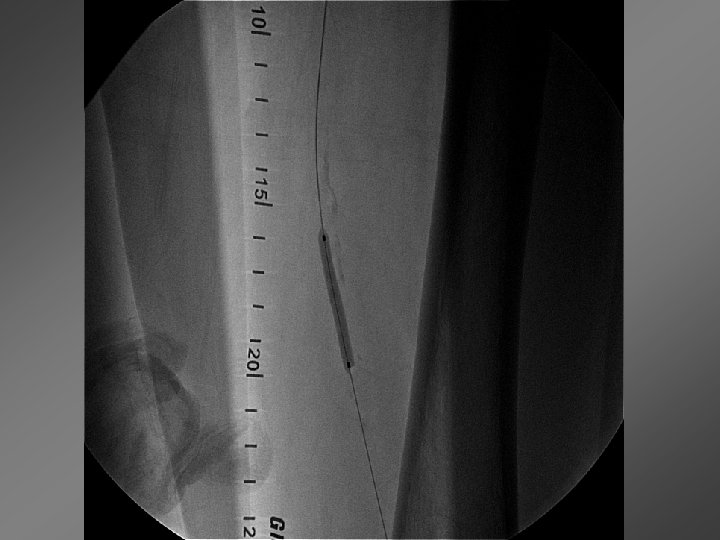
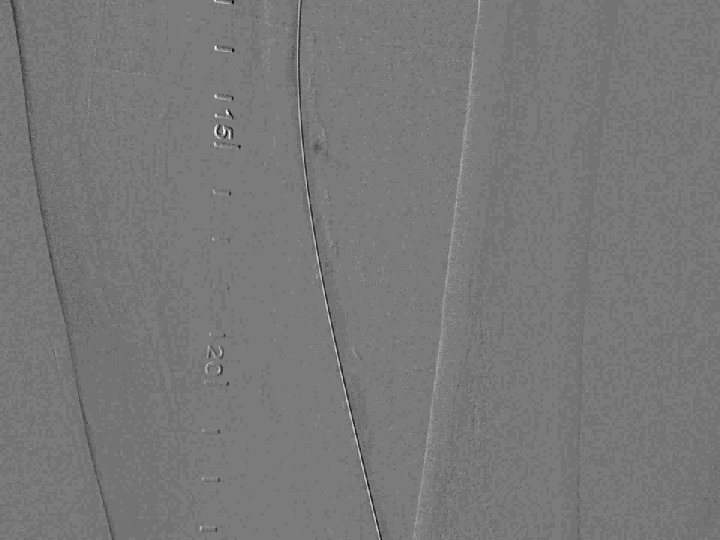
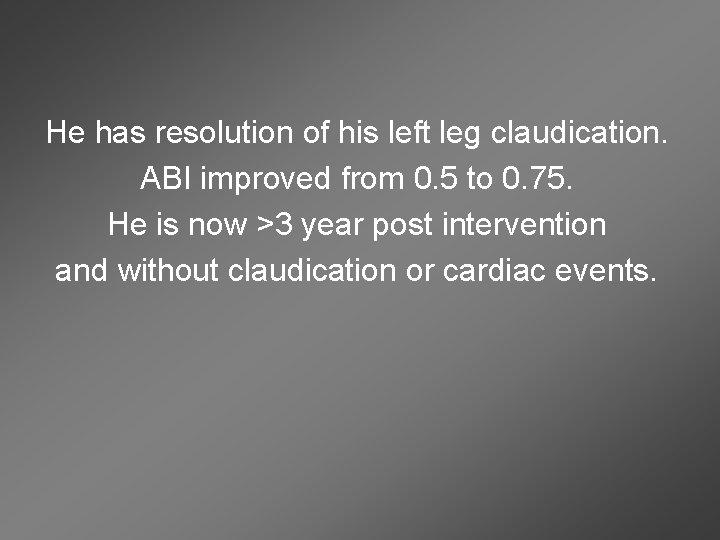
He has resolution of his left leg claudication. ABI improved from 0. 5 to 0. 75. He is now >3 year post intervention and without claudication or cardiac events.
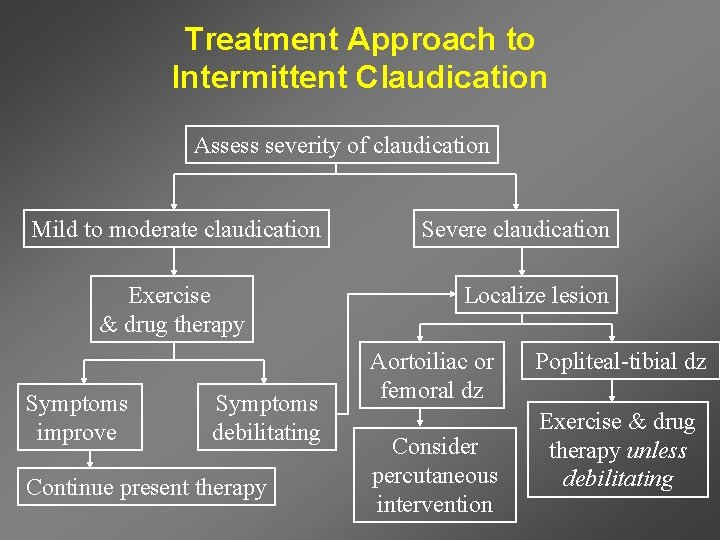
Treatment Approach to Intermittent Claudication Assess severity of claudication Mild to moderate claudication Exercise & drug therapy Symptoms improve Symptoms debilitating Continue present therapy Severe claudication Localize lesion Aortoiliac or femoral dz Consider percutaneous intervention Popliteal-tibial dz Exercise & drug therapy unless debilitating
PAD Case #3 • A 66 year old male presents with intense rest discomfort of his left foot • He was previously seen with claudication of both legs and placed on Pletal • He has a history of HIV with peripheral neuropathy, dyslipidemia and tobacco use. • Medications include pravastatin, Lopinivir/Rotinivir, Abacavir, Lamivudine, Notriptyline, Gabapentin • Exam reveals non-palpable pulses in left leg with pallor upon elevation and dependent rubor • Labs with ABI 0. 5 on left and 0. 9 on right

Lower Extremity Segmental Pressures • • • Index Brachial Thigh 0. 54 Calf Ankle/PT Ankle/DP Right Index Left 122 mm. Hg 127 mm. Hg 1. 03 123 mm. Hg 66 mm. Hg 115 mm. Hg 108 mm. Hg 114 mm. Hg 0. 93 0. 88 0. 93 64 mm. Hg 63 mm. Hg 57 mm. Hg 0. 52 0. 51 0. 46 Lower Extremity Pulse Volume Recording • • Amplitude Thigh Normal Calf Mild Ankle Normal Metatarsal Normal Right Amplitude 16 17 18 15 Left Moderate Severe 11 11 9

What should be done in his management?
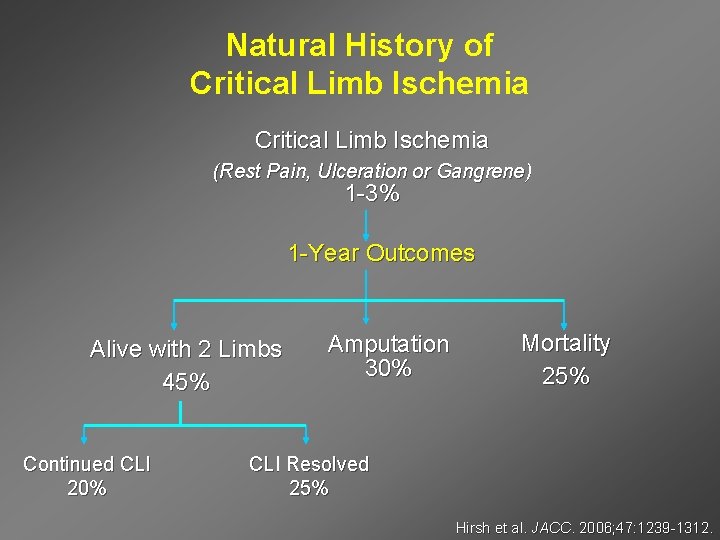
Natural History of Critical Limb Ischemia (Rest Pain, Ulceration or Gangrene) 1 -3% 1 -Year Outcomes Alive with 2 Limbs 45% Continued CLI 20% Amputation 30% Mortality 25% CLI Resolved 25% Hirsh et al. JACC. 2006; 47: 1239 -1312.
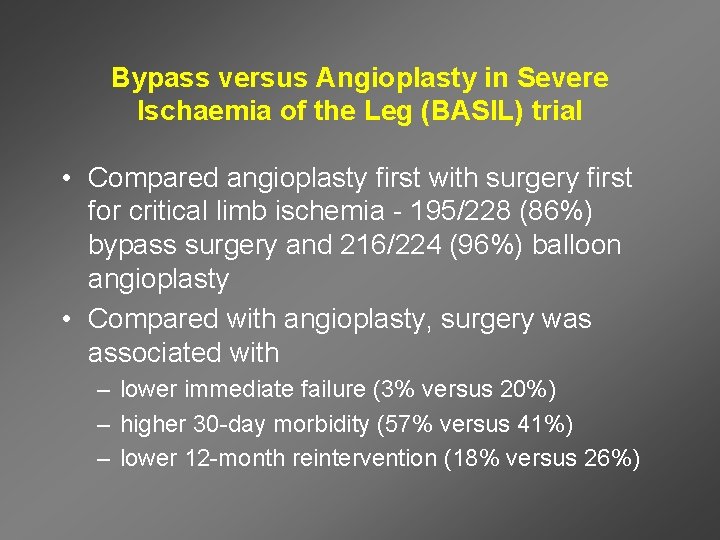
Bypass versus Angioplasty in Severe Ischaemia of the Leg (BASIL) trial • Compared angioplasty first with surgery first for critical limb ischemia - 195/228 (86%) bypass surgery and 216/224 (96%) balloon angioplasty • Compared with angioplasty, surgery was associated with – lower immediate failure (3% versus 20%) – higher 30 -day morbidity (57% versus 41%) – lower 12 -month reintervention (18% versus 26%)
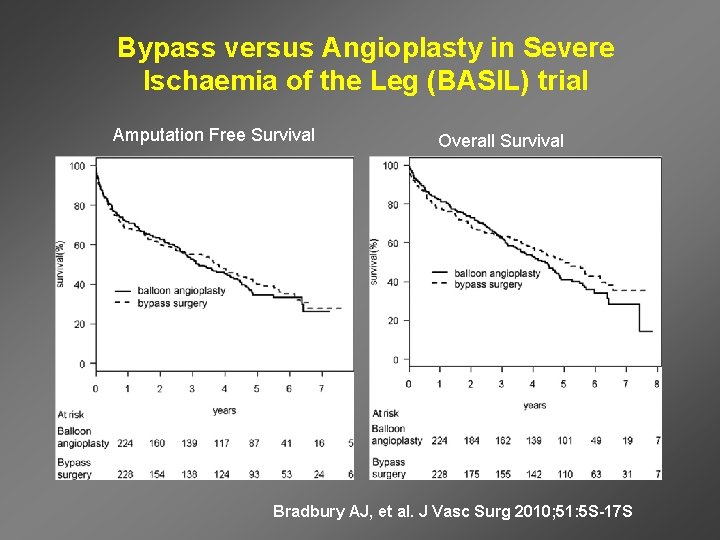
Bypass versus Angioplasty in Severe Ischaemia of the Leg (BASIL) trial Amputation Free Survival Overall Survival Bradbury AJ, et al. J Vasc Surg 2010; 51: 5 S-17 S
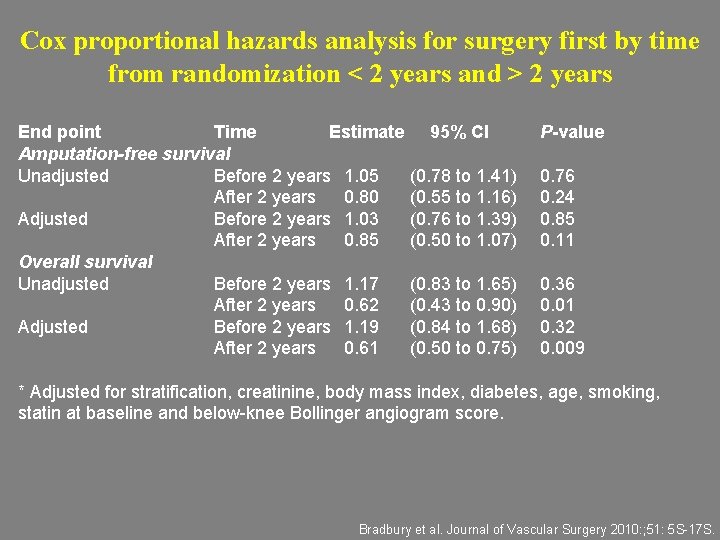
Cox proportional hazards analysis for surgery first by time from randomization < 2 years and > 2 years End point Time Estimate Amputation-free survival Unadjusted Before 2 years 1. 05 After 2 years 0. 80 Adjusted Before 2 years 1. 03 After 2 years 0. 85 Overall survival Unadjusted Before 2 years 1. 17 After 2 years 0. 62 Adjusted Before 2 years 1. 19 After 2 years 0. 61 95% CI P-value (0. 78 to 1. 41) (0. 55 to 1. 16) (0. 76 to 1. 39) (0. 50 to 1. 07) 0. 76 0. 24 0. 85 0. 11 (0. 83 to 1. 65) (0. 43 to 0. 90) (0. 84 to 1. 68) (0. 50 to 0. 75) 0. 36 0. 01 0. 32 0. 009 * Adjusted for stratification, creatinine, body mass index, diabetes, age, smoking, statin at baseline and below-knee Bollinger angiogram score. Bradbury et al. Journal of Vascular Surgery 2010: ; 51: 5 S-17 S.
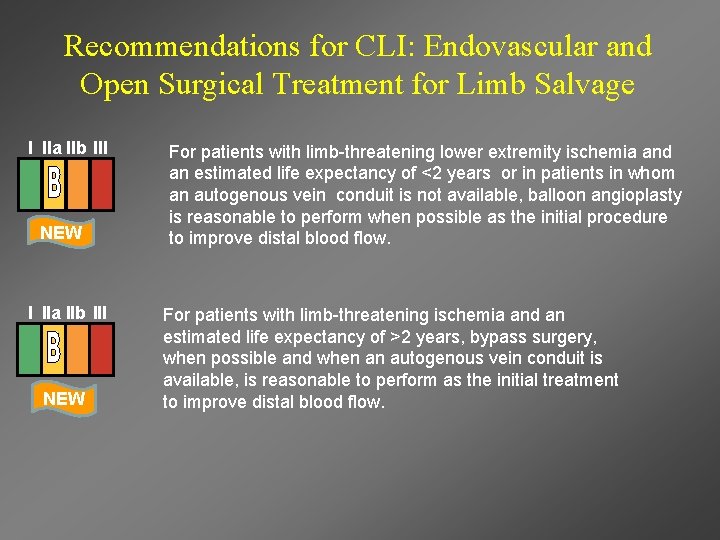
Recommendations for CLI: Endovascular and Open Surgical Treatment for Limb Salvage I IIa IIb III NEW For patients with limb-threatening lower extremity ischemia and an estimated life expectancy of <2 years or in patients in whom an autogenous vein conduit is not available, balloon angioplasty is reasonable to perform when possible as the initial procedure to improve distal blood flow. For patients with limb-threatening ischemia and an estimated life expectancy of >2 years, bypass surgery, when possible and when an autogenous vein conduit is available, is reasonable to perform as the initial treatment to improve distal blood flow.
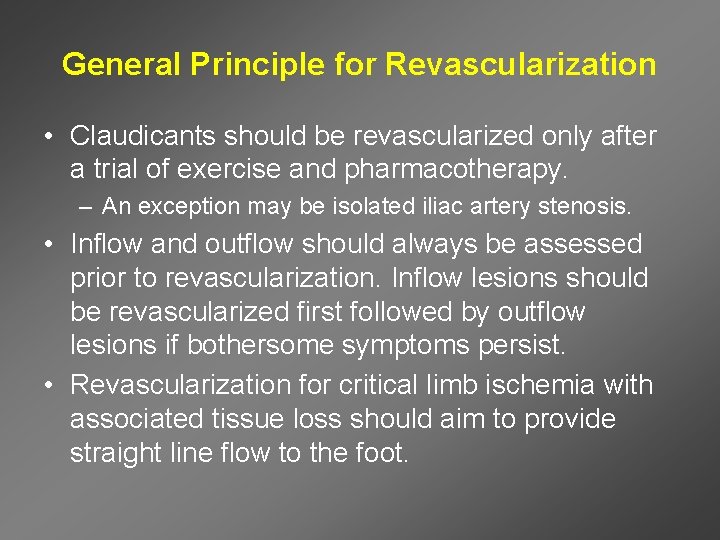
General Principle for Revascularization • Claudicants should be revascularized only after a trial of exercise and pharmacotherapy. – An exception may be isolated iliac artery stenosis. • Inflow and outflow should always be assessed prior to revascularization. Inflow lesions should be revascularized first followed by outflow lesions if bothersome symptoms persist. • Revascularization for critical limb ischemia with associated tissue loss should aim to provide straight line flow to the foot.
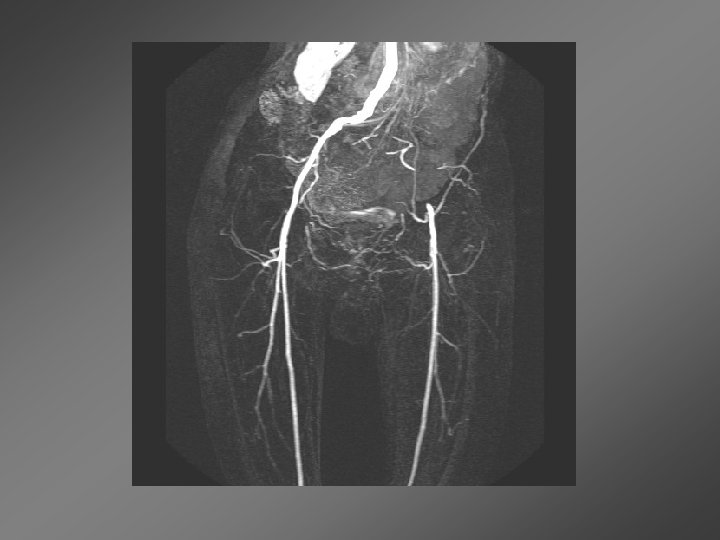
• The patient underwent angiography revealing a 70% R iliac artery stenosis and a long occlusion of the L iliac arteries • Attempt to cross L iliac lesion was unsuccessful • He underwent R iliac artery stent placement followed by a R to L femoral to femoral artery bypass graft • Resolution of his rest ischemia to his left foot
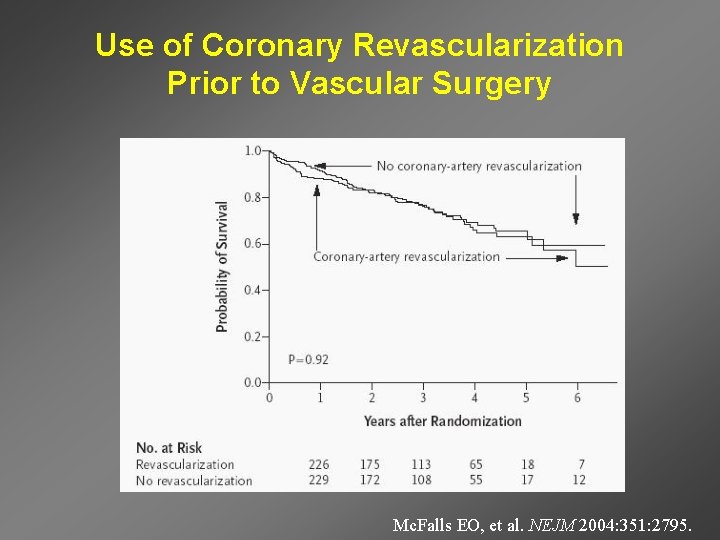
Use of Coronary Revascularization Prior to Vascular Surgery Mc. Falls EO, et al. NEJM 2004: 351: 2795.
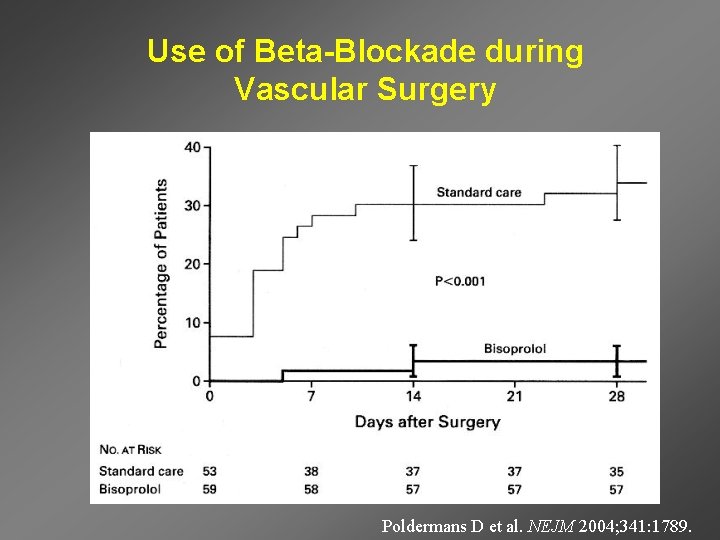
Use of Beta-Blockade during Vascular Surgery Poldermans D et al. NEJM 2004; 341: 1789.
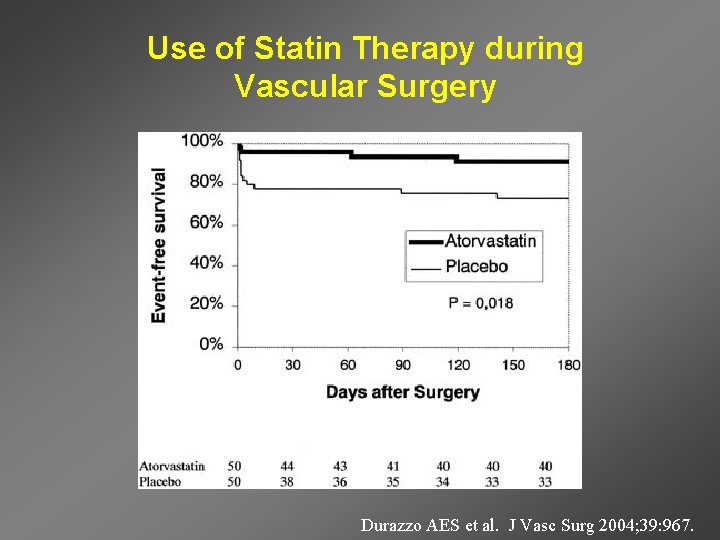
Use of Statin Therapy during Vascular Surgery Durazzo AES et al. J Vasc Surg 2004; 39: 967.
Summary of PAD and Its Management • PAD is common and has a significant impact upon cardiovascular outcomes • Treatment of PAD, even asymptomatic, should focus on risk factor modification/risk reduction • Treatment of intermittent claudication should include exercise therapy, drug therapy and selective use of revascularization • Treatment for critical limb ischemia warrants aggressive efforts at revascularization, including surgery, to reduce the risk of amputation
- Slides: 104