
A Guide to Stress Management in College Learning
- Slides: 27
A Guide to Stress Management in College
Learning Objectives Students will be able to: • Understand what stress is - in terms of personal life and more generally to effectively discuss its implications and effects. • Analyze different types of stressors in college to examine their prevalence in academic and personal circumstances. • Apply coping strategies and techniques to combat stress and help them moving forward in college. 2
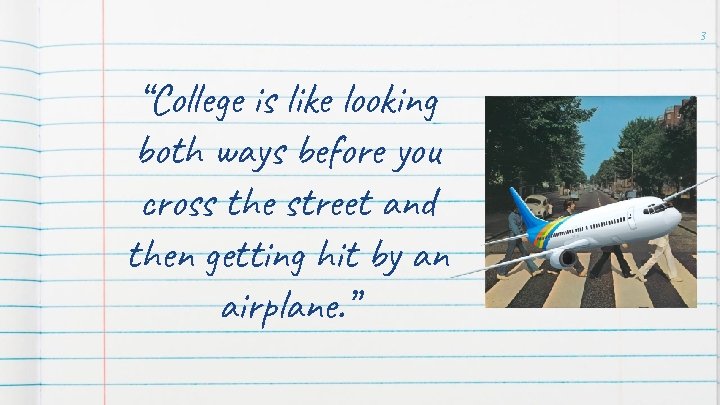
3 “College is like looking both ways before you cross the street and then getting hit by an airplane. ”
4 Mental Check-In
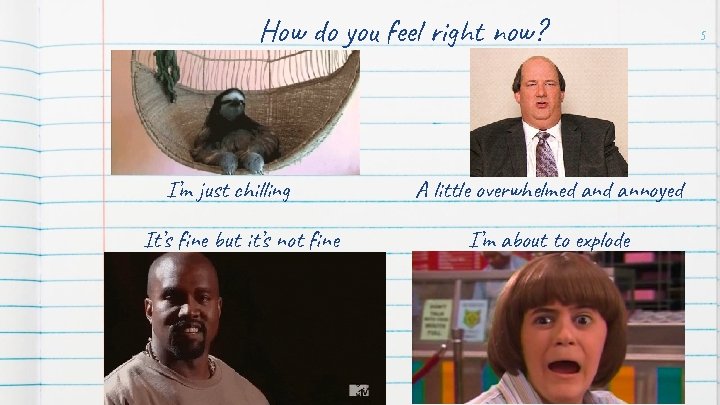
How do you feel right now? I’m just chilling It’s fine but it’s not fine A little overwhelmed annoyed I’m about to explode 5
What is Stress?
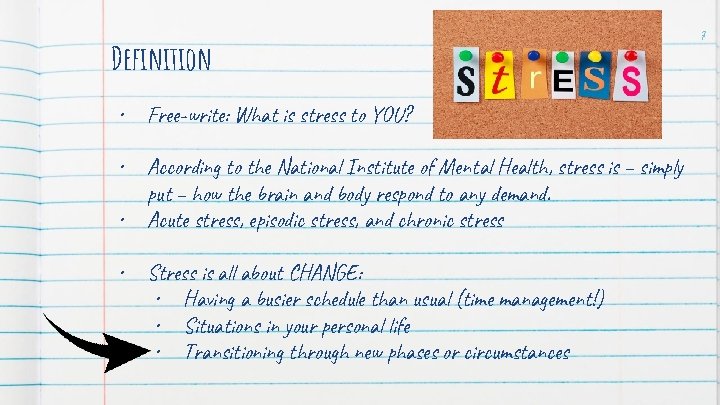
Definition • Free-write: What is stress to YOU? • According to the National Institute of Mental Health, stress is – simply put – how the brain and body respond to any demand. Acute stress, episodic stress, and chronic stress • • Stress is all about CHANGE: • Having a busier schedule than usual (time management!) • Situations in your personal life • Transitioning through new phases or circumstances 7
Stress Vs Anxiety 8
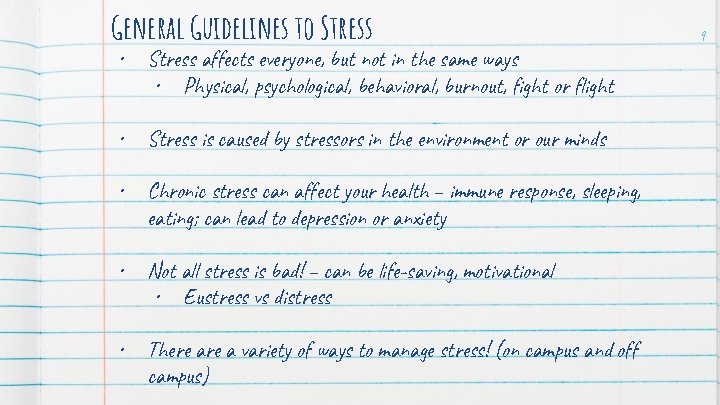
General Guidelines to Stress • Stress affects everyone, but not in the same ways • Physical, psychological, behavioral, burnout, fight or flight • Stress is caused by stressors in the environment or our minds • Chronic stress can affect your health – immune response, sleeping, eating; can lead to depression or anxiety • Not all stress is bad! – can be life-saving, motivational • Eustress vs distress • There a variety of ways to manage stress! (on campus and off campus) 9
Stressors in College
11 Pair Up & Discuss With the person next to you or in a small group of three, write down a short list of stressors that we typically encounter as college students.
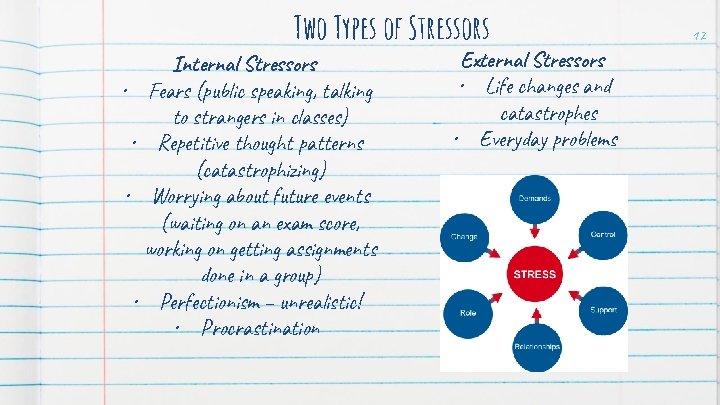
Two Types of Stressors • • Internal Stressors Fears (public speaking, talking to strangers in classes) Repetitive thought patterns (catastrophizing) Worrying about future events (waiting on an exam score, working on getting assignments done in a group) Perfectionism – unrealistic! • Procrastination External Stressors • Life changes and catastrophes • Everyday problems 12
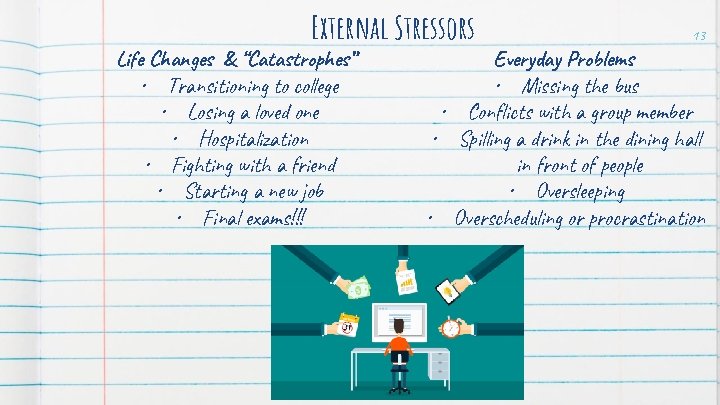
External Stressors Life Changes & “Catastrophes” • Transitioning to college • Losing a loved one • Hospitalization • Fighting with a friend • Starting a new job • Final exams!!! 13 Everyday Problems • Missing the bus • Conflicts with a group member • Spilling a drink in the dining hall in front of people • Oversleeping • Overscheduling or procrastination
Managing Stress in College
15 Pair Up & Discuss With the list of stressors that you and your partner/small group made earlier, come up with a few ways to cope with them. How do you cope with stress in college? Is there anything you may want to change?
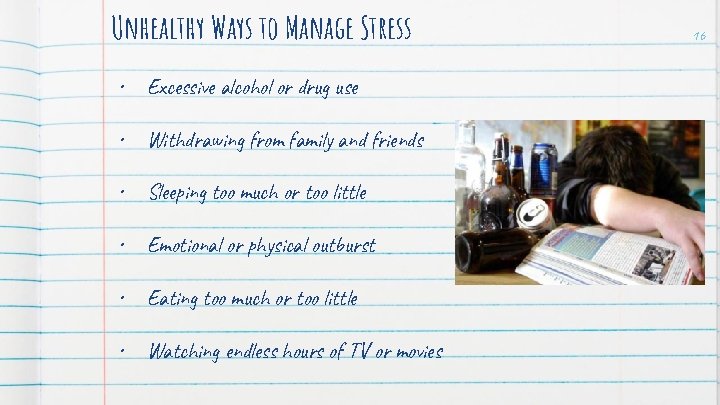
Unhealthy Ways to Manage Stress • Excessive alcohol or drug use • Withdrawing from family and friends • Sleeping too much or too little • Emotional or physical outburst • Eating too much or too little • Watching endless hours of TV or movies 16
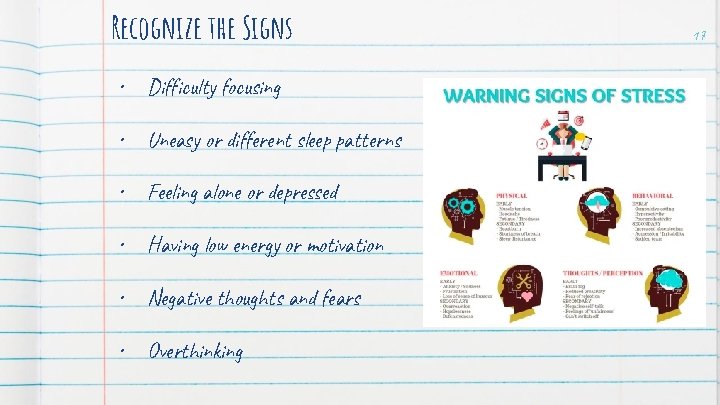
Recognize the Signs • Difficulty focusing • Uneasy or different sleep patterns • Feeling alone or depressed • Having low energy or motivation • Negative thoughts and fears • Overthinking 17
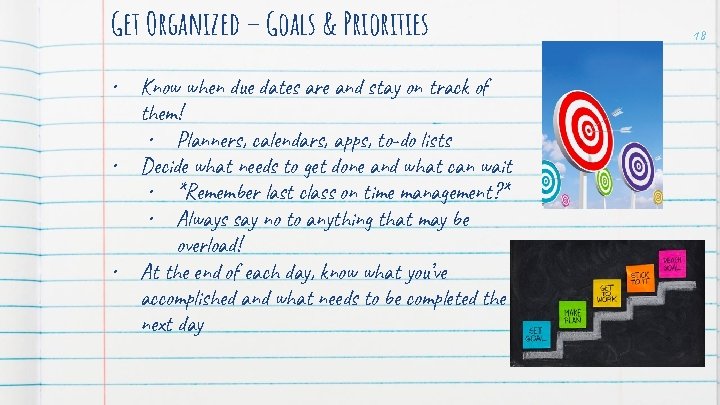
Get Organized – Goals & Priorities • • • Know when due dates are and stay on track of them! • Planners, calendars, apps, to-do lists Decide what needs to get done and what can wait • *Remember last class on time management? * • Always say no to anything that may be overload! At the end of each day, know what you’ve accomplished and what needs to be completed the next day 18
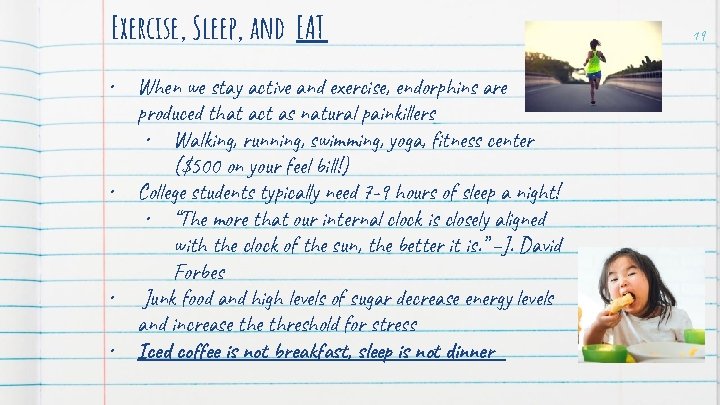
Exercise, Sleep, and EAT • • When we stay active and exercise, endorphins are produced that act as natural painkillers • Walking, running, swimming, yoga, fitness center ($500 on your feel bill!) College students typically need 7 -9 hours of sleep a night! • “The more that our internal clock is closely aligned with the clock of the sun, the better it is. ” –J. David Forbes Junk food and high levels of sugar decrease energy levels and increase threshold for stress Iced coffee is not breakfast, sleep is not dinner 19
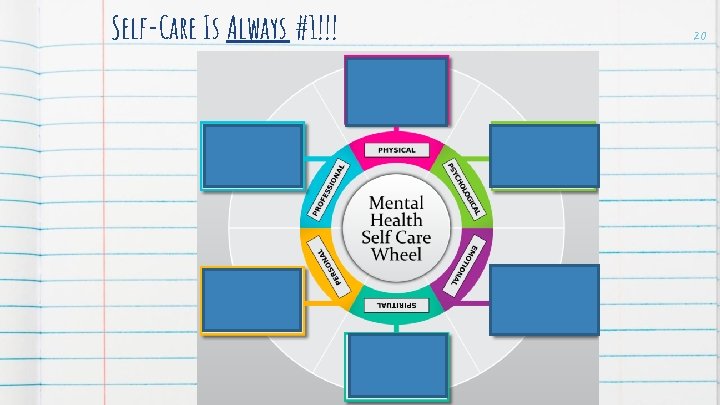
Self-Care Is Always #1!!! 20
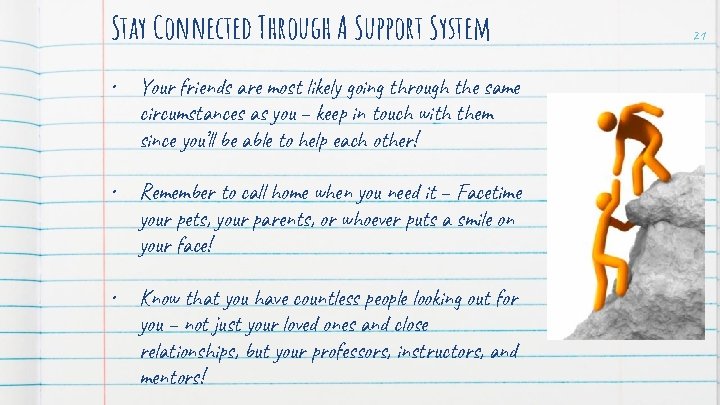
Stay Connected Through A Support System • Your friends are most likely going through the same circumstances as you – keep in touch with them since you’ll be able to help each other! • Remember to call home when you need it – Facetime your pets, your parents, or whoever puts a smile on your face! • Know that you have countless people looking out for you – not just your loved ones and close relationships, but your professors, instructors, and mentors! 21
Other Techniques and Resources • Keep a journal • Have an outlet – painting, drawing, writing, staying active, clubs, etc. • Meditate or try aromatherapy • If stress gets too high, seek a therapist, doctor, counseling services, advisor, or trusted individual. • Remember to accept the things you cannot change, take control of your environment, and breathe! 22
Debrief -Knowing more so about stress management strategies, would you change your list from before? Would you add to any of your techniques for dealing with stressors? -What is one new technique you learned? 23
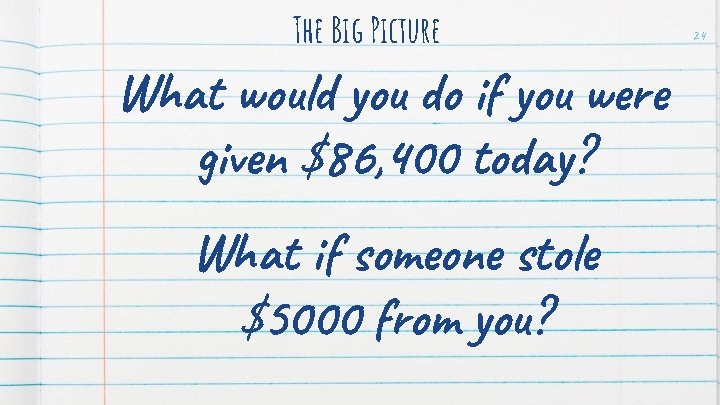
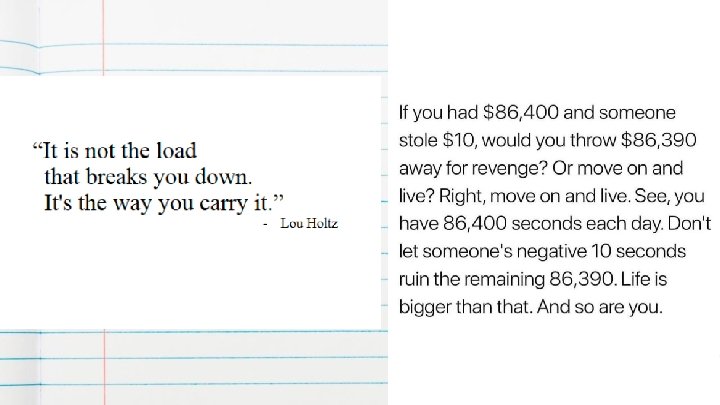
The Big Picture What would you do if you were given $86, 400 today? What if someone stole $5000 from you? 24
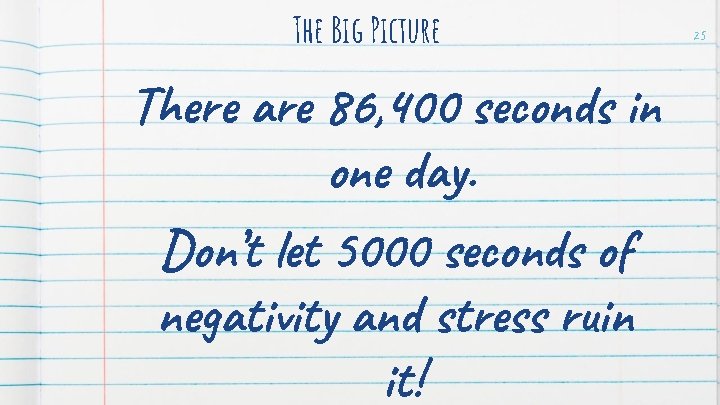
The Big Picture There are 86, 400 seconds in one day. Don’t let 5000 seconds of negativity and stress ruin it! 25
26
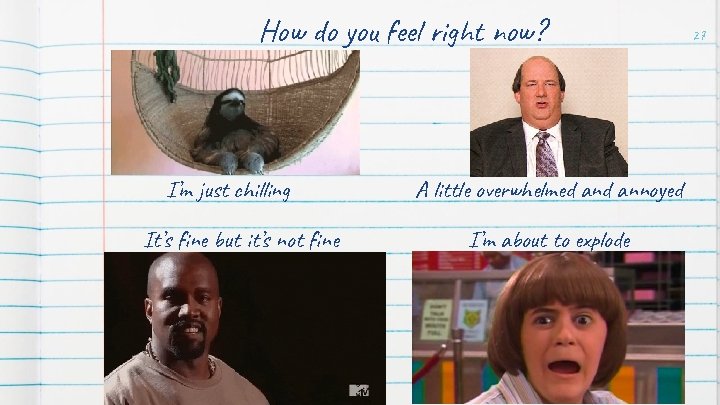
How do you feel right now? I’m just chilling It’s fine but it’s not fine A little overwhelmed annoyed I’m about to explode 27