
A greenway network for a more sustainable Auckland
A greenway network for a more sustainable Auckland Patrícia Vasconcelos Talking and Walking Sustainability Auckland 21 – 23 February 2007

Greenway linear green open space landscape connector multifunctional alternative route for travel with non-motorised vehicles
Contents Greenways and urban sustainability Methodology Case study – Auckland Isthmus Conclusions

Greenways and urban sustainability Greenway network Greenway benefits: - environmental - economical - social Topics for urban sustainability - Quality of life - Land use planning - Greener urban environments - Open spaces - Connections - Sense of identity and of belonging - Sustainable transport system Greenways and urban sustainability=>Methodology=>Case study=>Conclusions Urban sustainability 4
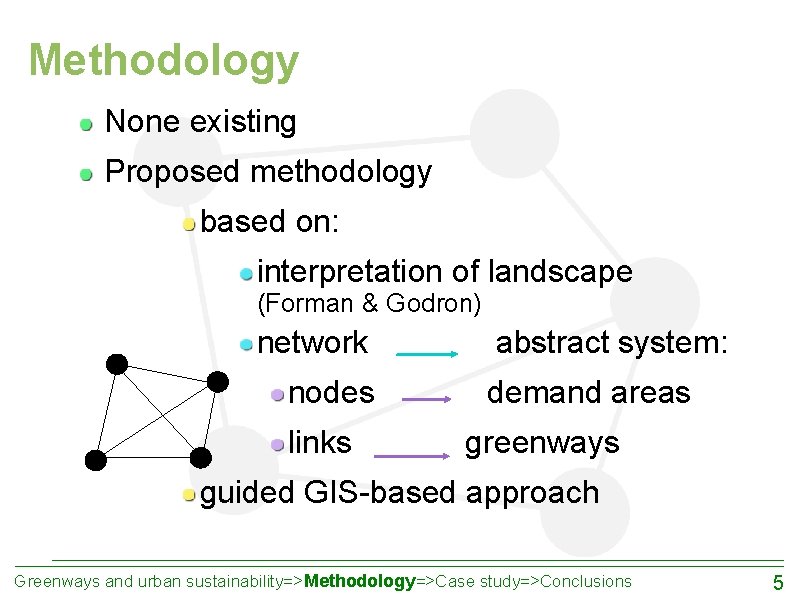
Methodology None existing Proposed methodology based on: interpretation of landscape (Forman & Godron) network nodes links abstract system: demand areas greenways guided GIS-based approach Greenways and urban sustainability=>Methodology=>Case study=>Conclusions 5
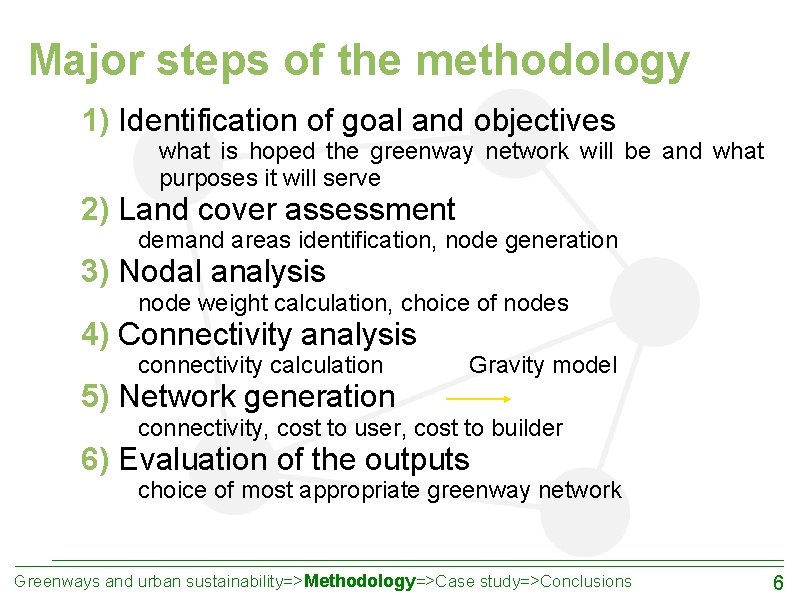
Major steps of the methodology 1) Identification of goal and objectives what is hoped the greenway network will be and what purposes it will serve 2) Land cover assessment demand areas identification, node generation 3) Nodal analysis node weight calculation, choice of nodes 4) Connectivity analysis connectivity calculation 5) Network generation Gravity model connectivity, cost to user, cost to builder 6) Evaluation of the outputs choice of most appropriate greenway network Greenways and urban sustainability=>Methodology=>Case study=>Conclusions 6
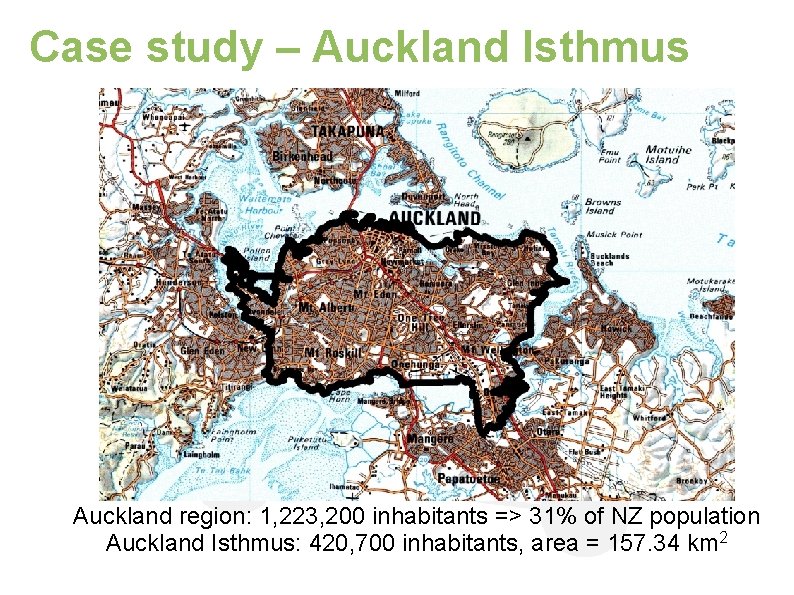
Case study – Auckland Isthmus Auckland region: 1, 223, 200 inhabitants => 31% of NZ population Auckland Isthmus: 420, 700 inhabitants, area = 157. 34 km 2
1) Identification of goal and objectives Goal: to improve urban sustainability of Auckland Isthmus Objectives: to provide a sustainable alternative transport route to protect land from development to preserve open and green spaces improve their accessibility Greenways and urban sustainability=>Methodology=>Case study=>Conclusions 8
Objectives (cont. ) to link: open spaces green spaces schools commercial facilities community facilities expressed intention of Auckland City Council Greenways and urban sustainability=>Methodology=>Case study=>Conclusions 9
2) Land cover assessment Total of nodes: 4, 889 Total of node classes: 12
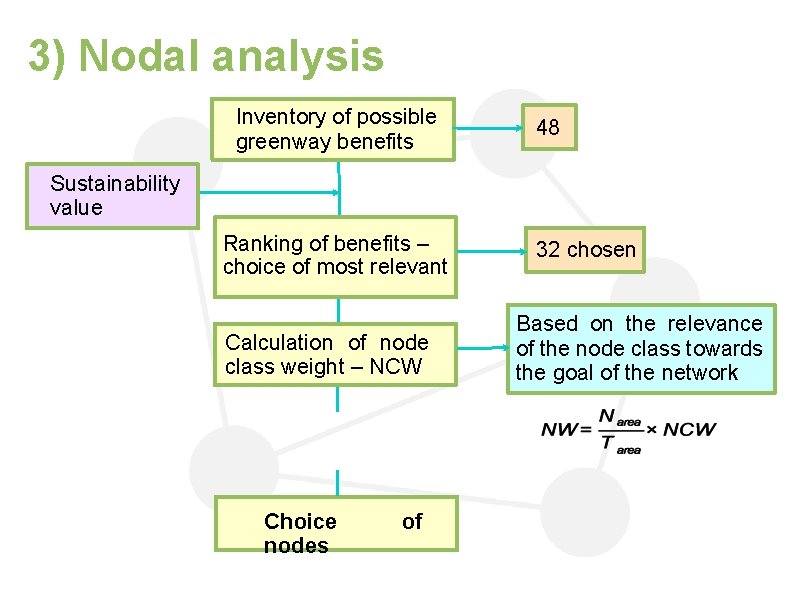
3) Nodal analysis Inventory of possible greenway benefits 48 Sustainability value Ranking of benefits – choice of most relevant Calculation of node class weight – NCW Choice nodes of 32 chosen Based on the relevance of the node class towards the goal of the network
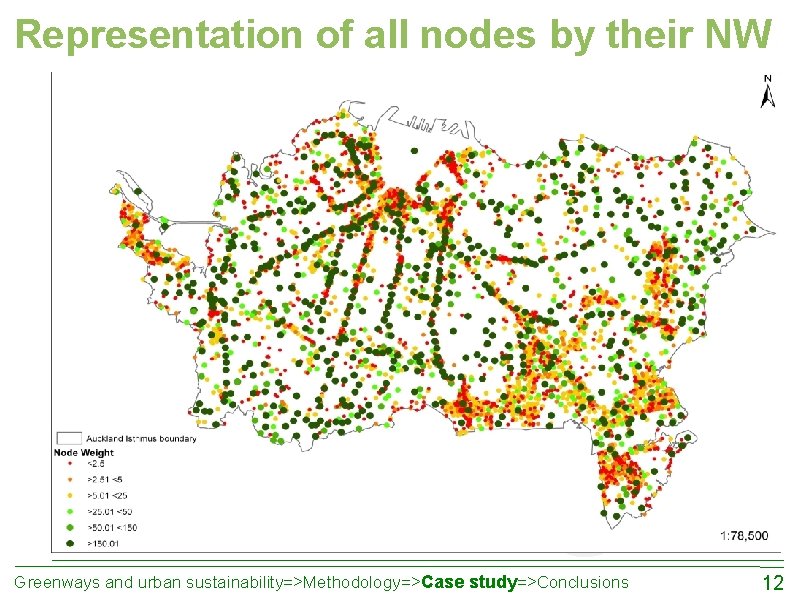
Representation of all nodes by their NW Greenways and urban sustainability=>Methodology=>Case study=>Conclusions 12
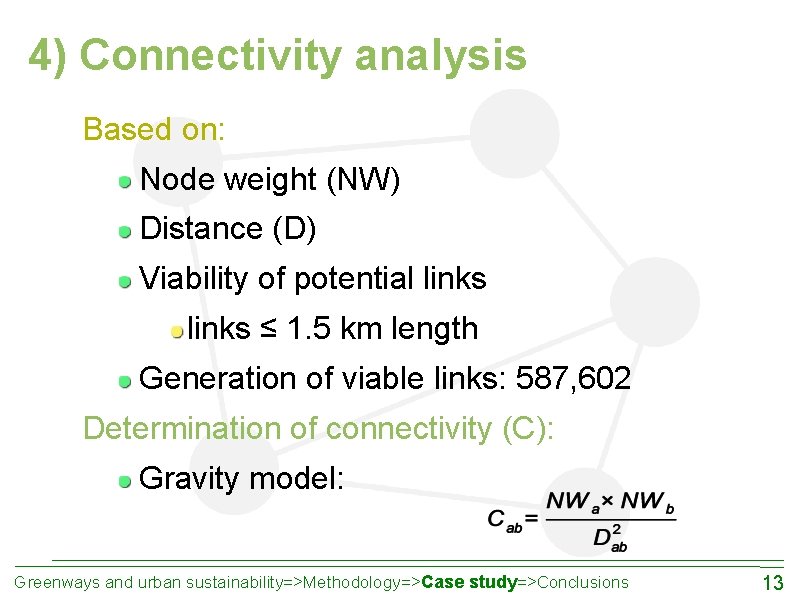
4) Connectivity analysis Based on: Node weight (NW) Distance (D) Viability of potential links ≤ 1. 5 km length Generation of viable links: 587, 602 Determination of connectivity (C): Gravity model: Greenways and urban sustainability=>Methodology=>Case study=>Conclusions 13
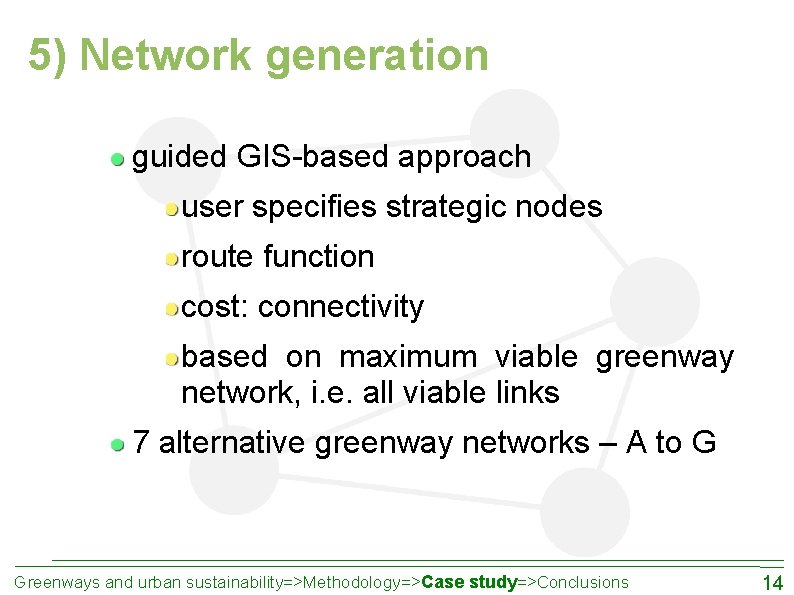
5) Network generation guided GIS-based approach user specifies strategic nodes route function cost: connectivity based on maximum viable greenway network, i. e. all viable links 7 alternative greenway networks – A to G Greenways and urban sustainability=>Methodology=>Case study=>Conclusions 14
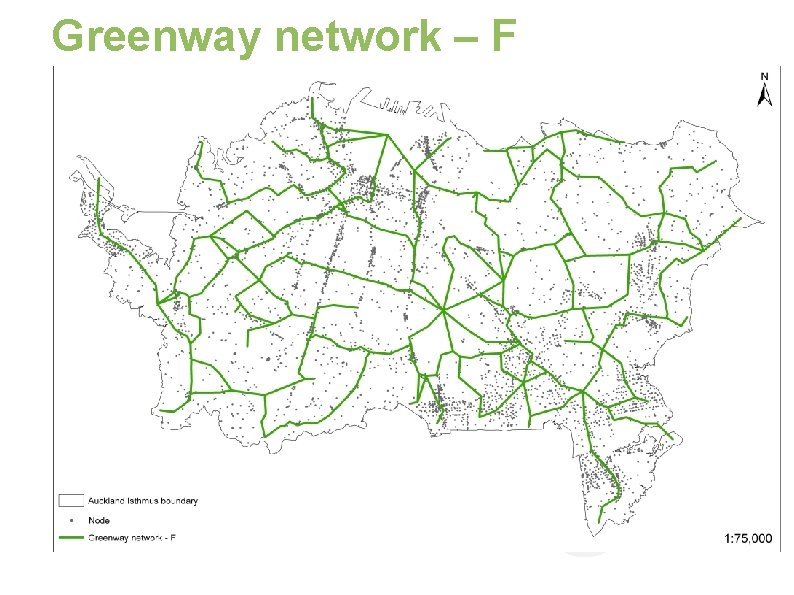
Greenway network – F
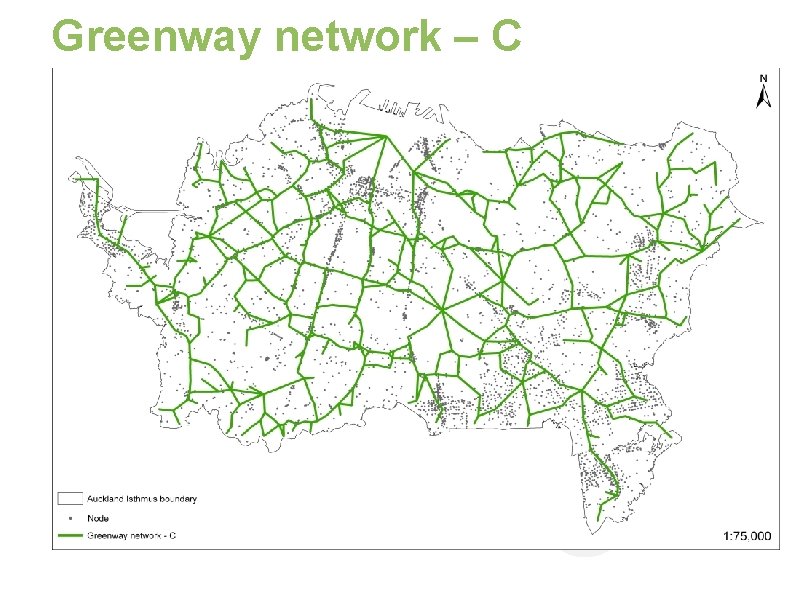
Greenway network – C
6) Evaluation of the outputs Same main skeleton! From network A to network G: cost to builder decreases cost to user increases Multi-circuit networks cross town links Master plan: greenway network F upgrading until C is reached Greenways and urban sustainability=>Methodology=>Case study=>Conclusions 17
Conclusions Greenways are a valuable tool towards urban sustainability Methodology proposed guided GIS-based node weight, connectivity flexible universal Master plan of a greenway network for a more sustainable Auckland guide to effective implementation Greenways and urban sustainability=>Methodology=>Case study=>Conclusions 18
- Slides: 18