
A graph oriented database implemented in DEX for
A graph oriented database implemented in DEX for protein structural information. 2 Larriba-Pey 1 Valdés-Jiménez 1 Reyes JL A JA 2 Dominguez-Sal D 1 Arenas-Salinas MA 1. Centro de Bioinformática y Simulación Molecular, Facultad de Ingeniería, Universidad de Talca. 2. DAMA-UPC, Data Management Universitat Politecnica de Catalunya
Introduction • Proteins are essential macromolecules of great interest for the study of diseases and the development of novel drug-targets. • The analysis and understanding of the tridimensional (3 D) structure of these proteins could help us to comprehend the molecular mechanisms involved in living organisms. • Examples of how the information stored in this graph-oriented database can be employed to make queries and find structural patterns among different proteins.
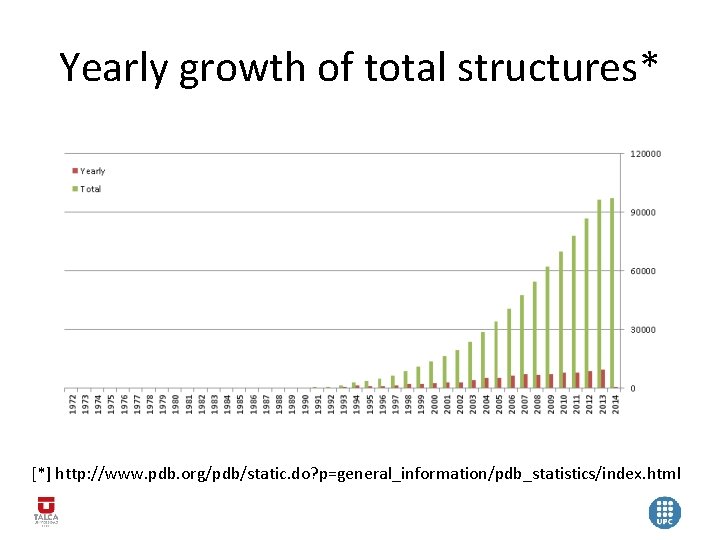
Yearly growth of total structures* [*] http: //www. pdb. org/pdb/static. do? p=general_information/pdb_statistics/index. html

PDB file format
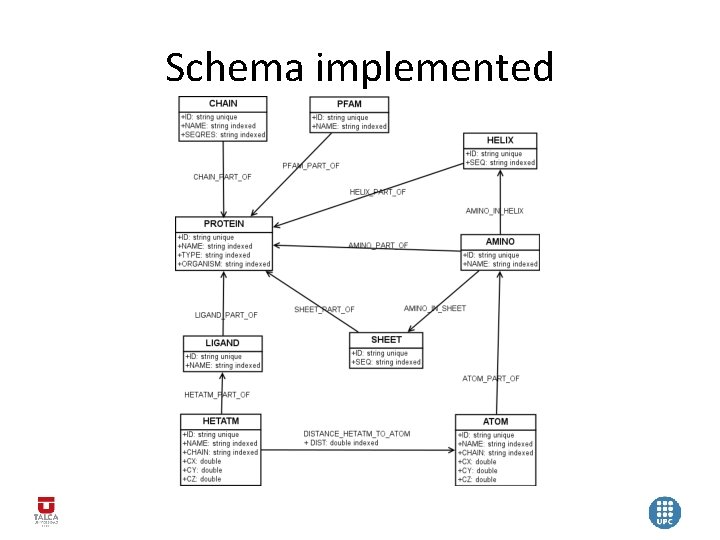
Schema implemented
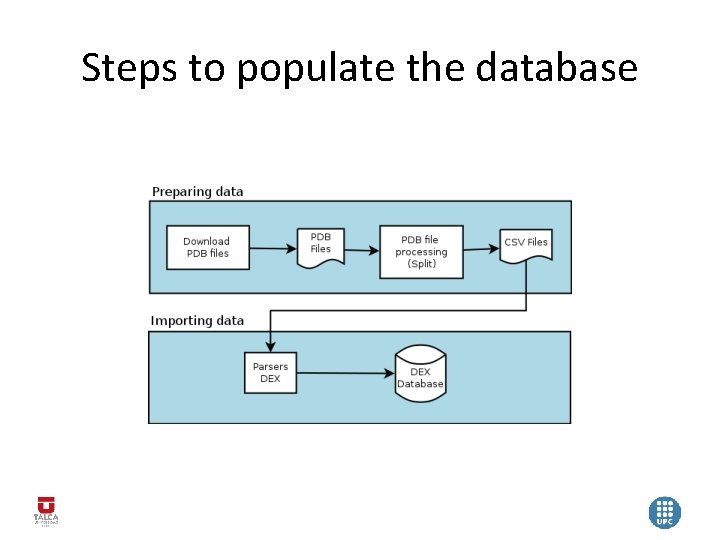
Steps to populate the database
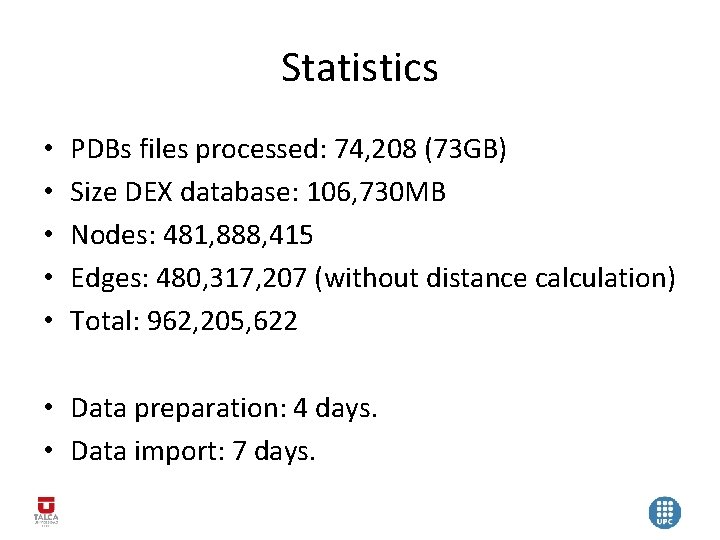
Statistics • • • PDBs files processed: 74, 208 (73 GB) Size DEX database: 106, 730 MB Nodes: 481, 888, 415 Edges: 480, 317, 207 (without distance calculation) Total: 962, 205, 622 • Data preparation: 4 days. • Data import: 7 days.
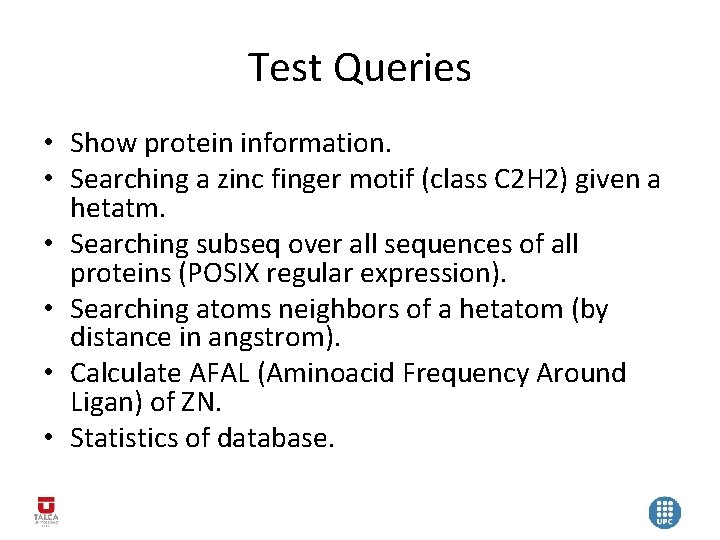
Test Queries • Show protein information. • Searching a zinc finger motif (class C 2 H 2) given a hetatm. • Searching subseq over all sequences of all proteins (POSIX regular expression). • Searching atoms neighbors of a hetatom (by distance in angstrom). • Calculate AFAL (Aminoacid Frequency Around Ligan) of ZN. • Statistics of database.
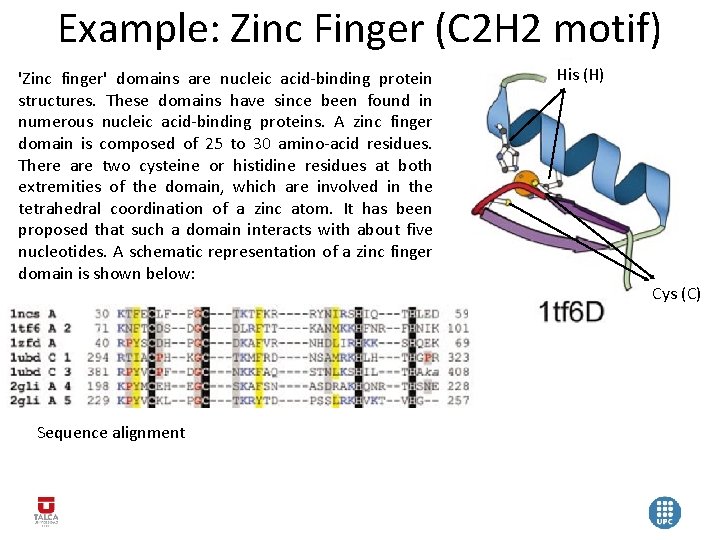
Example: Zinc Finger (C 2 H 2 motif) 'Zinc finger' domains are nucleic acid-binding protein structures. These domains have since been found in numerous nucleic acid-binding proteins. A zinc finger domain is composed of 25 to 30 amino-acid residues. There are two cysteine or histidine residues at both extremities of the domain, which are involved in the tetrahedral coordination of a zinc atom. It has been proposed that such a domain interacts with about five nucleotides. A schematic representation of a zinc finger domain is shown below: Sequence alignment His (H) Cys (C)
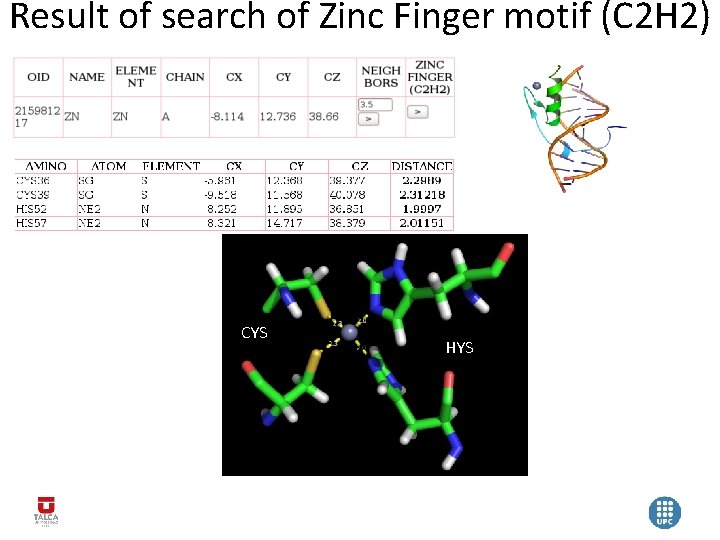
Result of search of Zinc Finger motif (C 2 H 2) CYS HYS
Working. . . 1. 2. 3. 4. Search for structural patterns Integration with other biological databases Incorporation of new attributes Benchmark.
- Slides: 11